Blog Archives
Pearls from artists* # 673

Barbara’s Studio
*an ongoing series of quotations – mostly from artists, to artists – that offers wisdom, inspiration, and advice for the sometimes lonely road we are on.
You may occasionally have the opportunity to publicly comment about the work, which helps to shape its life, but others will also interpret, criticize, and project their own agendas onto it. You must learn to be ok with that. You cannot follow your art around, explaining it and defending it. Once released, the life of your work depends on all sorts of factors completely out of your control. Separating your ego and self-worth from what you produce can be challenging, but it is essential. It protects your vital studio activity from the damaging effects of the outside world. Letting go of the old work also frees you up to move forward and focus on the next great idea.
Kate Kretz in Art From Your Core: A Holistic Guide to Visual Voice
Comments are welcome!
Pearls from artists* #561

*an ongoing series of quotations – mostly from artists, to artists – that offers wisdom, inspiration, and advice for the sometimes lonely road we are on.
The most powerful symbols draw profound reactions from us. The symbolic images in great art attract and fascinate us; they stir our souls and move us beyond what can be easily expressed; ‘their pregnant language cries out to us that they mean more than they say.’
The unconscious produces symbols as part of a natural process within us. These images emerge out of the context of our lived experience… Jung saw the meaning-making process as one that not only requires attendance to the real context of our lives and history, but also involves profound inner listening. It asks us to use our rational capacities, but also our feeling and imaginal ones.
Symbolic images redirect our psychic energy, bringing together conscious and unconscious material and producing the lessening of conflict. In this way, they activate a transcendent function within the psyche. We experience this as the discovery of personal meaning and healing. This transformation is not the result of formulaic operations, but rather is a dynamic process that requires our authentic and vulnerable participation. The process challenges the whole of who we are and requires deep moral effort. That the unconscious would produce moving, powerful compensatory symbols inside us at all points to a fact that our culture may not have fully grasped – that there is a force working within us which is always driving us towards healing growth and greater consciousness… Despite our suffering, the psyche is always ultimately seeking both a healthy homeostatic balance and our ever-unfolding growth and unique development.
Gary Bobroff in Carl Jung: Knowledge in a Nutshell
Comments are welcome!
Pearls from artists* # 514
*an ongoing series of quotations – mostly from artists, to artists – that offers wisdom, inspiration, and advice for the sometimes lonely road we are on
Basically I am trying not to stagnate. I go this way and I go that way and I don’t know where I’m going next. But if I should get stagnant, I’d lose my interest.
There are so many things to be considered when making music. The whole question of life itself; my life in which there are many things on which I don’t think I’ve reached a final conclusion; there are matters I don’t think I’ve covered completely, and all these things have to be covered before you make your music sound any way. You have to grow to know.
When I was younger, I didn’t think this would happen, but now I know that I’ve still got a long way to go. Maybe when I’m sixty I’ll be satisfied with what I’m doing, but I don’t know… I’m sure that later on my ideas will carry more conviction.
I know that I want to produce beautiful music, music that does things to people that they need. Music that will uplift and make them happy – those are the qualities I’d like to produce.
Coltrane on Coltrane: The John Coltrane Interviews, edited by Chris DeVito
Comments are welcome!
Pearls from artists* # 408

“No Cure for Insomnia,” pastel on sandpaper, 58″ x 38″ image, 70” x 50” framed
* an ongoing series of quotations – mostly from artists, to artists – that offers wisdom, inspiration, and advice for the sometimes lonely road we are on.
Classics have nothing to do with aesthetic sophistication. They use the aesthetic as a springboard to something else. The creation of a classic will often require the artist to deviate from prevailing standards in order to push the ordinary vision through. If there is one prerequisite for producing a classic, it is the willingness to follow the vision wherever it leads, even if it demands a breach of convention, technique, or popular taste. (It may not even be a question of if or when, for how can one produce a truly singular work without reinventing the medium to some extent?) We often hear that the master artist is “in love” with her material: that the sculptor loves the marble, the dancer loves the body, the musician loves his instrument. For the maker of classics, however, the medium always seems to be an obstacle; love is never without a tinge of spite. William S. Burroughs was so contemptuous of language that he took to describing it as a disease. He conceived his work as an attempt to confront language in hopes to cure the mind of the “word virus.” Indeed, if the goal of art is to take us beyond the ordinary preoccupations to reach the heart of the Real, it would seem essential that there be a fight, a struggle to wrest from the medium something to which Consensus dictates it is not naturally inclined.
J.F. Martel in Reclaiming Art in the Age of Artifice: A Treatise, Critique, and Call to Action
Comments are welcome!
Pearls from artists* # 330
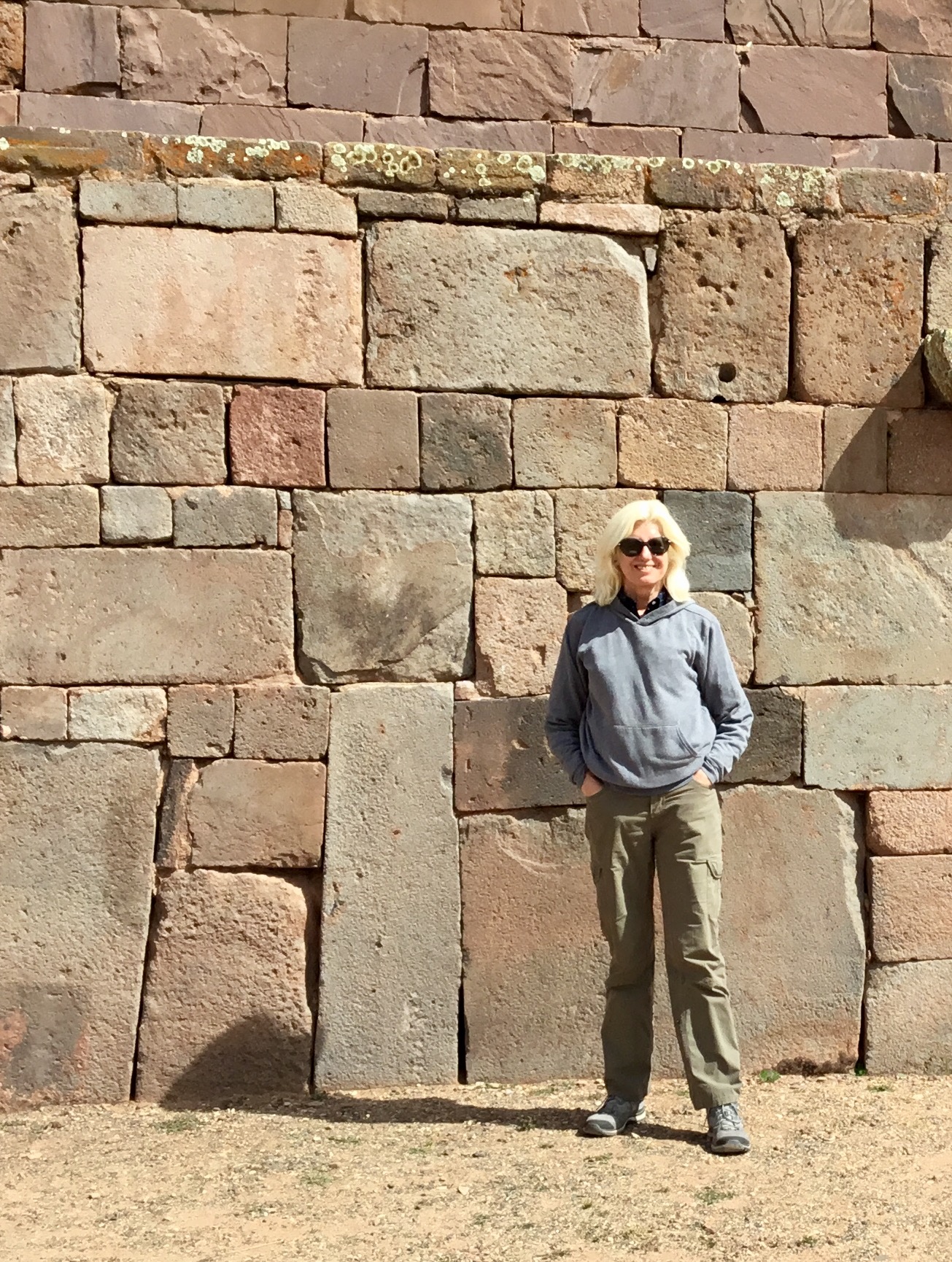
At Tiwanaku, Bolivia
*an ongoing series of quotations – mostly from artists, to artists – that offers wisdom, inspiration, and advice for the sometimes lonely road we are on.
To take the time to look and analyze the city or a building or an object is of the same nature as owning it, except that ownership is not a satisfactory feeling – but understanding is a form of complete assimilation. To really work and produce, there must be integration of your work in your life, or the integration of your life in your work.
Louise Bourgeois: Destruction of the Father, Reconstruction of the Father: Writings and interview 1923-1997, edited and with texts by Marie-Laure Bernadac and Hans-Ulrich Obrist
Comments are welcome!
Pearls from artists* # 288
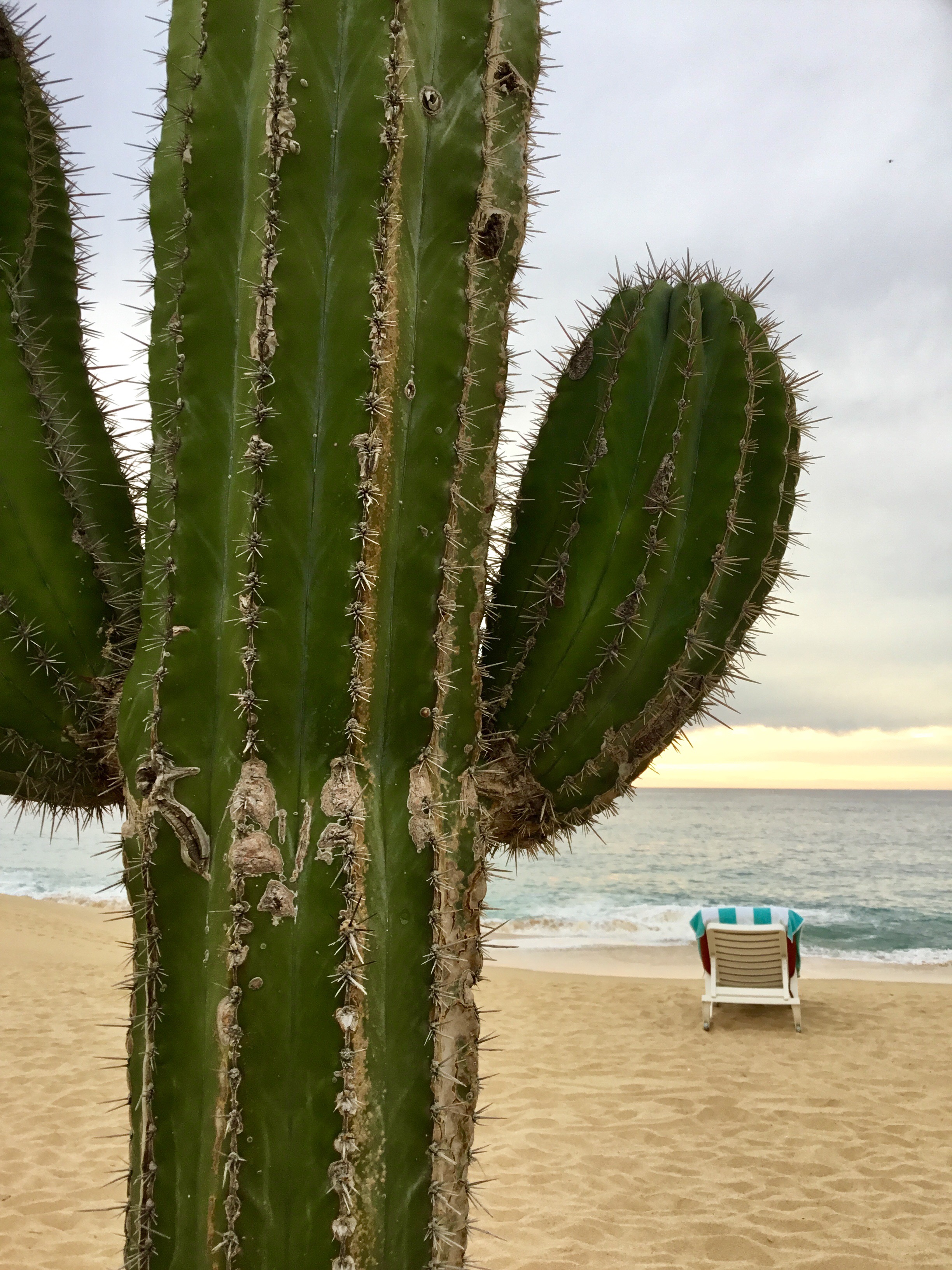
Los Cabos, Mexico
*an ongoing series of quotations – mostly from artists, to artists – that offers wisdom, inspiration, and advice for the sometimes lonely road we are on.
I always forget how important the empty days are, how important it may be sometimes not to expect to produce anything, even a few lines in a journal. I am still pursued by a neurosis about work inherited from my father. A day where one has not pushed oneself to the limit seems a damaged damaging day, a sinful day. Not so! The most valuable thing we can do for the psyche, occasionally, is to let it rest, wander, live in the changing light of a room, not try to be or do anything whatever.
May Sarton in Journal of a Solitude: The intimate diary of a year in the life of a creative woman
Comments are welcome!
Pearls from artists* # 186
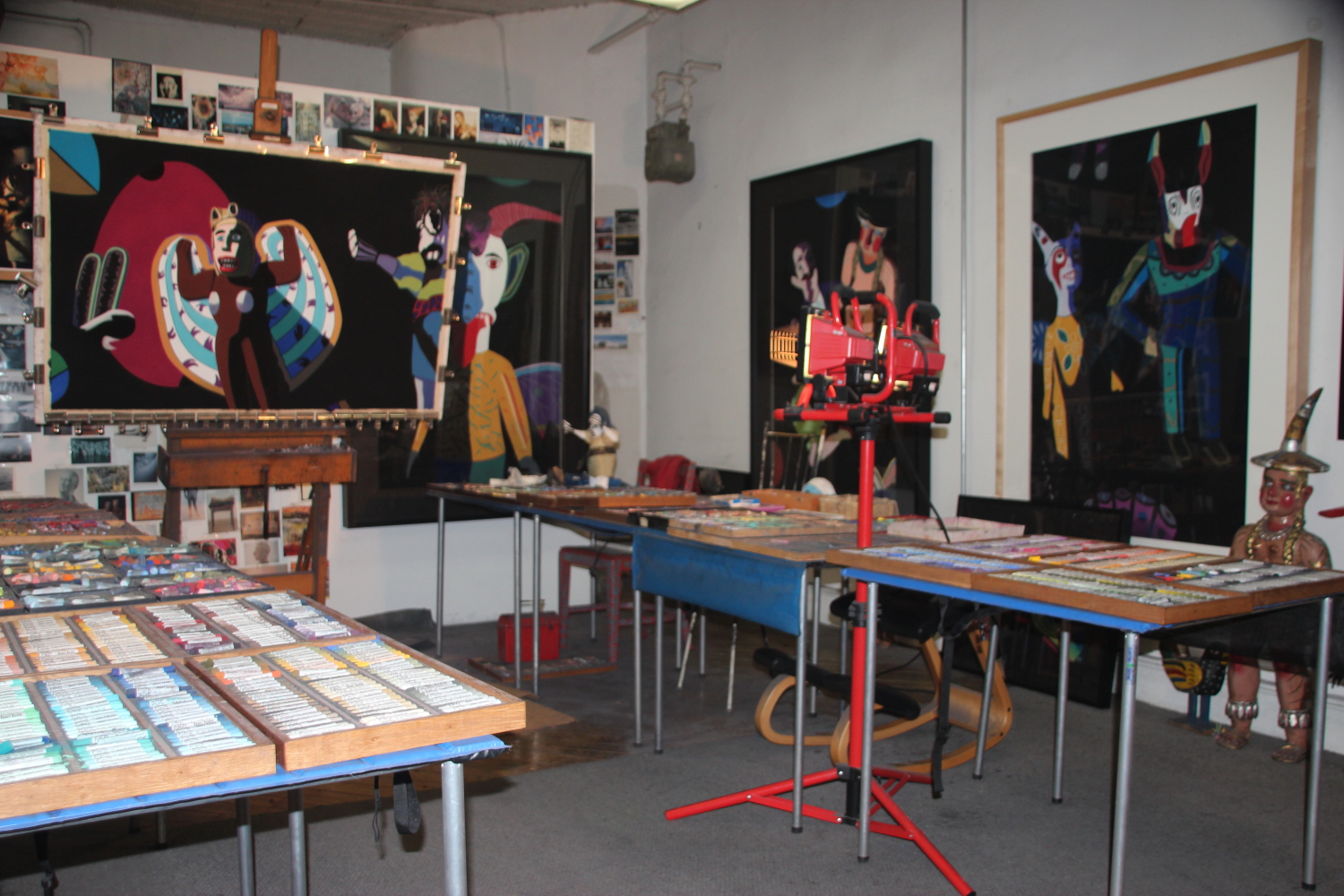
Barbara’s studio
* an ongoing series of quotations – mostly from artists, to artists – that offers wisdom, inspiration, and advice for the sometimes lonely road we are on.
I considered the painting of a picture the acme of human accomplishment; even today, the conviction still persists. At least I consider all artists as privileged and sacred beings, whatever they produce.
Self Portrait Man Ray, foreword by Merry A. Foresta
Comments are welcome!
Pearls from artists* # 179
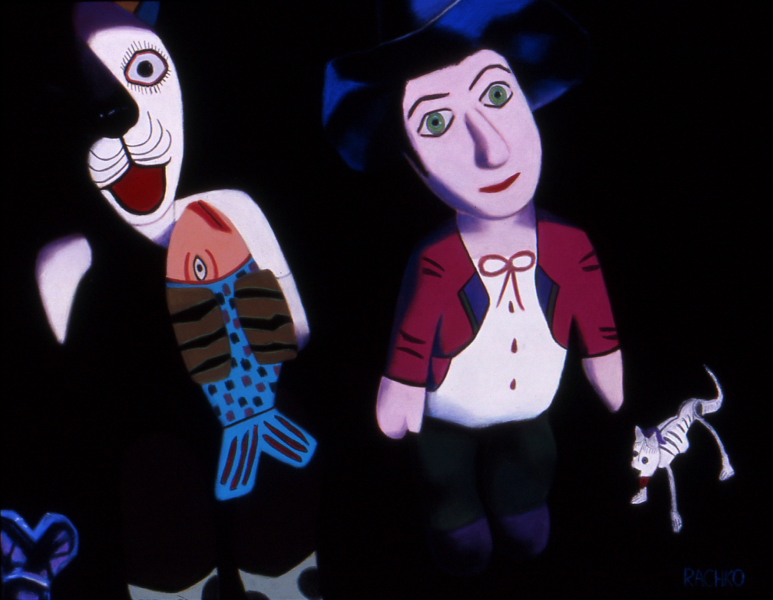
“Offering,” soft pastel on sandpaper, 20″ x 26″
* an ongoing series of quotations – mostly from artists, to artists – that offers wisdom, inspiration, and advice for the sometimes lonely road we are on.
Michael Kimmelman: You studied art in school. You started collecting early.
David Bowie: Yeah, I collected very early on. I have a couple of Tintorettos, which I’ve had for many, many years. I have a Rubens. Art was, seriously, the only thing I’ve ever wanted to own. It has always been for me a stable nourishment. I use it. It can change the way that I feel in the mornings. The same work can change me in different ways, depending on what I’m going through. For instance, somebody I like very much is Frank Auerbach. I think there are some mornings that if we hit each other a certain way – myself and a portrait by Auerbach – the work can magnify the kind of depression I’m going through. It will give spiritual weight to the angst. Some mornings I’ll look at it and go: “Oh, God, Yeah! I know!” But that same painting, on a different day, can produce in me the incredible feeling of the triumph of trying to express myself as an artist. I can look at it and say: “My God, Yeah! I want to sound like that looks.”
“At Heart an Artist with Many Muses,” by Michael Kimmelman, The New York Times, Friday, January 15, 2016
Comments are welcome!


 barbararachkoscoloreddust.com
Q: What kind of internal conversations do you tend to have when you are in the process of making art? (Question from Vedica Art Studios and Gallery)
Jan 10
Posted by barbararachkoscoloreddust
A: When standing at my easel creating a pastel painting, I focus on formal properties: composition, shape, color, and line. I always strive to produce a painting I’ve never seen before. Even as (perhaps especially as) the creator, I want to be surprised by the final result. My studio days are spent thinking, looking, reacting, and adjusting colors and composition as I refine increasingly tiny details, ensuring all elements work harmoniously. I determine which areas need to recede or advance, which require intricate details to appear three-dimensional, and which are better left as flat areas of color.
These countless adjustments ensure viewers’ eyes are guided around the finished painting in intriguing ways. I often recall something collectors of my pastel paintings shared: they mentioned a New York Times review of a Nan Goldin exhibition, in which the writer stated, “All of the pleasure circuits are fired in looking.” The collectors agreed this is exactly how they feel when viewing my work. Artists live for appreciative comments like these!
Comments are welcome!
Share this:
Posted in 2026, An Artist's Life, Creative Process, Studio, Working methods
Comments Off on Q: What kind of internal conversations do you tend to have when you are in the process of making art? (Question from Vedica Art Studios and Gallery)
Tags: adjusting, adjustments, advance, agreed, always, appear, appreciative, areas, around, artists, “Magisterial”, “New York Times”, better, circuits, collectors, colors, comments, composition, countless, creating, creator, details, determine, elements, ensure, ensuring, especially, exactly, exhibition, finished, fired, formal, guided, harmoniously, increasingly, intricate, intriguing, looking, mentioned, Nan Goldin, painting, pastel painting, perhaps, pleasure, produce, properties, question, reacting, recall, recede, refine, require, result, review, shared, something, stated, strive, Studio, surprised, thinking, three-dimensional, Vedica Art Studios and Gallery, viewers, viewing, working, writer