Blog Archives
Q: What’s on the easel today?
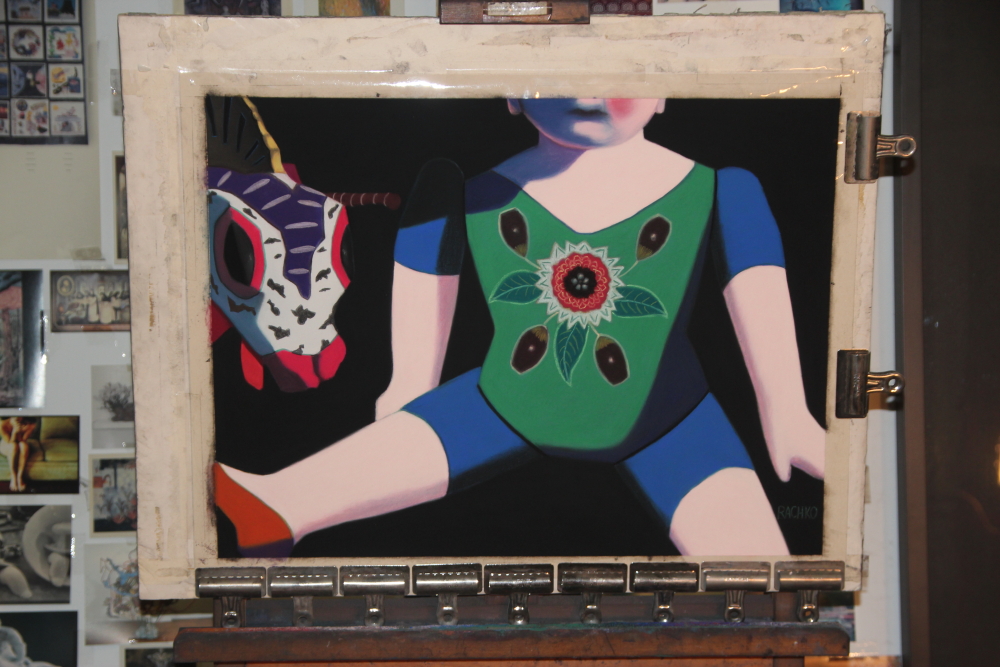
“Alone Together,” soft pastel on sandpaper, 20″ x 26″
A: I am putting finishing touches on a 20″ x 26″ pastel painting called, “Alone Together.”
Comments are welcome!
Q: What are some of your work habits? Do you sit most of the day?
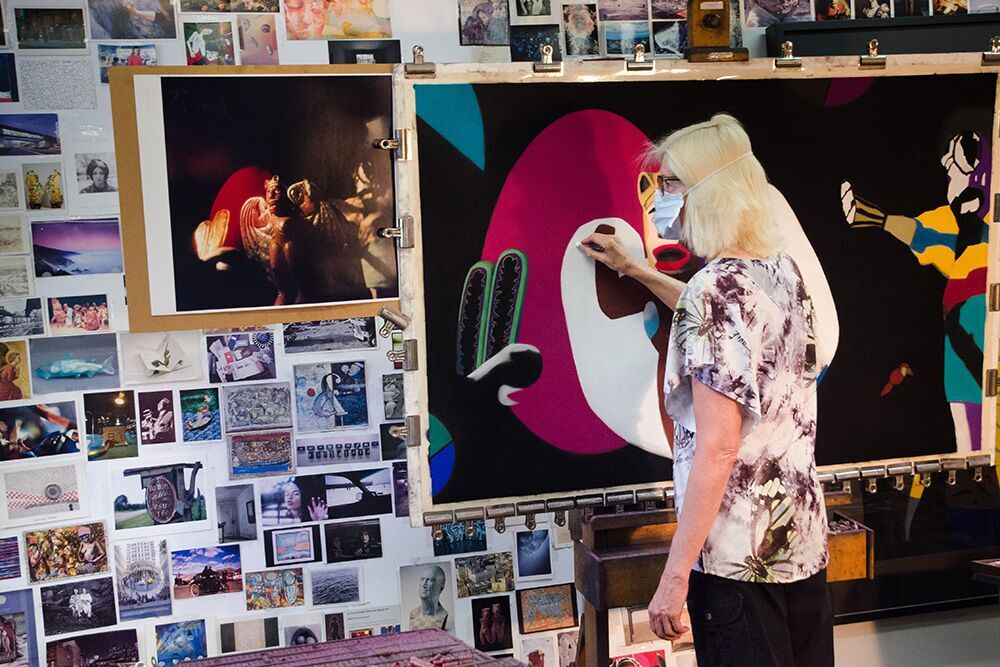
Barbara at work, Photo: Marianne Barcellona
A: No, I never sit while working. I enjoy the physicality of art-making and prefer to stand at my easel so I can back up to see how a painting looks from a distance. I like being on my feet all day and getting some exercise.
In order to accomplish anything, artists need to be disciplined. I work five days a week, taking Wednesdays and Sundays off, and spend seven hours or more in the studio. Daylight is necessary so I work more hours in summer, fewer in winter. I deliberately don’t have a clock on the wall – art-making is independent of timetables – but I tend to work in roughly two-hour blocks before taking a break.
Studio hours are sacrosanct and exclusively for creative work. I keep my computer and mobile devices out of the studio. Art business activities – answering email, keeping up with social media, sending jpegs, writing blog posts, doing interviews, etc. – are mostly accomplished at home in the evenings and on days off.
Comments are welcome!
Q: What’s on the easel today?
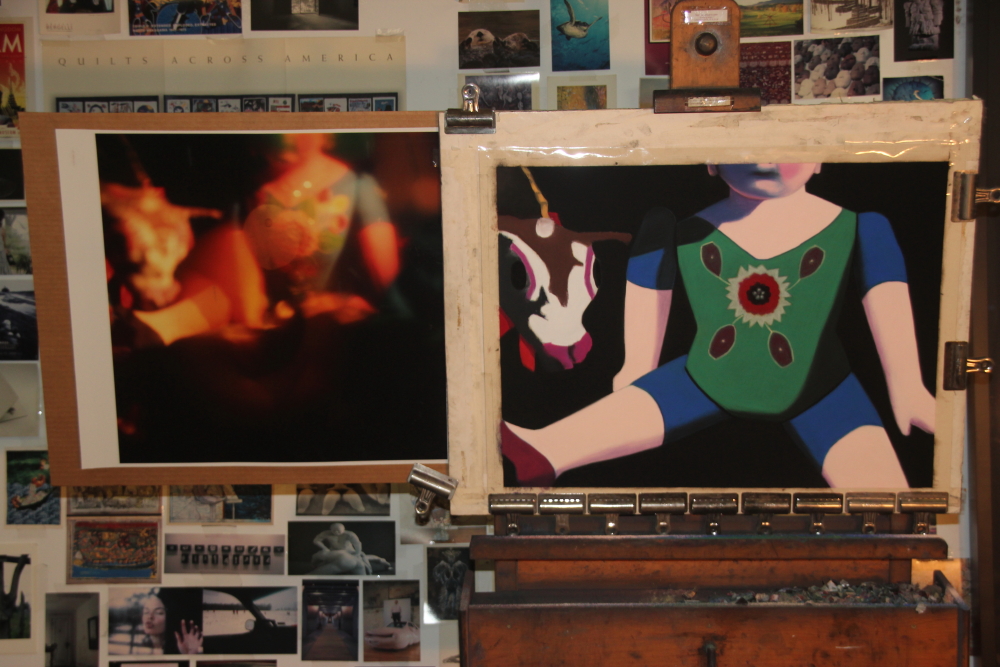
Work in progress
A: I am at work on a small (20″ x 26″) pastel-on-sandpaper painting tentatively called, “Duo.” My previous painting, “Charade,” was a breakthrough of sorts; at least I hope so, because it was such an ordeal to complete!
That’s why I am giving myself a break and making a relatively simple piece now. It’s a way of resting and also of re-filling the well.
Recently something happened that broke my heart: I had to put my beloved cat to sleep. When I look at this image I am reminded of Kit Kat, who was always by my side. He and I were another “Duo” alluded to in the title of this painting.
Comments are welcome!
Pearls from artists* # 173
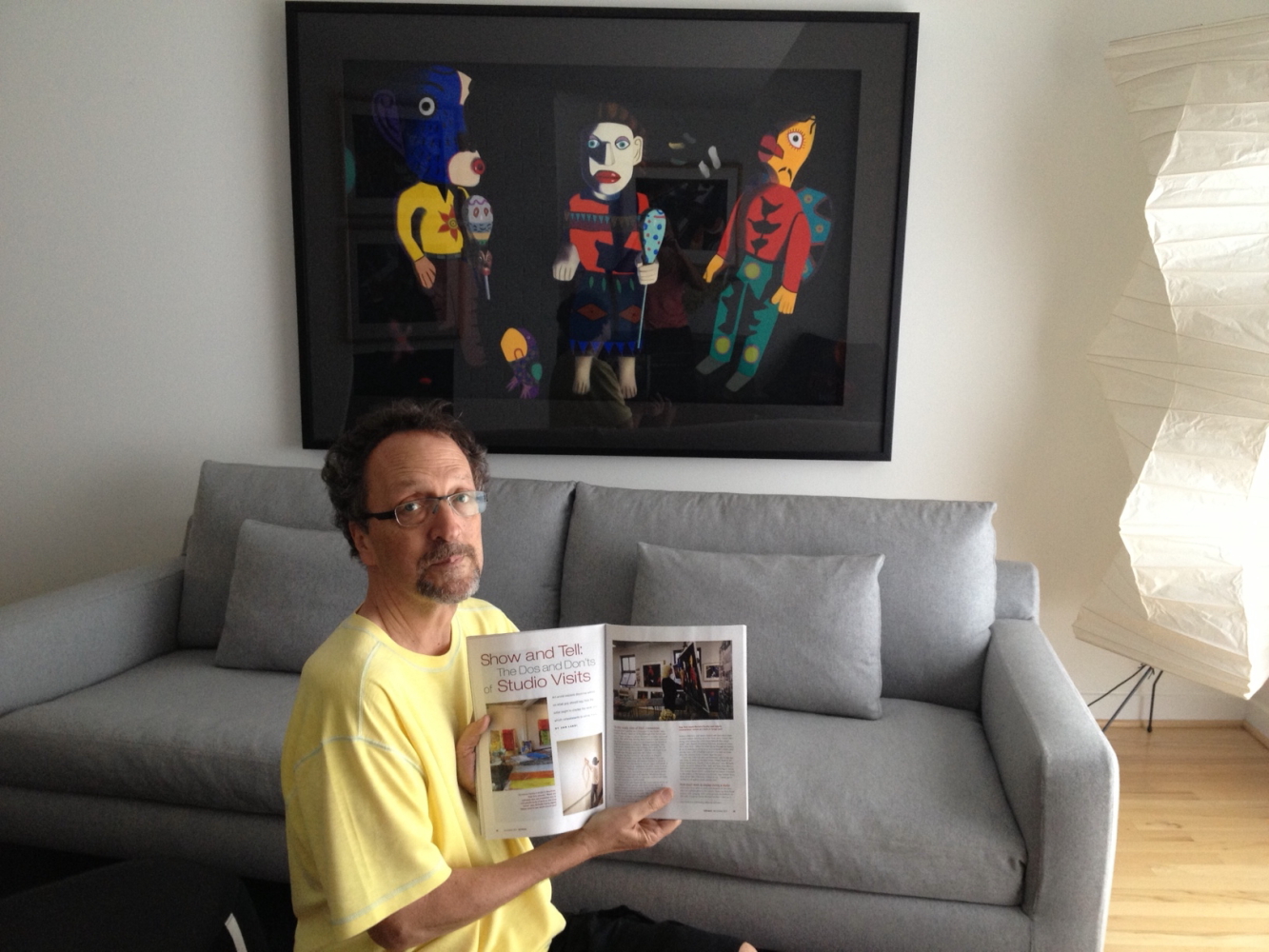
Collector, “False Friends,” and ARTNews article that shows the painting in progress
* an ongoing series of quotations – mostly from artists, to artists – that offers wisdom, inspiration, and advice for the sometimes lonely road we are on.
Artists, by nature, are gamblers. Gambling is a dangerous habit. But whenever you make art, you’re always gambling. You’re rolling the dice on the slim odds that your investment of time, energy, and resources now might pay off later in a big way – that somebody might buy your work, and that you might become successful.
Elizabeth Gilbert in Big Magic: Creative Living Beyond Fear
Comments are welcome!
Q: What’s on the easel today?

Work in progress
A: I continue working on a large pastel painting that combines some of my finds from Oaxaca and Mexico City, Kandy (Sri Lanka), and Panajachel (Guatemala).
Comments are welcome!
Pearls from artists* # 171
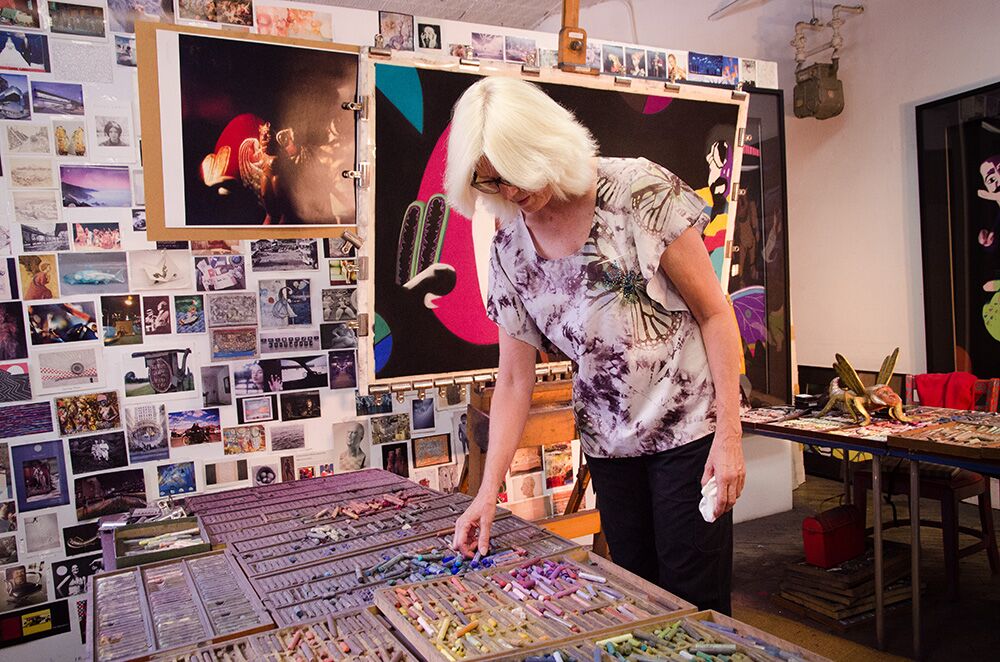
Barbara at work, Photo: Marianne Barcellona
* an ongoing series of quotations – mostly from artists, to artists – that offers wisdom, inspiration, and advice for the sometimes lonely road we are on.
We should do everything calmly and only react emotionally to great works of art or noble deeds. Work quietly and without hurrying. As soon as you begin to sweat and get excited, be careful. Slack painting is the painting of a slacker.
The Journal of Eugene Delacroix, edited by Hubert Wellington
Comments are welcome!
Q: What’s on the easel today?
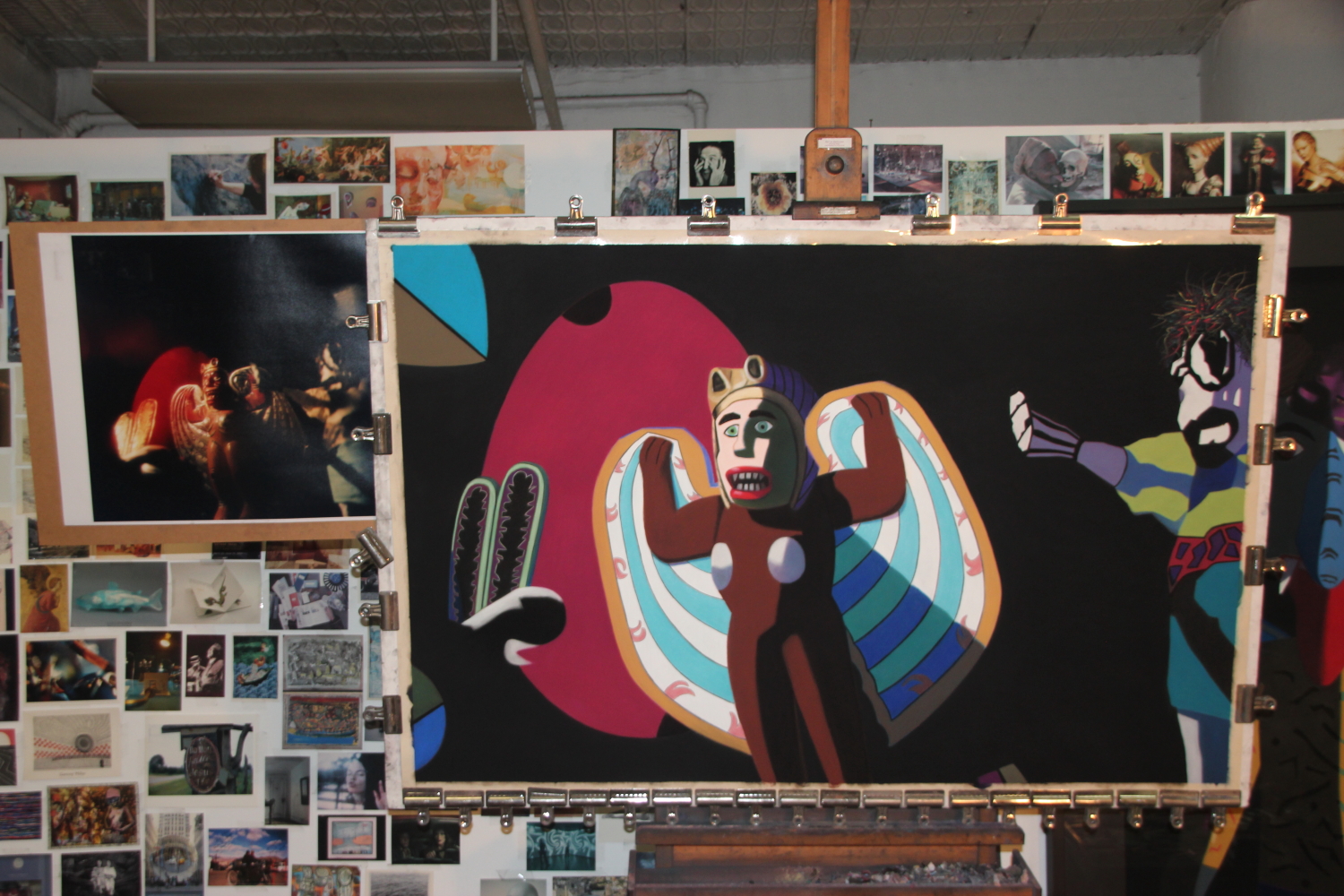
Work in progress
A: I am still working on “Charade.” This pastel painting has given me so many problems! In particular, I have not resolved the figure in the middle. l am not happy with the mouth and the entire figure needs more detail.
Comments are welcome!
Q: What was the first painting you ever sold?
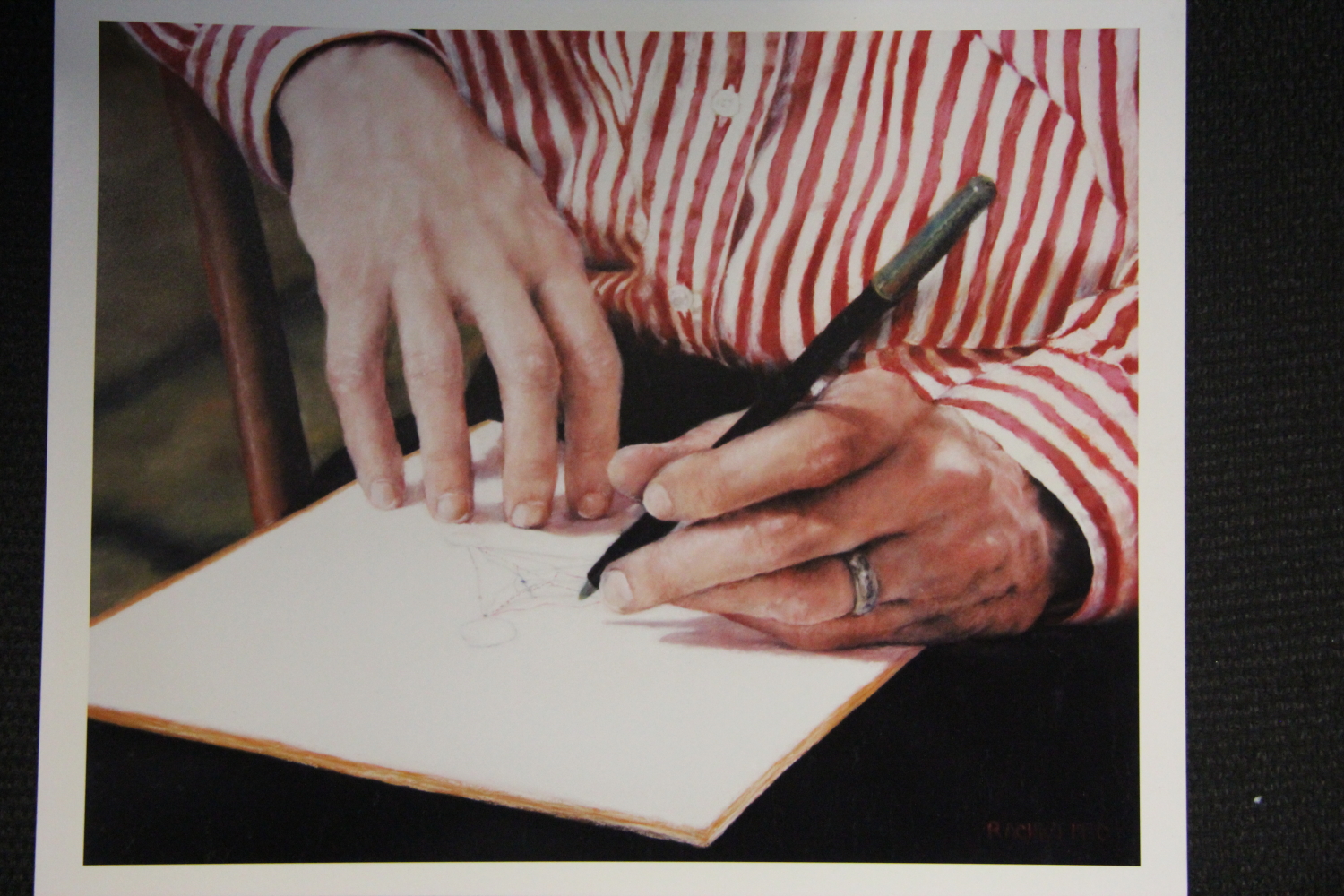
“Bryan’s Ph.D.”, 11″ x 13 1/2″, soft pastel on sandpaper
A: I believe my first sale was “Bryan’s Ph.D.” I made it in 1990 as one of several small paintings created to improve my skills at rendering human hands in pastel. I had recently left the Navy and was building a career as a portrait artist. Bryan, my late husband, was often my model for these studies, not only because it was convenient, but because he had such beautiful hands.
In 1990 Bryan was working on his Ph.D. in economics at the University of Maryland. In this painting he is drawing a diagram that illustrates a theoretical point about “international public goods,” the subject of his research. He was sitting in an old wooden rocking chair in our backyard in Alexandria, VA. I still own the chair and the house. I photographed his hands close-up and then created the painting. I don’t remember which of Bryan’s cameras I used, but it was one that took 35 mm film; perhaps his Nikon F-2. Somewhere I must still have the negative and the original reference photo.
“Bryan’s Ph.D.” is 11″ x 13 1/2″ and it sold for $500 at a monthly juried exhibition at The Art League in Alexandria. I have not seen it since 1990. (Above is a photograph of “Bryan’s Ph.D.” from my portfolio book).
Not long ago the owner contacted me, explaining that she had received the painting as a gift from her now ex-husband. She was selling it because it evoked bitter memories of her divorce. Her phone call was prompted by uncertainty about the painting’s value now. She had a likely buyer and needed to know what price to charge.
I was saddened because I have so many beautiful memories of this particular painting and of an idyllic time in my life with Bryan. He was on a leave of absence from the Pentagon to work on his dissertation, while I was finished with active duty. At last I was a full time artist, busily working in the spare bedroom that we had turned into my first studio.
My conversation with the owner was a reminder that once paintings are let out into the world, they take on associations that have nothing to do with the personal circumstances surrounding their creation. In short, what an artist creates solely out of love, stands a good chance of not being loved or appreciated by others. This is one reason to only sell my work to people I select personally. I ended the telephone conversation hoping that “Bryan’s Ph.D.” fares better in its new home.
Comments are welcome!
Q: Do you have a daily ritual that helps you start working in your studio?

Barbara’s studio
A: In the morning before I start working on a pastel painting, I read for roughly half an hour. Usually I read something art-related; for example, see the books that are quoted on Wednesdays in “Pearls from artists” on this blog.
As I’m reading, I look across at the painting on my easel and soon something becomes apparent, some annoying thing that needs immediate attention. That’s where I will begin. As I’m looking, of course, I’m thinking and the solution to a technical problem becomes obvious. Before I know it, I’m up and working, slowly improving the painting as I go.
Comments are welcome!
Pearls from artists* # 165
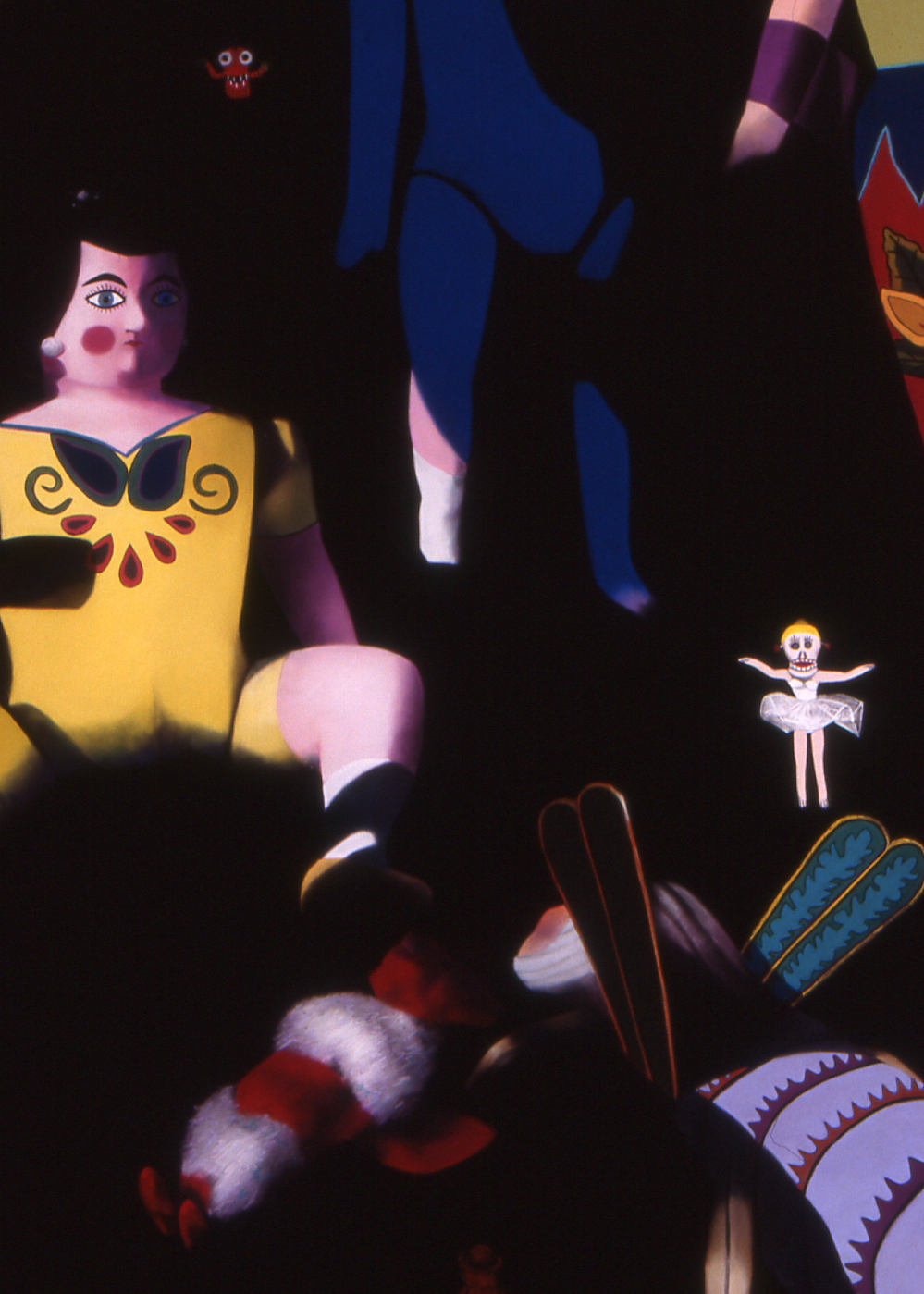
“The Space Between,” soft pastel on sandpaper, 58″ x 38″
* an ongoing series of quotations – mostly from artists, to artists – that offers wisdom, inspiration, and advice for the sometimes lonely road we are on.
When I have painted a fine picture I have not given expression to a thought! That is what they say. What fools people are! They would strip painting of all its advantages. A writer has to say almost everything in order to make himself understood, but in painting it is as if some mysterious bridge were set up between the spirit of the persons in the picture and the beholder. The beholder sees figures, the external appearance of nature, but inwardly he meditates; the true thinking that is common to all men. Some give substance to it in writing, but in so doing they lose the subtle essence. Hence, grosser minds are more easily moved by writers than by painters or musicians. The art of the painter is all the nearer to man’s heart because it seems to be more material. In painting, as in external nature, proper justice is done to what is finite and to what is infinite, in other words, to what the soul finds inwardly moving in objects that are known through the senses alone.
The Journal of Eugene Delacroix edited by Hubert Wellington
Comments are welcome!


 barbararachkoscoloreddust.com