Blog Archives
Q: Why do you make art?

Barbara’s studio
A: This is an excellent question and one I like to revisit because with all the day-to-day frustrations and disappointments that are a normal part of an artist’s life, it is easy to forget what is important.
First, I make art because I have a gift and a desire to share it with others. To not develop, express, and share all that I have to say through my work is unthinkable.
Second, I make art because it is what gives my life direction and purpose. I believe that each human being has his or her own quest, driven by passion, to fulfill a certain duty. Recall Joseph Campbell’s, “The Hero’s Journey.” I need to make art in order to feel that I am living up to my highest potential.
Third, for inexplicable reasons (to me, anyway) soft pastel is an undervalued medium. I fell in love with pastel above all other media and hope to demonstrate that great art can be created with it. This is one of the drives that keeps me steadily working.
Comments are welcome!
Q: Is it possible to sum up your creative practice in seven words?
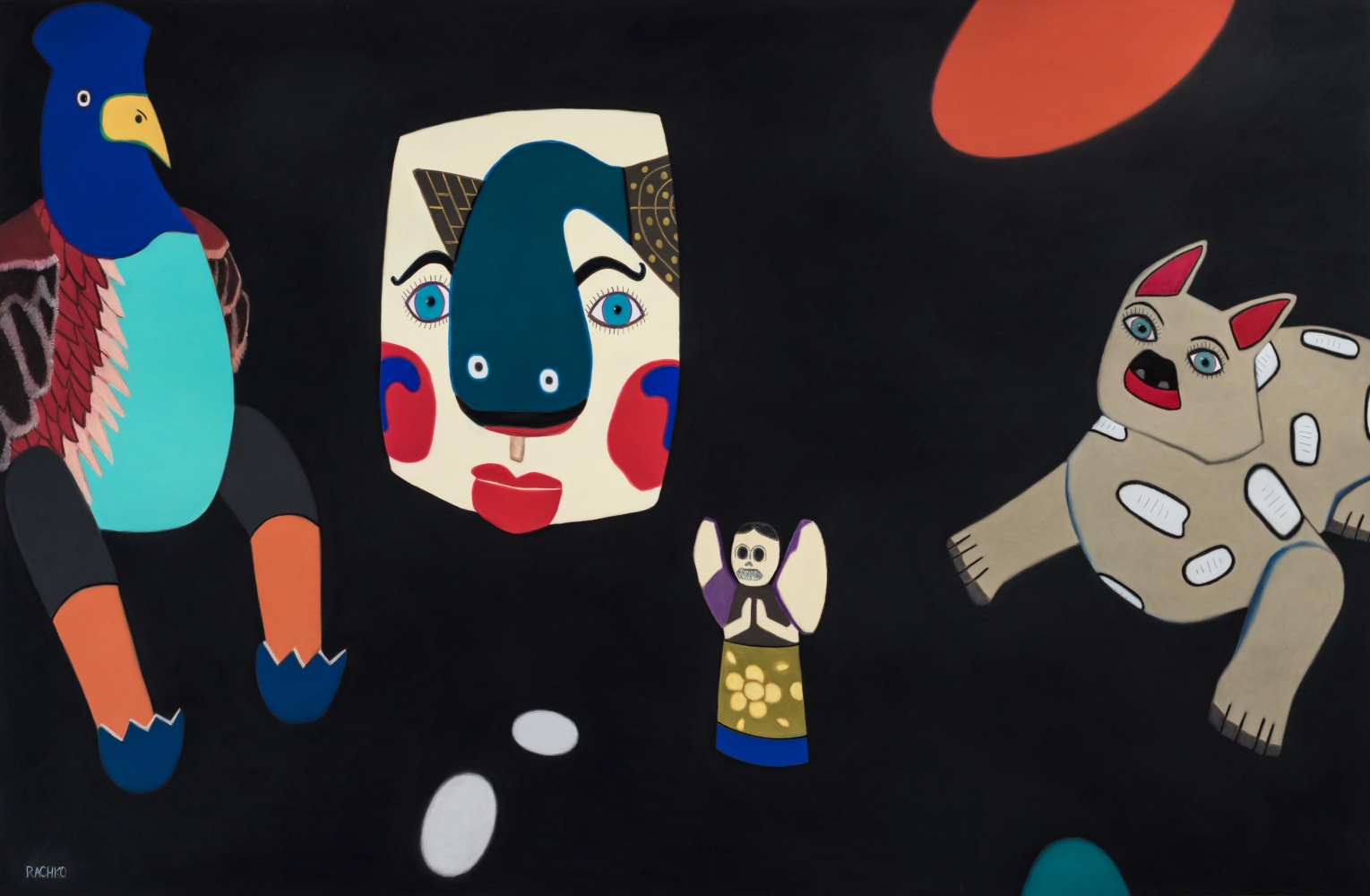
“Motley,” soft pastel on sandpaper, 38″ x 58″
A: Steadily striving to become a better artist. Of course, others determine how successful we have been in this regard.
Comments are welcome!
Q: So much of the art one sees in New York is ugly, but your art is consistently beautiful. Is beauty important to you?
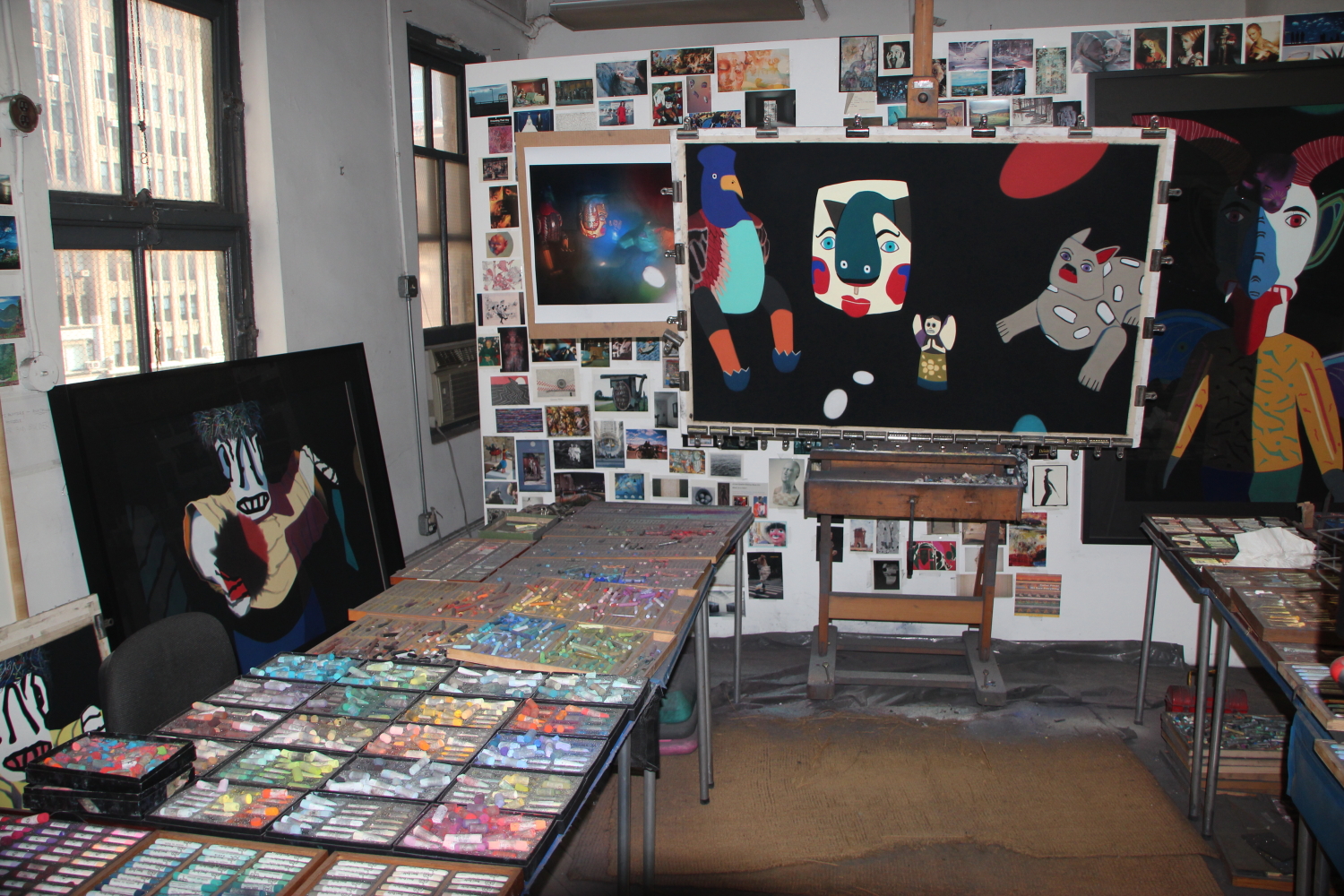
Barbara’s studio
A: Yes, beauty is extremely important. In some art circles it is not fashionable to say so, but I completely agree with the photographer, Robert Adams, who writes, “… the goal of art is Beauty.” I’ll leave it to others to decide if this quality is reached in my pastel paintings, but I certainly strive towards it.
Comments are welcome!
Q: Do you have any essential words that you live by?
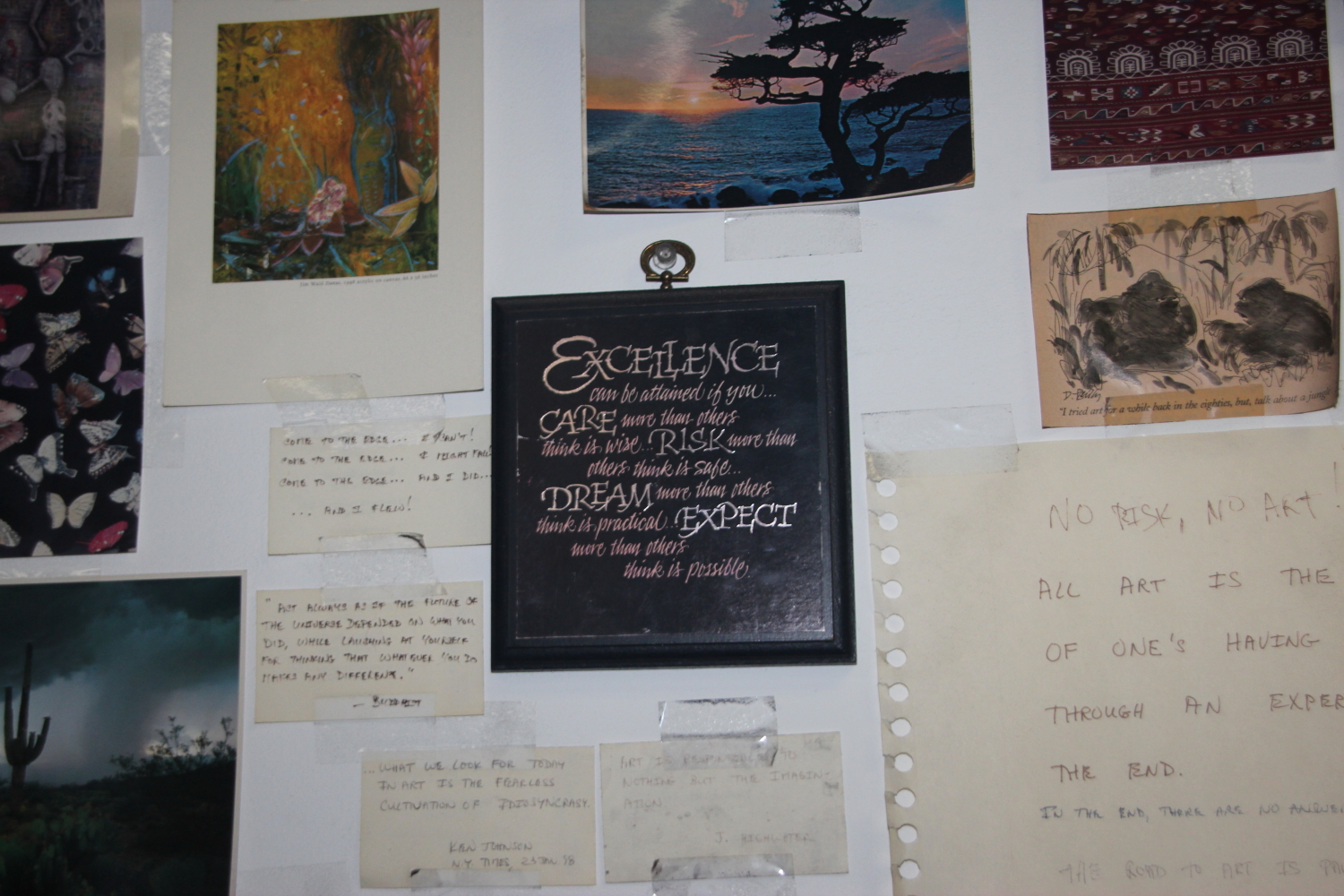
Studio wall
A: I certainly do! When I left the active duty Navy in 1989, my co-workers threw a farewell party. One of the parting gifts I received was a small plaque from Tina Greene, a young enlisted woman whom I had supervised. The words on the plaque deeply resonated with me, since I was about to make a significant, risky, and scary career change. It was the perfect gift for someone facing the uncertainty of an art career.
Many years later Tina’s plaque is still a proud possession of mine. It is hanging on the wall behind my easel, to be read every day as I work. It says:
“Excellence can be attained if you…
Care more than others think is wise…
Risk more than others think is safe…
Dream more than others think is practical…
Expect more than others think is possible.”
Comments are welcome!
Pearls from artists* # 110
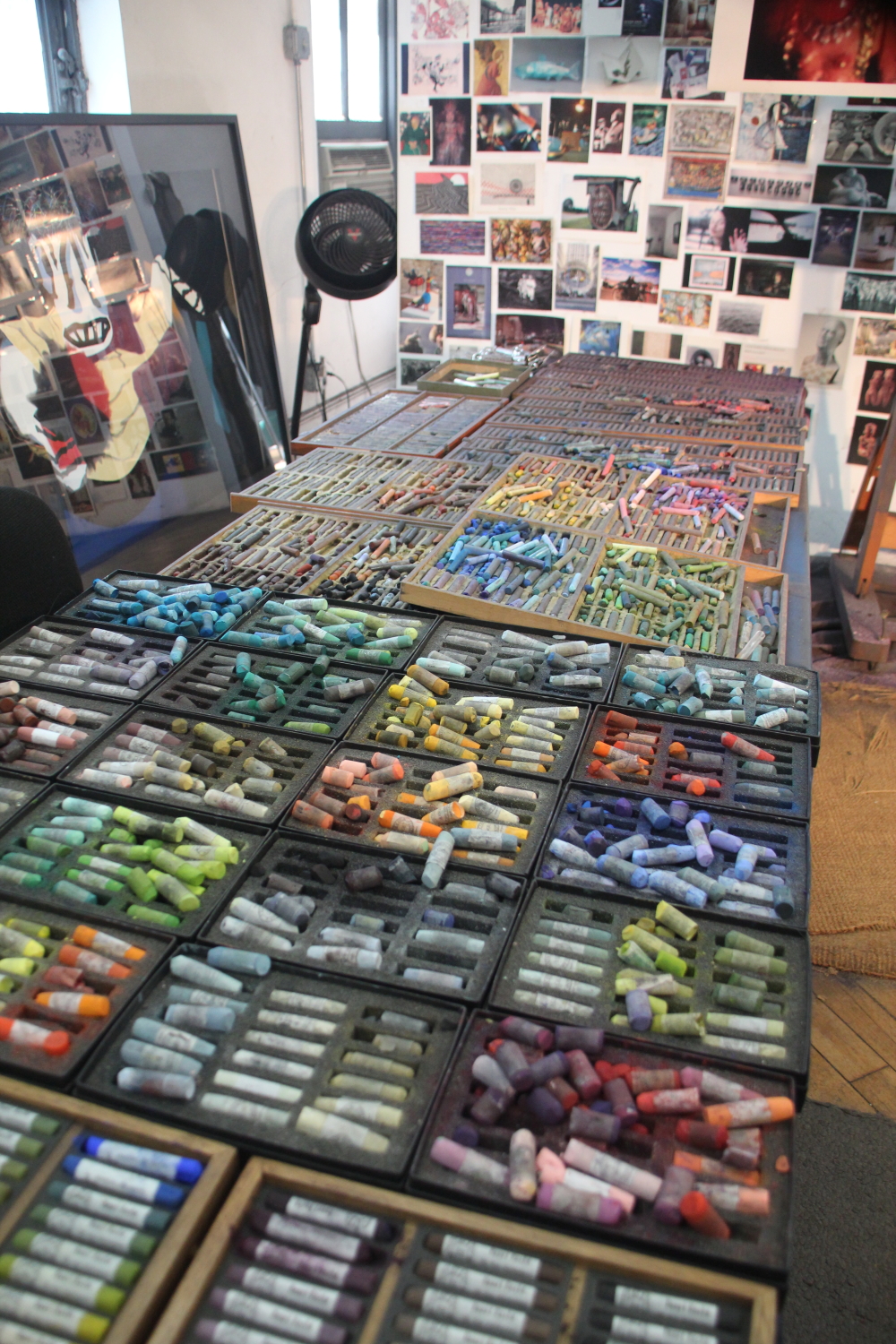
Barbara’s studio
* an ongoing series of quotations – mostly from artists, to artists – that offers wisdom, inspiration, and advice for the sometimes lonely road we are on.
A well-lived life should be worth attention. At the very least, you should find your own story engaging. In presenting yourself to yourself and others, then, you should keep in mind the rules that good playwrights follow. Like a good character – you should be making choices that are explicable – choices that appear to be coming from a mind in working order. Your choices should be reasonably coherent with each other, also, so as to support the thought that there is a real person – you – behind those choices.
Paul Woodruff, philosopher, quoted in What’s the Story: Essays about art, theater, and storytelling by Anne Bogart
Comments are welcome!
Pearls from artists* # 85
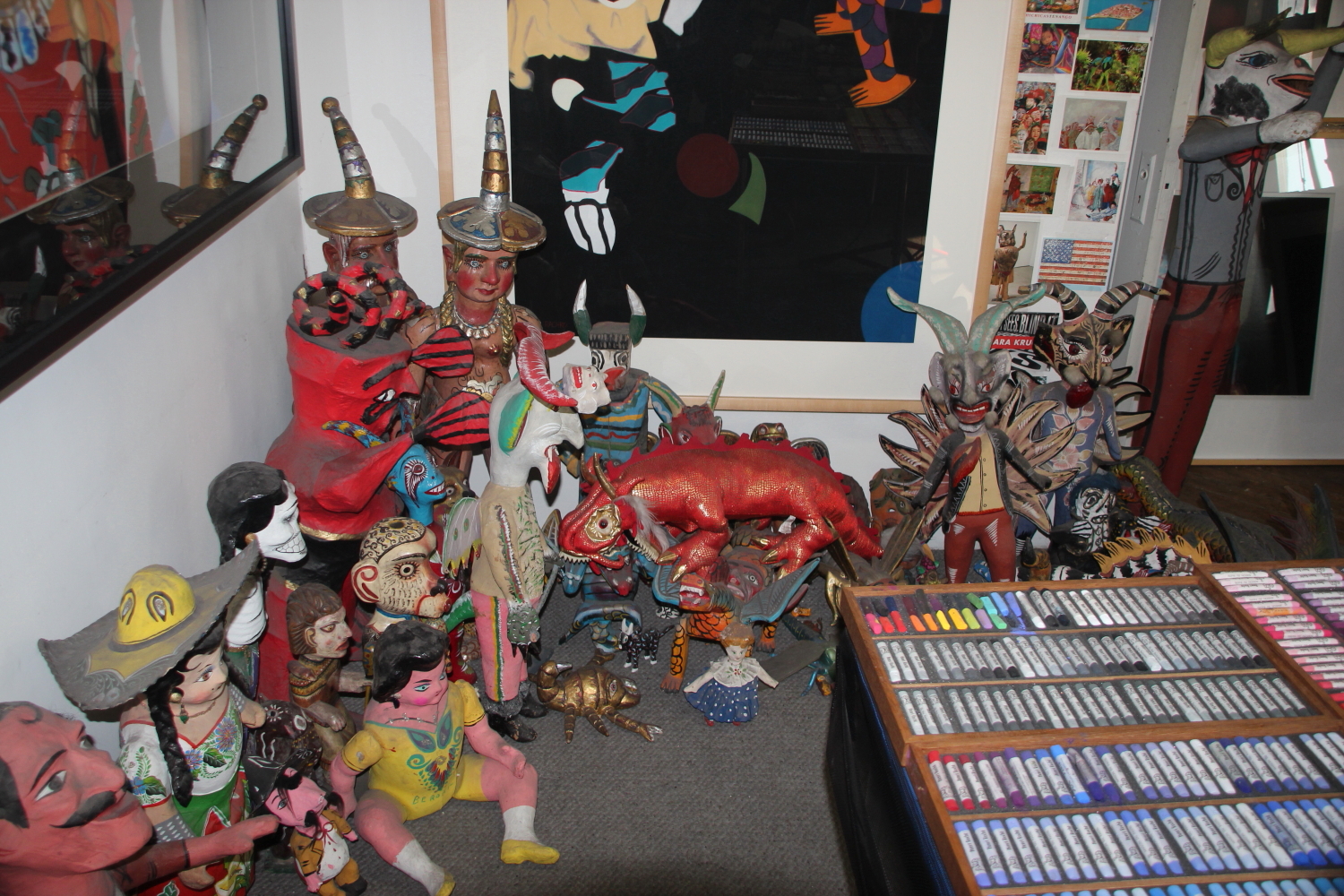
Studio
* an ongoing series of quotations – mostly from artists, to artists – that offers wisdom, inspiration, and advice for the sometimes lonely road we are on.
Credo
I believe in art.
I do not believe in the “art world” as
it is today.
I do not believe in art as a commodity.
Great art is in exquisite balance. It is
restorative.
I believe in the energy of art, and through
the use of that energy, the artist’s ability
to transform his or her life and, by ex-
ample, the lives of others.
I believe that through our art, and through
the projection of transcendent imagery, we
can mend and heal the planet.
Audrey Flack in Art & Soul: Notes on Creating
Comments are welcome!
Pearls from artists* # 63

Untitled, chromogenic print, 24″ x 24,” edition of 5
* an ongoing series of quotations – mostly from artists, to artists – that offers wisdom, inspiration, and advice for the sometimes lonely road we are on.
The artist’s job is to get in touch with the dark places of the soul and then shed light there. Sharing the process with others is the point. Within the context of our post-Cold War, post-9/11 climate, shedding light in newly fecund dark places is a valuable activity. The dark places of the soul that haunt our dreams are understandably matched by a tendency to shut out the issues with the busy work of the daylight hours. But without looking into those dark places, as Carl Jung suggested, we will lose touch with our essential humanity.
Anne Bogart, and then, you act: making art in an unpredictable world
Comments are welcome!
Pearls from artists* # 38
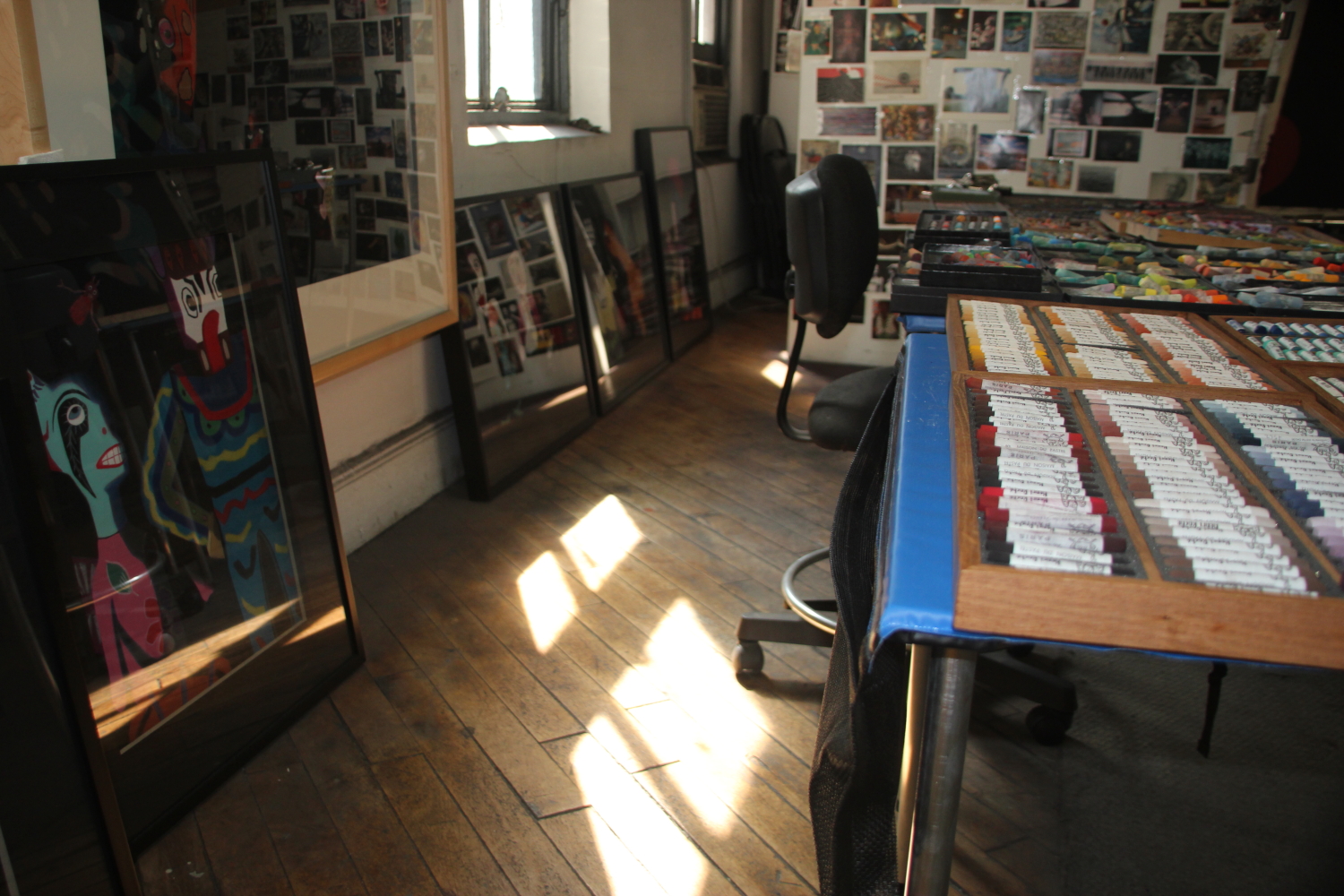
Morning sun at the studio
* an ongoing series of quotations – mostly from artists, to artists – that offers wisdom, inspiration, and advice for the sometimes lonely road we are on.
It’s one thing to be intelligent and it’s another to enjoy thinking, to relish the time spent alone with one’s thoughts, to happily muse, imagine, and analyze. Artists, who are introspective by nature, typically enjoy spending time in this fashion and may even prefer solitude to the company of others. Able to work by themselves, artists are often lost in a state of dreamy thoughtfulness of the sort described by the painter Hans Hofmann when he wrote, ” The first red spot on a white canvas may at once suggest to me the meaning of ‘morning redness,’ and from there I dream further with my color.” Artists are not introspective, thoughtful, lost in time and space because they wish to ignore the world. They’re introspective because out of that attitude artistic answers flow.
Eric Maisel in A Life in the Arts
Comments are welcome!
Pearls from artists* # 35
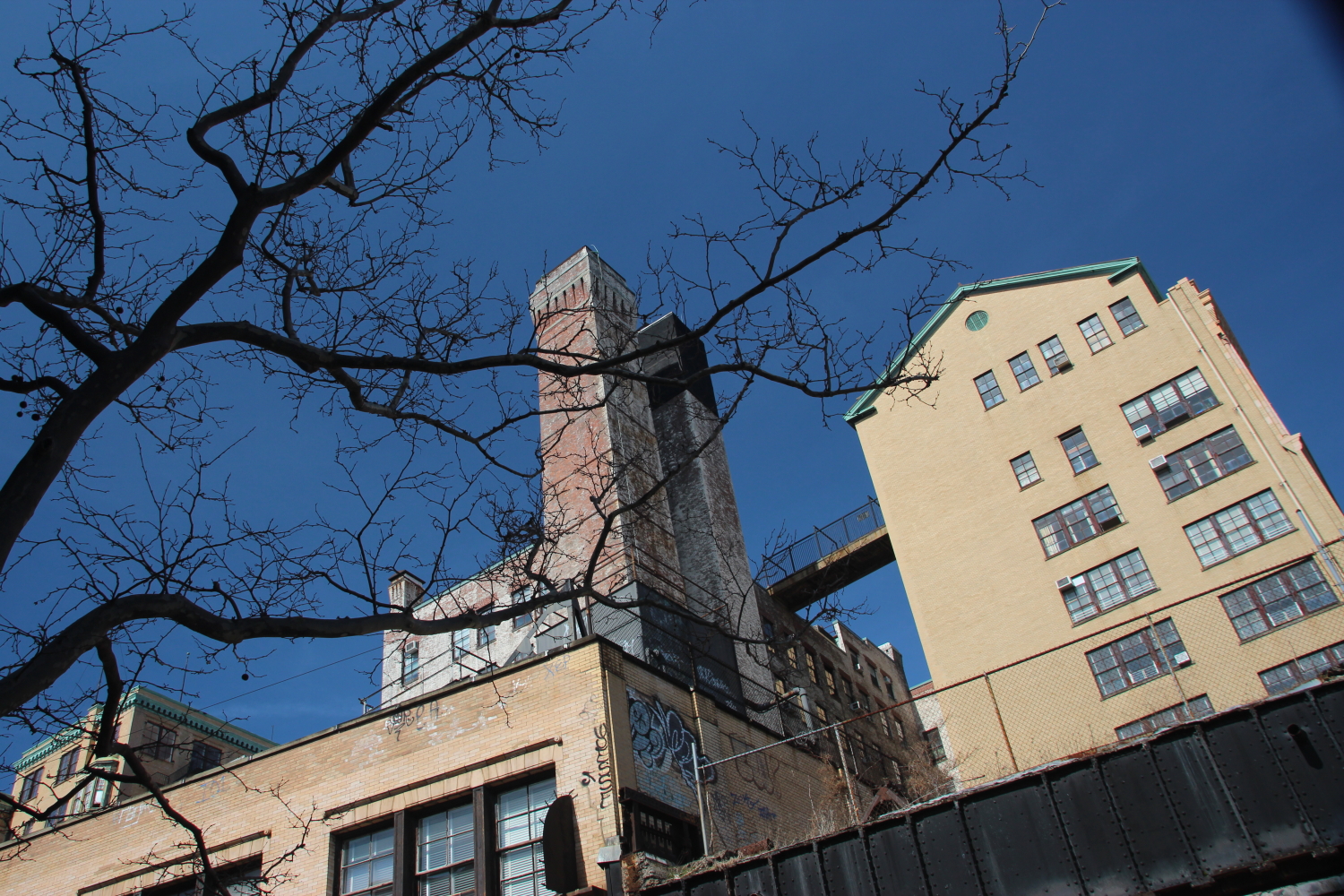
Westbeth, NYC
* an ongoing series of quotations – mostly from artists, to artists – that offers wisdom, inspiration, and advice for the sometimes lonely road we are on.
An individual who has committed himself to art and now wrestles within it, having given up everything else, has also become strict, you see. Such a person is more likely to warn off others rather than to beckon them to enter into a realm of the most tremendous demands and indescribable sacrifices. And for someone sitting at his desk, behind closed doors, matters are still relatively simple: at least he has to deal only with himself. But an actor, even when his work originates in the purest experiences of his being, stands in the open and performs his work in the open where he is exposed to all the influences, detractions, disturbances, and even hostilities that originate in his colleagues and his audience and that interrupt, distract, and split him off. For him things are more difficult than for anyone else; above all, he needs to lure success and to base his actions on it. And yet what misery results if this new alignment leads him to abandon the inner direction that had driven him into art in the first place. He seems to have no self; his job consists in letting others dictate selves to him. And the audience, once it has accepted him, wants to preserve him within the limits where it finds entertainment; and yet his achievement depends entirely upon his capacity to maintain an interior constancy through all kinds of changes, blindly, like a madman. Any momentary weakness toward success is as sure to doom him as giving in and drawing on applause as a precondition for their creation spells doom for the painter or poet.
Ulrich Baer in The Wisdom of Rilke
Comments are welcome!
Q: Your “Gods and Monsters” series consists of tableaux of Mexican and Guatemalan figures that are photographed in a way that blurs certain elements to abstraction while others are in clear focus. Can you please speak more about this work?

Untitled chromogenic print, 24″ x 24″, edition of 5
A: When I depict the Mexican and, more recently, Guatemalan figures in my pastel-on-sandpaper paintings, they are hard-edged, vibrant, and in-your-face. That’s a result of the way I work in pastel. I slowly and meticulously build up layers of pigment, blend them with my fingers, continually refine and try to find the best, most eye-popping colors. It’s a very slow process that takes months of hard work. An aside… One frustration I have as an artist – I am hardly unique in this – is that my audience only sees the finished piece and they look at it for perhaps ten seconds. They rarely think about how their ten-second experience took me months to create!
In 2002 when I began photographing these figures, I wanted to take the same subject matter and give it an entirely different treatment. So these images are deliberately soft focus, dreamy, and mysterious. I use a medium format camera and shoot film. I choose a narrow depth of field. I hold gels in front of the scene to blur it and to provide unexpected areas of color. Even as a photographer I am a colorist.
I want this work to surprise me and it does, since I don’t usually know what images I will get. Often I don’t even look through the viewfinder as I position the camera and the gels and click the shutter. I only know what I’ve shot after I’ve seen a contact sheet, usually the next day.
The “Gods and Monsters” series began entirely as a reaction to my pastel paintings. The latter are extremely meticulous and labor intensive. At a certain point in the process I know more or less what the finished painting will look like, but there are still weeks of slow, laborious detail work ahead. So my photographic work is spontaneous, serendipitous, and provides me with much-needed instant gratification. I find it endlessly intriguing to have two diametrically opposed ways of working with the same subject.
Comments are welcome!


 barbararachkoscoloreddust.com