Blog Archives
Q: How do you feel about donating your work to auctions?
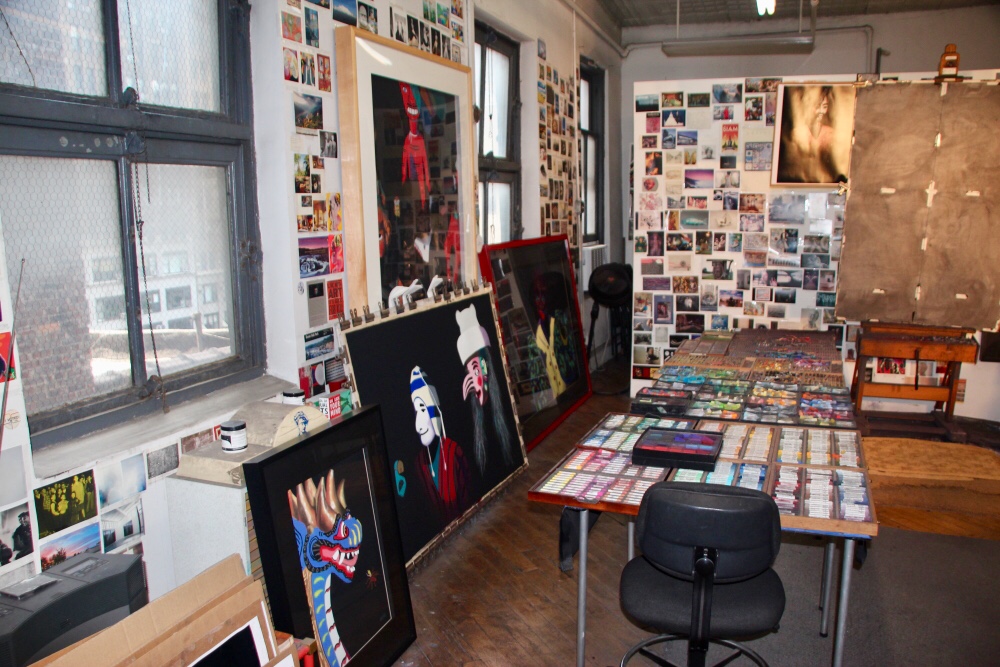
Studio with work in progress
A: Generally, it depends on who is doing the asking. If it’s an organization that has been supportive of my work, I am pleased to help with fundraising. If the organization and I have never connnected before, their out-of-the-blue request sometimes feels disrespectful. Artists invest decades, vast amounts of money, and plenty of blood, sweat, and tears to become the skilled creators that we are. And a New York artist’s overhead is considerable. I know of no artists who create their hard-fought work only to give it away.
Under certain conditions, however, I will participate. Here is my response to a recent donation request.
Dear…
Thank you for contacting me. Certainly your organization sounds worthwhile.
However, you may be unaware that artists may deduct ONLY the cost of materials when we give our work to auctions. I suggest that you ask one of your supporters to buy a pastel painting and donate it next year (there is a one-year waiting period for collectors to take this tax deduction). Then we have a win-win-win! I get paid, the collector/donor gets to enjoy owning my beautiful work for a year AND take a tax deduction for the full amount that he/she paid for it. Plus, your organization gets to sell my painting at next year’s auction.
Don’t you agree this is a better approach for everyone involved?
Sincerely…
Comments are welcome!
Pearls from artists* # 254

“Survivors,” soft pastel on sandpaper, 20″ x 26″ image, 28 1/2″ x 35″ framed
* an ongoing series of quotations – mostly from artists, to artists – that offers wisdom, inspiration, and advice for the sometimes lonely road we are on.
An artist learns by repeated trial and error, by an almost moral instinct, to avoid the merely or the confusingly decorative, to eschew violence where it is a fraudulent substitute for power, to say what he has to say with the most direct and economical means, to be true to his objects, to his materials, to his technique, and hence, by a correlated miracle, to himself.
Ian Roberts in Creative Authenticity: 16 Principles to Clarify and Deepen Your Artistic Vision
Comments are welcome!
Q: Besides your art materials is there something you couldn’t live without in your studio?
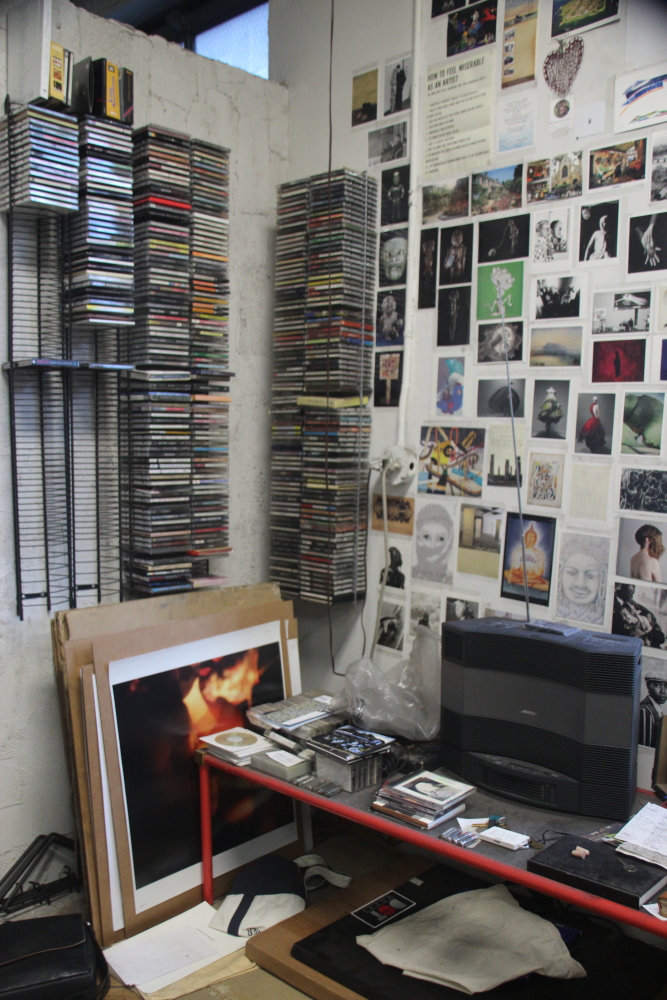
Barbara’s studio
A: I would not want to work without music. Turning on the radio or the cd player is part of my daily ritual before heading over to the easel. (Next I apply barrier cream to my hands to prevent pastel being absorbed into my skin, put on a surgical mask, etc.). I generally listen to WFUV, WBGO, or to my cd collection while I’m working.
Listening and thinking about song lyrics is integral to my art-making process. How this works exactly may be a topic to explore in a future blog post.
Comments are welcome!
Q: How do you decide how much to charge for your paintings?

Barbara’s studio
A: What to charge for my work is a complex question. The prices of my pastel paintings take into account many tangible and intangible factors. Here are a few:
Sales history.
My thirty-year-long exhibition history.
The costs of maintaining a studio in New York. My overhead goes up annually, but I do not raise prices every year to offset these expenses.
The countless hours of labor, cost of art materials, framing, photography, transportation, foreign travel, etc. that go into creating a painting.
Costs for marketing, social media, advertising, website design and upkeep, ongoing education, etc.
Somewhat less quantifiable factors such as my reputation as an artist, the real demand for my work, goodwill, the fact that I work full-time as a professional artist, etc.
Comments are welcome!
Pearls from artists* # 82
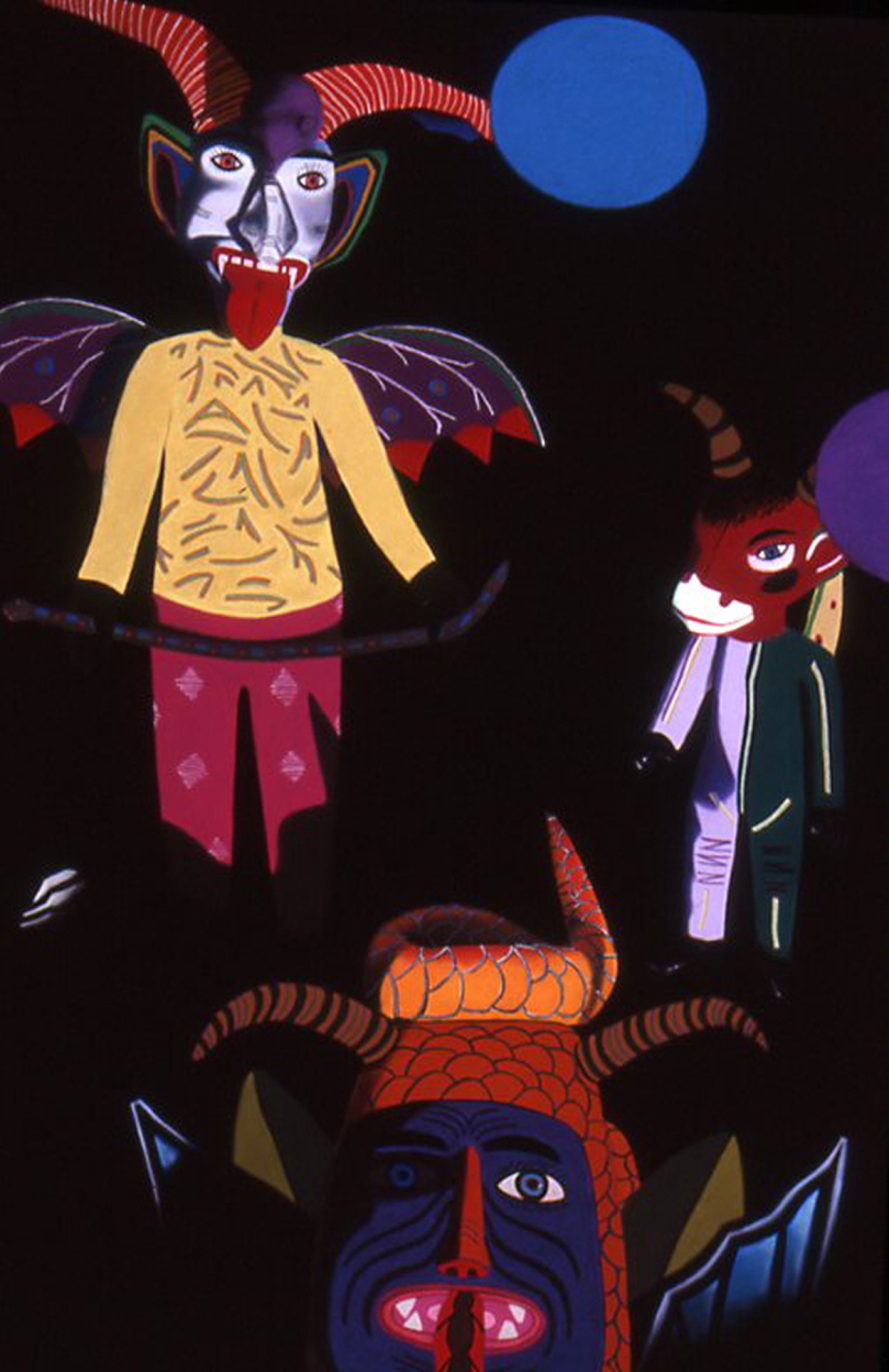
“The Sovereign,” soft pastel on sandpaper, 58″ x 38″
* an ongoing series of quotations – mostly from artists, to artists – that offers wisdom, inspiration, and advice for the sometimes lonely road we are on.
Art isn’t psychology. For one thing art deals in images, not language. Images precede language and are closer to feelings. They summon feelings before they’re named and categorized, when they’re still fresh and sometimes hard to recognize or identify.
For another thing, to translate his vision an artist uses materials that are, for lack of a better word, alchemical. Paint, for example, has this wonderful, mysterious quality – a smell and a sensuous, velvety feel and an ability to hold color and light – that unlocks and speeds up one’s creative metabolism. And paint captures my every impulse – from my broadest conceptions to the tiniest ticks and tremors of my wrist.
There are literally no words to describe what occurs when an image suddenly and unexpectedly appears on the canvas. Sometimes it’s serendipity, the result of a fortunate brushstroke. Sometimes I think it has to do with the inherent qualities of paint, or the slickness of a surface, or the fullness or acuity of a brush. And sometimes when I’ve got a good rhythm going and everything comes together, I feel as though it produces the purest expression of who I am and what I am and how I perceive the world.
Eric Fischl and Michael Stone in Bad Boy: My Life on and off the Canvas
Comments are welcome!
Pearls from artists* # 8
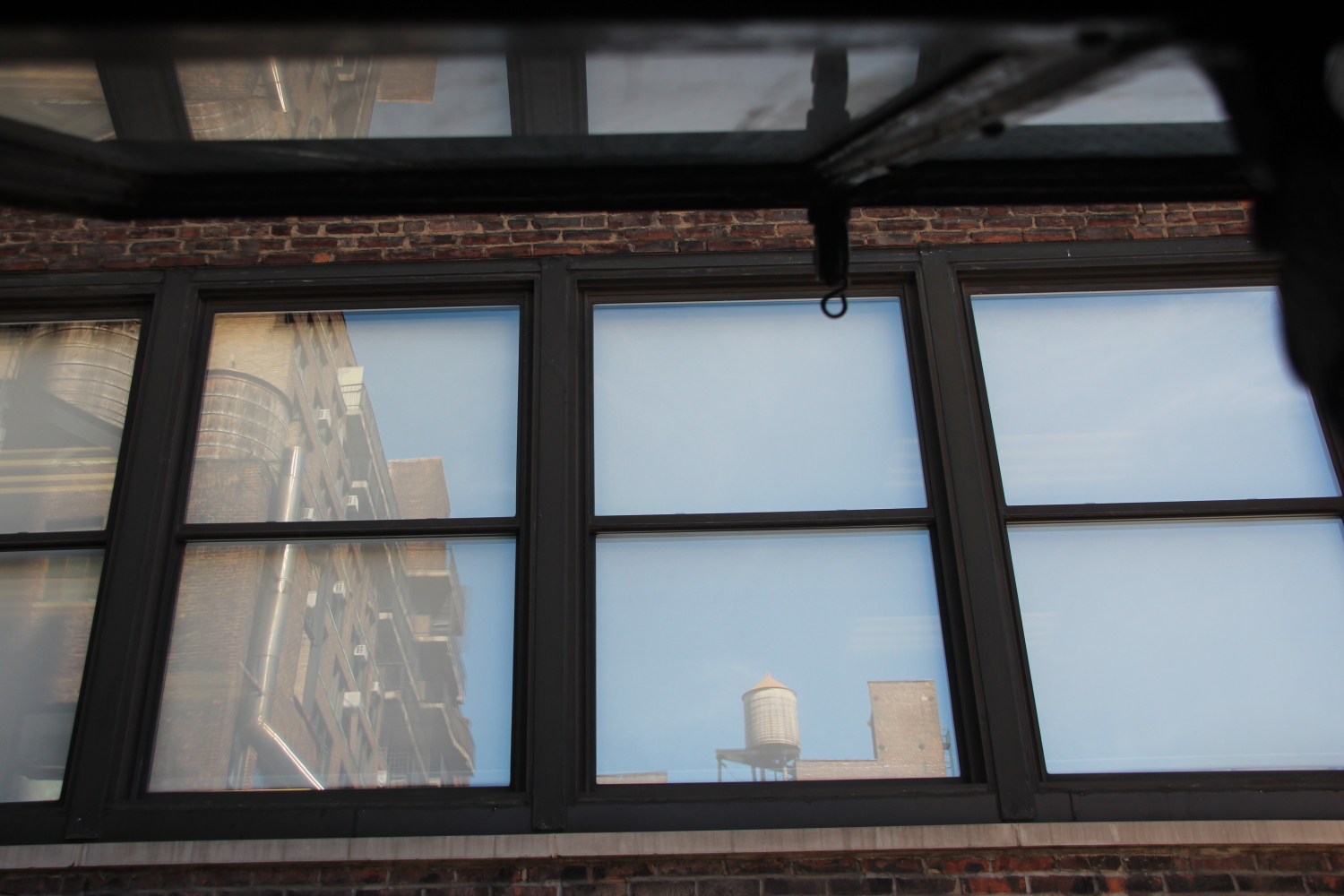
A view from the studio
* an ongoing series of quotations – mostly from artists, to artists – that offers wisdom, inspiration, and advice for the sometimes lonely road we are on.
Here is a fairly sober version of what happens in the small room between the writer and the work itself. It is similar to what happens between a painter and the canvas.
First you shape the vision of what the projected work of art will be. The vision, I stress, is no marvelous thing: it is he work’s intellectual structure and aesthetic surface. It is a chip of mind, a pleasing intellectual object. It is a vision of the work, not of the world. It is a glowing thing, a blurred thing of beauty. Its structure is at once luminous and translucent; you can see the world through it. After you receive the initial charge of this imaginary object, you add to it at once several aspects, and incubate it most gingerly as it grows into itself.
Many aspects of the work are still uncertain, of course; you know that. You know that if you proceed you will change things and learn things, that the form will grow under your hands and develop new and richer lights. But that change will not alter the vision or its deep structures; it will only enrich it. You know that and you are right.
But you are wrong if you think that in the actual writing or in the actual painting, you are filling in the vision. You cannot fill in the vision. You cannot even bring the vision to light. You are wrong if you think that you can in any way take the vision and tame it to the page. The page is jealous and tyrannical; the page is made of time and matter; the page always wins. The vision is not so much destroyed, exactly, as it is, by the time you have finished, forgotten. It has been replaced by this changeling, this bastard, this opaque lightless chunky ruinous work.
Here is how it happens. The vision is, sub specie aeternitatis, a set of mental relationships, a coherent series of formal possibilities. In the actual rooms of time, however, it is a page or two of legal paper filled with words and questions; it is a terrible diagram, a few books’ names in a margin, an ambiguous doodle, a corner folded down in a library book. There are memos from the thinking brain to witless hope.
Nevertheless, ignoring the provisional and pathetic nature of these scraps, and bearing the vision itself in mind – having it before your sights like the very Grail – you begin to scratch out the first faint marks on the canvas, on the page. You begin the work proper. Now you have gone and done it. Now the thing is no longer a vision: it is paper.
Words lad to other words and down the garden path. You adjust the paints’ values and hues not to the world, not to the vision, but to the rest of the paint. The materials are stubborn and rigid; push is always coming to shove. You can fly – you can fly higher than you thought possible – but you can never get off the page. After every passage another passage follows, more sentences, more everything on drearily down. Time and materials hound the work; the vision recedes ever farther into the dim realms.
And so you continue the work, and finish it. Probably by now you have been forced to toss the most essential part of the vision. But this is a concern for mere nostalgia now: for before your eyes, and stealing your heart, is this fighting and frail finished product, entirely opaque. You can see nothing through it. It is only itself, a series of well-known passages, some colored paint. Its relationship to the vision that impelled it is the relationship between any energy and any work, anything unchanging to anything temporal.
The work is not the vision itself, certainly. It is not the vision filled in, as if it had been a coloring book. It is not the vision reproduced in time; that were impossible. It is rather a simulacrum and a replacement. It is a golem. You try – you try every time – to reproduce the vision, to let your light so shine before men. But you can only come along with your bushel and hide it.
Annie Dillard, The Writing Life
Comments are welcome.
Pearls from artists* # 4

At work on “False Friends”; photo by Diana Feit
Given a small kernel of reality and any measure of optimism, nebulous expectations whisper to you that the work will soar, that it will become easy, that it will make itself. And verily, now and then the sky opens and the work does make itself. Unreal expectations are easy to come by, both from emotional needs and from the hope or memory of periods of wonder. Unfortunately, expectations based on illusion lead almost always to disillusionment.
Conversely, expectations based on the work itself are the most useful tool the artist possesses. What you need to know about the next piece is contained in the last piece. The place to learn about your materials is in the last use of your materials. The place to learn about your execution is in your execution. The best information about what you love is in your last contact with what you love. Put simply, your work is your guide: a complete, comprehensive, limitless reference book on your work. There is no other such book, and it is yours alone. It functions this way for no one else. Your fingerprints are all over your work, and you alone know how you got there. Your work tells you about your working methods, your discipline, your strengths and weaknesses, your habitual gestures, your willingness to embrace.
The lessons you are meant to learn are in your work. To see them, you need only look at the work clearly – without judgment, without need or fear, without wishes or hopes. Without emotional expectations. Ask your work what it needs, not what you need. Then set aside your fears and listen, the way a good parent listens to a child.
David Bayles and Ted Orland, Art & Fear
Comments are welcome.


 barbararachkoscoloreddust.com