Blog Archives
Q: You earned a degree in psychology. From that I’m sure you gained an in-depth understanding of humans and their stories. How has that influenced your art?
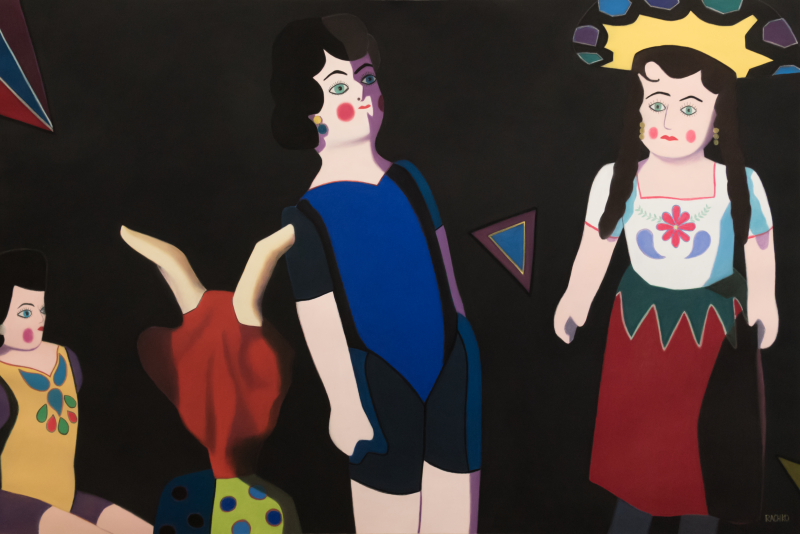
“Conundrum,” soft pastel on sandpaper, 38″ x 58″
A: I suppose there must be some deep connection, but I have never seen much of a correspondence between my psychology degree and the art I create. As an undergraduate psych major at the University of Vermont, my intent was to become a clinical psychologist. However, by the time I received my BA, I was no longer interested in making that my life’s work.
Comments are welcome!
Q: Do you think artists should post prices on their websites?
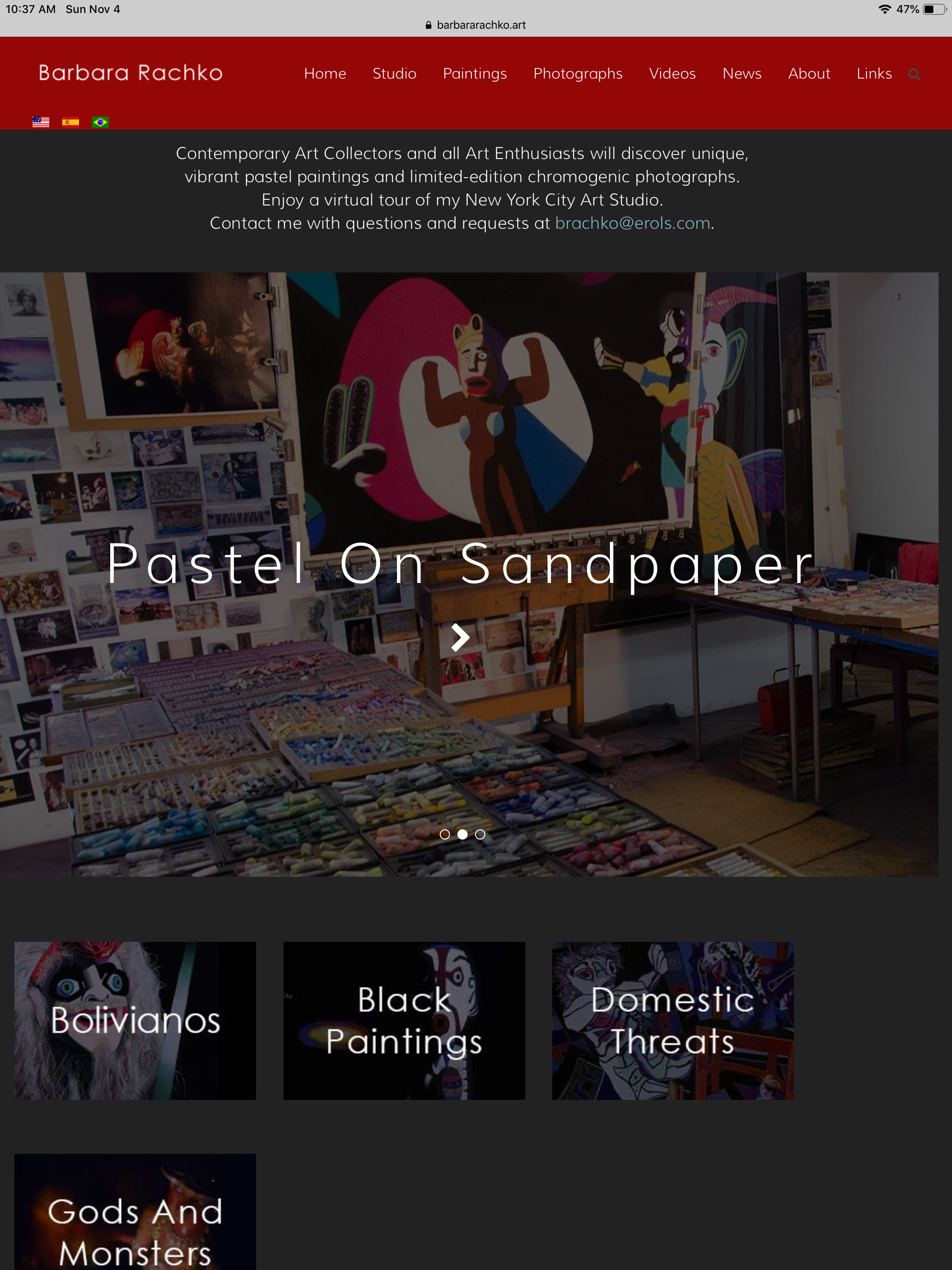
Screenshot of Barbara’s homepage
A: It depends on what the purpose and objectives of a particular artist’s website are. I use my website to document all of the work, the process, exhibitions, and press in one central place. I do not list prices. If someone is interested in more information, including prices, they can easily email or call me.
I have two assistants who help with social media and my online presence continues to grow. Many of my available pastel paintings are included on commercial sites like Artsy. Current prices are listed there.
Comments are welcome!
Pearls from artists* # 265
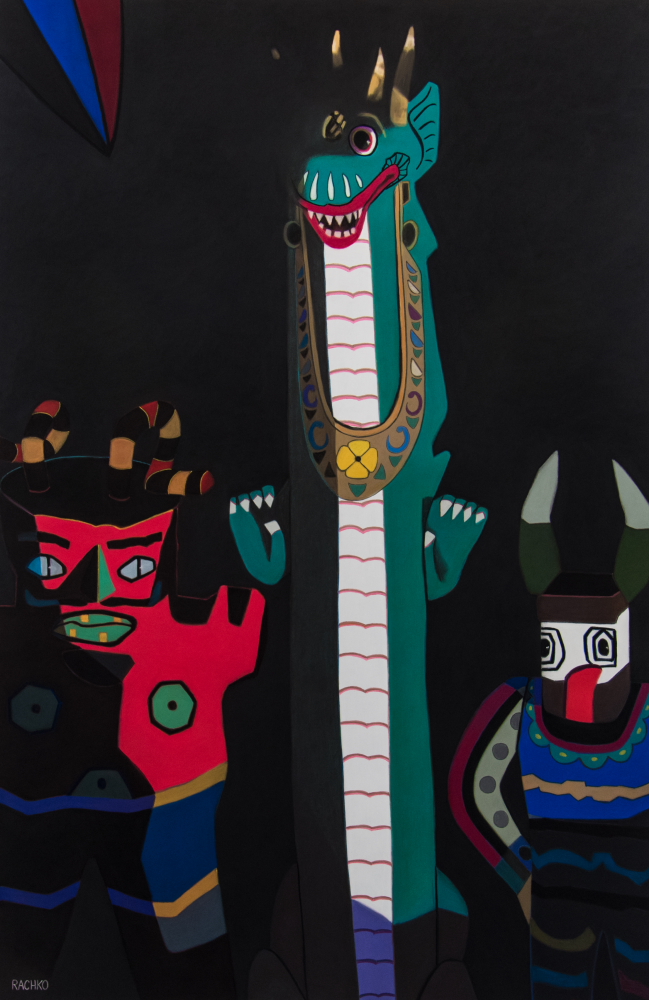
“Colloquium,” soft pastel on sandpaper, 58″ x 38″ image, 70″ x 50″ framed
* an ongoing series of quotations – mostly from artists, to artists – that offers wisdom, inspiration, and advice for the sometimes lonely road we are on.
I remember hearing Adolph Gottlieb on a panel once at NYU, and Adolph said, in effect – I’m not quoting him directly – “I don’t paint for the masses. I paint for the elite. The masses are not interested in what I do. They won’t understand this kind of painting that I do, and it won’t come through to them.”
I understood perfectly what he meant, and I was totally sympathetic. But the audience, which was not quite an audience of proletariat workers, but an audience of school of education, art teachers, or art teachers to be, were going out of their heads with rage just at the mention of the elite.
I think there is an elite, and there always was an elite for painting or good music or for good literature. For a long time there has been, and I don’t see anything wrong with it. What it means to a lot of people, the elite is the wealthy or something like that. Adolph, I don’t think, was referring to an elite of the wealthy, where the people run the government or something like that, but to those people who are concerned and interested in the most sophisticated, meaningful painting there is.
The Art Life: On Creativity and Career by Stuart Horodner
Comments are welcome!
Pearls from artists* # 203

“Palaver,” soft pastel on sandpaper, 26″ x 20″
* an ongoing series of quotations – mostly from artists, to artists – that offers wisdom, inspiration, and advice for the sometimes lonely road we are on.
One day, looking for something that might interest those few buyers there were, Marquet and I decided to reconnoiter. So we went to the Pavillon de Rohan, to the Galeries de Rivoli, where there were dealers in engraving and in all kinds of curiosities that might attract foreign customers. We each came back with an idea: mine was to do a park landscape with swans. I went to the Bois de Boulogne to do a study of the lake. Then I went to buy a photo showing swans and tried to combine the two. Only it was very bad; I didn’t like it – in fact nobody liked it; it was impossible; it was stodgy. I couldn’t change; I couldn’t counterfeit the frame of mind of the customers on the rue de Rivoli or anywhere else. So I put my foot through it.
I understood then that I had no business painting to please other people; it wasn’t possible. Either way, when I started a canvas, I painted it the way I wanted with things that interested me. I knew very well that it wouldn’t sell, and I kept putting off the confection of a picture that would sell. And then the same thing would happen the next time.
There are plenty of artists who think it’s smart to make paintings to sell. Then – when they have acquired a certain reputation, a degree of independence – they want to paint things for themselves. But that simply isn’t possible. Painting’s an uphill task and if you want to find out what you’re capable of, you can’t dillydally on the way.
Chatting with Henri Matisse: The Lost 1941 Interview, Henri Matisse with Pierre Courthion, edited by Serge Guilbaut, translated by Chris Miller
Comments are welcome!
Pearls from artists* # 202

Soft pastels
* an ongoing series of quotations – mostly from artists, to artists – that offers wisdom, inspiration, and advice for the sometimes lonely road we are on.
When you’re working on something, you always wonder, “Can I get away with this? Is it working?” It’s the space between that I’ve been interested in for a long time. I think that when I started to make, say, a triptych that came from an observation of a little Picasso drawing, the spaces in between became as important as the three actual pieces. It’s especially true of the Wallpaper piece. But most of the changes in my own work really evolve from one piece to the next: from looking at my own work, the works of others, and things in my studio. It happens when you see something that you didn’t see previously, like those scraps of clay that became the wall pieces. It’s similar to the space that I’ve explored for years and years between artist and craftsperson, which is both interesting and challenging, and I don’t think that one thing is inferior to the other. Each has a different goal, a different function. Its my responsibility how nd where my work is viewed in different contexts.
In Conversation: Betty Woodman with Phong Bui, The Brooklyn Rail, April 2016
Comments are welcome!
Pearls from artists* # 194

“Epiphany,” soft pastel on sandpaper, 38″ x 58″
* an ongoing series of quotations – mostly from artists, to artists – that offers wisdom, inspiration, and advice for the sometimes lonely road we are on.
I did sculpture because what interested me in painting was to bring some order to my brain. It was a change of means. I took to clay as a break from painting; at the time I’d done absolutely everything I could in painting. Which means it was still about organizing. It was to put my sensations in order and look for a method that really suited me. When I’d found it in sculpture, I used it for painting. To come into possession of my own brain: that was always the goal, a sort of hierarchy of all my sensations, so that I could reach a conclusion.
One day, visiting Carriere at his house, I told him that. He replied: “But, my friend, that’s why you work. If you ever managed it, you’d probably stop working. It’s your reason for working.”
In painting – in any oeuvre – the goal is to reconcile the irreconcilable. There are all kinds of qualities in us, contradictory qualities. You have to construct something viable with that, something stable. That’s why you work your whole life long and want to keep on working until the last moment… as long as you haven’t admitted defeat or lost your curiosity, as long as you haven’t settled into a routine.
Chatting with Henri Matisse: The Lost 1941 Interview, Henri Matisse with Pierre Courthion, edited by Serge Guilbaut, translated by Chris Miller
Comments are welcome!
Pearls from artists* # 190
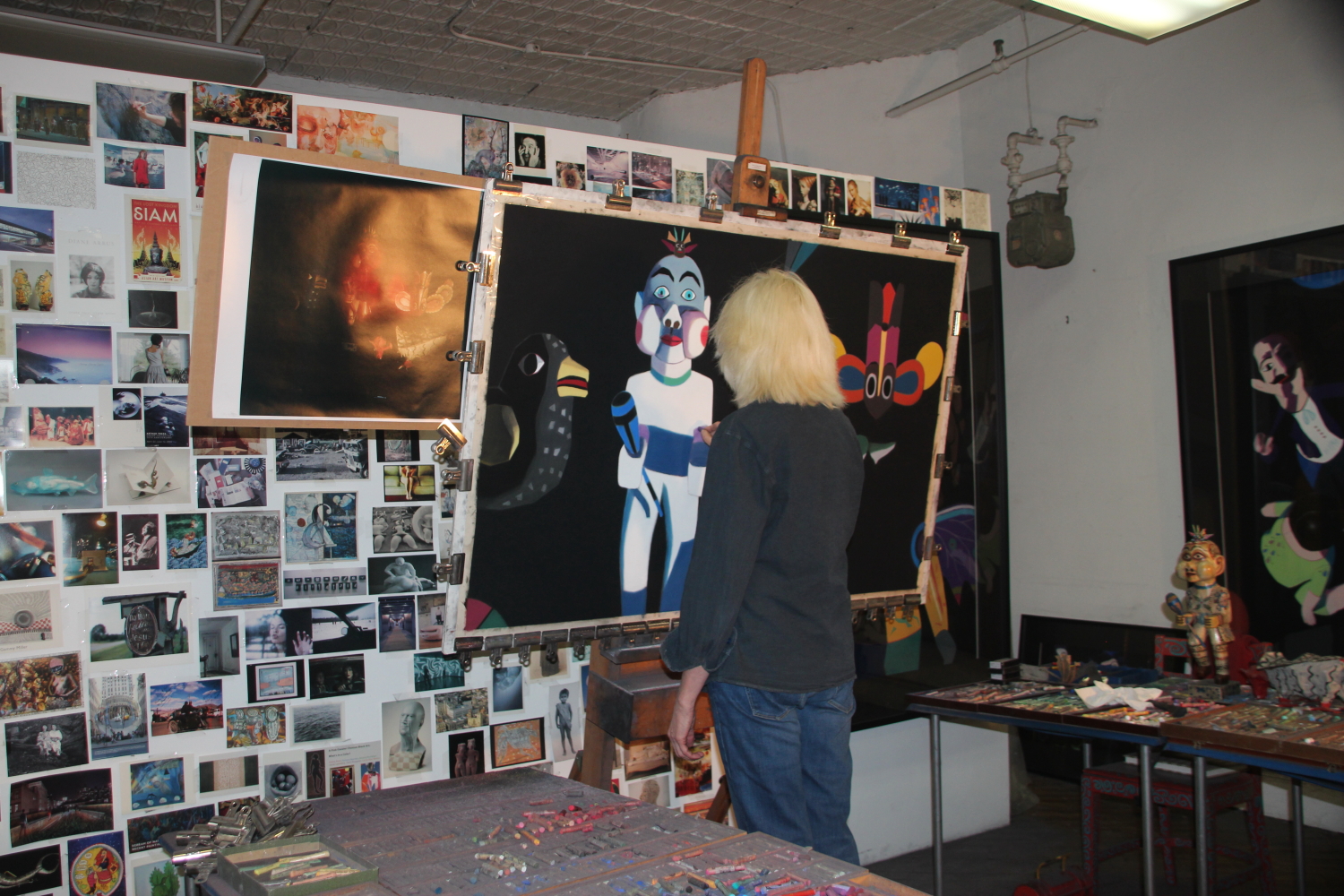
Working
* an ongoing series of quotations – mostly from artists, to artists – that offers wisdom, inspiration, and advice for the sometimes lonely road we are on.
For fifty years, I worked tirelessly, never looking up, interested in nothing but the organization of my own brain. And the works that came had their significance – which was just as well. Otherwise, I’d be a completely useless fellow.
Still, that’s not the point. The point is, I was lucky enough to be able to do fifty years’ work, until I was sixty-five. What happened was, I had to pay for it. It comes around for everyone. I’ve paid my dues!
Chatting with Henri Matisse: The Lost 1941 Interview, Henri Matisse with Pierre Courthion, edited by Serge Guilbaut, translated by Chris Miller
Comments are welcome!
Pearls from artists* # 135

Chalcatzingo (Mexico)
* an ongoing series of quotations – mostly from artists, to artists – that offers wisdom, inspiration, and advice for the sometimes lonely road we are on.
[Meredith Monk on beginning a new piece and whether it gets easier over time].
I always say that the fear is overwhelming at the beginning. It’s like jumping off a cliff. You have absolutely no idea what is going on. It is like being a detective. You try to follow every clue that comes up. Some of them are McGuffins, but I think that is what the process is. It starts out with fear, and I think that’s a good thing. If you know what you are doing already, what is the point in doing it? It is always like hanging out and tolerating pain and the fear of the unknown. Then usually what happens is that a little something will come up. If I am sitting at the piano – and I remember sitting at the piano and almost shaking at the beginning of this piece – one little phrase will come up. And then you get a little interested in that one little phrase. Or I say to myself, “Step by step.” Another thing I say to myself, “Remember playfulness, Meredith?”
What happens at a certain point is that the thing itself starts coming in and you realize that you are more interested than you are afraid. You are in this thing, whatever it is, and fear is useless at a certain point. But at the beginning, it is not bad. It is saying that you are risking. I think that taking the chance on risking is something that keeps you young. I’ll tell you, what you are saying about my skills – I don’t find it easier. It is just as hard as it ever was. I don’t think, “Now I have these skills.” I don’t think in those terms at all.
… When you are making something new, you aren’t going to be able to use the same technique that you used on something else. Maybe other people think it is easier as they go along. I think part of the challenge is not to rely on things that you know, and to keep on listening. It is really a process of listening to what something needs. What’s right for it.
Conversations with Meredith Monk by Bonnie Marranca
Comments are welcome!
Pearls from artists* # 124
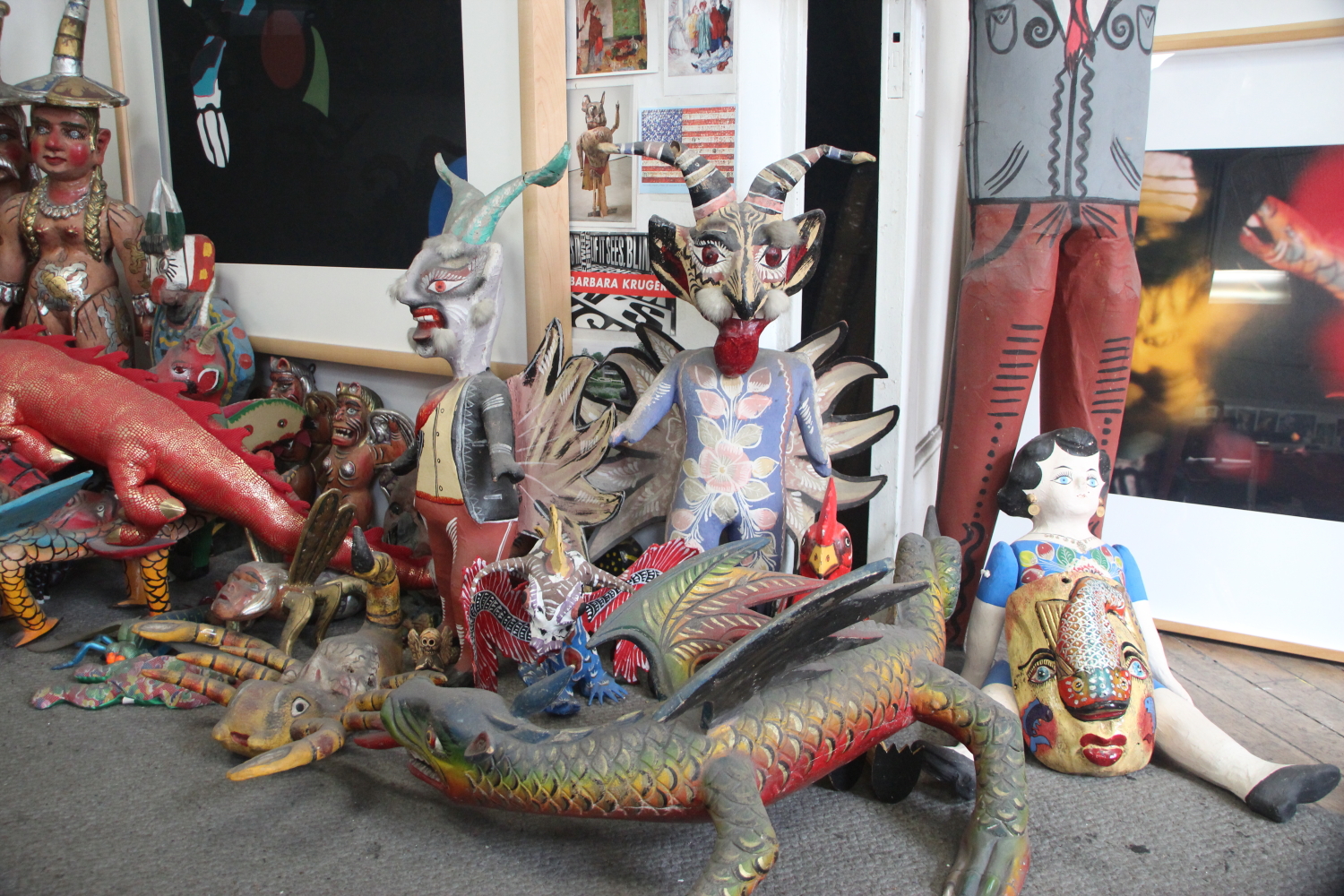
Barbara’s studio
* an ongoing series of quotations – mostly from artists, to artists – that offers wisdom, inspiration, and advice for the sometimes lonely road we are on.
You give yourself a creative life – pursuing those questions and aesthetic conditions that mean the most to you. What are you interested in? Landscape and gender and nuclear power are each worthy subjects and there are plenty more. Do you aspire to exhibit in museums or public spaces or virtual realms? Your job is to figure out how to best engage these distinct contexts. Your studio may be a large industrial space or a second bedroom or the kitchen table, where you can work days or nights while wearing your favorite sweatpants and drinking tea as music blasts or silence is maintained. You might produce five or fifty objects a year, using bronze or oil paint or folded paper, and these can be large or tiny, made to last for centuries or a few weeks. Maybe you’ve been a printmaker for several years and all of a sudden you decide to make videos. OK. You might be influenced by Pop Art or Minimalism or Feminism or Fluxus. How are you using these various histories to your advantage? Does Edward Hopper or Gordon Matta-Clark or Agnes Martin or David Hammons inspire you? If not, who does? Try to understand the reasons for your choices, and if you feel the need to shift gears, indulge that impulse. Grant yourself the permission to acquire new skills, travel to biennials, buy a new computer, start a reading group. Risk not knowing what will happen when you do.
Stephen Horodner in THE ART LIFE: On Creativity and Career
Comments are welcome!
Q: How did you happen to have a photograph published in The Wall Street Journal?

Sun Tunnels by Nancy Holt
A. That is a long story. To get far away from New York for the ten-year anniversary of 9/11, my friend, Donna Tang, and I planned a two-week road trip to see land art sites in Arizona, New Mexico, Utah, and Colorado. (Donna did excellent research).
We hoped for a private tour of Roden Crater with James Turrell, which is not easy to arrange. I had also invited my friend Ann Landi, an art critic and arts writer, to join us, hoping she might get an interview with Turrell and write an article for Artnews. Turrell has been working on Roden Crater for 30+ years so Ann was interested in seeing it too! Ann contacted Turrell’s gallery – Gagosian – but they later relayed Turrell’s refusal.
We were planning to see other land art sites. As an alternative to Roden Crater and Turrell, Ann pitched a story to The Wall Street Journal about Sun Tunnels and Nancy Holt (Robert Smithson’s wife, who as the only woman in the land art movement, has never been given her due). The Journal said yes, so Ann made plans to join Donna and me in Salt Lake City.
The three of us visited Sun Tunnels, Spiral Getty, and other sites together. Ann had a brand new point-and-shoot camera that she hadn’t yet learned how to use. I always take lots of photos whenever I travel. After we returned home, I sent Ann a few images and she asked permission to submit them with her article. I was thrilled when The Wall Street Journal requested JPEGs. It was the first time I’ve had a photograph published in a major newspaper.
Comments are welcome!


 barbararachkoscoloreddust.com