Blog Archives
Pearls from artists* # 362

On the Indian Ocean in Tanah Lot, Bali
* an ongoing series of quotations – mostly from artists, to artists – that offers wisdom, inspiration, and advice for the sometimes lonely road we are on.
… if we look at the artifacts of all cultures, beauty always has attracted man’s attention. We know when we are in its presence. We’re held. Different pieces of art will arrest different people, and… some pieces will arrest larger numbers of people for longer periods of time. These are the works that are perhaps worthy of being called great art. We have to recognize that some people today, observing the greatest works of art, or the most awesome works of nature – the Grand Canyon, for instance – give it a minute and then are ready for something else. Insatiable for change, they are immune to deep resonance.
Art and beauty are about those resonances. It isn’t the subject matter that holds us. Some inexplicable reaction stops us, and we find ourselves connected with something other than ourself. Perhaps our ‘Self’ might be a better term, to distinguish it from the self that is caught up in thoughts, worries, and distractions. I like Ken Weber’s definition, that beauty “suspends the desire to be elsewhere.” In the face of great art, we experience transcendence.
Ian Roberts in Creative Authenticity: 16 Principles to Clarify and Deepen Your Artistic Vision
Comments are welcome!
Pearls from artists* # 348
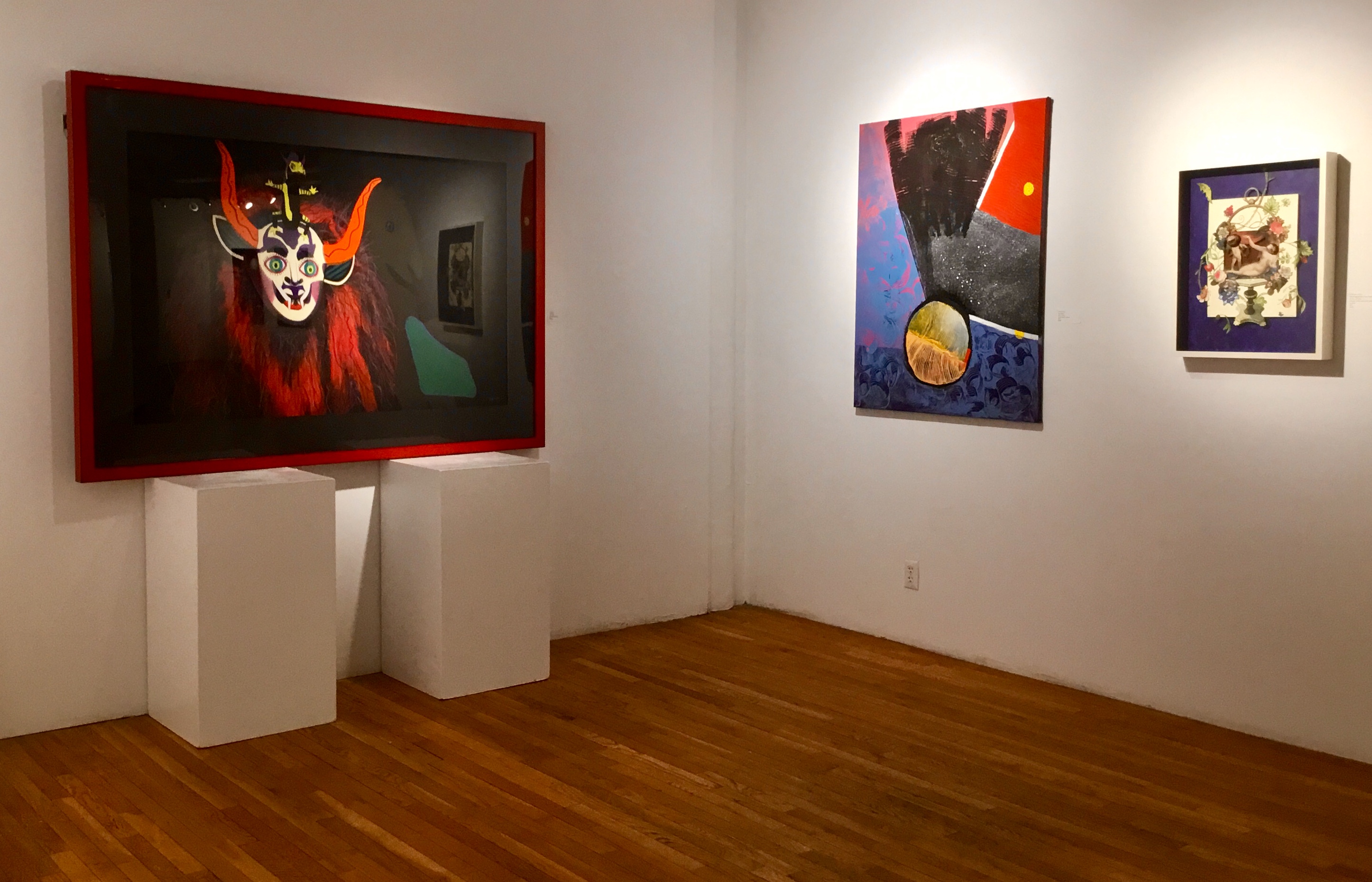
“The Orator” in “Worlds Seen & Unseen” at Westbeth Gallery, NYC
*an ongoing series of quotations – mostly from artists, to artists – that offers wisdom, inspiration, and advice for the sometimes lonely road we are on.
The percipient apprehends the primal quality of art as beauty and symbol, in an experience that invariably involves a sense of radical mystery. Art dissolves the fog of Consensus in which we normally operate to reveal the unseen in the situation. It places us in exactly the same position as the first people who stared up at the stars in wonder. The work of art is perpetually new; it demands reinterpretation with each era, each generation, each percipient. Great works of art are like inexhaustible springs originating from a place beyond our “little world of man.” They reconnect us with a reality too vast for the rational mind to comprehend. Therefore, art can be described as the human activity through which our all-too-human mentality is overcome and in light of which all finite judgments are shown to be inefficient. It is at once a sinking to the source and a leap toward the infinite.
J.F. Martel in Reclaiming Art in the Age of Artifice: A Treatise, Critique, and Call to Action
Comments are welcome!
Pearls from artists* # 338
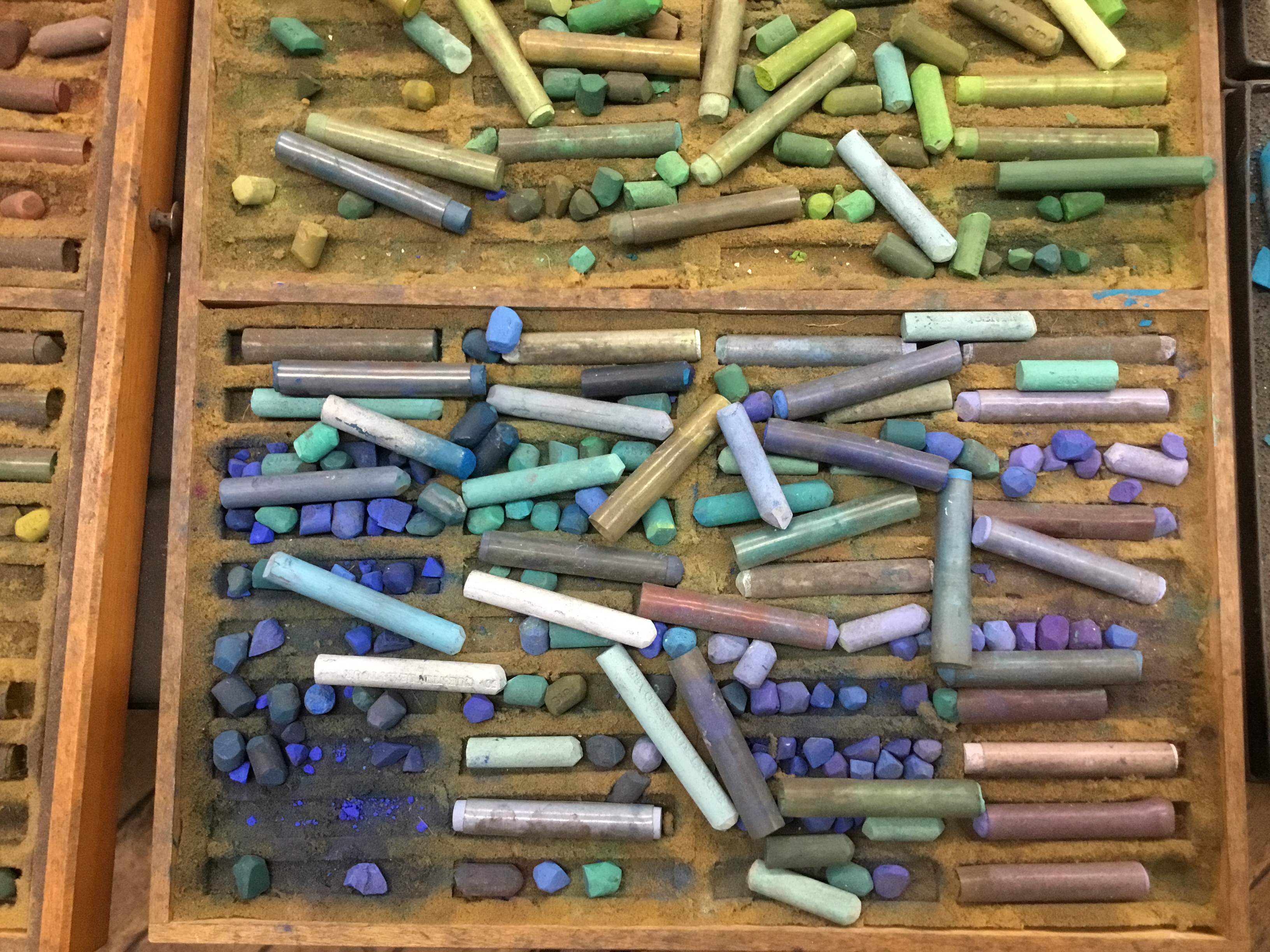
Pastels
*an ongoing series of quotations – mostly from artists, to artists – that offers wisdom, inspiration, and advice for the sometimes lonely road we are on.
Beauty without symbolic depth results in ornament. Symbol without beauty results in psychoanalysis. Only when the two meet can we speak of art. The artistic works that combine the two elements most compellingly are what are called the classics. In his magisterial book The Analogical Imagination, the theologian David Tracy defines the classic as a work exhibiting a permanent “excess of meaning.” We speak of classics as “timeless,” he says, not because they belong to time, but because they are perpetually timely; their relevance never wanes, and each generation, each percipient, must interpret them anew. According to Tracy, we know we are dealing with a classic when a work makes us realize that our general outlook on life is not as complete as we thought it was, that “something else might be the case.” In the light that the classic emanates, things suddenly seem less clear-cut than they used to seem – we find ourselves in the presence of something greater than we are, something potentially infinite. Classics take us to the apex of the numinous, the point of what Werner Herzog calls “ecstatic truth.”
J.F. Martel in Reclaiming Art in the Age of Artifice: A Treatise, Critique, and Call to Action
Comments are welcome!
Pearls from artists* # 336

Barbara’s studio
*an ongoing series of quotations – mostly from artists, to artists – that offers wisdom, inspiration, and advice for the sometimes lonely road we are on.
Beauty and symbol are the two faces of the numinous, that enigmatic force that bestows upon certain things, places, and moments an otherworldly power. It is the combination of radical beauty and symbolic resonance – of apparition and death – that makes aesthetic objects so overpowering. While at the surface there may appear to be an insurmountable difference between a Shinto shrine and a Tom Waits concert, both use beauty and symbol to confront us with what is strange and sacred in life. Their similarity is as profound as their differences.
J.F. Martel in Reclaiming Art in the Age of Artifice: A Treatise, Critique, and Call to Action
Comments are welcome!
Pearls from artists* # 311

On the road in Bolivia
*an ongoing series of quotations – mostly from artists, to artists – that offers wisdom, inspiration, and advice for the sometimes lonely road we are on.
In nature, light and shadow create ephemeral moments of beauty. To experience the transition from sunset to night we must await and cherish each fleeting moment and not just the finale. We must be attentive to beauty revealing all its moods.
Amy Tan in In Character: Opera Portraiture, John F. Martin, Foreword by Amy Tan, Preface by David Gockley.
Comments are welcome!
Pearls from artists* # 308
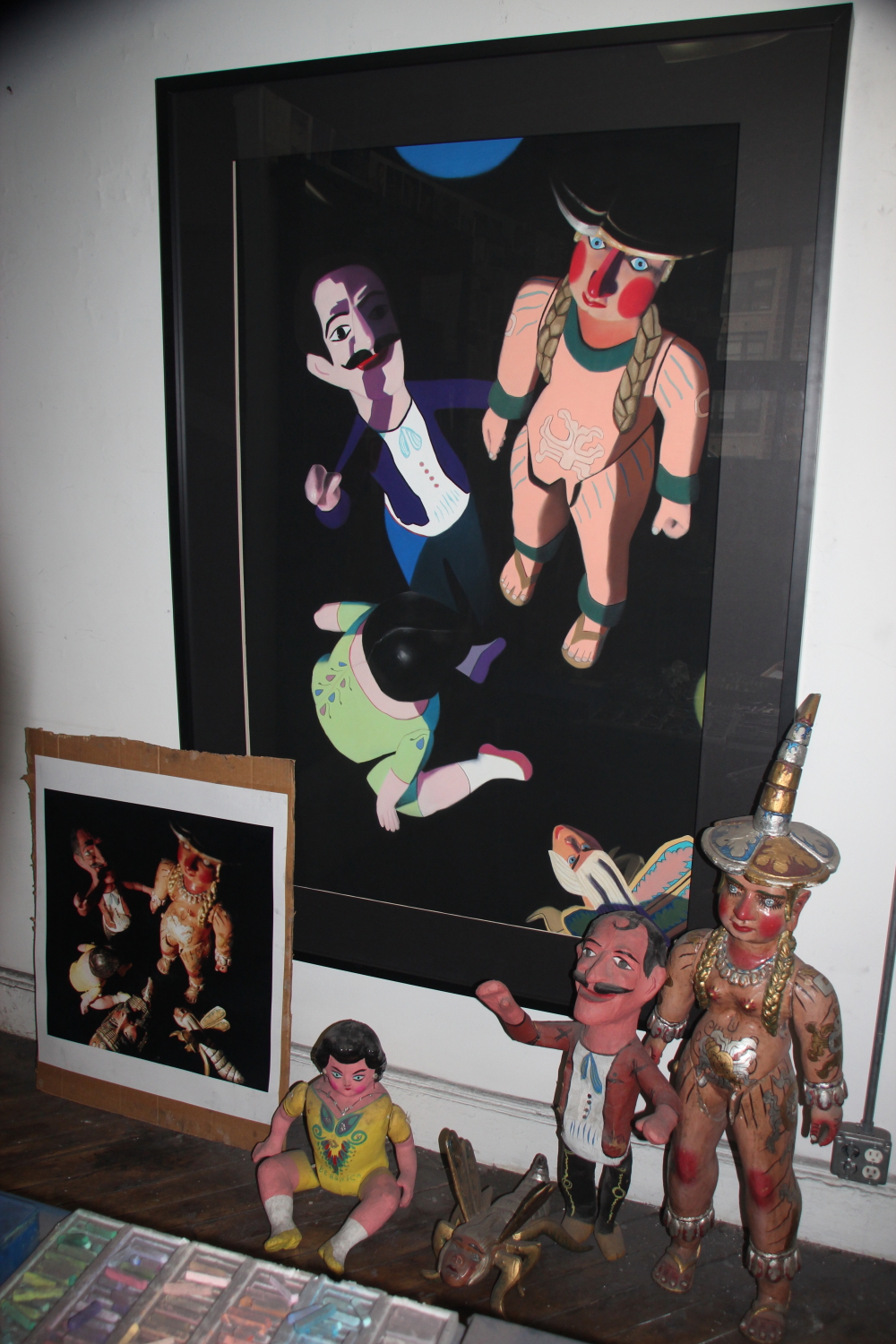
“The Ancestors,” 70” x 50” framed, in Barbara’s studio
*an ongoing series of quotations – mostly from artists, to artists – that offers wisdom, inspiration, and advice for the sometimes lonely road we are on.
Art is mysterious because its purpose is unknown and its effect always exceeds the ends we put it to. If it is true, for instance, that nearly all human societies see the possession of artistic objects as a sign of prestige and power, it may simply be because art’s primary quality makes it a suitable sign for those who want to legitimize their authority. And while it may be the case that art ennobles us by bringing beauty into our lives, or that it conveys complex cultural ideas simply and effectively, or that it preserves the beliefs of one age for the next – again, these functions could very well follow from art’s original, mysterious, irreducible shining. Just as it is the gleam of gold that makes it precious in our eye and not its preciousness that makes it gleam, so the primary quality of art could precede all of its uses and appropriations. In other words art may be something before it becomes all the things we claim it to be.
J.F. Martel in Reclaiming Art in the Age of Artifice: A Treatise, Critique, and Call to Action
Comments are welcome!
Pearls from artists* # 306

New York, NY
* an ongoing series of quotations – mostly from artists, to artists – that offers wisdom, inspiration, and advice for the sometimes lonely road we are on.
It is the responsibility of artists to pay attention to the world, pleasant or otherwise, and to help us live respectfully in it.
Artists do this by keeping their curiosity and moral sense alive, and by sharing with us their gift for metaphor. Often this means finding similarities between observable fact and inner experience – between birds in a vacant lot, say, and an intuition worthy of Genesis.
More than anything else, beauty is what distinguishes art. Beauty is never less than mystery, but it has within it a promise.
In this way, art encourages us to gratitude and engagement, and is of both personal and civic consequence.
Robert Adams in Art Can Help
Comments are welcome!
Pearls from artists* # 274

Barbara’s studio
* an ongoing series of quotations – mostly from artists, to artists – that offers wisdom, inspiration, and advice for the sometimes lonely road we are on.
“Beauty is never enough,” he said. “Meaning is more important. If something catches people’s eyes enough to make them move around it, they will build a story around it. And that will not just be about beauty.”
Eric Charles-Donatien in Feathered Glory: In a studio in Paris, an old craft is given new life by Burkhard Bilger in The New Yorker, Sept. 25, 2017
Comments are welcome!
Pearls from artists* # 258
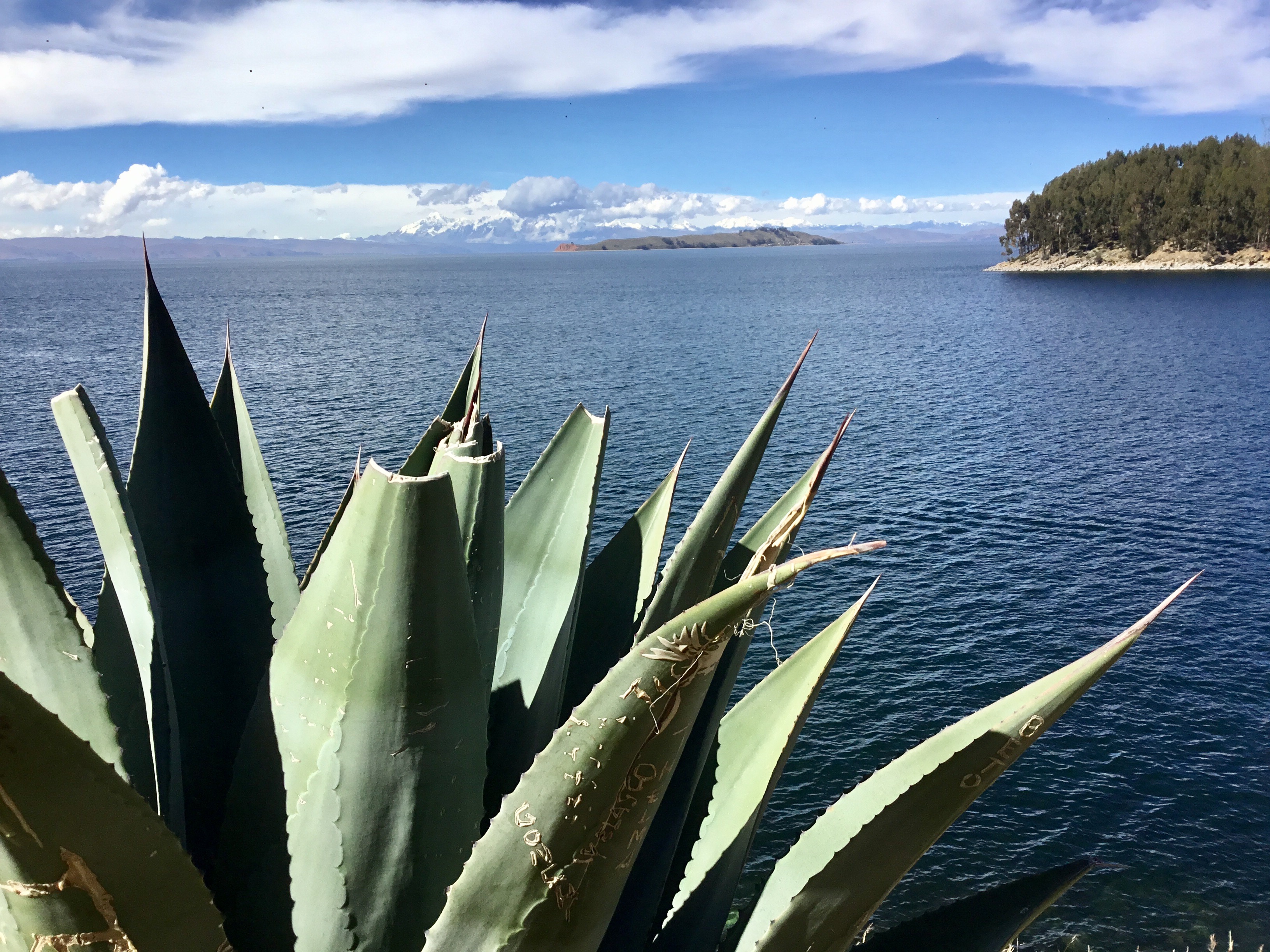
Isla del Sol in Bolivia
* an ongoing series of quotations – mostly from artists, to artists – that offers wisdom, inspiration, and advice for the sometimes lonely road we are on.
Does this imply that ‘beauty is in the eye of the beholder,’ that there is no objective property that we recognize and about whose nature and value we can agree? My answer is simply this: everything I have said about the experience of beauty implies that it is rationally founded. It challenges us to find meaning in its object, to make critical comparisons, and to examine our own lives and emotions in the light of what we find. Art, nature, and the human form all invite us to place this experience in the center of our lives. If we do so, then it offers a place of refreshment of which we will never tire. But to imagine that we can do this, and still be free to see beauty as nothing more than a subjective preference or a source of transient pleasure, is to misunderstand the depth to which reason and value penetrate our lives. It is to fail to see that, for a free being, there is right feeling, right experience and right enjoyment just as much as right action. The judgment of beauty orders the emotions and desires of those who make it. It may express their pleasure and their taste: but it is pleasure in what they value and taste for their true ideals.
Roger Scruton in Beauty: A Very Short Introduction
Comments are welcome!
Pearls from artists* # 211

Machu Picchu
* an ongoing series of quotations – mostly from artists, to artists – that offers wisdom, inspiration, and advice for the sometimes lonely road we are on.
There is an ancient view that beauty is the object of a sensory rather than an intellectual delight, and that the senses must always be involved in appreciating it. Hence, when the philosophy of art became conscious of itself at the beginning of the eighteenth century, it called itself ‘aesthetics,’ after the Greek aesthesis, sensation. When Kant wrote that the beautiful is that which pleases immediately, and without concepts, he was providing a rich philosophical embellishment to this tradition of thinking. Aquinas too seems to have endorsed the idea, defining the beautiful in the first part of the Summa as that which is pleasing to sight (pulchra sunt quae visa placent). However, he modifies this statement in the second part, writing that ‘the beautiful relates only to sight and hearing of all the senses, since these are the most cognitive (maxime cognoscitive) among them.’ And this suggests, not only that he did not confine the study of beauty to the sense of sight, but that he was less concerned with the sensory impact of the beautiful than with its intellectual significance – even if it is a significance that can be appreciated only through seeing or hearing.
Beauty: A Very Short Introduction, by Roger Scruton
Comments are welcome!



