Category Archives: Working methods
Q: What’s on the easel today?

Work in progress
A: This is my second day working on a new “Bolivianos” pastel painting. Next I will layer black Rembrandt soft pastels for the background. It usually takes 4 or 5 layers just to cover the 400 grit sandpaper.
Comments are welcome!
Q: What’s on the easel today?

Work in progress
A: I’m making slow progress on “Apparition,” 58” x 38,” soft pastel on sandpaper. There is still plenty of work to be done on the details.
Comments are welcome!
Q: What’s on the easel today?
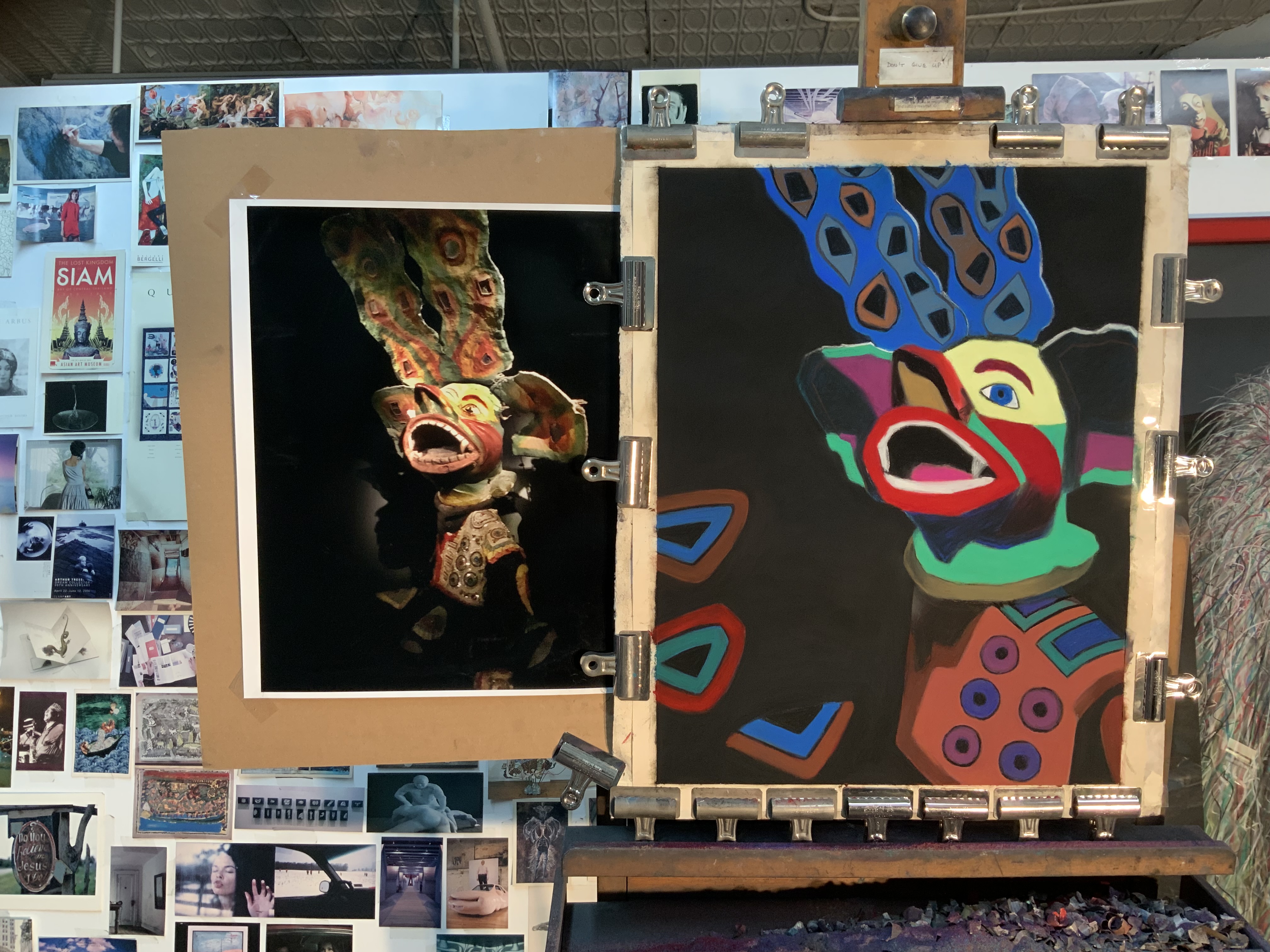
Work in progress
A: I continue working on “Maestro,” soft pastel on sandpaper, 26” x 20.”
Comments are welcome!
Pearls from artists* # 588

Screen shot from “Barbara Rachko: True Grit” Photo: Jennifer Cox
*an ongoing series of quotations – mostly from artists, to artists – that offers wisdom, inspiration, and advice for the sometimes lonely road we are on.
The structure of the hand is not… “just anything;” the fingers have certain characteristic relationships, certain ranges of relative movement, certain kinds of crossing, torquing, jumping, sliding, pressing, releasing movements that guide the music to come out a certain way. Graceful work uses those patterns and instinctively moves through them and out as we find ever-fresh combinations. The shape and size of the human hand brings powerful but subtle laws into every kind of art, craftsmanship, mechanical work, and into our ideas and feelings as well. There is a continuous dialogue between hand and instrument, hand and culture. Artwork is not thought up in consciousness and then, as a separate phase, executed by the hand. The hand surprises us, creates and solves problems on its own. Often enigmas that battle our brains are dealt with easily, unconsciously, by the hand.
Stephen Nachmanovitch in Free Play: Improvisation in Life and Art
Comments are welcome!
Start/Finish of “The Moralist,” soft pastel on sandpaper, 26” x 20”
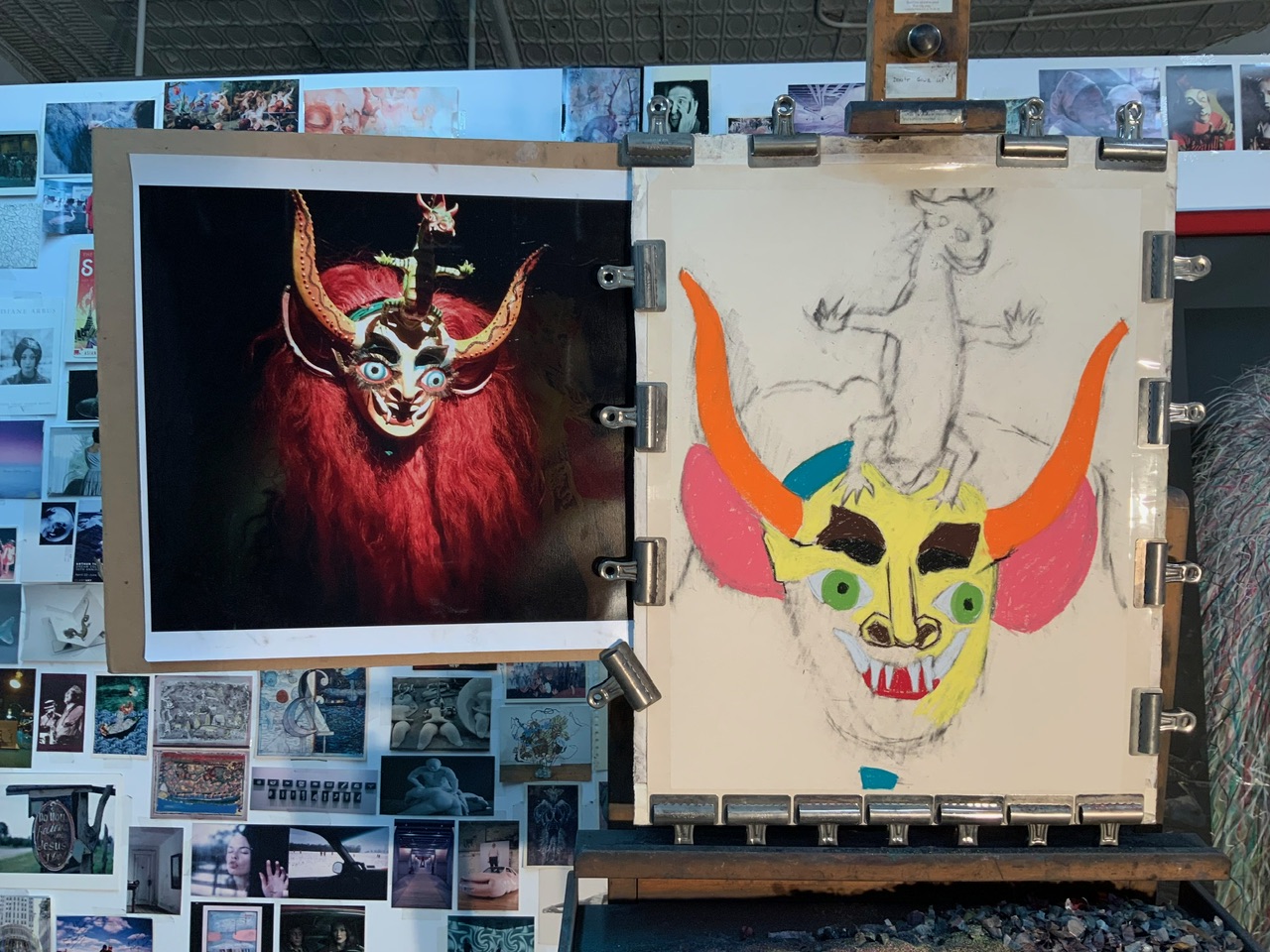
Start
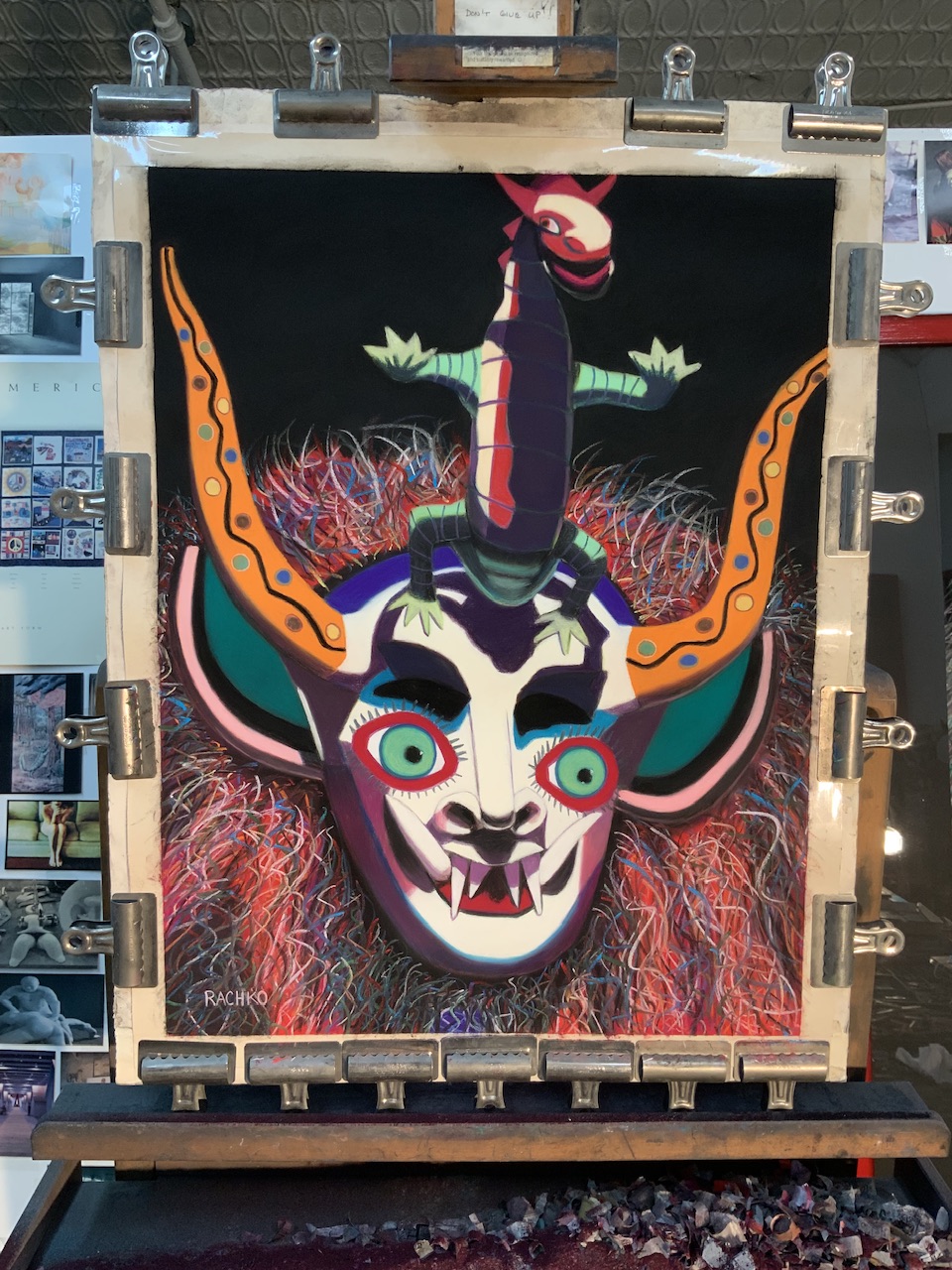
Finish
Comments are welcome!
Q: When you’re not creating art what’s your next favorite creative activity?

Hudson Yards, NYC iPad Photo
A: I love taking photographs with my iPad Pro! It has a 12.9″ screen so I can see every detail of the image. It is equivalent to using an 8 x 10 view camera with the advantages of being relatively lightweight and portable; does not require a tripod, a hood, or other special equipment like individual film holders; and the image appears right side up on the screen. It’s a perfect camera!
I have owned and used many film and digital cameras, but my iPad Pro has been my favorite for several years now. It’s great for my specific needs. I take it all over the world!
Comments are welcome!
Q: With so many soft pastels to choose from, do you have a way of organizing them so that you can find the color you need?
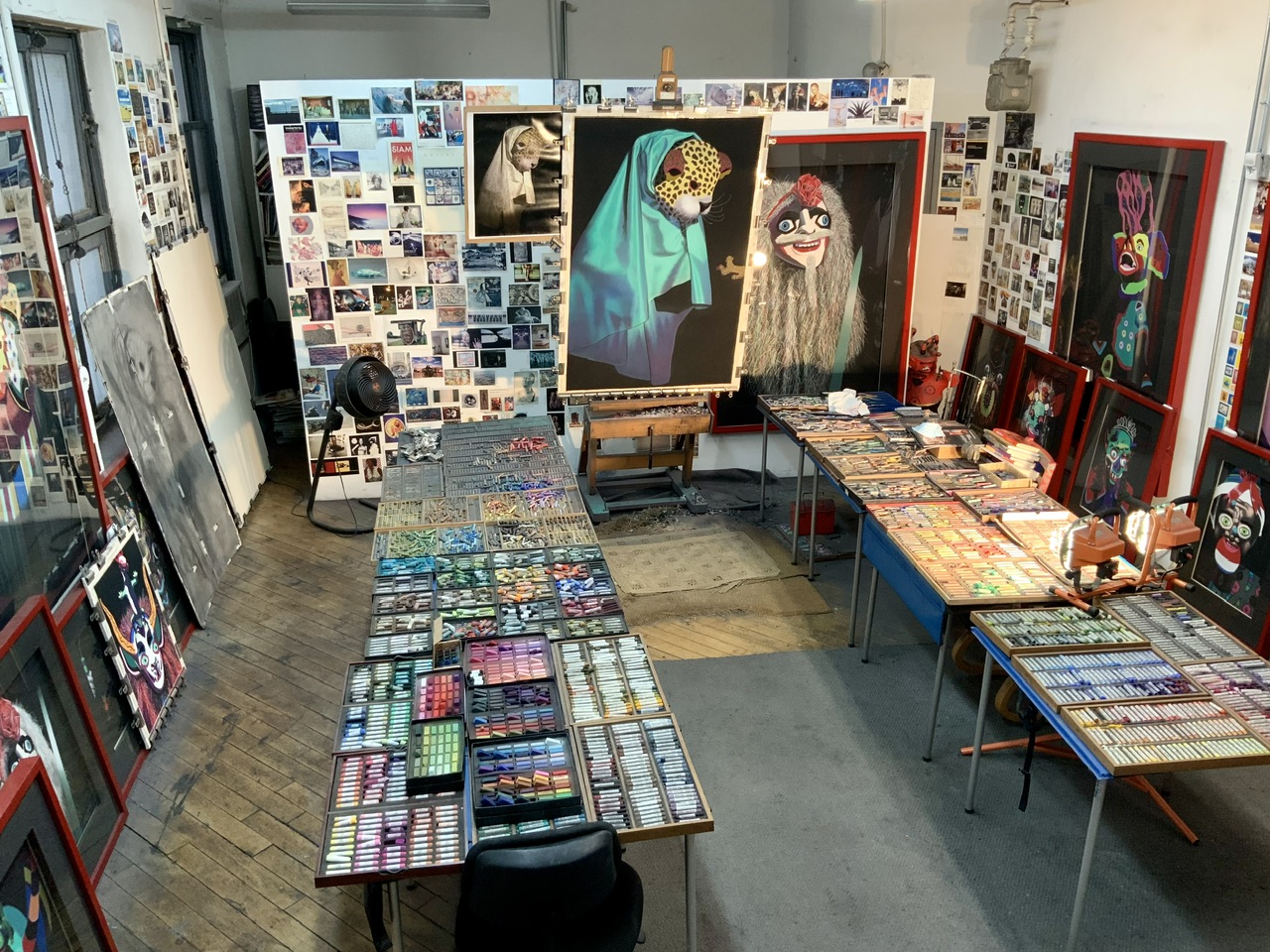
Barbara’s Studio
A: The arrangement of my pastels evolved organically. I keep them in their original trays. My oldest pastel sets are closer to the easel and the newest ones are the furthest away. After 37 years of experience working in pastel, I am well-acquainted with their individual properties. I know exactly where to find each color based on which manufacturer makes it.
Comments are welcome!
Q: How do you get such fine detail with soft pastel? Do they make pencil-size pastels? (Question from Lucia Sommer via Facebook)

A: After 37 years as a pastel artist, I have learned all sorts of techniques and can do whatever I want with it. I used regular Rembrandt white pastels for the sweater in “Sam and Bobo,” above.
There are several brands of pastel pencils that are made especially for drawing fine details. Sam’s face, hair, and hands are mostly pastel pencil. (Now I probably would not use pastel pencils as much. These days I only use them to draw lines and sign my name).
Another technique for making fine lines is to break a pastel stick and work with an edge.
Years ago I used to sharpen my pastels into a point with a small handheld sharpener (I still have one that allows me to change the blades). Sometimes I rub a pastel stick against a sandpaper pad until I get a somewhat sharp point. The problem with both of these methods is they waste so much pastel and pastels are not cheap! For example, my favorite French brand is nearly $20 per stick. I would never think of sharpening those!
Comments are welcome!
Q: Do you ever erase the color? Can you do that with pastel? (Question from Hollis Hildebrand-Mills via Facebook)
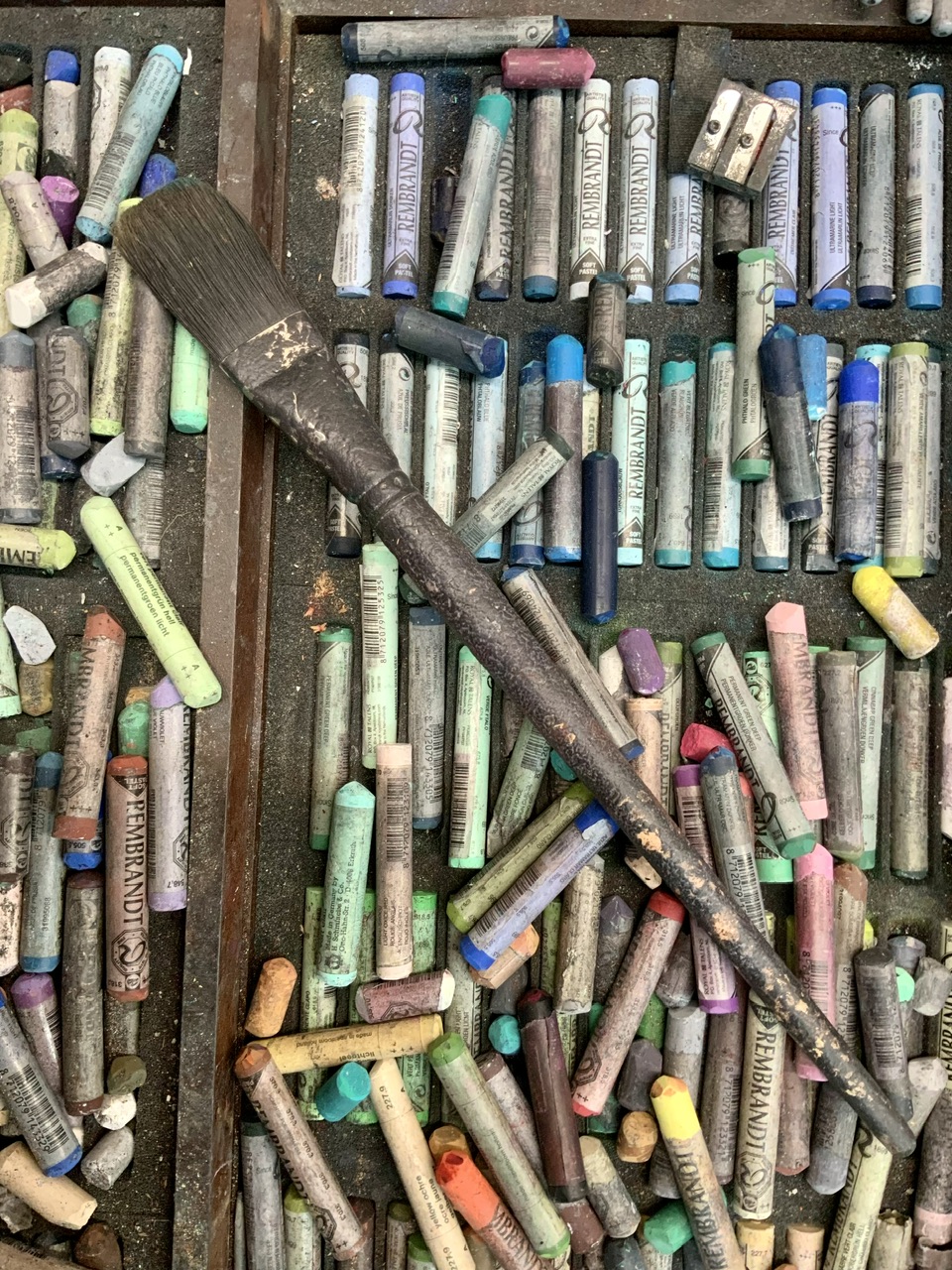
My “eraser”
A: Yes, sort of. I take a bristle brush and wipe it off. I do this only occasionally, when the sandpaper’s tooth is filled up and the paper will no longer accept more pastel. So I brush off what’s there and then I can start over.
Comments are welcome!
Q: What’s on the easel today?
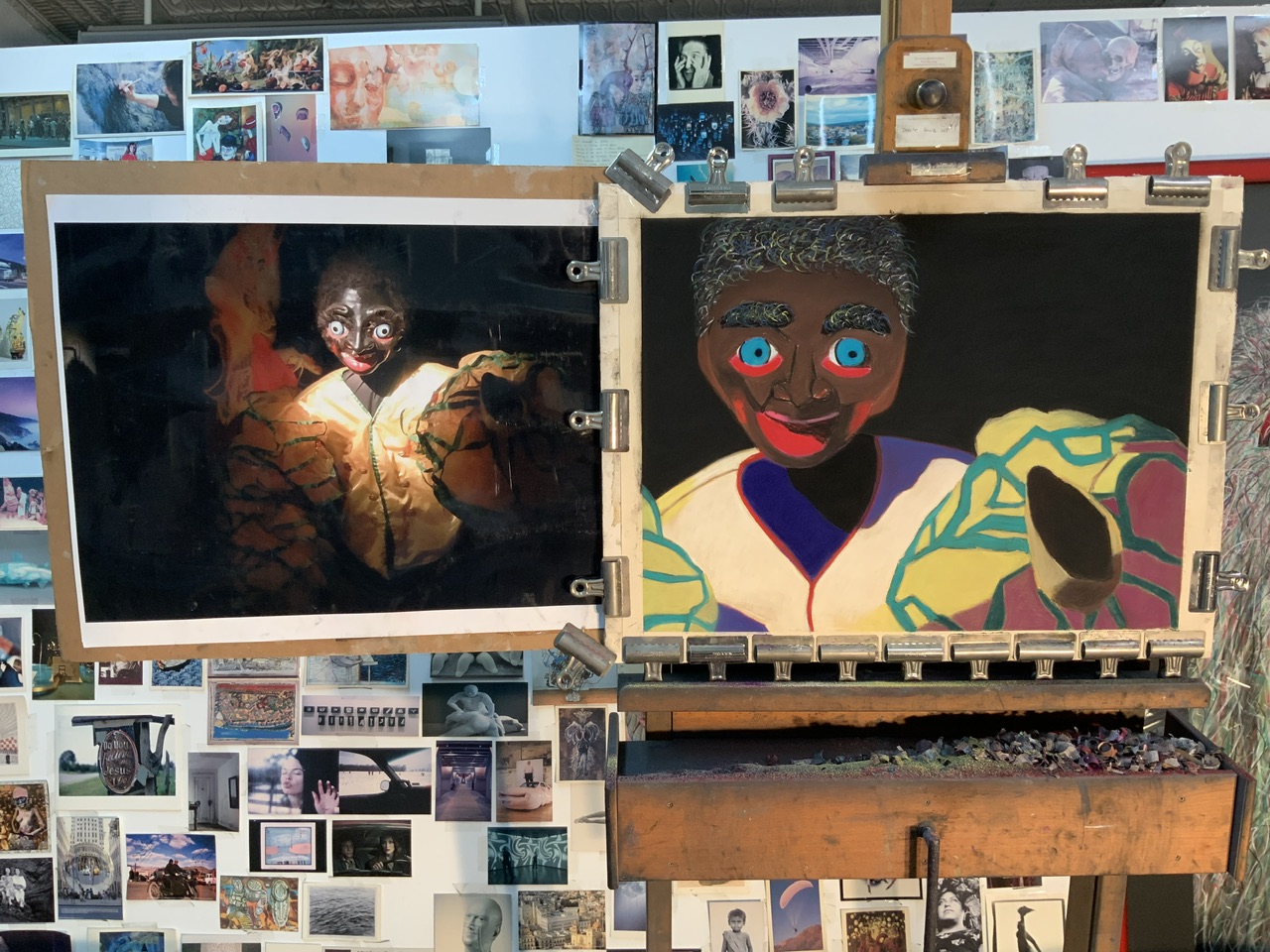
Work in progress
A: I started working on “Narcissist,” 20”x 26”, a few days ago.
Comments are welcome!


 barbararachkoscoloreddust.com