Category Archives: Inspiration
Q: Please speak about your background as a Naval officer and aviator and how that has informed your sensibility as an artist.
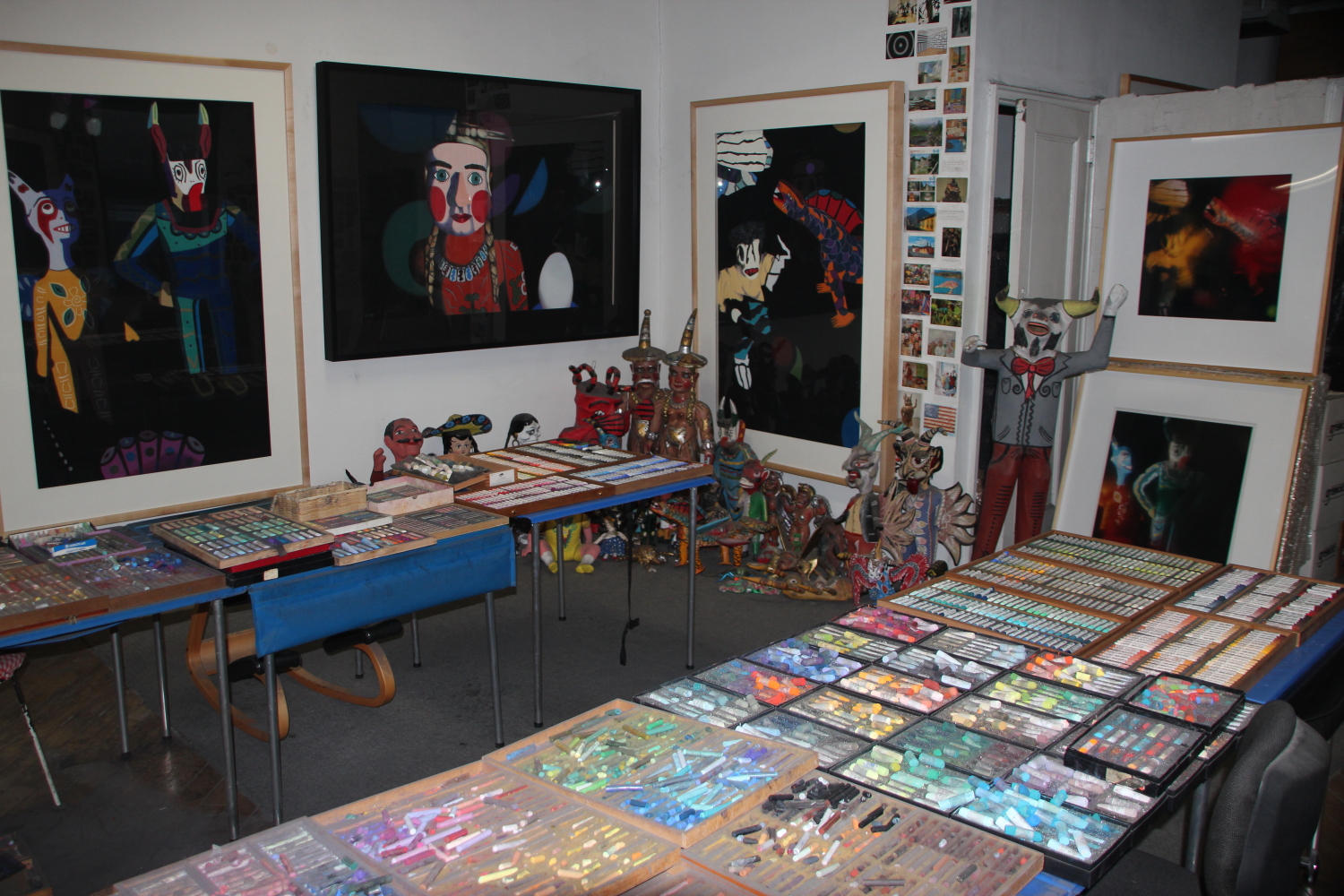
The studio yesterday
A: At the age of 25 I got my private pilot’s license before spending the next two years amassing thousands of hours of flight time as I earned every flying license and rating I could, ending with a Boeing-727 flight engineer certificate. I joined the Navy when I was 29. I used to think that the 7 years I spent on active duty were wasted – during those 7 years I should have been working on my art – but I see things differently now. The Navy taught me to be disciplined, to be goal-oriented and focused, to love challenges, and in everything I do, to pay attention to the details. Trying to make it as an artist in New York is nothing BUT challenges so these qualities serve me well, whether I’m creating paintings, shooting and printing photographs, or trying to understand the art business and keep up with social media. I enjoy spending long solitary hours working to become a better artist. I am meticulous about craft and will not let a work out of my studio or out of the darkroom until it is as good as I can make it.
Comments are welcome!
Pearls from artists* # 25
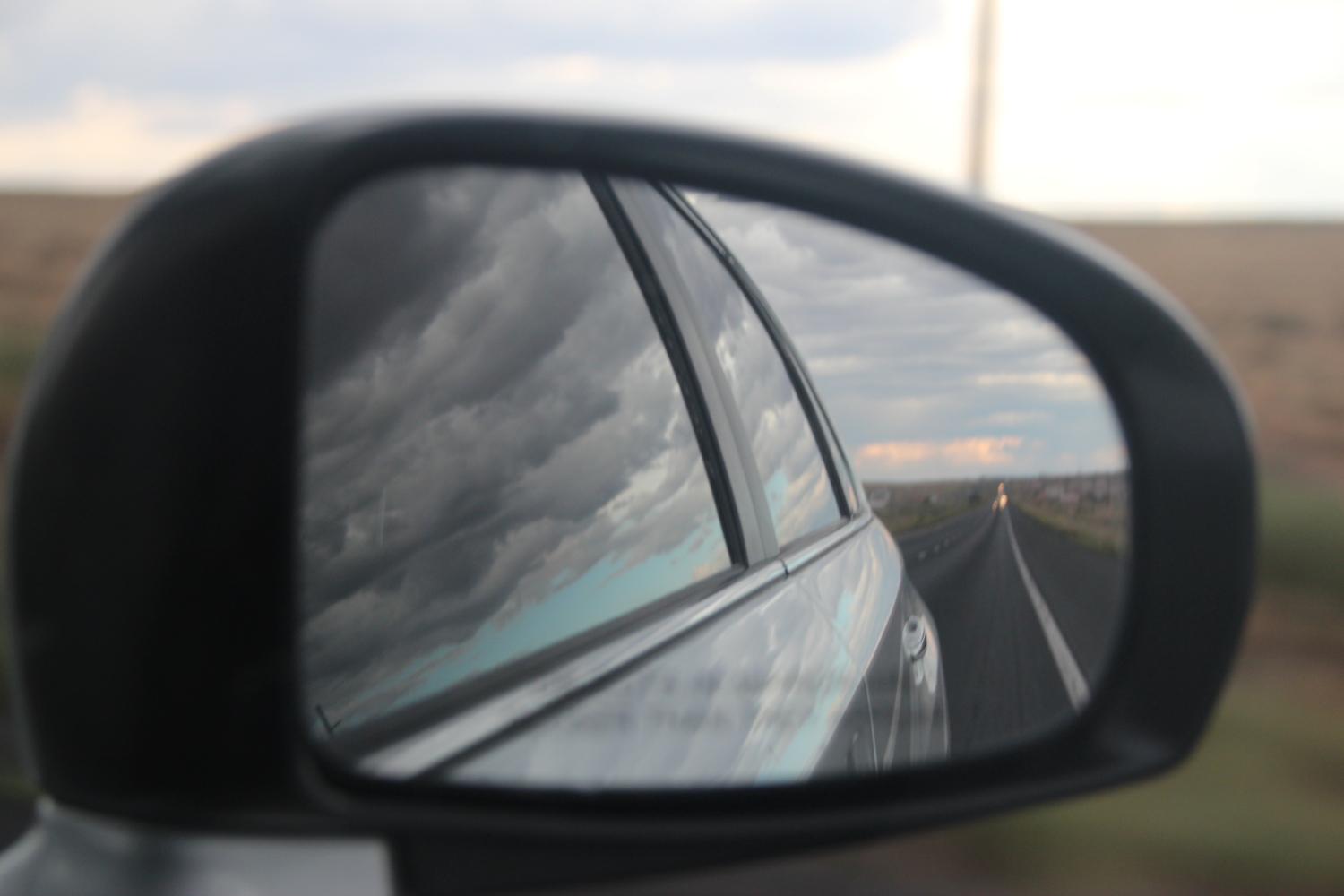
Arizona highway (Donna at the wheel)
* an ongoing series of quotations – mostly from artists, to artists – that offers wisdom, inspiration, and advice for the sometimes lonely road we are on.
February 21, 1924. A hell of a day yesterday. Bitter disappointment awaits the worker in photography.
After risking my neck to get the 8 x 10 camera on la azotea – flat roof – over Tina’s room, the highest vantage point of Lucerna 12, and after straining my back and stripping my nerves to capture a sweep of scurrying cloud forms, development revealed fog – ruinous fog – unmistakably from extraneous light – and a beautiful negative it was, or might have been!
The demon fog can play such uncanny tricks – always I am confounded, disconcerted, mystified until the trouble has been located. All morning I squinted and poked and probed, finally patching with felt the supposed leak due to a warped back, but I lost my negative, as fine a one as any of clouds I have done.
In a blue funk, I was ready to quit, and when Galvan called, accepted his suggestion that we ride into the country and then walk for a while.
North, and out of el distrito federal, he took us to a barranca – gorge – close by – in fact, hardly twenty minutes drive away, yet, from the desolation of this cactus covered gulch we seemed a hundred miles away from any city street. Cactus and rock and the tortuous curves of el arroyo seco – the dry gulch – a bleakness to the spot intensified by a lowering sky, black wrathful clouds, angrily unable to spill their burden of rain. We climbed, we shot, we lay on the dead grass and watched the sunset edge the clouds with rose, and all around stiff cacti in spreading silhouette. Tea with Galvan, his three old aunts and Don pepe – cajeta de Celaya, te, pasas – jelly from Celaya, tea, raisins, and sweet bread.
I feel better, to hell with photography, art, women and all.
Yet – I wished for my camera today. Those serrated stalks of the maguey, their bold uncompromising leaves cutting the horizon, they would make a fine jagged base to a typical Mexican sky.
Nancy Newhall, editor, The Daybooks of Edward Weston: Two Volumes in One: I. Mexico II. California
Comments are welcome!
Pearls from artists* # 22

Alexandria living room
* an ongoing series of quotations – mostly from artists, to artists – that offers wisdom, inspiration, and advice for the sometimes lonely road we are on.
So inclination you see is not lacking, and yet in all probability I shall have to try right here to clamber in the dark and all alone over the crest of the year, so to speak, for disciplinary reasons. I shall not deserve it otherwise, that is: I have long wanted to be here all alone, strictly alone, to go into my cocoon, to pull myself together, in short, to live by my heart and nothing else. Now since day before yesterday I have really been here all alone inside the old walls – outside, the sea, outside, the Karst, outside, the rain, perhaps tomorrow the storm – now must appear what is within by way of counterweight to such great and fundamental things. So, if something quite unexpected does not come, it may be the right thing to say, to hold out, to hold still with a kind of curiosity toward oneself, don’t you think? That is how things stand, and if I stir now everything will shift again; and then hearts are labeled, like certain medicines: shake before taking; I have been continually shaken in these last years, but never taken, that is why it is better that I should quietly arrive at clarity and precipitation…
Jane Bannard Greene and M.D. Herter Norton, translators, Letters of Rainer Maria Rilke 1910 – 1926
Comments are welcome!
Pearls from artists * # 20
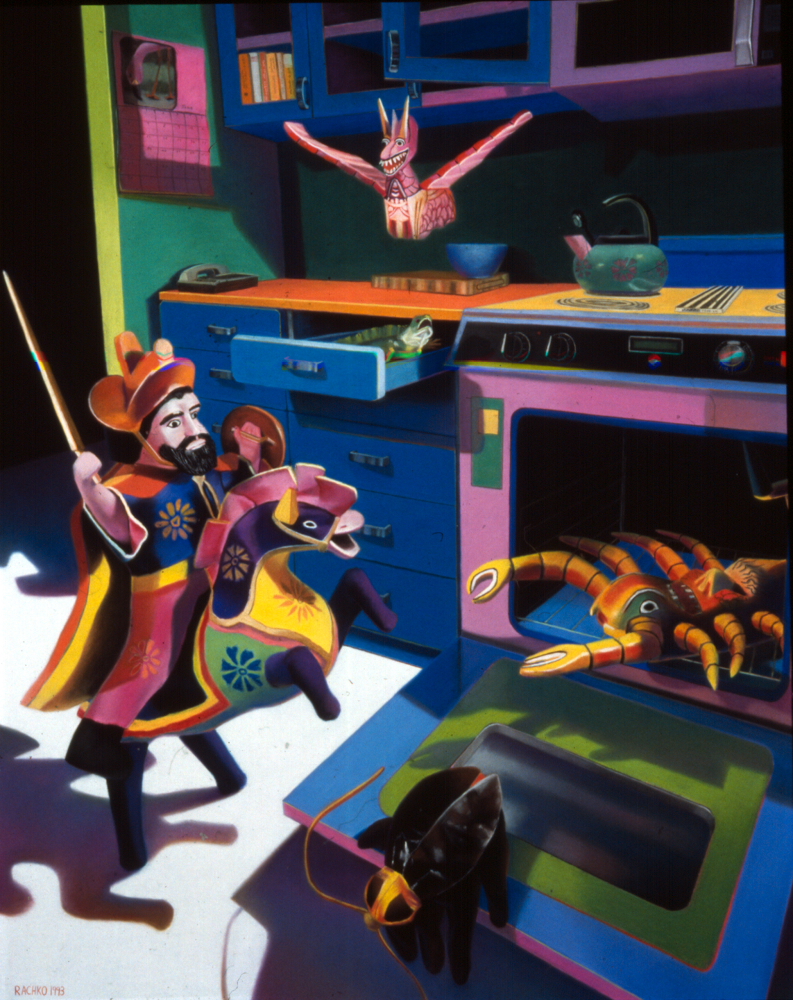
“The Magical Other,” soft pastel on sandpaper, 1993, 48″ x 38″
* an ongoing series of quotations – mostly from artists, to artists – that offers wisdom, inspiration, and advice for the sometimes lonely road we are on.
If, indeed, for any given time only a certain sort of work resonates with life, then that is the work you need to be doing in that moment. If you try to do some other work, you will miss your moment. Indeed, our own work is so inextricably tied to time and place that we cannot recapture even our own aesthetic ground of past times. Try, if you can, to reoccupy your own aesthetic space of a few years back, or even a few months. There is no way. You can only plunge ahead, even when that carries with it the bittersweet realization that you have already done your best work.
This heightened self-consciousness was rarely an issue in earlier times when it seemed self-evident that the artist (and everyone else, for that matter) had roots deeply intertwining their culture. Meanings and distinctions embodied within artworks were part of the fabric of everyday life, and the distance from art issues to all other issues was small. The whole population counted as audience when artists’ work encompassed everything from icons for the Church to utensils for the home. In the Greek amphitheater twenty-two hundred years ago, the plays of Euripides were performed as contemporary theater before an audience of fourteen thousand. Not so today.
Today art issues have for the most part become solely the concern of artists, divorced from – and ignored by – the larger community. Today artists often back away from engaging the times and places of their life, choosing instead the largely intellectual challenge of engaging the times and places of Art. But it’s an artificial construct that begins and ends at the gallery door. Apart from the readership of Artforum, remarkably few people lose sleep trying to incorporate gender-neutral biomorphic deconstructivism into their personal lives. As Adam Gopnik remarked in The New Yorker, “Post-modernist art is, above all, post-audience art.”
David Bayles & Ted Orland, Art & Fear: Observations on the Perils (and Rewards)of Artmaking
Comments are welcome!
Pearls from artists # 19
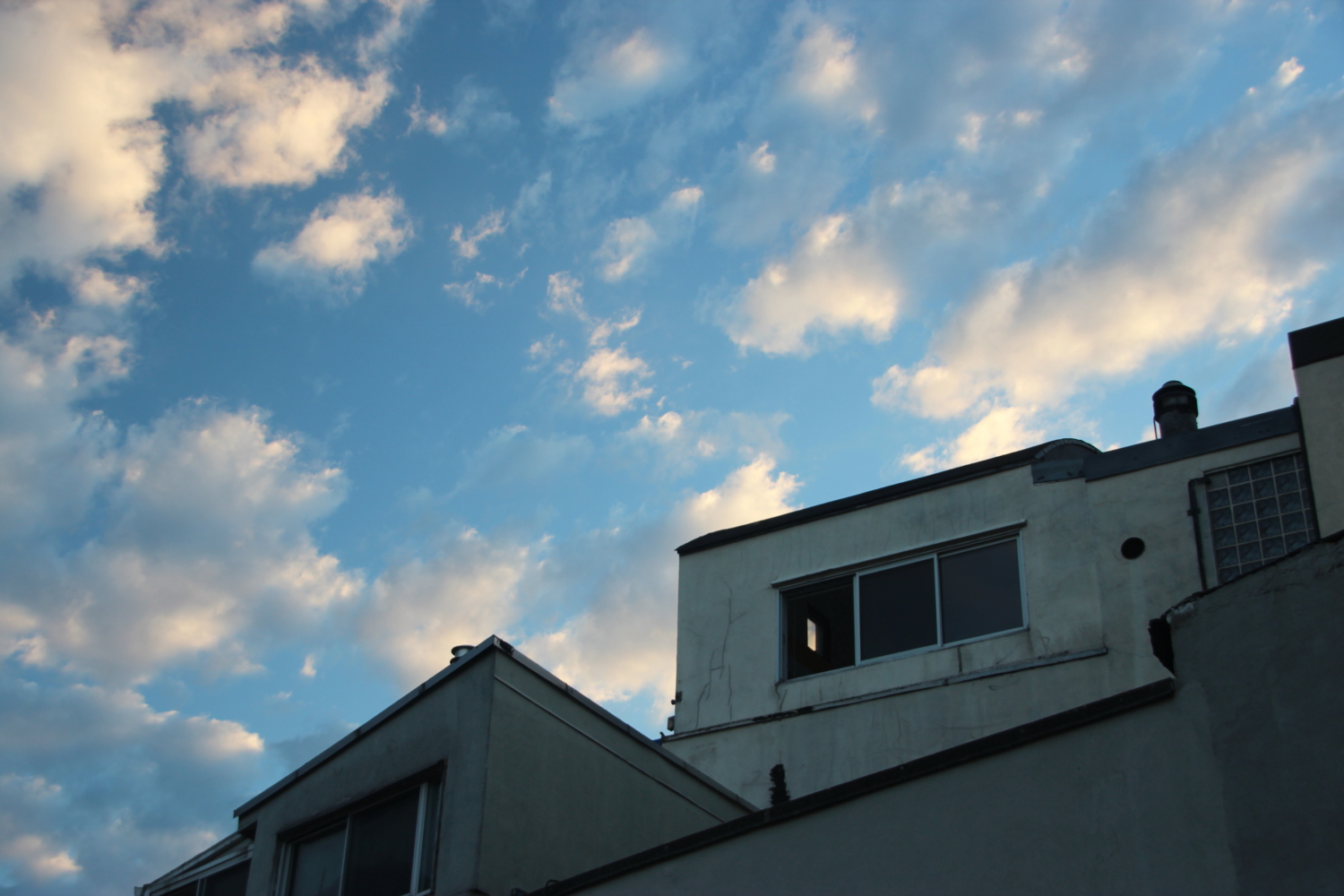
View from the balcony
* an ongoing series of quotations – mostly from artists, to artists – that offers wisdom, inspiration, and advice for the sometimes lonely road we are on.
What one writes at twenty-one is a cry, does one think of a cry that it ought to have been cried differently? The language is still so thin about one in these years, the cry pierces through and just takes along what is left clinging to it. The development will always be this, that one makes one’s language fuller, thicker, firmer (heavier), and of course there is sense in that only for one who is sure that the the cry too is growing in him ceaselessly, irresistibly, so that later, under the pressure of countless atmospheres, it will issue evenly from every pore of the almost impenetrable medium…
Talent, you understand, scarcely has significance any more in our day, since a certain dexterity of expression has become general, where is it not? Hence succeeding still means something only where the highest, utmost is achieved, and then one is again liable to think that just this unsurpassable something, once it appears in person, is in itself successful.
And so there is no real ground for concern, only that we want never to remain behind our heart and never to be in advance of it: that is probably needful. Thus we arrive at everything, each at what is his.
Jane Bannard Greene and M.D. Herter Norton editors, Letters of Rainer Maria Rilke 1910 – 1926
Comments are welcome!
Pearls from artists* # 16

“Big Deal,” soft pastel on sandpaper
* an ongoing series of quotations – mostly from artists, to artists – that offers wisdom, inspiration, and advice for the sometimes lonely road we are on.
For the artist drawing is discovery. And that is not just a slick phrase, it is quite literally true. It is the actual act of drawing that forces the artist to look at the object in front of him, to dissect it in his mind’s eye and put it together again; or, if he is drawing from memory, that forces him to dredge his own mind, to discover the content of his own store of past observations. It is a platitude in the teaching of drawing that the heart of the matter lies in the specific process of looking. A line, an area of tone, is not really important because it records what you have seen, but because of what it will lead you to see. Following up its logic in order to check its accuracy, you find confirmation or denial in the object itself or in your memory of it. Each confirmation or denial brings you closer to the object, until finally you are, as it were, inside it: the contours you have drawn no longer marking the edge of what you have seen, but the edge of what you have become. Perhaps that sounds needlessly metaphysical. Another way of putting it would be to say that each mark you make on the paper is a stepping-stone from which you proceed to the next, until you have crossed your subject as though it were a river, have put it behind you.
Geoff Dyer, editor, Selected Essays: John Berger
Comments are welcome.
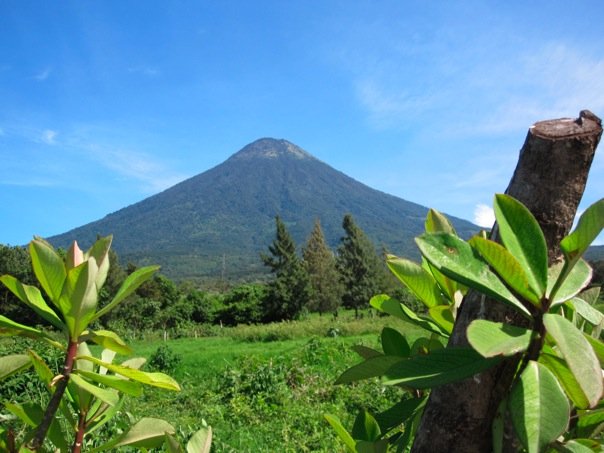
Q: Does your work look different to you on days when you are sad, happy, etc.?
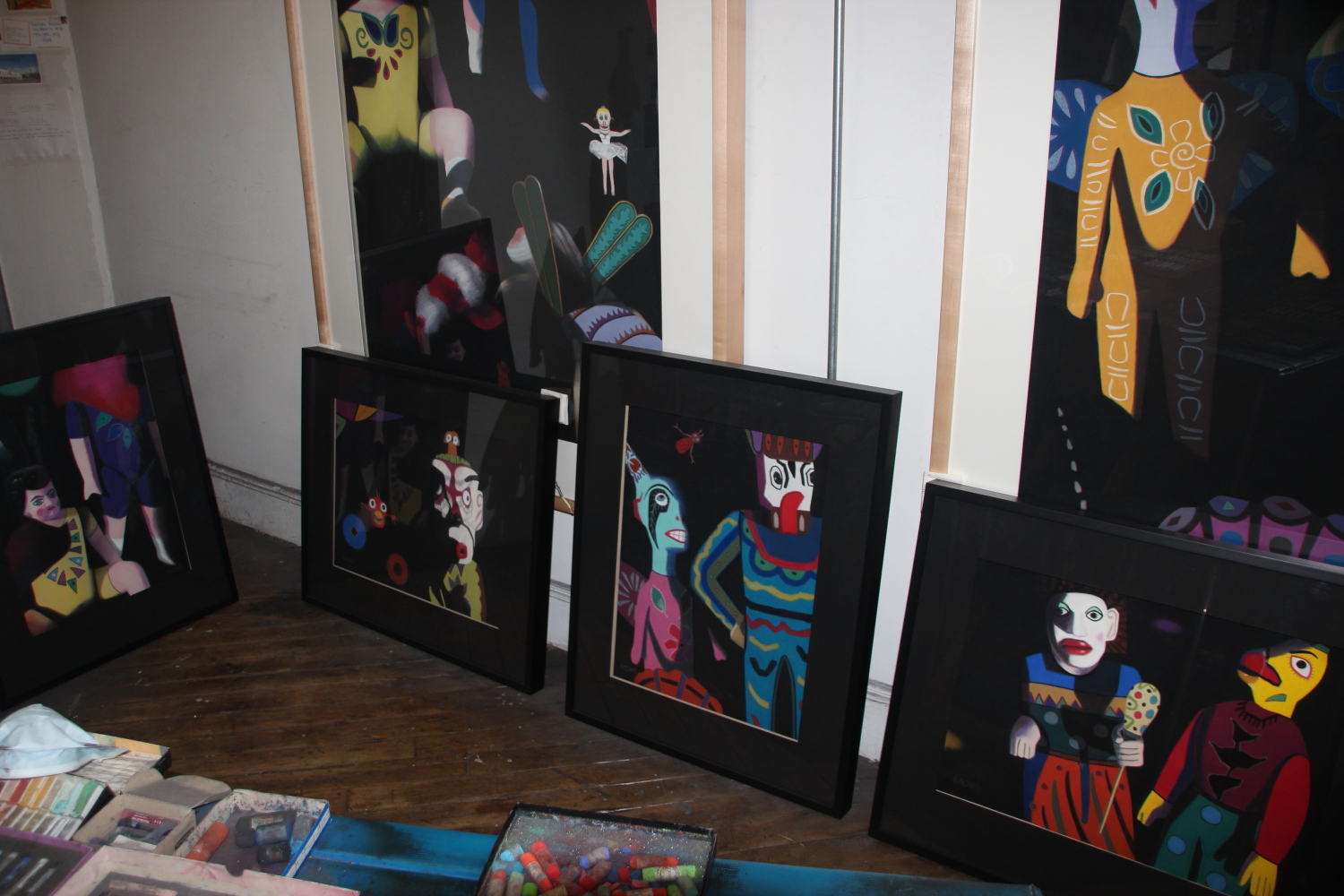
Recent work
A: I’m more critical on days when I am sad so that the faults, imperfections, and things I wish I had done better stand out. Fortunately, all of my work is framed behind plexiglas so I can’t easily go back in to touch up newly-perceived faults. It reminds me of the expression, “Always strive to improve, whenever possible. It is ALWAYS possible!” However, I’ve learned that re-working a painting is a bad idea. You are no longer deeply involved in making it and the zeitgeist has changed. The things you were concerned with are gone: some are forgotten, others are less urgent. For most artists the work is autobiography. Everything is personal. When I look at a completed pastel painting, I usually remember exactly what was happening in my life as I worked on it. Each piece is a snapshot – maybe even a time capsule, if anyone could decode it – that reflects and records a particular moment. When I finally pronounce a piece finished and sign it, that’s it, THE END. It’s as good as I can make it at that point in time. I’ve incorporated everything I was thinking about, what I was reading, how I was feeling, what I valued, art exhibitions I visited, programs that I heard on the radio or watched on television, music that I listened to, what was going on in New york, in the country, in the world, and so on. It is still a mystery how this heady mix finds its way into the work. During the time that I spend on it, each particular painting teaches me everything it has to teach. A painting requires months of looking, reacting, correcting, searching, thinking, re-thinking, revising. Each choice is made for a reason and as an aggregate these decisions dictate what the final piece looks like. On days when I’m sad I tend to forget that. On happier days I remember that the framed pastel paintings that you see have an inevitability to them. If all art is the result of one’s having gone through an experience to the end, as I believe it is, then the paintings could not, and should not, look any differently.
Comments are welcome.
Q: What would you be if you were not an artist?
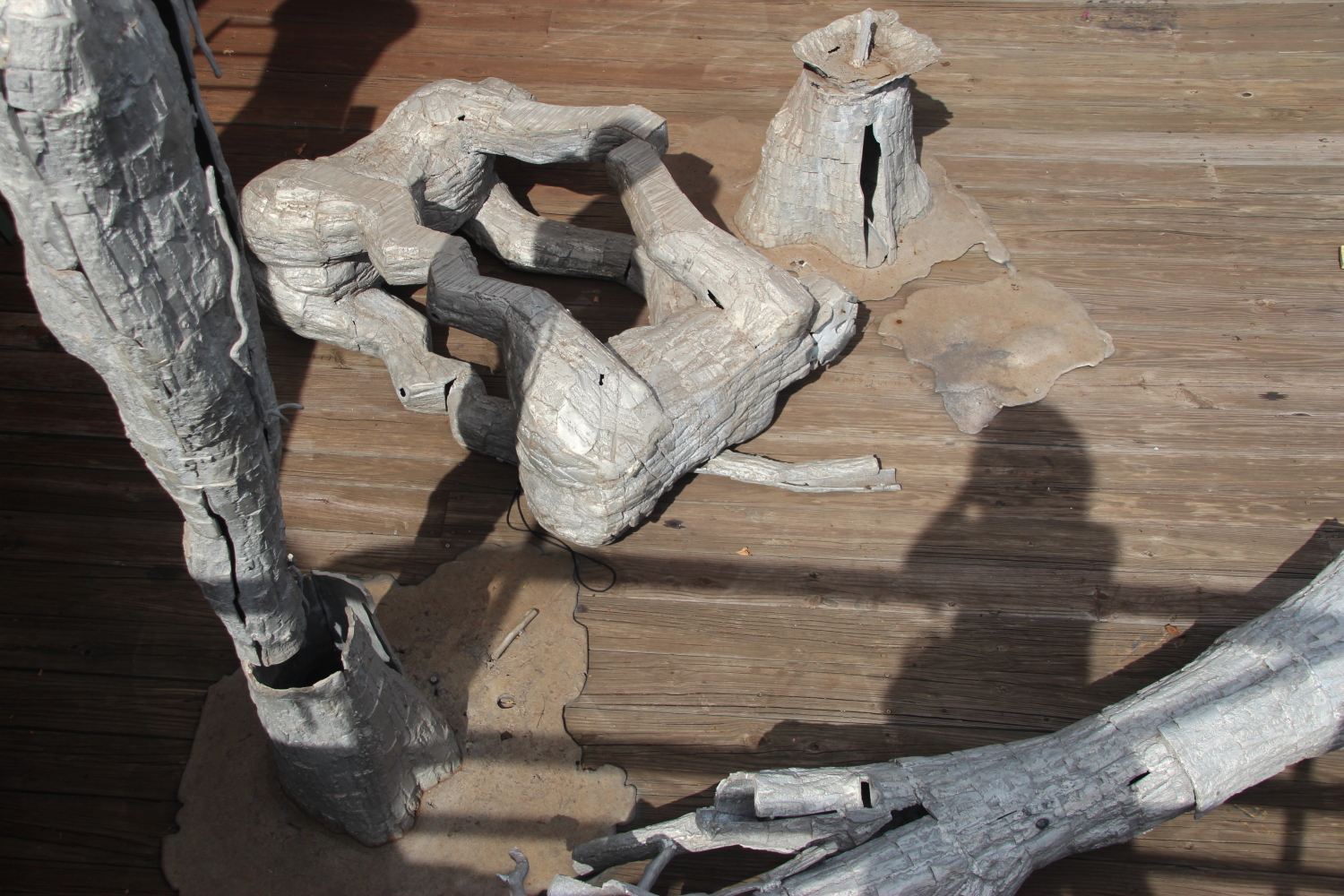
Self-portrait on a Hudson River barge
A: I honestly have no idea, but whatever it might be, there is a good chance that I’d be bored! In my younger days boredom was a strong motivator. I left the active duty Navy out of boredom. I couldn’t bear not being intellectually challenged (most of my jobs consisted of paper-pushing), not using my flying skills (at 27 I was a licensed commercial pilot and Boeing 727 flight engineer), and not developing my artistic talent. In what surely must be a first, by spending a lot of time and money training me for jobs I hated, the Navy turned me into a hard-working artist! And once I left the Navy there was no plan B. There was no time to waste. It was “full speed ahead.”
Art is a calling. You do not need to be told this if you are among those who are called. It’s all about “the work,” that all-consuming focus of an artist’s life. If a particular activity doesn’t make you a better artist, you avoid it. You work hard to nourish and protect your gifts. As artists we invent our own tasks, learn whatever we need in order to progress, and complete projects in our own time. It is life lived at its freest.
My art-making has led me to fascinating places: Mexico, Guatemala, Brazil, Argentina, Uruguay, France, England, Italy, Bali, Java and more; and to in-depth studies of intriguing subjects: drawing, color, composition, art and art history, the art business, film and film history, photography, mythology, literature, music, jazz history, and archaeology, particularly that of ancient Mesoamerica (the Olmec, Zapotec, Mixtec, Aztec, Maya, etc.). And this rich mixture continually grows! For anyone wanting to spend their time on earth learning and meeting new challenges, there is no better life than that of an artist.
I SO agree with this exchange that I read years ago between between Trisha Brown and Mikhail Baryshnikov in the New York Times. I wrote it on a piece of paper and taped it to my studio wall:
Trisha: How do you think we keep going? Are we obsessed?
Mikhail: We do it because there’s nothing better. I’m serious. Because there is nothing more exciting than that. Life is so boring, that’s why we are driven to the mystery of creation.
Comments are welcome.
Pearls from artists* # 13

“Stigmata,” soft pastel on sandpaper
* an ongoing series of quotations – mostly from artists, to artists – that offers wisdom, inspiration, and advice for the sometimes lonely road we are on.
Putting aside Steven’s references to God, I enjoy this quote. Give us what you’ve got, indeed!
Are you a born writer? Were you put on earth to be a painter, a scientist, an apostle of peace? In the end the question can only be answered by action.
Do it or don’t do it.
It may help to think of it this way. If you were meant to cure cancer or write a symphony or crack cold fusion and you don’t do it, you not only hurt yourself, even destroy yourself, you hurt your children. You hurt me. You hurt the planet.
You shame the angels who watch over you and you spite the Almighty, who created you and only you with your unique gifts, for the sole purpose of nudging the human race one millimeter farther along its path back to God.
Creative work is not a selfish act or a bid for attention on the part of the actor. It’s a gift to the world and every being in it. Don’t cheat us of your contribution. Give us what you’ve got.
Steven Pressfield, The War of Art
Comments are welcome.



