Category Archives: Inspiration
Pearls from artists* # 371
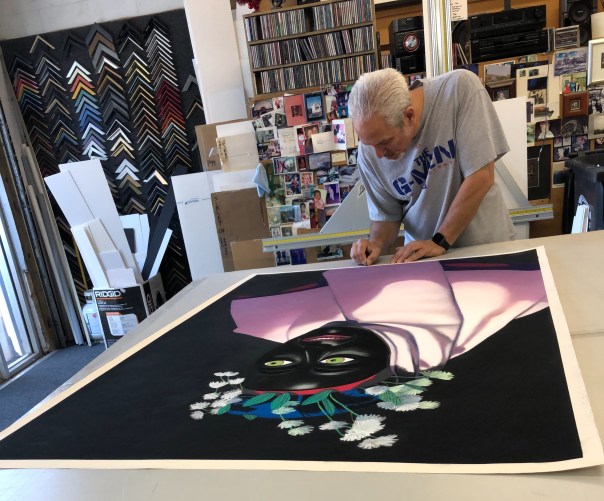
“Poseur,” Soft Pastel on Sandpaper, 58” x 38” at the framer
* an ongoing series of quotations – mostly from artists, to artists – that offers wisdom, inspiration, and advice for the sometimes lonely road we are on.
If you look at the work of an artist over a lifetime there is always transformation. Some hit a lively pace early on and then seem to lose it later. Others find that place progressively throughout their life; others still find it late. But regardless, they are all learning to isolate the poetic within them. That focus on the poetic in our own work increases our appreciation of the beauty around us, increases our growth, and increases our divine connection.
One thing you see in many artists’ work is that as they continue over the decades to translate their experience of the poetic into form, they learn to communicate better. They strip away all the extraneous stuff and artistic baggage they had. They say more with less.
Ian Roberts in Creative Authenticity: 16 Principles to Clarify and Deepen Your Artistic Vision
Comments are welcome!
Pearls from artists* # 370

Barbara at work on “The Orator.” Photo: Maria Cox
* an ongoing series of quotations – mostly from artists, to artists – that offers wisdom, inspiration, and advice for the sometimes lonely road we are on.
Nothing determines your creative life more than doing it. This is so obvious and fundamental, yet how much energy is wasted on speculation, worry, and doubt without the relief of action. “Success is 90 percent just showing up.” I can’t tell you the number of problems that are solved with this one simple principle, because when you start, it leads to something, anything. And when you have something tangible in front of you, then you can react to it and amend it. And that will lead to something else. In the book, In Search of Excellence by Tom Peters and Robert Waterman Jr., which looked at companies in America that excelled at what they did, one of the guiding principles was, “Do it, mend it, fix it.”
Ian Roberts in Creative Authenticity: 16 Principles to Clarify and Deepen Your Artistic Vision
Comments are welcome!
Q: Your work is unlike anyone else’s. There is such power and boldness in your pastels. What processes are you using to create such poignant and robustly colored work?

Barbara working on an interview. Photo: Maria Cox
A: For thirty-three years I have worked exclusively in soft pastel on sandpaper. Pastel, which is pigment and a binder to hold it together, is as close to unadulterated color as an artist can get. It allows for very saturated color, especially using the self-invented techniques I have developed and mastered. I believe my “science of color” is unique, completely unlike how any other artist works. I spend three to four months on each painting, applying pastel and blending the layers together to mix new colors on the paper.
The acid-free sandpaper support allows the buildup of 25 to 30 layers of pastel as I slowly and meticulously work for hundreds of hours to complete a painting. The paper is extremely forgiving. I can change my mind, correct, refine, etc. as much as I want until a painting is the best I can create at that moment in time.
My techniques for using soft pastel achieve rich velvety textures and exceptionally vibrant color. Blending with my fingers, I painstakingly apply dozens of layers of pastel onto the sandpaper. In addition to the thousands of pastels that I have to choose from, I make new colors directly on the paper. Regardless of size, each pastel painting takes about four months and hundreds of hours to complete.
I have been devoted to soft pastel from the beginning. In my blog and in numerous interviews online and elsewhere, I continue to expound on its merits. For me no other fine art medium comes close.
My subject matter is singular. I am drawn to Mexican, Guatemalan, and Bolivian cultural objects—masks, carved wooden animals, papier mâché figures, and toys. On trips to these countries and elsewhere I frequent local mask shops, markets, and bazaars searching for the figures that will populate my pastel paintings. How, why, when, and where these objects come into my life is an important part of the creative process. Each pastel painting is a highly personal blend of reality, fantasy, and autobiography.
Comments are welcome!
Pearls from artists* # 369
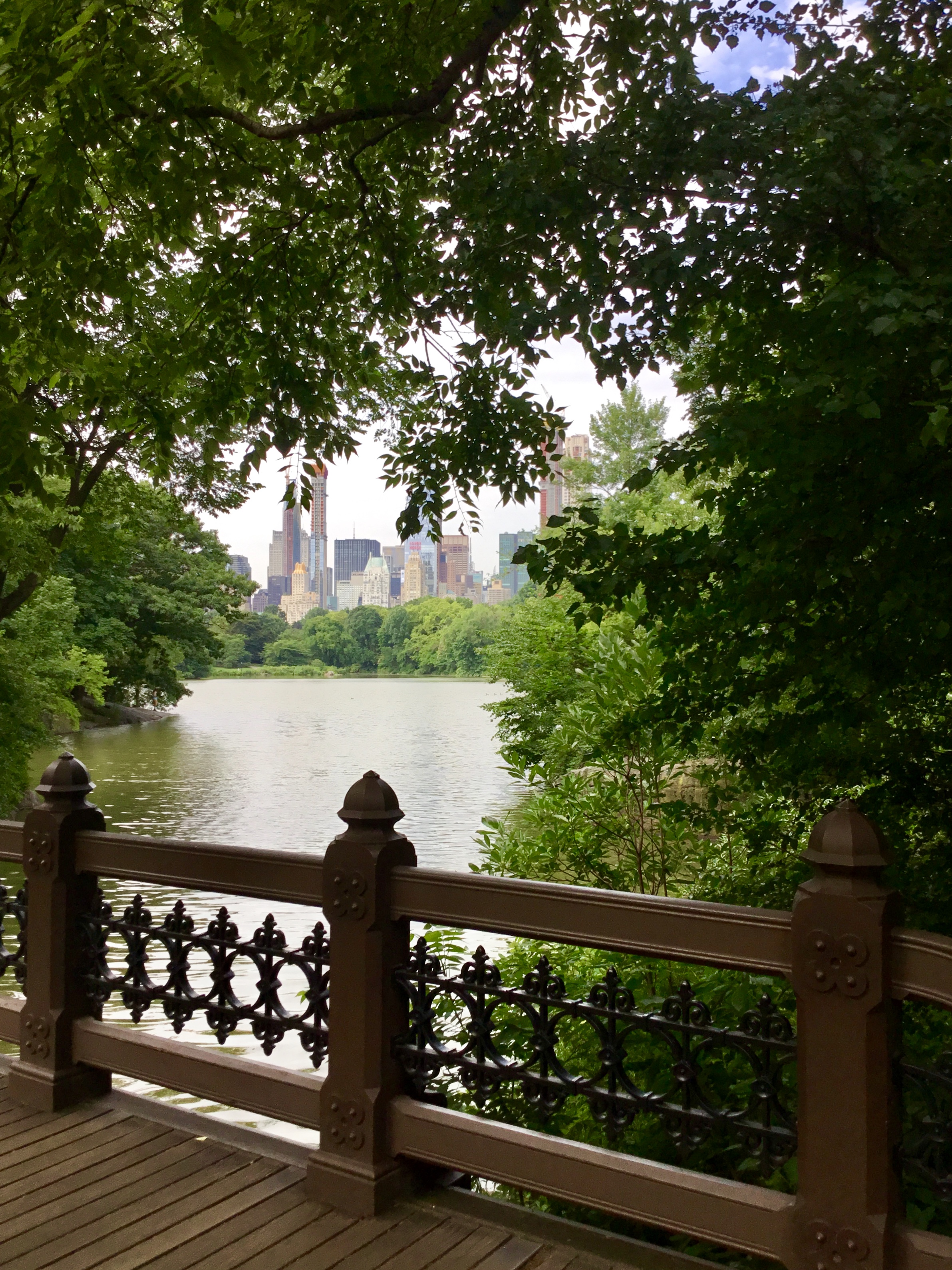
Central Park, NYC
* an ongoing series of quotations – mostly from artists, to artists – that offers wisdom, inspiration, and advice for the sometimes lonely road we are on.
Salieri wrote a memoir of his own, which his friend Ignacio von Mosel used as the basis for a biography, published in 1827. Salieri’s original document disappeared, but Mosel quoted parts of it. One anecdote is particularly winning. Salieri is recounting the premier, in 1770, of his second opera, “Le Donne Letterate” (“The Learned Woman”). The applause is vigorous, prompting the young composer to follow the audience out into the street, in the hope of soaking up more praise. He overheard a group of operagoers:
“The opera is not bad,” said one. “It pleased me right well,” said a second (that man I could have kissed). “For a pair of beginners, it is no small thing,” said the third. “For my part,” said the fourth, “I found it very tedious.” At these words I struck off into another street for fear of hearing something still worse.
Any creative person who has made the mistake of surreptiously canvassing public opinion will identify with Salieri’s fatal curiosity.
Alex Ross in Salieri’s Revenge in The New Yorker, June 3, 2019
Comments are welcome!
Pearls from artists* # 368

Leonora Carrington at Di Donna Galleries, NYC
* an ongoing series of quotations – mostly from artists, to artists – that offers wisdom, inspiration, and advice for the sometimes lonely road we are on.
Whether we look to the contradictory functions that people are asked to fulfill today – devoted parent and loyal employee, faithful spouse and emancipated libertine, mature adult and eternal child – or to the ways in which identities are disbursed across divergent political forums, information systems, and communication networks, the same observation holds: we are infinitely divided. What is called an individual today is an abstract assemblage of fragments. Phone calls, emails, voice mails, blogs, videos and photos, surveillance tapes, banking records: the body is dwarfed by the virtual tendrils that shoot out if it through time and space, any of which is likely to claim to be the real “you” as you are. Only the imaginal mind can lead us out of the maze, with art providing the symbols that mark the way to the elusive essence that truly defines us.
J.F. Martel in Reclaiming Art in the Age of Artifice:A Treatise, Critique, and Call to Action
Comments are welcome!
Pearls from artists* # 366

Studio entrance
* an ongoing series of quotations – mostly from artists, to artists – that offers wisdom, inspiration, and advice for the sometimes lonely road we are on.
For some artists the studio becomes like a temple, a place that becomes invested with a sacred energy. I was looking at a book recently called Artist at Work. It featured the studios of several well-known American artists. In almost every case the space reminded me of a chapel in a cathedral. The physical, emotional, and even spiritual elevation the space created contributed to the work.
This is the home turf of your creative space. A space that stays undisturbed from the rest of daily forces. It stays open for your arrival. When you walk in you acquire a heightened readiness to begin. Your dining room table that must be cleared off for the evening meal will require more energy from you each time you begin. but a studio collects energy and focuses it, ready for your return. That space may be your garden, the view behind the house, or a desk in a bedroom that is reserved for your creative work. But it will help to secure it. It is your temple, the place where you focus your energies to express yourself. Your creative home base.
Ian Roberts in Creative Authenticity: 16 Principles to Clarify and Deepen Your Artistic Vision
Comments are welcome!
Pearls from artists* # 365
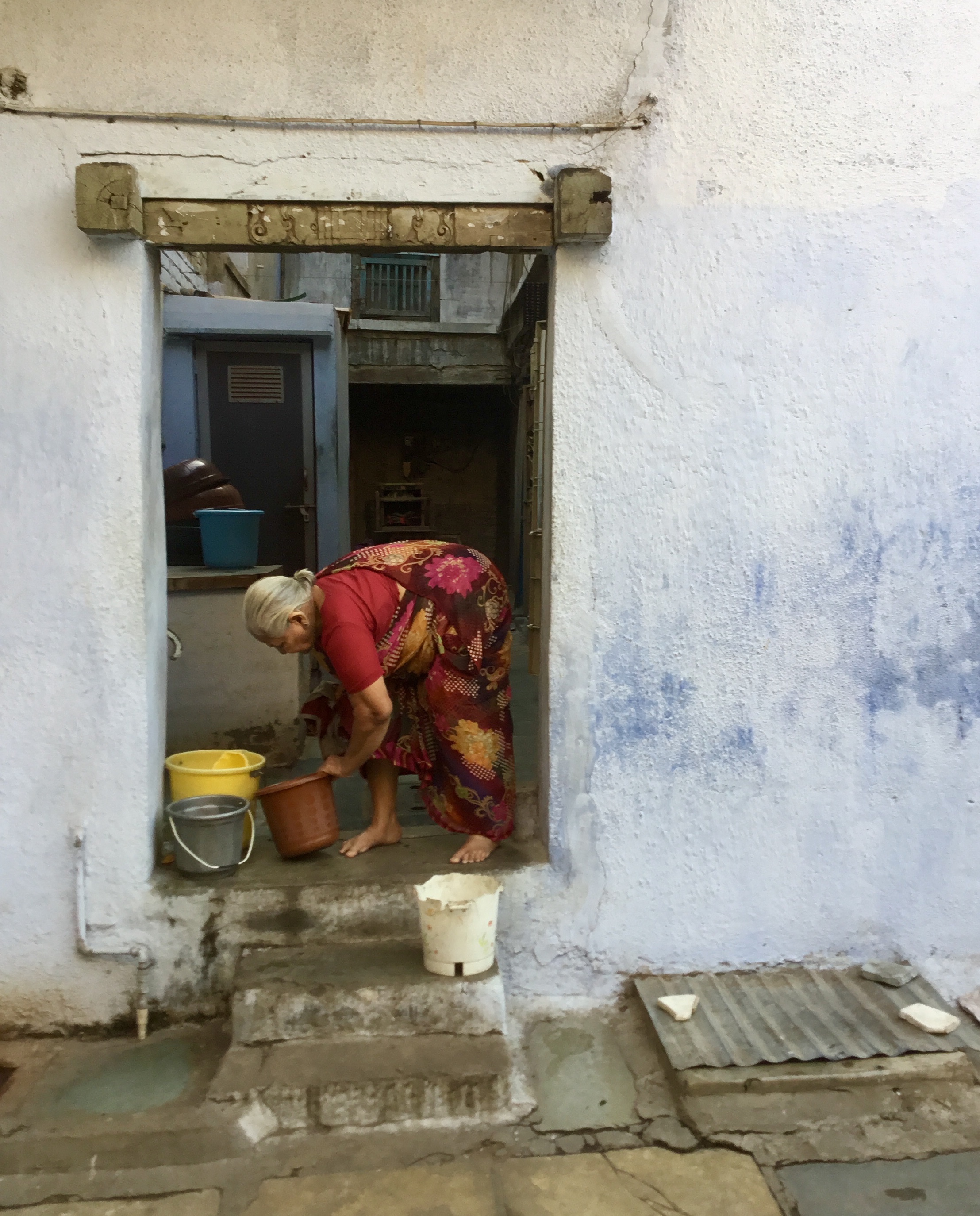
Ahmedabad, India
* an ongoing series of quotations – mostly from artists, to artists – that offers wisdom, inspiration, and advice for the sometimes lonely road we are on.
The important thing is the intersection between intuition and discipline, because you have to be alert and at the same time invisible. The eye has to be alert and capture very quickly everything you have inside you – I don’t know how to explain it. What the eye sees is the synthesis of what you are or what you’ve learned to do, this is the language of photography…
Graciela Iturbide in Eyes to Fly With: Portraits, Self-Portraits, and Other Photographs
Comments are welcome!
Pearls from artists* # 364
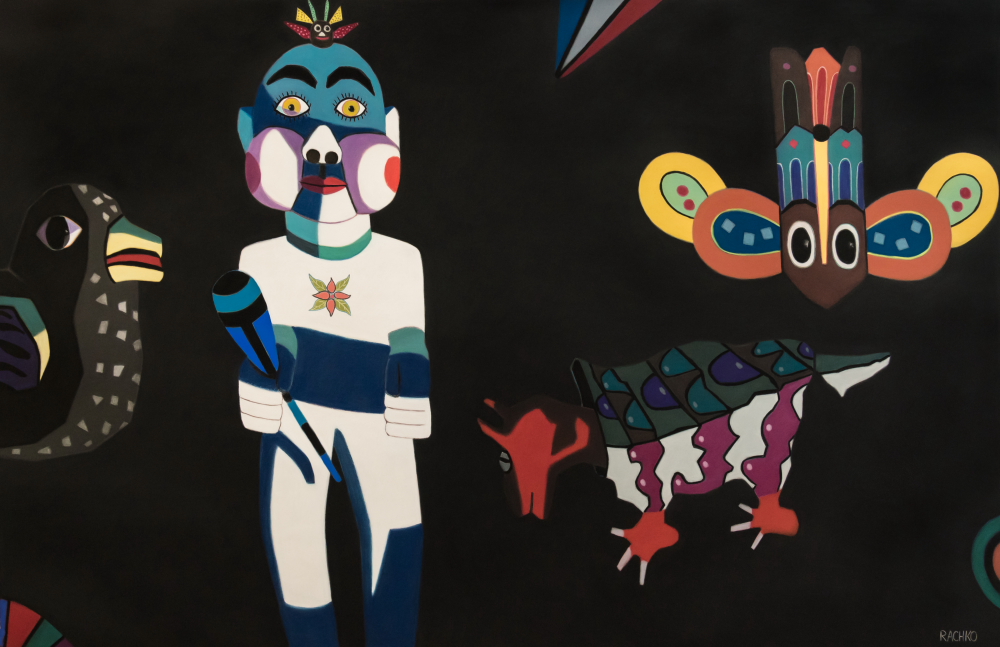
“White Star,” soft pastel on sandpaper, 38″ x 58″
* an ongoing series of quotations – mostly from artists, to artists – that offers wisdom, inspiration, and advice for the sometimes lonely road we are on.
If we are left unmoved by a painting of the Virgin, it is likely because the artist was unmoved in the painting of her. The subject matter is mostly irrelevant; it is important only as a vehicle for the artist’s attention. Authenticity comes from how deeply the artist felt. And this is the key to how much silence, how much consciousness or attention, the art contains.
… subject matter, if the artist is even using it, is just an armature for the artist to engage his intensity of feeling. It is the quality of your attention that influences how you see and how deeply you feel. Different artists have affinities for different subject matter as a way into expressing themselves deeply. And that depth is the quality, we, the viewers, respond to. It is what we continue to respond to over the centuries in great works of art. The fact that things last, that we continue to admire them, is in the end a good indicator of their quality, of their silence. Art museums therefore, have little nodes of silence nestling in their galleries. They are filled with, to use André Malraux’s expression, “the voices of silence.”
Ian Roberts in Creative Authenticity: 16 Principles to Clarify and Deepen Your Artistic Vision
Comments are welcome!
Q: During one of the most gripping times of your life, you were personally affected by the 9/11 attack on our country. Your husband was killed on the plane that crashed into the Pentagon. Would you mind telling us about it and how it has shaped your work?
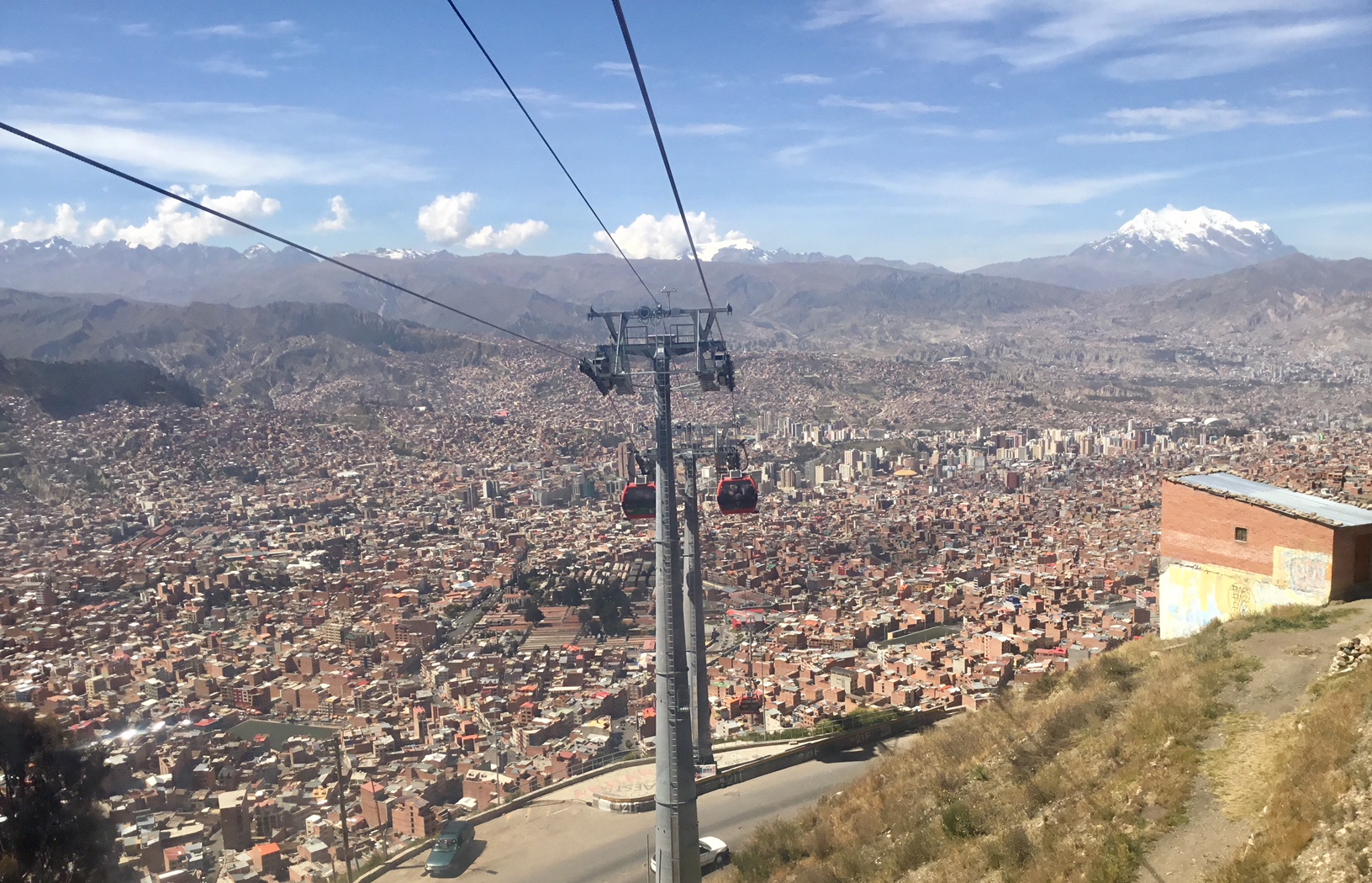
‘Mi Teleferico’ line, La Paz, Bolivia
A: In the summer of 2002 I was ready to – I HAD to – get back to work in my studio. I knew exactly what I must do. More than ever before, learning and painting would become the avenues to my well-being.
Because I use reference photos for my pastel paintings, the first challenge was to learn how to use Bryan’s 4 x 5 view camera. At that time I was not a photographer. Bryan had always taken reference photos for me.
In July 2002 I enrolled in a view camera workshop at New York’s International Center of Photography. Much to my surprise I had already absorbed quite a lot from watching Bryan. After the initial workshop, I continued more formal studies of photography for several years. In 2009, I am proud to say, I was invited to present a solo photography exhibition at a New York gallery!
In 2003 I resumed making my Domestic Threats series of pastel paintings, something that had seemed impossible after Bryan’s death. The first large pastel painting that I created using a reference photograph taken by me confirmed that my life’s work could continue. The title of that painting, “She Embraced It and Grew Stronger,” was autobiographical. “She” is me, and “it” meant continuing on without Bryan and living life for both of us.
Having had a long successful run, the Domestic Threats series finally ended in early 2007. Around that time I was feeling happier and had come to better terms with losing Bryan. While this is a tragedy I will never truly be at peace with, dealing with the loss became easier with time.
Then in 2007 I suddenly became blocked and did not know where to take my work next. I had never experienced creative block and especially for a full-time professional artist, this was a painful time. Still, I continued to go to the studio every day and eventually, thanks to a confluence of favorable circumstances, the block ended.
My next pastel painting series was called Black Paintings. I viewed the black background as literally, the very dark place that I was emerging from, exactly like the figures emerging in these paintings. The figures themselves were wildly colorful and full of life, but that black background – one critic has dubbed it my “blackground” – is always there.
Still the work continues to evolve. In 2017 I began my third pastel painting series called Bolivianos, based on a mask exhibition encountered in La Paz at the The National Museum of Ethnography and Folklore. Many people have proclaimed this to be my most bold, daring, and exciting pastel painting series yet. And I think they may be right! Continuing on the journey I began 30+ years ago, I am looking forward to creating many new, striking pastel paintings!
Comments are welcome!
Pearls from artists* # 363
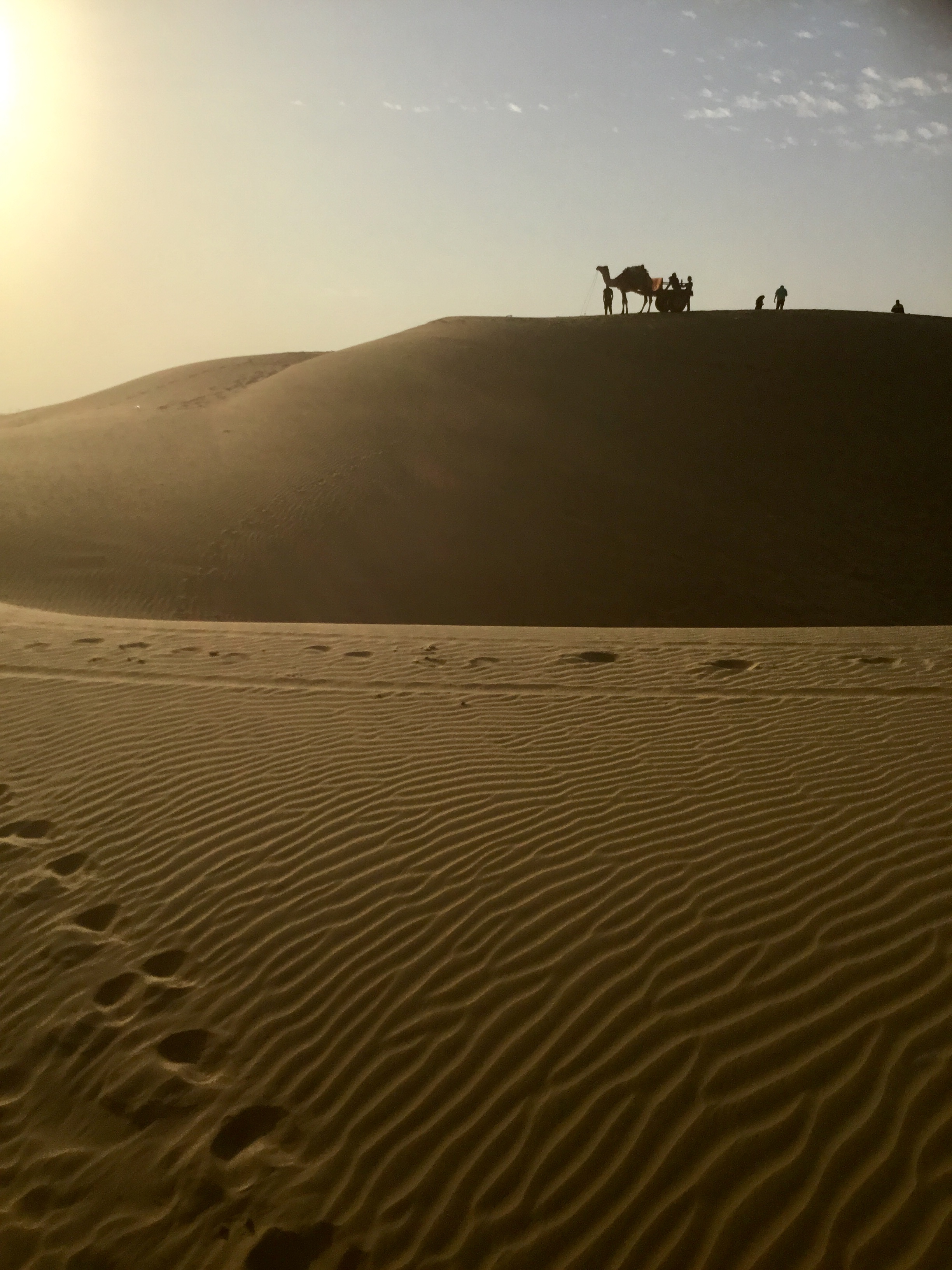
Thar Desert, Rajasthan, India
* an ongoing series of quotations – mostly from artists, to artists – that offers wisdom, inspiration, and advice for the sometimes lonely road we are on.
Beauty seems to need quiet and take patience, both to create it and to experience it.
If our minds are filled with a long and urgent “to do” list, we are not likely to slow down enough to appreciate anything but the next line we can draw through our never-ending list. Yet every now and again something stops us. It arrests our constant external activity and search. We can be stopped by the way the light filters through the trees in our backyard or hits a bowl of fruit on our kitchen table. And we are silenced, even if momentarily. We can be stopped by cave paintings as easily as by a thirteenth-century tapestry or a fifteenth-century Italian painting. We may be impressed by the craft of the artist, but almost always what moves us most deeply is the beauty that is expressed by the craft.
In the face of beauty, we are silenced because beauty expresses silence. In lavishing attention on the object of the artwork, the consciousness of the artist can touch something divine, some transcendental quality, and that transcendent element now resides in the artwork. How do we know it? We feel it. We experience it. Our heart responds to that sublime quality the artist infused into the work.
Ian Roberts in Creative Authenticity: 16 Principles to Clarify and Deepen Your Artistic Vision
Comments are welcome!


 barbararachkoscoloreddust.com