Category Archives: 2015
2015 Archives
Q: How important are the titles of your pastel paintings?
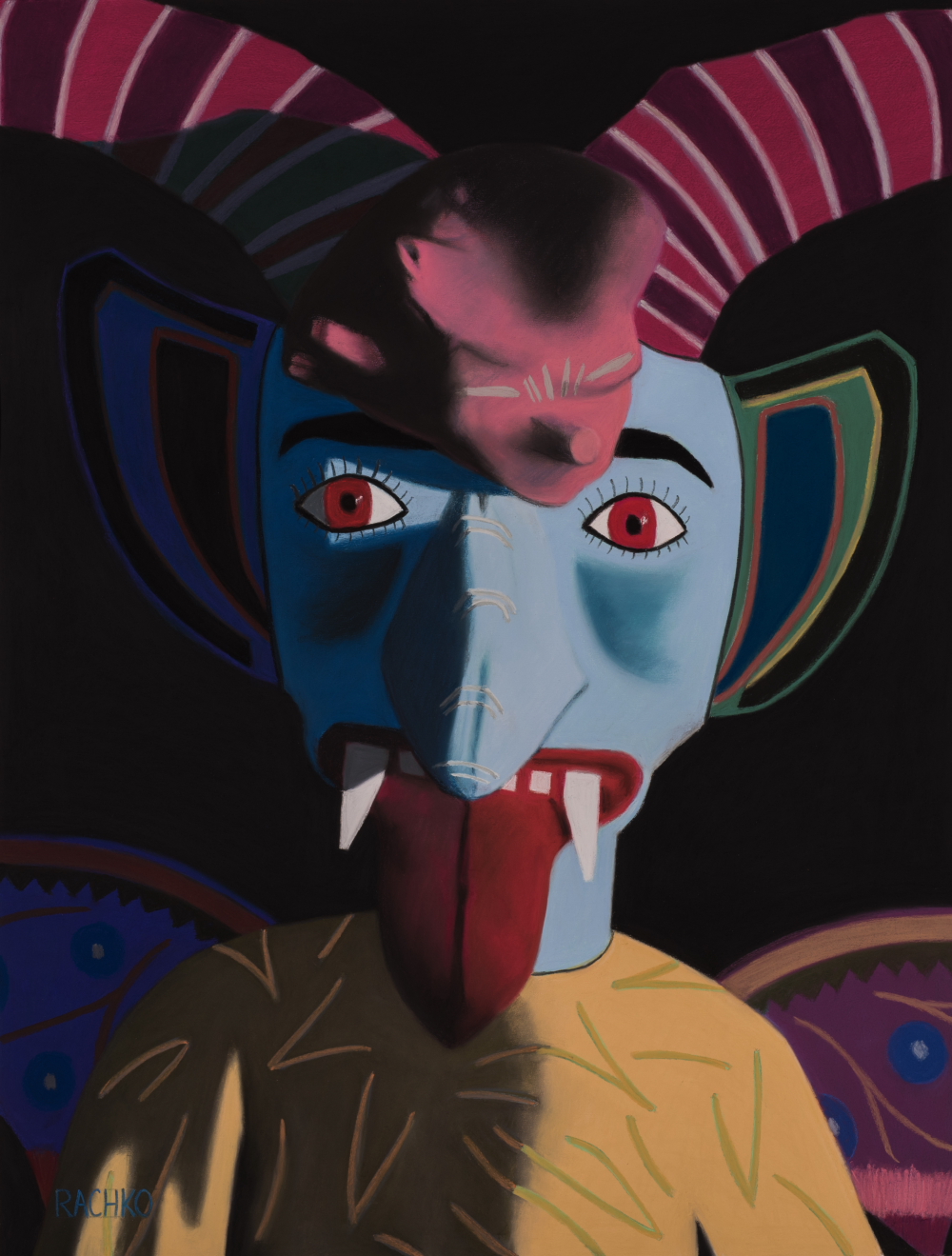
“Provocateur,” soft pastel on sandpaper, 26″ x 20″
A: I’d say they are important. Titles serve mainly as “a way in” for viewers, giving some clues about my thought processes while I am making a painting. Usually titles emerge only after I have been working on a painting for weeks or months. For me they are very much like mementos after a very interesting journey.
Comments are welcome!
Pearls from artists* # 171
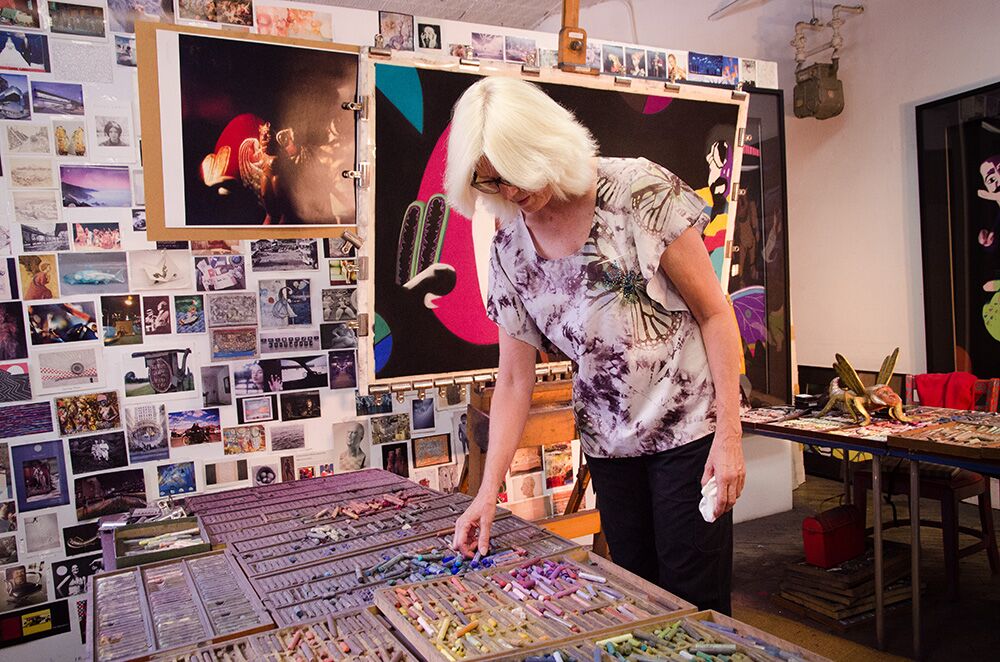
Barbara at work, Photo: Marianne Barcellona
* an ongoing series of quotations – mostly from artists, to artists – that offers wisdom, inspiration, and advice for the sometimes lonely road we are on.
We should do everything calmly and only react emotionally to great works of art or noble deeds. Work quietly and without hurrying. As soon as you begin to sweat and get excited, be careful. Slack painting is the painting of a slacker.
The Journal of Eugene Delacroix, edited by Hubert Wellington
Comments are welcome!
Q: Your pastel paintings are immediately recognizable as yours alone. Did you consciously try to develop a signature style in your work?
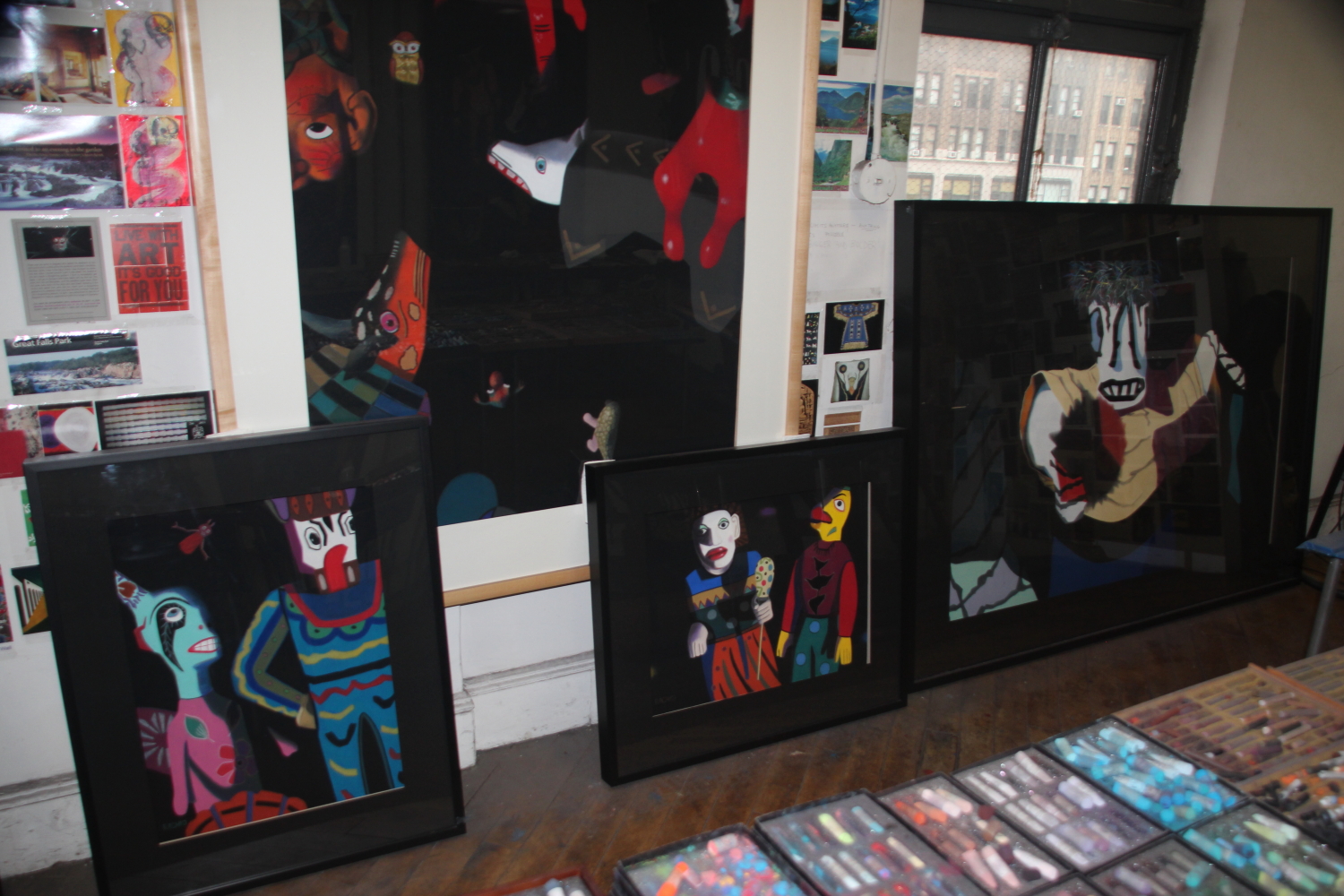
Barbara’s studio
A: I don’t believe that is even possible. An artist’s style is something that evolves with plain hard work and experience, over many years of trial and error, as one finds what techniques work best and discards those that don’t. It is a process of continually experimenting, refining, and clarifying. In other words, style is something that emerges naturally as you gradually strive to improve your art-making.
Style develops in close connection to what an artist is saying as she undergoes a very personal and idiosyncratic journey. Again, it would seem improbable for an artist to strive for any particular style, since style is not something over which an artist can exert much conscious control.
I would even say that each artist’s unique style is inevitable. It would be nearly impossible now to make a pastel painting or photograph that does NOT look like a Rachko.
Comments are welcome!
Pearls from artists* # 170
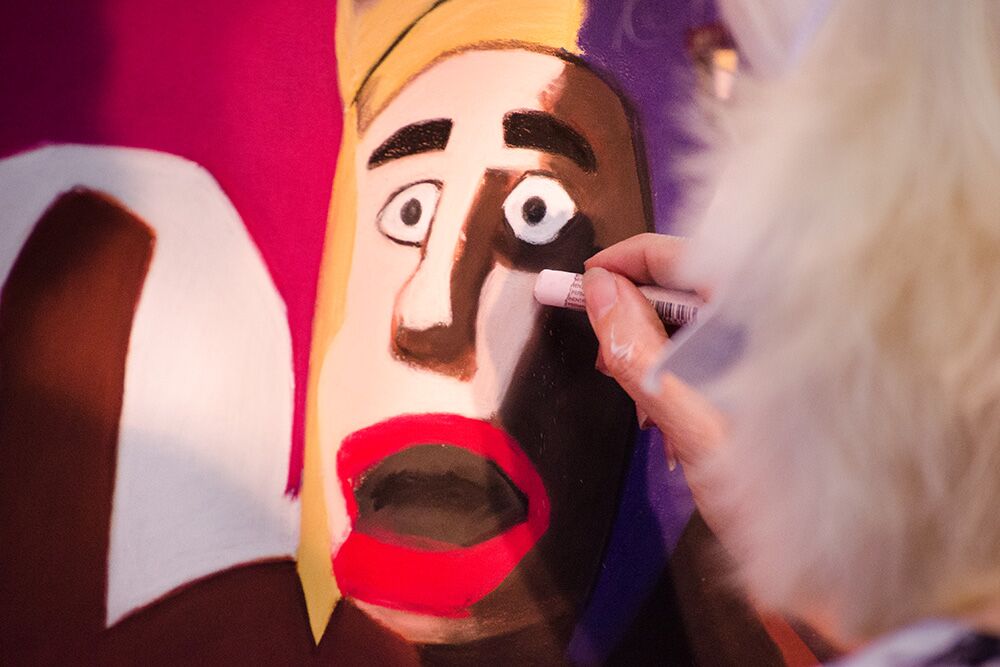
Barbara at work, Photo: Marianne Barcellona
* an ongoing series of quotations – mostly from artists, to artists – that offers wisdom, inspiration, and advice for the sometimes lonely road we are on.
Every novelist ought to invent his own technique, that is the fact of the matter. Every novel worthy of the name is like another planet, whether large or small, which has its own laws just as it has its own flora and fauna. Thus, Faulkner’s technique is certainly the best one with which to produce Faulkner’s world, and Kafka’s nightmare has produced its own myths that make it communicable. Benjamin Constant, Stendahl, Eugene Fromentin, Jaques Riviere, Radiquet, all used different techniques, took different liberties, and set themselves different tasks. The work of art itself, whether its title is Adolphe, Lucien Leuwen, Dominique, Le Diable au corps or A la Recherché du temps perdu, is the solution to the problem of technique.
Francois Mauriac in The Paris Review Interviews: Writers at Work 1st Series, edited and with an Introduction by Malcolm Cowley
Comments are welcome!
Q: Do you have any favorites among the Mexican and Guatemalan folk art figures that you depict in your work?

Idea for an upcoming pastel painting
A: I suppose it seems that way, since I certainly paint some figures more than others. My favorite characters change, depending on what is happening in my work. My current favorites are a figure I have never painted before (the Balinese dragon above) and several Mexican and Guatemalan figures last painted years ago. All will make an appearance in a pastel painting for which I am still developing preliminary ideas (above).
Comments are welcome!
Pearls from artists* # 169
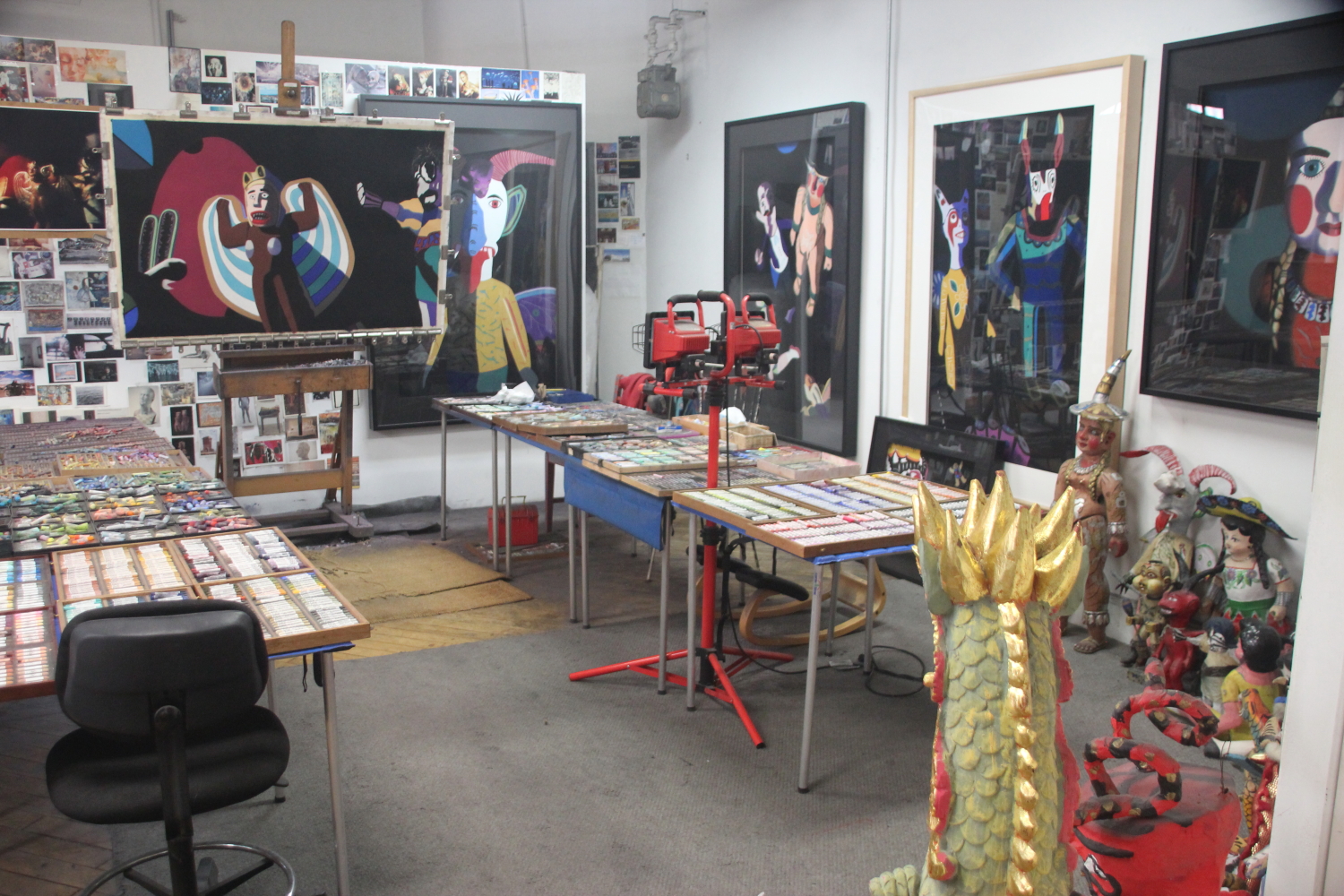
Barbara’s studio
* an ongoing series of quotations – mostly from artists, to artists – that offers wisdom, inspiration, and advice for the sometimes lonely road we are on.
For many, the familiar presence of things is a comfort. Things are valued not only because of their rarity or cost or their historical aura, but because they seem to partake in our lives; they are domesticated, part of our routine and so of us. Their long association with us seems to make them custodians of our memories; so that sometimes, as in Proust, things reveal us to ourselves in profound and unexpected ways.
The Tears of Things: Melancholy and Physical Objects by Peter Schwenger
Comments are welcome!
Q: What’s on the easel today?
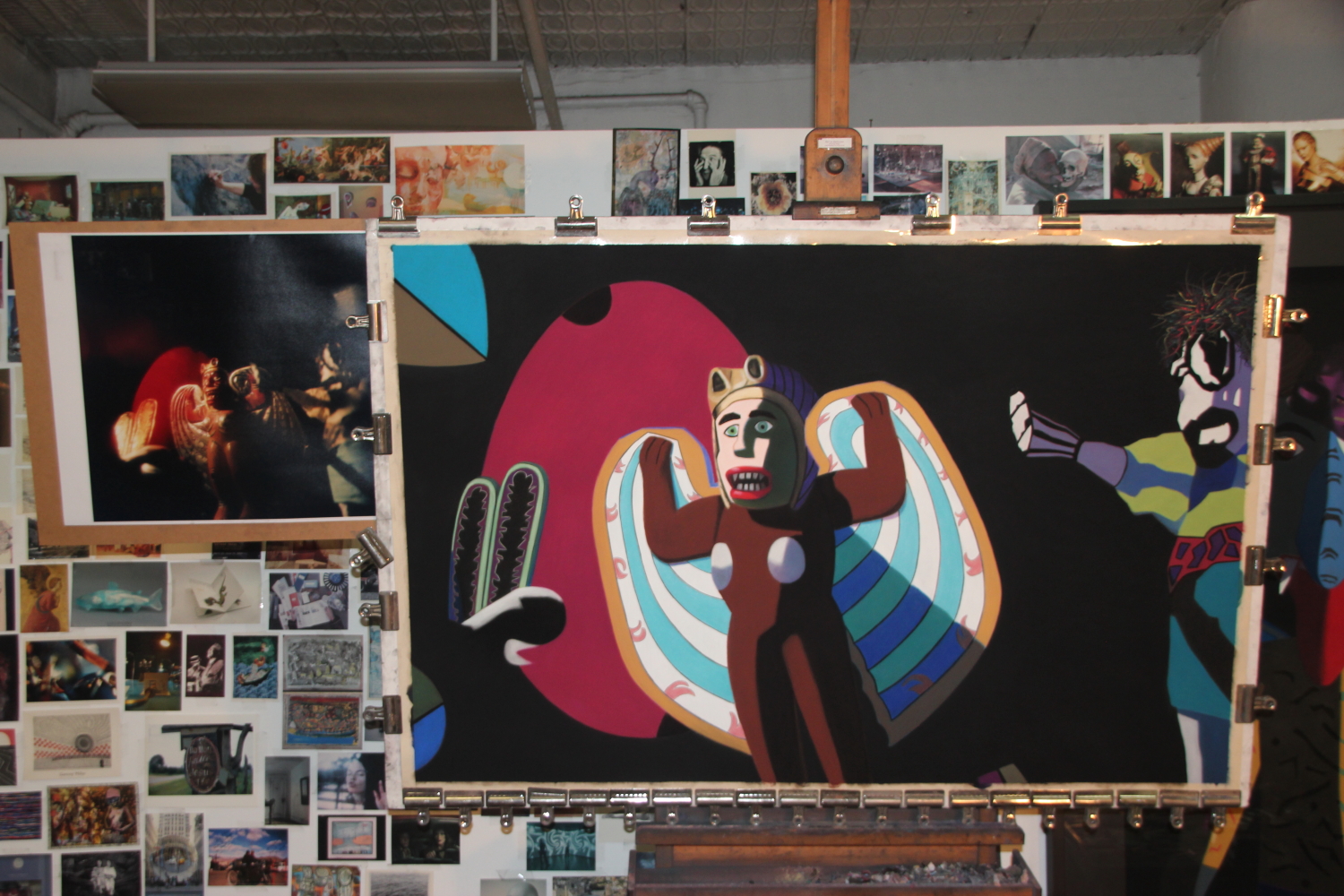
Work in progress
A: I am still working on “Charade.” This pastel painting has given me so many problems! In particular, I have not resolved the figure in the middle. l am not happy with the mouth and the entire figure needs more detail.
Comments are welcome!
Pearls from artists* # 168
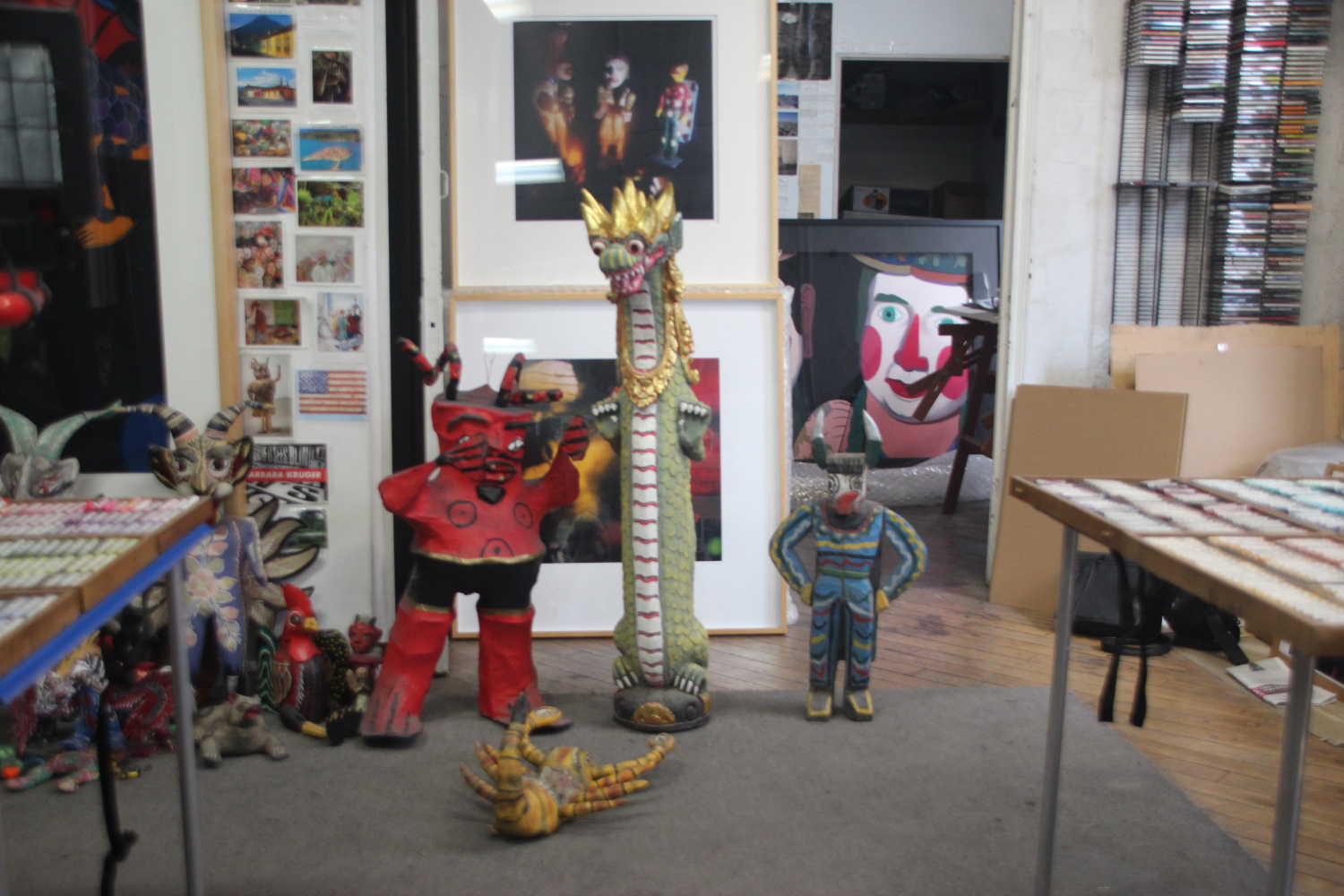
Barbara’s studio
* an ongoing series of quotations – mostly from artists, to artists – that offers wisdom, inspiration, and advice for the sometimes lonely road we are on.
How strange the human mind is! When I first began, I think I should have been willing to work at it from the tops of a church steeple, whereas now, even to think of finishing requires a real effort. And all this, simply because I have been away from it for so long. It is the same with my picture and with everything else I do. There is always a thick crust to be broken before I can give my whole heart to anything; a stubborn piece of ground, as it were, that resists the attacks of plough and hoe. But with a little perseverance the hardness suddenly gives and it becomes so rich in fruit and flowers that I am quite unable to gather them all.
The Journal of Eugene Delacroix edited by Hubert Wellington
Comments are welcome!
Q: What was the first painting you ever sold?
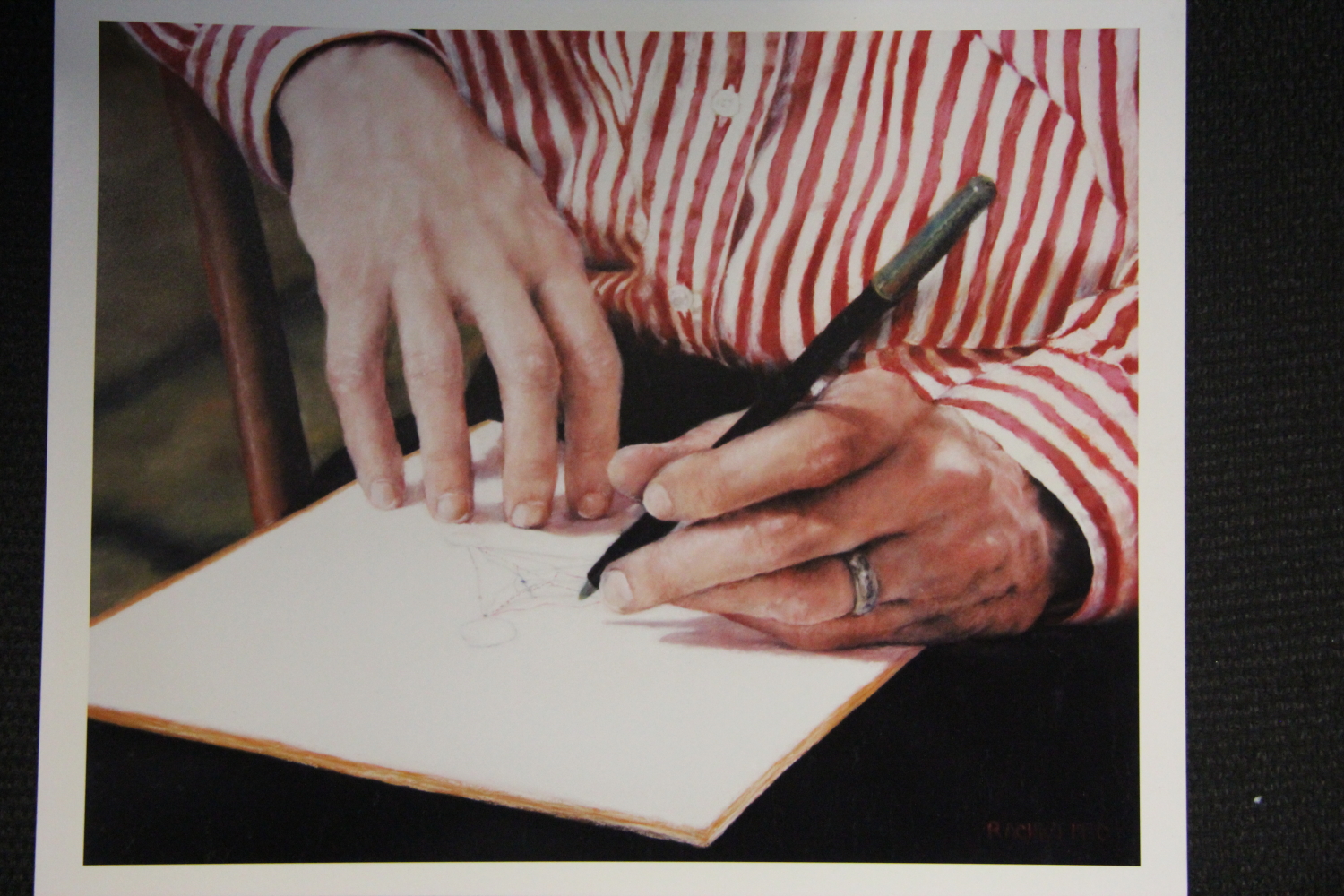
“Bryan’s Ph.D.”, 11″ x 13 1/2″, soft pastel on sandpaper
A: I believe my first sale was “Bryan’s Ph.D.” I made it in 1990 as one of several small paintings created to improve my skills at rendering human hands in pastel. I had recently left the Navy and was building a career as a portrait artist. Bryan, my late husband, was often my model for these studies, not only because it was convenient, but because he had such beautiful hands.
In 1990 Bryan was working on his Ph.D. in economics at the University of Maryland. In this painting he is drawing a diagram that illustrates a theoretical point about “international public goods,” the subject of his research. He was sitting in an old wooden rocking chair in our backyard in Alexandria, VA. I still own the chair and the house. I photographed his hands close-up and then created the painting. I don’t remember which of Bryan’s cameras I used, but it was one that took 35 mm film; perhaps his Nikon F-2. Somewhere I must still have the negative and the original reference photo.
“Bryan’s Ph.D.” is 11″ x 13 1/2″ and it sold for $500 at a monthly juried exhibition at The Art League in Alexandria. I have not seen it since 1990. (Above is a photograph of “Bryan’s Ph.D.” from my portfolio book).
Not long ago the owner contacted me, explaining that she had received the painting as a gift from her now ex-husband. She was selling it because it evoked bitter memories of her divorce. Her phone call was prompted by uncertainty about the painting’s value now. She had a likely buyer and needed to know what price to charge.
I was saddened because I have so many beautiful memories of this particular painting and of an idyllic time in my life with Bryan. He was on a leave of absence from the Pentagon to work on his dissertation, while I was finished with active duty. At last I was a full time artist, busily working in the spare bedroom that we had turned into my first studio.
My conversation with the owner was a reminder that once paintings are let out into the world, they take on associations that have nothing to do with the personal circumstances surrounding their creation. In short, what an artist creates solely out of love, stands a good chance of not being loved or appreciated by others. This is one reason to only sell my work to people I select personally. I ended the telephone conversation hoping that “Bryan’s Ph.D.” fares better in its new home.
Comments are welcome!
Pearls from artists* # 167
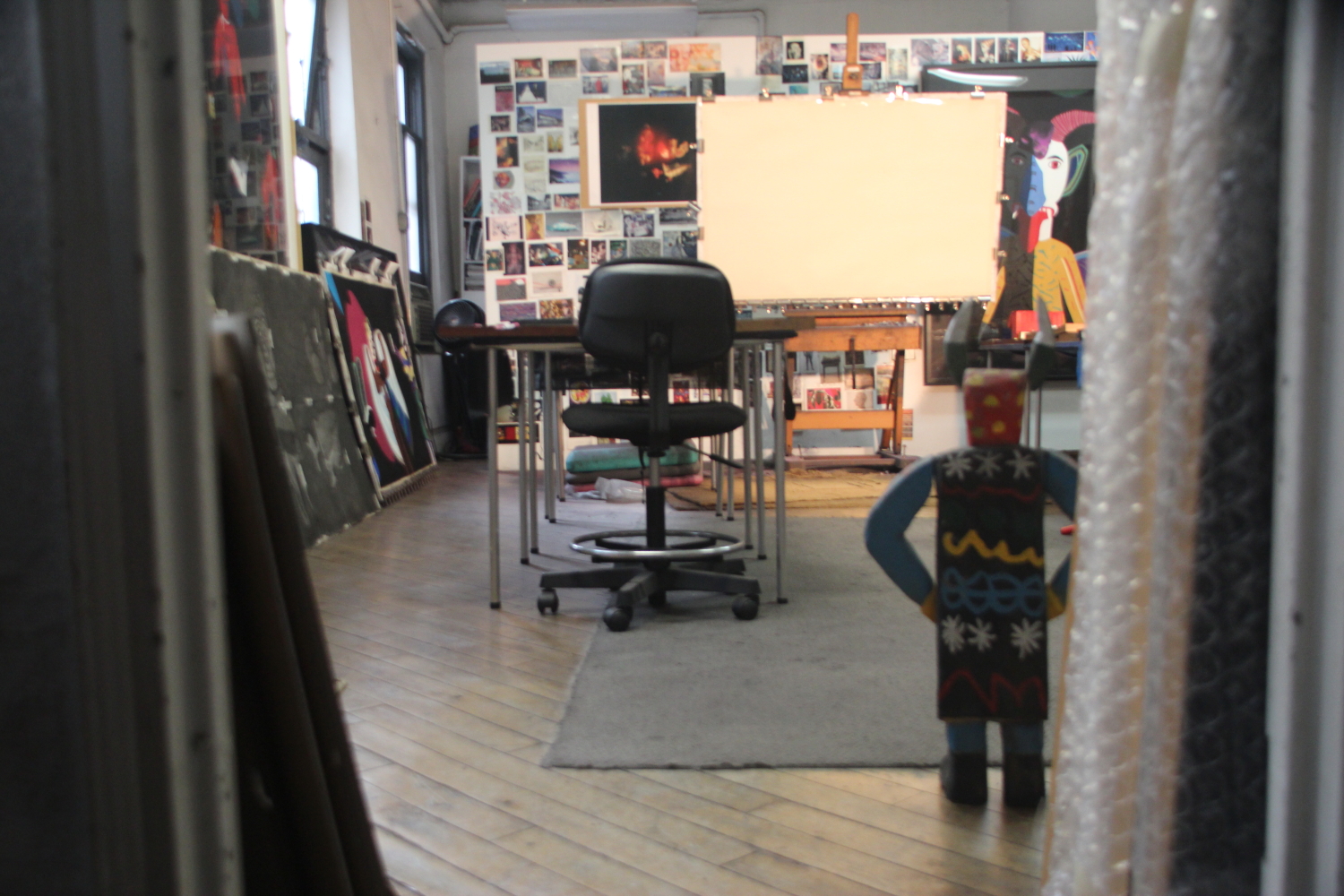
Barbara’s studio
* an ongoing series of quotations – mostly from artists, to artists – that offers wisdom, inspiration, and advice for the sometimes lonely road we are on.
So the only environment the artist needs is whatever peace, whatever solitude, and whatever pleasure he can get at not too high a cost. All the wrong environment will do is run his blood pressure up; he will spend more time being frustrated or outraged.
William Faulkner in Writers at Work: The Paris Review Interviews, First Series
Comments are welcome!


 barbararachkoscoloreddust.com