Blog Archives
Pearls from artists* # 677

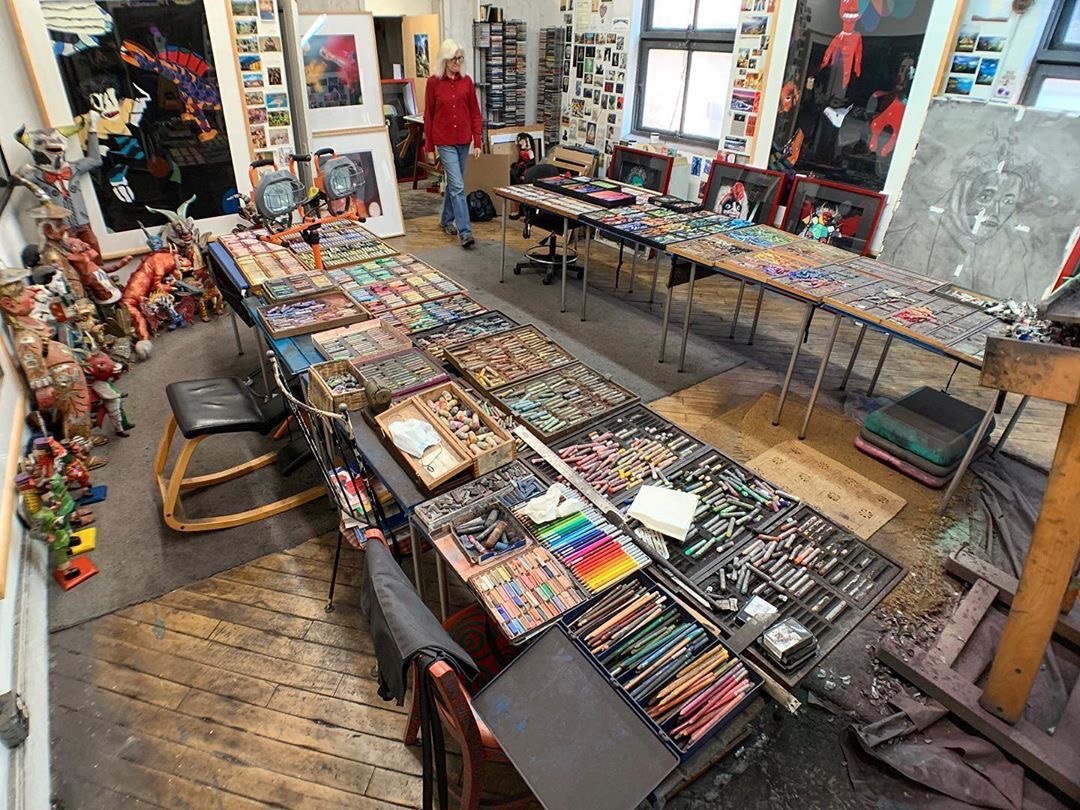
Barbara’s Studio
*an ongoing series of quotations – mostly from artists, to artists – that offers wisdom, inspiration, and advice for the sometimes lonely road we are on.
… in Japan, in the native Shinto religion of the land, where the rites are extremely stately, musical, and imposing, no attempt has been made to reduce their “affect images” to words. They have been left to speak for themselves – as rites, as works of art – through the eyes to the listening heart. And that, I would say, is what we, in our own religious rites, had best be doing, too. Ask an artist what his picture “means,” and you will not soon ask such a question again. Significant images render insights beyond speech, beyond the kinds of meaning speech defines. And if they do not speak to you, that is because you are not ready for them, and words will only serve to make you think you have understood, thus cutting you off altogether. You don’t ask what a dance means, you enjoy it. You don’t ask what the world means, you enjoy it. You don’t ask what you mean, you enjoy yourself; or at least, so you do when you are up to snuff.
Joseph Campbell in Myths to Live By
Comments are welcome!
Q: What kind of reactions do you get from spectators at your exhibitions? (Question from “Cultured Focus Magazine”)

A group exhibition in New Jersey
A: Reactions to my work run the gamut – from dopey comments like, “I’m scared!” to “How in the world is such beauty and profundity possible to achieve using only soft pastel on a piece of sandpaper!”
I’m sure most artists can say the same. We can only hope that our work finds its way to an audience that has the eyes, heart, and mind to understand, to appreciate on a deep level the decades of devotion, sacrifice, and hard work that go into creating works of art.
Comments are welcome!
Pearls from artists* # 477
*an ongoing series of quotations – mostly from artists, to artists – that offers wisdom, inspiration, and advice for the sometimes lonely road we are on.
Although he produced thousands of works of art in his pitifully short time on earth, Vincent [van Gogh] – as, following his own example, we shall call him – failed to sell a single painting in his lifetime, despite the fact that his brother Theo was a prominent Paris art dealer who, among other business coups, made a fortune for Claude Monet. Although he suffered through periods of deepest doubt, Vincent knew that one day his work would be recognized for its true worth. All the same, he could not have dreamed that his jarringly revolutionary paintings would one day rise so high in popular regard.
John Banville in His Own Worst Enemy, The New York Review of Books, May 13, 2021
Comments are welcome!
Pearls from artists* # 407

“Survivors,” soft pastel on sandpaper, 20″ x 26″ image, 28 1/2″ x 35″ framed
* an ongoing series of quotations – mostly from artists, to artists – that offers wisdom, inspiration, and advice for the sometimes lonely road we are on.
In the images [the paintings of the Chauvet cave in southern France] this prehistoric people have bequeathed to us, we get a glimpse of something like a shared humanity, but we also gaze into a stranger part of ourselves, something reaching to the depths. Since we do not know the context in which the paintings were made, we cannot in good faith chalk them up to some clear pragmatic end. We are seeing art in its naked state, deprived of any discernible appropriation. This can trouble our secular sensibilities since it confronts us not just with the mysteries of nature, but more strikingly still with the riddle of the presence of such things as us in the otherwise coherent physical world. Given the fact that the molecular chemistry that makes life possible is the same throughout the cosmos, would finding works of art on Mars or a remote planet be any more uncanny than finding them here on Earth?
J.F. Martel in Reclaiming Art in the Age of Artifice: A Treatise, Critique, and Call to Action
Comments are welcome!
Pearls from artists* # 396
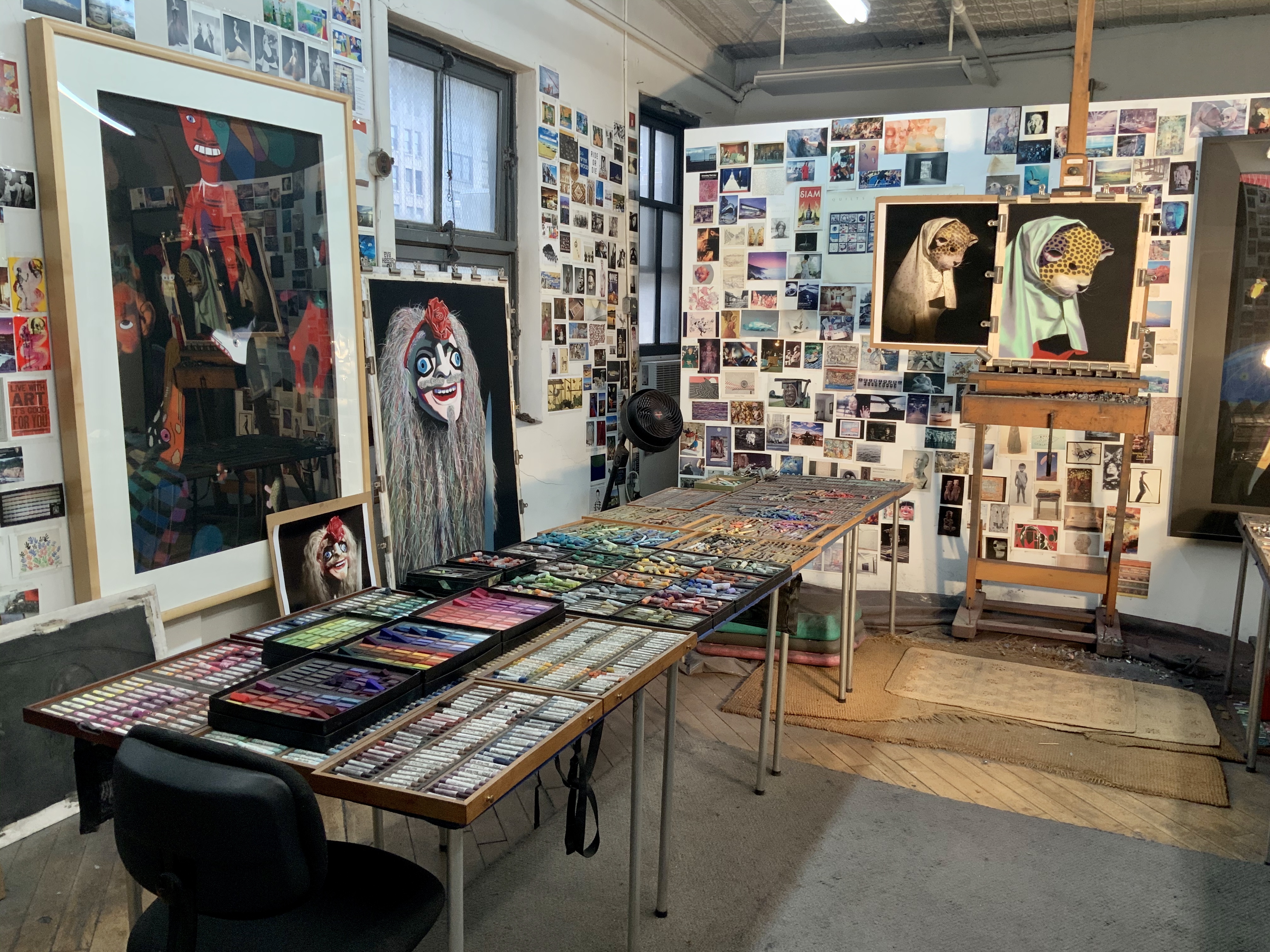
Barbara’s Studio
* an ongoing series of quotations – mostly from artists, to artists – that offers wisdom, inspiration, and advice for the sometimes lonely road we are on.
To summarize, art is expression. Expression is nonutilitarian and has no purpose beyond itself. Early on this led me to define works of art as things whose only function is to be perceived. Since the appearance of such things in everyday life breaks the drift of habit for which we have been hard-wired by evolution, art always occurs as an interruption. In the course of time, humans have produced innumerable works of art, subordinating them to innumerable ends according to the needs of the hour, yet all art exhibits a primal quality that exceeds those appropriations. Because the inherent multivalence of art threatens the desire to reduce things to clear significations, human societies have a tendency to overlook it, with the result that a great many aesthetic objects are called art when they are perhaps something else. To clarify this distinction I called art designed to serve instrumental reason “artifice.” In its worst forms, artifice amounts to aesthetic manipulation of a kind that is indisputably hostile to the ideals of openness, plurality, freedom of thought, and rational disclosure that we were told were the cornerstones of modernity. Art, on the other hand, is innately emancipatory, being itself the affirmation or sign of freedom.
J.F. Martel in Reclaiming Art in the Age of Artifice: A Treatise, Critique, and Call to Action
Comments are welcome!
Pearls from artists* # 388
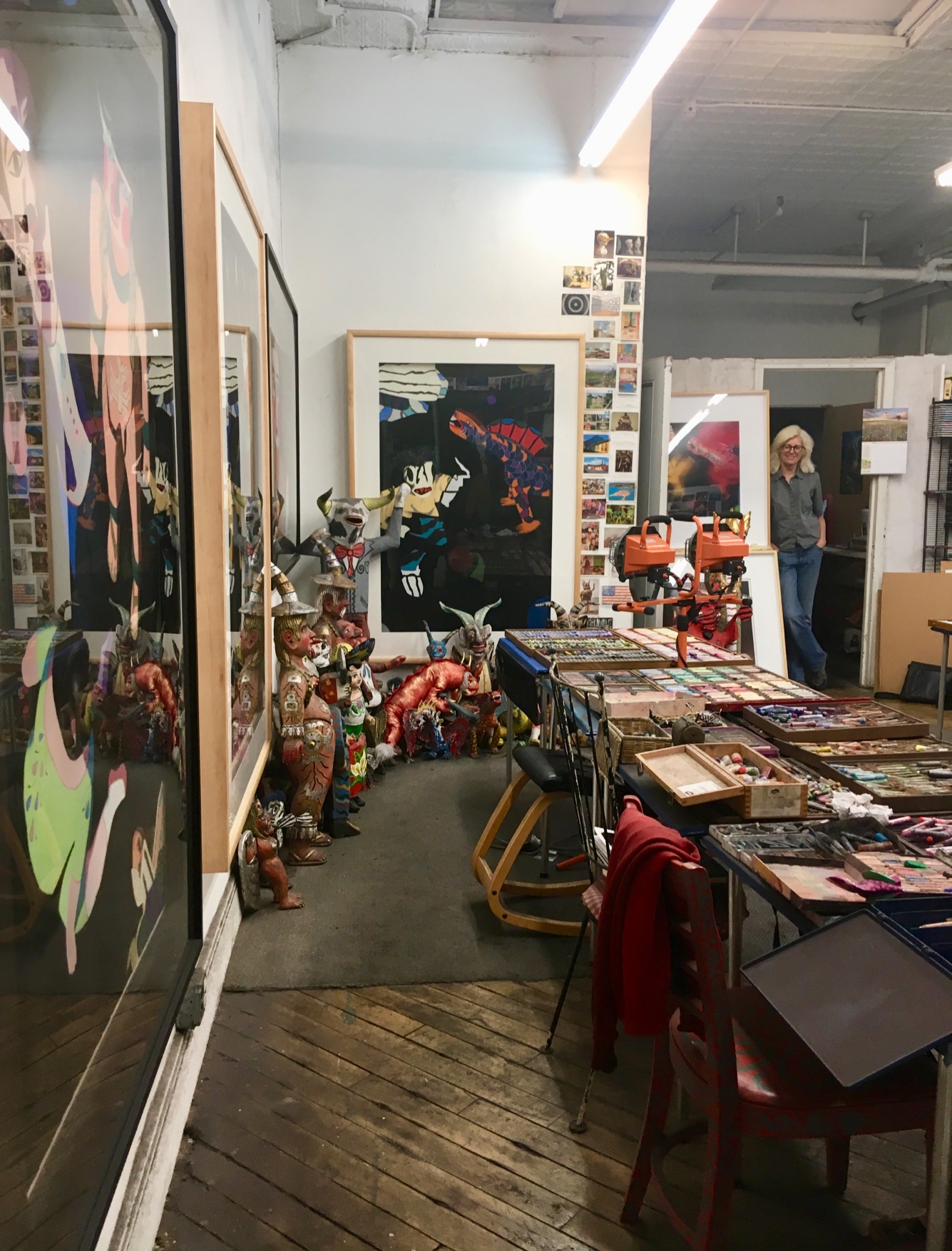
Barbara’a studio
* an ongoing series of quotations – mostly from artists, to artists – that offers wisdom, inspiration, and advice for the sometimes lonely road we are on.
… the artist’s nature, that wild nature to which so many powers are entrusted, and which all too often abuses them, leading cold reason, the bourgeois public, and even some connoisseurs down a myriad barren paths, precisely where the capricious white-winged sprite discovers castles, epics, works of art! A nature sometimes mocking, sometimes kind, at once fertile and desolate!
Honore Balzac in The Unknown Masterpiece
Comments are welcome!
Pearls from artists* # 364
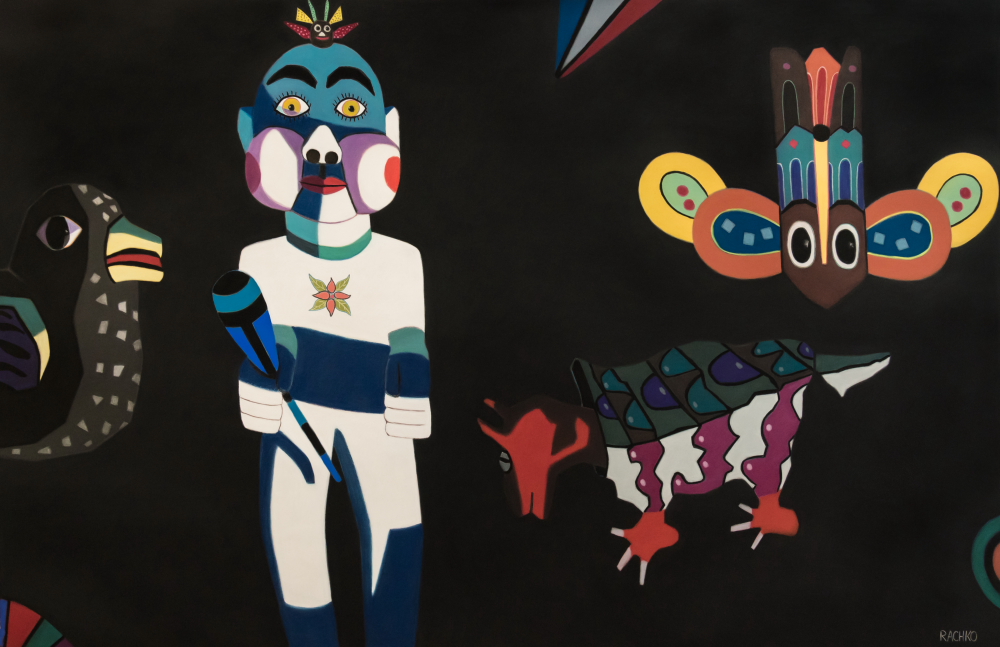
“White Star,” soft pastel on sandpaper, 38″ x 58″
* an ongoing series of quotations – mostly from artists, to artists – that offers wisdom, inspiration, and advice for the sometimes lonely road we are on.
If we are left unmoved by a painting of the Virgin, it is likely because the artist was unmoved in the painting of her. The subject matter is mostly irrelevant; it is important only as a vehicle for the artist’s attention. Authenticity comes from how deeply the artist felt. And this is the key to how much silence, how much consciousness or attention, the art contains.
… subject matter, if the artist is even using it, is just an armature for the artist to engage his intensity of feeling. It is the quality of your attention that influences how you see and how deeply you feel. Different artists have affinities for different subject matter as a way into expressing themselves deeply. And that depth is the quality, we, the viewers, respond to. It is what we continue to respond to over the centuries in great works of art. The fact that things last, that we continue to admire them, is in the end a good indicator of their quality, of their silence. Art museums therefore, have little nodes of silence nestling in their galleries. They are filled with, to use André Malraux’s expression, “the voices of silence.”
Ian Roberts in Creative Authenticity: 16 Principles to Clarify and Deepen Your Artistic Vision
Comments are welcome!
Pearls from artists* # 362
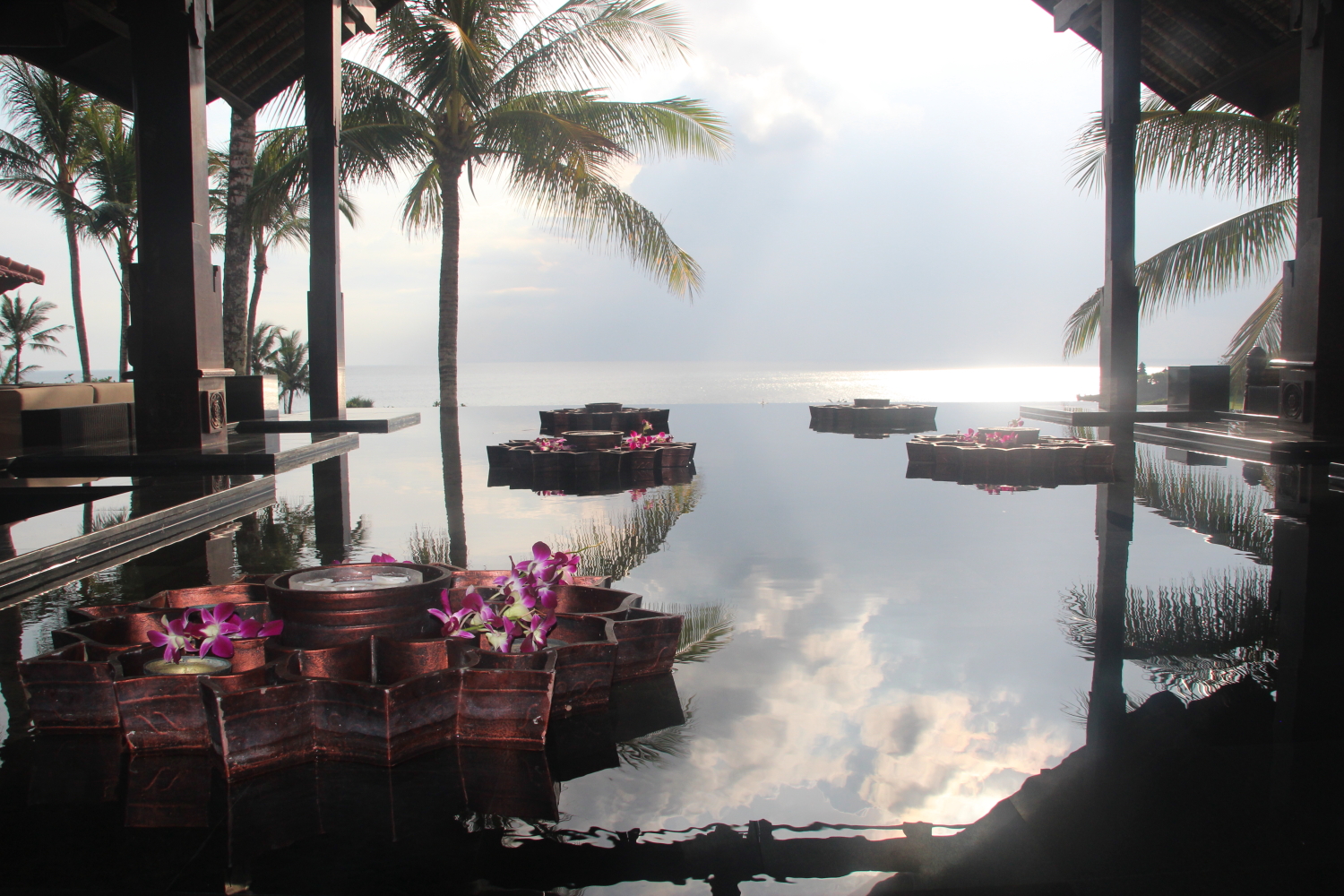
On the Indian Ocean in Tanah Lot, Bali
* an ongoing series of quotations – mostly from artists, to artists – that offers wisdom, inspiration, and advice for the sometimes lonely road we are on.
… if we look at the artifacts of all cultures, beauty always has attracted man’s attention. We know when we are in its presence. We’re held. Different pieces of art will arrest different people, and… some pieces will arrest larger numbers of people for longer periods of time. These are the works that are perhaps worthy of being called great art. We have to recognize that some people today, observing the greatest works of art, or the most awesome works of nature – the Grand Canyon, for instance – give it a minute and then are ready for something else. Insatiable for change, they are immune to deep resonance.
Art and beauty are about those resonances. It isn’t the subject matter that holds us. Some inexplicable reaction stops us, and we find ourselves connected with something other than ourself. Perhaps our ‘Self’ might be a better term, to distinguish it from the self that is caught up in thoughts, worries, and distractions. I like Ken Weber’s definition, that beauty “suspends the desire to be elsewhere.” In the face of great art, we experience transcendence.
Ian Roberts in Creative Authenticity: 16 Principles to Clarify and Deepen Your Artistic Vision
Comments are welcome!
Pearls from artists* # 316
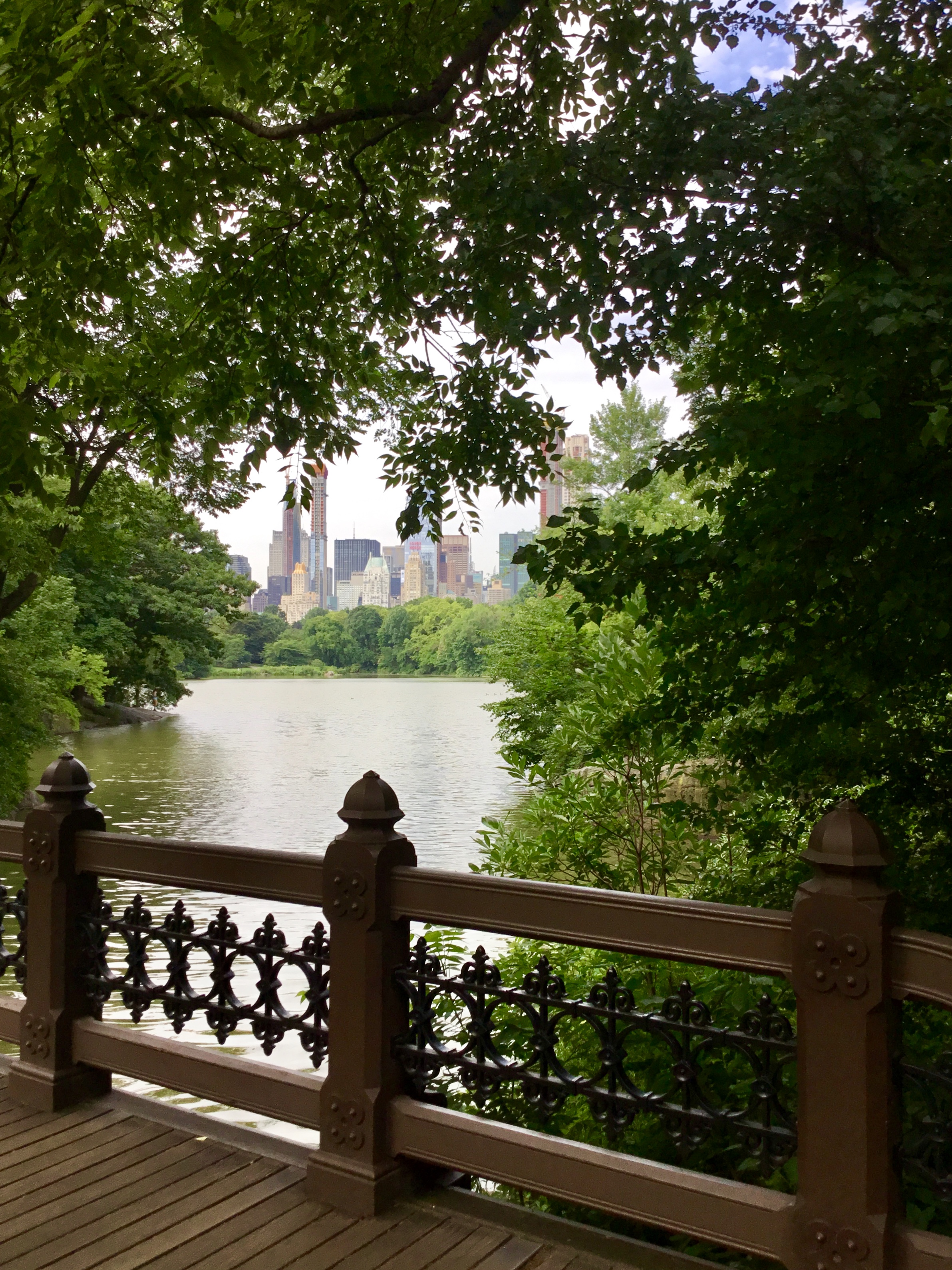
Central Park, NYC
*an ongoing series of quotations – mostly from artists, to artists – that offers wisdom, inspiration, and advice for the sometimes lonely road we are on.
Works of art are of an infinite loneliness and with nothing so little to be reached as with criticism. Only love can grasp and hold and be just toward them. Consider yourself and your feeling right every time with regard to every such argumentation, discussion, or introduction; if you are wrong after all, the natural growth of your inner life will lead you slowly and with time to other insights. Leave to your opinions their own quiet undisturbed development, which, like all progress, must come from deep within and cannot be pressed or hurried into anything. Everything is gestation and then bringing forth. To let each impression and each germ of a feeling come to completion wholly in itself, in the dark, in the inexpressible, the unconscious, beyond the reach of one’s own intelligence, and await with deep humility and patience the birth-hour of a new clarity: that alone is living the artist’s life: in understanding as in creating.
There is also no measuring with time, no year matters, and ten years are nothing. Being an artist means not reckoning and counting, but ripening like the tree which does not force its sap and stands confident in the storms of spring without the fear that after them may come no summer. It does come. But it comes only to the patient, who are there as though eternity lay before them, so unconcernedly still and wide. I learn it daily, learn it with pain to which I am grateful: patience is everything!
Rainer Maria Rilke, Letters to a Young Poet, Translation by M.D. Herter Norton
Comments are welcome!


 barbararachkoscoloreddust.com
Q: What kind of reactions do you get from spectators at your exhibitions? (Question from “Cultured Focus Magazine”)
Jan 18
Posted by barbararachkoscoloreddust
A: Reactions to my work run the gamut – from dopey comments like, “I’m scared!” to “How in the world is it possible to achieve such beauty and profundity using only soft pastel on a piece of sandpaper!” I’m sure most artists can say the same. We can only hope that our work finds its way to an audience that has the eyes, heart, and mind to understand, to appreciate on a deep level the decades of devotion, sacrifice, and hard work that go into creating works of art.
Comments are welcome!
Share this:
Posted in 2025, Exhibitions, New York, NY
Comments Off on Q: What kind of reactions do you get from spectators at your exhibitions? (Question from “Cultured Focus Magazine”)
Tags: achieve, appreciate, artists, audience, “Cultured Focus Magazine”, “Worlds Unseen & Seen”, beauty, comments, creating, decades, devotion, Exhibitions, hard work, New York, possible, profundity, question, reactions, sacrifice, sandpaper, scared, soft pastel, spectators, understand, using, Westbeth Gallery, works of art