Blog Archives
Pearls from artists* # 70

New York, NY
* an ongoing series of quotations – mostly from artists, to artists – that offers wisdom, inspiration, and advice for the sometimes lonely road we are on.
Ultimately, whether you like a photograph or not, it has a history behind it. When people look at a photograph, they want to believe in its authenticity, that they’re looking at something special that can’t be repeated. The artist’s eye, the photographer’s eye, has created a moment of truth by pushing the button on the camera. The issue is not that the moment is separate from the rest of the photograph; it is the element that links what’s happening to the rest of the image, and the photographer creates a higher meaning, a higher sensibility, in that instant. That’s difficult to achieve for most people who are involved in photography as artists. It’s an essential part of basic photography that’s learned on the street and in traditional ways that people used to do photography.
Roger Ballen in Lines, Marks, and Drawings: Through the Lens of Roger Ballen
Comments are welcome!
Pearls from artists* # 63

Untitled, chromogenic print, 24″ x 24,” edition of 5
* an ongoing series of quotations – mostly from artists, to artists – that offers wisdom, inspiration, and advice for the sometimes lonely road we are on.
The artist’s job is to get in touch with the dark places of the soul and then shed light there. Sharing the process with others is the point. Within the context of our post-Cold War, post-9/11 climate, shedding light in newly fecund dark places is a valuable activity. The dark places of the soul that haunt our dreams are understandably matched by a tendency to shut out the issues with the busy work of the daylight hours. But without looking into those dark places, as Carl Jung suggested, we will lose touch with our essential humanity.
Anne Bogart, and then, you act: making art in an unpredictable world
Comments are welcome!
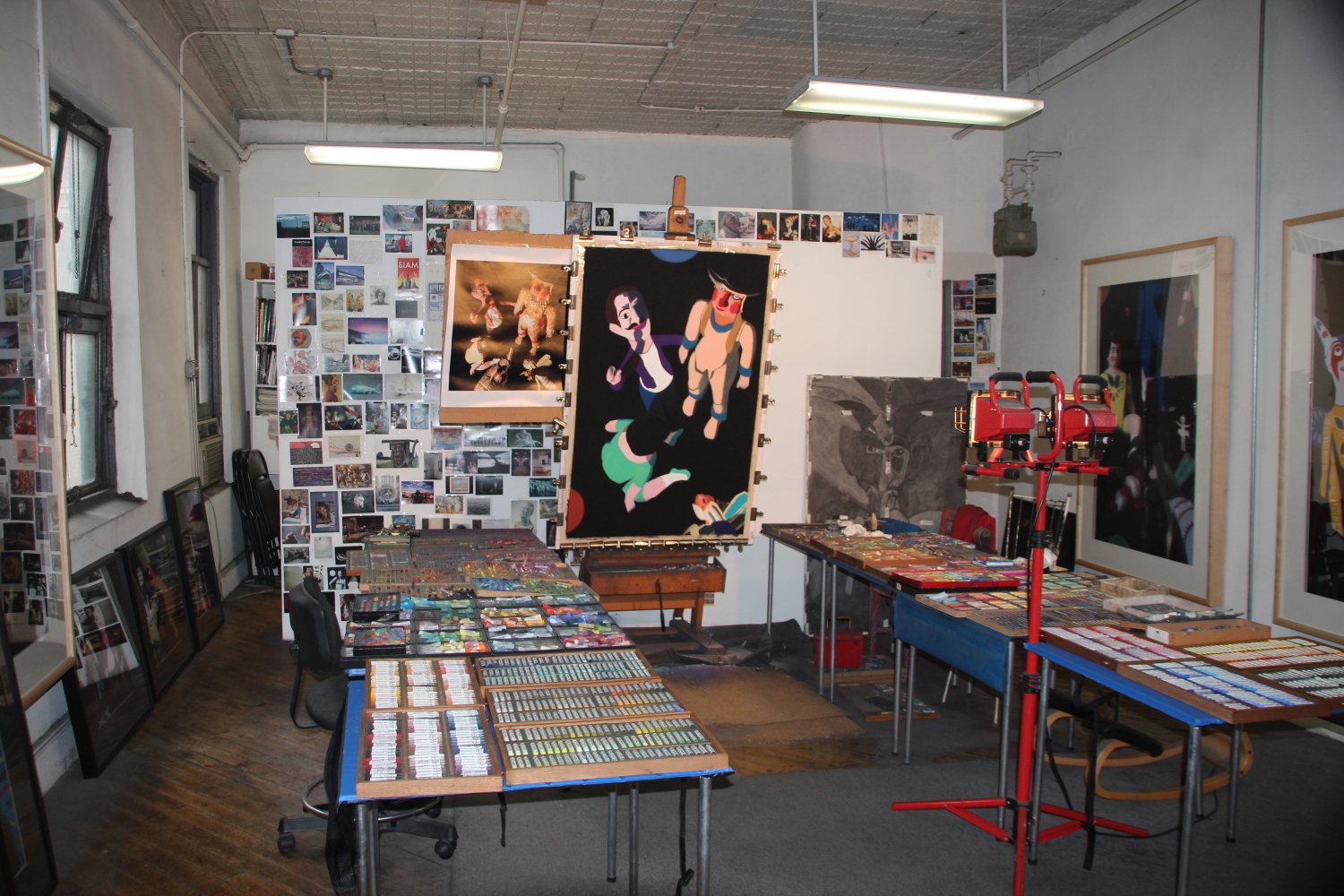
Q: Your pastel-on-sandpaper paintings are very labor intensive. Do you typically have just one in progress at any given time?

Works in progress, soft pastel on sandpaper, 58″ x 38″
A: For many years I always worked on one at a time because I have only one or two ideas – never more than that – about what I will make next. Also, I believe that “all art is the result of one’s having gone through an experience to the end.” (It’s on a note taped to the wall near my easel). So I would work on one painting at a time until all of the problems in it were resolved. Each piece that I undertake represents an investment of several months of my life and after nearly three decades as an artist, I know that once I start a piece I will not abandon it for any reason. When it is the best painting that I can make – when adding or subtracting anything would be a diminishment – I pronounce it “finished.” In the past I would start the next one only when the completed piece was out of my sight and at the frame shop.
But a few years ago I began working on two pastel paintings at a time. When I get stuck – or just need a break from looking at the same image day after day (I am in my studio 5 days a week) – I switch to the other one. This helps me work more efficiently. The two paintings interact with each other; they play off of each other and one suggests solutions that help me to resolve problem areas in the other. I’m not sure exactly how this happens – maybe putting a piece aside for awhile alerts my unconscious to begin working deeply on it – but having two in progress at the same time is my preferred way of working now.
A note about the painting on the left above, which was previously called, “Judas.” I happen to be reading “Cloud Atlas,” by David Mitchell and came across the word “judasing” used as a verb meaning, “doing some evil to a person who profoundly trusted you.” I’d never heard the word before, but it resonated with an event in my personal life. So the new title of my painting is “Judasing.” This is a good reminder that work and life are inextricably (and inexplicably) woven together and that titles can come from anywhere!
Comments are welcome!
Pearls from artists* # 16

“Big Deal,” soft pastel on sandpaper
* an ongoing series of quotations – mostly from artists, to artists – that offers wisdom, inspiration, and advice for the sometimes lonely road we are on.
For the artist drawing is discovery. And that is not just a slick phrase, it is quite literally true. It is the actual act of drawing that forces the artist to look at the object in front of him, to dissect it in his mind’s eye and put it together again; or, if he is drawing from memory, that forces him to dredge his own mind, to discover the content of his own store of past observations. It is a platitude in the teaching of drawing that the heart of the matter lies in the specific process of looking. A line, an area of tone, is not really important because it records what you have seen, but because of what it will lead you to see. Following up its logic in order to check its accuracy, you find confirmation or denial in the object itself or in your memory of it. Each confirmation or denial brings you closer to the object, until finally you are, as it were, inside it: the contours you have drawn no longer marking the edge of what you have seen, but the edge of what you have become. Perhaps that sounds needlessly metaphysical. Another way of putting it would be to say that each mark you make on the paper is a stepping-stone from which you proceed to the next, until you have crossed your subject as though it were a river, have put it behind you.
Geoff Dyer, editor, Selected Essays: John Berger
Comments are welcome.
Q: Does your work look different to you on days when you are sad, happy, etc.?
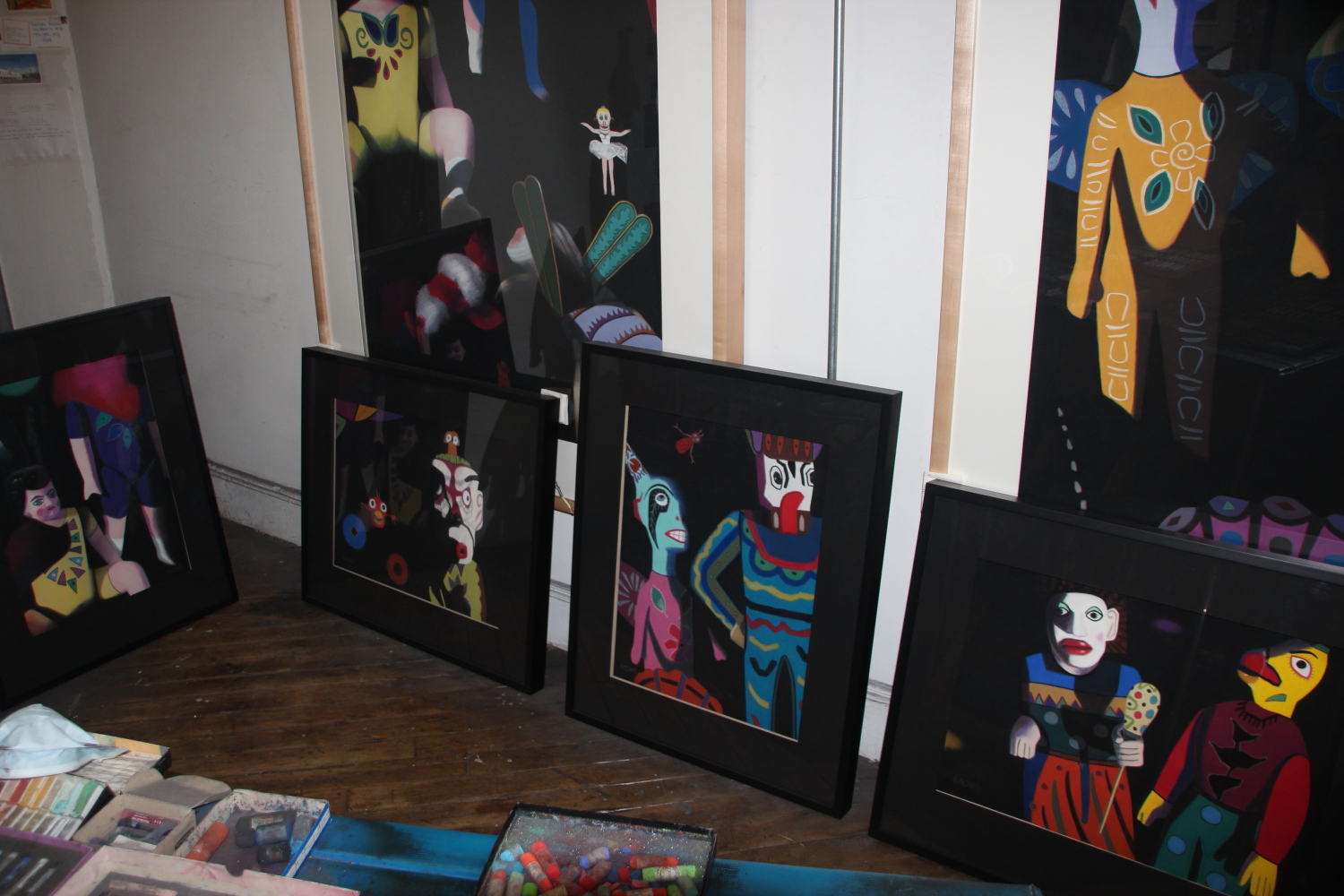
Recent work
A: I’m more critical on days when I am sad so that the faults, imperfections, and things I wish I had done better stand out. Fortunately, all of my work is framed behind plexiglas so I can’t easily go back in to touch up newly-perceived faults. It reminds me of the expression, “Always strive to improve, whenever possible. It is ALWAYS possible!” However, I’ve learned that re-working a painting is a bad idea. You are no longer deeply involved in making it and the zeitgeist has changed. The things you were concerned with are gone: some are forgotten, others are less urgent. For most artists the work is autobiography. Everything is personal. When I look at a completed pastel painting, I usually remember exactly what was happening in my life as I worked on it. Each piece is a snapshot – maybe even a time capsule, if anyone could decode it – that reflects and records a particular moment. When I finally pronounce a piece finished and sign it, that’s it, THE END. It’s as good as I can make it at that point in time. I’ve incorporated everything I was thinking about, what I was reading, how I was feeling, what I valued, art exhibitions I visited, programs that I heard on the radio or watched on television, music that I listened to, what was going on in New york, in the country, in the world, and so on. It is still a mystery how this heady mix finds its way into the work. During the time that I spend on it, each particular painting teaches me everything it has to teach. A painting requires months of looking, reacting, correcting, searching, thinking, re-thinking, revising. Each choice is made for a reason and as an aggregate these decisions dictate what the final piece looks like. On days when I’m sad I tend to forget that. On happier days I remember that the framed pastel paintings that you see have an inevitability to them. If all art is the result of one’s having gone through an experience to the end, as I believe it is, then the paintings could not, and should not, look any differently.
Comments are welcome.
Pearls from artists* # 6
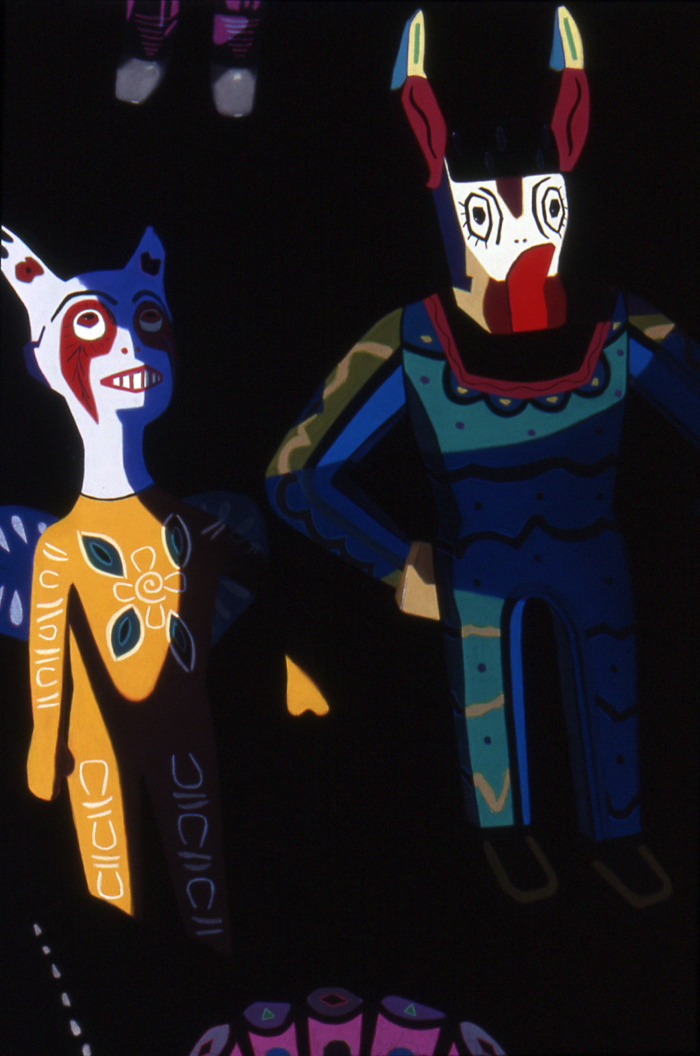
“Quartet,” soft pastel on sandpaper, 58″ x 38″ image, 70″ x 50″ framed
* an ongoing series of quotations – mostly from artists, to artists – that offers wisdom, inspiration, and advice for the sometimes lonely road we are on.
After we have responded to a work of art, we leave it, carrying in our consciousness something which we didn’t have before. This something amounts to more than our memory of the incident represented, and also more than our memory of the shapes and colours and spaces which the artist used and arranged. What we take away with us – on the most profound level – is the memory of the artist’s way of looking at the world. The representation of a recognizable incident (an incident here can simply mean a tree or a head) offers us the chance of relating the artist’s way of looking to our own. The forms he uses are the means by which he expresses his way of looking. The truth of this is confirmed by the fact that we can often recall the experience of a work, having forgotten both its precise subject and its precise formal arrangement.
Yet why should an artist’s way of looking at the world have any meaning for us? Because, I believe, it increases our awareness of our own potentiality. Not of course our awareness of our potentiality as artists ourselves. But a way of looking at the world implies a certain relationship with the world, and every relationship implies action. The kind of actions implied vary a great deal. A classical Greek sculpture increases our awareness of our own potential physical dignity; a Rembrandt of our potential moral courage; a Matisse of our potential sensual awareness. Yet each of these examples is too personal and too narrow to contain the whole truth of the matter. A work can, to some extent, increase an awareness of different potentialities in different people. The important point is that a valid work of art promises in some way or another the possibility of an increase, an improvement. Nor need the work be optimistic to achieve this; indeed, its subject may be tragic. For it is not the subject matter that makes the promise, it is the artist’s way of viewing his subject. Goya’s way of looking at a massacre amounts to the contention that we ought to be able to do without massacres.
John Berger, Selected Essays
Comments are welcome.


 barbararachkoscoloreddust.com