Blog Archives
Pearls from artists* # 573

In the studio
*an ongoing series of quotations – mostly from artists, to artists – that offers wisdom, inspiration, and advice for the sometimes lonely road we are on.
The literature on creativity is full of tales of breakthrough experiences. These moments come when you let go of some impediment or fear, and boom – in whooshes the muse. You feel clarity, power, freedom, as something unforeseen jumps out at you. The literature of Zen… abounds with accounts of kensho and satori – moments of illumination and moments of total change of heart. There come points in your life when you simply kick the door open. But there is no ultimate breakthrough; what we find in the development of a creative life is an open-ended series of provisional breakthroughs. In this journey there is no endpoint because it is the journey into the soul.
Stephen Nachmanovitch in Free Play: Improvisation in Life and Art
Comments are welcome!
Pearls from artists* # 569
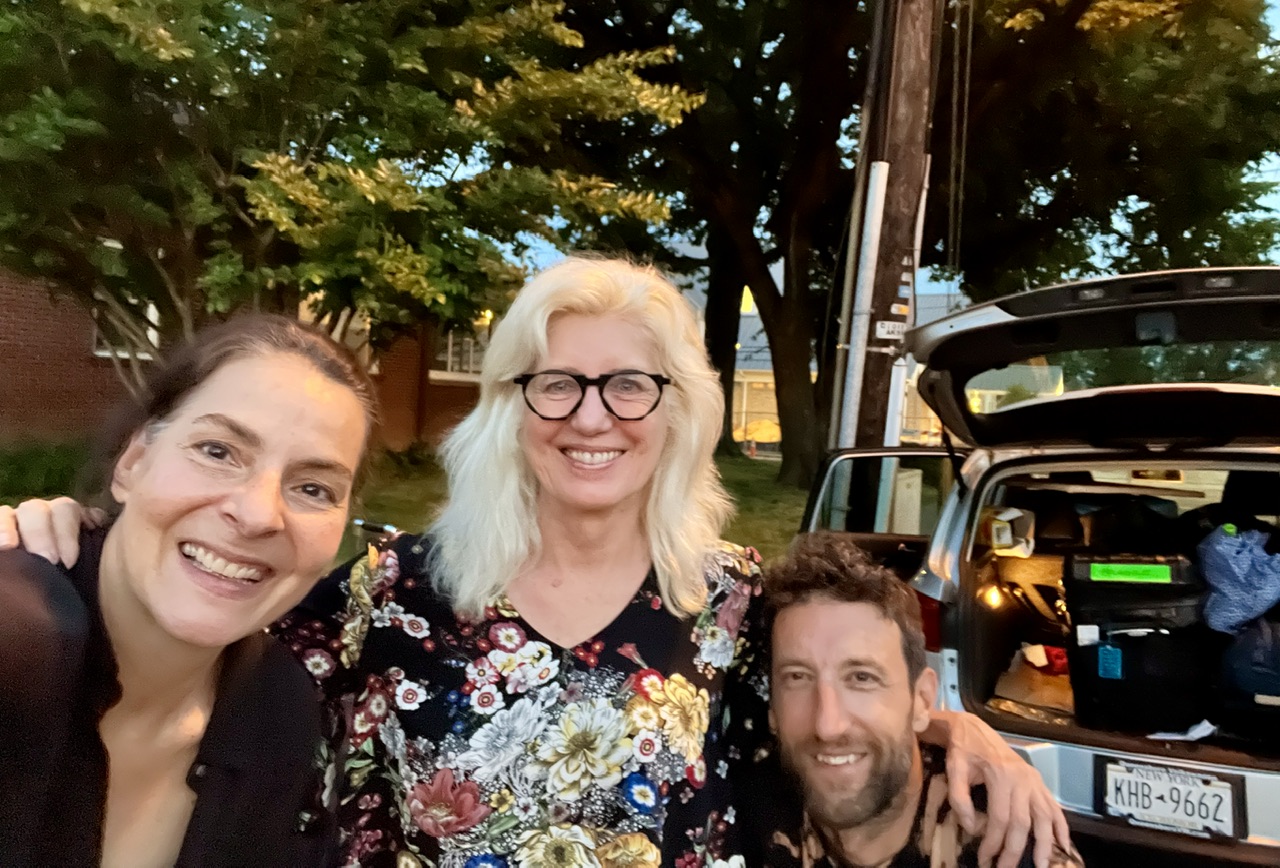
With Jennifer and Dmitri after our film shoot in Alexandria, VA
*an ongoing series of quotations – mostly from artists, to artists – that offers wisdom, inspiration, and advice for the sometimes lonely road we are on.
Artists consider themselves to be independent people. But the artist’s independent, rebellious, nonconforming nature, coupled with his introspective habits of mind, also make him wary of social interactions. Whereas the fireman, for example, has no reason to believe keeping company with other firemen will diminish his ability to fight fires, the artist, keenly aware that his journey is a personal and independent one, often fears that contact with his peers will slow him down, detour him, limit him, or unduly influence him.
Eric Maisel in A Life in the Arts: Practical Guidance and Inspiration for Creative and Performing Artists
Comments are welcome!
Pearls from artists* 564
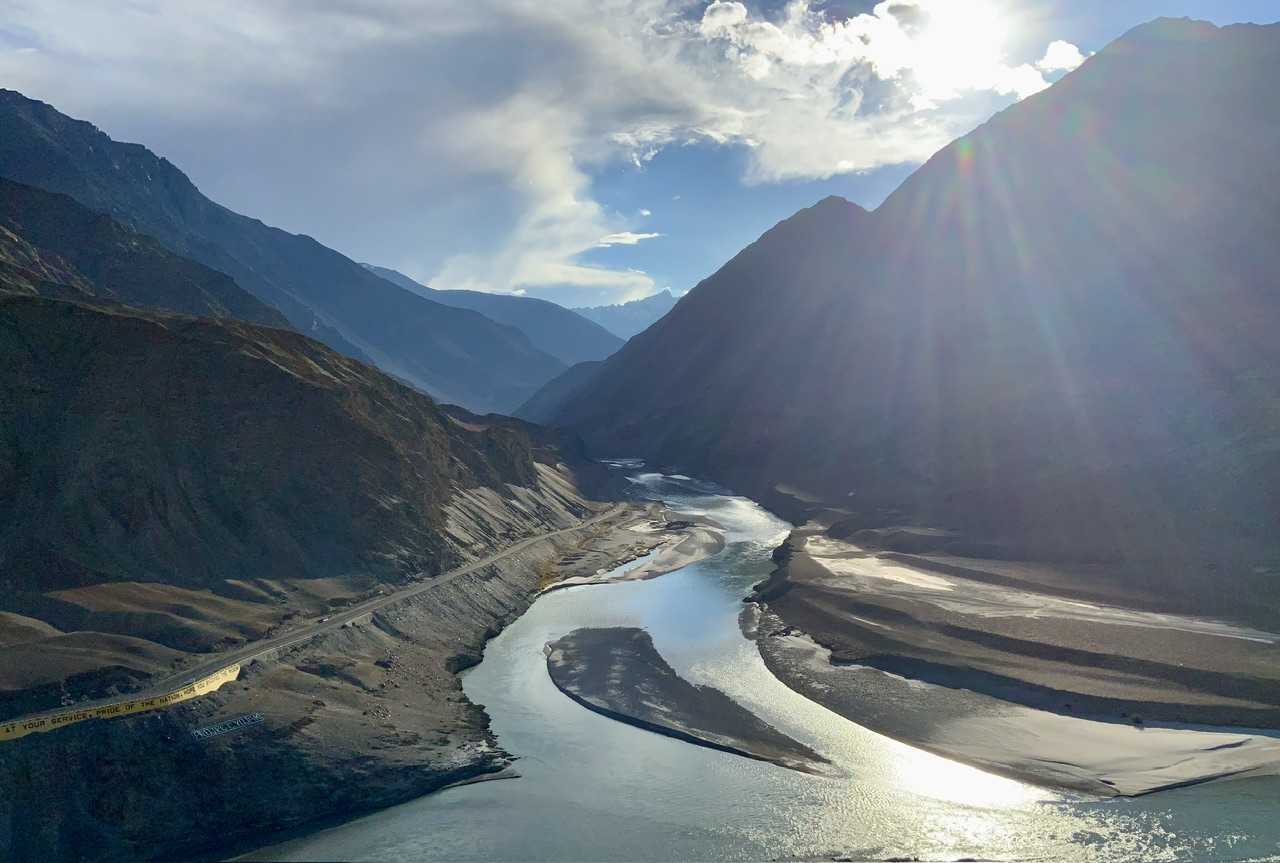
Indus River, Ladakh, India
*an ongoing series of quotations – mostly from artists, to artists – that offers wisdom, inspiration, and advice for the sometimes lonely road we are on.
To travel through the peaks and valleys of Himalayan Buddhism is to become a collector of fragmented images and a teasing array of sense impressions, many of them bound to counter the stereotypes of simplicity and serenity that we expect to define a Buddhist universe. At the end of the journey, the traveler assembles these sense fragments into an individualistic understanding of what has been seen and experienced. Maybe that’s the way it should be, since Buddhism itself teaches us that each person must seek his own way to knowledge and enlightenment in this life or some other.
Barbara Crossette in So Close to Heaven: The Vanishing Buddhist Kingdoms of the Himalayas
Comments are welcome!
Pearls from artists* # 557

*an ongoing series of quotations – mostly from artists, to artists – that offers wisdom, inspiration, and advice for the sometimes lonely road we are on.
It is true that art, while indebted to tradition, is usually at odds with it; art is about the thrill of mutiny. Young painters and sculptors are particularly unwilling to be hampered by the past, especially if that past is encased in the cement shoes of gender. But familiarity with tradition can be liberating for an artist because it provides a map illustrating the route other people have taken, which is especially valuable at the start of such a perilous journey. Male artists can inspire and instruct, surely. Artistic concerns are gender neutral. But there are social and personal issues a woman artist faces that cannot be found in the stories of men; these are the obstacles confronted and obstacles overcome. The poet Adrienne Rich wrote, “For spiritual values and a creative tradition to continue unbroken we need concrete artifacts, the work of hands, written words to read, images to look at, a dialogue with brave and imaginative women who came before us.” It’s instructive as well as comforting to know how other women have managed and what other women have dared. It’s also gratifying to find in their stories an occasional energizing dose of inspiration.
Mary Gabriel in Ninth Street Women
Comments are welcome!
Pearls from artists* # 531
* an ongoing series of quotations – mostly from artists to artists – that offers wisdom, inspiration, and advice for the sometimes lonely road we are on.
Find joy in the process as well as in the product. The issue of recognition is in part the issue of process versus outcome. Insofar as the process brings you joy, insofar as constructing a paragraph, painting shafts of sunlight, or playing a passage fills you with awe and delight, for that hour the issue of recognition vanishes. Insofar as the effort to construct that paragraph or to master that passage is a heartfelt struggle, welling up from deep sources, for that hour the issue of recognition vanishes. Notice your joy in the work, so as to remind yourself why you embarked on this journey.
Eric Maisel in A Life in the Arts: Practical Guidance and Inspiration for Creative and Performing Artists
Comments are welcome!
Pearls from artists* # 520
*an ongoing series of quotations – mostly from artists, to artists – that offers wisdom, inspiration, and advice for the sometimes lonely road we are on.
Ondaatje: Do you think success and failure can distort the lessons an artist is able to learn?
Murch: There’s that wonderful line of Rilke’s, “The point of life is to fail at greater and greater things.” Recognizing that all of our achievements are doomed, in one sense – the earth will be consumed by the sun in a billion years or so – but in another sense the purpose of our journey is to go farther each time. So you’re trying things out in every film you make, with the potential of failure. I think we’re always failing, in Rilke’s sense – we know there’s more potential that we haven’t realized. But because we’re trying, we develop more and more talent, or muscles, or strategies to improve, each time.
In The Conversation: Walter Murch and the Art of Editing Film by Michael Ondaatje
Comments are welcome!
Pearls from artists* # 499

*an ongoing series of quotations – mostly from artists, to artists – that offers wisdom, inspiration, and advice for the sometimes lonely road we are on.
Life is a journey back to where you started from, Le Guin always said. True voyage is return. When you get there, you might know a little more than when you began.
Isn’t the real question this: Is the work worth doing? Am I, a human being, working for what I really need and want – or for what the State or the advertisers tell me I want? Do I choose? I think that’s what anarchism comes down to. Do I let my choices be made for me, and so go along with the power game, or do I choose? In other words, am I going to be a machine-part, or a human being?
Ursula K. Le Guin: The Last Interview and Other Conversations edited and with an introduction by David Streitfeld
Comments are welcome!
Q: What is your earliest memory of wanting to be an artist? (Question from “Arts Illustrated”).
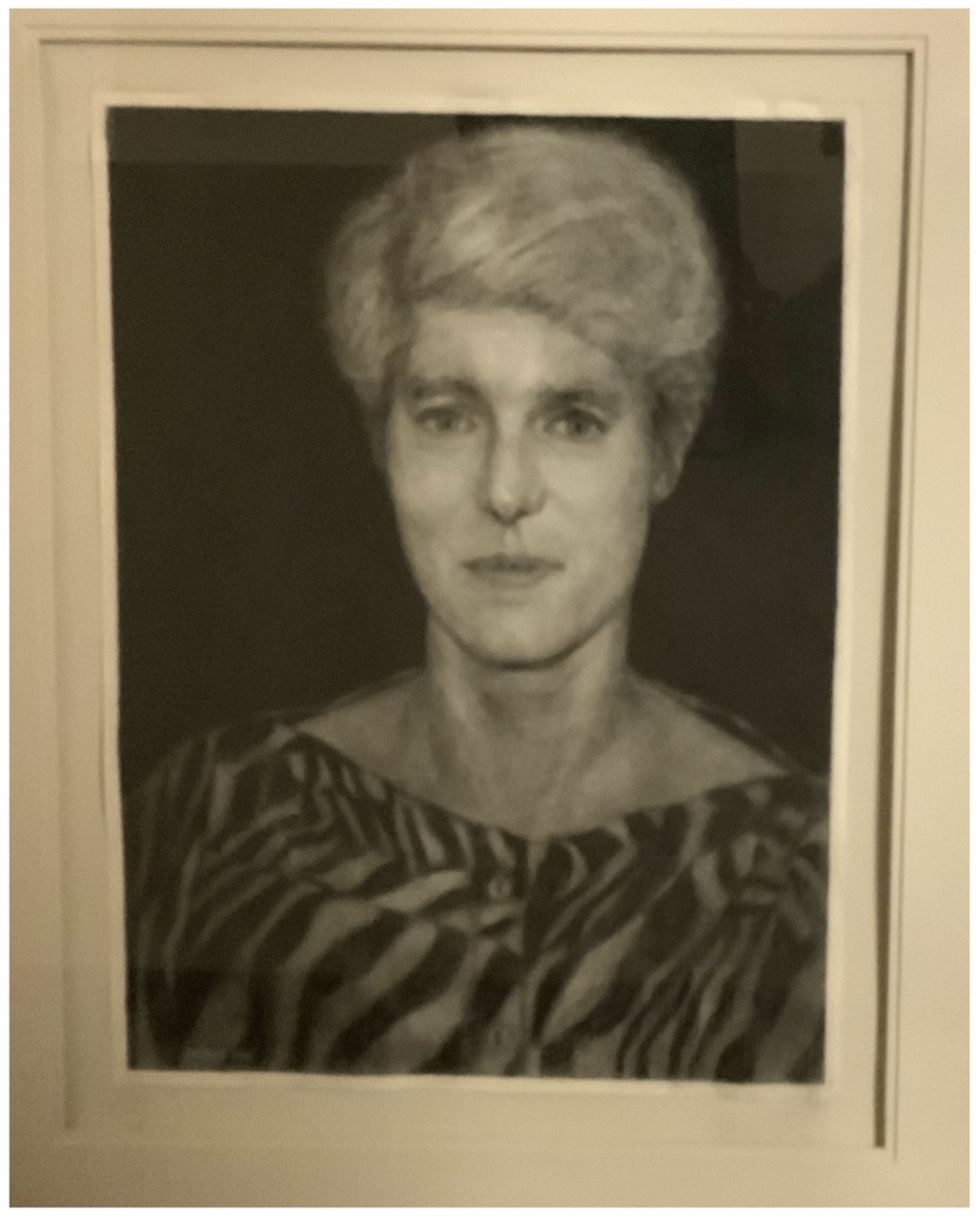
A: I don’t believe I have any such ‘early memories.’ I came to art late and my journey to becoming an artist was circuitous, to say the least.
In the mid-1980s I was a thirty-something Navy lieutenant. I worked a soul-crushing job as a computer analyst on the midnight shift in a Pentagon basement. We were open 24/7 and supported the Joint Chiefs of Staff.
Remembering the joyful Saturdays of my youth in New Jersey, when I had studied with a local painter, I enrolled in a drawing class at the Art League School in Alexandria, Virginia. I loved it! I took more classes and became a highly motivated, full-time art student who worked nights at the Pentagon. After two years and as my skills improved, I discovered my preferred medium – soft pastel on sandpaper.
I knew I had found my calling, submitted my resignation, and left active duty. On October 1, 1989 I became a professional artist. However, I remained in the Navy Reserve for another fourteen years, working at the Pentagon one weekend a month. On November 1, 2003, I retired as a Navy Commander.
Please also see Art Market (barbararachko.art)
Comments are welcome!
Pearls from artists* # 446

*an ongoing series of quotations – mostly from artists, to artists – that offers wisdom, inspiration, and advice for the sometimes lonely road we are on.
What stops us in our tracks? I am rarely stopped by something or someone I can instantly know. In fact, I have always been attracted to the challenge of getting to know what I cannot instantly categorize or dismiss, whether an actor’s presence, a painting, a piece of music, or a personal relationship. It is the journey towards the object of attraction that interests me. We stand in relation to one another. We long for the relationship that will change our vistas. Attraction is an invitation to an evanescent journey, to a new way of experiencing life or perceiving reality.
An authentic work of art embodies intense energy. It demands response. You can either avoid it, shut it out, or meet it and tussle. It contains attractive and complicated energy fields and a logic all its own. It does not create desire or movement in the receiver, rather it engenders what James Joyce labelled ‘aesthetic interest.’ You are stopped in your tracks. You cannot easily walk by it and go on with your life. You find yourself in relation to something that you cannot readily dismiss.
Anne Bogart in A Director Prepares: Seven Essays on Art and Theater
Comments are welcome!
Pearls from artists* # 418
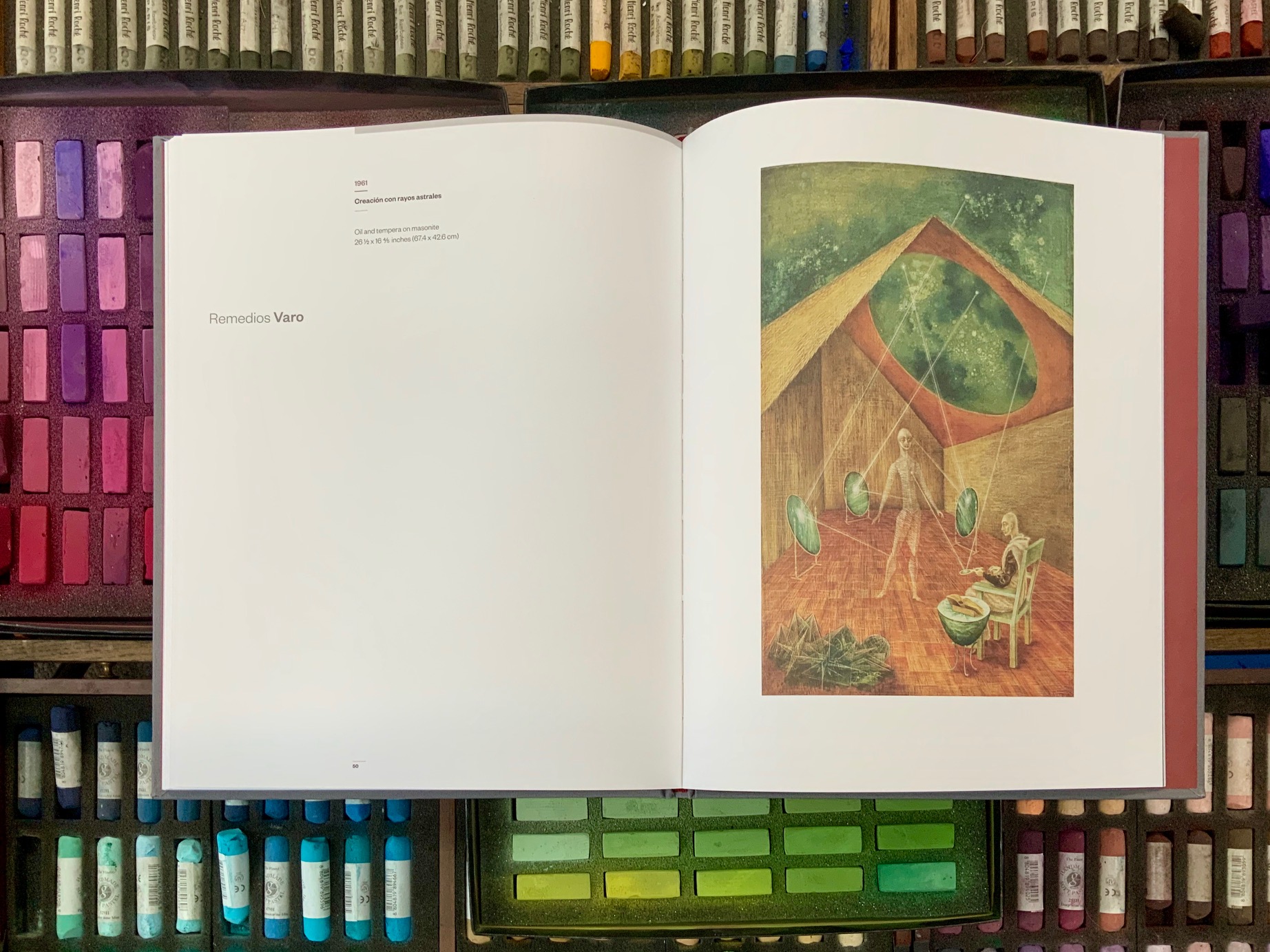
A Remedios Varo Plate from “Science and Surrealism”
*an ongoing series of quotations – mostly from artists, to artists – that offers wisdom, inspiration, and advice for the sometimes lonely road we are on.
… both Surrealism’s birth and infancy coincided with probably the most momentous period in the history of physics. The first Surrealist text, written by Andre Breton and Philippe Soupault and titled Magnetic Fields, deployed the spontaneous technique of ‘automatic writing,’ which supposedly allowed direct access to unconscious material. It appeared in 1920 but was written in the previous year, coinciding with the expedition led by the English astrophysicist, Arthur Eddington, to observe the solar eclipse from the island of Principe off the west coast of Africa. It was this journey that proved predictions set out in Einstein’s General Theory of Relativity (1916) about the gravitational deflection of light by the sun. Eddington’s experiment led not only to Einstein’s instant, mythic status as the ‘new Copernicus’ and the swift popularization of Relativity, but more specifically its appearance in the early theoretical writings of Surrealism’s principle spokesman, Breton, which helped lay the foundations of the movement. Breton’s subsequent manifesto texts of 1924 and 1929, extending his discussion of what he deemed the narrow, restrictive logic of Western though, can be situated within the same historical context that bore the revolutionary discoveries of quantum mechanics, culminating in 1927.
“Sibylline Strangeness: Surrealism and Modern Physics,” by Gavin Parkinson in Science in Surrealism, published by Gallery Wendy Norris
Comments are welcome!


 barbararachkoscoloreddust.com