Blog Archives
Q: Is there a particular challenge you are currently facing? (Question from “Bold Journey”)

A: Yes! It’s one that has been unresolved for a few years now, but I just keep working on it. Now I have a new and valuable tool. A short documentary, “Barbara Rachko: True Grit” tells the story of my life and work. Our film recently premiered at the Newport Beach Film Festival in California, where we won the Audience Award and the Best in Category Award. You can view it here. https://www.youtube.com/watch?v=JJWLy84kXI0
The online audience for my paintings keeps steadily growing. I am represented by galleries in the UK, India, Sweden, and in the US. However, I do not have commensurate gallery representation in New York City, the world’s art capital, and New York is where I live and work. I hope to change this situation very soon!
Comments are welcome!
Pearls from artists* # 566

With “Sacrificial” (left), 70” x 50” framed and “Disruptor,” 35” x 28.5” framed; both are soft pastel on sandpaper
*an ongoing series of quotations – mostly from artists, to artists – that offers wisdom, inspiration, and advice for the sometimes lonely road we are on.
Money, fame. It was funny, it was confusing. It was the end. The purity was gone. “I vividly experienced the change of climate with the financial boom in the art world,” Mercedes [Matter] said. “The change from taking poverty and obscurity for granted to competing for a place in the spotlight. At the Cedar [Tavern] one began hearing many talking about galleries over their bourbons instead… [of] about art as before over their beers.” Artists had become entertainers, selling themselves and their gifts for a piece of paper, the almighty dollar, emblazoned with a new motto, “In God We Trust.” Paul Brach said 1957 was the last year that artists made other artists’ reputations. From then on, they were made by a machine called “the art establishment.” “Career, the nemesis of our past, had crept up on all of us,” Larry [Rivers] said. It was like a virus, something all of them had but none of them wanted. At least in the abstract.
Mary Gabriel in Ninth Street Women
Comments are welcome!
Q: To what extent will the world of art change in the post-COVID period – both in terms of what is created and also the business of art? (Question from artamour)
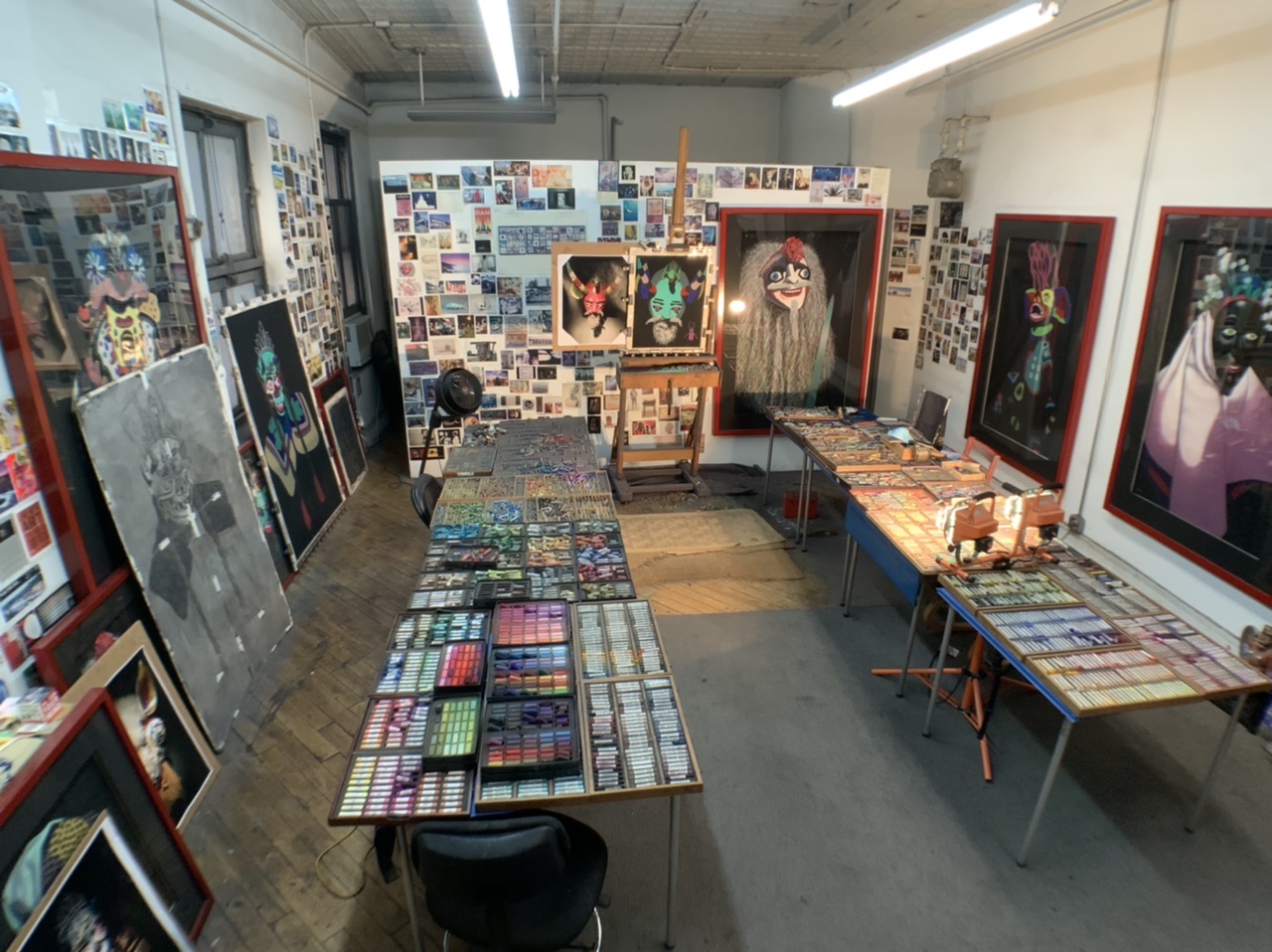
A: We all still wonder how the art world will change post-COVID. (Will there ever be a time when we can say we are post-COVID?). I know that I will continue refining and developing my art practice and seeking out new business opportunities. I have been an artist long enough to know that I will always follow my own path (each pastel painting points to the next one) regardless of what is going on in the larger world. How could I not do so? In large part due to an extensive social media program carried out by my two able assistants, the COVID period has been a personal boon. I completed a short documentary film about my life and work. It is in post-production now. I gained representation with three new international galleries. My blog is attracting approximately 1,000 – 2,000 new subscribers every month and I continue receiving requests for interviews from around the world.
Comments are welcome!
Q: What are your current aspirations?

A: During the pandemic I was fortunate to have added three international galleries – in London, New Delhi, and Sweden – to the growing list of galleries that represent my work. (This is in addition to a gallery in Naples, FL that I have been working with for several years). It is extremely gratifying to discover that finally, after 36 years as a devoted and hard-working professional artist, galleries are seeking me out, instead of the other way around. Next I’d like to find a local home gallery in New York with whom to work. This will be the final piece of my business plan… at least for now!
Comments are welcome!
Q: What was the first review you ever received and how did you get it?
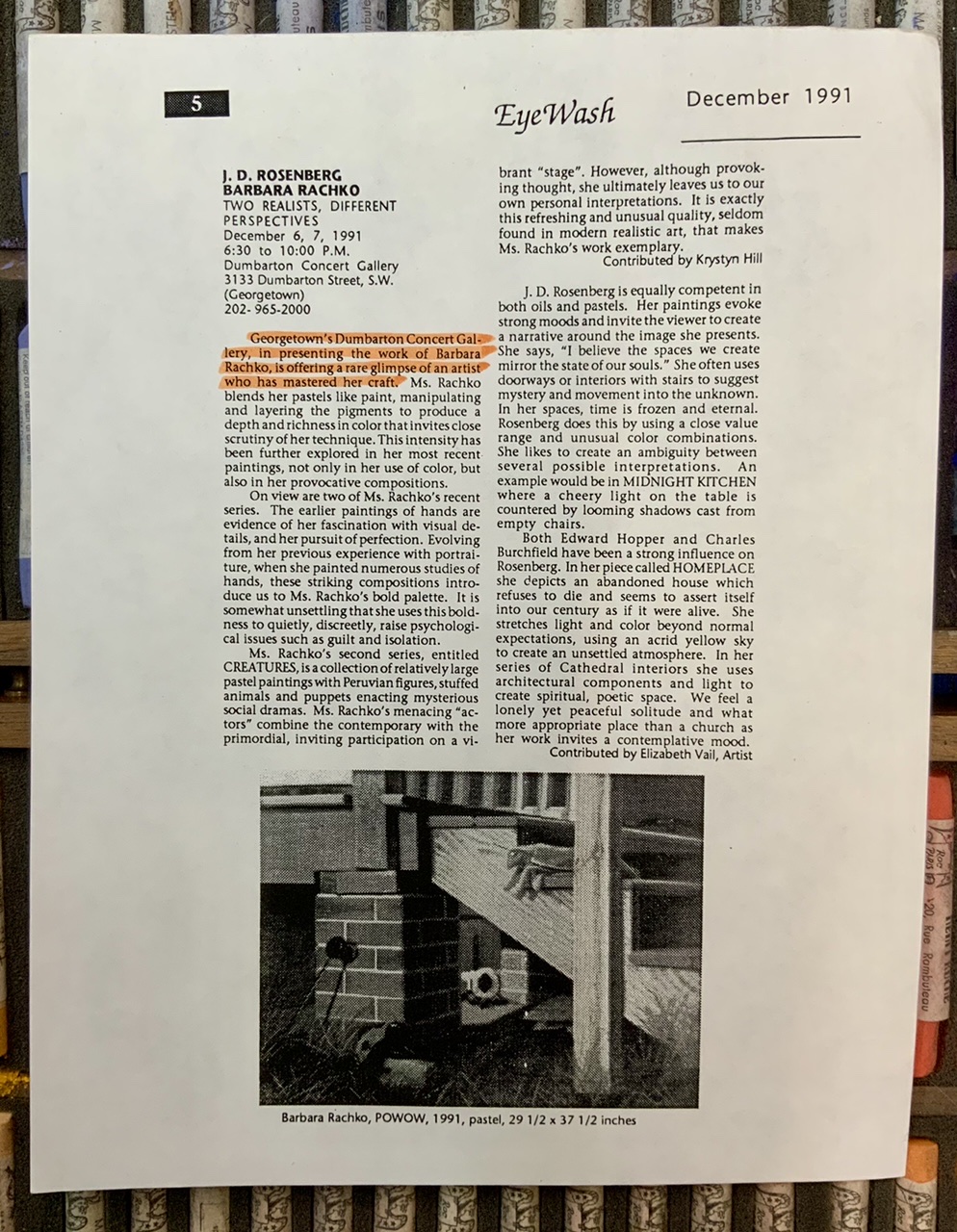
A: In 1991 I was in my late thirties and had resigned my active duty Naval commission two years before. I had been an artist for five years. I was anxious to get my pastel paintings exhibited, seen by an audience, and collected! As I worked hard to build my resume, I hustled to exhibit in all sorts of spaces that were not galleries: restaurants, hospitals, real estate offices, law offices, theaters, doctors’ offices, and more. The goal was to just get the work out of my home studio.
In December 1991 I presented a solo exhibition at Dumbarton Church in Georgetown (Washington, DC). For years Bryan had volunteered to set up chairs, a Steinway piano, and other miscellaneous equipment for their classical music concert series. The church’s downstairs space was used to showcase artists’ work. So I applied for a solo exhibition, was accepted, and got my first review in a local Washington, DC newspaper called “Eye Wash!”
Moral: artists have to work extremely hard for every little thing that comes our way!
Comments are welcome!
Q: What do you enjoy the least about being an artist?
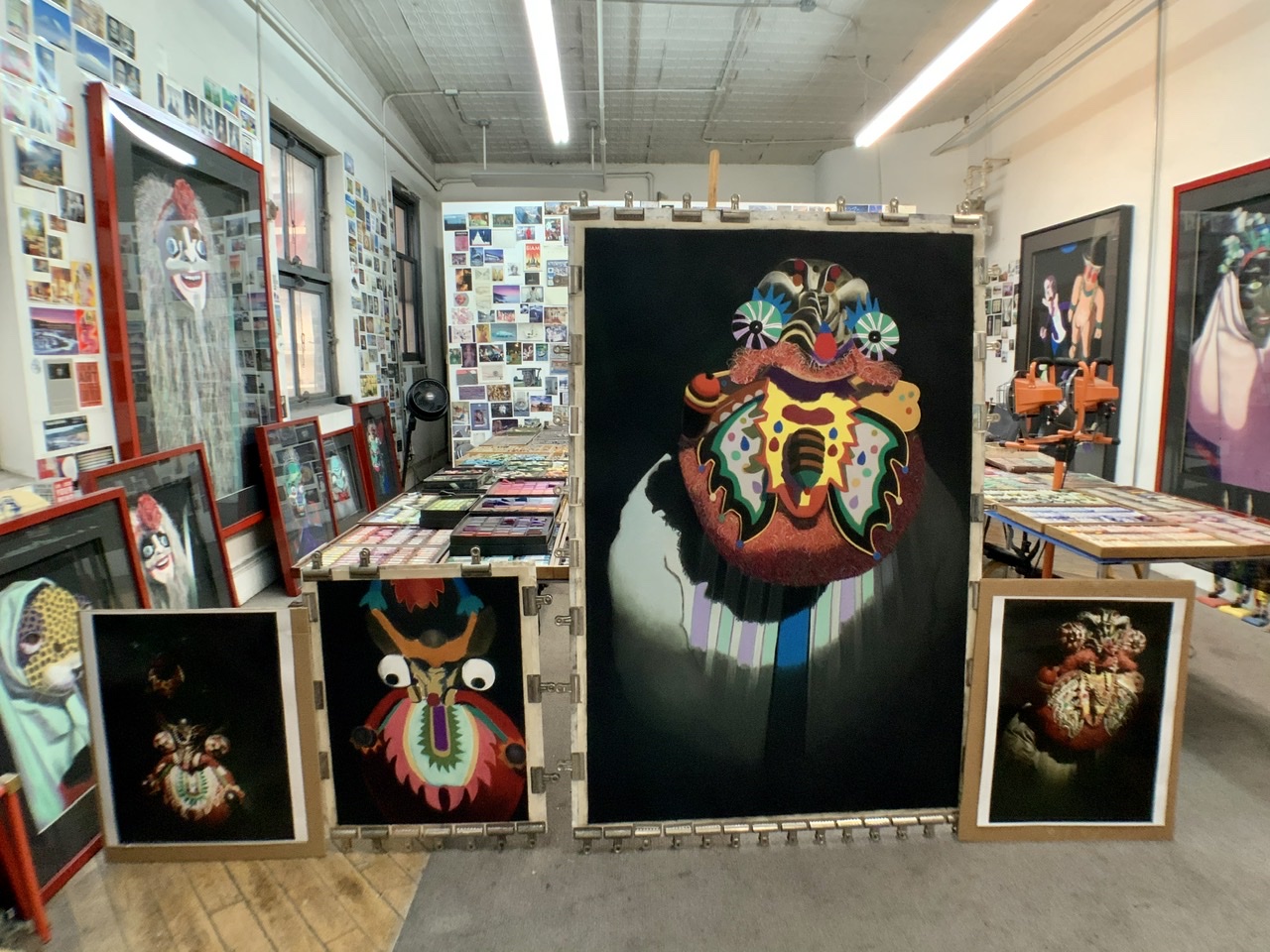
A recent view of the studio with works in progress
A: It’s the fact that no matter how hard an artist works there is no guarantee that money will be forthcoming soon. I work very hard at all aspects of being an artist, from creating pastel paintings and educating the public about what I do, to finding galleries with whom to partner, responding to interview requests, staying on top of social media, writing, etc. Under-appreciation seems to be the fate of too many contemporary artists.
Comments are welcome!
Q: You have worked with twenty-plus galleries during your career. Which ones do you consider the best?

“Myth Meets Dream,” 1993, soft pastel on sandpaper, the earliest painting that includes Mexican figures
A: Probably the most prestigious gallery that represented my work was Brewster Fine Arts on West 57th Street in Manhattan. Brewster was my first New York gallery. In the summer of 1996 I mailed the gallery a sheet of slides, as we did in those days. I was living in Virginia and had been a working artist for ten years. In July while traveling around Mexico, I decided to check the phone messages at home in Virginia. I was thrilled to receive an invitation from Mia Kim, the gallery director, to exhibit pastel paintings in October! And she had not yet even seen my work in person.
Beginning that fall, I gained representation with Brewster Fine Arts, an elegant gallery specializing in Latin American Masters like Rufino Tamayo, Diego Rivera, and others. I am not Latina, of course, but I showed there due to my subject matter. At my October opening, I remember Mia declaring to the attendees, “Barbara has the soul of a Latina!” That night I met fellow gallery artist Leonora Carrington. She and I were the only non-Latina artists respresented. I knew I was on my way!
The gallery continued to present my work in group exhibitions and the staff gave brilliant talks about me and my creative process. For many years whenever I introduced myself to a new art aficionado, they already knew my work from having seen it at Brewster. I continued to be represented there until the gallery closed years later.
Also, Gallery Bergelli in Larkspur, CA did an excellent job of representing my work. I applied for one of their juried exhibitions, was accepted, and afterwards, they offered permanent representation. Soon they introduced me to one of my best collectors, with whom I am still friends.
I have worked with many galleries, some good, some not, for various reasons. Ours is an extremely tough business. Unfortunately, many of the best and formerly-great galleries are gone forever.
Comments are welcome!
Pearls from artists* # 377
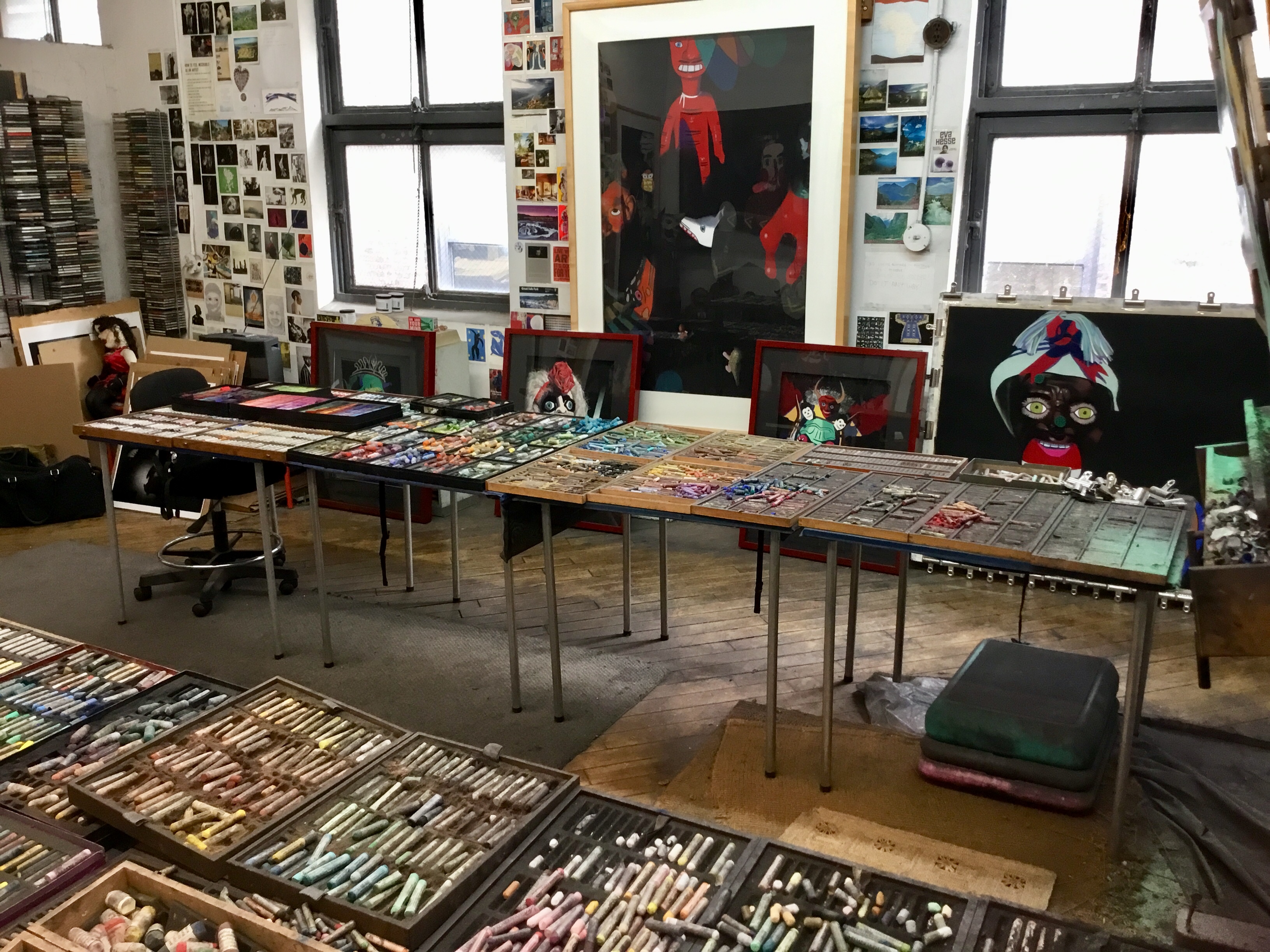
Barbara’s studio
* an ongoing series of quotations – mostly from artists, to artists – that offers wisdom, inspiration, and advice for the sometimes lonely road we are on.
Life for an artist, any artist, was difficult. There were few rewards other than the most important, which was satisfying one’s need to create. But in the art world of galleries, collections, and museums that the avant-garde artists in New York would inherit in the late 1940s, the difficulties experienced by the men who painted and sculpted would be nothing compared to those of the women. Society might mock the men’s work and disparage them for being “bums,” but at least they were awarded the dignity of ridicule. Women had to fight with every fiber of their being not to be completely ignored. In a treatise on men and women in America published at the start of the war, author Pearl S. Buck wrote,
The talented woman… must have, besides their talent, an unusual energy which drives them… to exercise their own powers. Like talented men, they are single-minded creatures, and they can’t sink into idleness nor fritter away life and time, nor endure discontent. They possess that rarest gift, integrity of purpose… Such women sacrifice, without knowing they do, what many other women hold dear – amusement, society, play of one kind or another – to choose solitude and profound thinking and feeling, and at last final expression.
“To what end?” another woman might ask. To the end, perhaps… of art – art which has lifted us out of mental and spiritual savagery.”
Mary Gabriel in Ninth Street Women
Comments are welcome!
Pearls from artists* # 364
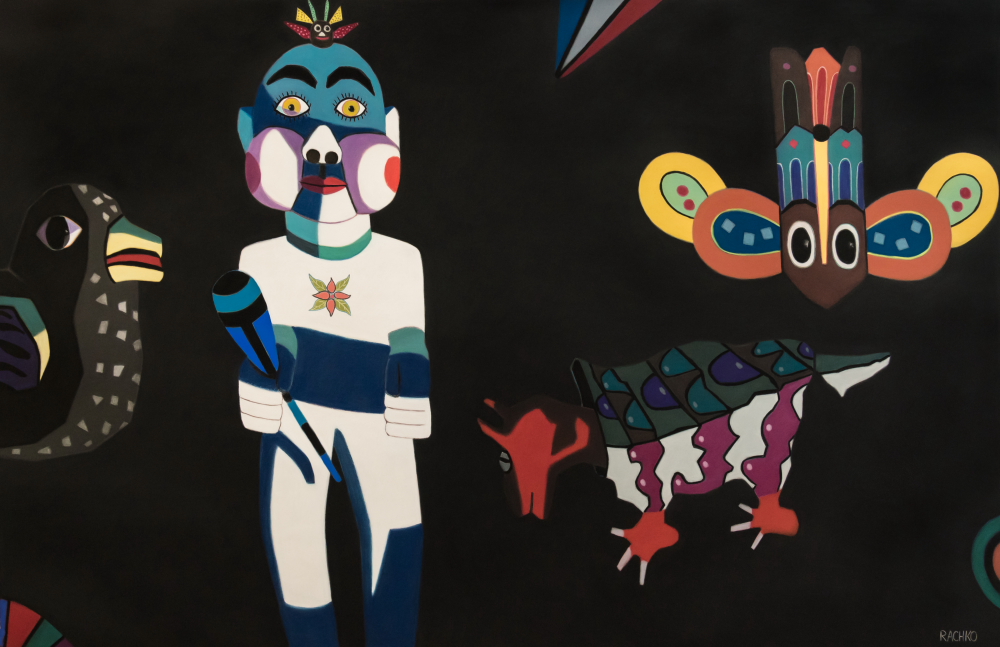
“White Star,” soft pastel on sandpaper, 38″ x 58″
* an ongoing series of quotations – mostly from artists, to artists – that offers wisdom, inspiration, and advice for the sometimes lonely road we are on.
If we are left unmoved by a painting of the Virgin, it is likely because the artist was unmoved in the painting of her. The subject matter is mostly irrelevant; it is important only as a vehicle for the artist’s attention. Authenticity comes from how deeply the artist felt. And this is the key to how much silence, how much consciousness or attention, the art contains.
… subject matter, if the artist is even using it, is just an armature for the artist to engage his intensity of feeling. It is the quality of your attention that influences how you see and how deeply you feel. Different artists have affinities for different subject matter as a way into expressing themselves deeply. And that depth is the quality, we, the viewers, respond to. It is what we continue to respond to over the centuries in great works of art. The fact that things last, that we continue to admire them, is in the end a good indicator of their quality, of their silence. Art museums therefore, have little nodes of silence nestling in their galleries. They are filled with, to use André Malraux’s expression, “the voices of silence.”
Ian Roberts in Creative Authenticity: 16 Principles to Clarify and Deepen Your Artistic Vision
Comments are welcome!
Q: What invaluable art business lesson did you learn in the past year?
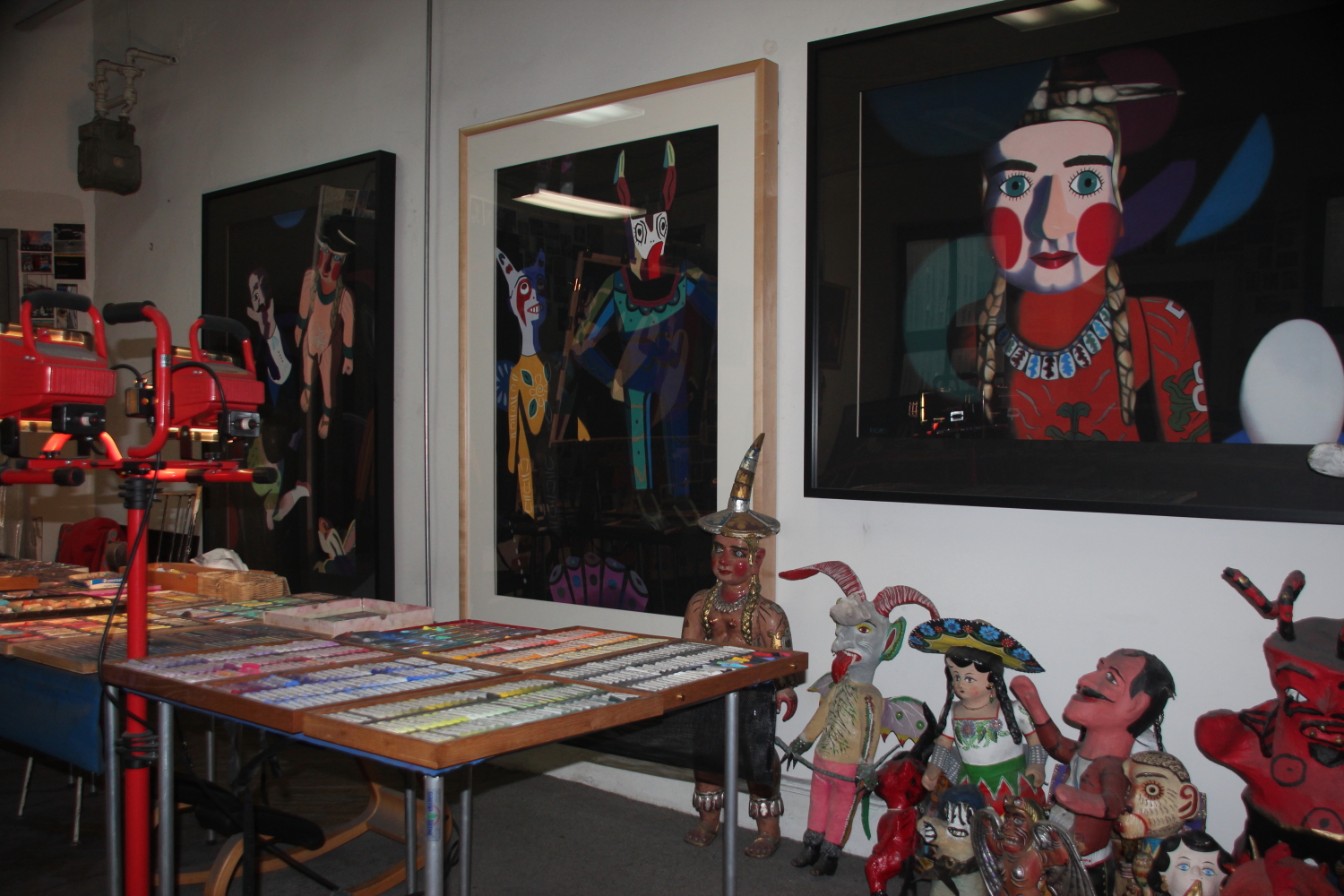
Barbara’s studio
A: I have decided that it IS necessary to work with art galleries. During my thirty years as an artist, I have been represented by two dozen galleries and found most to be disappointing. For the past few years I have focused extensively on social media and other sorts of creative marketing. My efforts have built significant name recognition – many more people around the world know about me and my work – but my collector base has not expanded as much as I would have liked. So I have revised my marketing strategy to include gallery representation.
Comments are welcome!


 barbararachkoscoloreddust.com