Blog Archives
Q: Another exhibition was described as “a journey from identity to authenticity.” Does that resonate? (Question from “Pastel, Passion, and Perseverance: An Interview with Barbara Rachko” in .ART Odyssey: Healing)
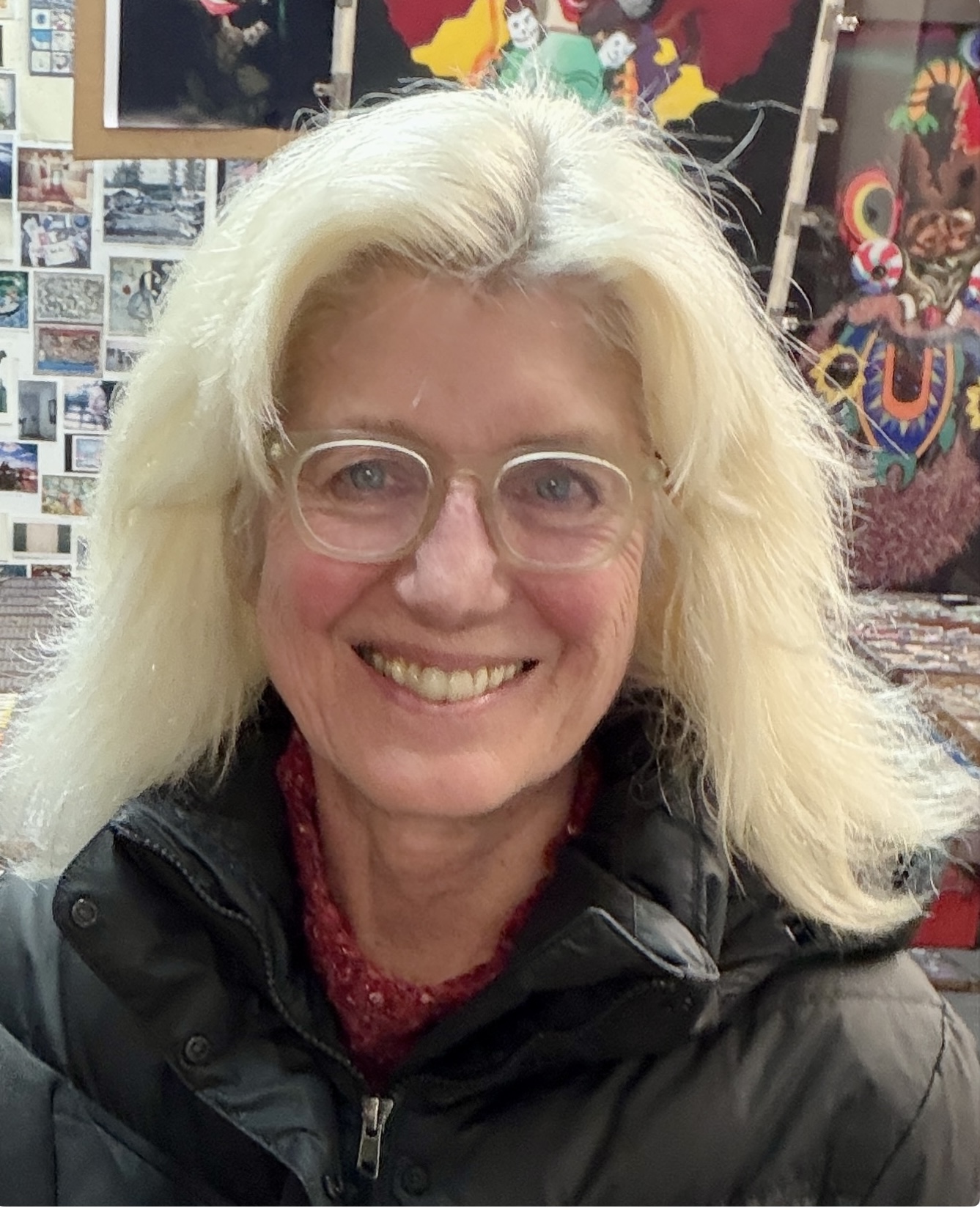
A: Yes, especially the authenticity part.
My work has always come from a deep place. Each painting is the inevitable result of three or four months of daily engagement—the constant adjustments, decisions, and struggles. By the time it’s finished, it couldn’t be any other way.
That, to me, is authenticity. Identity may be what we inherit — culture, upbringing, circumstance. Authenticity is what we strip back to, the choices we make that reflect our core. As I get older, l’ve been shedding what doesn’t serve me. I want to use my time and energy on what makes me a better artist and a better person.
Comments are welcome!
Q: Does your work look different to you on days when you are sad, happy, etc.?

Barbara’s Studio
A: I am much more critical on days when I am sad so that the faults, imperfections, and things I wish I had done better stand out. Fortunately, all of my work is framed behind plexiglas so I can’t easily go back in to touch up perceived faults. I am reminded of the expression, “Always strive to improve, whenever possible. It is ALWAYS possible!” However, I’ve learned that re-working a painting is a bad idea. You are no longer deeply involved in making it and the zeitgeist has changed. The things you were concerned with are gone: some are forgotten, others are less urgent.
For most artists our work is autobiography. Art is personal. When I look at a completed pastel painting, I usually remember exactly what was happening in my life as I created it. Each piece is a snapshot – maybe a time capsule, if anyone could decode it – that reflects and records a particular moment. When I finally pronounce a piece finished and sign it, that’s it, THE END. It’s as good as I can make it at that point in time. I’ve incorporated everything I was thinking about, what I was reading, how I was feeling, what I valued, art exhibitions I visited, programs that I heard on the radio or watched on television, music that I listened to, what was going on in New York, in the country, and in the world.
It is still a mystery how this heady mix finds its way into the work. During the time that I spend on it, each particular painting teaches me everything it has to teach. A painting requires months of looking, reacting, correcting, searching, thinking, re-thinking, revising. Each choice is made for a reason and together these decisions dictate what the final piece looks like. On days when I’m sad I tend to forget that. On happier days I remember that the framed pastel paintings that you see have an inevitability to them. If all art is the result of one’s having gone through an experience to the end, as I believe it is, then the paintings could not, and should not, look any differently.
Comments are welcome.
Pearls from artists* # 567
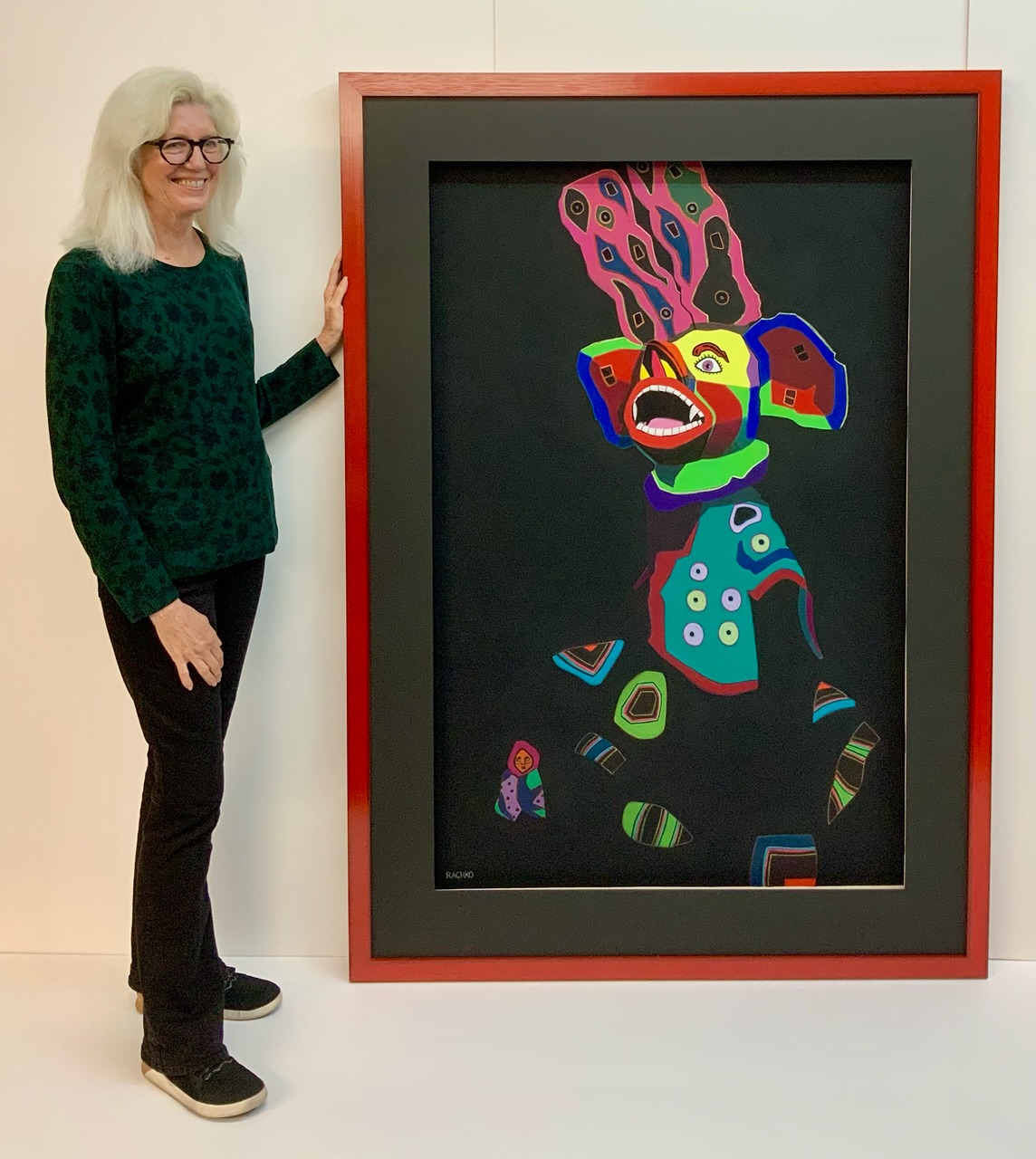
With “Impresario,” 70” x 50” framed, soft pastel on sandpaper
*an ongoing series of quotations – mostly from artists, to artists – that offers wisdom, inspiration, and advice for the sometimes lonely road we are on.
Almost every artist seems to meet someone at the beginning of his career who profoundly and often inexplicably affects later decisions and attitudes, someone whose personal expression is identified with the peculiar glamour of art that hits certain people so hard that they are caught up with it for the rest of their lives.
Mary Gabriel in Ninth Street Women
Comments are welcome!
Pearls from artists* # 551

Barbara’s Studio
*an ongoing series of quotations – mostly from artists, to artists – that offers wisdom, inspiration, and advice for the sometimes lonely road we are on.
A creative process is a philosophical search, shaped by matters of practice and procedure that extend from the first touch of the artist’s pencil, brush, or chisel to the final decisions about what constitutes completeness.
Stylistic particularism – the decision as to what kind of abstract or representational artist you’re going to be – shapes, deepens, and extends the artist’s imaginative powers. Most artists who work for many years see their style evolve, sometimes dramatically. In the 1930s and 1940s Giacometti, who had first been admired for Surrealist sculptures in which representational elements are set in essentially abstract structures, found himself increasingly focused on the direct observation of the human figure. What by the mid-1940s could look like a wholesale transformation of his artistic language was the result of individual decisions all of which, during Giacometti’s career of nearly five decades, interlocked. They reinforced one another. They added up.
Between Abstraction and Representation by Jed Perl in The New York Review of Books, November 24, 2022
Comments are welcome!
Q: There are so many instances in the art world where paintings are discovered to be fakes. Do you think this is a potential problem where your work is concerned? Can your pastel paintings be forged?


A: For the record, a little-appreciated fact about my pastel-on-sandpaper paintings is that they can never be forged. To detect a fake, you would only need to x-ray them. If dozens of layers of revisions are not visible under the final pastel painting, you are not looking at an original Rachko, period.
My completed paintings are the results of thousands of decisions. They are the product of an extremely meticulous, labor-intensive, and self-invented process. This is the difference between spending months thinking about and creating a painting, as I do, or a single day. It’s highly doubtful that my rigorous creative process can EVER be duplicated.
Comments are welcome!
Pearls from artists* # 502

* an ongoing series of quotations – mostly from artists, to artists – that offers wisdom, inspiration, and advice for the sometimes lonely road we are on.
It seems to me that the less I fight my fear, the less it fights back. If I can relax, then fear relaxes, too. I cordially invite fear to come along with me everywhere I go. I even have a welcoming speech prepared for fear, which I deliver right before embarking upon any new project or adventure.
It goes something like this.
“Dearest fear: Creativity and I are about to go on a road trip together. I understand you will be joining us, because you always do. I acknowledge that you believe you have an important job to do in my life, and that you take your job seriously. Apparently, your job is to induce complete panic whenever I’m about to do something interesting – and may I say, you are superb at your job. So, by all means, keep doing your job, if you feel you must. But I will also be doing my job on this road trip, which is to work hard and stay focused. And Creativity will be doing its job, which is to remain stimulating and inspiring. There’s plenty of room in this vehicle for all of us, so make yourself at home, but understand this: Creativity and I are the only ones who will be making any decisions along the way. I recognize and respect that you are part of this family, and so I will never exclude you from our activities, but still – your suggestions will never be followed. You’re allowed to have a seat, and you’re allowed to have a voice, but you are not allowed to have a vote. You’re not allowed to touch the road maps; you’re not allowed to suggest detours; you’re not allowed to fiddle with the temperature. Dude, you’re not even allowed to touch the radio. But above all else, my dear old familiar friend, you are absolutely forbidden to drive.”
Then we head off together – me and creativity and fear – side by side by side forever, advancing once more into the terrifying but marvelous terrain of unknown outcome.
Elizabeth Gilbert in Big Magic: Creative Living Beyond Fear
Comments are welcome!
Q: Why do you make a preliminary drawing before you begin a pastel painting?

A: I make a preliminary charcoal drawing because that’s how I like to begin thinking about and planning a new pastel painting. I always make preliminary drawings the same size as the upcoming pastel painting. While I draw, I make decisions about the overall composition, decide where the major light and dark shapes will be, and envision the likely problem areas that lie ahead. These drawings are done quickly. I spend perhaps an hour on them.
Once the drawing is in my head I no longer need it. So I put it away and when it’s time to begin a subsequent pastel painting, I erase it. I wipe it out with a paper towel and make the next preliminary charcoal drawing directly on top. These are ephemeral tools, existing only for as long as I need them.
Comments are welcome!
Q: Do you plan your work in advance or is it improvisation?
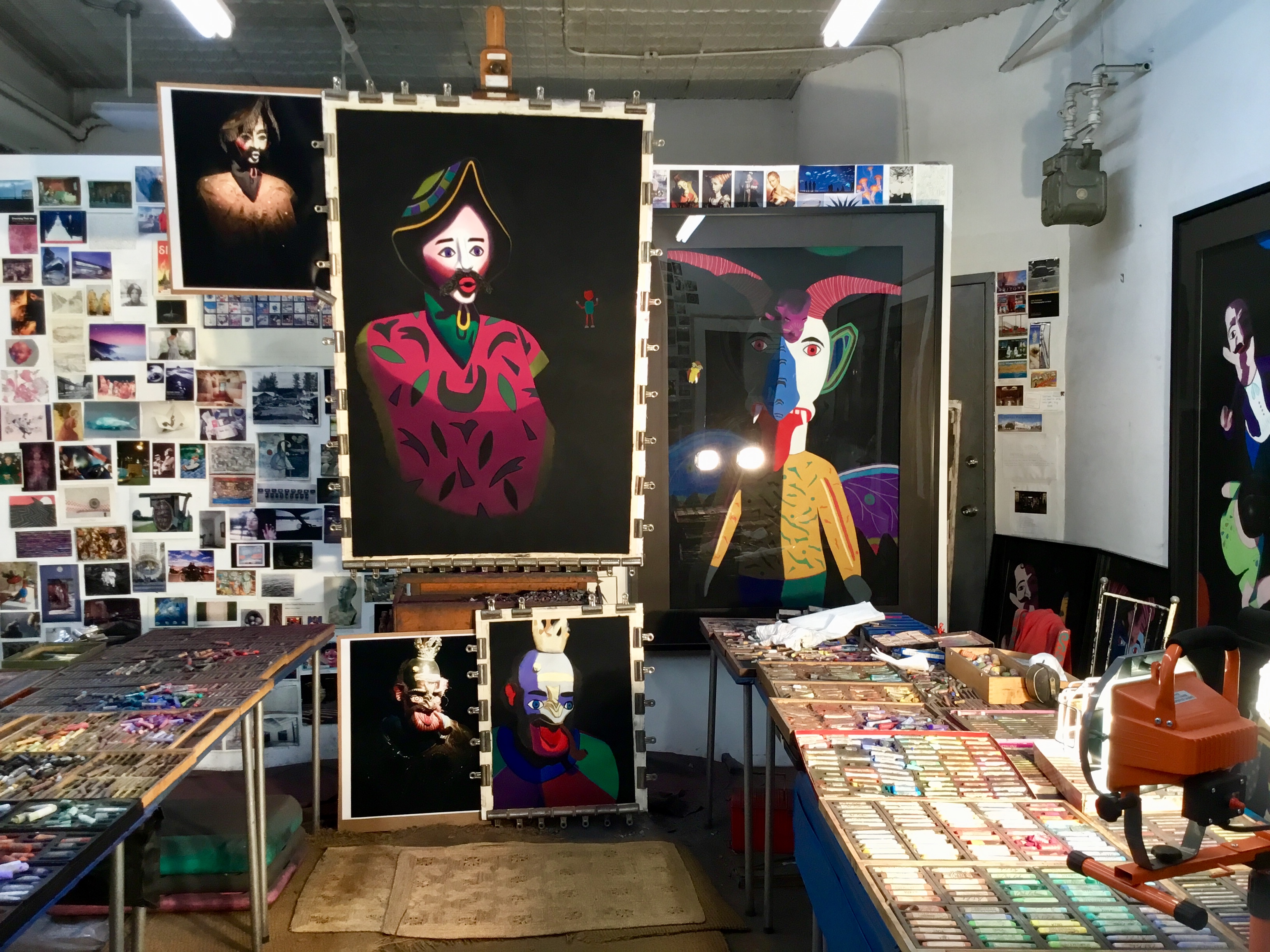
Barbara’s studio
A: My process is somewhere in between those two. I work from my own set-up or on-site photographs and make a preliminary sketch in charcoal before I start a pastel painting. Thousands of decisions about composition, color, etc. occur as I go along.
Although it starts out somewhat planned, I have no idea what a pastel painting will look like when it’s finished. Each piece takes about three months, not counting foreign travel, research, and a gestation period of several months to determine what the next pastel painting will even be.
Comments are welcome!
Q: Do you work with a particular audience in mind?
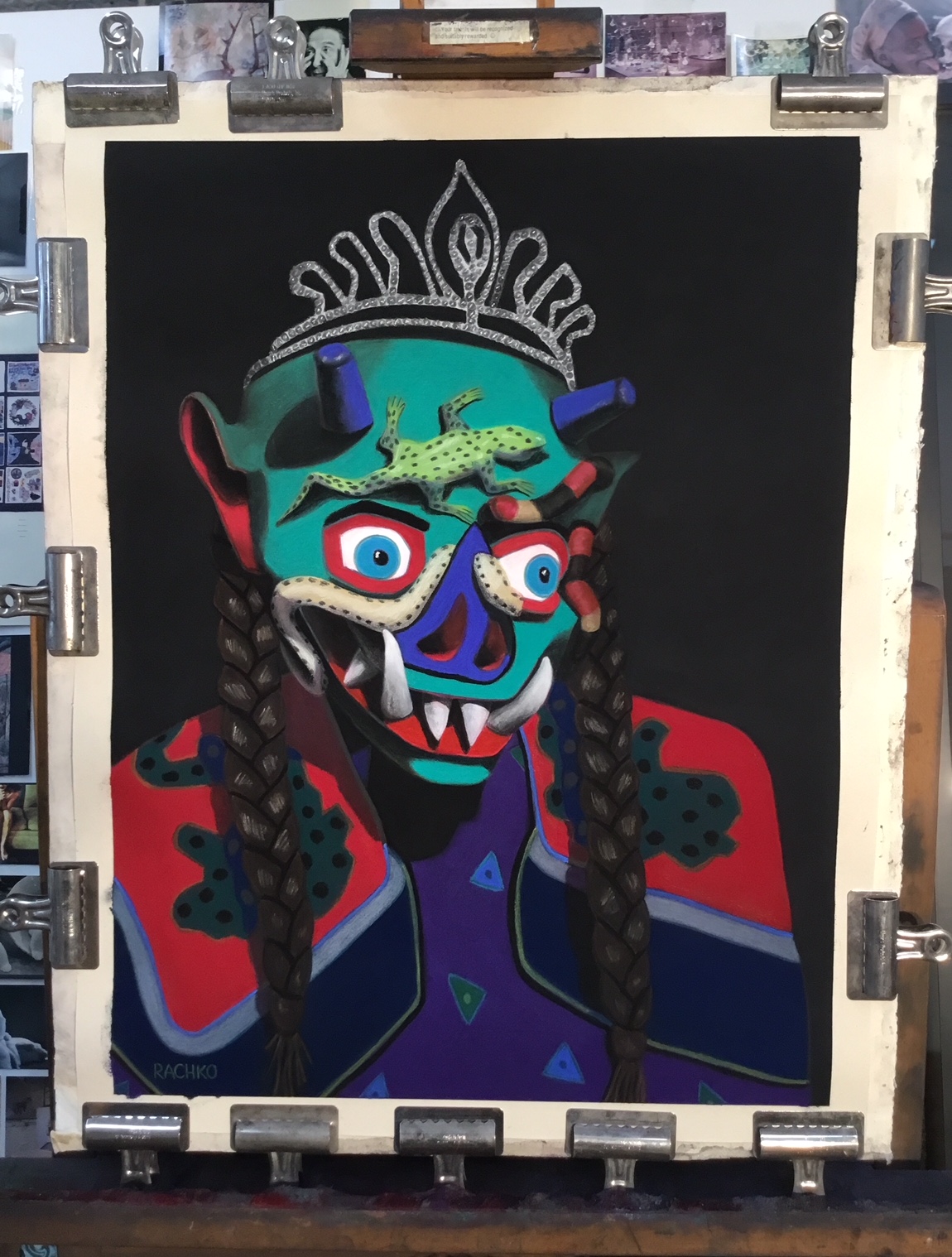
“Shamanic,” 26″ x 20,” finished
A: In general I would answer no, I have no ‘specific’ audience in mind. But I DO consider the audience in this sense. As I put finishing touches on a pastel painting, I pay attention to how all of my decisions up to that point lead the viewer’s eyes around. I fine tune – brightening some areas, heightening the contrast with what’s next to it, blurring, fading, and pushing back others – all to keep the viewer’s gaze moving around the painting. Once I am satisfied that it’s as visually exciting as I can make it, I consider the pastel painting finished, ready to be photographed, and driven to Virginia for framing.
Comments are welcome!
Pearls from artists* # 210
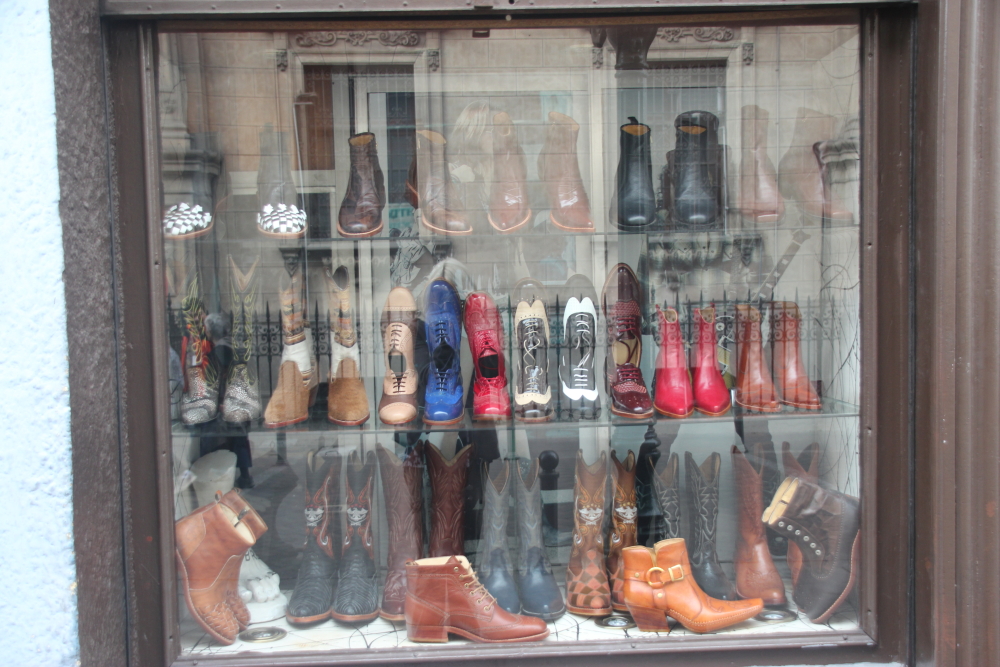
Lima, Peru (with self-portrait)
* an ongoing series of quotations – mostly from artists, to artists – that offers wisdom, inspiration, and advice for the sometimes lonely road we are on.
Much that is said about beauty and its importance in our lives ignores the minimal beauty of an unpretentious street, a nice pair of shoes or a tasteful piece of wrapping paper, as though these things belonged to a different order of value from a church by Bramante or a Shakespeare sonnet. Yet these minimal beauties are far more important to our daily lives, and far more intricately involved in our own rational decisions, than the great works which (if we are lucky) occupy our leisure hours. They are part of the context in which we live our lives, and our desire for harmony, fittingness and civility expressed and confirmed in them. Moreover, the great works of architecture often depend for their beauty on the humble context that these lesser beauties provide. Longhena’s church on the Grand Canal would lose its confident and invocatory presence, were the modest buildings which nestle in its shadow to be replaced with cast-concrete office blocks, of the kind that ruin the aspect of St. Paul’s.
Beauty: A Very Short Introduction, by Roger Scruton
Comments are welcome!


 barbararachkoscoloreddust.com