Blog Archives
Pearls from artists* 601

Along the Seine, Paris
*an ongoing series of quotations – mostly from artists, to artists – that offers wisdom, inspiration, and advice for the sometimes lonely road we are on.
The central construct of café life in Paris introduced [Jack] Youngerman to contemporary political and cultural debates. He would take with him to New York this particular way of being alone but with people. It would infuse Coenties Slip with its unique template of influence by osmosis; the collective solitude model unique to the geographic makeup of that corner of New York. In Paris, “at any time, you can go out and be part of the city, you can see passersby, you can get out of your personal loneliness, without having to make conversation with another person. That’s something I want to do almost every day.” For Youngerman , it felt vital for art making.
Prudence Peiffer in The Slip: The New York Street that Changed American Art Forever
Comments are welcome!
Pearls from artists* # 595

Film still from “Barbara Rachko: True Grit,” directed by Jennifer Cox, Moto Films LLC
*an ongoing series of quotations – mostly from artists, to artists – that offers wisdom, inspiration, and advice for the sometimes lonely road we are on.
One of the great paradoxes of the writing life is that our words – chosen carefully, so thoughtfully, with deep focus and concentration – those words once on the page go dead on us. Language is ours only when we are forming sentences, moving elements around, grappling with punctuation, speaking words aloud, feeling them on our lips. While we are shaping a scene into something we can hear and touch and see, that scene lives and breathes. We are inside language like painters, we are working in our medium: the tempera, the thin line, the wet oil on canvas, still in process, still alive.
But once we commit – once those words dry like paint, are affixed to the page – it becomes nearly impossible to see them. This? We think to ourselves. Our most loathsome critic emerges with a swirl of her cape. Really? What the hell is this? The sentences appear to have been written in another language – a dark dream language, tucked into some musty, inaccessible corner of our psyche. Attempting to discern its meaning is a bit like looking at our own face in the mirror. It is at once so familiar as to be invisible, and so intimate that we turn away, baffled, ashamed.
Can we ever see ourselves, really? Can we read ourselves?
It is a powerful conundrum because without the ability to see our writing afresh we cannot do the necessary work. How do we know whether a problem lies with the work, or with our inability to enter it? We need clarity, but not coldness. Openness, but not attachment. We want optimism, but that optimism must not go hand in hand with discernment. We’re not looking for a cheerleader, nor a fault-finding judge. We want to read ourselves with equanimity.
Dani Shapiro in Still Writing: The Pleasures and Perils of a Creative Life
Comments are welcome!
Q: It must be tricky moving pastel paintings from your New York studio to your framer in Virginia. Can you explain what’s involved? (Question from Ni Zhu via Instagram)
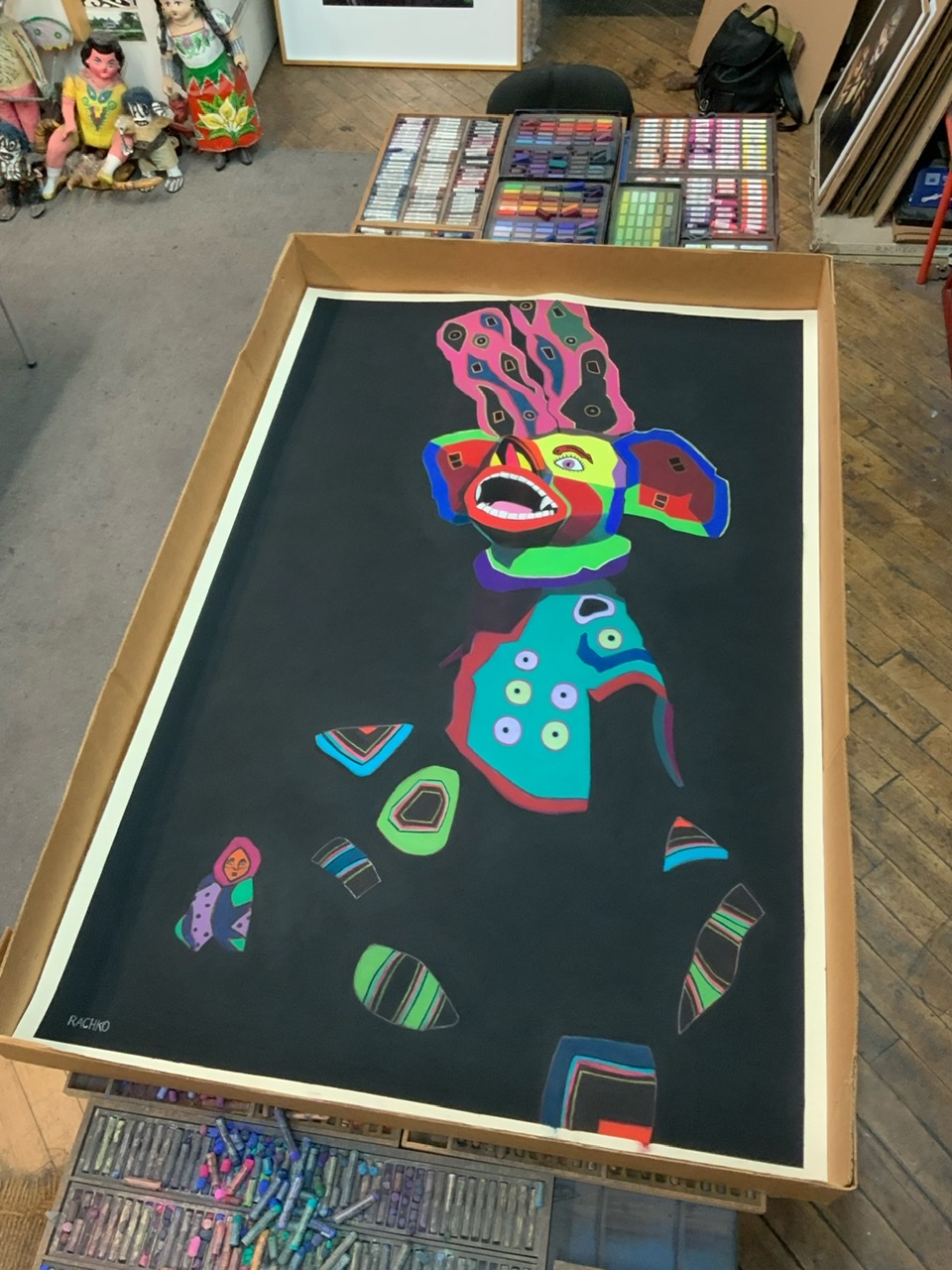
“Impresario” partially boxed for transport to Virginia
A: Well, I have been working with the same framer for three decades so I am used to the process.
Once my photographer photographs a finished, unframed piece, I carefully remove it from the 60” x 40” piece of foam core to which it has been attached (with bulldog clips) during the months I worked on it. I carefully slide the painting into a large covered box for transport. Sometimes I photograph it in the box before I put the cover on (see above).
My studio is in a busy part of Manhattan where only commercial vehicles are allowed to park, except on Sundays. Early on a Sunday morning, I pick up my 1993 Ford F-150 truck from Pier 40 (a parking garage on the Hudson River at the end of Houston Street) and drive to my building’s freight elevator. I try to park relatively close by. On Sundays the gate to the freight elevator is closed and locked so I enter the building around the corner via the main entrance. I unlock my studio, retrieve the boxed painting, bring it to the freight elevator, and buzz for the operator. He answers and I bring the painting down to my truck. Then I load it into the back of my truck for transport to my apartment.
I drive downtown to the West Village, where I live, and double park my truck. (It’s generally impossible to park on my block). I hurry to unload the painting, bring it into my building, and up to my apartment, all the while hoping I do not get a parking ticket. The painting will be stored in my apartment, away from extreme cold or heat, until I’m ready to drive to Virginia. On the day I go to Virginia, I load it back into my truck. Then I make the roughly 5-hour drive south.
Who ever said being an artist is easy was lying!
Comments are welcome!
Pearls from artists* # 521

*an ongoing series of quotations – mostly from artists, to artists – that offers wisdom, inspiration, and advice for the sometimes lonely road we are on.
But on the whole, I’m taking into consideration, at the point of the cut, where the audience’s eye is and what direction it’s moving, and with what speed. The editor has to imagine the audience’s point of attention when the film is projected, and has to be able to predict where ninety-nine percent of the audience is looking at any moment… I have to be able to say with some certainty that at such-and-such a moment ninety-nine percent of the audience will be looking at this point on the screen, and in the next second they will be looking here. That means that their eye is travelling, say, left to right, to the upper corner of the frame, at a certain speed. If I choose to cut at this point – at frame 17 – I know that at that moment their eye is right here, in the Cartesian grid of the screen.
That’s a very valuable piece of information. When I select the next shot, I choose a frame that has an interesting visual at exactly that point, where the audience’s eye is at the moment of the cut, to catch and redirect their attention somewhere else. Every shot has its own dynamic. One of the editor’s obligations is to carry, like a sacred vessel, the focus of attention of the audience and move it in interesting ways around the surface of the screen.
This is exactly what I do as I work to compose my pastel paintings! – BR
In The Conversations: Walter Murch and the Art of Editing Film by Michael Ondaatje
Comments are welcome!
Pearls from artists* # 484

*an ongoing series of quotations – mostly from artists, to artists – that offers wisdom, inspiration, and advice for the sometimes lonely road we are on.
[Walter] Murch: We hope we become better editors with experience! Yet you have to have an intuition about the craft to begin with: for me, it begins with, Where is the audience looking? What are they thinking? As much as possible, you try to be the audience. At the point of transition from one shot to another, you have to be pretty sure where the audience’s eye is looking, where the focus of attention is. That will either make the cut work or not.
[Michael] Ondaatje: So before you make the cut, if you feel the audience is looking towards point X, then you cut to another angle where the focus of attention is somewhere around that point X.
The Conversation: Walter Murch and the Art of Editing Film by Michael Ondaatje
This passage in Ondaatje’s book resonates because I work similarly to refine and construct each pastel painting. My goal is to move the viewer’s eye around in an engaging and interesting way. This part of my process is subtle so I suspect that most of my audience neither appreciates nor even suspects that I have done it.
Comments are welcome!
Pearls from artists* # 161

Whitney Museum
* an ongoing series of quotations – mostly from artists, to artists – that offers wisdom, inspiration, and advice for the sometimes lonely road we are on.
It is the artist’s innate sensitivity that makes him special and different from other professionals. Society expects the artist to be more compassionate and understanding in order to bring out that which will enlighten, inspire and encourage life in his work. His vocation should not just be for art’s sake.
Where the average person sees an old beat-up shark, the artist sees a symbol of beauty in aging and imagines bringing out those qualities that the shark has sheltered over the ages, by means of artistic creation. To the intelligent and sensitive artist, the homeless man lying on the street corner is a symbol that reminds us of what we, as a society, should be doing to better our living.
Sensitivity comes into play when leaves that appear to the general viewer to be uniformly green are seen by the sensitive artist to be different shades, tones, and subtle nuances of green. Without sensitivity, special and important characteristics of nature will be out of our sight and out of reach to the viewing layman. Only the obvious, the average and the common will reveal themselves to the insensitive artist. The endurance of certain works will depend on what the artist has captured with the help of his sensitivity and because of the ideas behind the work.
Samuel Adoquei in Origin of Inspiration: Seven Short Essays for Creative People
Comments are welcome!
Pearls from artists* # 158

“Dichotomy,” soft pastel on sandpaper, 38″ x 58″
* an ongoing series of quotations – mostly from artists, to artists – that offers wisdom, inspiration, and advice for the sometimes lonely road we are on.
It is the artist’s innate sensitivity that makes him special and different from other professionals. Society expects the artist to be more compassionate and understanding in order to bring out that which will enlighten, inspire and encourage life in his work. His vocation should not just be art for art’s sake.
Where the average person sees an old beat-up shark, the artist sees a symbol of beauty in aging and imagines bringing out those qualities that the shark has sheltered over the ages by means of artistic creation. To the intelligent and sensitive artist, the homeless man lying on the street corner is a symbol that reminds us of what we, as a society, should do to better our living.
Sensitivity comes into play when leaves that appear to the general viewer to be uniformly green are seen by the sensitive artist to be different shades, tones and nuances of green. Without sensitivity, special and important characteristics of nature will be out of sight and out of reach to the viewing layman. Only the obvious, the average and the common will reveal themselves to the insensitive artist. The endurance of certain works will depend on what the artist has captured with the help of his sensitivity and because of the ideas behind the work.
Samuel Adoquei in Origin of Inspiration: Seven Short Essays for Creative People
Comments are welcome!
Pearls from artists* # 138

A corner of Barbara’s studio
* an ongoing series of quotations – mostly from artists, to artists – that offers wisdom, inspiration, and advice for the sometimes lonely road we are on.
BM: … so many artists value the sense of retaining something of the child, like the strangeness that children have where they’ll just make a gesture or say something that we filter as adults.
MM: Sometimes people think that it is childish, but it’s not, it is child-like. People get confused. One of the things we are trying to do as artists – it’s not romantic – is to get to a point where we are seeing things in a fresh way, in a way that we’ve never seen them before, the way children do. So we are acknowledging the magic in every moment we have.
BM: And it’s not a form of nostalgia, but the history of an entire human being.
MM: Exactly. Rather than nostalgia it is teaching us how to be present.
Conversations with Meredith Monk by Bonnie Marranca
Comments are welcome!
Pearls from artists* # 130
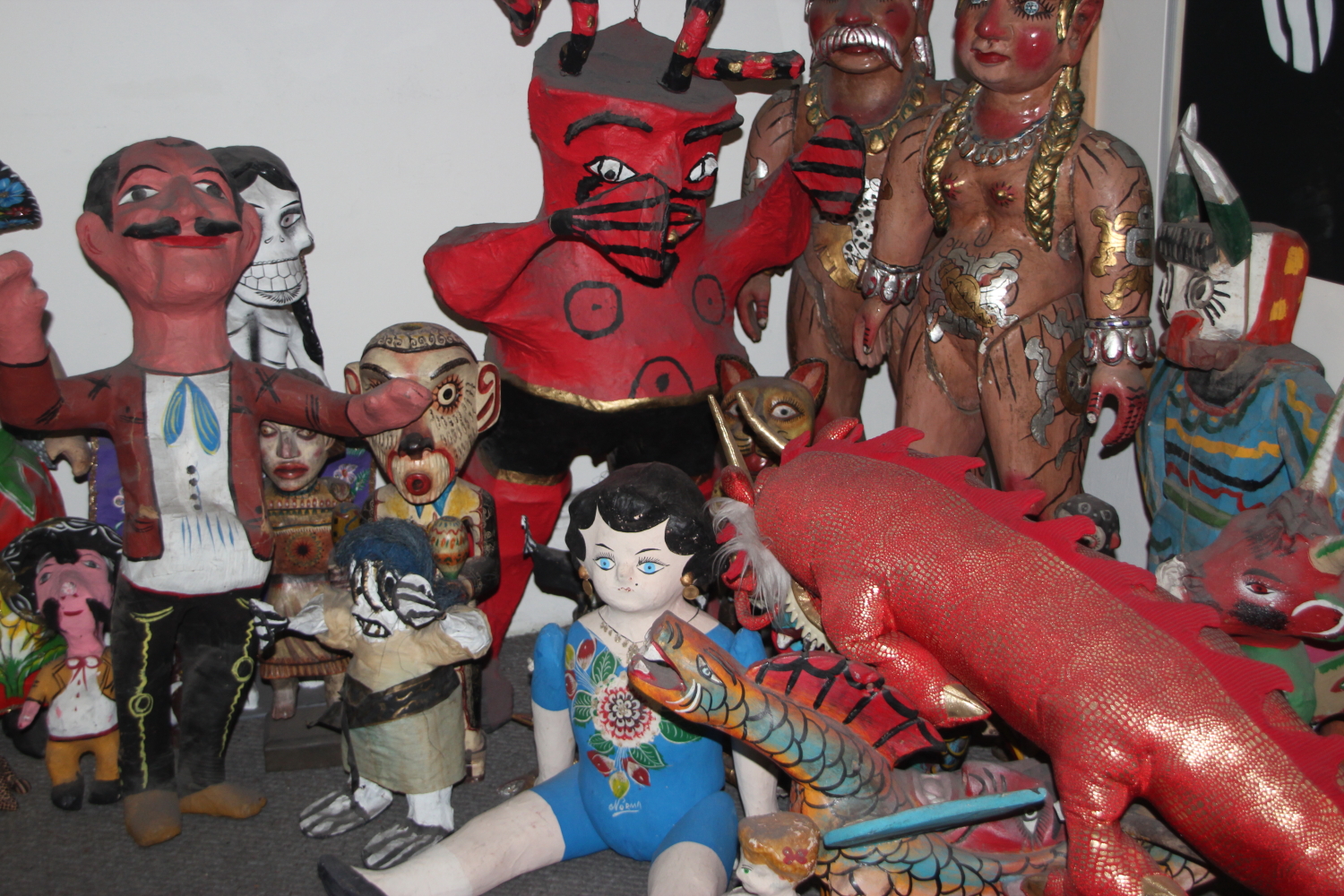
Studio corner
* an ongoing series of quotations – mostly from artists, to artists – that offers wisdom, inspiration, and advice for the sometimes lonely road we are on.
In the aesthetic act something comes to life. That’s a good phrase for it, comes to life, suggesting both something separate, apart from life, extra, from elsewhere, and something not alive in the act of being invested with life. The phrase brought to life does this same double take.
Ali Smith in Artful
Comments are welcome!


 barbararachkoscoloreddust.com
Pearls from artists # 429
Nov 18
Posted by barbararachkoscoloreddust
*an ongoing series of quotations – mostly from artists, to artists – that offers wisdom, inspiration, and advice for the sometimes lonely road we are on.
Vincent [van Gogh] found himself in perfect harmony with[Emile] Zola’s world view. Neither of them sugarcoated or idealized the harsh reality of the everyday life that surrounded them, or the subjects it offered up. The same reality was at the heart of both of their work. In July 1883, Vincent read Zola’s essay on art, ‘Le Moment artistique,’ contained in one of his critical works on literary and artistic life, Mes haines (My Hatreds), in which Zola reflected on a crucial aspect of artistic creativity, going beyond the word ‘realistic;’ ‘the word “realist” means nothing to me, and I declare reality subordinate to temperament.’ Therefore, according to Zola, a ‘work of art is a corner of creation seen through a temperament.’ Vincent did not comment on this passage directly, but in his lines we see that in Zola’s words he found confirmation of his own beliefs. To Theo, in 1885, he wrote of his attempts to capture the effects of light in The Potato Eaters: “Not always literally exactly – rather never exactly – for one sees nature through one’s temperament.” The two contrasting souls that live side by side in the author of Les Rougon Macquart, one methodical, the other creative, reflected Vincent’s own creative approach.
Mariella Guzzoni in Vincent’s Books: Van Gogh and the Writers Who Inspired Him
Comments are welcome!
Share this:
Posted in 2020, An Artist's Life, Creative Process, Inspiration, Pearls from Artists, Quotes
Comments Off on Pearls from artists # 429
Tags: "Le Moment artistique", "Les Rougon Macquart", "Mes haines", "The Potato Eaters", accepted, according, ality, approach, artist, artistic, aspect, attempts, author, beliefs, beyond, capture, comment, confirmation, contained, contrasting, corner, creation, creative, creativity, critical, crucial, directly, effects, Emile Zola, everyday, exactly, harmony, himself, idealized, individual, literally, literary, Mariella Guzzoni, methodical, nature, neither, nothing, offered, passage, perfect, rather, realist, reality, reemperament, subjects, subordinate, sugarcoated, surrounded, transposition, Vincent Van Gogh, Vincent's Books: Van Gogh and the Writers Who Inspired Him, world view