Category Archives: Quotes
Pearls from artists* # 197
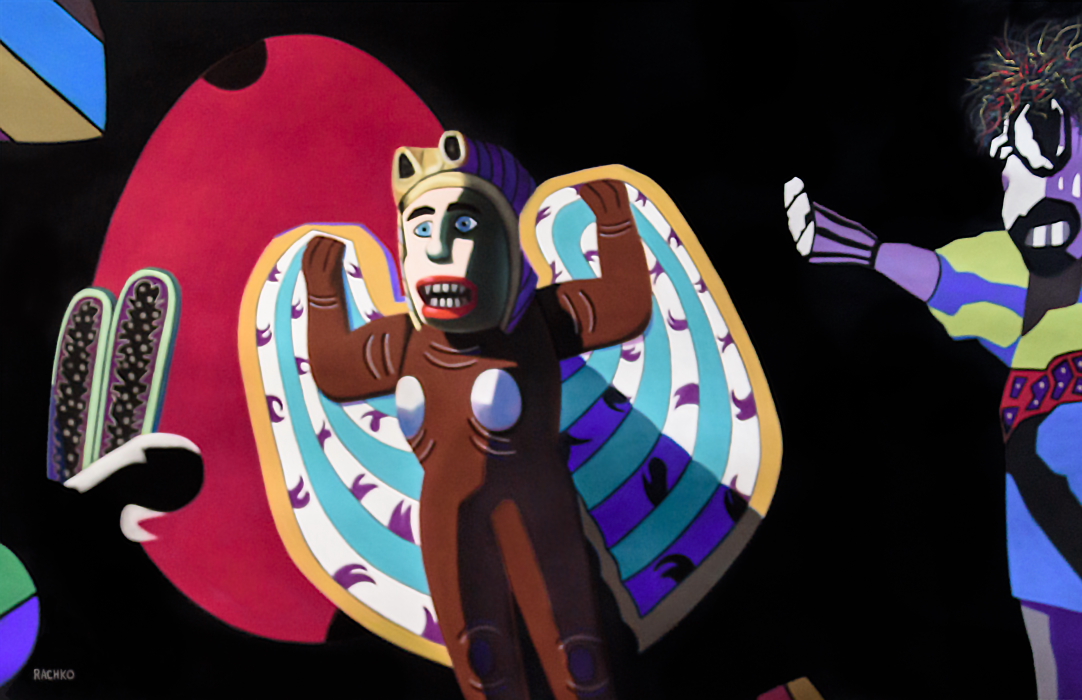
“Charade,” soft pastel on sandpaper, 38″ x 58″
* an ongoing series of quotations – mostly from artists, to artists – that offers wisdom, inspiration, and advice for the sometimes lonely road we are on.
As Kenneth Burke says in ‘Counter-Statement:’ “[Great] artists feel as opportunity what others feel as menace. This ability does not, I believe, derive from exceptional strength, it probably arises purely from professional interest the artist may take in his difficulties.”
Marianne Moore in Writers at Work: The Paris Review Interviews Second Series, edited by George Plimpton
Comments are welcome!
Pearls from artists* # 196

“The Sovereign,” soft pastel on sandpaper, 58″ x 38″
* an ongoing series of quotations – mostly from artists, to artists – that offers wisdom, inspiration, and advice for the sometimes lonely road we are on.
…for me, there’s nothing gratuitous about the least drawing. Every part of me has to be reaching toward that goal: exteriorizing the shock of events and external life.
Chatting with Henri Matisse: The Lost 1941 Interview, Henri Matisse with Pierre Courthion, edited by Serge Guilbaut, translated by Chris Miller
Comments are welcome!
Pearls from artists* # 195
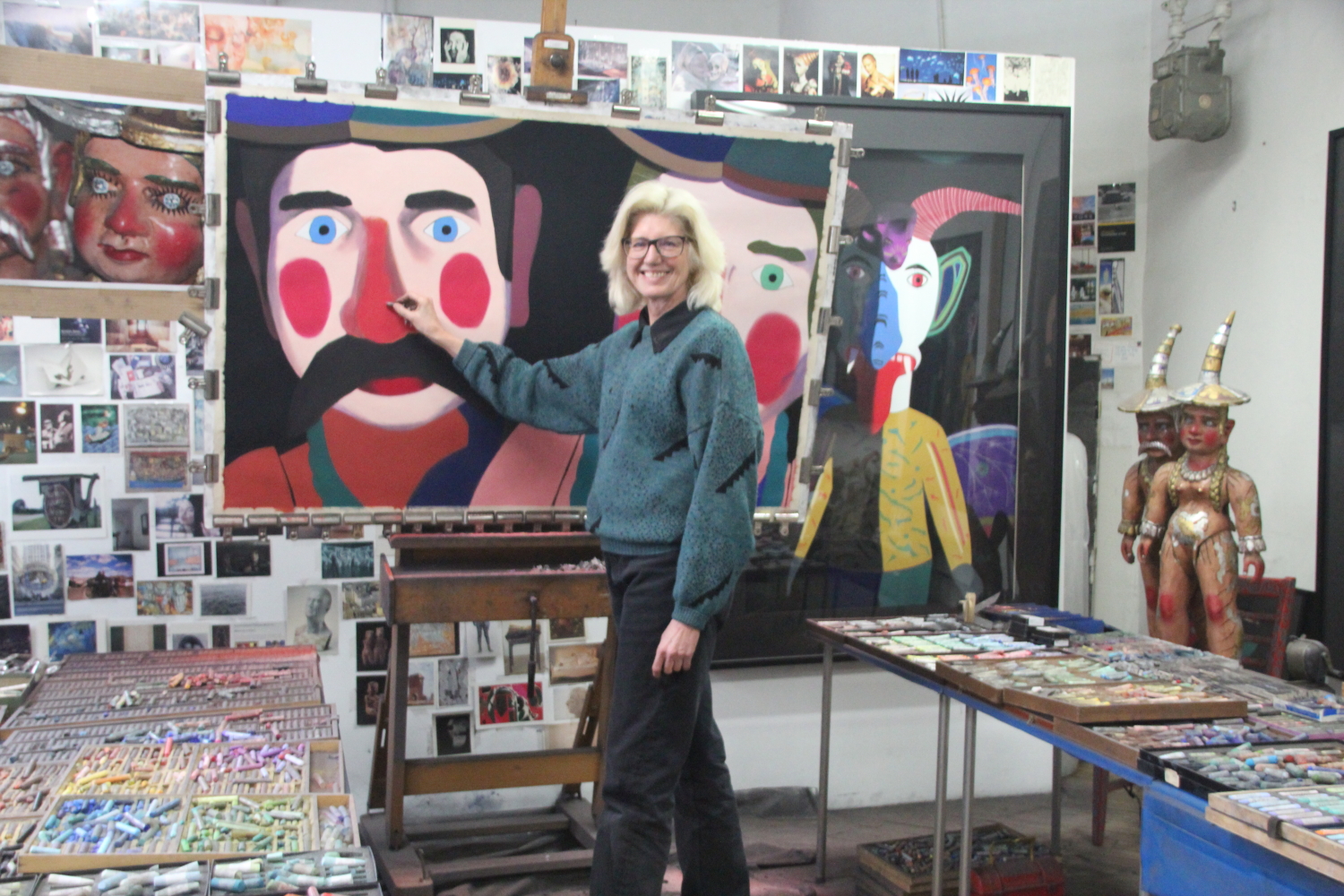
Barbara at work
* an ongoing series of quotations – mostly from artists, to artists – that offers wisdom, inspiration, and advice for the sometimes lonely road we are on.
There is no list of rules.
There is one rule: there are no rules.
Happiness comes from living as you need to, as you want to. Happiness comes from being who you actually are instead of who you think you are supposed to be.
Being traditional is not traditional anymore.
Normalize your lives, people.
You don’t want a baby? Don’t have one.
I don’t want to get married? I won’t.
You want to live alone? Enjoy it.
You want to love someone? Love someone.
Don’t apologize. Don’t explain. Don’t ever feel less than.
When you feel the need to apologize or explain who you are, it means the voice in your head is telling you the wrong story. Wipe the slate clean. And rewrite it.
No fairy tales.
Be your own narrator.
And go for a happy ending.
One foot in front of the other.
You will make it.
Shonda Rhimes in Year of Yes: How to Dance It Out, Stand in the Sun and Be Your Own Person
Comments are welcome!
Pearls from artists* # 194

“Epiphany,” soft pastel on sandpaper, 38″ x 58″
* an ongoing series of quotations – mostly from artists, to artists – that offers wisdom, inspiration, and advice for the sometimes lonely road we are on.
I did sculpture because what interested me in painting was to bring some order to my brain. It was a change of means. I took to clay as a break from painting; at the time I’d done absolutely everything I could in painting. Which means it was still about organizing. It was to put my sensations in order and look for a method that really suited me. When I’d found it in sculpture, I used it for painting. To come into possession of my own brain: that was always the goal, a sort of hierarchy of all my sensations, so that I could reach a conclusion.
One day, visiting Carriere at his house, I told him that. He replied: “But, my friend, that’s why you work. If you ever managed it, you’d probably stop working. It’s your reason for working.”
In painting – in any oeuvre – the goal is to reconcile the irreconcilable. There are all kinds of qualities in us, contradictory qualities. You have to construct something viable with that, something stable. That’s why you work your whole life long and want to keep on working until the last moment… as long as you haven’t admitted defeat or lost your curiosity, as long as you haven’t settled into a routine.
Chatting with Henri Matisse: The Lost 1941 Interview, Henri Matisse with Pierre Courthion, edited by Serge Guilbaut, translated by Chris Miller
Comments are welcome!
Pearls from artists* # 193
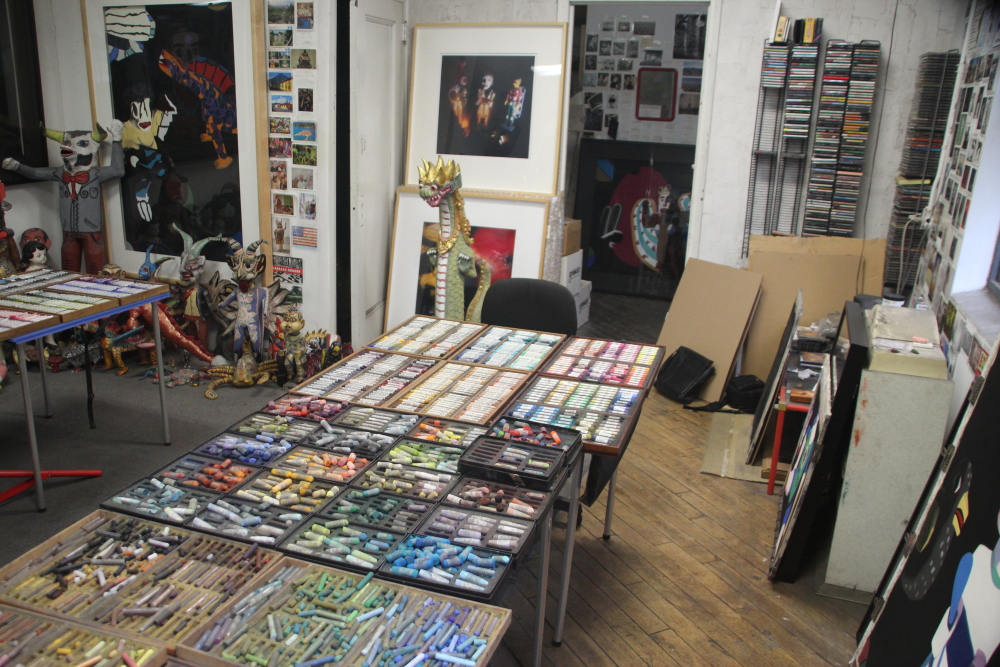
Barbara’s studio
* an ongoing series of quotations – mostly from artists, to artists – that offers wisdom, inspiration, and advice for the sometimes lonely road we are on.
Interviewer: Your work includes a great range of experience, as well as of form. What do you think is the greatest quality a poet can have? Is it formal, or is it a quality of thinking?
Ezra Pound: I don’t know that you can put the needed qualities in hierarchic order, but he must have a continuous curiosity, which of course does not make him a writer. but if he hasn’t got that he will wither. And the question of doing anything about it depends on a persistent energy. A man like Agassiz is never bored, never tired. The transit from the reception of stimuli to the recording, to the correlation, that is what takes the whole energy of a lifetime.
Writers at Work: The Paris Review Interviews Second Series, edited by George Plimpton and introduced by Van Wyck Brooks
Comments are welcome!
Pearls from artists* # 192

“Dichotomy,” soft pastel on sandpaper, 38″ x 58″
* an ongoing series of quotations – mostly from artists, to artists – that offers wisdom, inspiration, and advice for the sometimes lonely road we are on.
Interviewer: Do you have any unfinished poems that you look at occasionally?
T.S. Eliot: I haven’t much in that way, no. As a rule, with me an unfinished thing is a thing that might as well be rubbed out. It’s better, if there’s something good in it that I might make use of elsewhere, to leave it at the back of my mind than on paper in a drawer. If I leave it in a drawer it remains the same thing but if it’s in the memory it becomes transformed into something else.
Writers at Work: The Paris Review Interviews 2nd Series, edited by George Plimpton and introduced by Van Wyck Brooks
Comments are welcome!
Pearls from artists* # 191
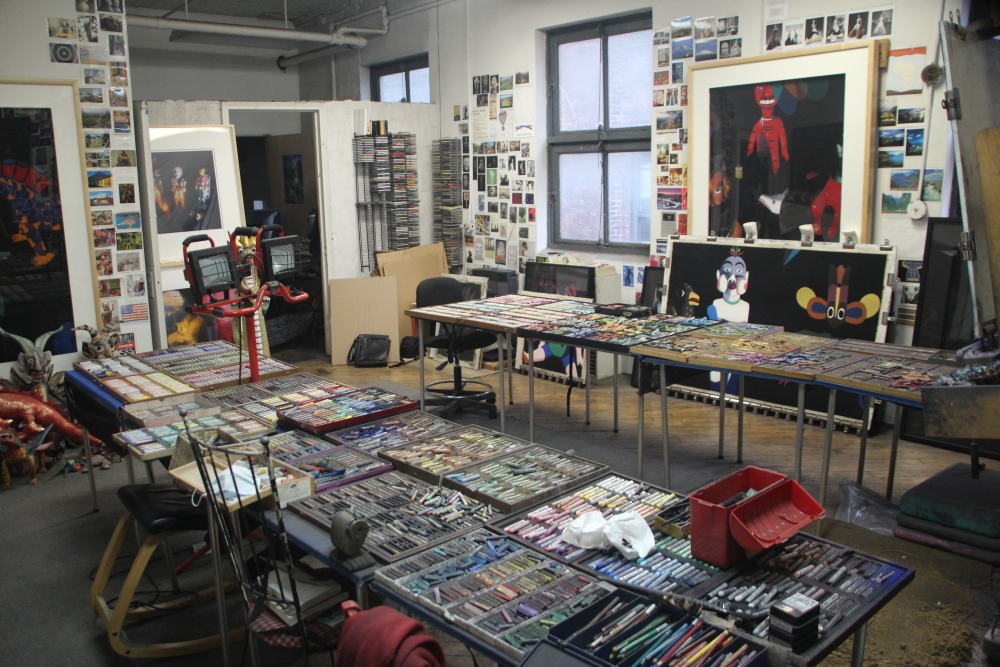
Barbara’s studio
* an ongoing series of quotations – mostly from artists, to artists – that offers wisdom, inspiration, and advice for the sometimes lonely road we are on.
“Do you understand what this is? Jacob Kahn asked me, his strong voice rising. “Do you begin to understand what you are going to be doing to yourself? You understand now what Picasso did, yes? Even Picasso, the pagan, had to do this. At times there is no other way. Do you understand me, Asher Lev? This is not a toy. This is not a child scrawling on a wall. This is a tradition; it is a religion, Asher Lev. You are entering a religion called painting. It has its fanatics and rebels. And I will force you to master it. Do you hear me? No one will listen to what you have to say unless they are convinced you have mastered it. Only one who has mastered a tradition has a right to attempt to add to it or rebel against it. Do you understand me, Asher Lev?”
My Name is Asher Lev by Chaim Potok
Comments are welcome!
Pearls from artists* # 190
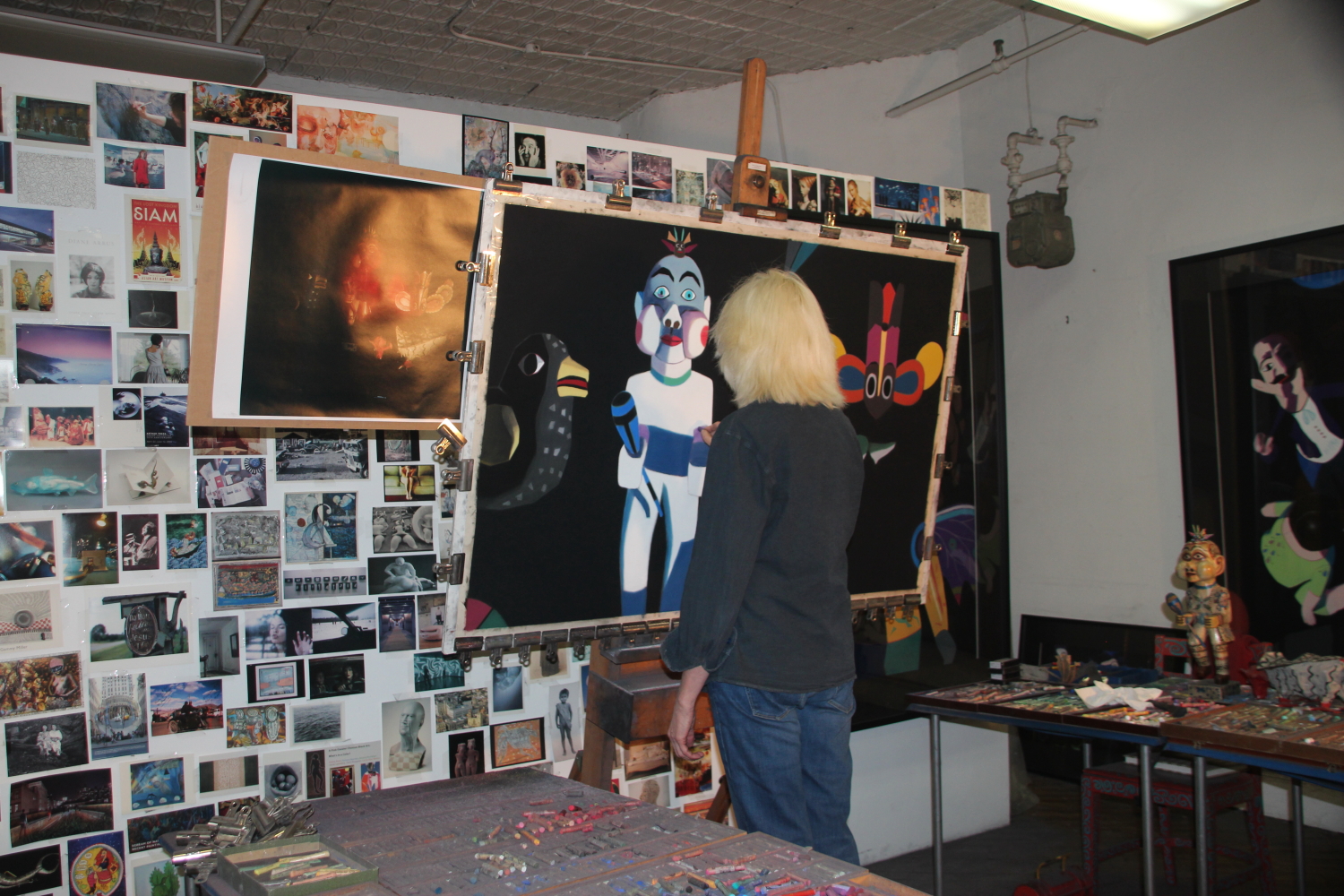
Working
* an ongoing series of quotations – mostly from artists, to artists – that offers wisdom, inspiration, and advice for the sometimes lonely road we are on.
For fifty years, I worked tirelessly, never looking up, interested in nothing but the organization of my own brain. And the works that came had their significance – which was just as well. Otherwise, I’d be a completely useless fellow.
Still, that’s not the point. The point is, I was lucky enough to be able to do fifty years’ work, until I was sixty-five. What happened was, I had to pay for it. It comes around for everyone. I’ve paid my dues!
Chatting with Henri Matisse: The Lost 1941 Interview, Henri Matisse with Pierre Courthion, edited by Serge Guilbaut, translated by Chris Miller
Comments are welcome!
Pearls from artists* # 189
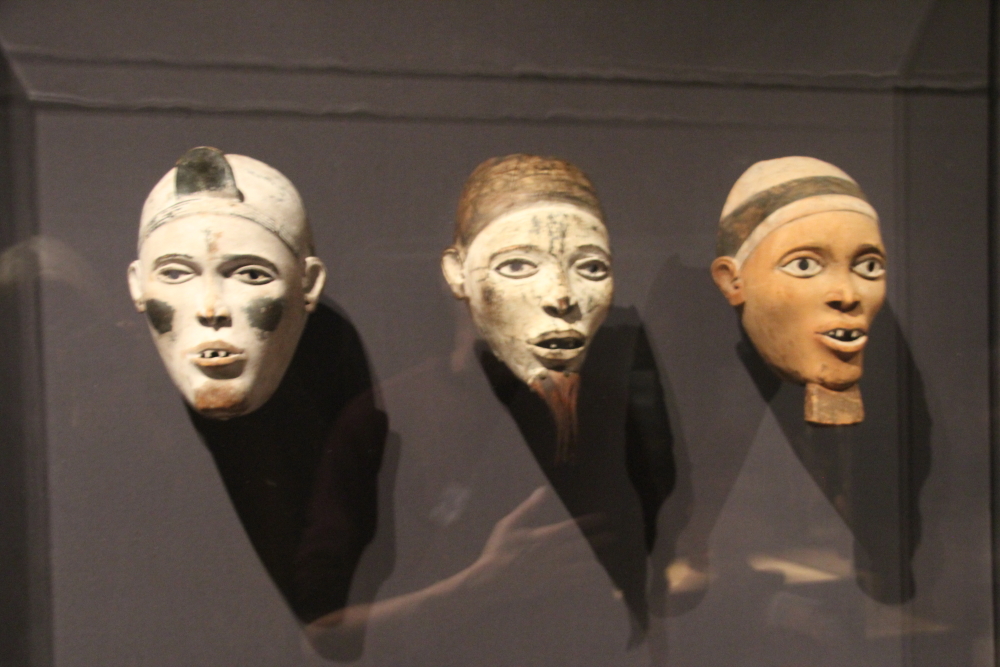
Metropolitan Museum of Art, NYC
* an ongoing series of quotations – mostly from artists, to artists – that offers wisdom, inspiration, and advice for the sometimes lonely road we are on.
There is no such thing beneath the heavens as conditions favorable to art. Art must crash through or perish.
Sylvia Ashton quoted in A Life in the Arts: Practical Guidance and Inspiration for Creative and Performing Artists by Eric Maisel
Comments are welcome!
Pearls from artists* # 188
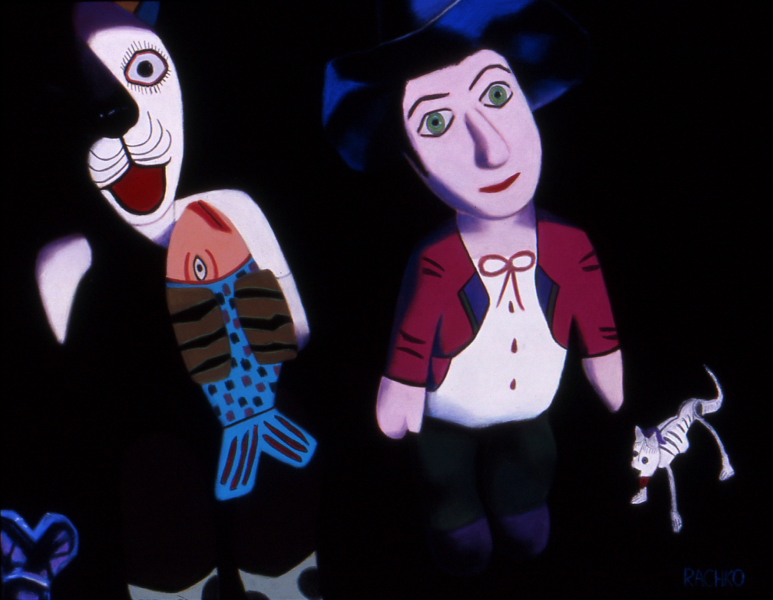
“Offering,” soft pastel on sandpaper, 20″ x 26″
* an ongoing series of quotations – mostly from artists, to artists – that offers wisdom, inspiration, and advice for the sometimes lonely road we are on.
HM: In order to create a work of art, you need an artist, an object, the work, and the audience. Indeed, where there’s no audience, there’s no artist. Renoir used to say, “No painters in Hamlet.” meaning that on a desert island you wouldn’t paint.
( I confess I am a little surprised. For my part, I find it difficult to believe that the true artist cannot work without hope. It seems to me that art is first and foremost an internal necessity, a need to escape from life. It is true that this is closer to the mystics’ point of view and that the artist, if he does not work directly for his contemporaries, at least looks forward to some future resonance. Nonetheless, I ask the same question again.)
PC: Even a true painter wouldn’t paint on a desert island?
HM: No… Painting is a means of communication, a language. An artist is an exhibitionist. Take away his spectators and the exhibitionist slinks off with his hands in his pockets.
The audience is the material in which you work. You don’t see the face of the audience. It’s huge, an immense mass. The public is – listen, it’s the man you encounter one fine day, who says, “Monsieur Matisse, I can’t tell you how much I love your picture, the one you exhibited at the salon,” and this man is a clerk who could never spend a red cent on painting. The public is not the buyer; the public is the sensitive material on which you hope to leave an imprint.
PC: Through the picture, the audience returns to the source of emotion.
HM: Yes, and the artist is the actor, the fellow with the wheedling voice who won’t rest until he’s told you his life story.
Chatting with Henri Matisse: The Lost 1941 Interview, Henri Matisse with Pierre Courthion, edited by Serge Guilbaut, translated by Chris Miller
Comments are welcome!


 barbararachkoscoloreddust.com