Category Archives: Quotes
Pearls from artists* # 206
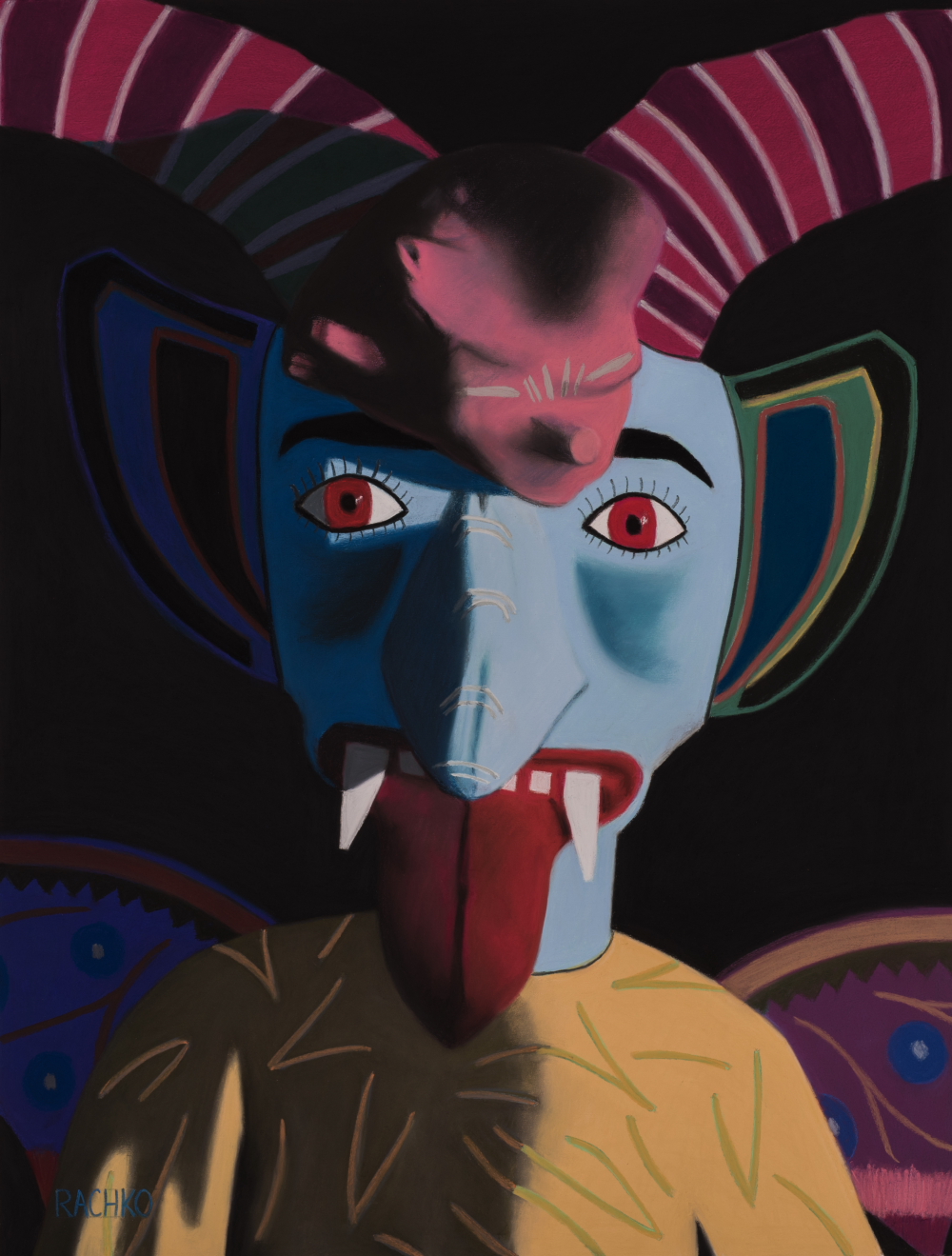
“Provocateur,” soft pastel on sandpaper, 26″ x 20″
* an ongoing series of quotations – mostly from artists, to artists – that offers wisdom, inspiration, and advice for the sometimes lonely road we are on.
And a career in higher education and medicine has taught me that creativity – whether in the sciences, arts or humanities – fosters controversy. We neither seek nor avoid controversy – we anticipate it and welcome the opportunity to explain the creative choices we make. We must take risks. We must be involved in the vital issues facing the world.
David J. Skorton, Director of the Smithsonian Institution in “What Do We Value?” Museum, May/June 2016
Comments are welcome!
Pearls from artists* # 205
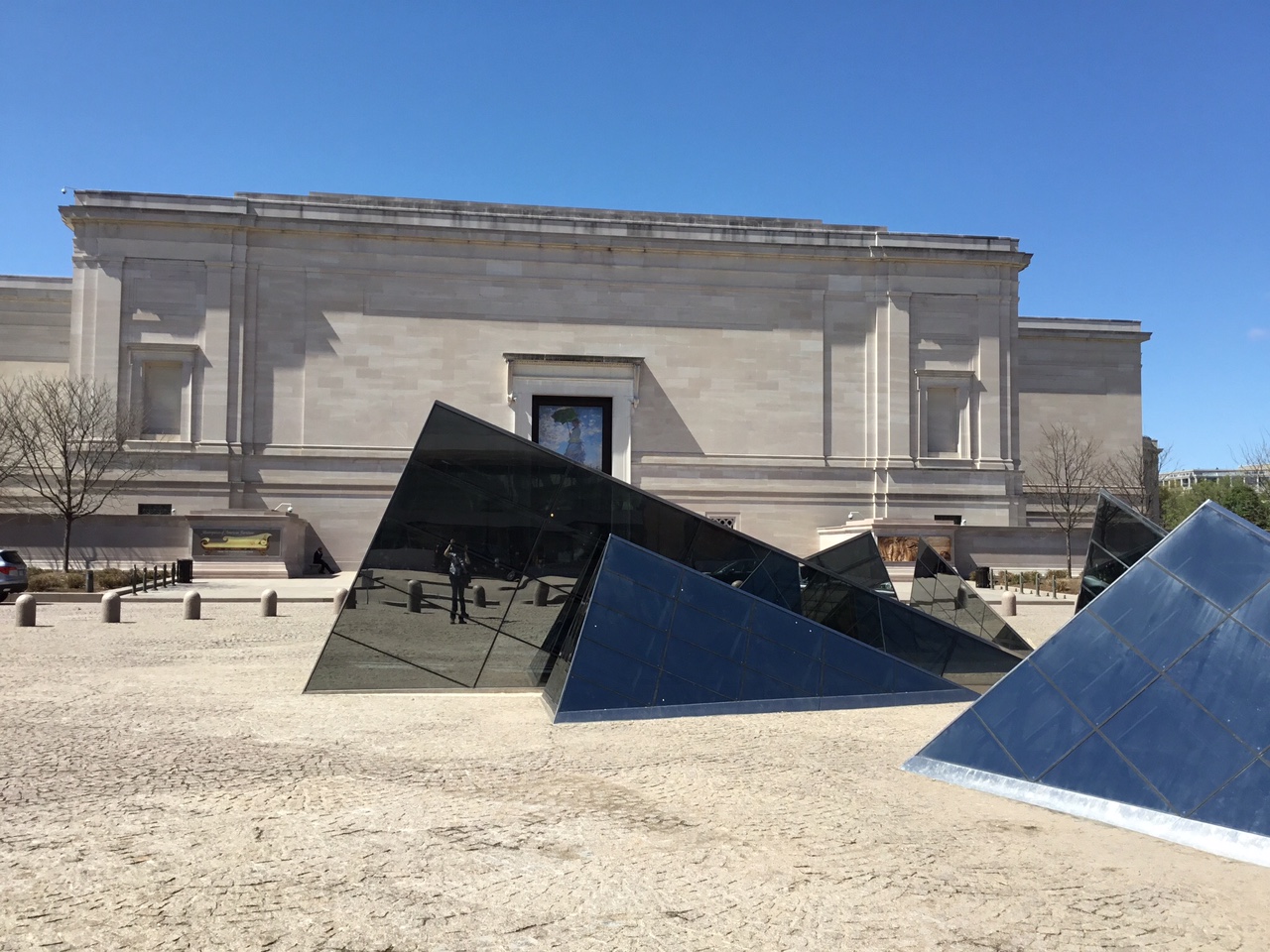
National Gallery of Art with self-portrait
* an ongoing series of quotations – mostly from artists, to artists – that offers wisdom, inspiration, and advice for the sometimes lonely road we are on.
Museums empower people when they are patrons for artists and thinkers; when they amplify civic discourse, accelerate cultural change and contribute to cultural intelligence among the great diversity of city dwellers, visitors, policy makers and leaders… Museums present beautiful, accessible and meaningful spaces in which communities and individuals can meet, exchange ideas and solve problems.
David J. Skorton, Director of the Smithsonian Institution in “What Do We Value?” Museum, May/June 2016
Comments are welcome!
Pearls from artists* # 204
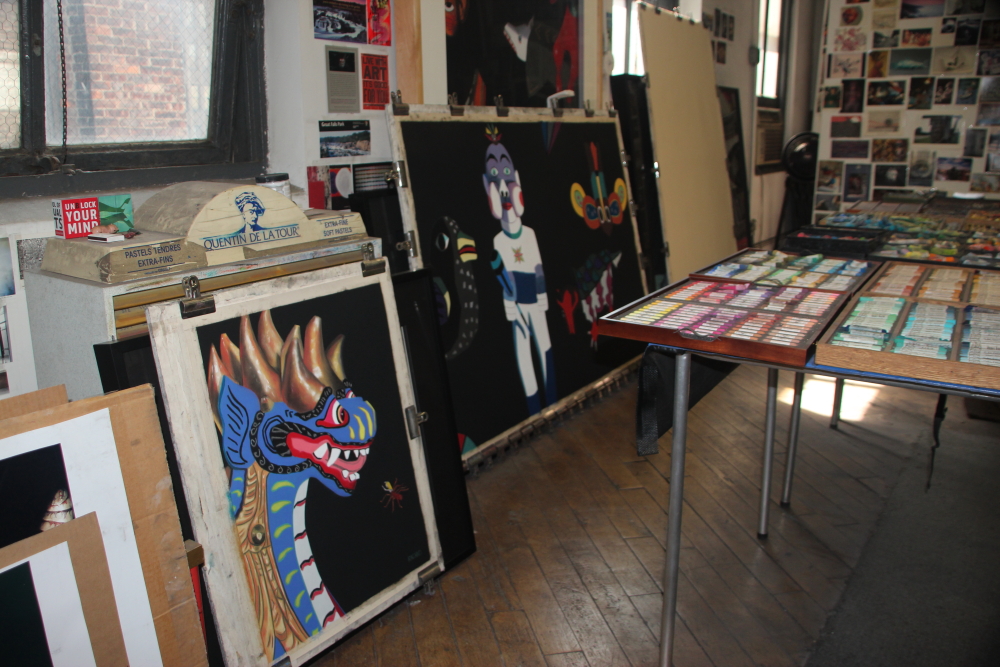
Barbara’s studio with work in progress
* an ongoing series of quotations – mostly from artists, to artists – that offers wisdom, inspiration, and advice for the sometimes lonely road we are on.
It has been said that science helps us understand what we can do; the arts and humanities – our culture and values – help us decide what to do. Studying the arts and humanities develops critical-thinking skills and nimble habits of mind, provides historical and cultural perspective and fosters the ability to analyze, synthesize and communicate.
As author Daniel Pink observed, “The last few decades have belonged to a certain kind of person with a certain kind of mind – computer programmers who could crank code, lawyers who could craft contracts, MBAs who could crunch numbers… The future belongs to a very different kind of mind – creators and empathizers, pattern recognizers and meaning makers. These people – artists, inventors, designers, storytellers, caregivers, consolers, big-picture thinkers – will now reap society’s richest rewards and share its greatest joys.”
David J. Skorton, Director of the Smithsonian Institution in “What Do We Value?” Museum, May/June 2016
Comments are welcome!
Pearls from artists* # 203

“Palaver,” soft pastel on sandpaper, 26″ x 20″
* an ongoing series of quotations – mostly from artists, to artists – that offers wisdom, inspiration, and advice for the sometimes lonely road we are on.
One day, looking for something that might interest those few buyers there were, Marquet and I decided to reconnoiter. So we went to the Pavillon de Rohan, to the Galeries de Rivoli, where there were dealers in engraving and in all kinds of curiosities that might attract foreign customers. We each came back with an idea: mine was to do a park landscape with swans. I went to the Bois de Boulogne to do a study of the lake. Then I went to buy a photo showing swans and tried to combine the two. Only it was very bad; I didn’t like it – in fact nobody liked it; it was impossible; it was stodgy. I couldn’t change; I couldn’t counterfeit the frame of mind of the customers on the rue de Rivoli or anywhere else. So I put my foot through it.
I understood then that I had no business painting to please other people; it wasn’t possible. Either way, when I started a canvas, I painted it the way I wanted with things that interested me. I knew very well that it wouldn’t sell, and I kept putting off the confection of a picture that would sell. And then the same thing would happen the next time.
There are plenty of artists who think it’s smart to make paintings to sell. Then – when they have acquired a certain reputation, a degree of independence – they want to paint things for themselves. But that simply isn’t possible. Painting’s an uphill task and if you want to find out what you’re capable of, you can’t dillydally on the way.
Chatting with Henri Matisse: The Lost 1941 Interview, Henri Matisse with Pierre Courthion, edited by Serge Guilbaut, translated by Chris Miller
Comments are welcome!
Pearls from artists* # 202

Soft pastels
* an ongoing series of quotations – mostly from artists, to artists – that offers wisdom, inspiration, and advice for the sometimes lonely road we are on.
When you’re working on something, you always wonder, “Can I get away with this? Is it working?” It’s the space between that I’ve been interested in for a long time. I think that when I started to make, say, a triptych that came from an observation of a little Picasso drawing, the spaces in between became as important as the three actual pieces. It’s especially true of the Wallpaper piece. But most of the changes in my own work really evolve from one piece to the next: from looking at my own work, the works of others, and things in my studio. It happens when you see something that you didn’t see previously, like those scraps of clay that became the wall pieces. It’s similar to the space that I’ve explored for years and years between artist and craftsperson, which is both interesting and challenging, and I don’t think that one thing is inferior to the other. Each has a different goal, a different function. Its my responsibility how nd where my work is viewed in different contexts.
In Conversation: Betty Woodman with Phong Bui, The Brooklyn Rail, April 2016
Comments are welcome!
Pearls from artists* # 201

Barbara’s studio
* an ongoing series of quotations – mostly from artists, to artists – that offers wisdom, inspiration, and advice for the sometimes lonely road we are on.
Matisse needs to find life difficult. There has to be opposition and struggle: “You come out by your own means,” he says: “The essential thing is to come out, to express that sense of falling head over heals for a thing; the artist’s job is not to transpose something he’s seen but to express the impact the object made on him, on his constitution, the shock of it and the original reaction.”
I sense that Matisse has little faith in the way his painting is feted nowadays. A man of scrupulous integrity, he must wonder how much truth there is in all of that. There is a vein of gutsy courage in him that is as unyielding now as it ever was. Hard times have accustomed him to rely entirely on his own judgment and accept the solitude that this implies.
HM: I’m already a little too official. You need a bit of persecution. When you’ve been controversial and they finally welcome you in, something goes wrong. Very few people can see the picture itself; they just see the banknotes you could turn it into. You love your paintings less when they’re worth something. When they’re not worth a cent, they’re like desolate children.
Chatting with Henri Matisse: The Lost 1941 Interview, Henri Matisse with Pierre Courthion, edited by Serge Guilbaut, translated by Chris Miller
Comments are welcome!
Pearls from artists* # 200
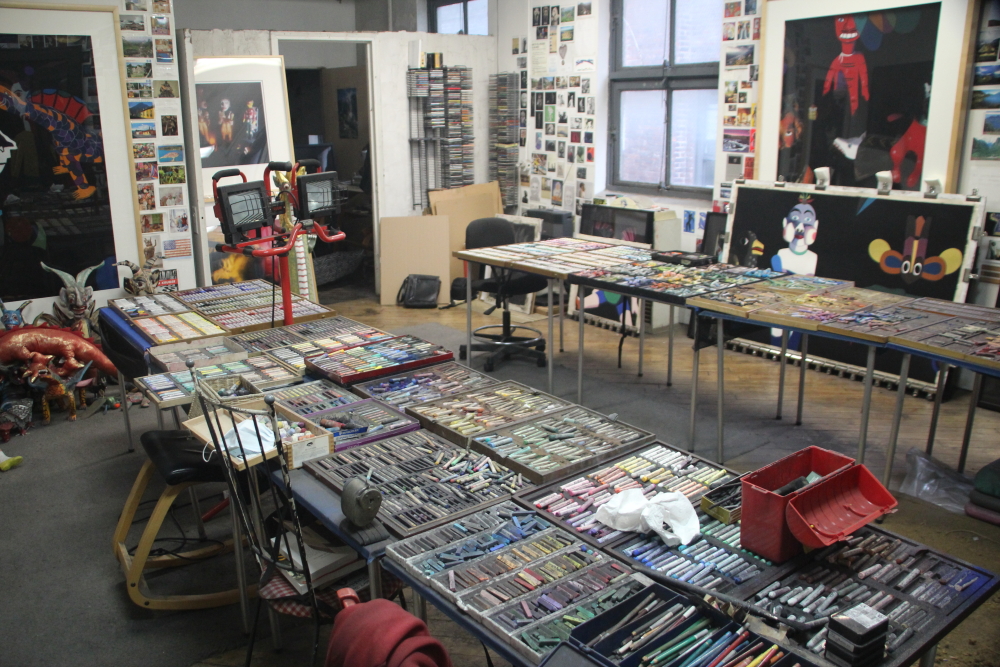
Barbara’s studio
* an ongoing series of quotations – mostly from artists, to artists – that offers wisdom, inspiration, and advice for the sometimes lonely road we are on.
Why Art?
Because you will never have to change batteries or remember passwords or read directions or fear obsolescence.
Questroyal Fine Art, LLC, ad in The New Yorker, issue of April 11, 2016
Comments are welcome!
Q: What historical art movement do you most identify with?

Barbara’s studio
A: I’d have to say that I identify most with surrealism, although my work does not exactly fit into any particular art historical movement. When I was first finding my way as an artist, I read everything I could find about surrealism in art and in literature. This research still res0nates deeply and is a tremendous influence on my studio practice. Elements of surrealism DO fit my work. Here’s an excerpt from Wikipedia:
Surrealism is a cultural movement that began in the early 20s and is best known for its visual artworks and writings. The aim was to “resolve the previously contradictory conditions of dream and reality.” Artists painted unnerving, illogical scenes with photographic precision, created strange creatures from everyday objects and developed painting techniques that allowed the unconscious to express itself.
Surrealist works feature the element of surprise, unexpected juxtapositions and non sequitur; however, many Surrealist artists and writers regard their work as an expression of the philosophical movement first and foremost, with the works being an artifact. Leader Andre Breton was explicit in his assertion that Surrealism was, above all, a revolutionary movement.
I hope to expand on this in a future post.
Comments are welcome!
Pearls from artists* # 199
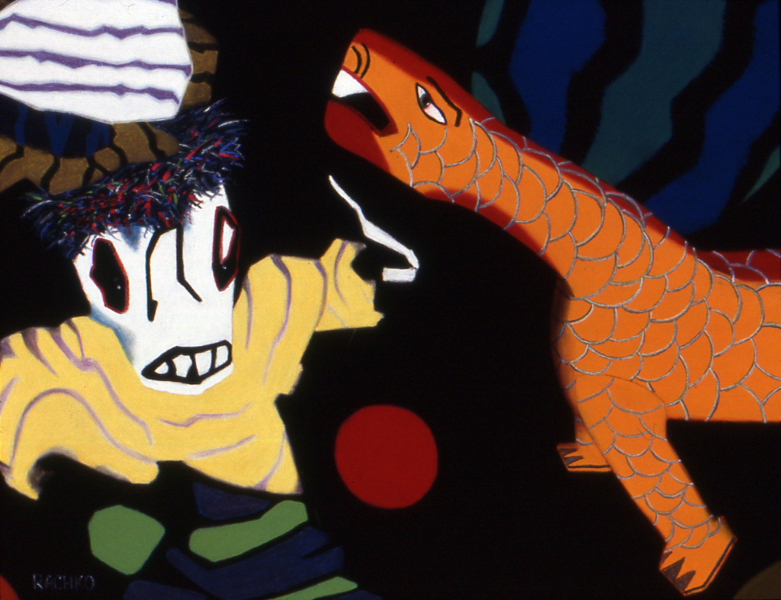
“Trio,” soft pastel on sandpaper, 20″ x 26″
* an ongoing series of quotations – mostly from artists, to artists – that offers wisdom, inspiration, and advice for the sometimes lonely road we are on.
Writers, like all artists, are concerned to represent reality, to create a more absolute and complete reality than reality itself. They must, if they are to accomplish this, assume a moral position, a clearly conceived political, social, and philosophical attitude; in consequence, their beliefs are, of course, going to find their way into their work. What artists believe, however, is of secondary importance, ancillary to the work itself. A writer survives in spite of his beliefs. Lawrence will be read whatever one thinks of his notions on sex. Dante is read in the Soviet Union.
A work of art, on the other hand, has a representative and expressive function. In this representation the author’s ideas, his judgments, the author himself, are engaged with reality.
Alberto Moravia in Writers at Work: The Paris Review Interviews First Series, edited and with an introduction by Malcolm Cowley
Comments are welcome!
Pearls from artists* # 198

“Troublemaker,” soft pastel on sandpaper, 20″ x 26″
* an ongoing series of quotations – mostly from artists, to artists – that offers wisdom, inspiration, and advice for the sometimes lonely road we are on.
The writer doesn’t need economic freedom. All he needs is a pencil and some paper. I’ve never known anything good in writing to come from having accepted any free gift of money. The good writer never applies to a foundation. He’s too busy writing something. If he isn’t first rate he fools himself by saying he hasn’t got time or economic freedom. Good art can come out of thieves, bootleggers, or horse swipes. People really are afraid to find out just how much hardship and poverty they can stand. They are afraid to find out how tough they are. Nothing can destroy the good writer. The only thing that can alter the good writer is death. Good ones don’t have time to bother with success or getting rich…
Nothing can injure a man’s writing if he’s a first-rate writer. If a man is not a first-rate writer, there’s not anything that can help it much. The problem does not apply if he is not first-rate, because he has already sold his soul for a swimming pool.
William Faulkner in Writers at Work: The Paris Review Interviews First Series, edited and with an introduction by Malcolm Cowley
Comments are welcome!


 barbararachkoscoloreddust.com