Category Archives: Gods and Monsters
Pearls from artists* # 100
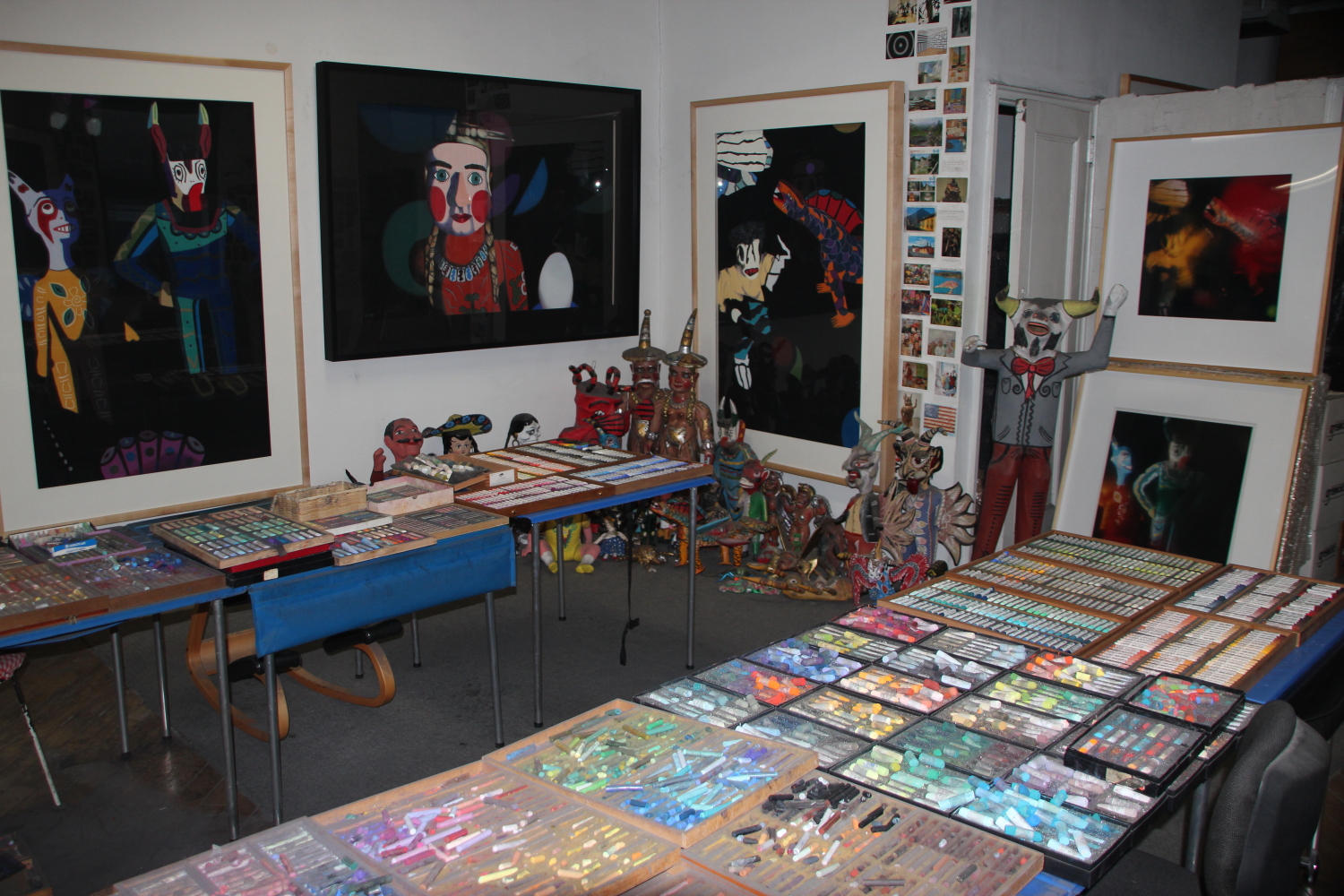
Barbara’s studio
* an ongoing series of quotations – mostly from artists, to artists – that offers wisdom, inspiration, and advice for the sometimes lonely road we are on.
I think it’s terribly important that people have always made structures that are better and more rigorous and more demanding than we as an audience can live up to for every single moment. Serious art should be better than you are. I think my plays are more lucid, more rigorous, than I, Richard, am in my life. I’m a stumble bum like all the rest of us. Create art that is better than you are able to manifest in normal life.
Richard Foreman in Anne Bogart’s Conversations with Anne: Twenty-four Interviews
Comments are welcome!
Pearls from artists* # 85
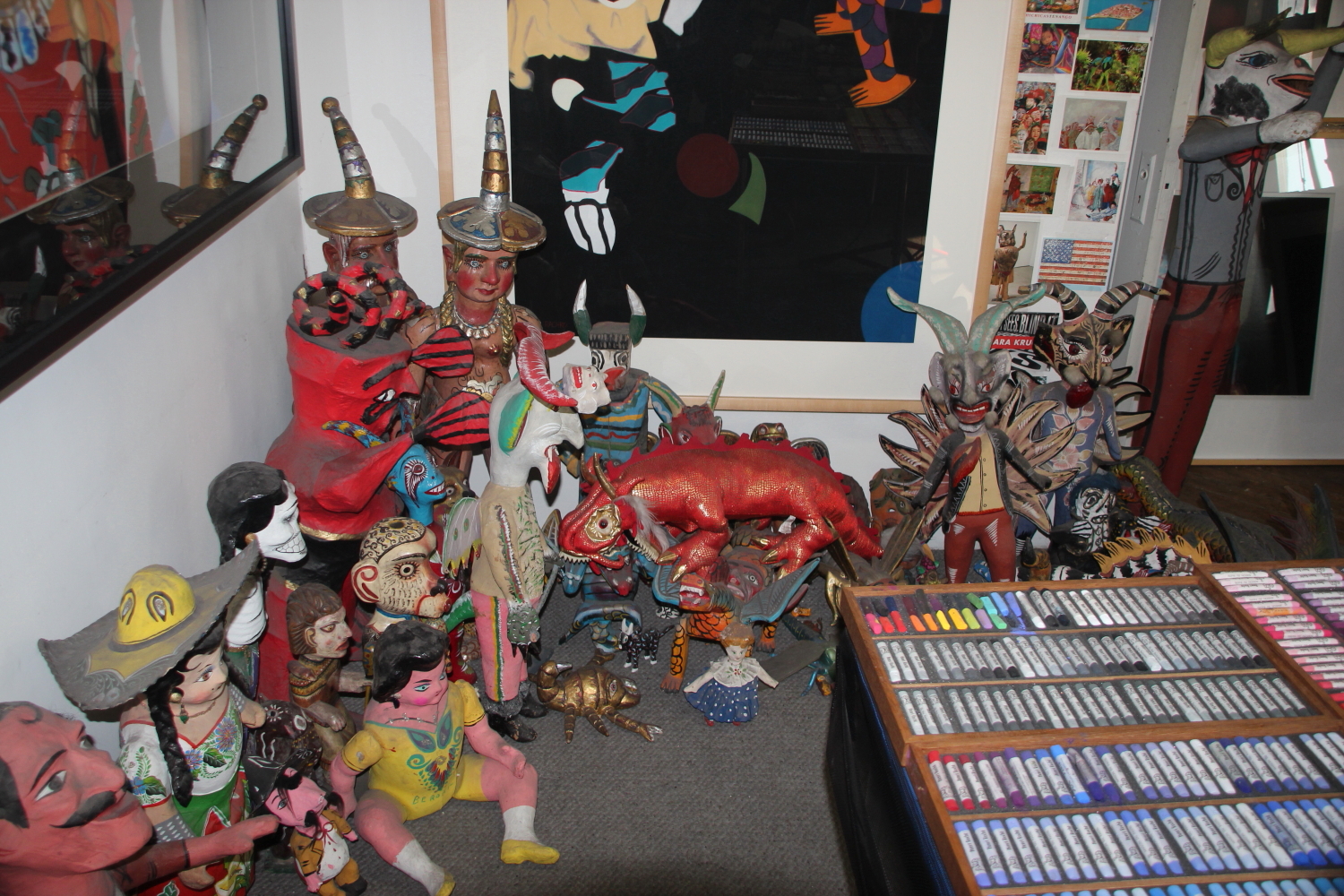
Studio
* an ongoing series of quotations – mostly from artists, to artists – that offers wisdom, inspiration, and advice for the sometimes lonely road we are on.
Credo
I believe in art.
I do not believe in the “art world” as
it is today.
I do not believe in art as a commodity.
Great art is in exquisite balance. It is
restorative.
I believe in the energy of art, and through
the use of that energy, the artist’s ability
to transform his or her life and, by ex-
ample, the lives of others.
I believe that through our art, and through
the projection of transcendent imagery, we
can mend and heal the planet.
Audrey Flack in Art & Soul: Notes on Creating
Comments are welcome!
Pearls from artists* # 74
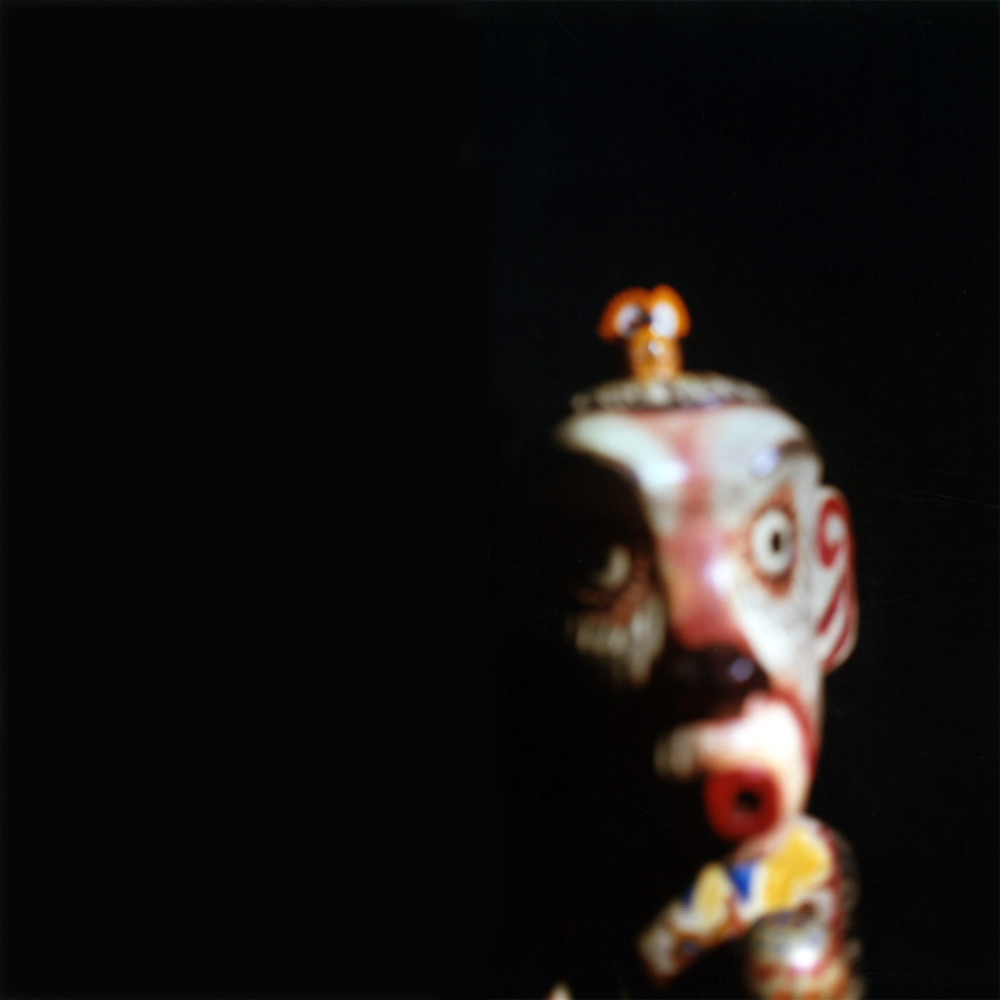
Untitled, chromogenic print, 24″ x 24,” edition of 5
* an ongoing series of quotations – mostly from artists, to artists – that offers wisdom, inspiration, and advice for the sometimes lonely road we are on.
An artist is known by his or her works. But how often do we consider that much of what we know depends on factors that were beyond the artist’s control? A few that come to mind are value on the art market, the knowledge and forethought of the artist’s survivors as they decide to keep or discard works, research interests of art and photo historians and the ways in which these change over time, willingness of dealers, collectors, and museum curators to provide information about the existence of works, the state of printing technology, and the availability of financing for exhibitions and publications.
Laszlo Moholy-Nagy: Color in Transparency, edited by Jeannine Fiedler and Hattula Maholy-Nagy for the Bauhaus-Archive Berlin
Comments are welcome!
Q: How do you select a photograph to use as reference material to make a pastel painting?
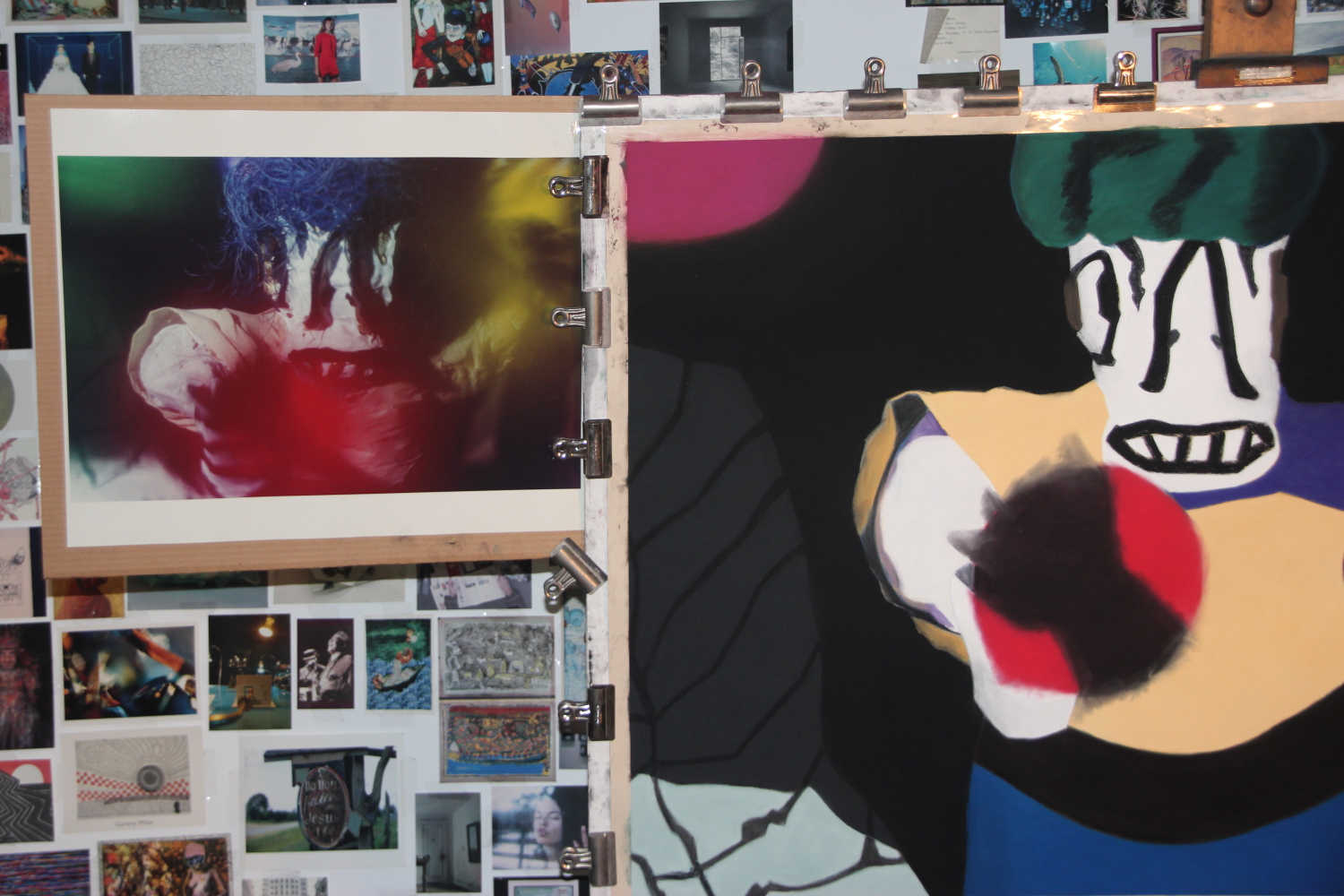
Photograph, left, and work in progress
A: Like everything else associated with my studio practice, my use of photographs from which to work has changed considerably. Beginning in the early 1990s all of the paintings in my first series, “Domestic Threats,” started out as elaborately staged, well-lit scenes that either my husband, Bryan, or I photographed with Bryan’s Toyo Omega 4 x 5 view camera using a wide-angle lens. Depending on where I was living at the time, I set up the scenes in one of three places: our house in Alexandria, VA, a six-floor walkup apartment on West 13th Street in New York, or my current Bank Street condominium. Then one of us shot two pieces of 4 x 5 film at different exposures and I’d usually select the more detailed one to be made into a 20″ x 24″ photo to use as a reference.
Just as the imagery in my paintings has simplified and emptied out over the years, my creative process has simplified, too. I often wonder if this is a natural progression that happens as an artist gets older. More recently I have been shooting photos independently of how exactly I will use them in my work. Only later do I decide which ones to make into paintings; sometimes it’s YEARS later. For example, the pastel painting that is on my easel now is based on a relatively old (2002) photograph that I have always liked, but only now felt ready to tackle in pastel.
Comments are welcome!
Q: How do you begin a photograph?

Untitled chromogenic print, 24″ x 24″, edition of 5
A: It always begins in my mind long before I actually start making it. By the time I take the photograph, I’ve already thought deeply about the possibilities, the formal arrangements, meanings, etc. so that setting up the objects, lighting them, and clicking the shutter feels like a reward after a long thought process. My fine art photographs are finished works in themselves. However, when I select one to use as reference for a pastel painting, a different but related process of working out my ideas and translating them into pastel occurs over the next several months spent in the studio. Of course, in that case the photo becomes only the starting point for an entirely new artwork.
Comments are welcome!
Pearls from artists* # 63

Untitled, chromogenic print, 24″ x 24,” edition of 5
* an ongoing series of quotations – mostly from artists, to artists – that offers wisdom, inspiration, and advice for the sometimes lonely road we are on.
The artist’s job is to get in touch with the dark places of the soul and then shed light there. Sharing the process with others is the point. Within the context of our post-Cold War, post-9/11 climate, shedding light in newly fecund dark places is a valuable activity. The dark places of the soul that haunt our dreams are understandably matched by a tendency to shut out the issues with the busy work of the daylight hours. But without looking into those dark places, as Carl Jung suggested, we will lose touch with our essential humanity.
Anne Bogart, and then, you act: making art in an unpredictable world
Comments are welcome!
Pearls from artists* # 49

Untitled, 24″ x 24″ chromogenic print, edition of 5
* an ongoing series of quotations – mostly from artists, to artists – that offers wisdom, inspiration, and advice for the sometimes lonely road we are on.
The beauty of art is better, “higher,” according to Hegel, than the beauty of nature because it is made by human beings and is the work of the spirit. But the discerning of beauty in nature is also the result of traditions of consciousness, and of culture – in Hegel’s language, of spirit.
The responses to beauty in art and to beauty in nature are interdependent. As Wilde pointed out, art does more than school us on how and what to appreciate in nature. (He was thinking of poetry and painting. Today the standards of beauty in nature are largely set by photography.) What is beautiful reminds us of nature as such – of what lies beyond the human and the made – and thereby stimulates and deepens our sense of the sheer spread and fullness of reality, inanimate as well as pulsing, that surrounds us all.
A happy by-product of this insight, if insight it is: beauty regains its solidity, its inevitability, as a judgment needed to make sense of a large portion of one’s energies, affinities, and admirations; and the usurping notions appear ludicrous.
Imagine saying, “That sunset is interesting.”
Paolo Dilonardo and Anne Jump, editors, Susan Sontag At the Same Time: Essays and Speeches
Comments are welcome!
Pearls from artists* # 34

On the High Line
* an ongoing series of quotations – mostly from artists, to artists – that offers wisdom, inspiration, and advice for the sometimes lonely road we are on.
To collect photographs is to collect the world. Movies and television programs light up walls, flicker, and go out; but with still photographs the image is also an object, lightweight, cheap to produce, easy to carry about, accumulate, store.
In Godard’s Les Carabiniers (1963), two sluggish lumpen-peasants are lured into joining the king’s army by the promise that they will be able to loot, rape, kill, or do whatever else they please to the enemy, and get rich. But the suitcase of booty that Michel-Ange and Ulysse triumphantly bring home, years later, to their wives turns out to contain only picture postcards, hundreds of them, of monuments, department stores, mammals, wonders of nature, methods of transport, works of art, and other classified treasures from around the globe.
Godard’s gag vividly parodies the equivocal magic of the photographic image. Photographs are perhaps the most mysterious of all the objects that make up, and thicken, the environment we recognize as modern.
Photographs really are experience captured, and the camera is the ideal arm of consciousness in its acquisitive mood.
Susan Sontag in On Photography
Comments are welcome!
Q: Your new work explores relationships to figures through the medium of soft pastel. What prompted this departure from photography?
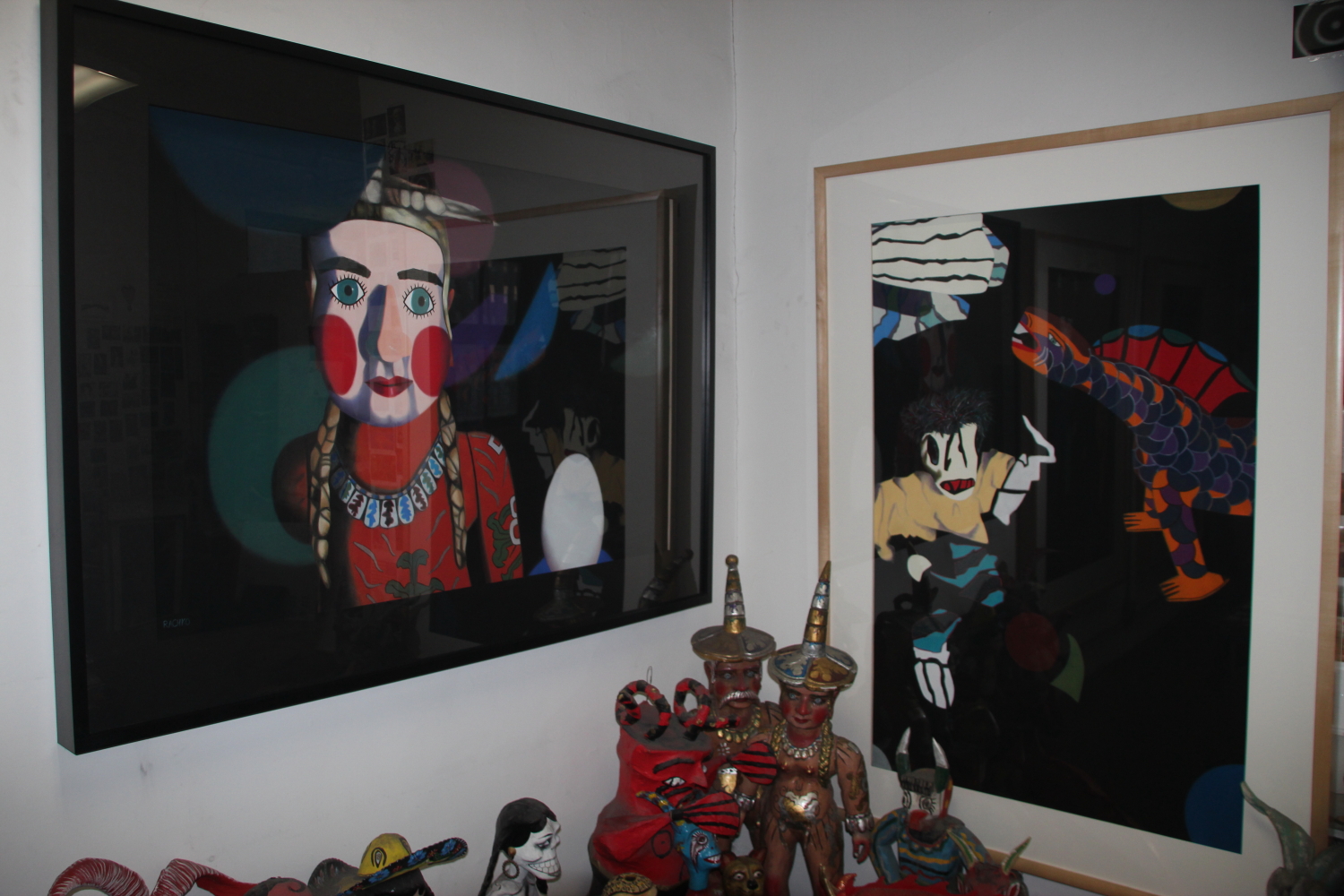
A corner of the studio
A: Actually it was the other way around. As I’ve mentioned, I was a maker of pastel-on-sandpaper paintings long before I became a photographer (1986 vs. 2002). However, the photos in the “Gods and Monsters” series were meant to be photographs in their own right, i.e., they were not made to be reference material for paintings. in an interesting turn of events, in 2007 I started a new series, “Black Paintings,” which uses the “Gods and Monsters” photographs as source material. Collectors who have been following my work for years tell me the new series is the strongest yet. For now I’m enjoying where this work is leading. The last three paintings are the most minimal yet and I’ve begun thinking of them as the “Big Heads.” There is usually a single figure (“Stalemate” has two) that is much larger than life size. “Epiphany” (above, left) is an example. All of them are quite dramatic when seen in person, especially with their black wooden frames and mats.
Comments are welcome!


 barbararachkoscoloreddust.com
New eBook!
Jan 18
Posted by barbararachkoscoloreddust
Cover
I am pleased to announce that my first eBook, FROM PILOT TO PAINTER, is available now on Amazon!
It is based on my blog and is part memoir, including my personal loss on 9/11, insights into my creative practice, and intimate reflections on what it’s like to be an artist living in New York City now.
The eBook includes new material not found on the blog: 25+ reproductions of my vibrant pastel-on-sandpaper paintings, a Foreword by Ann Landi (who writes for ARTnews and The Wall Street Journal), and more.
Thank you for your support!
http://www.amazon.com/From-Pilot-Painter-Interview-Barbara-ebook/dp/B00HNVR200/ref=sr_1_1?ie=UTF8&qid=1389292390&sr=8-1&keywords=barbara+rachko
Note: If you do not own a Kindle, you can download a free Kindle app.
Here is the one for MACs:
http://www.amazon.com/gp/feature.html?docId=1000464931
Here is a link for the rest:
Kindle Cloud Reader – Read instantly in your browser
Smartphones – iPhone & iPod touch, Android, Windows Phone, BlackBerry
Computers – Mac, Windows 8, Windows 7, XP & Vista
Tablets – iPad, Android Tablet, Windows 8
http://www.amazon.com/gp/feature.html/ref=sv_kstore_3?ie=UTF8&docId=1000493771
Comments are welcome!
Share this:
Posted in 2014, An Artist's Life, Art in general, Art Works in Progress, Black Paintings, Creative Process, Domestic Threats, Gods and Monsters, Guatemala, Inspiration, Mexico, New York, NY, Painting in General, Pastel Painting, Photography, Quotes, Studio, Travel, Working methods
4 Comments
Tags: "From Pilot to Painter", "The Wall Street Journal", 9/11, Amazon, Ann Landi, announce, app, artist, ARTnews, available, blog, comments, cover, creative, easy, ebook, foreword, instructions, interview, intimate, Kindle, loss, material, memoir, New York City, paintings, pastel-on-sandpaper, personal, pleased, practice, reflections, reproductions, support, vibrant