Category Archives: An Artist’s Life
Q: You’ve been working with the same medium and subject matter for decades. How did that begin, and how has it sustained you for so long? (Question from “Pastel, Passion, and Perseverance: An Interview with Barbara Rachko” in .ART Odyssey: Healing)
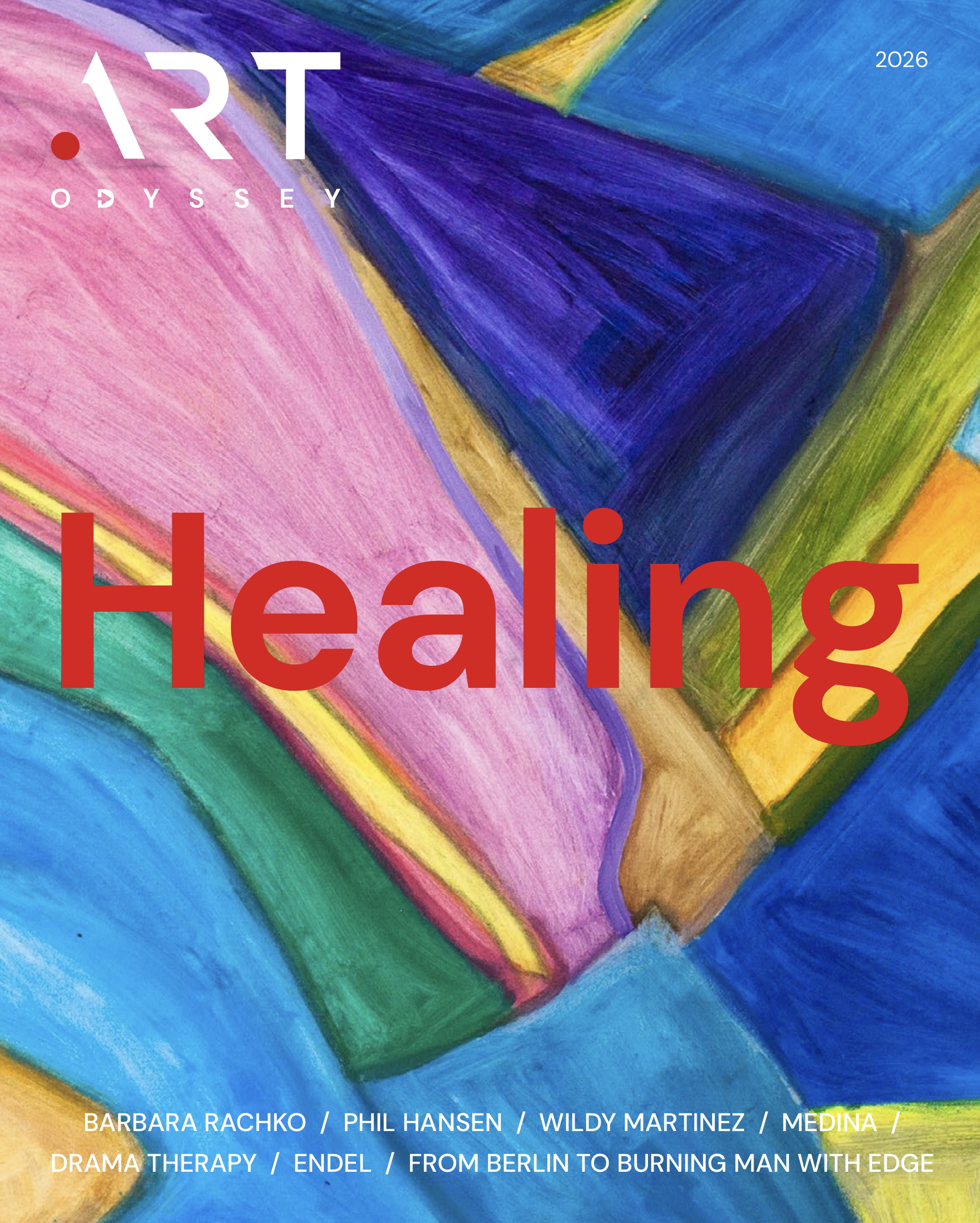
A: Back in the early 1990s I began using folk art as my subject matter, and I was incredibly lucky. More than thirty years later, I’m still working with it. As artists, we don’t know at the start whether a subject will sustain us, whether it will keep our curiosity alive. For me it has. I’ve always been fascinated by different cultures around the world, and that continues to feed the work. There’s freedom in that kind of framework.
I chose pastel on sandpaper as my medium. I don’t have to question it anymore. That choice itself has opened space to keep growing.
Comments are welcome!
Pearls from artists* # 709
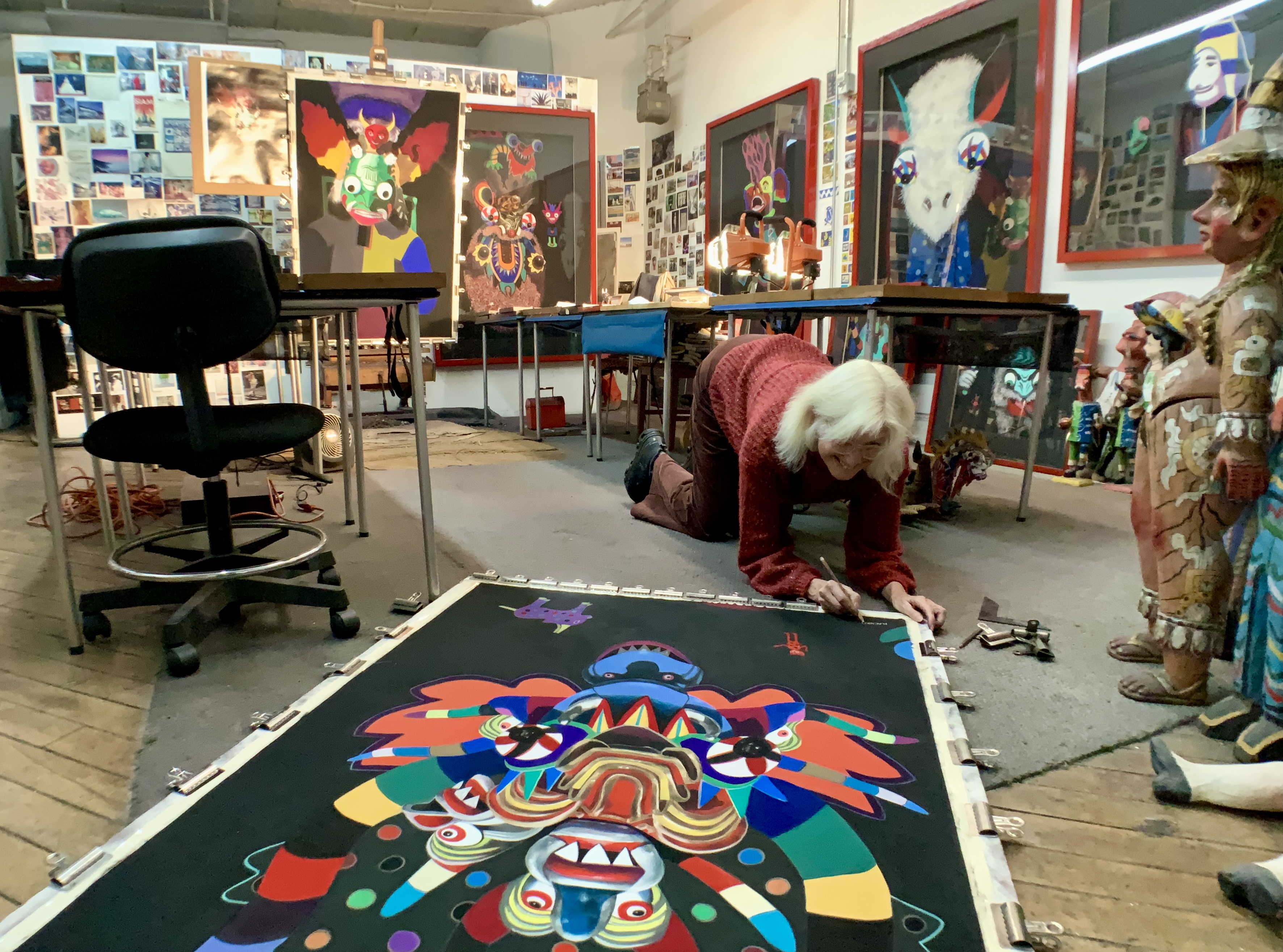
Signing “Magisterial,” soft pastel on sandpaper, 58” x 38”
*an ongoing series of quotations – mostly from artists, to artists – that offers wisdom, inspiration, and advice for the sometimes lonely road we are on
The artist’s life cannot be otherwise than full of conflicts, for two forces are at war within him—on the one hand the common human longing for happiness, satisfaction and security in life, and on the other a ruthless passion for creation which may go so far as to override every personal desire… There are hardly any exceptions to the rule that a person must pay dearly for the divine gift of creative fire.
Carl Jung quoted in Free Play: Improvisation in Life and Art by Steven Nachmanovitch
Comments are welcome!
Travel photo of the month*
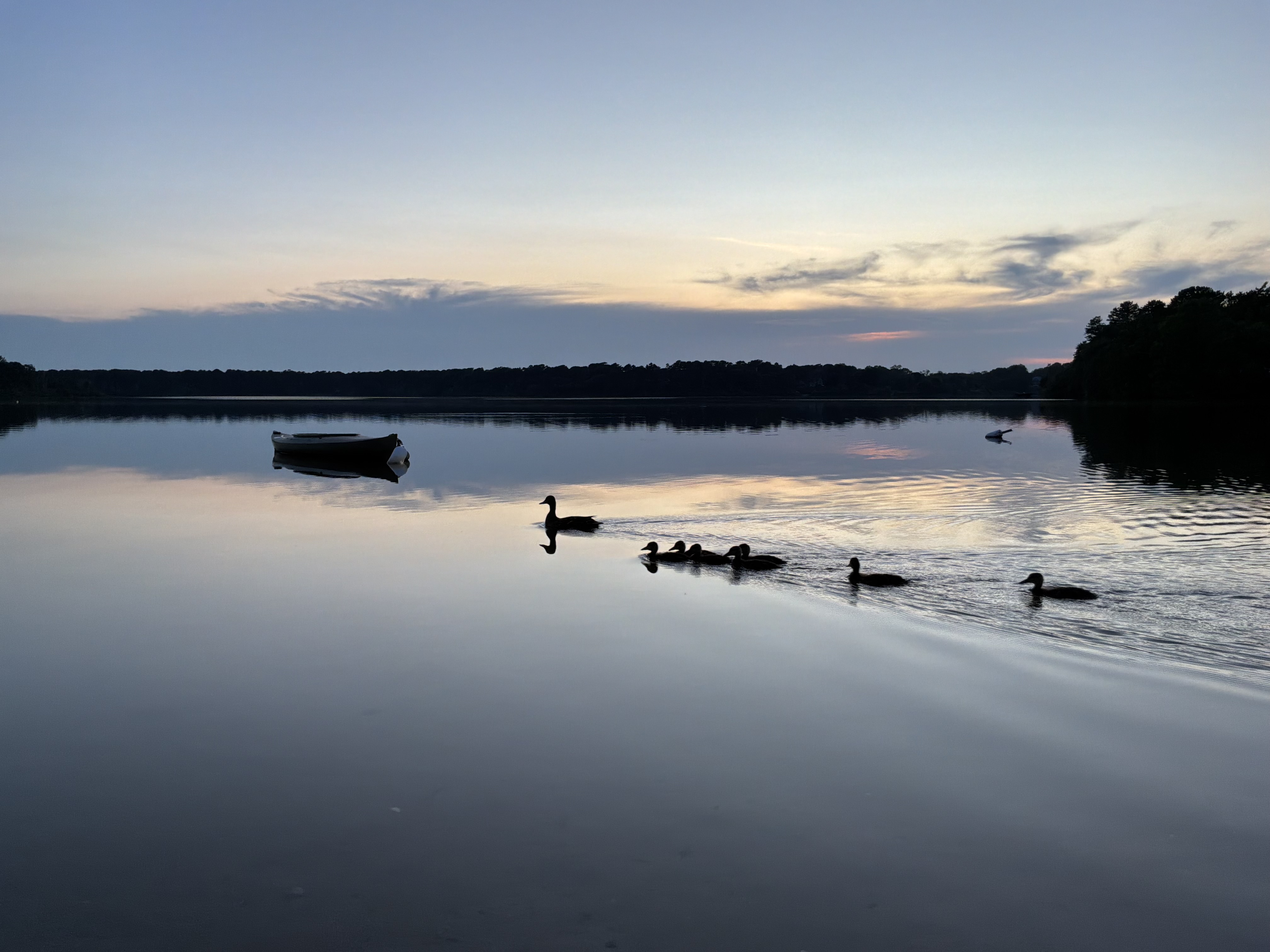
*favorite travel photos that have not yet appeared in this blog
Eastham, MA
Comments are welcome!
Pearls from artists* # 708

*an ongoing series of quotations – mostly from artists, to artists – that offers wisdom, inspiration, and advice for the sometimes lonely road we are on
Free play must be tempered with judgment, and judgment tempered with freedom to play. We perform innumerable balancing acts, dances between opposite poles, each of which is necessary for life and art to exist. We have to live right on the balance point of an equi-valence between free flow of impulse and constant testing and questing for quality. With too little judgment, we get trash. We too much judgment, we get blockage. In order to play freely, we must have a command of technique. Back and forth flows the dialogue of imagination and discipline, passion and precision. We harmonize groundedness in daily practice with spiritedness in daily stepping out into the unknown.
Stephen Nachmanovitch in Free Play: Improvisation in Life and Art
Comments are welcome!
Q: What’s on the easel today?
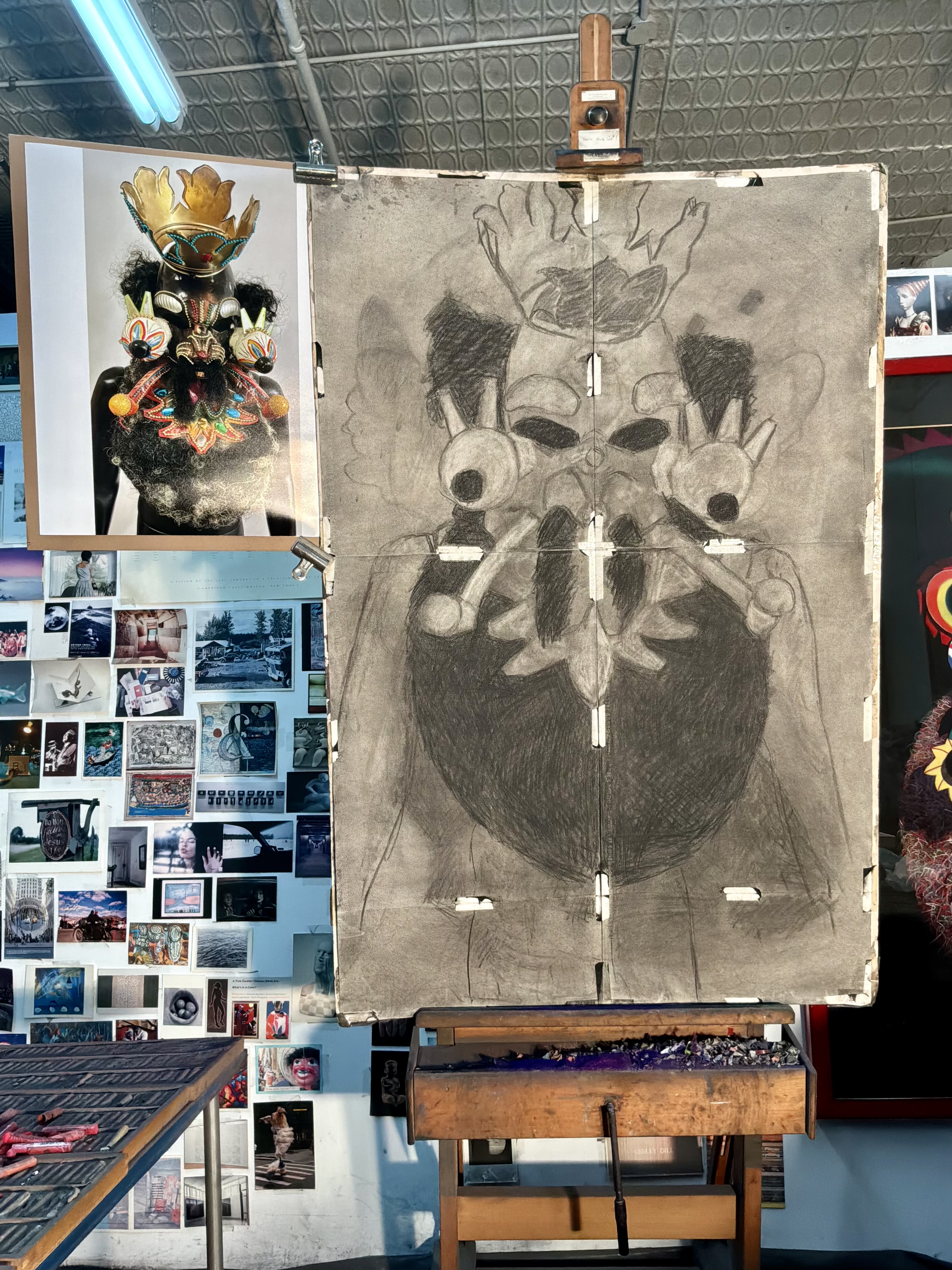
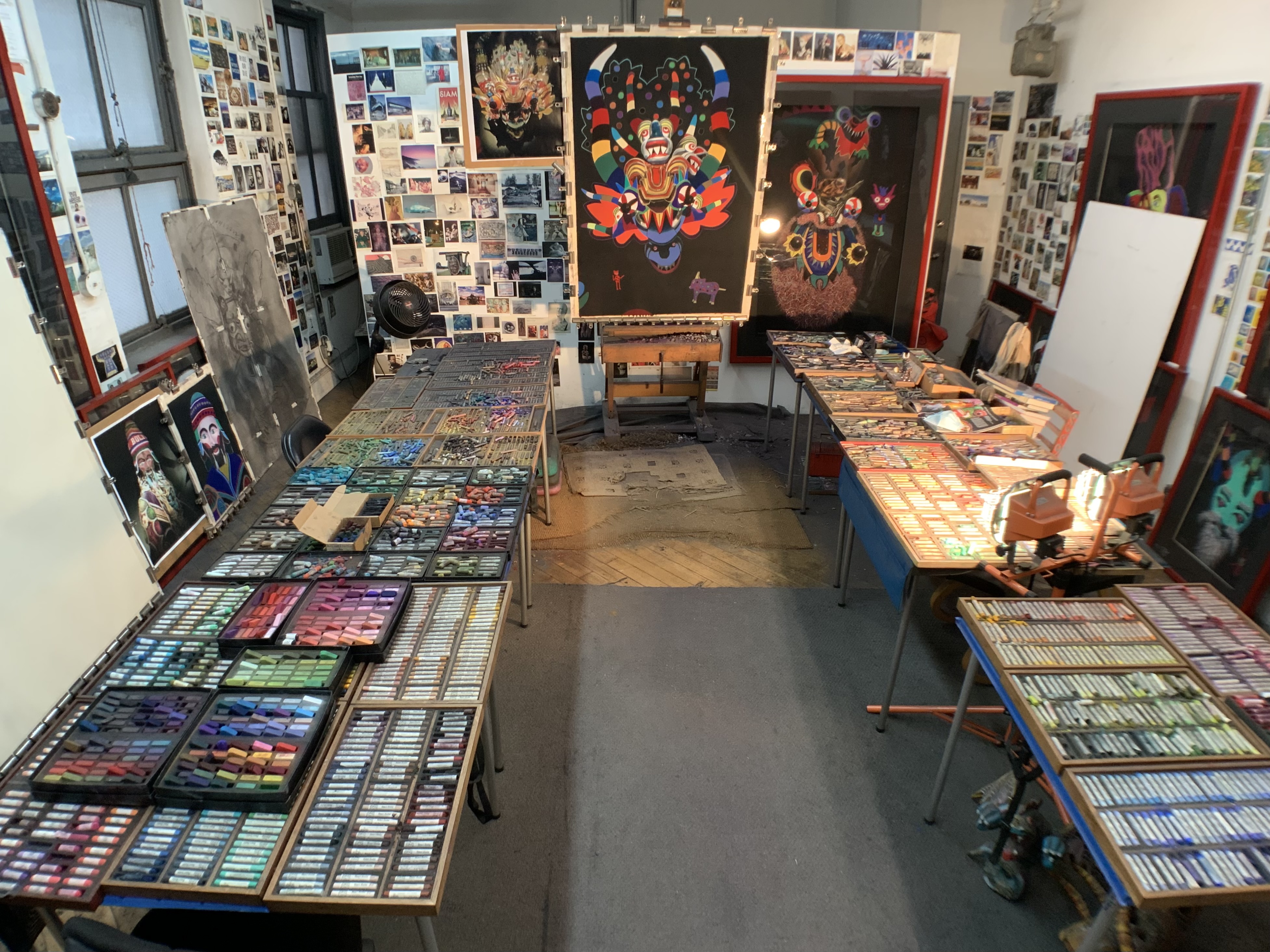
Charcoal drawing
A: This preliminary charcoal drawing is my first tentative move towards the next “Bolivianos” pastel painting. I took the reference photo in February during my Bolivia trip to research and experience Carnival in Oruro.
Comments are welcome!
Pearls from artists* # 707
The Studio
*an ongoing series of quotations – mostly from artists, to artists – that offers wisdom, inspiration, and advice for the sometimes lonely road we are on
Intuition often serves as a diving rod that guides us to our secret language. ‘Listening to your gut’ is actually a rapid process of previous experience and cumulative knowledge that results in a seemingly sudden ‘educated guess.’ You may not be able to consciously access all the memories and information that led to your ‘hunch,’ but they are there, nevertheless. Many of us have a keenly developed sense of intuition, but do not trust it. But often, when we are deliberating a problem, we lay our head on our pillow, all the rational ‘pros and cons’ drop away, and we know the answer to our question. We simply need to cultivate and have faith in that knowing.
Kate Kretz in Art From Your Core: A Holistic Guide to Visual Voice
Comments are welcome!
Travel photo of the month*
*favorite travel photos that have not yet appeared in this blog
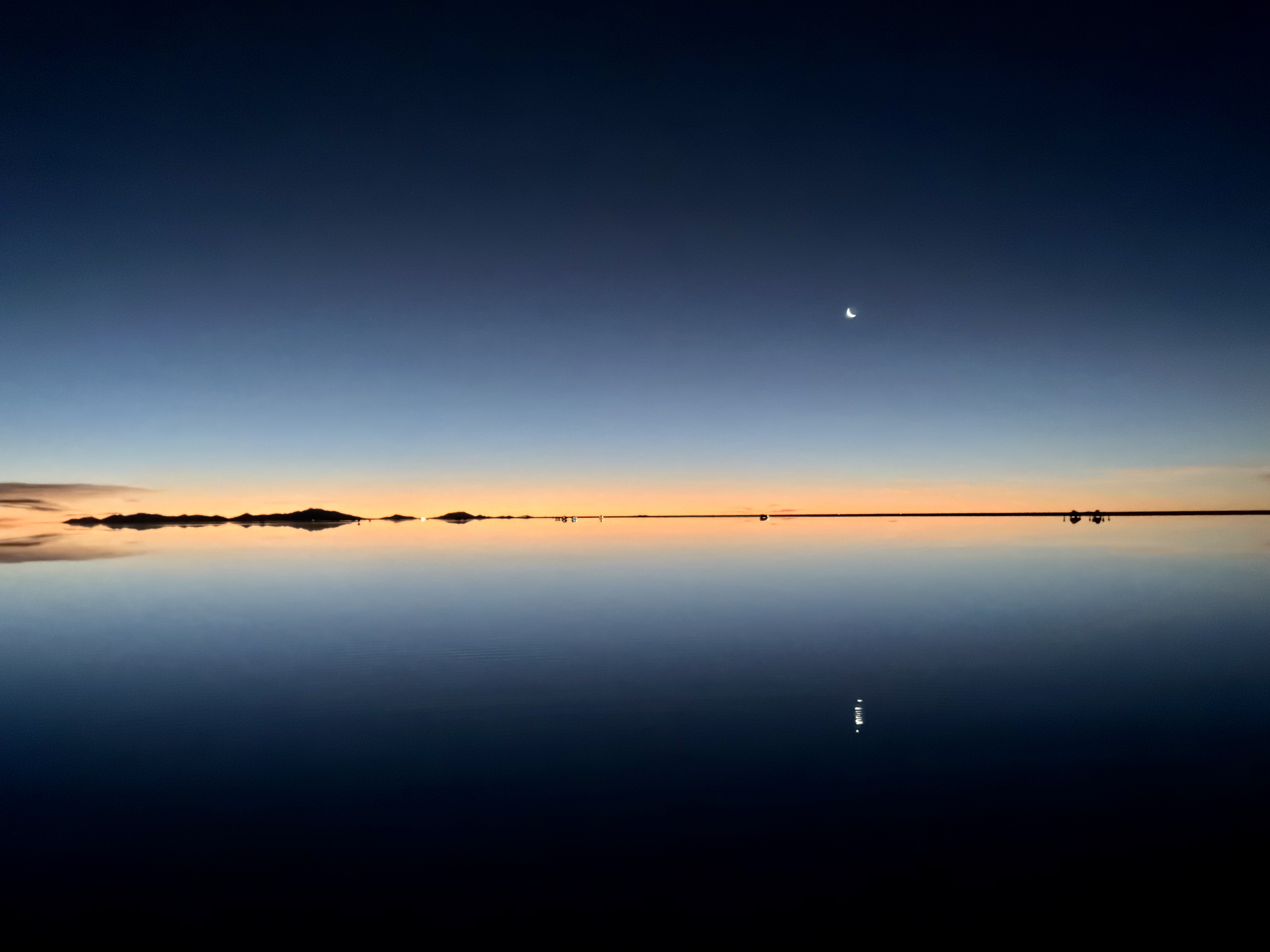
Moonrise, Salar de Uyuni, Bolivia
Comments are welcome!
Q: What’s a belief or project you are committed to, no matter how long it takes? (Question from Bold Journey)
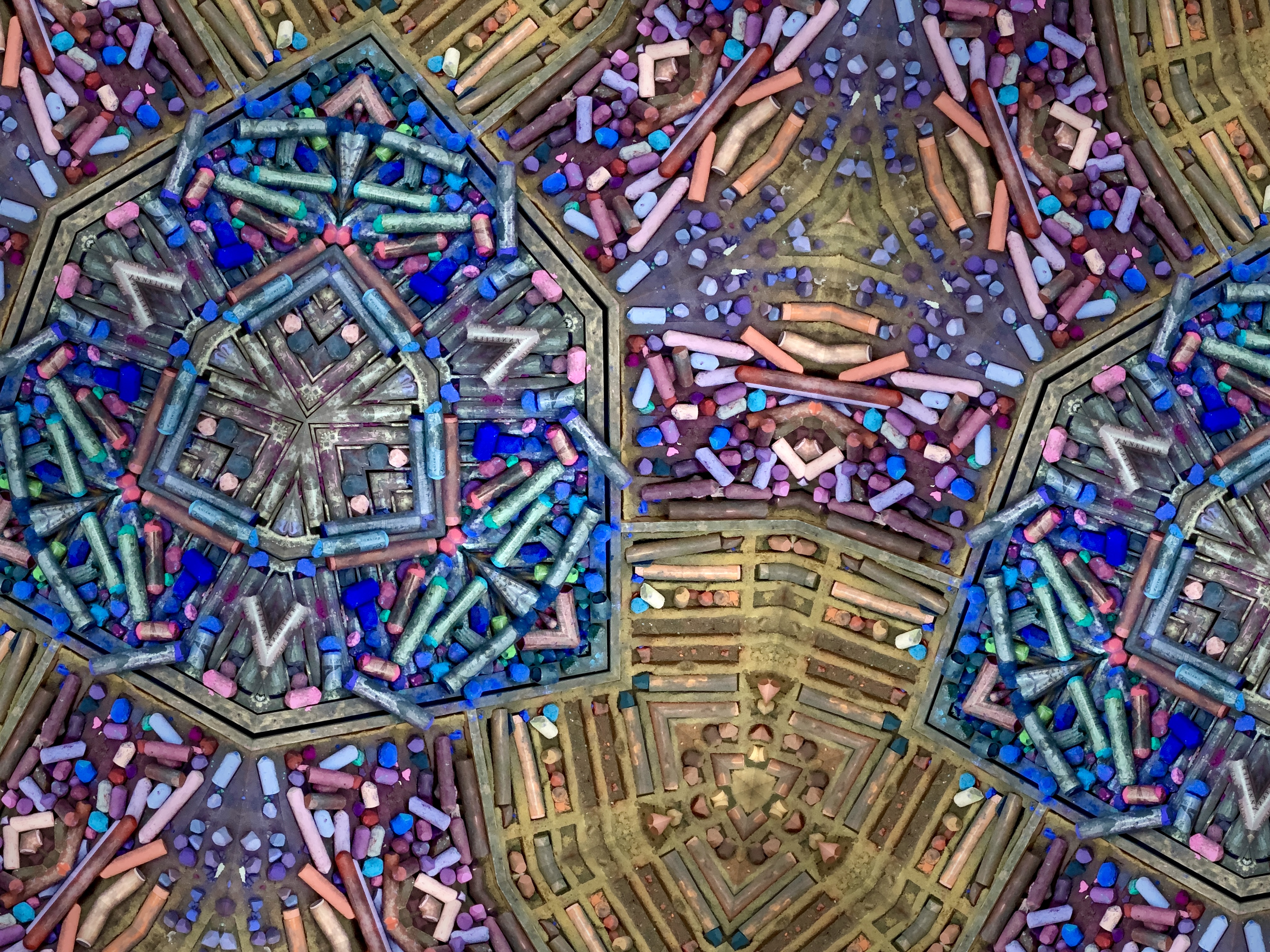
Some of my soft pastels (Girault and Sennelier)
A: For centuries, pastel was dismissed as a “second-class” medium, used mainly for sketches. My mission for the past four decades has been to prove otherwise.
Pastel is pure pigment—rich, permanent, and luminous. Great artists such as Degas, Cassatt, and Renoir used pastel for finished works, not just studies. Today, I remain dedicated to showing what pastel can achieve as a major fine art medium.
Comments are welcome!
Pearls from artists* # 705
*an ongoing series of quotations – mostly from artists, to artists – that offers wisdom, inspiration, and advice for the sometimes lonely road we are on.
There are infinitely many ways to structure art and as many ways to construe it once it exists. One mark of a great poem, novel, symphony, or painting is that innumerable interpretations are generated—different people see it differently from one time to another. The hundredth time I taste an artwork I love, I still find something new in it, because I am different, and because there is some largeness or manyness in the art that can resonate with the changing versions of myself.
Stephen Nachmanovitch in Free Play: Improvisation in Life and Art
Comments are welcome!
Q: What have been the defining wounds of your life—and how have you healed them? (Question from Bold Journey)

A: The deepest wound was losing Bryan on 9/11. I resolved not to become another victim of that tragedy and chose to continue living and making art.
Because I depend on reference photographs for my work, my first hurdle was learning to use Bryan’s 4×5 view camera. He had always taken the photos for me. In 2002, I enrolled in a photography workshop at the International Center of Photography in New York. To my surprise, I had absorbed a lot just from watching him, and I went on to formally study photography for several years. In 2009, I was invited to present a solo photography exhibition in New York.
By 2003, I resumed my Domestic Threats series. The first large pastel I completed from one of my own photographs was titled She Embraced It and Grew Stronger. It was autobiographical: “she” was me, and “it” was life without Bryan.
That series ended in 2007, by which time I was finding more peace. But then I faced a new challenge: creative block. For months I struggled, but I kept showing up daily. Eventually, a breakthrough came, and I began the Black Paintings series. The dark backgrounds represented the place I had emerged from; the vibrant figures symbolized resilience and life.
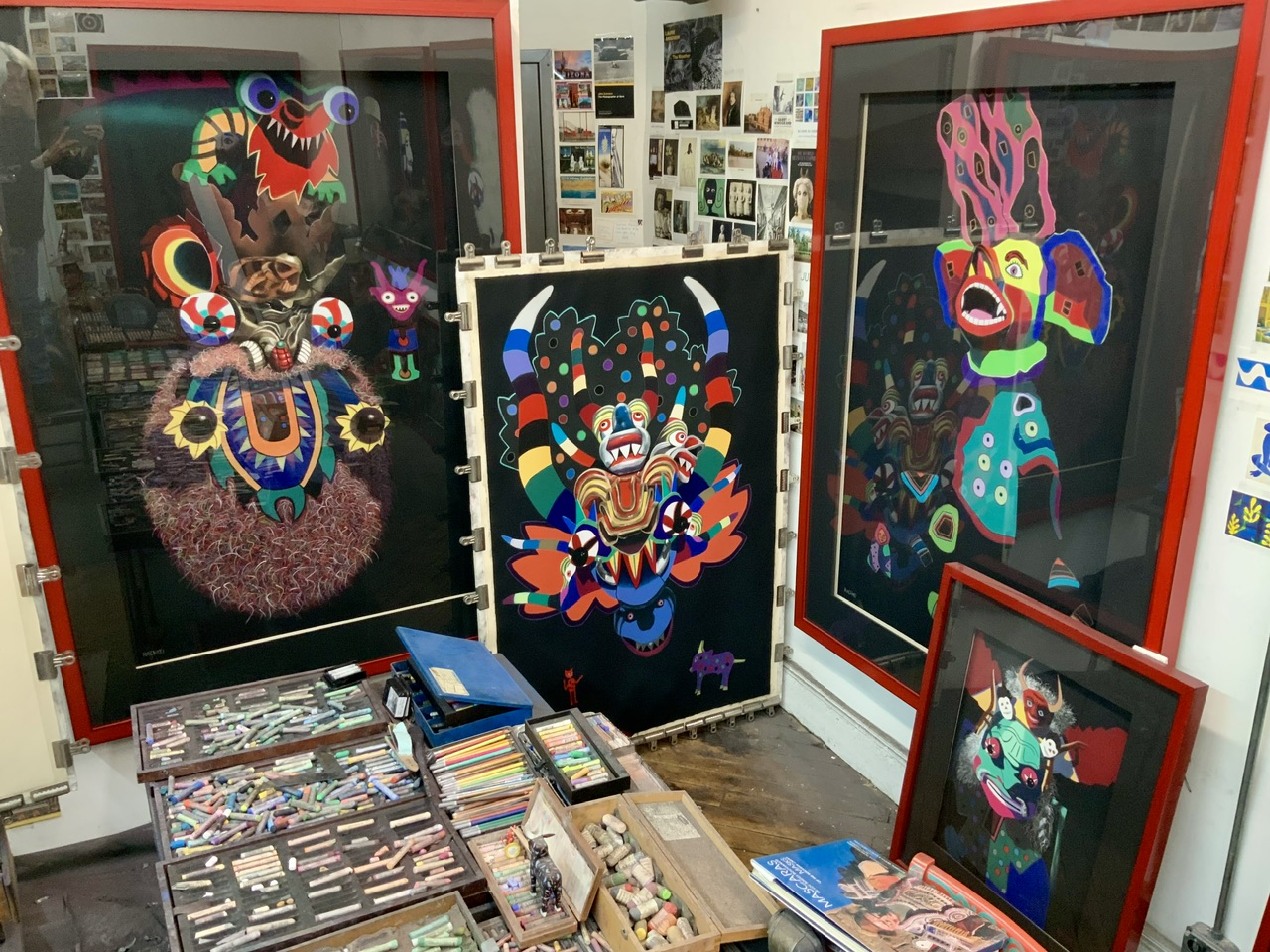
In 2017, inspired by a museum exhibition in La Paz, I began Bolivianos, based on Carnival masks. Many view this as my boldest and most exciting work yet.
Comments are welcome!



