Blog Archives
Pearls from artists* # 573

In the studio
*an ongoing series of quotations – mostly from artists, to artists – that offers wisdom, inspiration, and advice for the sometimes lonely road we are on.
The literature on creativity is full of tales of breakthrough experiences. These moments come when you let go of some impediment or fear, and boom – in whooshes the muse. You feel clarity, power, freedom, as something unforeseen jumps out at you. The literature of Zen… abounds with accounts of kensho and satori – moments of illumination and moments of total change of heart. There come points in your life when you simply kick the door open. But there is no ultimate breakthrough; what we find in the development of a creative life is an open-ended series of provisional breakthroughs. In this journey there is no endpoint because it is the journey into the soul.
Stephen Nachmanovitch in Free Play: Improvisation in Life and Art
Comments are welcome!
Q: Many of the world’s cultures have a mask tradition. Is there something special about Bolivian masks that first attracted you to them?

Bolivian Carnival Mask
A: My subject matter emerges directly from my travels. I visited Bolivia in 2017. What I especially liked then – and now – about Bolivian Carnival masks, is that they include additional textures – feathers, fur, costume jewelry, sequins, fabric, etc. that add to their physical presence. Masks from most of the other countries I’ve visited tend to be made of wood and/or paper mache and nothing else. In my view such masks are not as dramatic nor do they offer much expressive potential. They feel dead. They lack a certain “soulfulness.”
Furthermore, textures are challenging to render in soft pastel. For more than three decades I have been striving to improve my pastel techniques. By now I have a vast repertoire from which to select. As was true in my earlier series, with “Bolivianos” an important personal goal is to keep adding to the repertoire.
It takes months to create a pastel painting, which means I need masks that will hold my attention every day over the course of three or four months. I never want to be bored in the studio. If I am bored while making the work, those feelings will be directly transferred and I will make a boring pastel painting, something I hope never to do! The masks need to have a really strong ‘presence.’ Then as I slowly make a pastel painting, one that is exciting to work on from start to finish, I can transform my subject into something surprising and powerful that has never existed before!
Comments are welcome!
Pearls from artists* # 566

With “Sacrificial” (left), 70” x 50” framed and “Disruptor,” 35” x 28.5” framed; both are soft pastel on sandpaper
*an ongoing series of quotations – mostly from artists, to artists – that offers wisdom, inspiration, and advice for the sometimes lonely road we are on.
Money, fame. It was funny, it was confusing. It was the end. The purity was gone. “I vividly experienced the change of climate with the financial boom in the art world,” Mercedes [Matter] said. “The change from taking poverty and obscurity for granted to competing for a place in the spotlight. At the Cedar [Tavern] one began hearing many talking about galleries over their bourbons instead… [of] about art as before over their beers.” Artists had become entertainers, selling themselves and their gifts for a piece of paper, the almighty dollar, emblazoned with a new motto, “In God We Trust.” Paul Brach said 1957 was the last year that artists made other artists’ reputations. From then on, they were made by a machine called “the art establishment.” “Career, the nemesis of our past, had crept up on all of us,” Larry [Rivers] said. It was like a virus, something all of them had but none of them wanted. At least in the abstract.
Mary Gabriel in Ninth Street Women
Comments are welcome!
Pearls from artists* # 563

*an ongoing series of quotations – mostly from artists, to artists – that offers wisdom, inspiration, and advice for the sometimes lonely road we are on.
[John] Graham defined art as a “process of abstracting” thought and emotion by the use of paint or metal or stone. Because art was therefore intrinsically abstract, the duty of the artist would be to push abstraction “fearlessly to its logical end instead of evading it under the disguises of charm or being ‘true to nature.’” The artist created for society, he said, but if that society didn’t like what he or she had produced, the artist”does not trade his ideals for success. Martyrs and saints love luxury and success just as much as ordinary people, only they love something else even more.” Graham said, if the artist is a true genius, he can expect to be misunderstood and alone. “The beauty of genius is frightful to behold, few can envisage it. Others find subterfuge in scepticism.” The abstract artist, he said, would be repeatedly challenged by such skeptics asking, “‘What does it mean?’… Is it a sky, a house, a horse?’” To which they should respond with confidence and honesty, “‘No, it is a painting.’”
Mary Gabriel in Ninth Street Women
Comments are welcome!
Q: Why do you sometimes depict the same subject matter twice?

“Trickster” (left) and “Sacrificial,” while the latter was in-progress
A: It is fascinating to play around with scale. For starters, it helps demonstrate how my pastel techniques and my approach to the subject matter are evolving. I’ve noticed that I always see and depict more details the second time around.
Typically, I prefer the second pastel painting over the first one depicting the same subject. Man Ray famously said:
“There is no progress in art, any more than there is progress in making love. There are simply different ways of doing it.”
I disagree with him. I am an optimist who believes that artists cannot help but improve over time. It’s one of the things that gets me into my studio: the idea that my creative process and my ways of using pastel are changing for the better. I like to think this represents some sort of creative progress. But still I sometimes have to wonder, is the idea of ‘progress’ just something artists tell ourselves in order to keep going?
Comments are welcome!
Pearls from artists* # 549
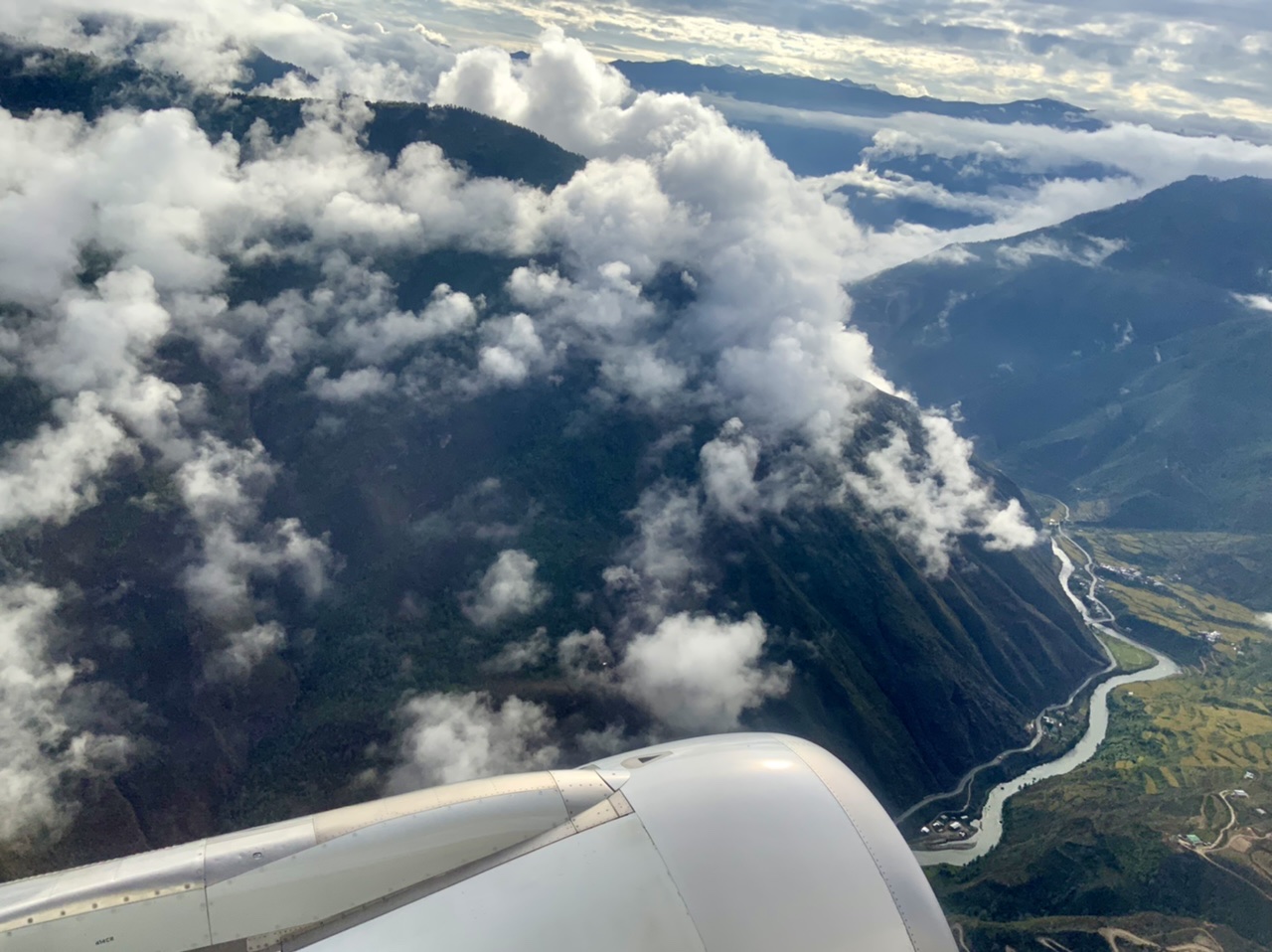
Departing from Paro Airport in Bhutan
*an ongoing series of quotations – mostly from artists, to artists – that offers wisdom, inspiration, and advice for the sometimes lonely road we are on.
… a lot of times you take a trip halfway around the world. You think the trip is for one thing… and you came away with something else. You change in a way you did not expect. These are the lessons that come well after school, college, training, apprenticeships. These lessons are not full courses; they are two sentences long. I felt I had gotten a degree in two minutes.
Anna Deavere Smith in Letters to a Young Artist: Straight-up Advice on Making a Life in the Arts – For Actors, Performers, Writers, and Artists of Every Kind
Comments are welcome!
Pearls from artists* # 545

*an ongoing series of quotations – mostly from artists, to artists – that offers wisdom, inspiration, and advice for the sometimes lonely road we are on.
… in the pursuit of better behavior and moral action, we’ve cut ourselves off from instinct. But it’s gone too far. Today, we know that we’re in our heads too much. It’s not hard to see that something has been lost by placing so much of our attention into devices. Our overstimulated culture is a bird that feels like it has nowhere to land. Many people feel like, or operate as though, they’ve lost feeling for life.
Gary Bobroff in Carl Jung: Knowledge in a Nutshell
Comments are welcome!
Pearls from artists* # 543

*an ongoing series of quotations – mostly from artists, to artists – that offers wisdom, inspiration, and advice for the sometimes lonely road we are on.
Although the struggles that I faced involved me as an individual, I didn’t feel alone. I was forbidden to travel, but this forced immobility didn’t adversely affect my work; instead it gave me sustenance. For me, inspiration comes from resistance – without that, my efforts would be fruitless. Having a real – and powerful – adversary was my good fortune, making freedom all the more tangible – freedom comes from all the sacrifices you make to achieve it. Limitations come only from a fear inside the heart, and art is the antidote to fear. I did not need sympathy, for courage itself is an aesthetic feeling, and it’s only when true feeling is transformed into something broadly understood that art can avoid drying up.
Ai Weiwei in 1000 Years of Joys and Sorrows
Comments are welcome!
Q: What makes you feel most alive?

A: Making art makes me feel alive, using all my gifts, my brain, my heart, and my hands to create something that never existed before and that can never be duplicated; knowing I’m the only person, ever, who could or would make this particular thing, as I strive to push my pastel techniques further each time out. Whether it’s a painting or a photograph, I enjoy making something from nothing… art that is well-crafted and has never been seen before.
Travel is the other activity that excites me. I thrive on adventure and I especially love new vistas. When I am in a country I have never visited before, with every step and around every bend there is something new to see. I am an explorer at heart!
Comments are welcome!
Q: How do you account for your intense compositions? (Question from Robin Plati via Facebook)
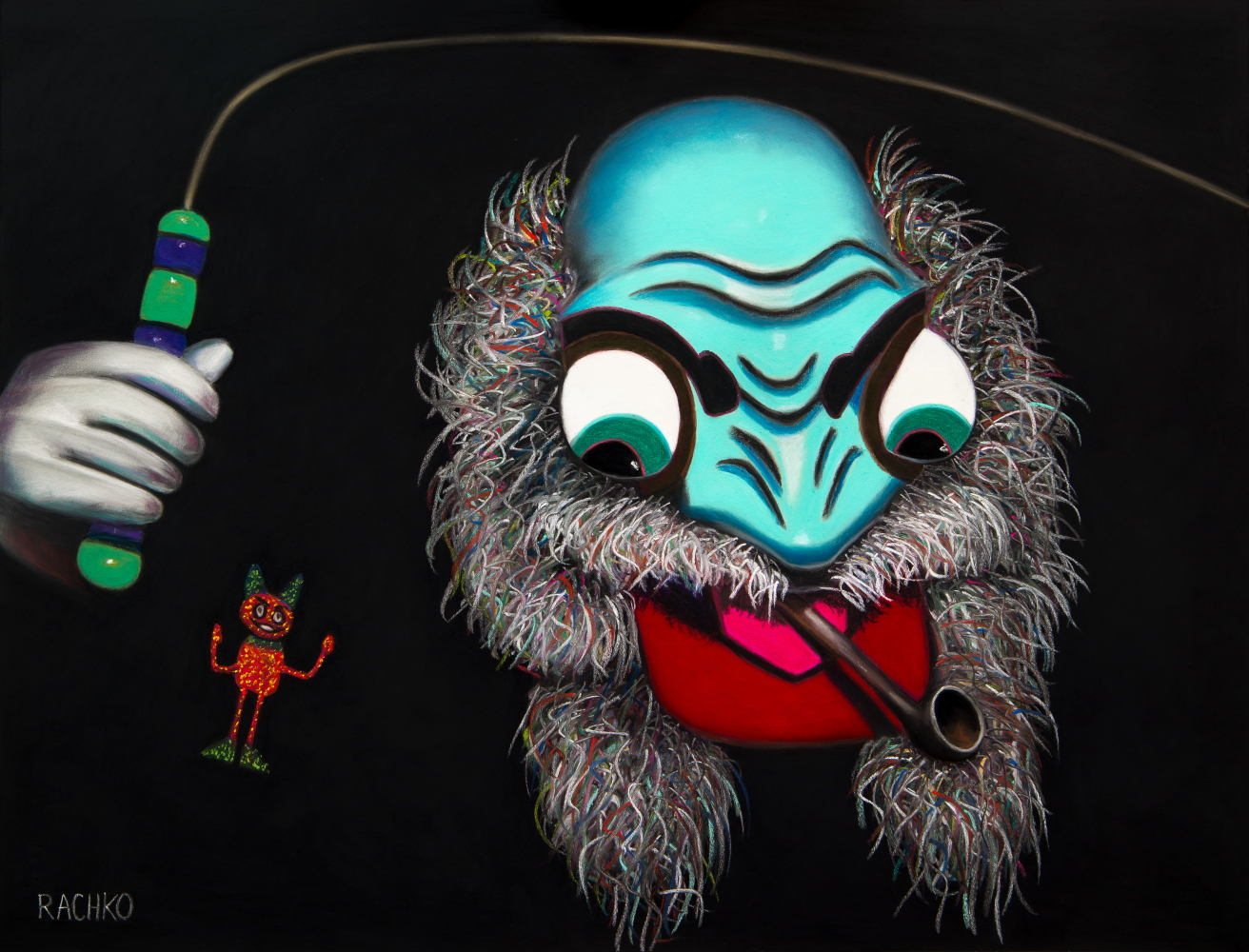
A: If I do say so, composition is something I’m known for. During the months I work on them, I devote many hours to looking at the painting on my easel and figuring out how to move the viewer’s eyes around in interesting ways. Everything you see is carefully worked out after hundreds of studio hours. Finished pastel paintings always have an inevitability about them. Change one detail and the entire composition is thrown off.
Comments are welcome!


 barbararachkoscoloreddust.com