Blog Archives
Pearls from artists* # 679
*an ongoing series of quotations – mostly from artists, to artists – that offers wisdom, inspiration, and advice for the sometimes lonely road we are on.
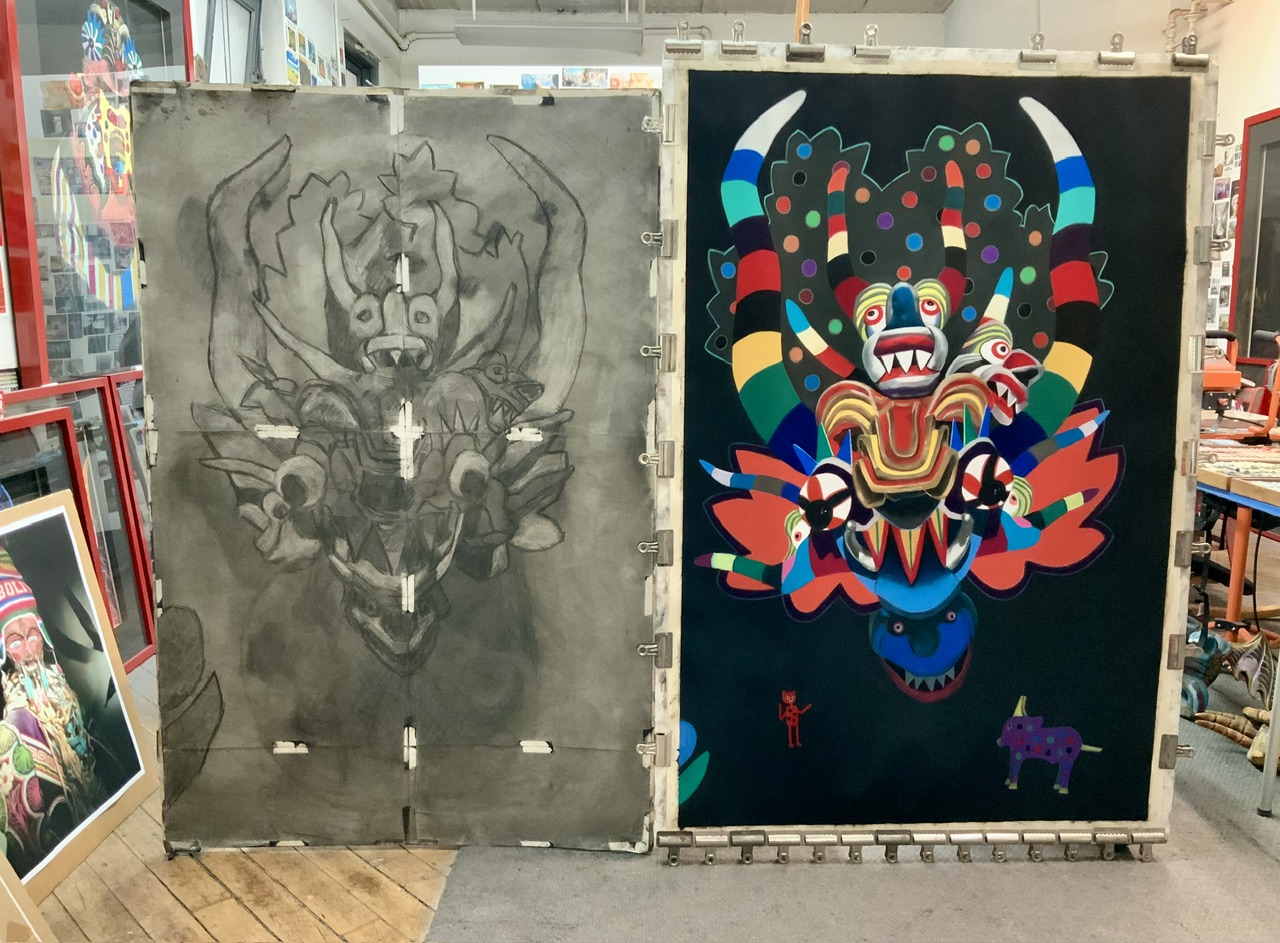
PC: In your painting, you’ve always kept this speed of movement. One senses that you work something out slowly, deep down, that it’s hard work, but there’s always something fresh about its expression
HM: That’s because I revise my notion several times over. People often add or superimpose completing things without changing their plan, whereas I rework my plan every time. I always start again, working from the previous state. I try to work in a contemplative state, which is very difficult: contemplation is inaction and I act in contemplation.
In all the studies I’ve made from my own ideas, there’s never been a faux pas because I’ve always unconsciously had a feeling for the goal; I’ve made my way toward it the way one heads north, following the compass. What I’ve done, I’ve done by instinct, always with my sights on a goal I still hope to reach today. I’ve completed my apprenticeship now. All I ask is four or five years to realize the goal.
PC: Delacroix said that too. Great artists never look back.
HM: Delacroix also said – ten years after he’d left the place – “I’m just beginning to see Morocco.” He needed the perspective. Rodin said to an artist, “You need to stand back a long way for sculpture.” To which the student replied, “Master, my studio is only ten meters wide.”
Chatting With Henri Matisse: The Lost 1941 Interview, Henri Matisse with Pierre Courthion, edited by Serge Guilbaut
Comments are welcome!
Q: What makes you just want to run back to the studio and start something new?
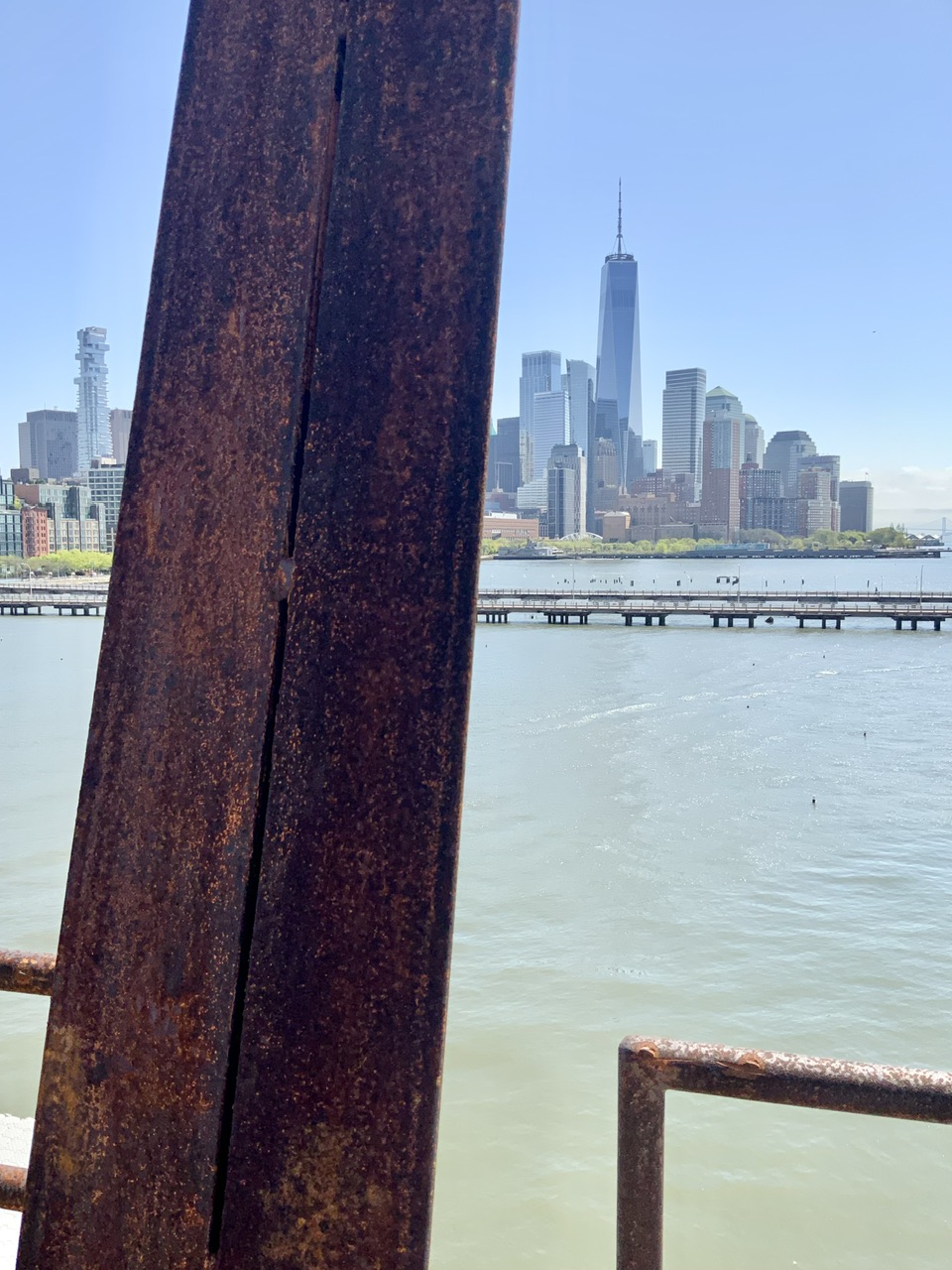
View of Lower Manhattan
A: I always work in series, which means that one pastel painting generally leads into the next. Considerable thought and planning go into each one before I begin, so it would be rare for me to just start something new out of the blue.
Sometimes on days off from the studio when we have beautiful weather, I can can hardly wait to go outside for a walk. I grab my iPad Pro and search for new sights to photograph. After a couple of hours, I usually return home with a handful of interesting images. Photography is such a departure from the slowness of my work in the studio, considering that in a good year I make 3 or 4 pastel paintings.
Comments are welcome!
Pearls from artists* # 488
*an ongoing series of quotations – mostly from artists, to artists – that offers wisdom, inspiration, and advice for the sometimes lonely road we are on.
To be astonished is to be caught unawares by the revelation of realities denied or repressed in the everyday. Astonishment has an intellectual as well as an emotional component – in it, the brain and the heart come together. Far from distracting us from the strange and the uncanny in life, the astonishment evoked by great artistic works puts them square in our sights. The work demands that we feel and think the mystery of our passage through this body, on this earth, in this universe. We realize afterward that the world is not what we thought it was: something hidden, impossible to communicate though clearly expressed in the work has risen into the light of awareness, and the share of the Real to which we are privy is proportionately expanded.
JF Martel in Reclaiming Art in the Age of Artifice: A Treatise, Critique, and Call to Action
Comments are welcome!
Travel photo of the month*
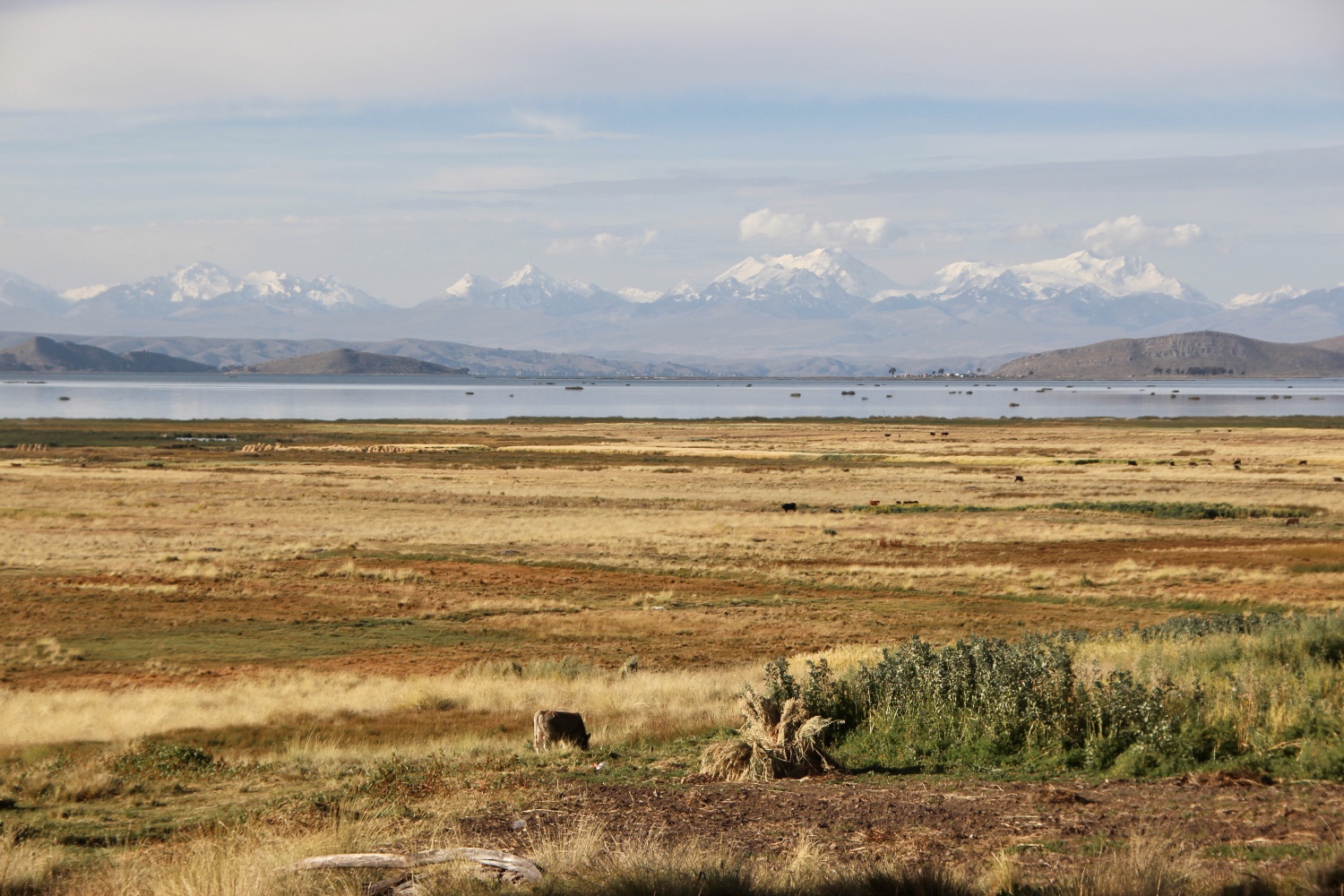
On the road in Bolivia
* Favorite travel photos that have not yet appeared in this blog
Of all the countries I have visited so far, I’d say that the most beautiful, awe-inspiring landscapes are to be found in Bolivia! The people and the sights and sounds of Bolivia truly won my heart. I hope to return.
Comments are welcome!
Pearls from artists* # 349
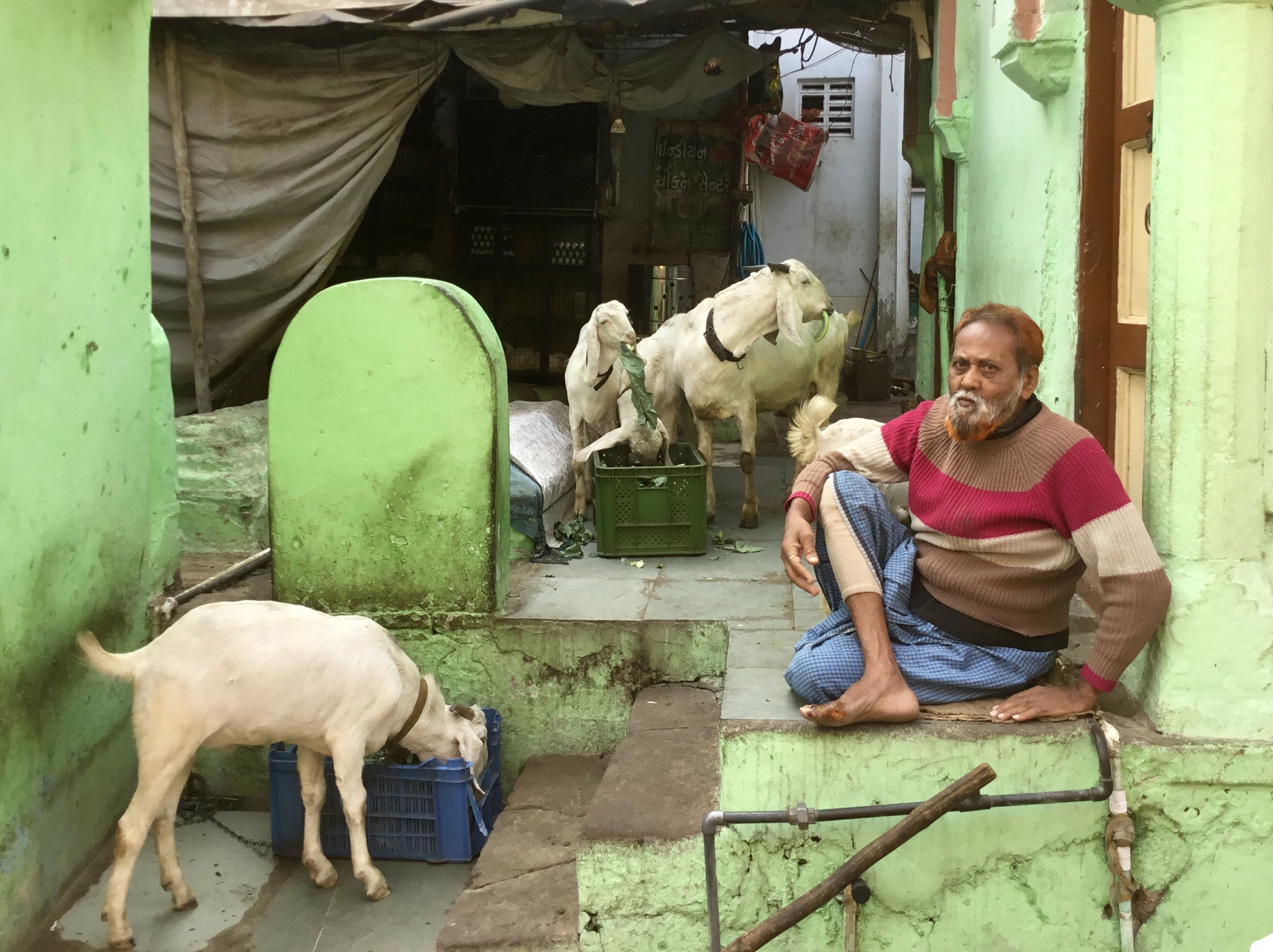
Ahmedabad, India
*an ongoing series of quotations – mostly from artists, to artists – that offers wisdom, inspiration, and advice for the sometimes lonely road we are on.
India presents to the visitor an overwhelmingly visual impression. It is beautiful, colorful, sensuous. It is captivating and intriguing, repugnant and puzzling. It combines the intimacy and familiarity of English four o’clock tea with the dazzling foreignness of carpisoned elephants or vast crowds bathing in the Ganga during an eclipse. India’s display of multi-armed images, it’s processions and pilgrimages, it’s beggars and kings, it’s street life and markets, it’s diversity of peoples – all appear to the eye in a kaleidoscope of images. Much that is removed from public view in the modern West and taken into the privacy of rest homes, asylums, and institutions is open and visible in the life of an Indian city or village. The elderly, the infirm, the dead awaiting cremation – these sights, while they may have been expunged from the childhood palace of the Buddha, are not isolated from the public eye in India. Rather, they are present daily in the visible world in which Hindus, and those who visit India, move in the course of ordinary activities. In India, one sees everything. One sees people at work and at prayer; one sees plump, well-endowed merchants, simple renouncers, fraudulent “holy” men, frail widows, and emaciated lepers; one sees the festival procession, the marriage procession, and the funeral procession. Whatever Hindus affirm of the meaning of life, death, and suffering, they affirm with their eyes wide open.
Diana L. Eck in Darsan: Seeing the Diving Image in India
Comments are welcome!
Q: Your relationship with photography has changed considerably over the years. How did you make use of photography in your first series of pastel-on-sandpaper paintings, “Domestic Threats”?
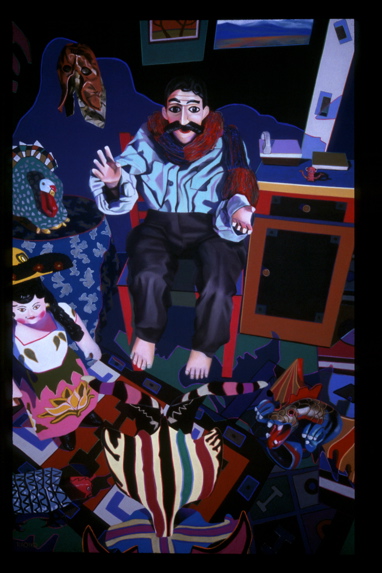
“Truth Betrayed by Innocence,” 2001, 58″ x 38″, the last pastel painting for which Bryan photographed the setup
A: When my husband, Bryan, was alive I barely picked up a camera, except to photograph sights encountered during our travels. Throughout the 1990s and beyond (ending in 2007), I worked on my series of pastel-on-sandpaper paintings called, “Domestic Threats.” These were realistic depictions of elaborate scenes that I staged in our 1932 Sears house in Alexandria, Virginia, and later, in a New York sixth floor walk-up apartment, using the Mexican masks, carved wooden animals, and other folk art figures that I found on our trips to Mexico. I staged and lit these setups, while Bryan photographed them using his Toyo-Omega 4 x 5 view camera. We had been collaborating this way almost from the beginning (we met on February 21, 1986). Having been introduced to photography by his father at the age of 6, Bryan was a terrific amateur photographer. He would shoot two pieces of 4 x 5 film at different exposures and I would select one, generally the one that showed the most detail in the shadows, to make into a 20 x 24 photograph. The photograph would be my starting point for making the pastel painting. Although I work from life, too, I could not make a painting without mostly looking at a reference photo. After Bryan was killed on 9/11, I had no choice but to study photography. Over time, I turned myself into a skilled photographer.
Comments are welcome!
Q: How do you think your time in Bali will affect your work?
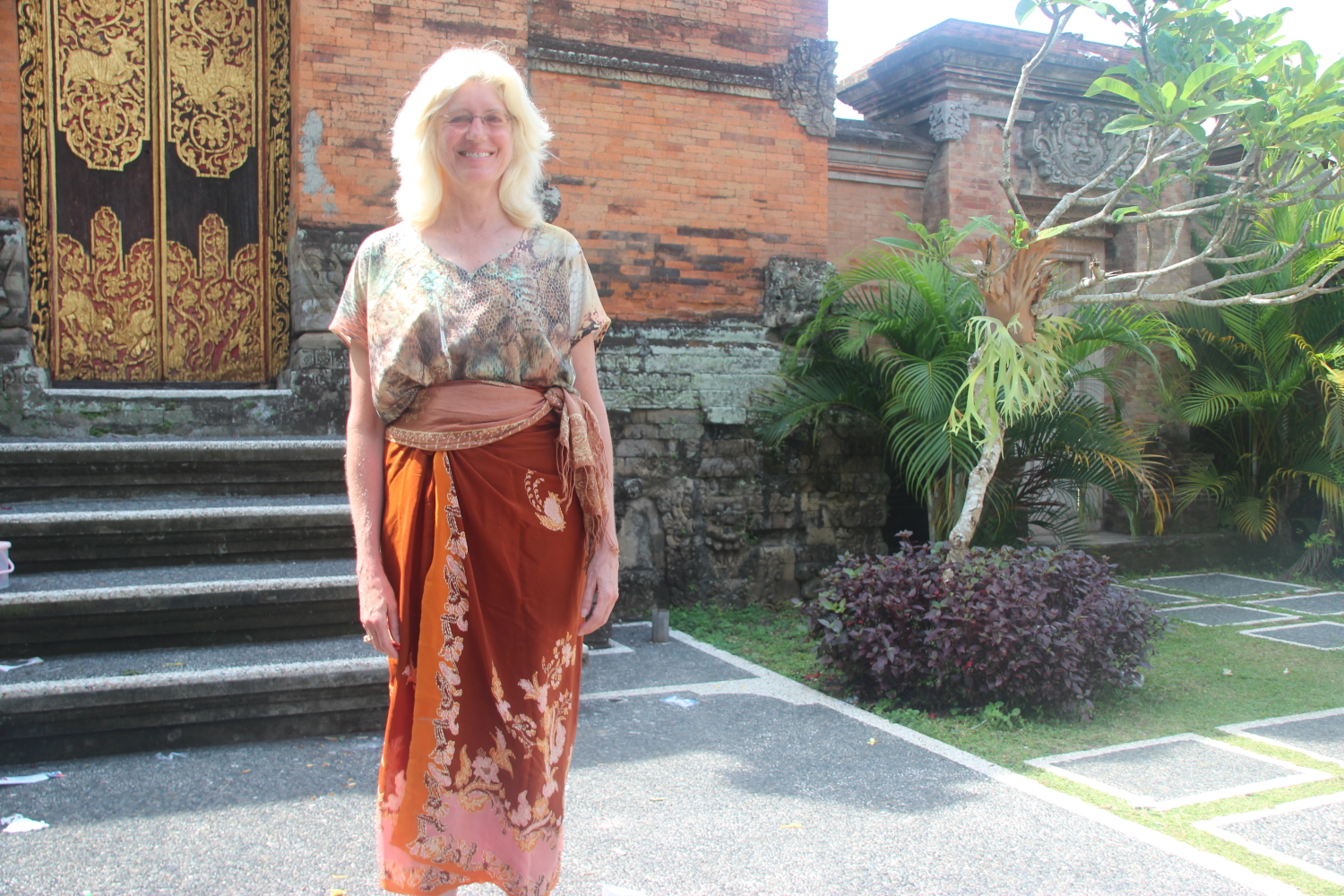
Barbara in her favorite sarong; photo by Donna Tang
A: There is always a long gestation period as I reflect on the new experiences, sights, sounds, etc. after a trip. Bali is a fascinating place – the only Hindu outpost in the world’s most populous Muslim country – so I’m reading everything I can find. I’ve finished an historical novel, Love and Death in Bali, about the 1906 mass suicide of the royal family during the Dutch invasion. I’m slowly making my way through Bali: Sekala and Niskala, a densely packed book about the intricacies of Hinduism, rituals, and art, written with the help of our guide, Budi. In the short term I’m using more green pastels in my paintings. Amidst all of the tropical lushness, I must have seen thousands of shades of green. The volcano shapes in “Absence,” a pastel painting completed last week (see post of JUL 20), resulted from this trip. Other, more pronounced effects will probably show up later.


 barbararachkoscoloreddust.com