Blog Archives
Pearls from artists* # 92
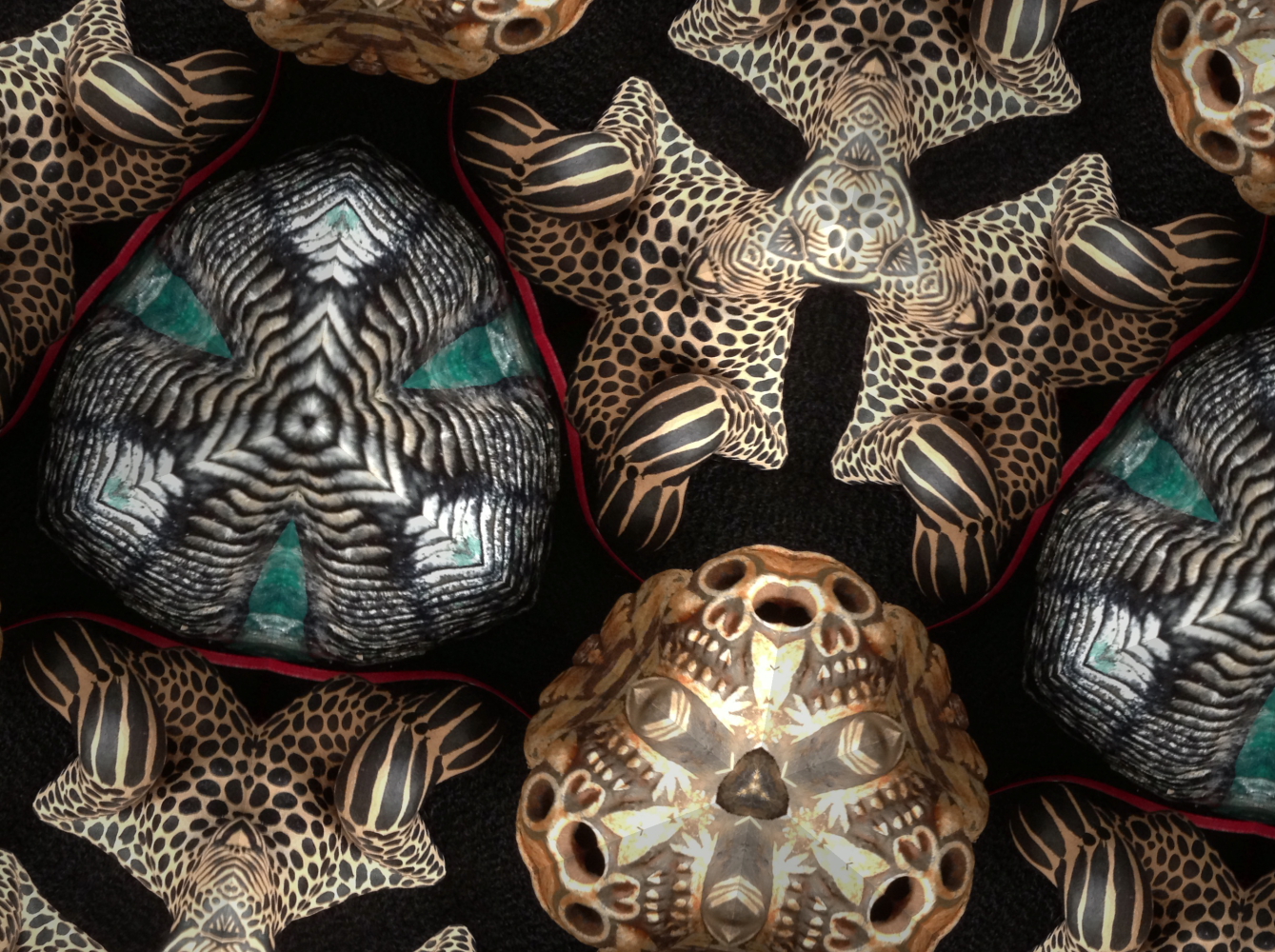
Untitled iPad photo
* an ongoing series of quotations – mostly from artists, to artists – that offers wisdom, inspiration, and advice for the sometimes lonely road we are on.
To avoid disappointment in art, one mustn’t treat it as a career. Despite whatever great artistic sense and talent a man might possess, he ought to seek money and power elsewhere to avoid forsaking his art when he fails to receive proper compensation for his gifts and efforts.
My Name is Red by Orhan Pamuk
Comments are welcome!
Q: How would you define art?

Barbara’s studio
A: At its core all art is communication. I personally believe that without the component of communication, there is no art. The expression of human creative skill and imagination becomes art when it is appreciated for its beauty, complexity, emotional power, evocativeness, etc. A sympathetic and understanding audience is essential.
Why might artists fail to communicate? Perhaps they haven’t mastered their medium sufficiently to elicit a reaction from the viewer. Perhaps the viewer lacks the necessary artistic, cultural, or intellectual background to understand and appreciate what the artist is communicating. Maybe the viewer is distracted or preoccupied and not looking or thinking deeply enough. There are many reasons.
Comments are welcome!
Pearls from artists* # 87
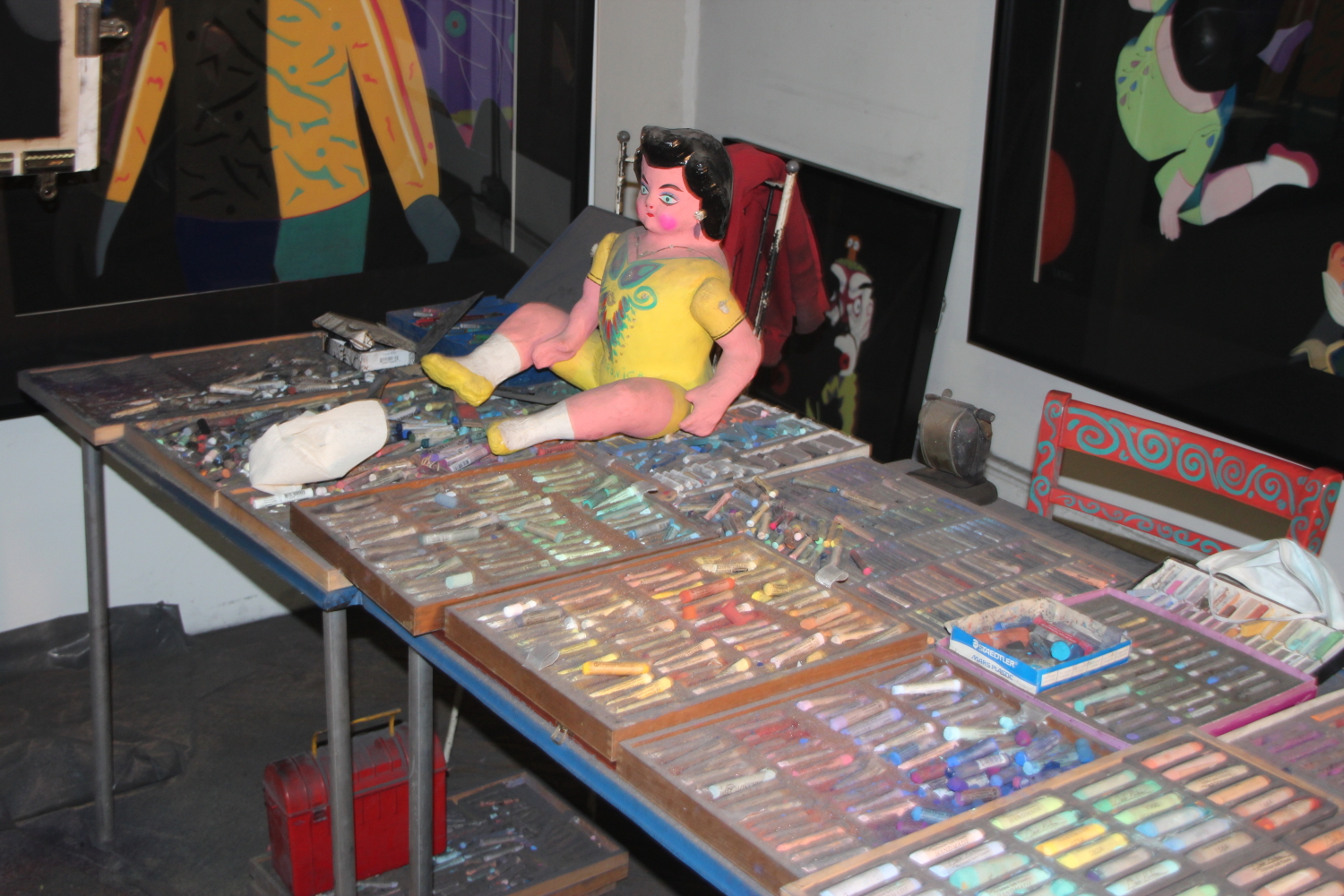
Studio
* an ongoing series of quotations – mostly from artists, to artists – that offers wisdom, inspiration, and advice for the sometimes lonely road we are on.
One evening, after one false start too many, I just gave up. Sitting at a bar, feeling a bit burned out by work and by life in general, I just started drawing on the backs of business cards for no reason. I didn’t really need a reason. I just did it because it was there, because it amused me in a kind of random, arbitrary way.
Of course it was stupid. Of course it was not commercial. Of course it wasn’t going to go anywhere. Of course it was a complete and utter waste of time. But in retrospect, it was this built-in futility that gave it its edge. Because it was the exact opposite of all the “Big Plans” my peers and I were used to making. It was so liberating not to have to think about all of that, for a change.
It was so liberating to be doing something that didn’t have to have some sort of commercial angle, for a change.
It was so liberating to be doing something that didn’t have to impress anybody, for a change.
It was so liberating to be free of ambition, for a change.
It was so liberating to have something that belonged just to me and no one else, for a change.
It was so liberating to feel complete sovereignty, for a change. To feel complete freedom, for a change. To have something that didn’t require somebody else’s money, or somebody else’s approval, for a change.
And of course, it was then, and only then, that the outside world started paying attention.
The sovereignty you have over your work will inspire far more people than the actual content ever will. How your own sovereignty inspires other people to find their own sovereignty, their own sense of freedom and possibility, will give the work far more power than the work’s objective merits ever will.
Your idea doesn’t have to be big. It just has to be yours alone. The more the idea is yours alone, the more freedom you have to do something really amazing.
The more amazing, the more people will click with your idea. The more people click with your idea, the more this little thing of yours will snowball into a big thing.
That’s what doodling on the backs of business cards taught me.
Hugh MacLeod in Ignore Everybody: and 39 Other Keys to Creativity
Comments are welcome!
Pearls from artists* # 41
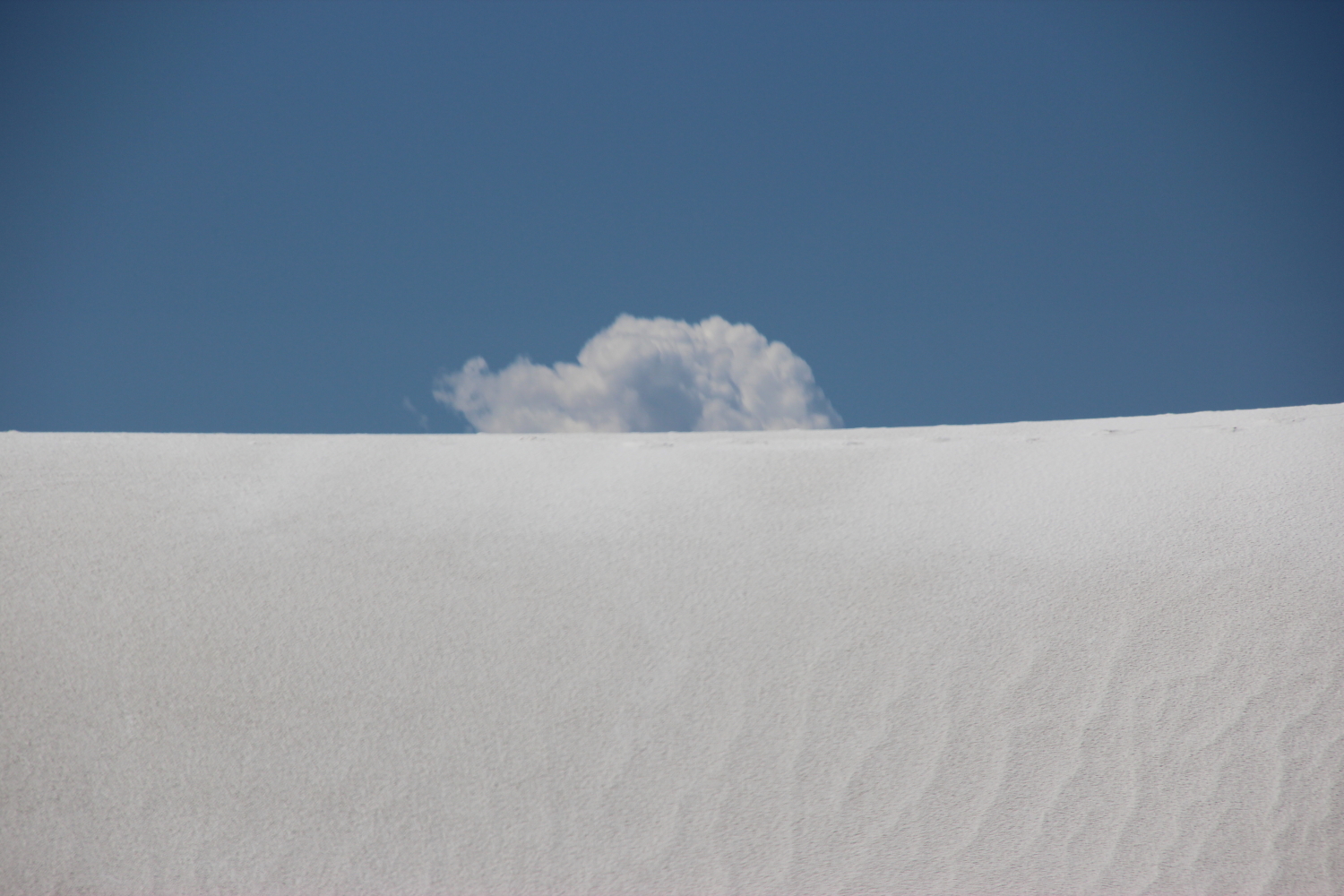
White Sands, NM
* an ongoing series of quotations – mostly from artists, to artists – that offers wisdom, inspiration, and advice for the sometimes lonely road we are on.
If you look at the work of an artist over a lifetime there is always transformation. Some hit a lively place early and then seem to lose it later. Others find that place progressively throughout their life; others still, find it late. But regardless, they are all learning to isolate the poetic place within them. That focus on the poetic in our own work increases our appreciation of the beauty around us, increases our growth, and increases our divine connection.
One thing you see in many artists’ work is that as they continue over the decades to translate their experience of the poetic into form, they learn to communicate better. They strip away all the extraneous stuff and artistic baggage they had. They say more with less.
The problem is seldom that what we truly, deeply experience is too simple to simplify. There is power in stripping everyhing away to reveal the vision. That’s what takes a lifetime.
Ian Roberts in Creative Authenticity: 16 Principles to Clarify and Deepen Your Artistic Vision
Comments are welcome!
Q: What is it about soft pastel that you find so intriguing that you use it as your primary fine art medium?

Some of Barbara’s pastels
A: For starters it’s the medium that I fell in love with many years ago. I recently read this article online, “What is Pastel?” by Mike Mahon, and will quote it because it neatly sums up what I love about working with pastel.
Pastel is the most permanent of all media when applied to conservation ground and properly framed. Pastel has no liquid binder that may cause it to oxidize with the passage of time as oftentimes happens with other media.
In this instance, Pastel does not refer to pale colors, as the word is commonly used in cosmetic and fashion terminology. The pure, powdered pigment is ground into a paste with a minimum amount of gum binder, rolled into sticks and dried. The infinite variety of colors in the Pastel palette range from soft and subtle to hard and brilliant.
An artwork is created by stroking the stick of dry pigment across an abrasive ground, embedding the color in the “tooth” of the ground. If the ground is completely covered with Pastel, the work is considered a Pastel painting; whereas, leaving much of the ground exposed produces a Pastel sketch. Techniques vary with individual artists. The Pastel medium is favored by many artists because it allows a spontaneous approach. There is no drying time, therefore, no change in color occurs after drying as it does in other media.
Did you know that a particle of Pastel pigment seen under a microscope looks like a diamond with many facets? It does! Therefore, Pastel paintings reflect light like a prism. No other medium has the same power of color or stability.
Historically, Pastel can be traced back to the 16th century. Its invention is attributed to the German painter, Johann Thiele. A Venetian woman, Rosalba Camera, was the first to make consistent use of Pastel. Chardin did portraits with an open stroke, while La Tour preferred the blended finish. Thereafter, a galaxy of famous artists—Watteau, Copley, Delacroix, Millet, Manet, Renoir, Toulouse Lautrec, Vuillard, Bonnard, Glackens, Whistler, Hassam, William Merritt Chase—used Pastel for a finished work rather than for preliminary sketches.
Pastels from the 16th century exist today, as fresh as the day they were painted. Edgar Degas was the most prolific user of Pastel and its champion. His protégé, Mary Cassat, introduced Pastel to her friends in Philadelphia and Washington, and thus to the United States. In the Spring of 1983, Sotheby Parke Bernet sold at auction, two Degas Pastels for more than $3,000,000 each! Both Pastels were painted about 1880.
Note: Do not confuse Pastel with “colored chalk.” Chalk is a porous, limestone substance impregnated with dyes, whereas, Pastel is pure pigment—the same as is used in other permanent painting media.
Today, Pastel paintings have the stature of oil and watercolor as a major fine art medium. Many of our most renowned, living artists have distinguished themselves in Pastel and have enriched the art world with this beautiful medium.
So knowing all this, I often wonder, why don’t more artists use pastel? Is it because framing is a big issue? Works on paper need to be framed and pastel paintings have unique problems (see my April 27, 2013 blog post). Second only to the cost of maintaining a studio in New York City, frames are my single largest business expense. Sometimes I am grateful that pastel is a very slow medium. I typically finish 4 or 5 paintings in a year, which means I only have to pay for 4 or 5 frames!
Comments are welcome!
Pearls from artists* # 26
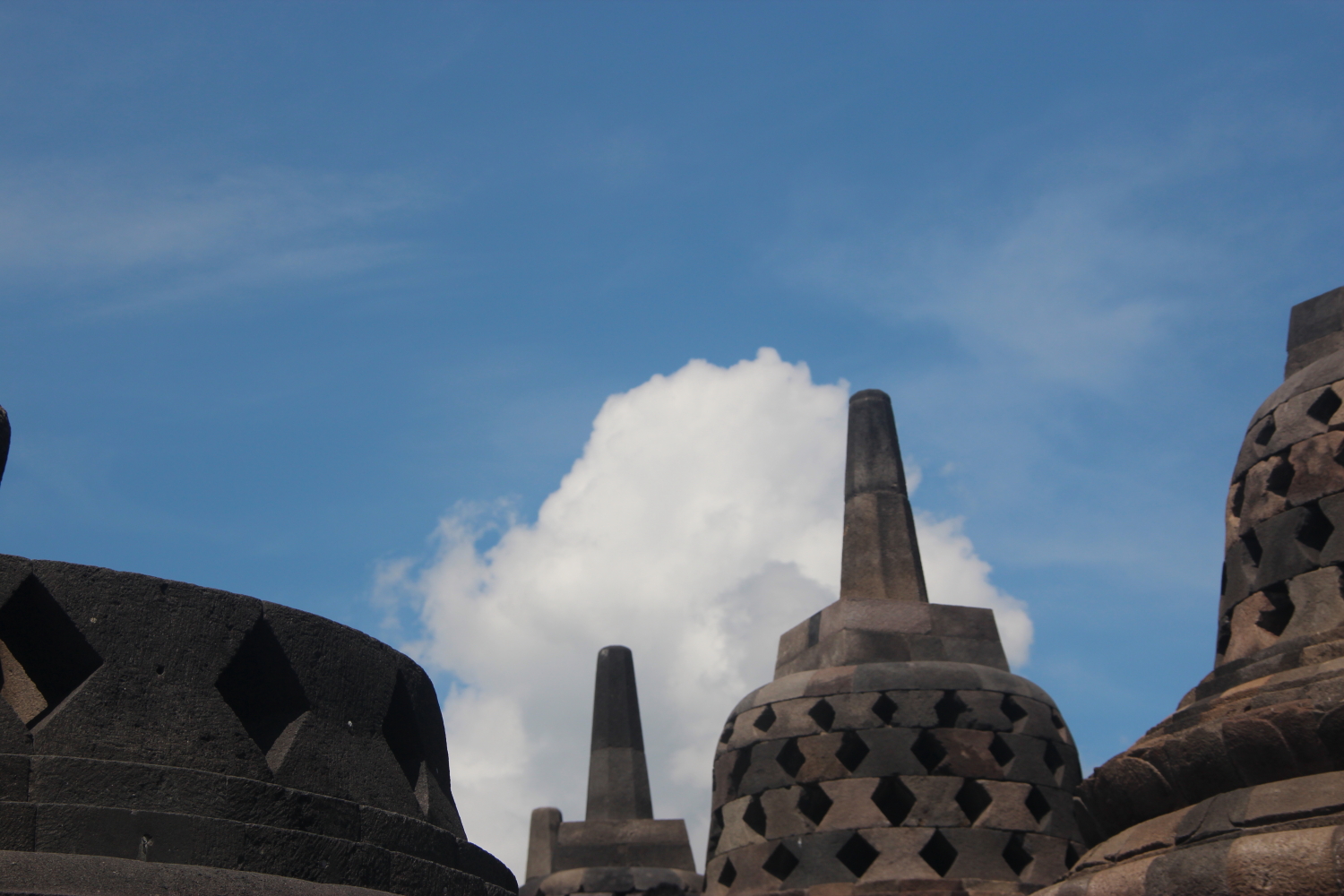
Borobudur, Java
* an ongoing series of quotations – mostly from artists, to artists – that offers wisdom, inspiration, and advice for the sometimes lonely road we are on.
Beauty is made up of relationships. It derives its prestige from a specific metaphysical truth, expressed through a host of balances, imbalances, waverings, surges, halts, meanderings, and straight lines, the peculiar quality of which, as a whole, add up to a marvelous number, apparently born without pain. Its distinguishing mark is that it judges those who judge it, or imagine that they possess power to do so. Critics have no hold over it. They would have to know the minutest details of how it works, and this they cannot do, because the mechanics of beauty are secret. Hence the soil of an age is strewn with a litter of cogs that criticism dismantles in the same way as Charlie Chaplin dismantles an alarm clock after opening it like a tin can. Criticism dismantles the cogs. Unable to put them back together or understand the relationships that give them life, it discards them and goes on to something else. And beauty ticks on. Critics cannot hear it because the roar of current events clogs the ears of their souls.
Jean Cocteau in Andre Bernard and Claude Gauteur, editors, Jean Cocteau: The Art of Cinema
Comments are welcome!
Pearls from artists* # 21

Apartment building, New York City
* an ongoing series of quotations – mostly from artists, to artists – that offers wisdom, inspiration, and advice for the sometimes lonely road we are on.
It is the beginning of a work that the writer throws away.
A painting covers its tracks. Painters work from the ground up. The latest version of a painting overlays earlier versions, and obliterates them. Writers, on the other hand, work from left to right. The discardable chapters are on the left. The latest version of a literary work begins somewhere in the work’s middle, and hardens toward the end. The earlier version remains lumpishly on the left; the work’s beginning greets the reader with the wrong hand. In those early pages and chapters anyone may find bold leaps to nowhere, read the brave beginnings of dropped themes, hear a tone since abandoned, discover blind alleys, track red herrings, and laboriously learn a setting now false.
Several delusions weaken the writer’s resolve to throw away work. If he has read his pages too often, those pages will have a necessary quality, the ring of the inevitable, like poetry known by heart; they will perfectly answer their own familiar rhythms. He will retain them. He may retain those pages if they possess some virtues, such as power in themselves, though they lack the cardinal virtue, which is pertinence to, and unity with, the book’s thrust. Sometimes the writer leaves his early chapters in place from gratitude; he cannot contemplate them or read them without feeling again the blessed relief that exalted him when the words first appeared – relief that he was writing anything at all. That beginning served to get him where he was going, after all; surely the reader needs it, too, as groundwork. But no.
Every year the aspiring photographer brought a stack of his best prints to an old, honored photographer, seeking his judgment. Every year the old man studied the prints and painstakingly ordered them into two piles, bad and good. Every year the old man moved a certain landscape print into the bad stack. At length he turned to the young man: “You submit this same landscape every year, and every year I put it in the bad stack. Why do you like it so much?” The young photographer said, “Because I had to climb a mountain to get it.”
Annie Dillard, The Writing Life
Comments are welcome!


 barbararachkoscoloreddust.com