Blog Archives
Pearls from artists* # 404

“Broken,” soft pastel on sandpaper, 38″ x 58″ image, 50″ x 70″ framed
* an ongoing series of quotations – mostly from artists, to artists – that offers wisdom, inspiration, and advice for the sometimes lonely road we are on.
Before we can even think of ecological rescue, global disarmament, or economic reform, we must find a way back to what science fiction writers call our homeworld. The term encompasses more than the biosphere; it also includes our homes, our places of work, our communities, families, friends, and lovers. It includes our technologies and tools, the physical body, the sensible soul, and the unconscious psyche. We need a faith to restore our capacity to feel, to affect and be affected with the same passionate intensity as our forebears, whose powers of feeling astound us so in the records and art of the past. The death of affect, to borrow a phrase from JG Ballard, is the true catastrophe of our spectral age, our spiritual Hiroshima. It makes questions such as whether life’s riddles are answered at the Vatican, in Tibet, or by the Large Hadron Collider utterly meaningless, since it removes the ground we need to pose such questions in the first place. Neither religion nor science can give us back the ground. Only the imagination can. Only art can mend the rupture of the soul and the world, the body and the earth.
J.F. Martel in Reclaiming Art in the Age of Artifice: A Treatise, Critique, and Call to Action
Comments are welcome!
Q: What do you do when you are feeling undervalued and/or misunderstood as a visual artist?

On a favorite walk
A: After more than three decades as a professional artist, I wish I could say this rarely happens, but that’s not the case. People say dumb things to artists all the time and I’m no exception. Often I tune it out, remembering the title of a terrific book by Hugh MacLeod called, “Ignore Everybody and 39 Other Keys to Creativity.” Come to think of it, it’s time for a re-read of Hugh’s wise book.
But ignoring people is not always possible. So I might take a break from the studio, go for a long walk along the Hudson River, compose photographs, think about what’s bothering me, and try to refocus and remember all the positive things that art-making has brought to my life. I always feel better after this simple ritual.
Here’s another helpful quote that I read recently and try to remember:
‘’An artist cannot fail; it is a success to be one.” – Charles Cooley
I wonder, what do you do?
Comments are welcome!
Pearls from artists* # 377
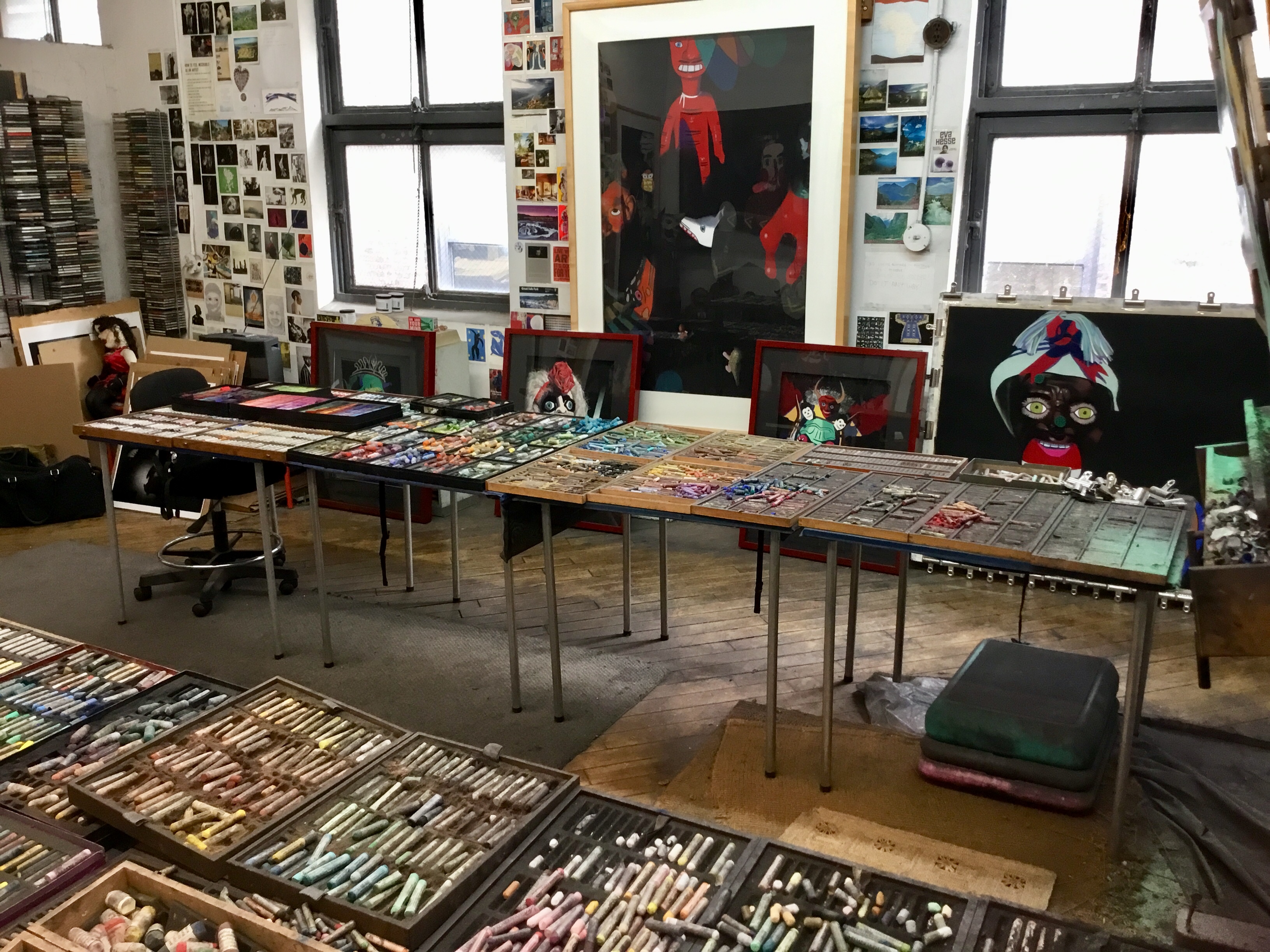
Barbara’s studio
* an ongoing series of quotations – mostly from artists, to artists – that offers wisdom, inspiration, and advice for the sometimes lonely road we are on.
Life for an artist, any artist, was difficult. There were few rewards other than the most important, which was satisfying one’s need to create. But in the art world of galleries, collections, and museums that the avant-garde artists in New York would inherit in the late 1940s, the difficulties experienced by the men who painted and sculpted would be nothing compared to those of the women. Society might mock the men’s work and disparage them for being “bums,” but at least they were awarded the dignity of ridicule. Women had to fight with every fiber of their being not to be completely ignored. In a treatise on men and women in America published at the start of the war, author Pearl S. Buck wrote,
The talented woman… must have, besides their talent, an unusual energy which drives them… to exercise their own powers. Like talented men, they are single-minded creatures, and they can’t sink into idleness nor fritter away life and time, nor endure discontent. They possess that rarest gift, integrity of purpose… Such women sacrifice, without knowing they do, what many other women hold dear – amusement, society, play of one kind or another – to choose solitude and profound thinking and feeling, and at last final expression.
“To what end?” another woman might ask. To the end, perhaps… of art – art which has lifted us out of mental and spiritual savagery.”
Mary Gabriel in Ninth Street Women
Comments are welcome!
Pearls from artists* # 374
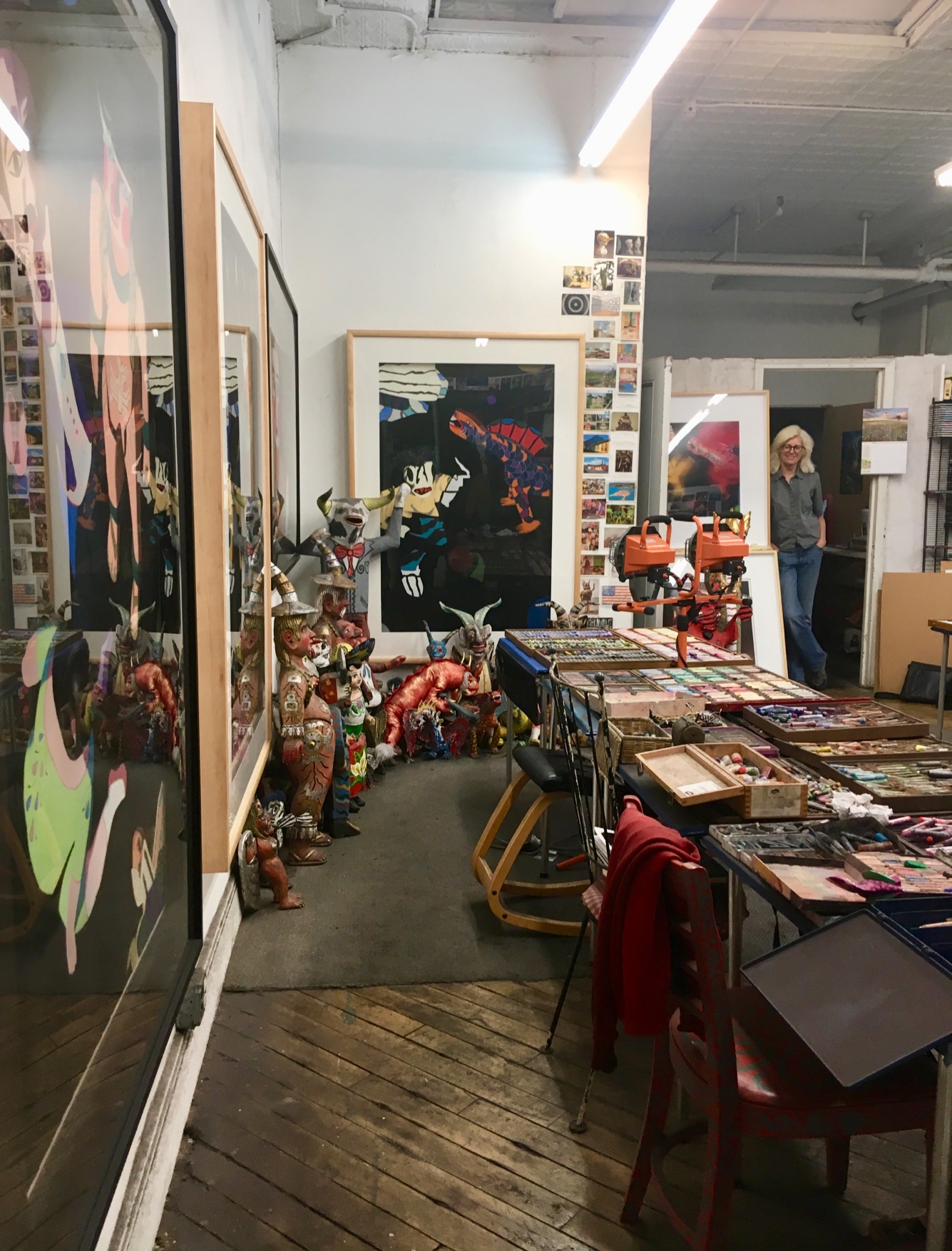
Barbara’a studio
* an ongoing series of quotations – mostly from artists, to artists – that offers wisdom, inspiration, and advice for the sometimes lonely road we are on.
Finally, [John] Graham said, of all the arts, painting was the most difficult because one false move on a canvas could mean the difference between a great painting and a failure. A writer could always resurrect a word, but a line or a shape was so ephemeral that, once changed, it was almost always lost for good. “To create life one has to love. To create a great work of art one has to love truth with the passion of a maniac. If society does not perceive this love, perhaps humanity will.” …The artists… came away… feeling as though they were not aberrations but part of a long tradition of individuals who had ignored fashion to create culture.
Mary Gabriel in Ninth Street Women
Comments are welcome!
Pearls from artists* # 364
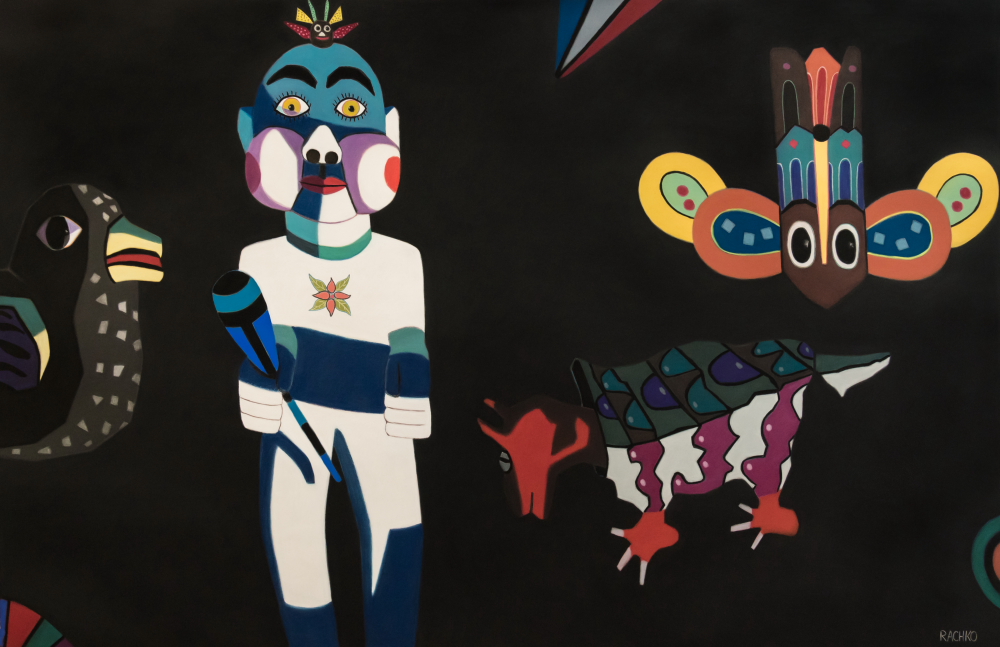
“White Star,” soft pastel on sandpaper, 38″ x 58″
* an ongoing series of quotations – mostly from artists, to artists – that offers wisdom, inspiration, and advice for the sometimes lonely road we are on.
If we are left unmoved by a painting of the Virgin, it is likely because the artist was unmoved in the painting of her. The subject matter is mostly irrelevant; it is important only as a vehicle for the artist’s attention. Authenticity comes from how deeply the artist felt. And this is the key to how much silence, how much consciousness or attention, the art contains.
… subject matter, if the artist is even using it, is just an armature for the artist to engage his intensity of feeling. It is the quality of your attention that influences how you see and how deeply you feel. Different artists have affinities for different subject matter as a way into expressing themselves deeply. And that depth is the quality, we, the viewers, respond to. It is what we continue to respond to over the centuries in great works of art. The fact that things last, that we continue to admire them, is in the end a good indicator of their quality, of their silence. Art museums therefore, have little nodes of silence nestling in their galleries. They are filled with, to use André Malraux’s expression, “the voices of silence.”
Ian Roberts in Creative Authenticity: 16 Principles to Clarify and Deepen Your Artistic Vision
Comments are welcome!
Pearls from artists* # 330
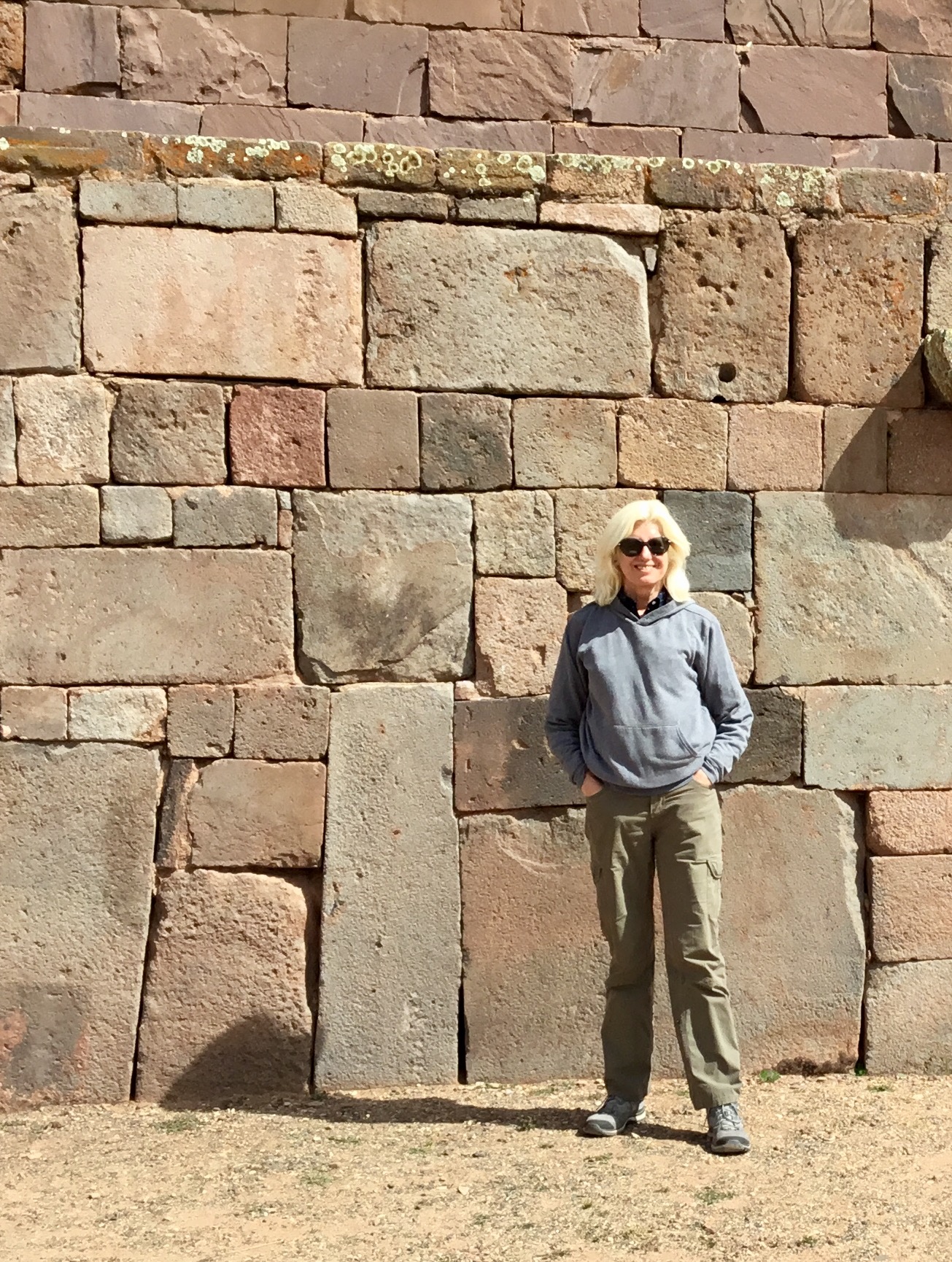
At Tiwanaku, Bolivia
*an ongoing series of quotations – mostly from artists, to artists – that offers wisdom, inspiration, and advice for the sometimes lonely road we are on.
To take the time to look and analyze the city or a building or an object is of the same nature as owning it, except that ownership is not a satisfactory feeling – but understanding is a form of complete assimilation. To really work and produce, there must be integration of your work in your life, or the integration of your life in your work.
Louise Bourgeois: Destruction of the Father, Reconstruction of the Father: Writings and interview 1923-1997, edited and with texts by Marie-Laure Bernadac and Hans-Ulrich Obrist
Comments are welcome!
Pearls from artists* # 316
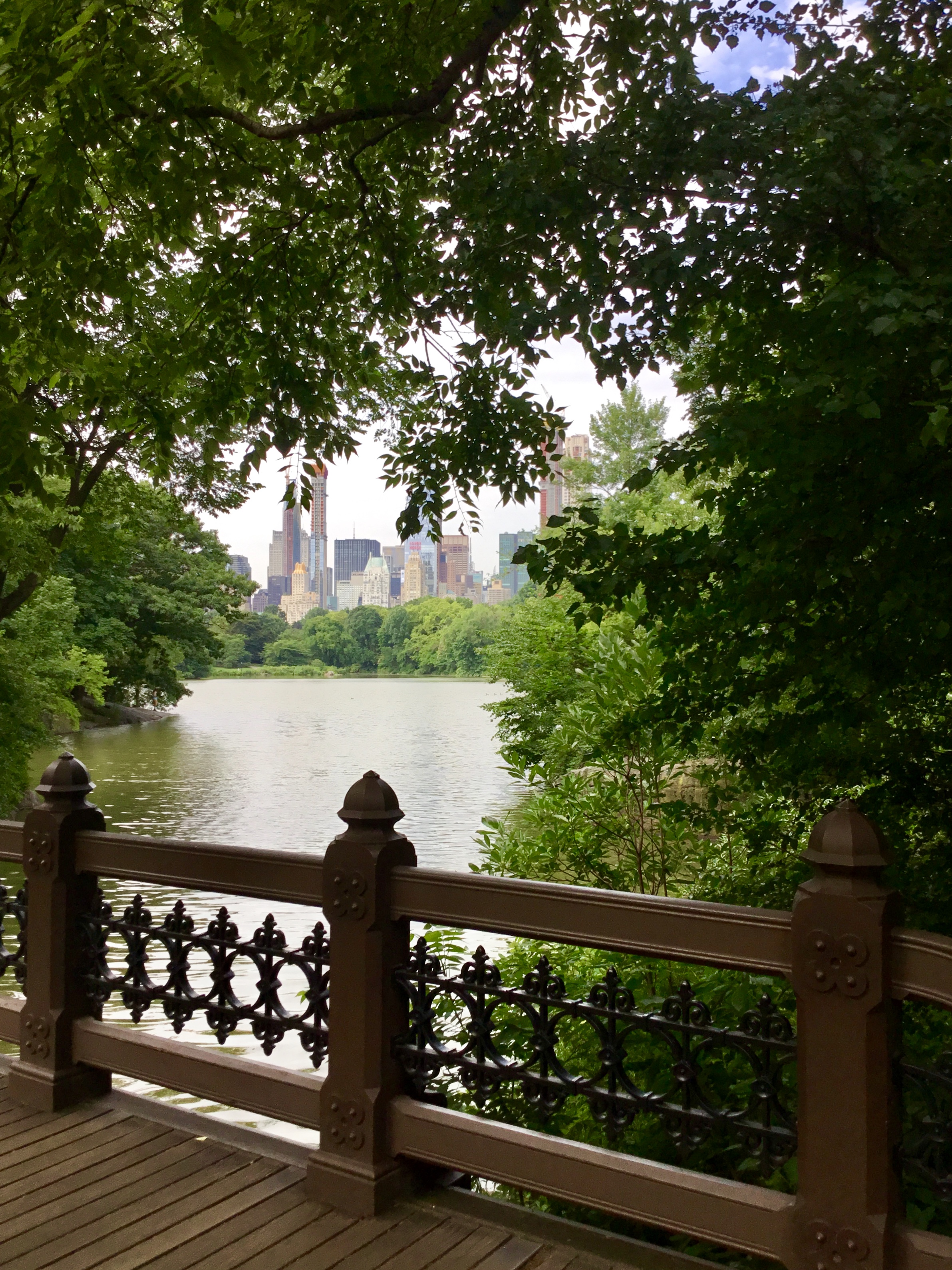
Central Park, NYC
*an ongoing series of quotations – mostly from artists, to artists – that offers wisdom, inspiration, and advice for the sometimes lonely road we are on.
Works of art are of an infinite loneliness and with nothing so little to be reached as with criticism. Only love can grasp and hold and be just toward them. Consider yourself and your feeling right every time with regard to every such argumentation, discussion, or introduction; if you are wrong after all, the natural growth of your inner life will lead you slowly and with time to other insights. Leave to your opinions their own quiet undisturbed development, which, like all progress, must come from deep within and cannot be pressed or hurried into anything. Everything is gestation and then bringing forth. To let each impression and each germ of a feeling come to completion wholly in itself, in the dark, in the inexpressible, the unconscious, beyond the reach of one’s own intelligence, and await with deep humility and patience the birth-hour of a new clarity: that alone is living the artist’s life: in understanding as in creating.
There is also no measuring with time, no year matters, and ten years are nothing. Being an artist means not reckoning and counting, but ripening like the tree which does not force its sap and stands confident in the storms of spring without the fear that after them may come no summer. It does come. But it comes only to the patient, who are there as though eternity lay before them, so unconcernedly still and wide. I learn it daily, learn it with pain to which I am grateful: patience is everything!
Rainer Maria Rilke, Letters to a Young Poet, Translation by M.D. Herter Norton
Comments are welcome!
Pearls from artists* # 286
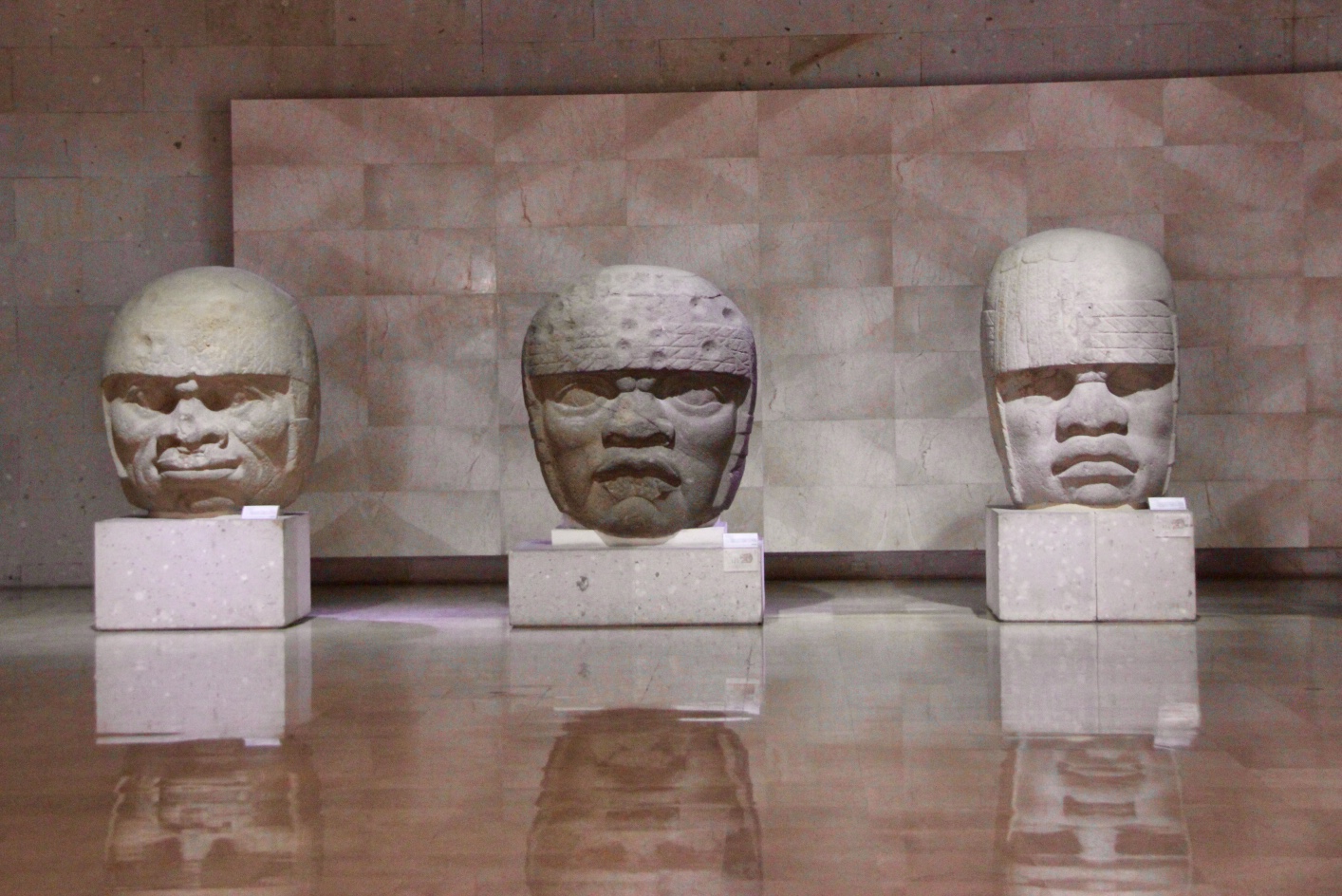
Museo de Antropología de Xalapa
*an ongoing series of quotations – mostly from artists, to artists – that offers wisdom, inspiration, and advice for the sometimes lonely road we are on.
All real art is or was modern in its time,
daring and new,
demonstrating a constant change in seeing and feeling.
If revival had been a perpetual virtue,
we would still live in caves and earth pits.
In art, tradition is to create,
not to revive.
Joseph Albers quoted in Ruins in Reverse by Lauren Hinkson in Joseph Albers in Mexico
Comments are welcome!
Q: Do you lose yourself in your work?

Barbara at work
A: Of course! When I am having a productive day in the studio, I am completely present and focused, fully immersed in solving technical problems and trying to improve the painting on my easel. I barely notice the time and have to remind myself to take a break or stop for lunch. Nothing else exists except the painting and my relationship with it. The rest of life completely falls away from my consciousness.
I believe most artists regularly experience this feeling of ‘flow.’ It is a state of being that is inherent and necessary to creative work of all kinds.
Comments are welcome!
Pearls from artists* # 247
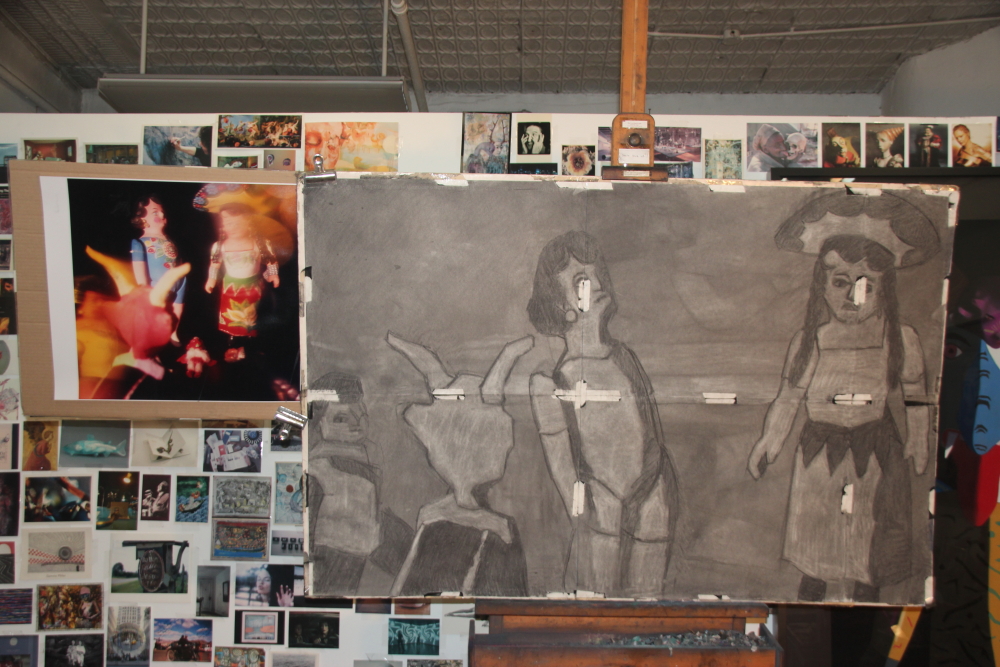
A recent charcoal study
* an ongoing series of quotations – mostly from artists, to artists – that offers wisdom, inspiration, and advice for the sometimes lonely road we are on.
Studies made in the open air are different from pictures that are destined to be shown in public. The latter, in my opinion, result from the studies, but they may, or even must, differ a great deal from them. For in the picture the painter rather gives a personal impression, while in a study his aim is simply to analyze a bit of nature – either to make his idea or conception more correct, or to find a new idea; for example, the studies of Mauve, which I myself like very much, precisely because of their soberness and because they are done so faithfully. Still they miss a certain charm, which the pictures that result from them possess in such a high degree.
I believe one gets more sound ideas when thoughts arise from direct contact with things than when one looks at them with the set purpose of finding certain facts in them. It is the same with the question of a colour scheme. There are colours that harmonize wonderfully, but I try my best to paint a subject as I see it before I set to work to make it as I feel it. Yet feeling is a great thing, and without it one would not be able to do anything. Thus, studies belong more to the studio than among the pubic.
Dear Theo: The Autobiography of Vincent Van Gogh, edited by Irving Stone
Comments are welcome!


 barbararachkoscoloreddust.com