Blog Archives
Q: You started the Bolivianos series in 2017. It has been 8 years since you created The Champ. This endeavor of focussing on a series for almost a decade’s timeline shows that you embody stability as against many artists who tend to hop on to the next inspiration they find. How has discipline, stability, focus and punctuality defined your works apart from being inspired by Bolivian culture for the series Bolivianos? (Question from Vedica Art Studios and Gallery)
A: My first series, Domestic Threats, lasted fifteen years, and my second, Black Paintings, lasted ten. Stability and related qualities are likely natural parts of my personality, reinforced by my previous professional life. My prior careers as a Navy Commander, commercial pilot, and Boeing-727 Flight Engineer undoubtedly helped develop discipline, stability, focus, and punctuality. Details matter deeply to me; as a Naval Officer for twenty-one years, “attention to detail” was paramount. From my earliest days as an artist, I have been meticulous and dedicated to inventing new techniques and refining the craft of soft pastel.
I dislike wasting precious time. As a goal-oriented person, I continually strive to accomplish as much as possible. These qualities were influenced by my Navy career and further deepened by the tragic loss of my husband onboard the plane that crashed into the Pentagon on 9/11. I understand firsthand that life can change in an instant. Whenever I finish one task, I immediately look around and ask, “OK, what’s next?” I devote my studio time to pushing myself and pastel to new technical heights. There’s always more to accomplish as an artist!
Comments are welcome!
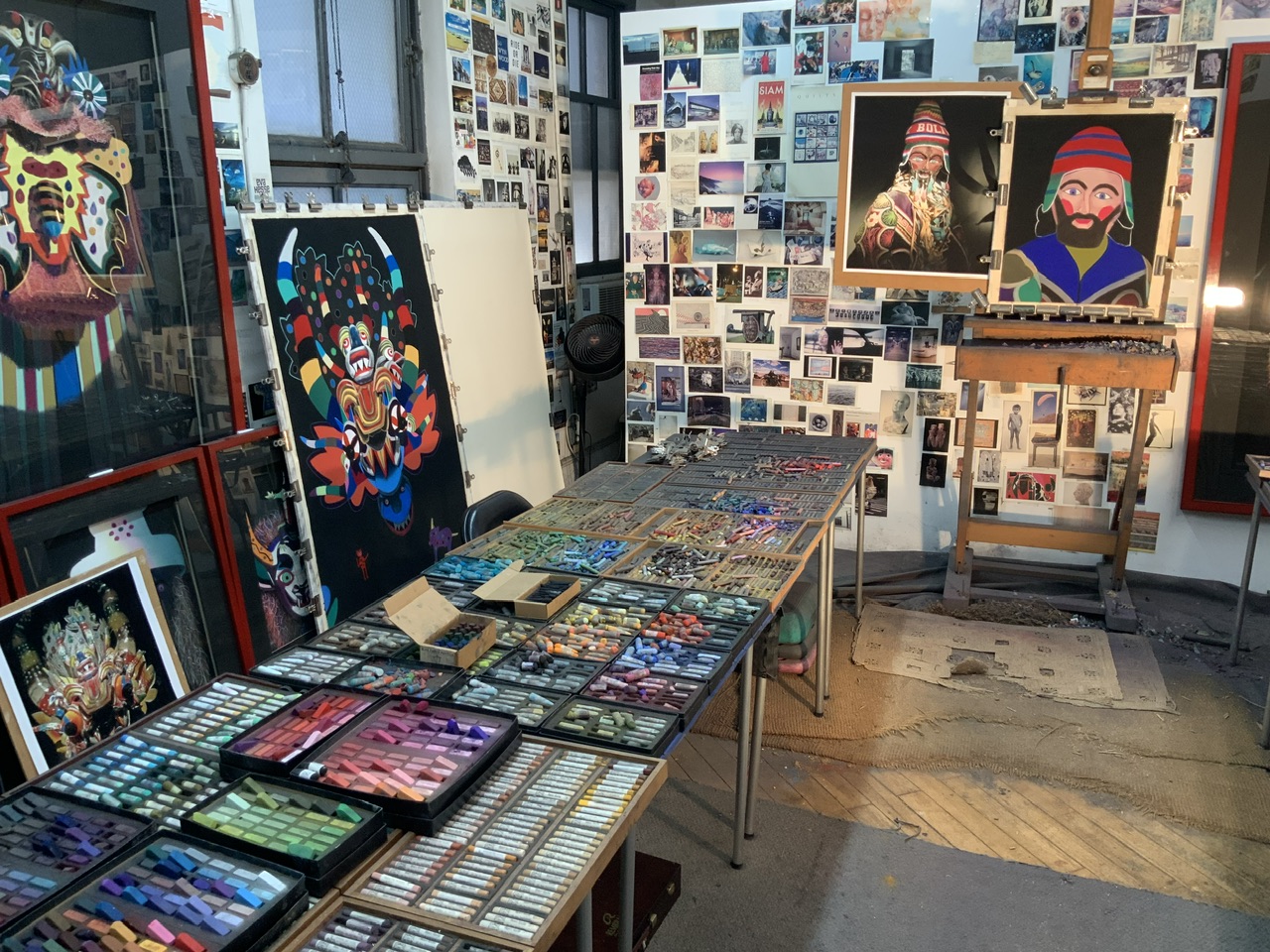
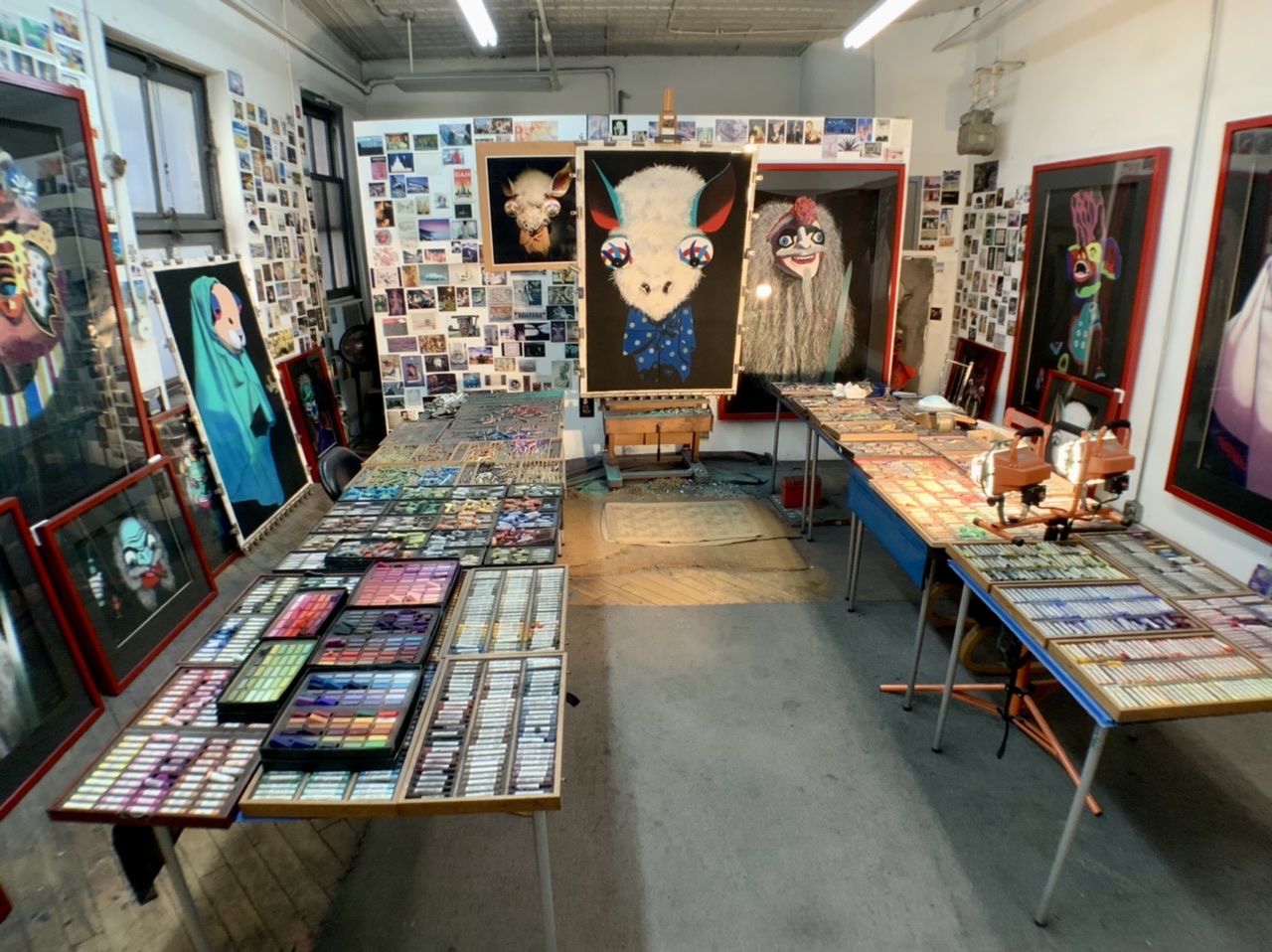
Q: Why do you have so many pastels?

Barbara’s Studio
A: Our eyes can see infinitely more colors than the relative few that are made into pastels. When I layer pigments onto the sandpaper substrate, I mix new colors directly on the paper. The short answer is, I need lots of pastels so that I can make new colors.
I have been working exclusively with soft pastel for 40 years. Whenever I feel myself getting into a rut in how I select and use my colors, I look around for new materials to try. Fortunately, new brands of soft pastels are continually coming onto the market. There are pastels that are handmade by artists – I love discovering these – and new colors manufactured by well-known pastel companies. Some sticks of soft pastel are oily, some are buttery, some more powdery, some crumble easily, some are more durable. Each one feels distinct in my hand.
Furthermore, they each have unique mixing properties. It’s an under-appreciated science that I stumbled upon (or maybe I invented it, I’m not sure since I cannot know how other pastel painters work). In this respect soft pastel is very different from other paint media. Oil painters, for example, need only a few tubes of paint to make any color in the world. I don’t go in much for studying color theory as a formal discipline. If you want to really understand and learn how to use color, try soft pastel and spend 10,000+ hours (the amount of time Malcolm Gladwell says, in his book, “Outliers,” that it takes to master a skill) figuring it all out for yourself!
Comments are welcome.
Pearls from artists* # 647

Barbara’s Studio
*an ongoing series of quotations – mostly from artists, to artists – that offers wisdom, inspiration, and advice for the sometimes lonely road we are on.
My life is a collage, with time cutting and rearranging the materials and laying them down, overlapping and contrasting, sometimes with the fresh shock of a surrealist painting. I wonder if traditional perspective is a necessary discipline for the art student, for over the years my life has taken on its own pattern and formed its own rules, adapting events and chronology in the sifting process of memory. As a mature artist, I can take liberties with perspective. We are not made of straight lines. As Picabia said: ‘Our heads are round so that thoughts can change direction.’
Eileen Agar in A Look at My Life
Comments are welcome!
Pearls from artists* # 631

With “Maestro,” soft pastel on sandpaper, 35” x 28.5” framed
*an ongoing series of quotations – mostly from artists, to artists – that offers wisdom, inspiration, and advice for the sometimes lonely road we are on.
Selling your art is harder than creating it. Every artist dreams of being able to sell his/her art and make a considerable profit from it and/or build a business based on art. This would give artists the opportunity to make art full-time. However, the process is neither easy nor quick. It requires determination, discipline, and consistency. The idea of becoming a successful artist overnight almost doesn’t exist. All the artists who seem to be “overnight successes” put in a lot of hard work for years.
Dr. Bianca Turner in The Business of Art: A Guide for Visual Artists to Become Successful Entrepreneurs
Comments are welcome!
Pearls from artists* # 623

The Studio
*an ongoing series of quotations – mostly from artists, to artists – that offers wisdom, inspiration, and advice for the sometimes lonely road we are on.
Jealousy? Hmmm. Jealousy links up with competition. It’s hard to compete, really compete, in the art world. That’s why award ceremonies are a little suspect. Athletes can compete. I don’t know how much you can really compete as an artist. You can compete with yourself.
You are an explorer. You understand that every time you go into the studio you are after something that does not yet exist. Maybe it’s the same for a runner. I don’t know. But with running, or swimming, or gymnastics, or tennis, the achievement is measurable. Forget about competition. Rather, commit yourself to find out the true nature of your art. How does it really work; what’s the essence of it? Go for that thing that no one can teach you. Go for that communion, that real communion with your soul, and the discipline of expressing that communion with others. That doesn’t come from competition. That comes from being one with what you are doing. It comes from concentration, and from your own ability to be fascinated endlessly with the story, the song, the jump, the color you are working with.
I know this sounds a little monkish or even sort of “holier than thou,” but I really do believe it. And that said, jealousy is a human sentiment. Few of us are above it. John Lahr, a writer, told me that the major emotion in Los Angeles is envy. I have to say he’s probably right. And a lot of it has to do with how close or far from an Academy Award one is. And LA, the capital of smoke and mirrors, would have sone believe that the award is just a step away. When you drive down Hollywood Boulevard, some of the dreamers look as though the dream ate them alive.
Anna Deavere Smith in Letters to a Young Artist: Straight-Up Advice on Making a Life in the Arts
Comments are welcome!
Pearls from artists* # 596

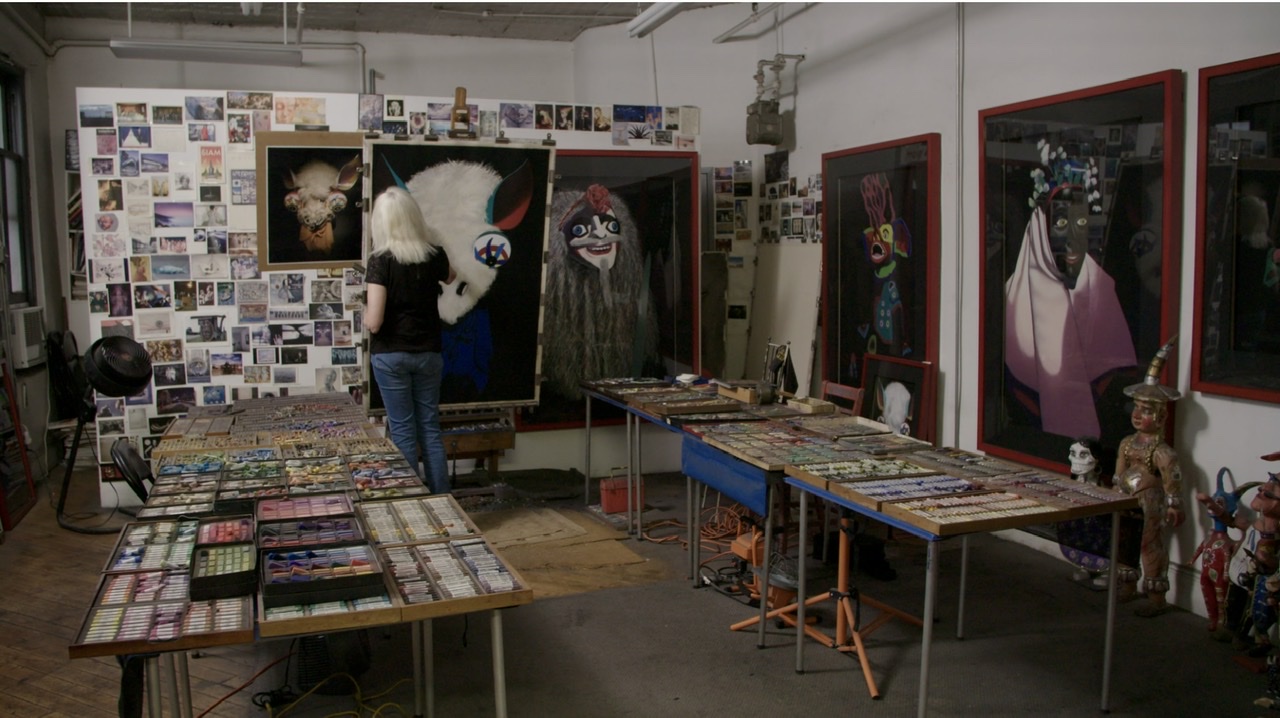
Film still from “Barbara Rachko: True Grit,” Directed by Jennifer Cox, Moto Films LLC
*an ongoing series of quotations – mostly from artists, to artists – that offers wisdom, inspiration, and advice for the sometimes lonely road we are on.
Being an artist is very hard work. Not only do you have to constantly develop your discipline, but if you have a desire to make a living, you have to be a good businessperson.
Agents, business managers, etc., etc., are not the authors of your career. They make suggestions. They are a part of your research team. You are the author. You are the center of your career. You have to run the show. I hope your show is about more than gold digging. I hope your show is about becoming the most engaging, enchanting, magical person that you can be – through your art. Art is ultimately transcendent. That’s a fact.
Anna Deavere Smith in Letters to a Young Artist: Straight-Up Advice on Making a Life in the Arts – For Actors, Performers, Writers, and Artists of Every Kind
Comments are welcome!
Pearls from artists* # 550

In the studio
*an ongoing series of quotations – mostly from artists, to artists – that offers wisdom, inspiration, and advice for the sometimes lonely road we are on.
Be more than ready. Be present in your discipline. Remember your gift. Be grateful for your gift and treat it like a gift. Cherish it, take care of it, and pass it on. Use your time to bathe yourself in that gift. Move your hand across the canvas. Go to museums. Make this into an obsession.
… what you are will show, ultimately. Start now, every day, becoming in your actions, your regular actions, what you would like to become in the bigger scheme of things.
Anna Deveare Smith in Letters to a Young Artist: Straight Up Advice on Making a Life in the Arts – For Actors, Performers, Writers, and Artists of Every Kind
Comments are welcome!
Pearls from artists* # 548
*an ongoing series of quotations – mostly from artists, to artists – that offers wisdom, inspiration, and advice for the sometimes lonely road we are on.
We who work in the arts are at risk of being in a popularity contest rather than a profession. If that fact causes you despair, you should probably pick another profession. Your desire to communicate must be bigger than your relationship to these chaotic and unfair realities. Ideally, we must be even more ‘professional’ than lawyers, doctors, accountants, hairdressers. We have to create our own standards of discipline.
All of the successful artists I know are very disciplined and very organized. Even if they don’t look organized, they have their own order.
Anna Deavere Smith in Letters to a Young Artist: Straight Up Advice on Making a Life in the Arts – for Actors, Performers, Writers, and Artists of Every Kind
Comments are welcome!
Pearls from artists* # 544
*an ongoing series of quotations – mostly from artists, to artists – that offers wisdom, inspiration, and advice for the sometimes lonely road we are on.
Creativity is human potential made manifest. But what is talent? The dictionary (in this case Webster’s New World Dictionary) informs us that talent is any natural ability, power, or endowment, and especially a superior, apparently natural ability in the arts or sciences or in the learning or doing of anything.
This definition is revealing on several counts. First of all, it defines talent in terms of abilities and powers. It suggests that an artist can answer the question “Am I talented?” In the affirmative if he can point to certain endowments that he possesses.
But which ones should be point to? What are the important ones in his art discipline? How many of them does he need to do good work? Do they all matter equally? Which, if any, are absolutely necessary? How much of a desired ability does he need – how great a vocal range, how long a leap, how fine a hand as a draftsman?
Eric Maisel in A Life in the Arts: Practical Guidance and Inspiration for Creative and Performing Artists
Comments are welcome!
Pearls from artists* # 525

* an ongoing series of quotations – mostly from artists, to artists – that offers wisdom, inspiration, and advice for the sometimes lonely road we are on.
… this reflects the inner necessity of the arts, the creative spirit’s determination to make something that can stand on its own, precisely because it’s rooted in rules, systems, and processes that are immune to the vagaries of politics, society, and day-to-day life. It’s the discipline of art that frees the artist to go public with the most private thoughts and feelings. No matter how the world encroaches on the artist, the artist in the act of creation must stand firm in the knowledge that art has its own laws and logic. These are the fundamentals of the creative vocation.
Jed Perl in Authority and Freedom: A Defense of the Arts
Comments are welcome!


 barbararachkoscoloreddust.com