Blog Archives
Pearls from artists* # 415
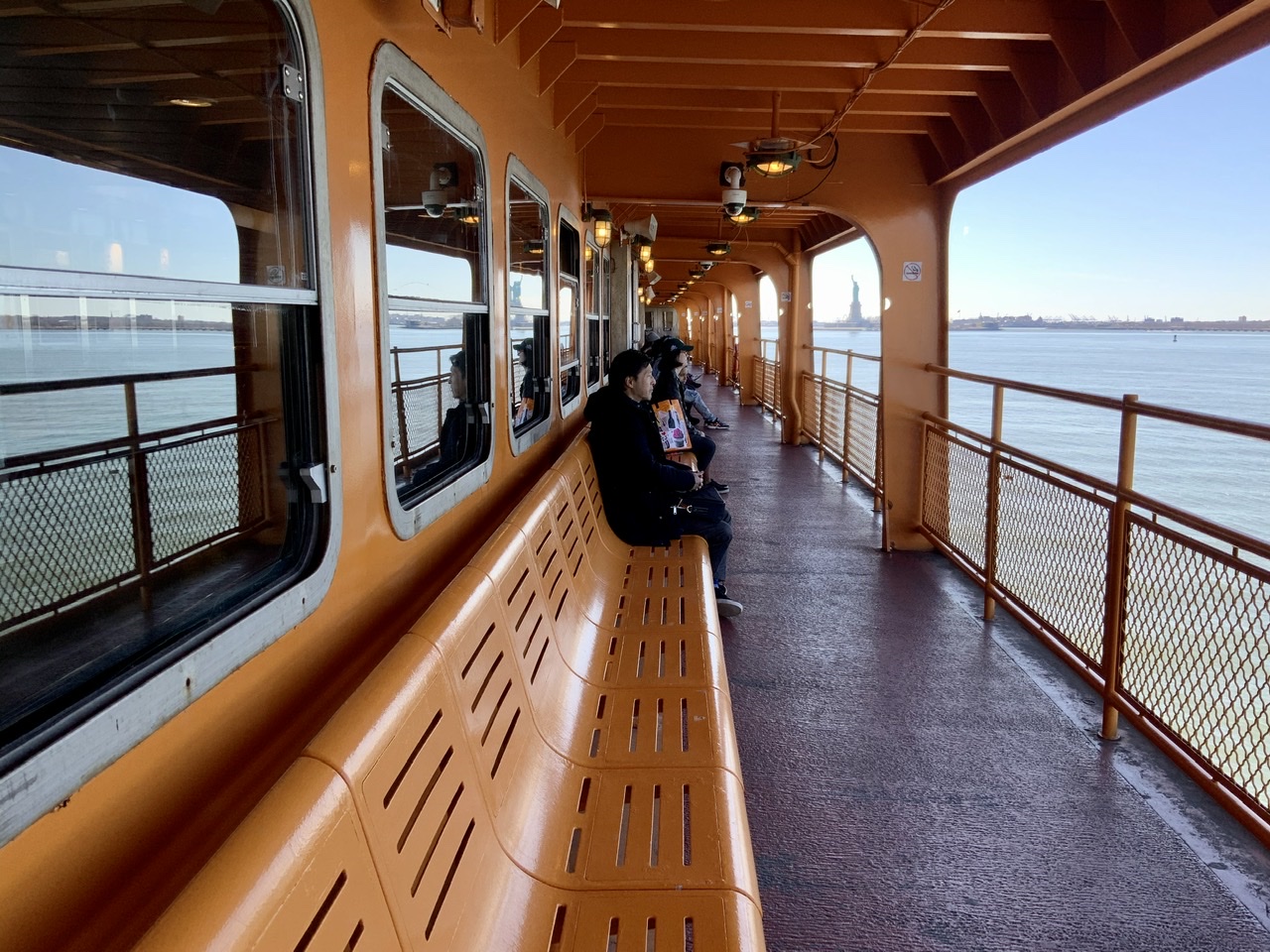
Staten Island Ferry
*an ongoing series of quotations – mostly from artists, to artists – that offers wisdom, inspiration, and advice for the sometimes lonely road we are on.
I like to think of myself (and each of you) as a high priest of memory protection. Using our cameras, we protect the memories of our subjects; we protect the memories we have while interacting with those subjects; we help to protect the memories of our audience who sees our work. This is truly a sacred calling, and one that deserves respect and a thoughtful approach.
Scott Bourne in Photo Therapy Motivation and Wisdom by Rick Sammon
Comments are welcome!
Pearls from artists* # 399
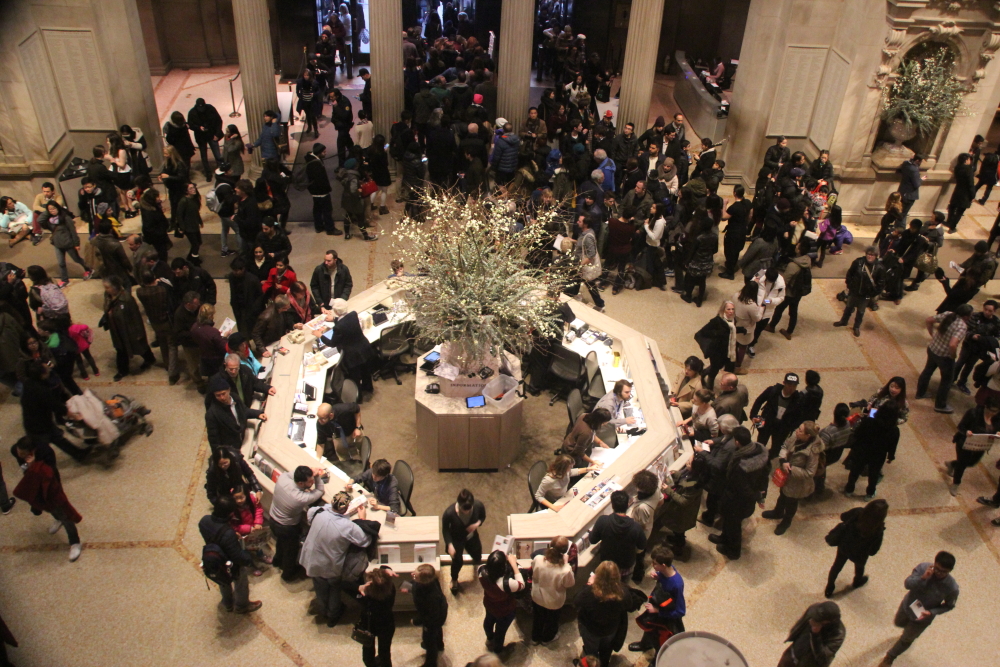
The Great Hall at the Met
* an ongoing series of quotations – mostly from artists, to artists – that offers wisdom, inspiration, and advice for the sometimes lonely road we are on.
Science is concerned with the general, the abstract, and the knowable. In contrast, art deals with the particular, the unknowable, the singular. This applies not just to the content of artistic works but also to the way this content is received. Even in the case of a film or concert attended by large numbers of people, the artistic experience remains fundamentally a solitary one. Each one of us lives the work alone. Whatever sense of togetherness accompanies the experience comes precisely from the fact that, faced with the singularity of the aesthetic moment, each percipient feels his aloneness before the radical mystery that enfolds us all. Wherever an act of creation is shared with others, then, there is individuation – not just for the author of the work but for the audience too. The singularity of art awakens us to our own singularity, and through it to the singularity in the Other. I have argued that artifice unifies by imposing an univocal image that replicates itself identically in each spectator. True art tears the spectator out of the mass of sameness, calling forth from the numberless crowd a new people and a new communion.
J.F. Martel in Reclaiming Art in the Age of Artifice: A Treatise, Critique, and Call to Action
Comments are welcome!
Pearls from artists* # 356
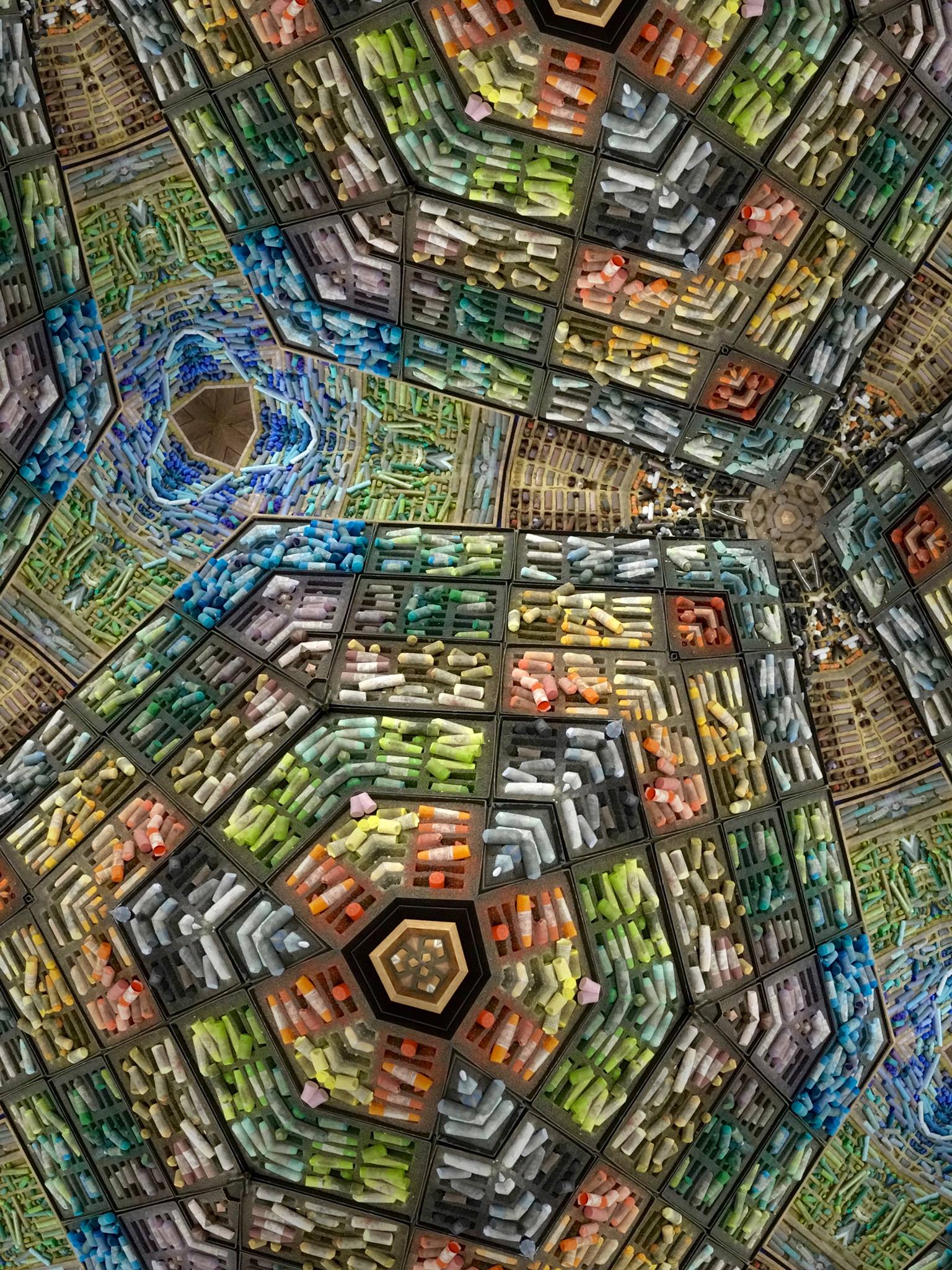
Some of Barbara’s pastels
*an ongoing series of quotations – mostly from artists, to artists – that offers wisdom, inspiration, and advice for the sometimes lonely road we are on.
Science is concerned with the general, the abstract, and the knowable. In contrast, art deals with the particular, the unknowable, the singular. This applies not just to the content of artistic works but also to the way this content is received. Even in the case of a film or concert attended by large numbers of people, the artistic experience remains a fundamentally solitary one. Each one of us lives the work from the work alone. Whatever sense of togetherness accompanies the experience comes precisely from the fact that, faced with the singularity of the aesthetic moment, each percipient feels his aloneness before the radical mystery that enfolds us all. Wherever an act of creation is shared with others, then, there is individuation – not just for the author of the work but for the audience too. The singularity of art awakens us to our own singularity, and through it to the singularity in the Other. I have argued that artifice unifies by imposing a univocal image that replicates itself indefinitely in each spectator. True art tears the spectral out of the mass of sameness, calling forth from the numberless crowd a new people and a new communion.
Reclaiming Art in the Age of Artifice: A treatise, Critique, and Call to Action
Comments are welcome!
Q: How many studios have you had since you’ve been a professional artist?

Barbara’s studio
A: I am on my third, and probably last, studio. I say ‘probably’ because I love my space and have no desire to move. Plus, it would be a tremendous amount of work to relocate, considering that I have been in my West 29th Street studio since 1997.
My very first studio, in the late 1980s, was the spare bedroom of my house in Alexandria, Virginia. I set up a studio there while I was on active duty in the Navy. When I resigned my commission, I was required to give the President an entire year’s advance notice. Towards the end of that year I remember calling in sick so I could stay home and make art.
In the early 1990s I rented a studio on the third floor of the Torpedo Factory in Alexandria. For a while I enjoyed working there, but the constant interruptions – in an art center that is open to the public – became tiresome.
In 1997 I had the opportunity to move to New York. I desperately craved solitary hours to work in peace, without interruption, so at first I didn’t have a telephone. I still don’t have WiFi there because my studio is reserved strictly for creative work.
Moving from Virginia to New York in 1997 was relatively easy. My aunt, who planned to be in California to continue her Buddhist studies, offered me her rent-controlled sixth-floor walkup on West 13th Street. I looked at just one other studio before signing a sublease for my space at 208 West 29th Street. I had heard about the vacancy through a college friend of my husband, Bryan. Karen, the lease-holder, was relocating to northern California to work on “Star Wars” with George Lucas. After several years, she decided not to return to New York and I have been the lease-holder ever since.
Comments are welcome!
Q: What was the first painting you ever sold?
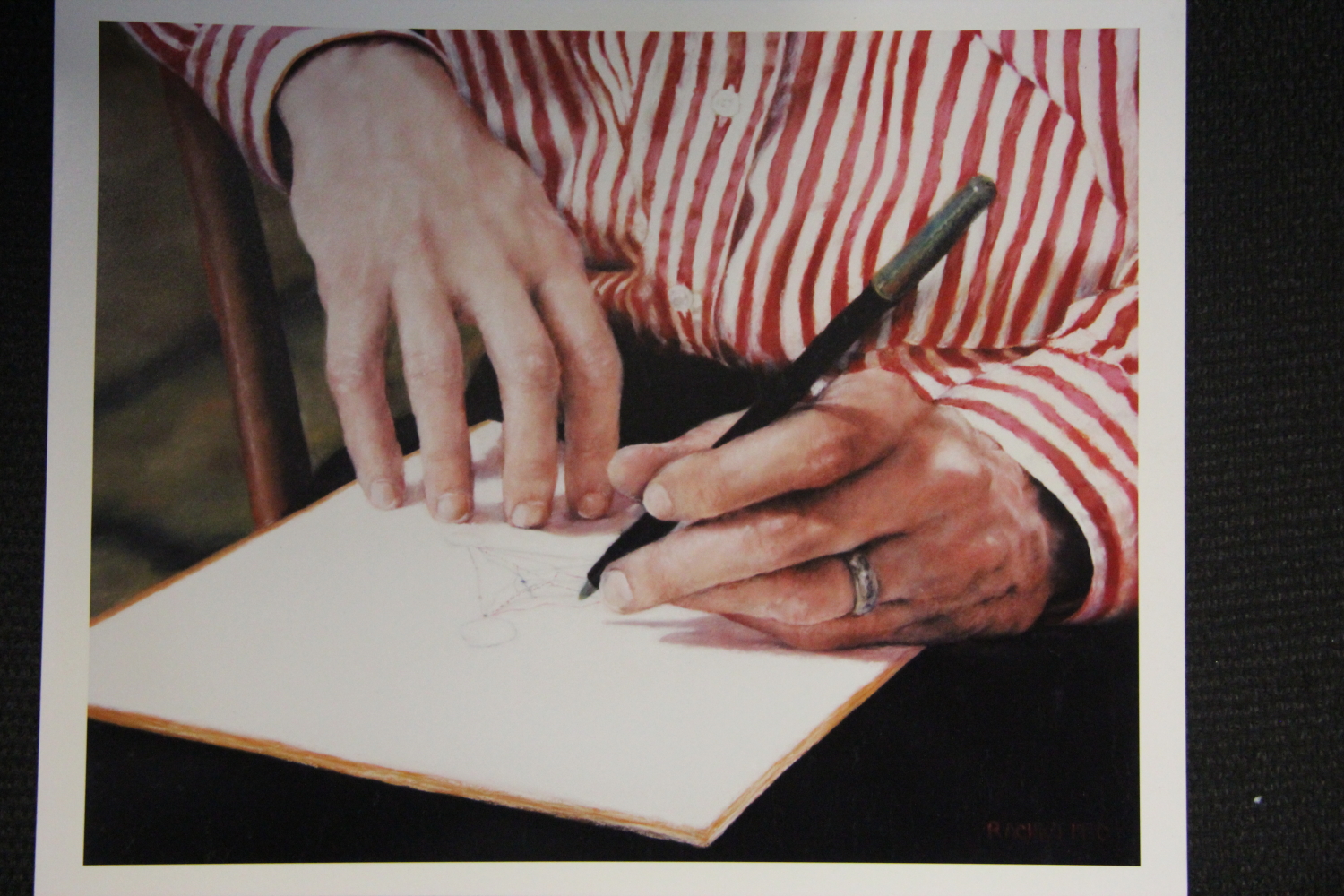
“Bryan’s Ph.D.”, 11″ x 13 1/2″, soft pastel on sandpaper
A: I believe my first sale was “Bryan’s Ph.D.” I made it in 1990 as one of several small paintings created to improve my skills at rendering human hands in pastel. I had recently left the Navy and was building a career as a portrait artist. Bryan, my late husband, was often my model for these studies, not only because it was convenient, but because he had such beautiful hands.
In 1990 Bryan was working on his Ph.D. in economics at the University of Maryland. In this painting he is drawing a diagram that illustrates a theoretical point about “international public goods,” the subject of his research. He was sitting in an old wooden rocking chair in our backyard in Alexandria, VA. I still own the chair and the house. I photographed his hands close-up and then created the painting. I don’t remember which of Bryan’s cameras I used, but it was one that took 35 mm film; perhaps his Nikon F-2. Somewhere I must still have the negative and the original reference photo.
“Bryan’s Ph.D.” is 11″ x 13 1/2″ and it sold for $500 at a monthly juried exhibition at The Art League in Alexandria. I have not seen it since 1990. (Above is a photograph of “Bryan’s Ph.D.” from my portfolio book).
Not long ago the owner contacted me, explaining that she had received the painting as a gift from her now ex-husband. She was selling it because it evoked bitter memories of her divorce. Her phone call was prompted by uncertainty about the painting’s value now. She had a likely buyer and needed to know what price to charge.
I was saddened because I have so many beautiful memories of this particular painting and of an idyllic time in my life with Bryan. He was on a leave of absence from the Pentagon to work on his dissertation, while I was finished with active duty. At last I was a full time artist, busily working in the spare bedroom that we had turned into my first studio.
My conversation with the owner was a reminder that once paintings are let out into the world, they take on associations that have nothing to do with the personal circumstances surrounding their creation. In short, what an artist creates solely out of love, stands a good chance of not being loved or appreciated by others. This is one reason to only sell my work to people I select personally. I ended the telephone conversation hoping that “Bryan’s Ph.D.” fares better in its new home.
Comments are welcome!
Q: Why do people need art in their daily lives?
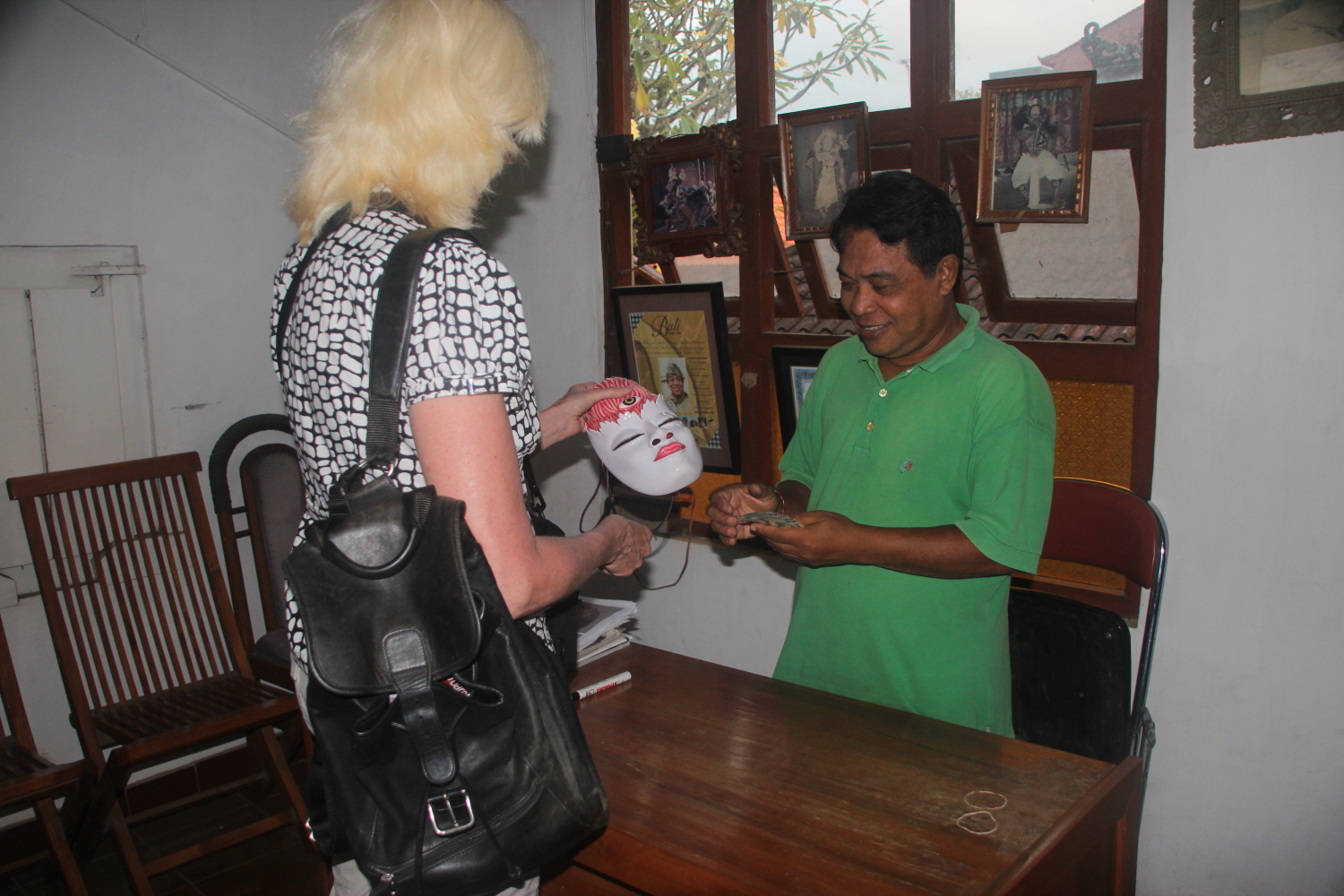
With Ida Bagus Anom, Mas, Bali; Photo: Donna Tang
A: That is for each person to decide, but as someone who devotes every waking moment to my work and to becoming a better artist, I cannot imagine my life without art.
I will tell you a little about what art has done for me. In my younger days boredom was a strong motivator. I left the active duty Navy out of boredom. I couldn’t bear not being intellectually challenged (most of my jobs consisted of paper-pushing), not using my flying skills (at 27 I was a licensed commercial pilot and Boeing-727 flight engineer), and not developing my artistic talents. In what surely must be a first, the Navy turned me into a hard-working and disciplined artist. And once I left the Navy there was no plan B. There was no time to waste. It was “full speed ahead.”
Art is a calling. You do not need to be told this if you are among those who are called. It’s all about “the work,” that all-consuming focus of an artist’s life. If a particular activity doesn’t seem likely to make me a better artist, I tend to avoid it. I work hard to nourish and protect my gifts. As artists we invent our own tasks, learn whatever we need in order to progress, and complete projects in our own time. It is life lived at its freest.
My art-making has led me to fascinating places: Mexico, Guatemala, Brazil, Argentina, Uruguay, France, England, Italy, Bali, Java, Sri Lanka, and more; and to in-depth studies of intriguing subjects: drawing, color, composition, art and art history, the art business, film and film history, photography, mythology, literature, music, jazz and jazz history, and archaeology, particularly that of ancient Mesoamerica (Olmec, Zapotec, Mixtec, Aztec, Maya, etc.). And this rich mixture continually grows! For anyone wanting to spend their time on earth learning and meeting new challenges, there is no better life!
Comments are welcome!
Q: I just got home from my first painting experience… three hours and I am exhausted! Yet you, Barbara, build up as many as 30 layers of pastel, concentrate on such intricate detail, and work on a single painting for months. How do you do it?
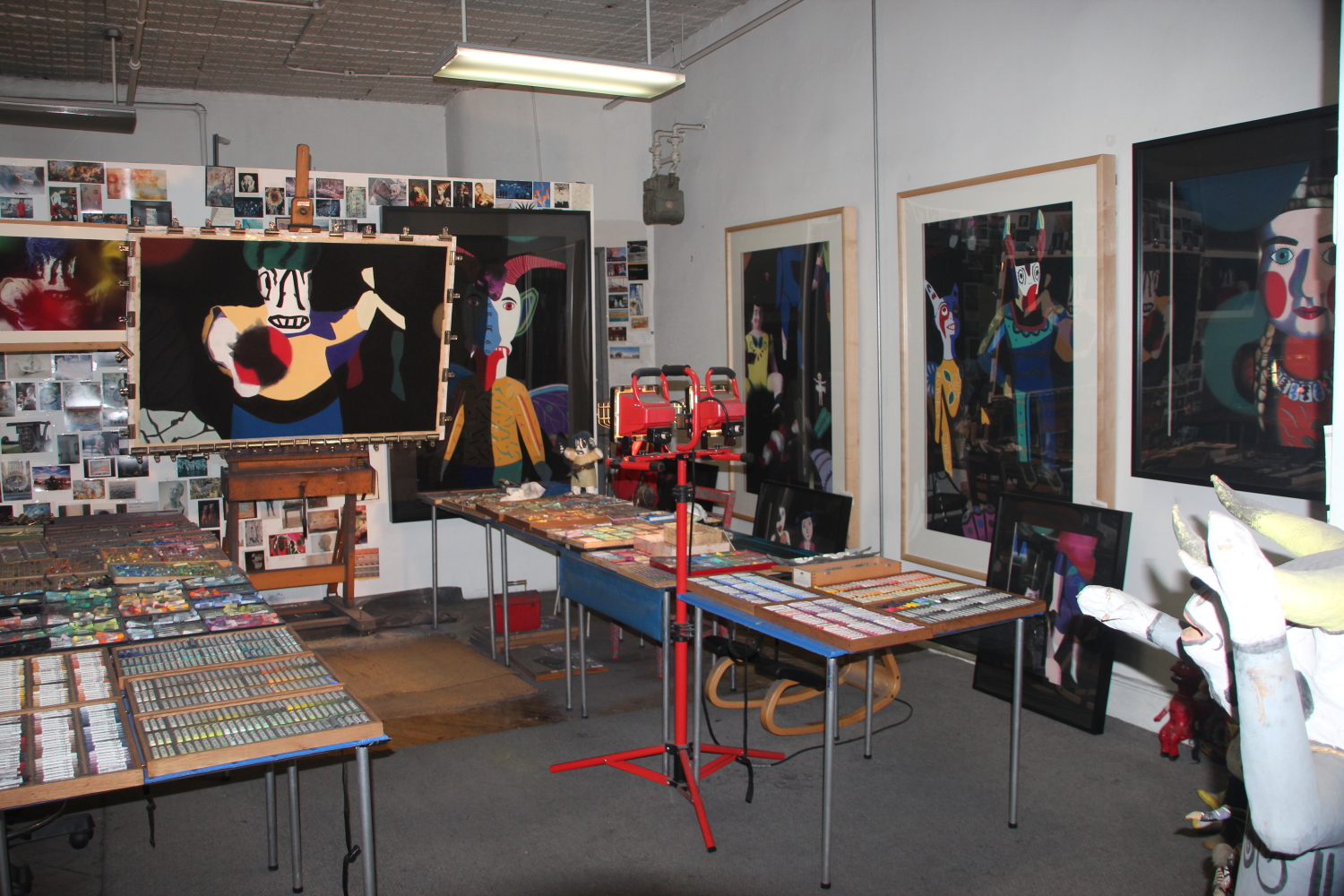
Barbara’s studio
A: The short answer is that I absolutely love making art in my studio and on the best days I barely even notice time going by!
Admittedly, it’s a hard road. Pursuing life as an artist takes a very special and rare sort of person. Talent and having innate gifts are a given, merely the starting point. We must possess a whole cluster of characteristics and be unwavering in displaying them. We are passionate, hard-working, smart, devoted, sensitive, self-starting, creative, hard-headed, resilient, curious, persistent, disciplined, stubborn, inner-directed, tireless, strong, and on and on. Into the mix add these facts. We need to be good business people. Even if we are, we are unlikely to make much money. We are not respected as a profession. People often misunderstand us: at best they ignore us, at worst they insult our work and us, saying we are lazy, crazy, and more.
The odds are stacked against any one individual having the necessary skills and stamina to withstand it all. So many artists give up, deciding it’s too tough and just not worth it, and who can blame them? This is why I believe artists who persevere over a lifetime are true heroes. It’s why I do all I can to help my peers. Ours is an extremely difficult life – it’s impossible to overstate this – and each of us finds our own intrinsic rewards in the work itself. Otherwise there is no reason to stick with it. Art is a calling and for those of us who are called, the work is paramount. We build our lives around the work until all else becomes secondary and falls away. We are in this for the duration.
In my younger days everything I tried in the way of a career eventually became boring. Now with nearly thirty years behind me as a working artist, I can still say, “I am never bored in the studio!” It’s difficult to put into words why this is true, but I know that I would not want to spend my time on this earth doing anything else. How very fortunate that I do not have to do so!
Comments are welcome!
Q: In light of the realities you discussed last week (see blog post of Aug. 24), what keeps you motivated to make art?

A favorite book
A: In essence it’s that I have always worked much harder for love than for money. I absolutely love my work, my creative process, and my chosen life. I have experienced much tragedy – no doubt there is more to come – but through it all, my journey as an artist is a continual adventure that gives me the ultimate freedom to spend my time on this earth as I want. In my work I make the rules, set my own tasks, and resolve them on my own timetable. What could be better than that?
Furthermore, I know that I have a gift and with that comes a profound responsibility, an obligation to develop and use it to the best of my ability, regardless of what it may cost. And when I say “cost,” I do not mean only money. Art is a calling and all self-respecting artists do whatever is necessary to use and express our gifts.
In “The Gift” Lewis Hyde says, “A gift is a thing we do not get by our own efforts. We cannot buy it, we cannot acquire it through an act of will. It is bestowed upon us. Thus we rightly speak of “talent” as a “gift” for although a talent can be perfected through an act of will, no effort in the world can cause its initial appearance. Mozart, composing on the harpsichord at the age of four, had a gift.”
Comments are welcome!
Q: How do you decide on the titles for your pastel paintings?

“Stigmata,” soft pastel on sandpaper, 28″ x 48″
A: Usually a title suggests itself over the course of the months I spend on a painting. Sometimes it comes from a book I’m reading, from a piece of music, a film, bits of overheard conversation. A title can come from anywhere, but finding the best one is key. I like what Jean Cocteau says about this:
One title alone exists. It will be, so it is. Time conceals it from me. How discover it, concealed by a hundred others? I have to avoid the this, the that. Avoid the image. Avoid the descriptive and the undescriptive. Avoid the exact meaning and the inexact. The soft, the hard. Neither long nor short. Right to catch the eye, the ear, the mind. Simple to read and to remember. I had announced several. I had to repeat them twice and the journalists still got them wrong. My real title defies me. It enjoys its hiding place, like a child one keeps calling, and whom one believes drowned in the pond.
Once I have the best title, I make sure it fits the painting exactly. How I do that is difficult to explain. It’s an intuitive process that involves adjusting colors, shapes, and images so that they fit the painting’s meaning, i.e., the meaning hinted at by the title.
Comments are welcome!


 barbararachkoscoloreddust.com
Q: What is the reality of the art world today? Do people experience it enough?
Aug 2
Posted by barbararachkoscoloreddust
West 29th Street studio
A: I cannot comment on the art world today or the experience of other people. I can only speak for myself. I am completely devoted to my work; my entire life revolves around art. When I’m not in my studio creating, I am reading about art, thinking about it, gaining inspiration from other artists and from artistic travel, working out new ideas, going to museum and gallery exhibitions, trying to understand the business side of things, etc. Art is a calling and I personally experience it enough as my work continues to evolve!
Comments are welcome!
Share this:
Posted in 2014, An Artist's Life, Art in general, Black Paintings, Creative Process, Inspiration, New York, NY, Pastel Painting, Photography, Studio, Working methods
2 Comments
Tags: art, art world, artistic, business, calling, comment, completely, continues, creating, devoted, enough, evolve, Exhibitions, experience, gaining, gallery, going, grow, ideas, inspiration, life, museum, people, personally., reading, reality, revolves, speak, Studio, thinking, today, travel, trying, understand, West 29th Street, work, working