Blog Archives
Pearls from artists* # 428

View from Isla del Sol in Bolivia
* an ongoing series of quotations – mostly from artists, to artists – that offers wisdom, inspiration, and advice for the sometimes lonely road we are on.
In its spectacle and ritual the Carnival procession in Oururo bears an intriguing resemblance to the description given by Inca Garcilaso de la Vega of the great Inca festival of Inti Raymi, dedicated to the Sun. Even if Oururo’s festival did not develop directly from that of the Inca, the 16th-century text offers a perspective from the Andean tradition:
“The curacas (high dignitaries) came to their ceremony in their finest array, with garments and head-dresses richly ornamented with gold and silver.
Others, who claimed to descend from a lion, appeared, like Hercules himself, wearing the skin of this animal, including its head.
Others, still, came dressed as one imagines angels with the great wings of the bird called condor, which they considered to be their original ancestor. This bird is black and white in color, so large that the span of its wing can attain 14 or 15 feet, and so strong that many a Spaniard met death in contest with it.
Others wore masks that gave them the most horrible faces imaginable, and these were he Yuncas (people from the tropics), who came to the feast with the heads and gestures of madmen or idiots. To complete the picture, they carried appropriate instruments such as out-of-tune flutes and drums, with which they accompanied the antics.
Other curacas in the region came as well decorated or made up to symbolize their armorial bearings. Each nation presented its weapons: bows and arrows, lances, darts, slings, maces and hatchets, both short and long, depending upon whether they used them with one hand or two.
They also carried paintings, representing feats they had accomplished in the service of the Sun and of the Inca, and a whole retinue of musicians played on the timpani and trumpets they had brought with them. In other words, it may be said that each nation came to the feast with everything that could serve to enhance its renown and distinction, and if possible, its precedence over the others.”
El Carnaval de Oruro by Manuel Vargas in Mascaras de los Andes Bolivianos, Editorial Quipus and Banco Mercantil
Comments are welcome!
Travel photo of the month*
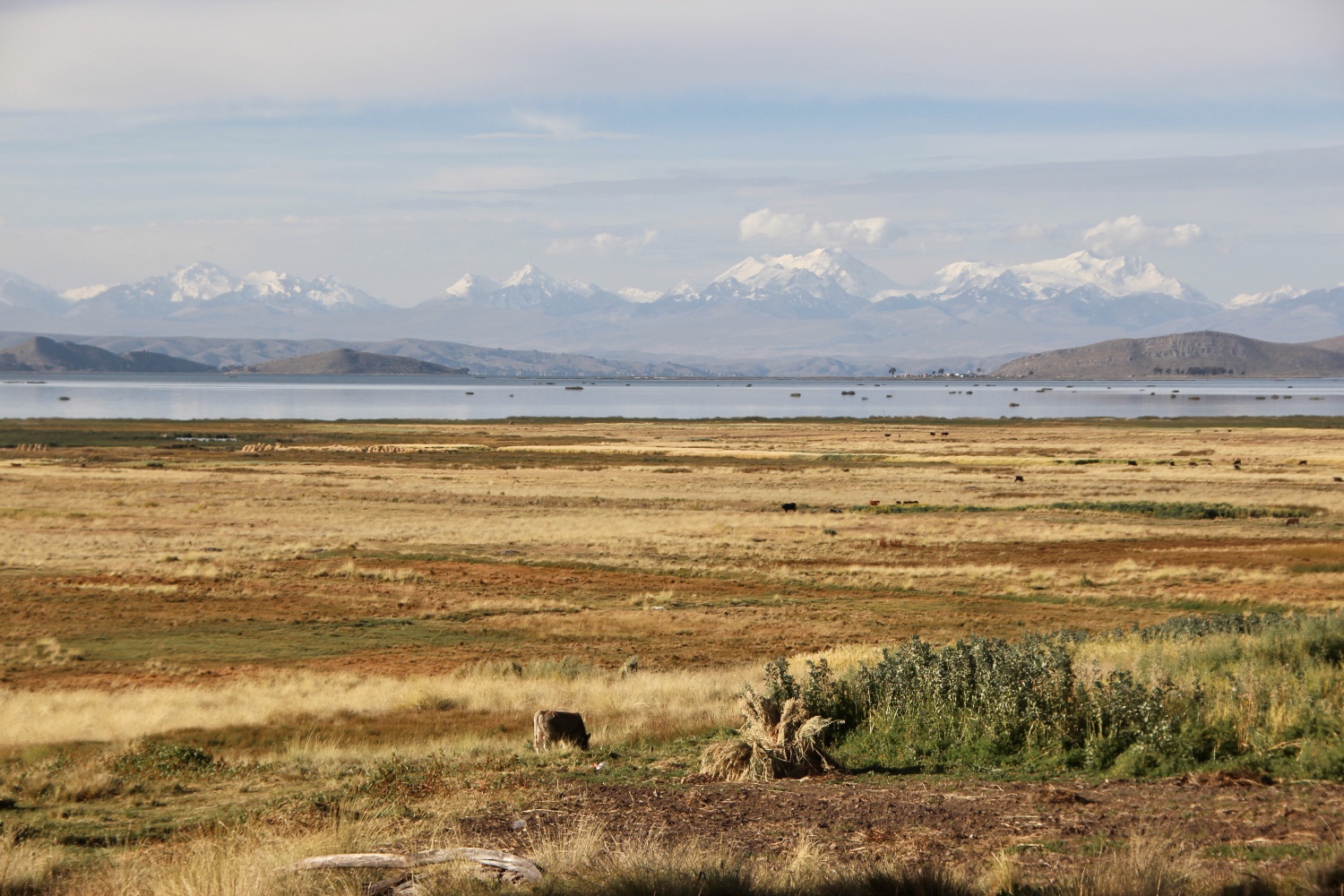
On the road in Bolivia
* Favorite travel photos that have not yet appeared in this blog
Of all the countries I have visited so far, I’d say that the most beautiful, awe-inspiring landscapes are to be found in Bolivia! The people and the sights and sounds of Bolivia truly won my heart. I hope to return.
Comments are welcome!
Q: Travel is an essential aspect of your work. How do you decide where to travel next?
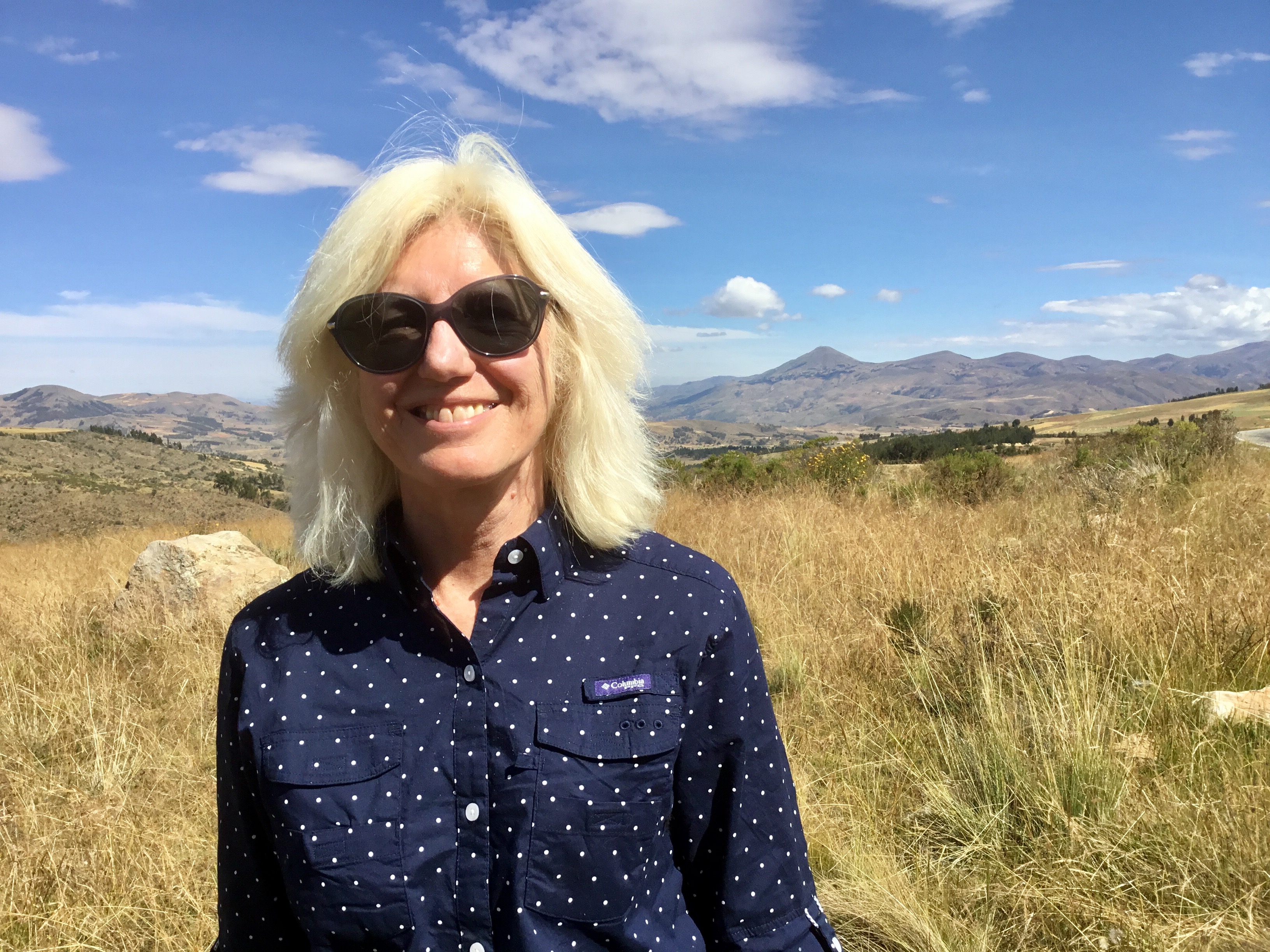
In the Bolivian Andes at about 14,000’
A: Generally, I am most interested in exploring Mexico and destinations in Central and South American because they offer endless inspiration to further my work. I’m not exactly certain why this is the case. I DO know that I cannot get enough of travel to points south!
My 2017 trip to Bolivia proved to be crucial for my current pastel painting series. “Bolivianos” is based on an exhibition of Carnival masks encountered at the National Museum of Ethnology and Folklore in La Paz.
I had high hopes of making a return visit – along with a private tour guide – last February. However, since President Moreno resigned last November, much political instability, violence, and turmoil resulted. I would not have felt safe traveling to Oruro to see Carnival celebrations this year.
In the mean time I look forward to traveling to Chile, the Atacama Desert, and Easter Island next winter!
Comnents are welcome!
Q: Can you briefly explain how the Bolivian Carnival masks you depict in your work are used?

Museum of Ethnography and Folklore, La Paz, Bolivia
A: The masks depict important figures from Bolivian folklore traditions and are used in Carnival celebrations in the town of Oruro. Carnival occurs every year in late February or early March. I had hoped to visit again this year, but political instability in Bolivia made a trip too risky.
Carnival in Oruro revolves around three great dances. The dance of “The Incas” records the conquest and death of Atahualpa, the Inca emperor when the Spanish arrived in 1532. “The Morenada” music and dance style from the Bolivian Andes was possibly inspired by the suffering of African slaves brought to work in the silver mines of Potosi. The dance of “The Diablada” depicts Saint Michael fighting against Lucifer and the seven deadly sins. Lucifer was disguised in seven different masks derived from medieval Christian symbols aor totemic animals that became nd mostly devoid of pre-Columbian elements (except that became attached to Christianity after the Conquest). Typically, in these dances the cock represents Pride, the dog Envy, the pig Greed, the female devil Lust, etc.
Comments are welcome!
Travel photo* of the month
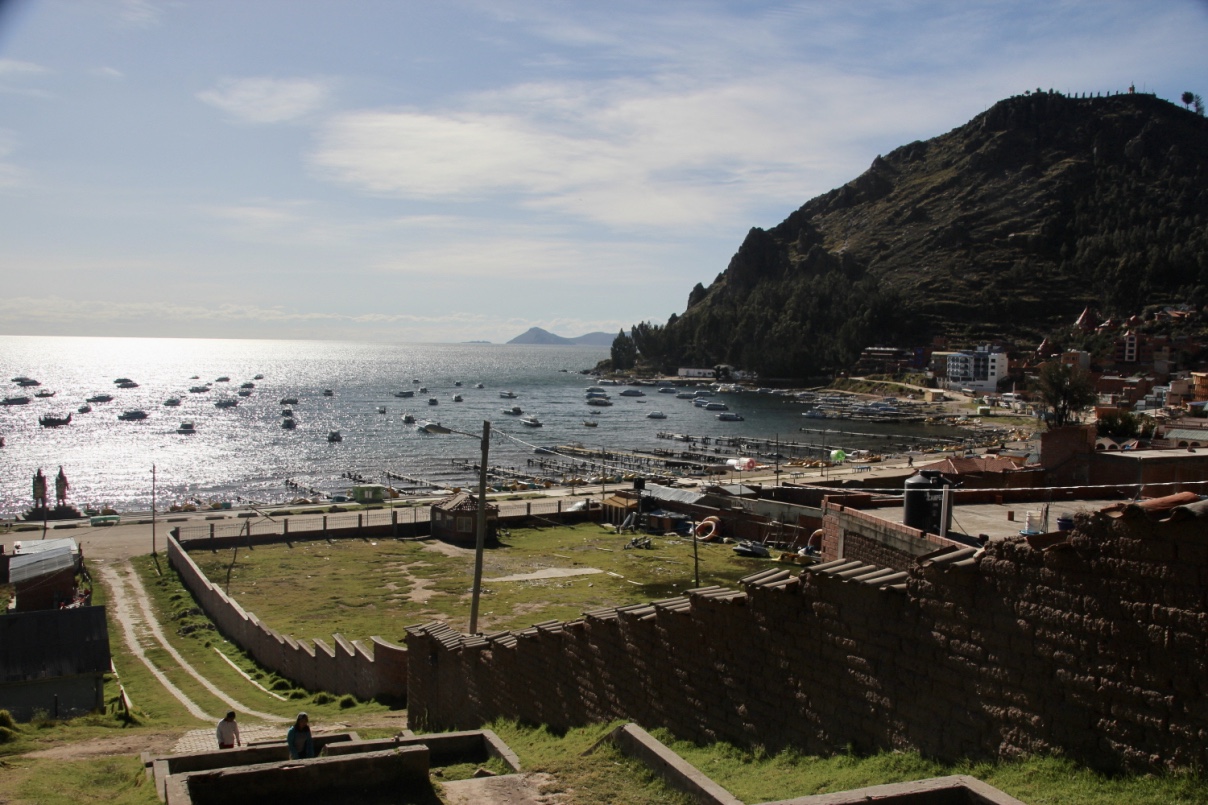
Copacabana, Bolivia
* Favorite travel photos that have not yet appeared in this blog.
Comments are welcome!
Pearls from artists* # 385
Potosí, Bolivia
* an ongoing series of quotations – mostly from artists, to artists – that offers wisdom, inspiration, and advice for the sometimes lonely road we are on.
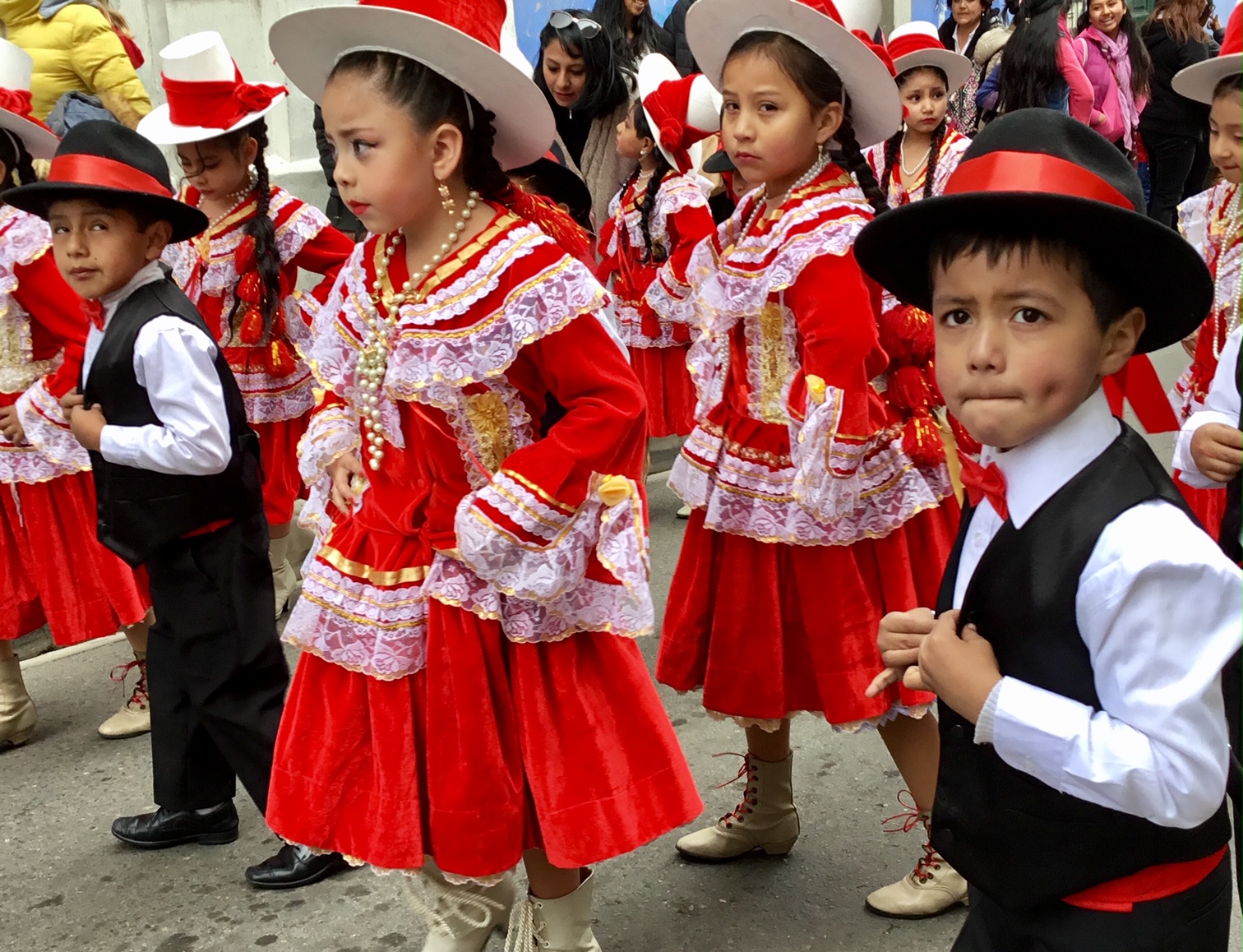
Sunday of Carnival, the parade begins. For a whole day of celebration in music and dance, people can express their hope and fears, revive their myths and escape to a reality far from everyday life.
Thousands of spectators arrive from different parts if Bolivia and other countries. Filling the streets, they straddle benches, window ledges, balconies, cats and eve hang from walls or roofs to witness the entrance of the Carnival. Thus is the magnificent parade when Carnival makes its official entry into Oruro. The comparsas (dance troupes) dance to music for20 blocks, nearly eight lies, to the Church of the Virgin of Socavón (Virgin of the Mine). Each tries to out do the next in the brilliance of their costumes, the energy of their dancing and the power of their music. All their efforts are dedicated to the Virgin whose shrine is found on the hill called Pie de Gallo.
If there are thousands of spectators, there are also thousands of dancers from the city and other parts of the country. Among the most remarkable are the Diablos and Morenos which count for eight of the 40 or 50 participating groups. Keeping in mind that the smallest troupes have between 30 and 50 embers and the largest between 200 and 300, it is possible to calculate the number of dancers and imagine the spectacle.
… Each dance recalls a particular aspect of life in the Andes. Lifted from different periods and places, the dances offer a rich interpretation of historical events, creating an imaginative mythology for Oruro.
… Carnival blends indigenous beliefs and rituals with those introduced by the Spaniards. Both systems of belief have undergone transformations, each making allowance for the other, either through necessity or familiarity. The Christianity fought from Europe becomes loaded with new meanings while the myths and customs of the Andes accommodate their language and creativity to the reality of their conquered world. The process can be seen as a struggle culminating in a ‘mestizaje’ or new cultural mix.
El Carnaval de Oruro by Manuel Vargas in Mascaras de los Andes Bolivianos, Editorial Quipus and Banco Mercantil
Comments are welcome!
Q: Can you tell us about the different series of work you have created and what they embody?
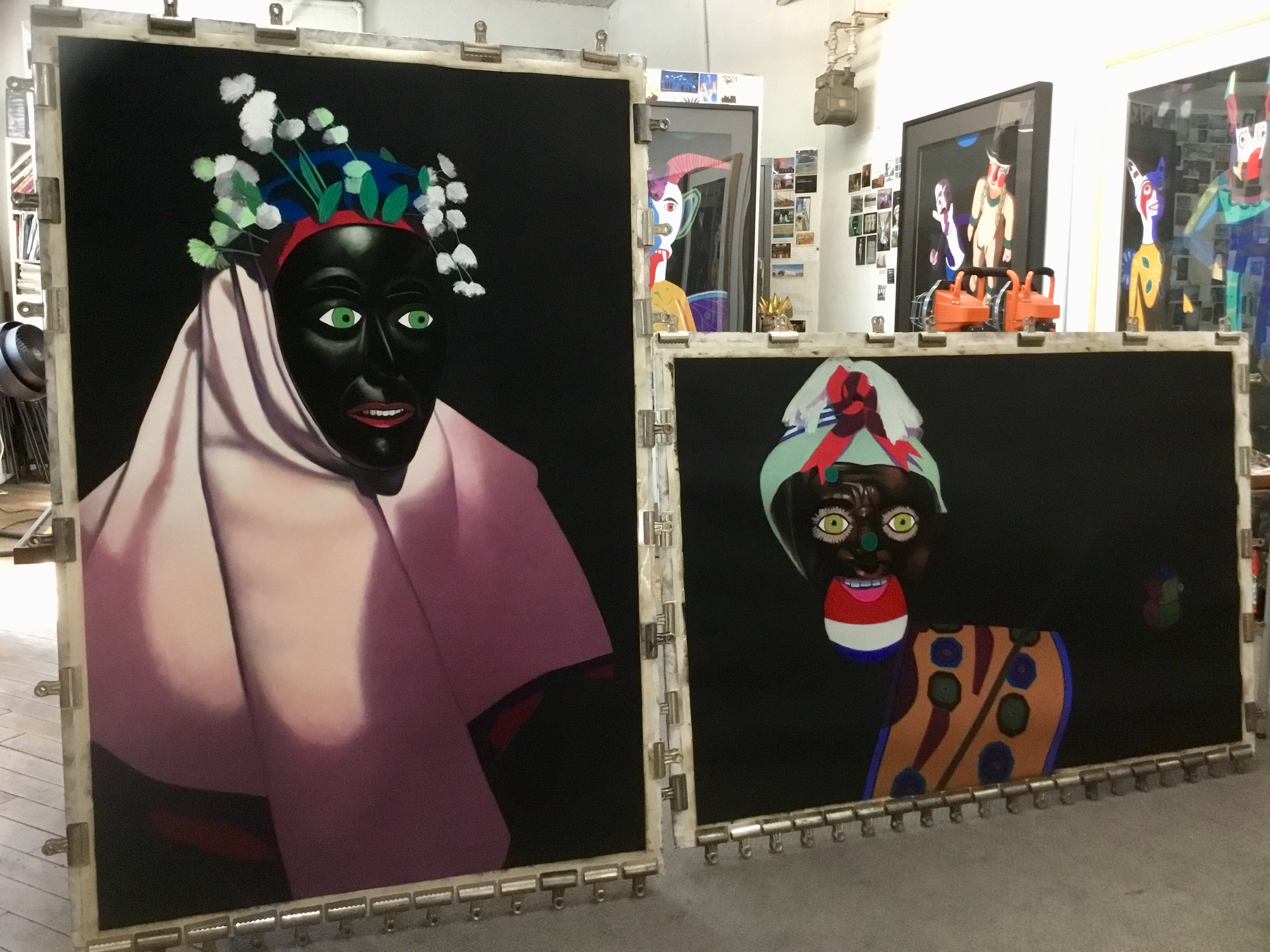
Barbara’s studio with work in progress
A: The Black Paintings series of pastel-on-sandpaper paintings grew directly from an earlier series, Domestic Threats. While both use cultural objects as surrogates for human beings acting in mysterious, highly-charged narratives, in the Black Paintings I replaced all background details of my actual setup (furniture, rugs, etc.) with lush black pastel. In this work the ‘actors’ are front and center.
While traveling in Bolivia two years ago, I visited a mask exhibition at the National Museum of Ethnography and Folklore in La Paz. The masks were presented against black walls, spot-lit, and looked eerily like 3D versions of my Black Paintings. I immediately knew I had stumbled upon a gift. So far I have completed nine pastel paintings in the Bolivianos series. One is awaiting finishing touches, one is in progress now, and I am planning the next one.
All of my pastel paintings are an example of a style called “contemporary conceptual realism” in which things are not quite as innocent as they seem. In this sense each painting is a kind of Trojan horse. There is plenty of backstory to my images, although I usually prefer not to over-explain them. Some mystery must always remain in art.
The world I depict is that of the imagination and this realm owes little debt to the natural world. I recently gave an art talk where I was reminded how fascinating it is to learn how others respond to my work. As New York art critic Gerrit Henry once remarked, “What we bring to a Rachko… we get back, bountifully.”
Comments are welcome!
Q: When did your love of indigenous artifacts begin? Where have you traveled to collect these focal points of your works and what have those experiences taught you?
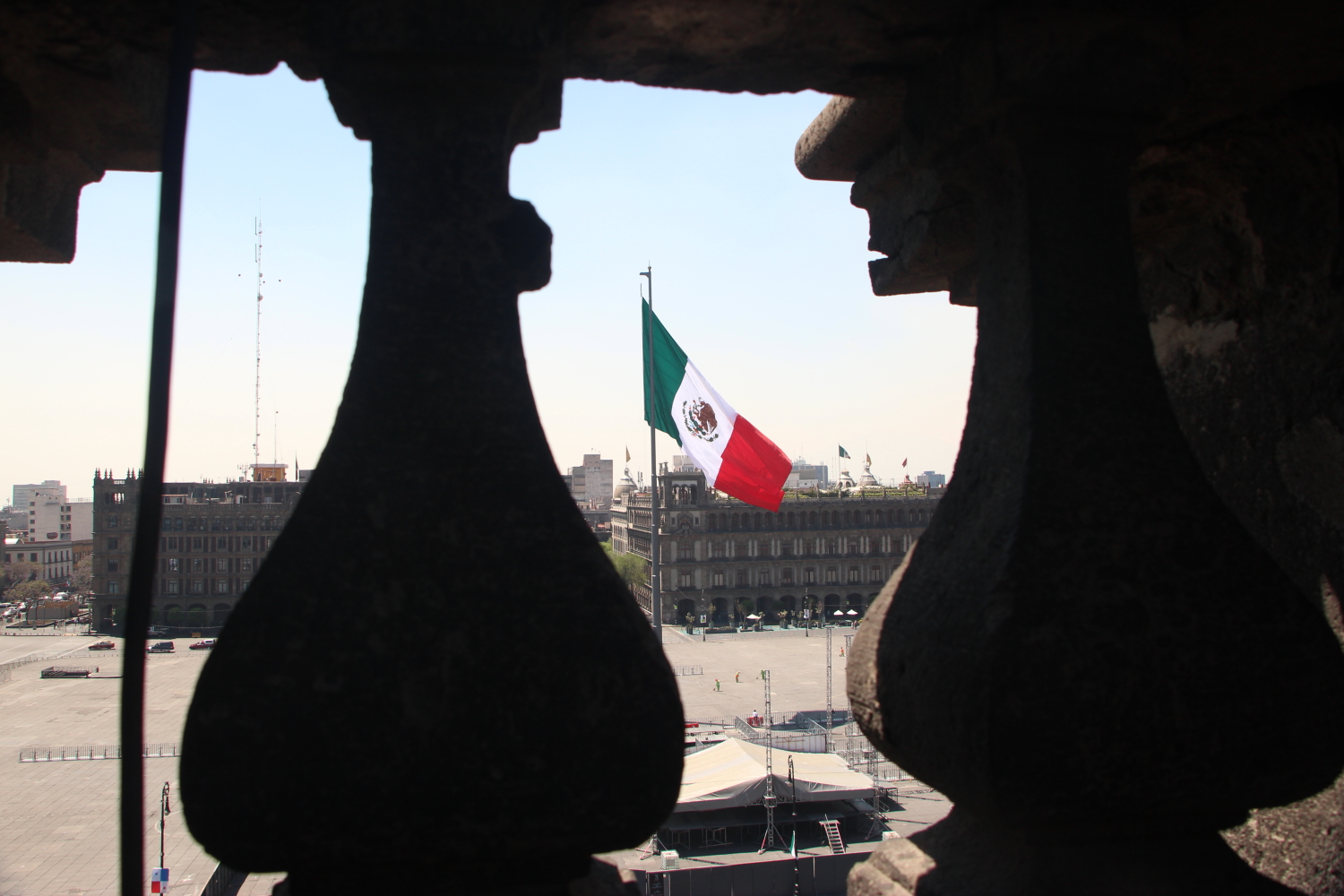
Mexico City
A: As a Christmas present in 1991 my future sister-in-law sent me two brightly painted wooden animal figures from Oaxaca, Mexico. One was a blue polka-dotted winged horse. The other was a red, white, and black bear-like figure.
I was enthralled with this gift and the timing was fortuitous because I had been searching for new subject matter to paint. I started asking artist-friends about Oaxaca and learned that it was an important art hub. Two well-known Mexican painters, Rufino Tamayo and Francisco Toledo, had gotten their start there, as had master photographer Manuel Alvarez Bravo. There was a “Oaxacan School of Painting” (‘school’ meaning a style) and Alvarez Bravo had established a photography school there (the building/institution kind). I began reading everything I could find. At the time I had only been to Mexico very briefly, in 1975.
The following autumn, Bryan and I planned a two-week trip to visit Mexico. We timed it to see Day of the Dead celebrations in Oaxaca. (During my research I had become fascinated with this festival). We spent one week in Oaxaca followed by one week in Mexico City. My interest in collecting Mexican folk art was off and running!
Along with busloads of other tourists, we visited several cemeteries in small Oaxacan towns for the “Day of the Dead.” The indigenous people tending their ancestors’ graves were so dignified and so gracious, even with so many mostly-American tourists tromping around on a sacred night, that I couldn’t help being taken with these beautiful people and their beliefs.
From Oaxaca we traveled to Mexico City, where again I was entranced, but this time by the rich and ancient history. We visited the National Museum of Anthropology, where I was introduced to the fascinating story of ancient Mesoamerican civilizations; the ancient city of Teotihuacan, which the Aztecs discovered as an abandoned city and then occupied as their own; and the Templo Mayor, the historic center of the Aztec empire, infamous as a place of human sacrifice. I was astounded! Why had I never learned in school about Mexico, this highly developed cradle of Western civilization in our own hemisphere, when so much time had been devoted to the cultures of Egypt, Greece, and elsewhere? When I returned home to Virginia I began reading everything I could find about ancient Mexican civilizations, including the Olmec, Zapotec, Mixtec, Aztec, and Maya. The first trip to Mexico opened up a whole new world and was to profoundly influence my future work. I would return there many more times, most recently to study Olmec art and archeology. In subsequent years I have traveled to Guatemala, Peru, Bolivia and other countries in search of inspiration and subject matter to depict in my work.
Comments are welcome!
Q: During one of the most gripping times of your life, you were personally affected by the 9/11 attack on our country. Your husband was killed on the plane that crashed into the Pentagon. Would you mind telling us about it and how it has shaped your work?
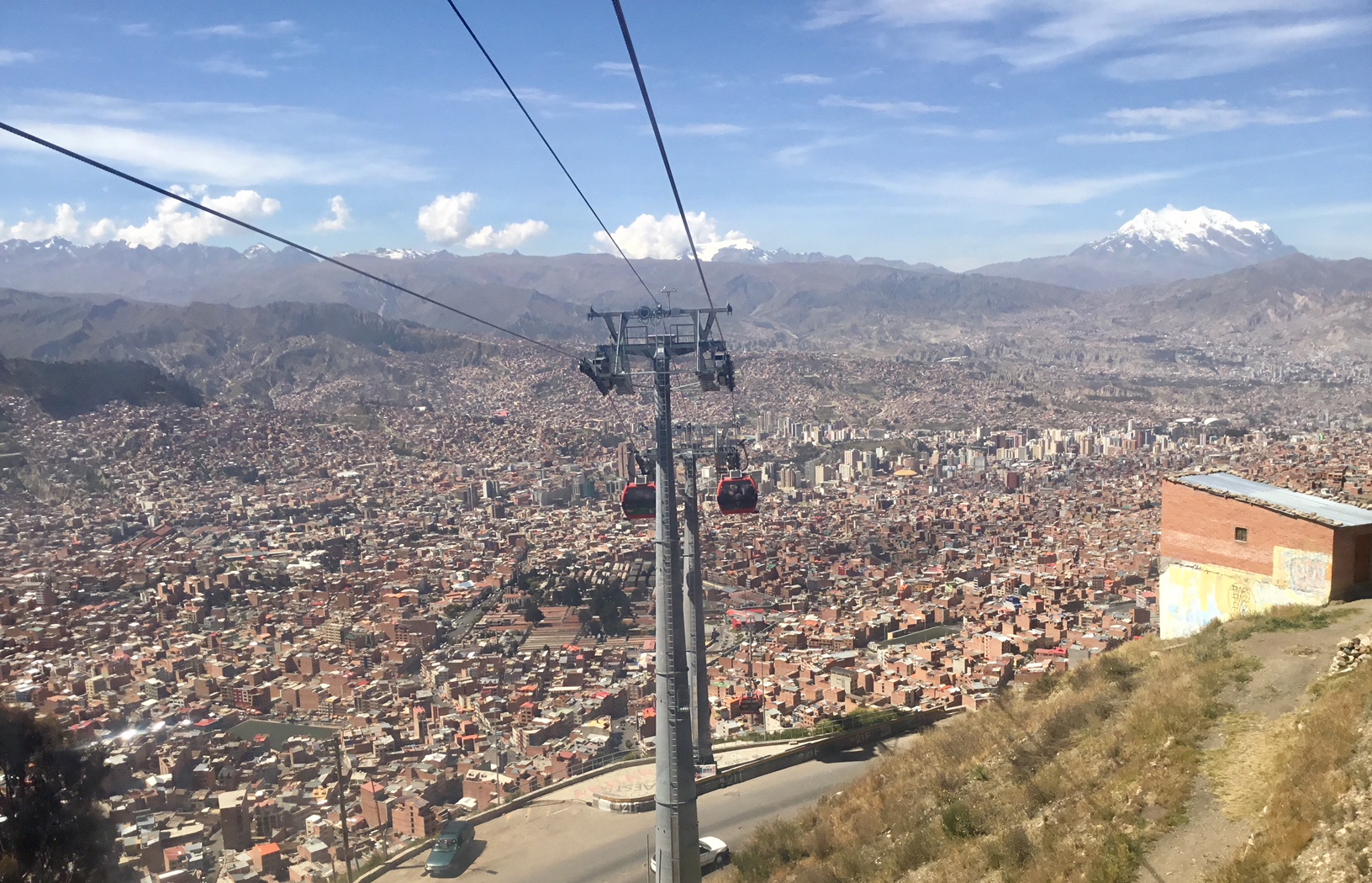
‘Mi Teleferico’ line, La Paz, Bolivia
A: In the summer of 2002 I was ready to – I HAD to – get back to work in my studio. I knew exactly what I must do. More than ever before, learning and painting would become the avenues to my well-being.
Because I use reference photos for my pastel paintings, the first challenge was to learn how to use Bryan’s 4 x 5 view camera. At that time I was not a photographer. Bryan had always taken reference photos for me.
In July 2002 I enrolled in a view camera workshop at New York’s International Center of Photography. Much to my surprise I had already absorbed quite a lot from watching Bryan. After the initial workshop, I continued more formal studies of photography for several years. In 2009, I am proud to say, I was invited to present a solo photography exhibition at a New York gallery!
In 2003 I resumed making my Domestic Threats series of pastel paintings, something that had seemed impossible after Bryan’s death. The first large pastel painting that I created using a reference photograph taken by me confirmed that my life’s work could continue. The title of that painting, “She Embraced It and Grew Stronger,” was autobiographical. “She” is me, and “it” meant continuing on without Bryan and living life for both of us.
Having had a long successful run, the Domestic Threats series finally ended in early 2007. Around that time I was feeling happier and had come to better terms with losing Bryan. While this is a tragedy I will never truly be at peace with, dealing with the loss became easier with time.
Then in 2007 I suddenly became blocked and did not know where to take my work next. I had never experienced creative block and especially for a full-time professional artist, this was a painful time. Still, I continued to go to the studio every day and eventually, thanks to a confluence of favorable circumstances, the block ended.
My next pastel painting series was called Black Paintings. I viewed the black background as literally, the very dark place that I was emerging from, exactly like the figures emerging in these paintings. The figures themselves were wildly colorful and full of life, but that black background – one critic has dubbed it my “blackground” – is always there.
Still the work continues to evolve. In 2017 I began my third pastel painting series called Bolivianos, based on a mask exhibition encountered in La Paz at the The National Museum of Ethnography and Folklore. Many people have proclaimed this to be my most bold, daring, and exciting pastel painting series yet. And I think they may be right! Continuing on the journey I began 30+ years ago, I am looking forward to creating many new, striking pastel paintings!
Comments are welcome!
Pearls from artists* # 330
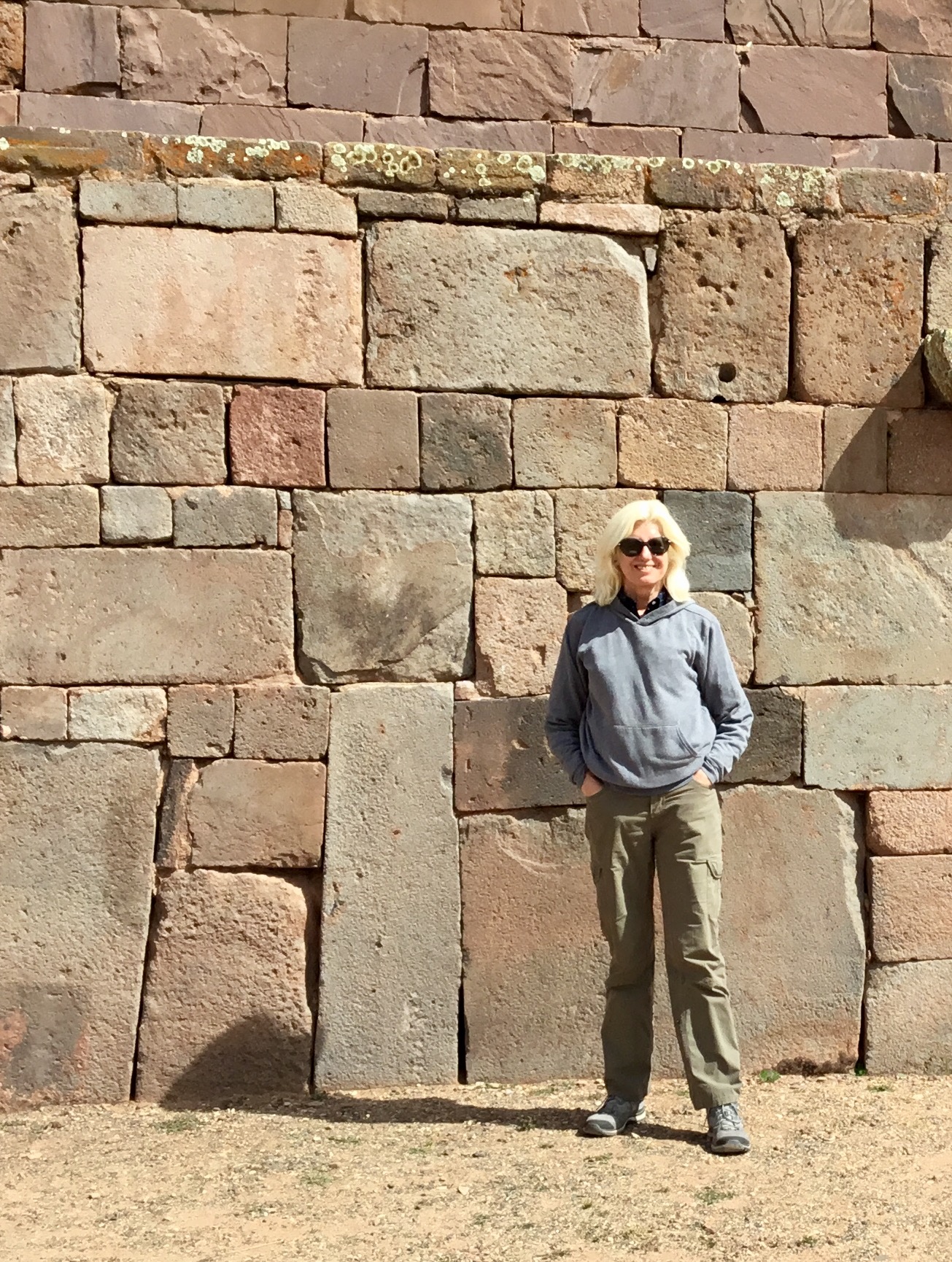
At Tiwanaku, Bolivia
*an ongoing series of quotations – mostly from artists, to artists – that offers wisdom, inspiration, and advice for the sometimes lonely road we are on.
To take the time to look and analyze the city or a building or an object is of the same nature as owning it, except that ownership is not a satisfactory feeling – but understanding is a form of complete assimilation. To really work and produce, there must be integration of your work in your life, or the integration of your life in your work.
Louise Bourgeois: Destruction of the Father, Reconstruction of the Father: Writings and interview 1923-1997, edited and with texts by Marie-Laure Bernadac and Hans-Ulrich Obrist
Comments are welcome!



