Category Archives: Pearls from Artists
Pearls from artists* # 687
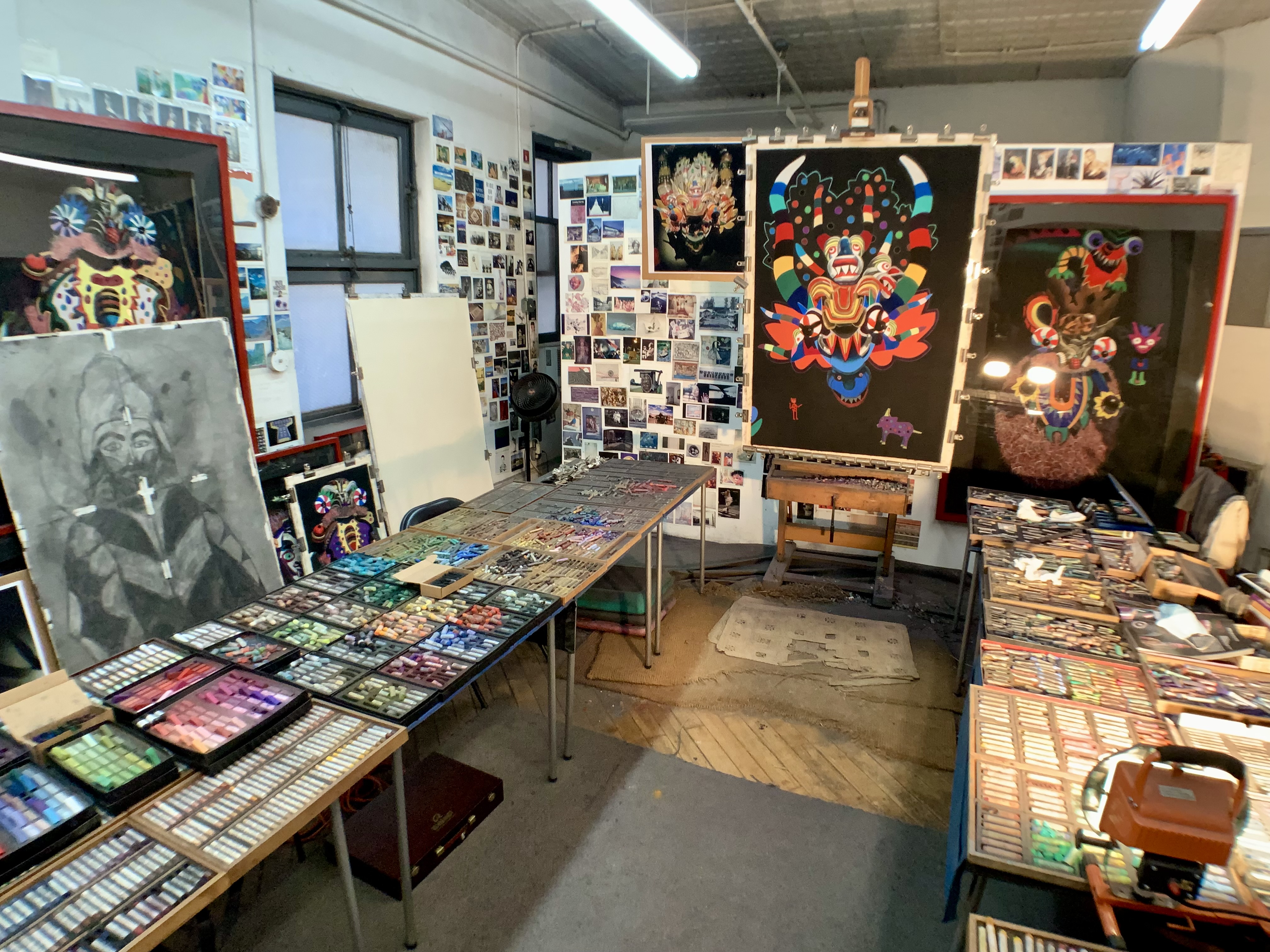
Barbara’s Studio
*an ongoing series of quotations – mostly from artists, to artists – that offers wisdom, inspiration, and advice for the sometimes lonely road we are on.
PC: Talking about sales, when it comes down to it, don’t you find that most of the time, the true art lovers, the disinterested amateurs, are the ones who can’t afford to buy?
HM: Yes, the man who buys, buys for speculative reasons, and after a year or two says to himself – what’s my painting worth? – he wants to cash in. But who knows whether a picture can be sold profitably at any given point? I have friends who begrudged me the fact that I persuaded them to buy a beautiful painting.
Henri Matisse in Chatting With Matisse: The Lost 1941 Interview, Henri Matisse with Pierre Courthion, edited by Serge Guilbault
Comments are welcome!
Pearls from artists* # 686
*an ongoing series of quotations – mostly from artists, to artists – that offers wisdom, inspiration, and advice for the sometimes lonely road we are on.
HM: I’ve never met many people; I’ve never much sought out older painters, first because I didn’t want to disturb them and then because what an artist says is so insignificant, I find, compared to what he does. The same phrases can so easily fit different things when you’re talking about the visual arts.
You can’t describe them. All you can do is create a kind of analogy using words. But even then the words have to reach the same part of the spectator that’s ready and waiting for them.
Henri Matisse in Chatting With Matisse: The Lost 1941 Interview, Henri Matisse with Pierre Courthion, edited by Serge Guilbault
Comments are welcome!
Pearls from artists* # 685
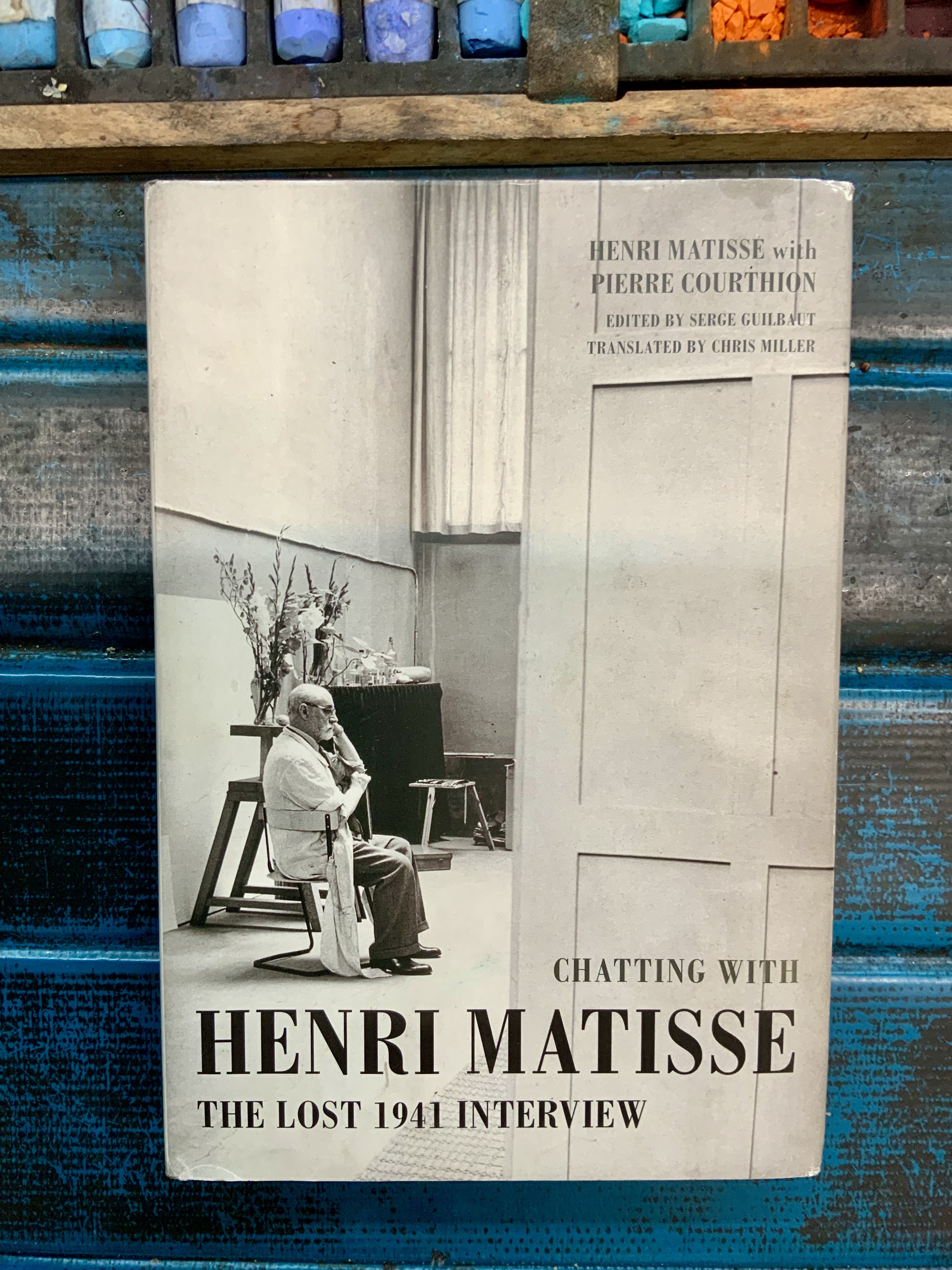
Another of my favorite books!
*an ongoing series of quotations – mostly from artists, to artists – that offers wisdom, inspiration, and advice for the sometimes lonely road we are on.
HM: The great benefit I took from visits with Renoir was realizing that even after a long working life, an artist’s curiosity could remain unquenched. The hope of some further progress, something to be added to his œuvre, was what kept Renoir alive. He was painting a “bathing” picture (now, finally, in the Musée du Louvre) and doing it with some difficulty because the picture was quite big and Renoir’s hands weren’t very nimble. But it’s only now, when I think about it, that I realize he must have found it hard; it would never occur to you when you saw him at his canvas – there was such intellectual urgency about everything he did.
Another big lesson I learned from visiting Renoir was that this man, riddled with pain and infirmity – his legs were so stiff he couldn’t walk a single step – could still be happy working and talking about his work. When you were with him for a while and he’d warmed to the conversation, you hadn’t the least sense that you were talking to an old man; his eyes were so full of life and intelligence that you forgot his age.
Henri Matisse in Chatting With Matisse: The Lost 1941 Interview, Henri Matisse with Pierre Courthion, edited by Serge Guilbault
Comments are welcome!
Pearls from artists* # 684

*an ongoing series of quotations – mostly from artists, to artists – that offers wisdom, inspiration, and advice for the sometimes lonely road we are on.
I often think that we should invent another word altogether for what real artists are doing… outside of, and despite, the market, so we could divorce ourselves from what ‘Art’ has devolved into. I aspire to create a new and visionary paradigm far away from the old one. I wish all the art magazines and blogs would declare that there is no longer any money to be made or any fame to be had, so all the people who were in for the wrong reasons would simply go away.
I want artists everywhere to figure out how to tap into their own deep well, the unpredictable source inside that can keep their work fresh and alive. I hope they build confidence to consistently preserve their integrity and independence. I long for them to trust their own intuition, to keep them on their true path as their work evolves. Finally, I yearn for them to reject anything that gets in the way of actualizing their deepest voice, so they might step into that expansive space that the universe has intended for them since the day they appeared on this earth.
Kate Kretz in Art From Your Core: A Holistic Guide to Visual Voice
Comments are welcome!
Pearls from artists* # 683
*an ongoing series of quotations – mostly from artists, to artists – that offers wisdom, inspiration, and advice for the sometimes lonely road we are on.
Clichéd subject matter can be a symptom of shallow understanding. Experiencing our subject matter firsthand helps us absorb complexities and discover surprising insights, leading to enriched outcomes. Envision a painting of a tree copied from a found internet photograph. Then, imagine the possibilities of a work executed by a person who loves to climb, sit under, caress, plant, and nurture trees, one who has observed their qualities through downpours, windstorms, and the Fall twilight filtered through leaf layers. They don’t just see, but feel these living, breathing giants straining to grow toward the sun, cooperatively respecting their neighbor’s space high in their crowns, and communicating with their community underground. Inspiration is not just gleaned through the eyes but through our entire bodies, intellect, and feelings.
Kate Kretz in Art From Your Core: A Holistic Guide to Visual Voice
Comments are welcome!
Pearls from artists* # 682
*an ongoing series of quotations – mostly from artists, to artists – that offers wisdom, inspiration, and advice for the sometimes lonely road we are on.
Following Julie’s lead, I’d started viewing the everyday the way I looked at art – with an extra beat, with an inquisitive eye, with a willingness to linger on form and ask why. I’d gone into her studio hoping to see art differently. Bit by bit, I saw everything differently. Have you contemplated the forlorn beauty of a stripped-down storefront glowing white on a dark street? Or watched tarps draped on construction sites shiver with the wind? Like nibbling on a magic mushroom, turning an eye on reality makes you feel as if the world is performing just for you.
Bianca Booker in Get the Picture: A Mind-Bending Journey Among the Inspired Artists and Obsessive Friends Who Taught Me How to See
Comments are welcome!
Pearls from artists* # 681
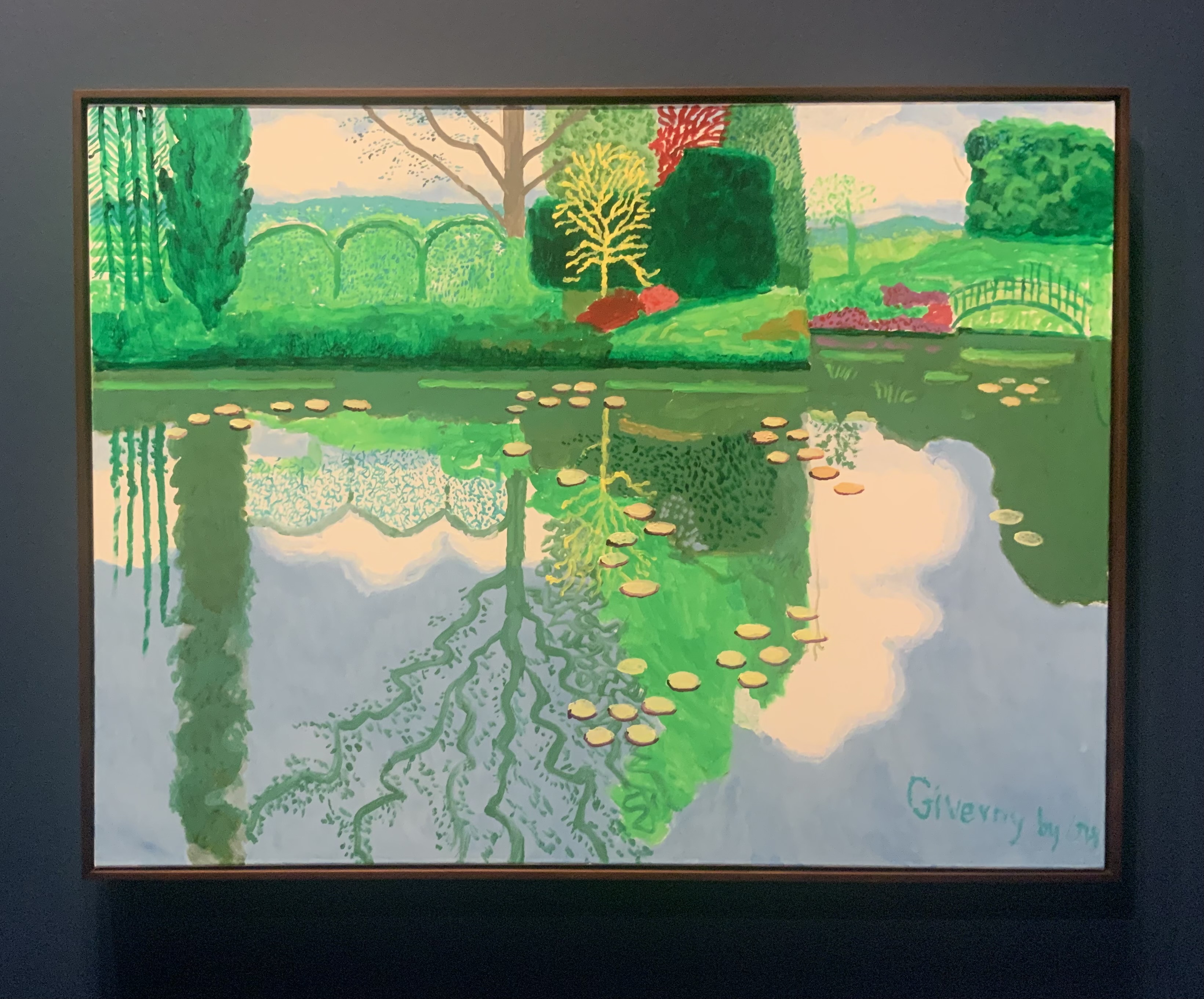
Giverny by DH, 2023, in David Hockney 25, Fondation Louis Vuitton, Paris
*an ongoing series of quotations – mostly from artists, to artists – that offers wisdom, inspiration, and advice for the sometimes lonely road we are on.
If you want to lose faith in the concept of “good” art, just consider all the artists who were brushed aside as feckless losers in their own day – El Greco, Van Gogh, Monet, Gauguin, Cézanne, the list goes on – only to get their own museum wings and their paintings plastered on tote bags today.
Bianca Booker in Get the Picture: A Mind-Bending Journey Among the Inspired Artists and Obsessive Friends Who Taught Me How to See
Comments are welcome!
Pearls from artists* # 680

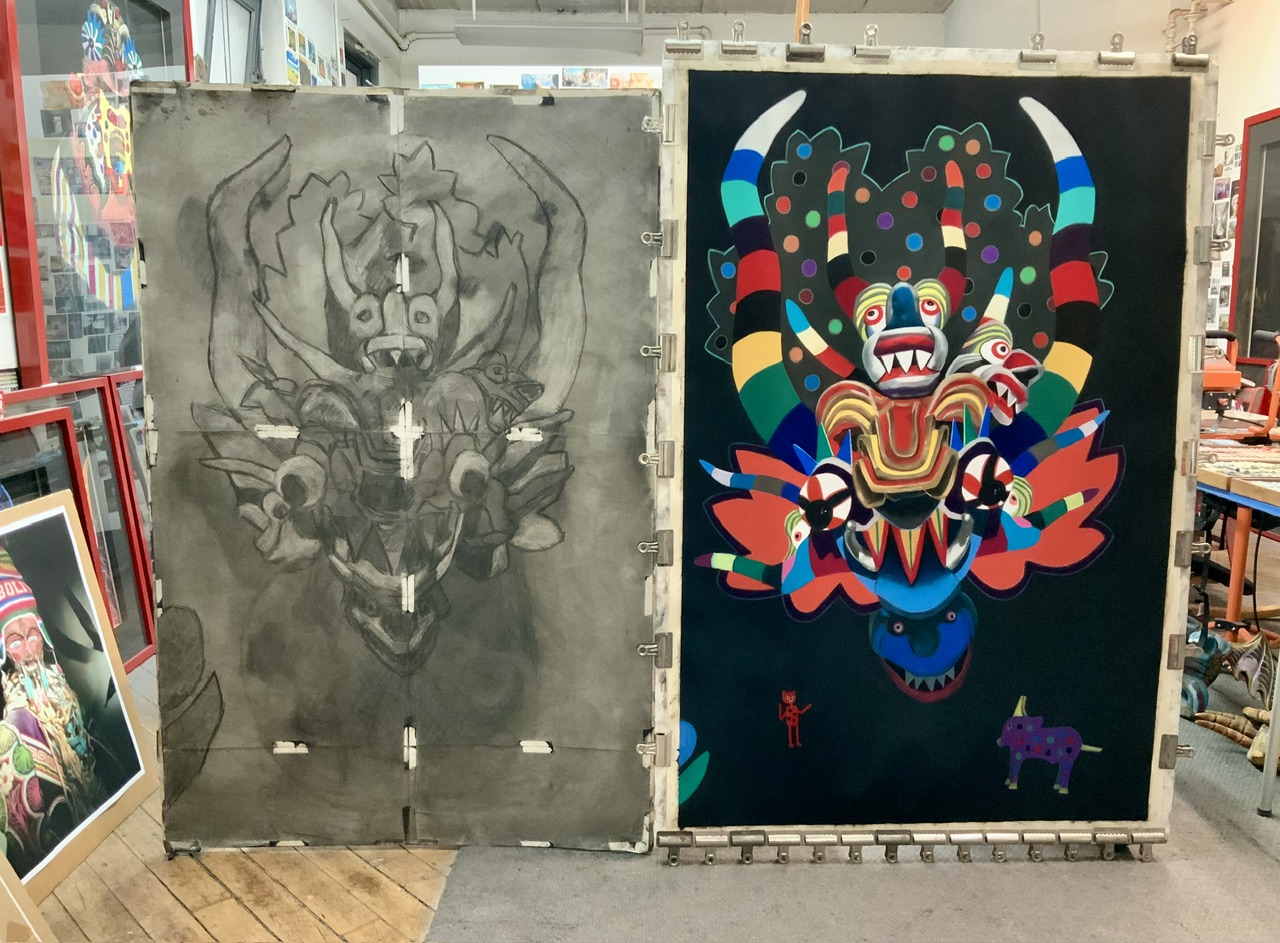
“Sacrificial” (on the wall) and “Trickster” (on the floor)
*an ongoing series of quotations – mostly from artists, to artists – that offers wisdom, inspiration, and advice for the sometimes lonely road we are on.
What makes a work transcendent and powerful is a personal intensity, an ‘extra’ quality. Yet that intensity is exclusive to each artist: extra strangeness, subtlety, causticity, bravado, sensuality, rawness, grandiosity, succinctness, mystery, vulnerability, truth, etc. For an individual artist to infuse an object or an experience with their own ‘extra’ quality requires not only skill or ideas, but the profound benevolence of consistently delivering in spades.
It is this passion and genuine feeling, specific to each creator, that lives on in the art as a gift. It is wrapped up in the work, forever suspended in time. The artist says,
Here… everything I possessed in this moment is embodied in this object… All skills I have painstakingly learned, all of the knowledge I possess, the joy and pain I have felt and all the experiences I have lived. I spun these into the perfect, most sublime form, and packed it up, but for you to unwrap anytime you need sustenance. It will nourish, comfort, and surround you, because you have chosen it.
Each viewer selects which works of art speak to them… which embodied feelings, concepts, and knowledge they value. An empathic connection is forged through the art object or experience. What is love, but to say to someone, ‘you are truly seen and understood?’ Art offers this as well, by reaching out to puncture through the membrane of our emotional isolation, to articulate how we feel in the moments when we cannot find words. It tells the artist and viewer alike, ‘You are not alone. You are not alone in how your brain works. You are not alone in the pain you feel. You are not alone in what you notice or appreciate, or in how much love you have to give.’
Pour that love into an art object. It can handle all the devotion you pack into it, and more.
Kate Kretz in Art From Your Core: A Holistic Guide to Visual Voice
Comments are welcome!
Pearls from artists* # 679
*an ongoing series of quotations – mostly from artists, to artists – that offers wisdom, inspiration, and advice for the sometimes lonely road we are on.
PC: In your painting, you’ve always kept this speed of movement. One senses that you work something out slowly, deep down, that it’s hard work, but there’s always something fresh about its expression
HM: That’s because I revise my notion several times over. People often add or superimpose completing things without changing their plan, whereas I rework my plan every time. I always start again, working from the previous state. I try to work in a contemplative state, which is very difficult: contemplation is inaction and I act in contemplation.
In all the studies I’ve made from my own ideas, there’s never been a faux pas because I’ve always unconsciously had a feeling for the goal; I’ve made my way toward it the way one heads north, following the compass. What I’ve done, I’ve done by instinct, always with my sights on a goal I still hope to reach today. I’ve completed my apprenticeship now. All I ask is four or five years to realize the goal.
PC: Delacroix said that too. Great artists never look back.
HM: Delacroix also said – ten years after he’d left the place – “I’m just beginning to see Morocco.” He needed the perspective. Rodin said to an artist, “You need to stand back a long way for sculpture.” To which the student replied, “Master, my studio is only ten meters wide.”
Chatting With Henri Matisse: The Lost 1941 Interview, Henri Matisse with Pierre Courthion, edited by Serge Guilbaut
Comments are welcome!
Pearls from artists* # 678
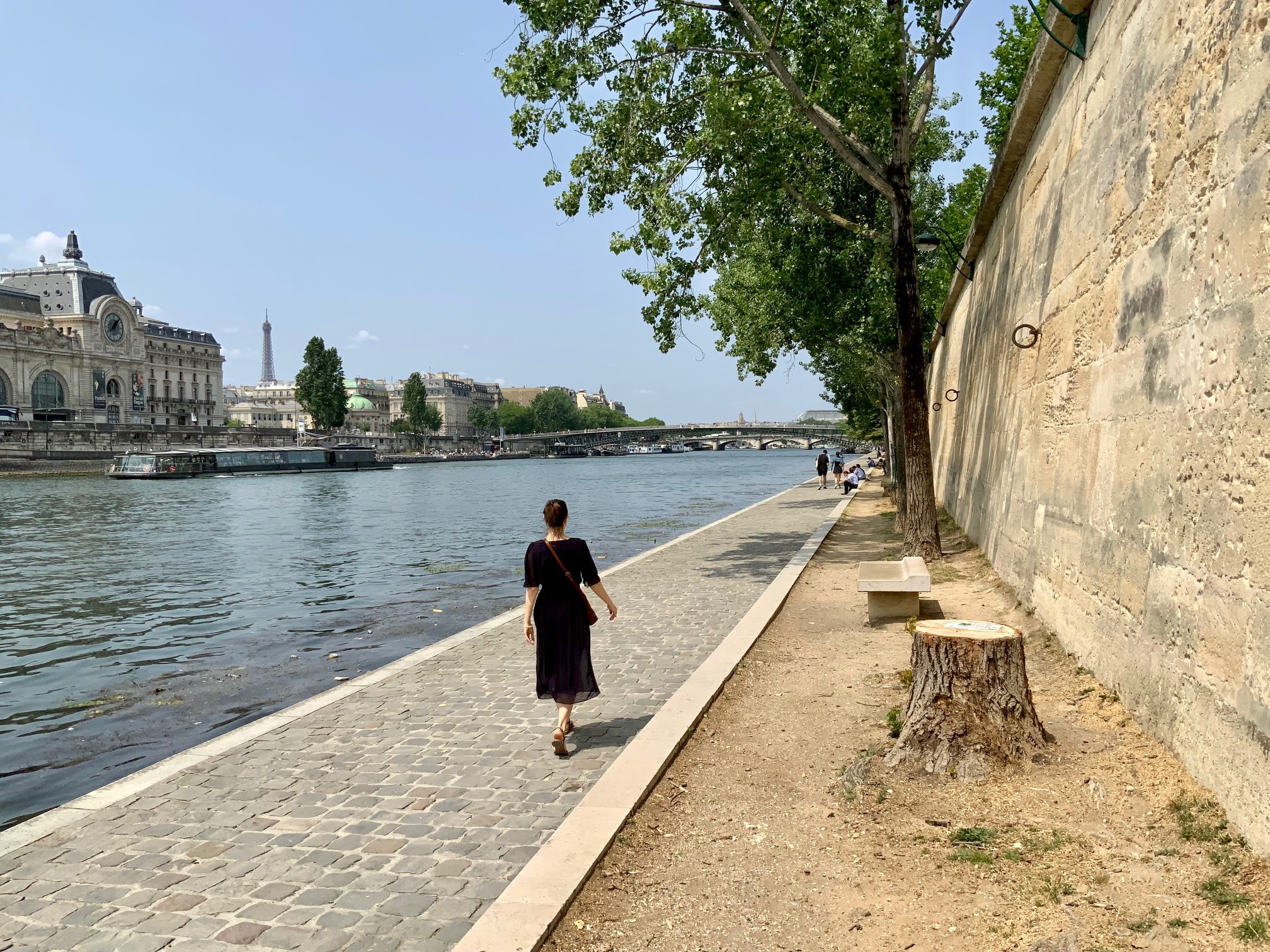
Along the Seine, Paris, France
*an ongoing series of quotations – mostly from artists, to artists – that offers wisdom, inspiration, and advice for the sometimes lonely road we are on.
When I was a bit weary, losing hope, I would go out and walk across Paris. Sometimes I would meet an art lover who would say a word to me, nothing binding for him, but all the same it would buck me up a bit. For example, he might say: “What are you up to? I’d love to see what you’ve done. I’ll come and see you on Thursday at eleven. I’d go home feeling like a new man; I’d tell my wife how enthusiastic I felt; but on Thursday at ten I’d get an express letter saying, “Dear friend, please excuse me, something has come up.” But that wouldn’t matter so much because I’d made a new start. The deal had fallen through, but it’d still helped because it had given me new momentum.
Chatting With Henri Matisse: The Lost 1941 Interview, Henri Matisse with Pierre Courthion, edited by Serge Guilbaut
Comments are welcome!


 barbararachkoscoloreddust.com