Blog Archives
Pearls from artists* # 379

“Blind Faith,” 38″ x 58,” soft pastel on sandpaper
* an ongoing series of quotations – mostly from artists, to artists – that offers wisdom, inspiration, and advice for the sometimes lonely road we are on.
Elaine’s and Bill’s [de Kooning] relationship involved a continual exchange of ideas that wasn’t restricted to conversations with friends. In the quiet of their studio when they were finally alone, they’d climb into bed and Elaine would read to Bill. Faulkner was a favorite. She also read Ambrose Bierce’s Civil War tales. And she would read Kierkegaard. That nineteenth-century father of Existentialism wrote with great passion about the essential solitude and uncertainty of the human struggle. They were words of consolation for Bill and Elaine who, though confident in their paths as artists, could not have been free of the nagging fear that they might spend their lives looking and never find what they sought in their work. Kierkegaard seemed to say that it didn’t matter, that it was striving that counted, and he described the need to reconcile oneself to the unknowable that was man’s fate. The artist, he said, had a crucial role to play in that regard. Like a religious figure who was an envoy from a realm most people could not access, the artist through his or her work revealed pure spirit so that men mired in the bitter reality of daily life might find the strength to continue.
Mary Gabriel in Ninth Street Women
Comments are welcome!
Pearls from artists* # 378
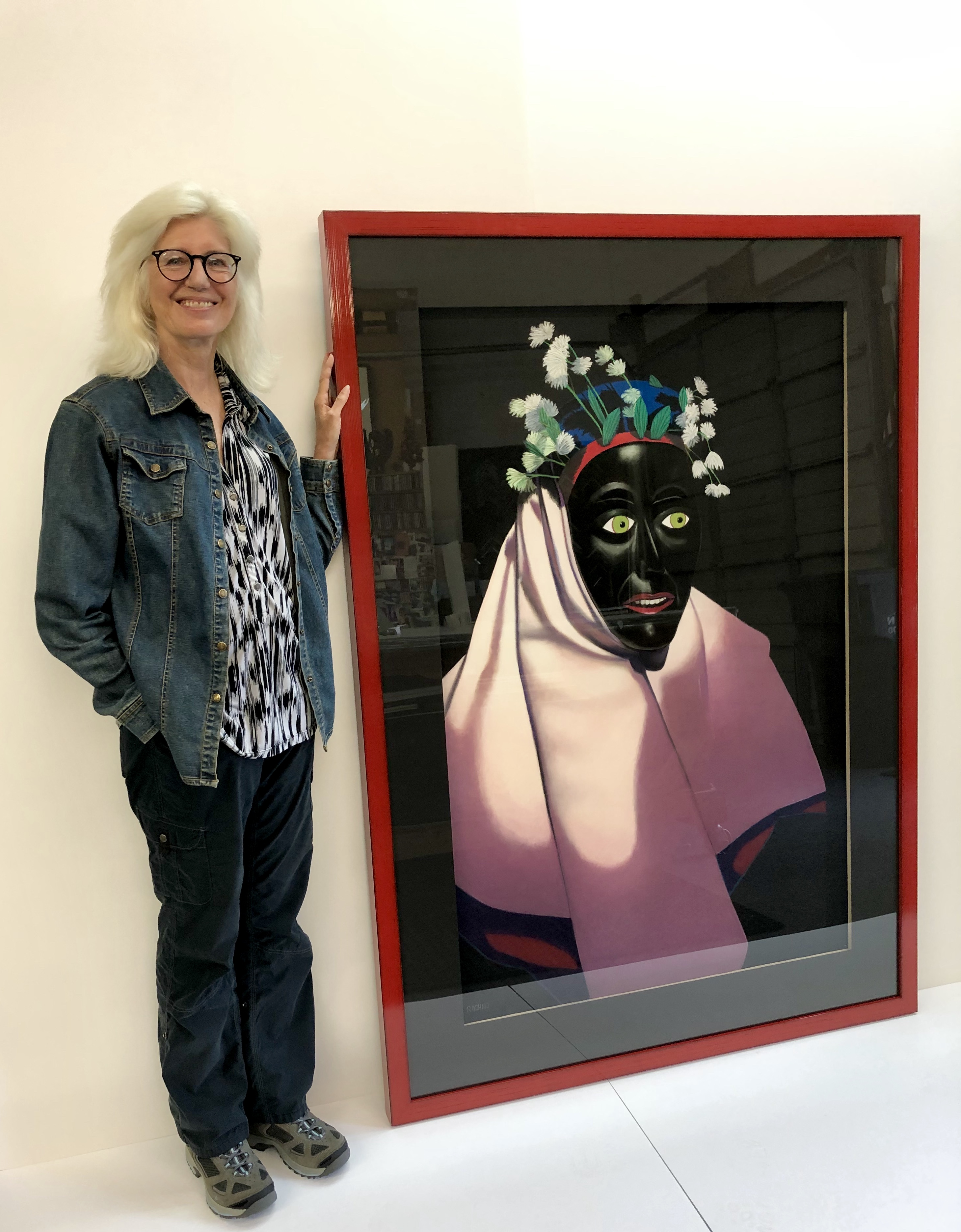
With “Poseur,” Soft Pastel on Sandpaper, 70” x 50,” 2019
* an ongoing series of quotations – mostly from artists, to artists – that offers wisdom, inspiration, and advice for the sometimes lonely road we are on.
[John] Graham told Lee [Krasner] and Jackson [Pollock] they were at the most wonderful part of their artistic journey because they were unknown and therefore free, and that there was only one thing they had to dread: fame.
How many men of great talent on their way to remarkable achievement in the present day are ruthlessly destroyed by critics, dealers, and public while mediocre, insensitive hacks, who by intrigue and industrious commercial effort have gained recognition and success, will go down in history with their inane creations. Success, fame, and greatness coincide very seldom. The great are not recognized during their life-time… Poe, Van Gogh,Rembrandt, Cezanne, Gauguin, Modigliani, Pushkin, Rimbaud, Baudelaire, and others could not make even a miserable living out of their art.
As Graham described it, true art could never be of the world because it was always steps, decades, light-years ahead of it. Artists, therefore, had no need to be part of the world, either. Their only duty was to persevere. Humanity, he said, depended on it.
Mary Gabriel in Ninth Street Women
Comments are welcome!
Q: What’s on the easel today?
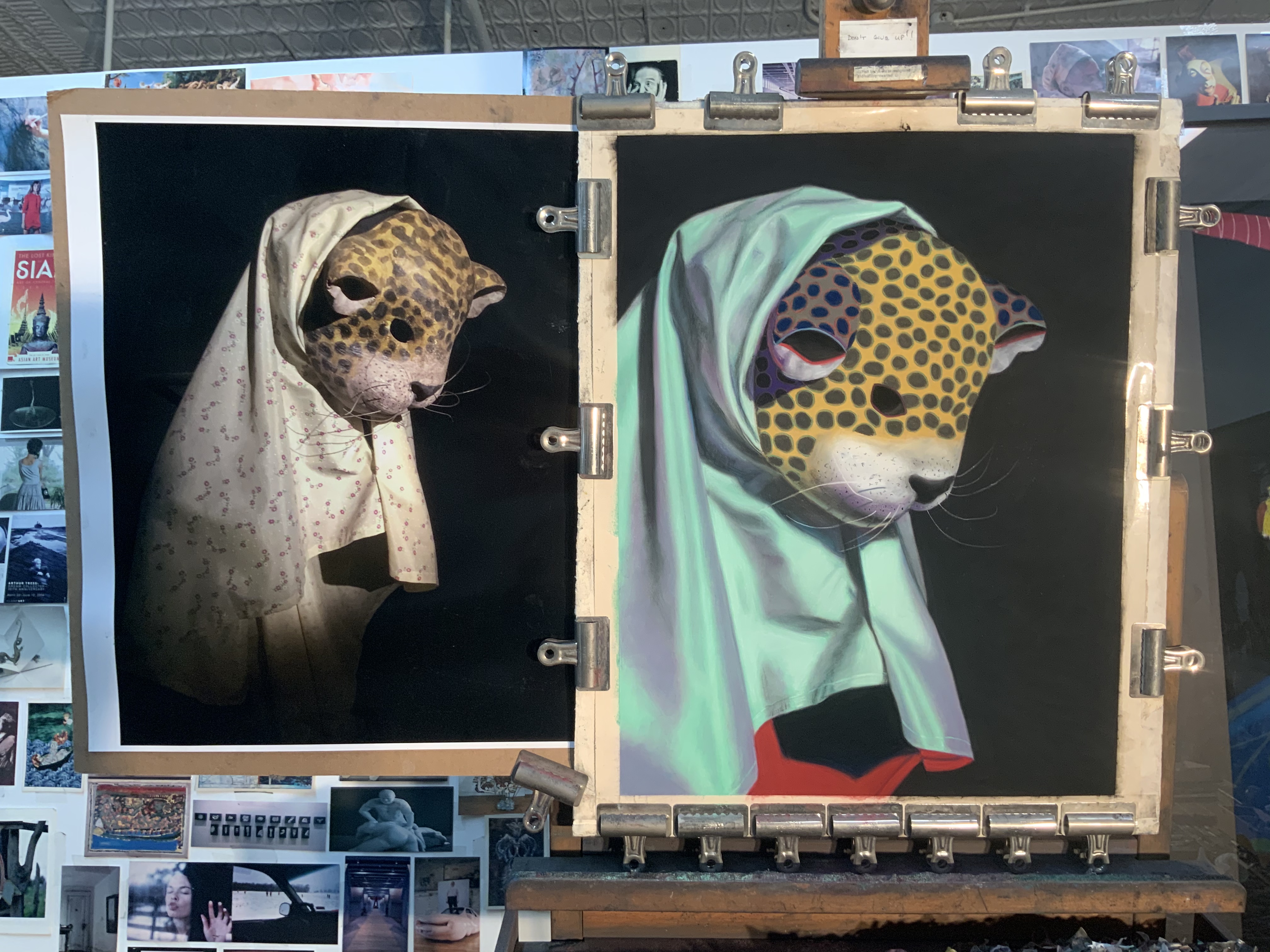
Work in progress
A: “Schemer,” Soft Pastel on Sandpaper, 26” x 20” is nearly finished. Among other things, I will do more blending to soften the transitions from light to dark in the fabric.
Comments are welcome!
Start/Finish of “Sentinels,” Soft Pastel on Sandpaper, 38” x 58”
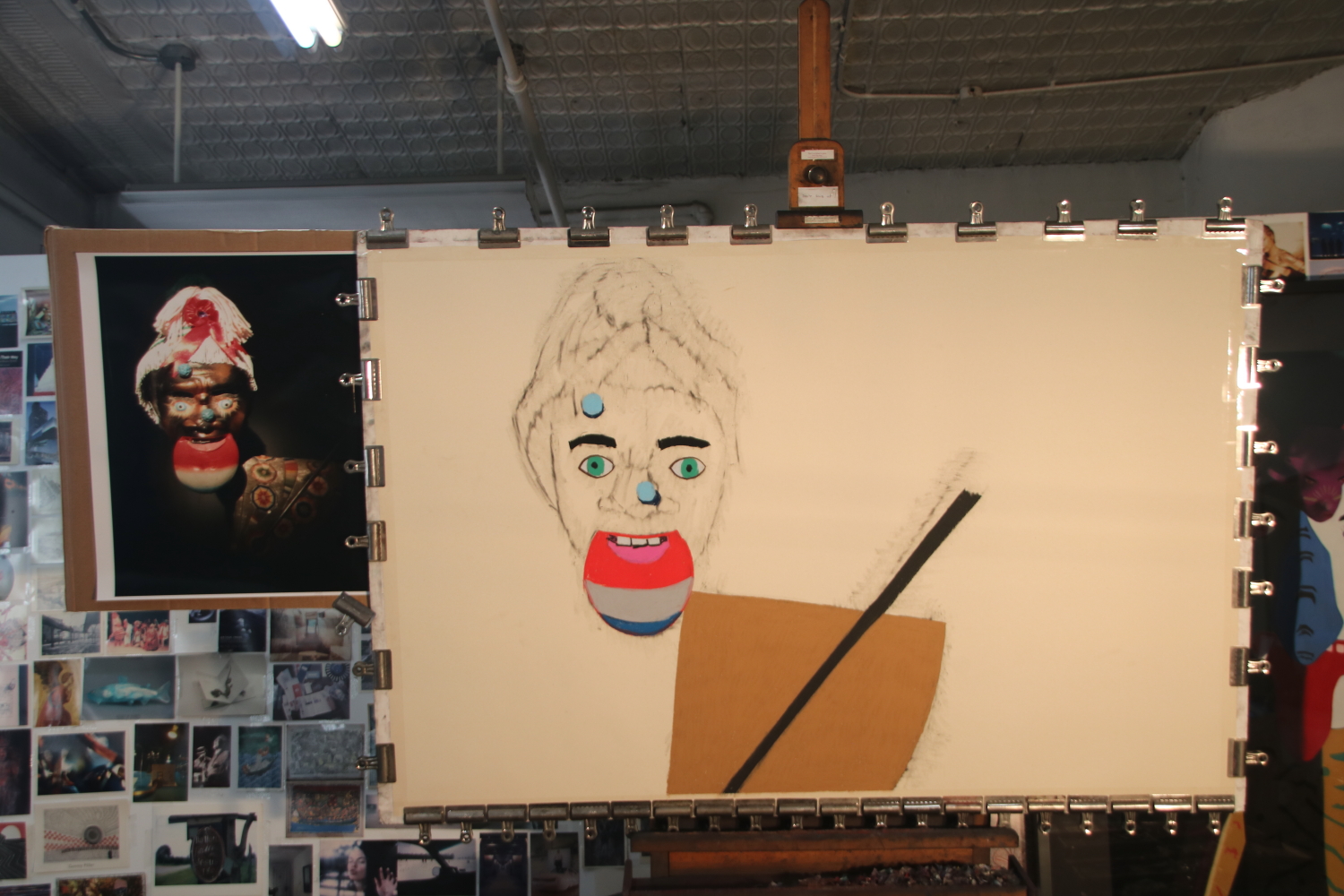
Start
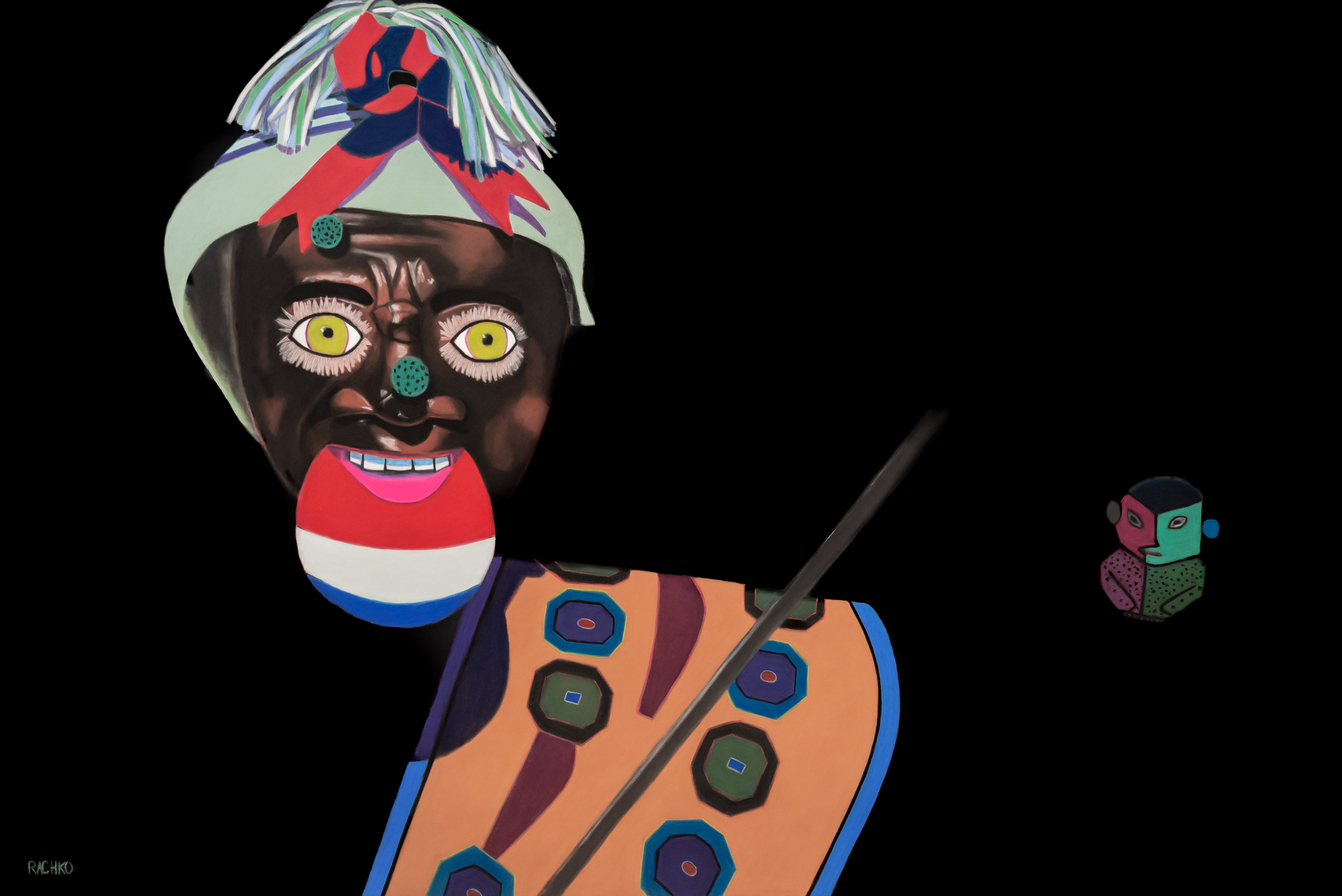
Finished, signed lower left
Comments are welcome!
Pearls from artists* # 371
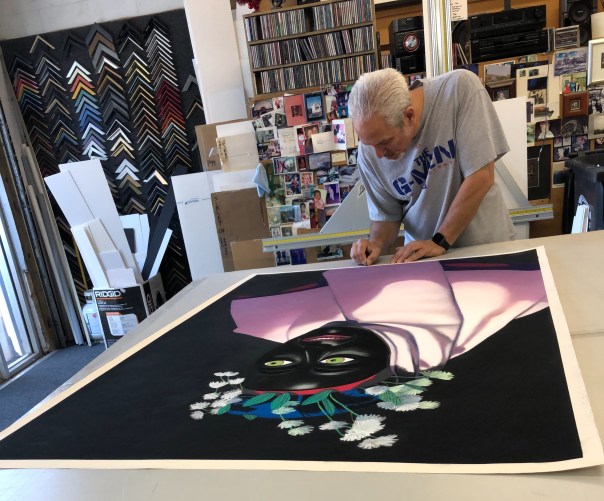
“Poseur,” Soft Pastel on Sandpaper, 58” x 38” at the framer
* an ongoing series of quotations – mostly from artists, to artists – that offers wisdom, inspiration, and advice for the sometimes lonely road we are on.
If you look at the work of an artist over a lifetime there is always transformation. Some hit a lively pace early on and then seem to lose it later. Others find that place progressively throughout their life; others still find it late. But regardless, they are all learning to isolate the poetic within them. That focus on the poetic in our own work increases our appreciation of the beauty around us, increases our growth, and increases our divine connection.
One thing you see in many artists’ work is that as they continue over the decades to translate their experience of the poetic into form, they learn to communicate better. They strip away all the extraneous stuff and artistic baggage they had. They say more with less.
Ian Roberts in Creative Authenticity: 16 Principles to Clarify and Deepen Your Artistic Vision
Comments are welcome!
Q: What’s on the easel today?
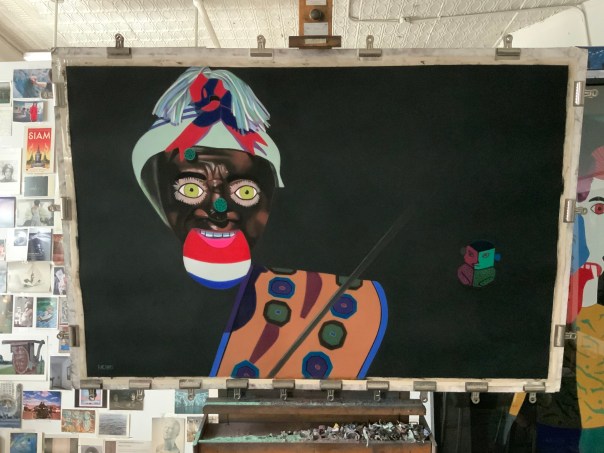
“Sentinels,” Soft Pastel on Sandpaper, 38” x 58”
A: At last, I have put finishing touches on “Sentinels,” 38” x 58,” and signed it! The photographer will photograph it and then, on my next trip south, this painting goes to the framer in Virginia.
Comments are welcome!
Q: Your work is unlike anyone else’s. There is such power and boldness in your pastels. What processes are you using to create such poignant and robustly colored work?

Barbara working on an interview. Photo: Maria Cox
A: For thirty-three years I have worked exclusively in soft pastel on sandpaper. Pastel, which is pigment and a binder to hold it together, is as close to unadulterated color as an artist can get. It allows for very saturated color, especially using the self-invented techniques I have developed and mastered. I believe my “science of color” is unique, completely unlike how any other artist works. I spend three to four months on each painting, applying pastel and blending the layers together to mix new colors on the paper.
The acid-free sandpaper support allows the buildup of 25 to 30 layers of pastel as I slowly and meticulously work for hundreds of hours to complete a painting. The paper is extremely forgiving. I can change my mind, correct, refine, etc. as much as I want until a painting is the best I can create at that moment in time.
My techniques for using soft pastel achieve rich velvety textures and exceptionally vibrant color. Blending with my fingers, I painstakingly apply dozens of layers of pastel onto the sandpaper. In addition to the thousands of pastels that I have to choose from, I make new colors directly on the paper. Regardless of size, each pastel painting takes about four months and hundreds of hours to complete.
I have been devoted to soft pastel from the beginning. In my blog and in numerous interviews online and elsewhere, I continue to expound on its merits. For me no other fine art medium comes close.
My subject matter is singular. I am drawn to Mexican, Guatemalan, and Bolivian cultural objects—masks, carved wooden animals, papier mâché figures, and toys. On trips to these countries and elsewhere I frequent local mask shops, markets, and bazaars searching for the figures that will populate my pastel paintings. How, why, when, and where these objects come into my life is an important part of the creative process. Each pastel painting is a highly personal blend of reality, fantasy, and autobiography.
Comments are welcome!
Pearls from artists* # 368

Leonora Carrington at Di Donna Galleries, NYC
* an ongoing series of quotations – mostly from artists, to artists – that offers wisdom, inspiration, and advice for the sometimes lonely road we are on.
Whether we look to the contradictory functions that people are asked to fulfill today – devoted parent and loyal employee, faithful spouse and emancipated libertine, mature adult and eternal child – or to the ways in which identities are disbursed across divergent political forums, information systems, and communication networks, the same observation holds: we are infinitely divided. What is called an individual today is an abstract assemblage of fragments. Phone calls, emails, voice mails, blogs, videos and photos, surveillance tapes, banking records: the body is dwarfed by the virtual tendrils that shoot out if it through time and space, any of which is likely to claim to be the real “you” as you are. Only the imaginal mind can lead us out of the maze, with art providing the symbols that mark the way to the elusive essence that truly defines us.
J.F. Martel in Reclaiming Art in the Age of Artifice:A Treatise, Critique, and Call to Action
Comments are welcome!
Pearls from artists* # 364
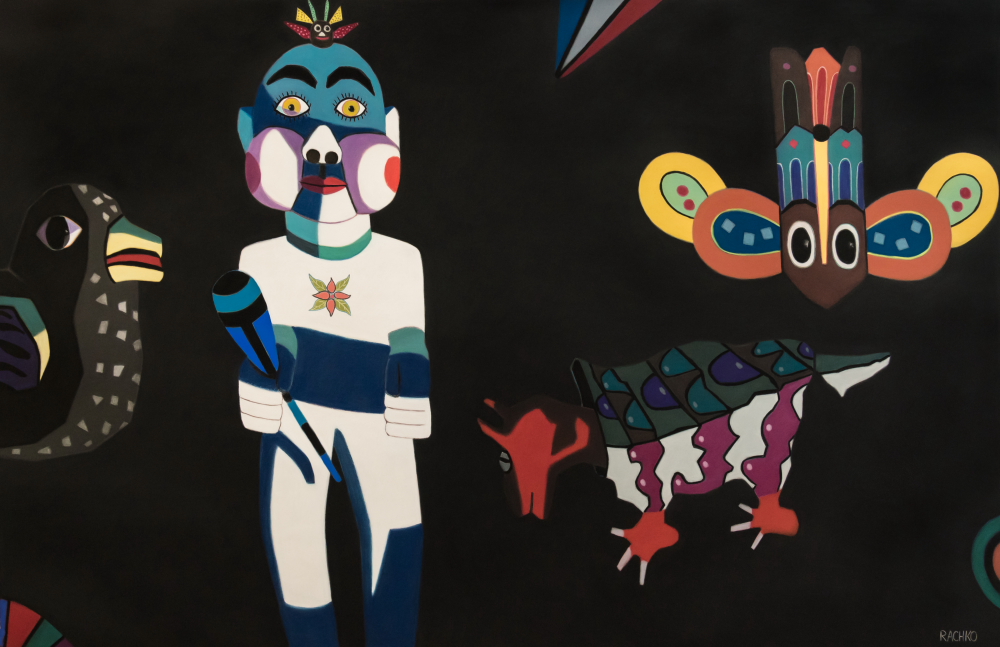
“White Star,” soft pastel on sandpaper, 38″ x 58″
* an ongoing series of quotations – mostly from artists, to artists – that offers wisdom, inspiration, and advice for the sometimes lonely road we are on.
If we are left unmoved by a painting of the Virgin, it is likely because the artist was unmoved in the painting of her. The subject matter is mostly irrelevant; it is important only as a vehicle for the artist’s attention. Authenticity comes from how deeply the artist felt. And this is the key to how much silence, how much consciousness or attention, the art contains.
… subject matter, if the artist is even using it, is just an armature for the artist to engage his intensity of feeling. It is the quality of your attention that influences how you see and how deeply you feel. Different artists have affinities for different subject matter as a way into expressing themselves deeply. And that depth is the quality, we, the viewers, respond to. It is what we continue to respond to over the centuries in great works of art. The fact that things last, that we continue to admire them, is in the end a good indicator of their quality, of their silence. Art museums therefore, have little nodes of silence nestling in their galleries. They are filled with, to use André Malraux’s expression, “the voices of silence.”
Ian Roberts in Creative Authenticity: 16 Principles to Clarify and Deepen Your Artistic Vision
Comments are welcome!
Start/Finish of “Poseur,” Soft Pastel on Sandpaper, 58” x 38”
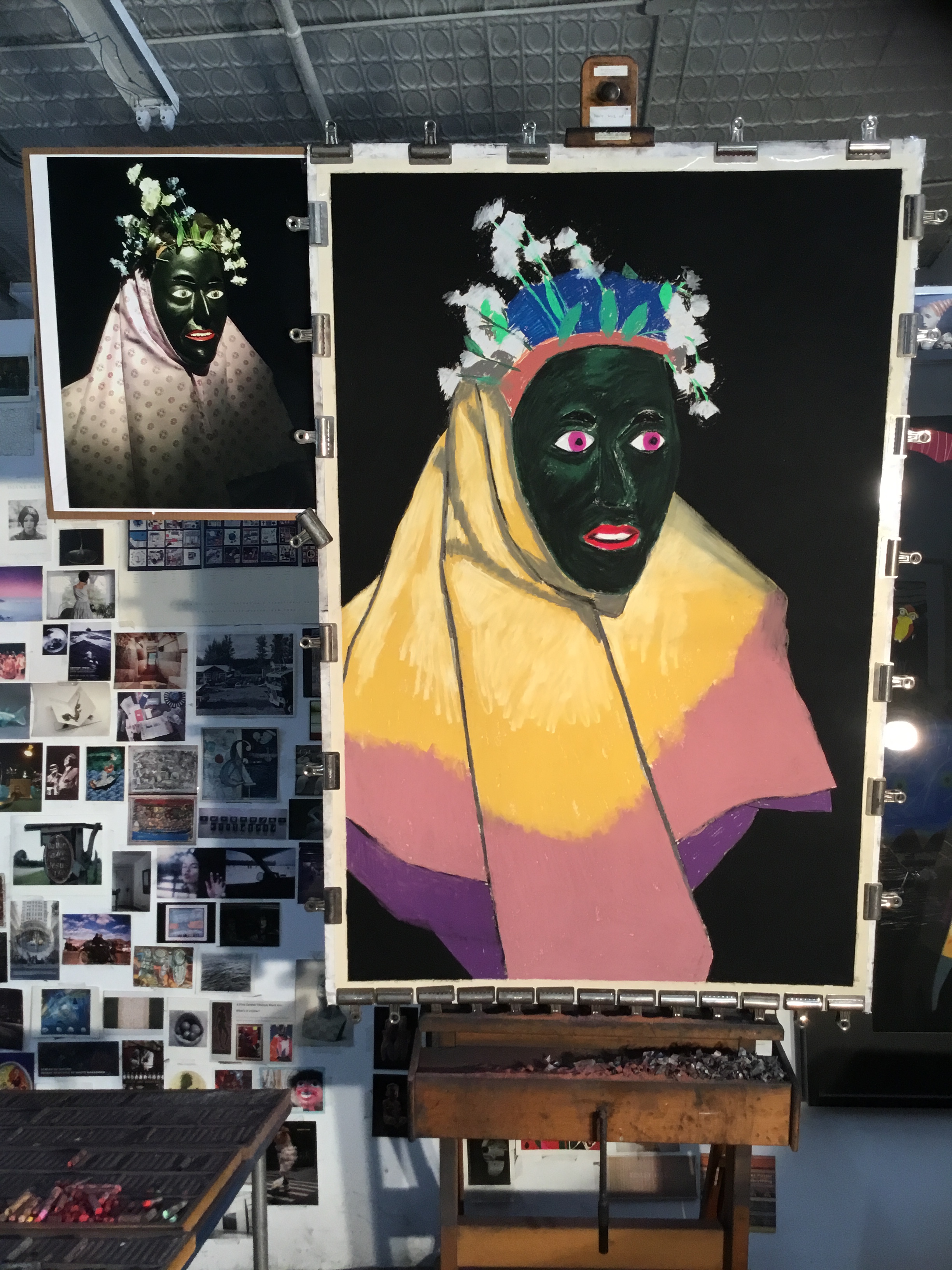
Start
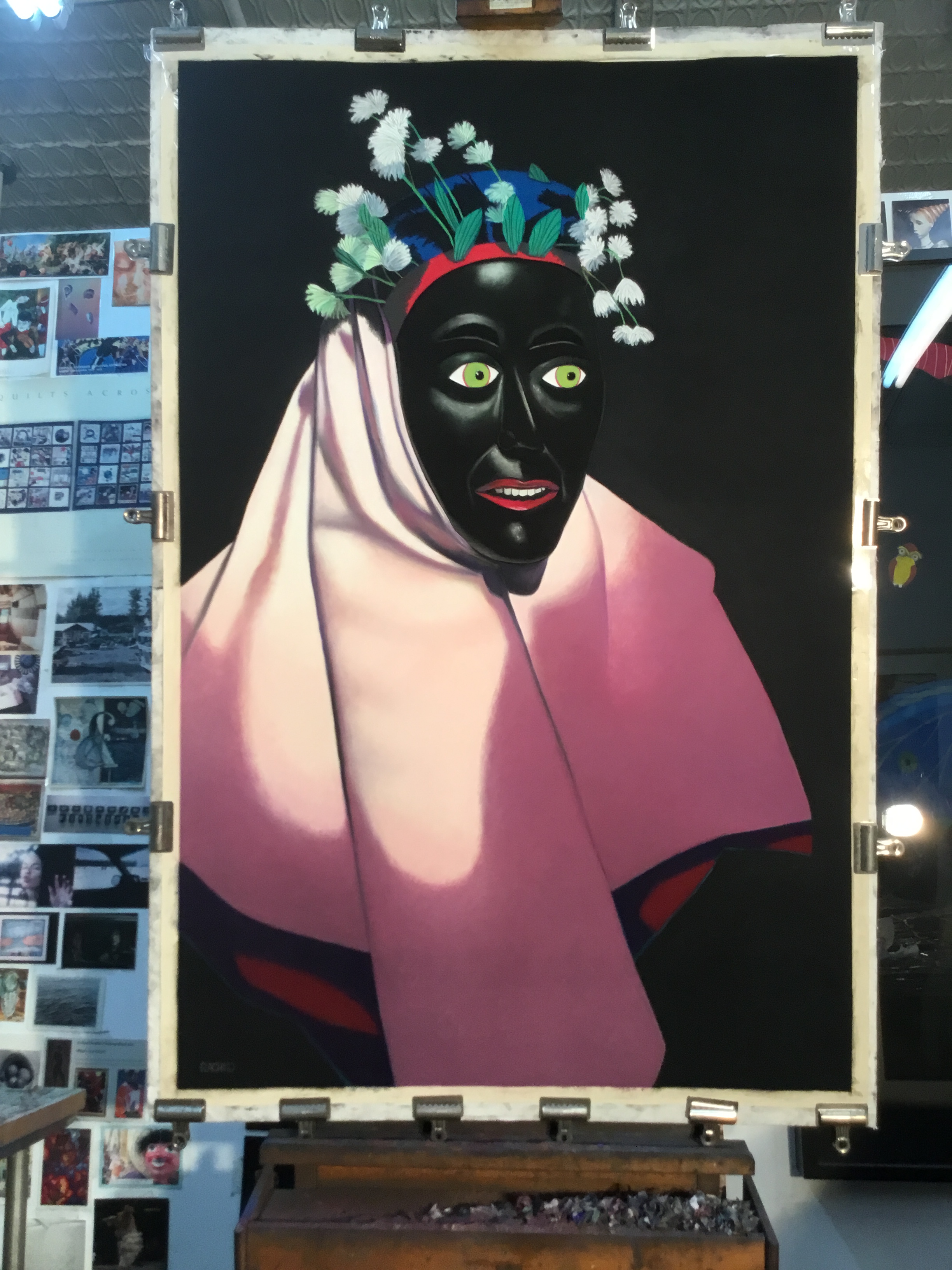
Finished, signed lower left
Comments are welcome!


 barbararachkoscoloreddust.com