Blog Archives
Pearls from artists* # 181

“Epiphany,” soft pastel on sandpaper, 38″ x 58″
* an ongoing series of quotations – mostly from artists, to artists – that offers wisdom, inspiration, and advice for the sometimes lonely road we are on.
It takes courage to face the unfamiliar, to espouse the different; courage to fight one’s own prejudices only less than those of others. Was it not a little child who first dared call the emperor naked? It took great fortitude for Kepler to adhere to his new notion of infinity (as the second focus of a parabola), for, as he said, “The idea seems absurd, but I can find no flaw in it”; just as it did for Galileo to murmur among his inquisitors, “Yet the world does move.” Most of us will never achieve great imaginative insights; we might at least attempt to be tolerant of those offered by others.
The Biological Basis of Imagination by R.W. Gerard in The Creative Process edited by Brewster Ghiselin
Comments are welcome!
Q: You often speak about the Mexican and Guatemalan figures in your paintings as serving a function analogous to actors in a repertory company. In other words, a particular figure plays a different role each time it appears in one of your pastel paintings. Would you choose a figure and show how you have painted it through the years?
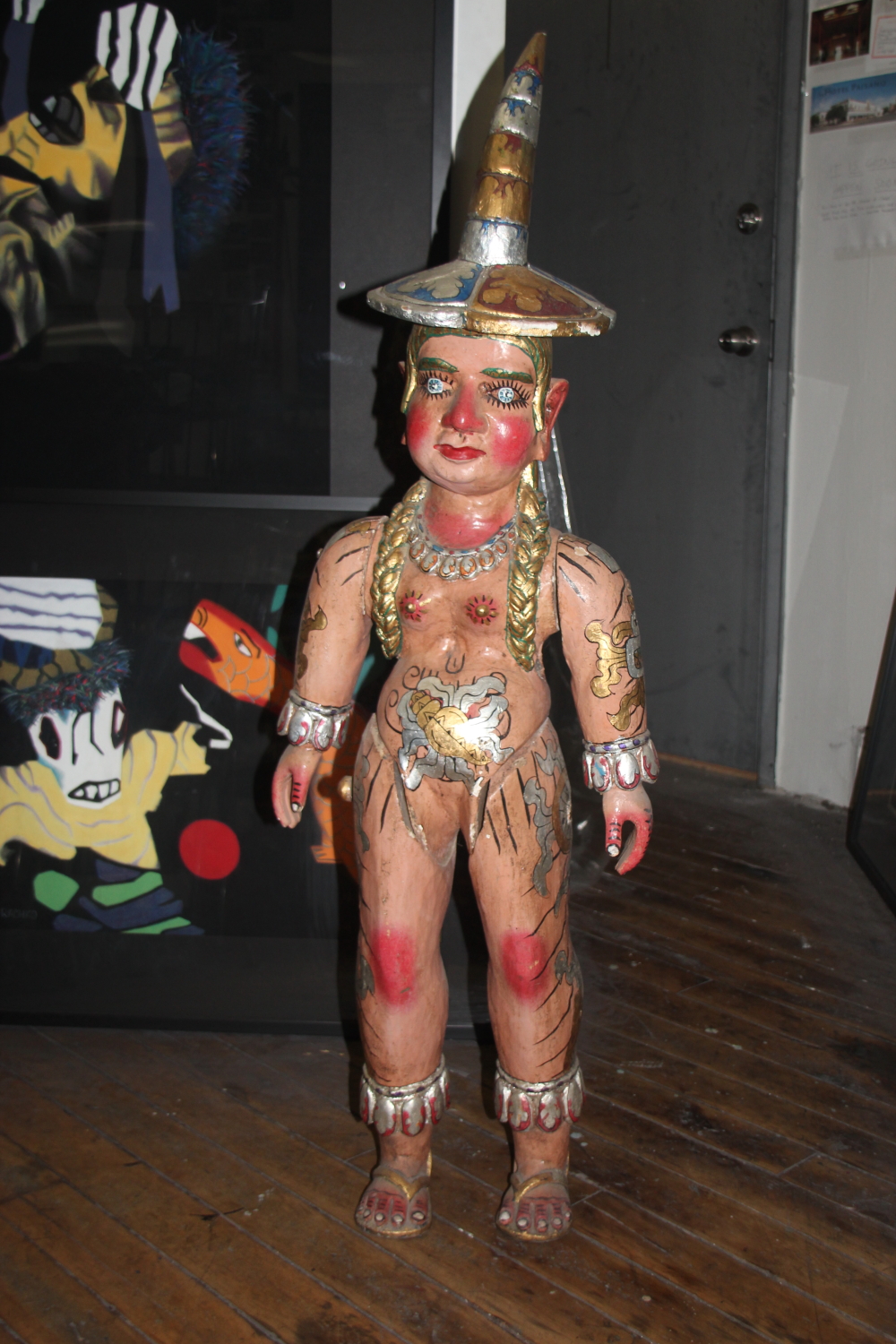
A Chinese-influenced figure Barbara brought home from Mexico City in 1999.
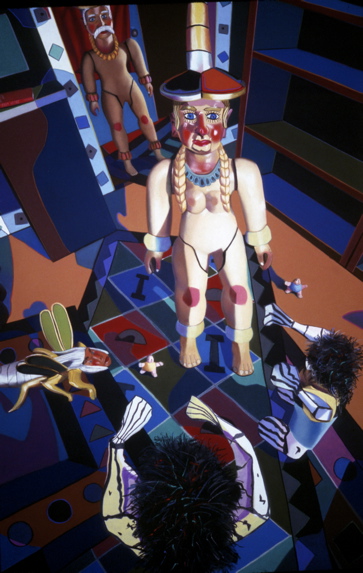
“Answering the Call,” 58″ x 38,” soft pastel on sandpaper, 2000
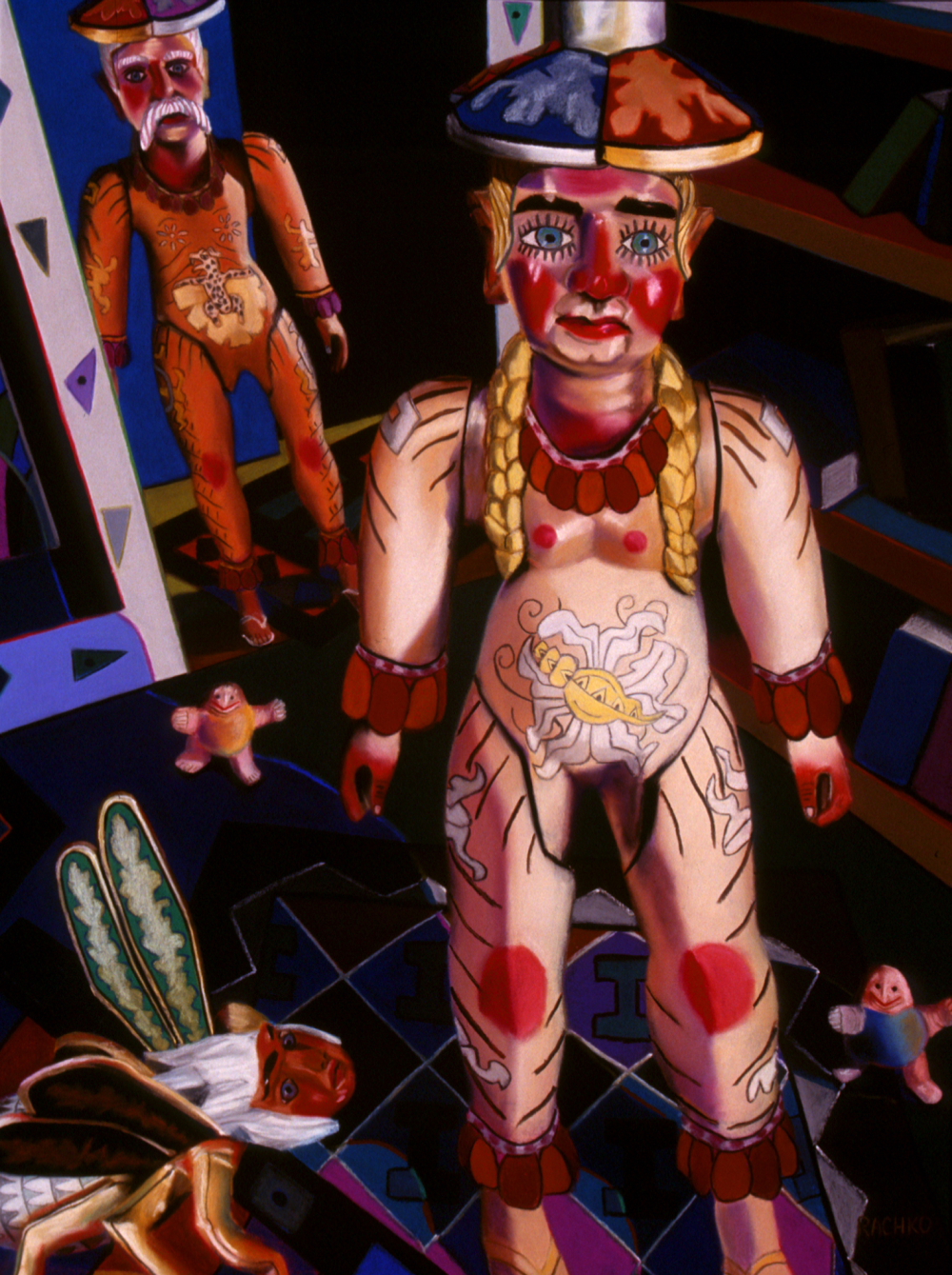
“Scene Fifteen: Living Room,” 26″ x 20″ soft pastel on sandpaper, 2002
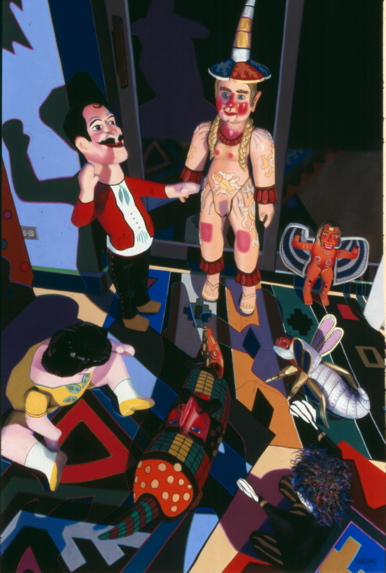
“Sometimes He Still Tried to Restrain Her,” 58″ x 38,” soft pastel on sandpaper, 2005
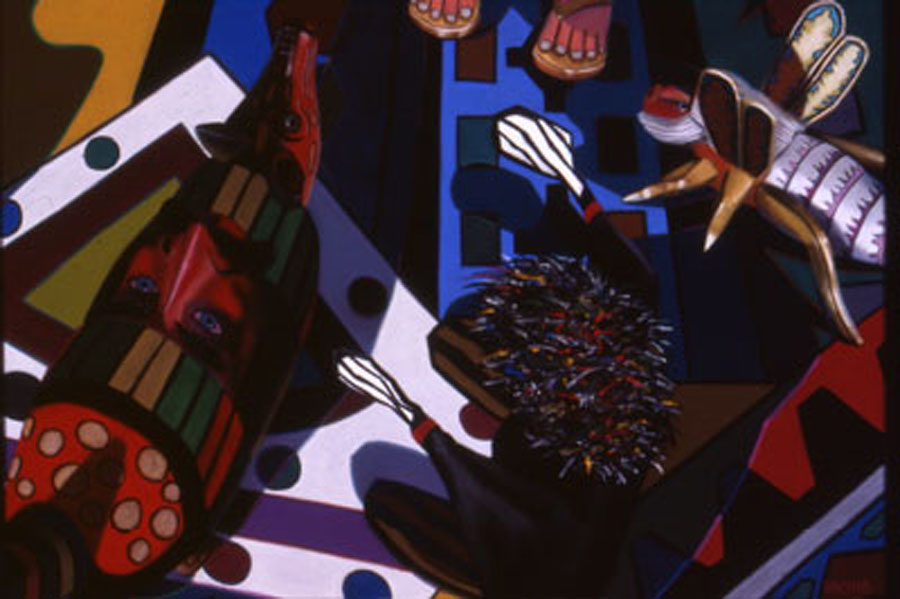
“Scene Twenty-One: Living Room,” 20″ x 26,” soft pastel on sandpaper, 2006 (see feet at top)
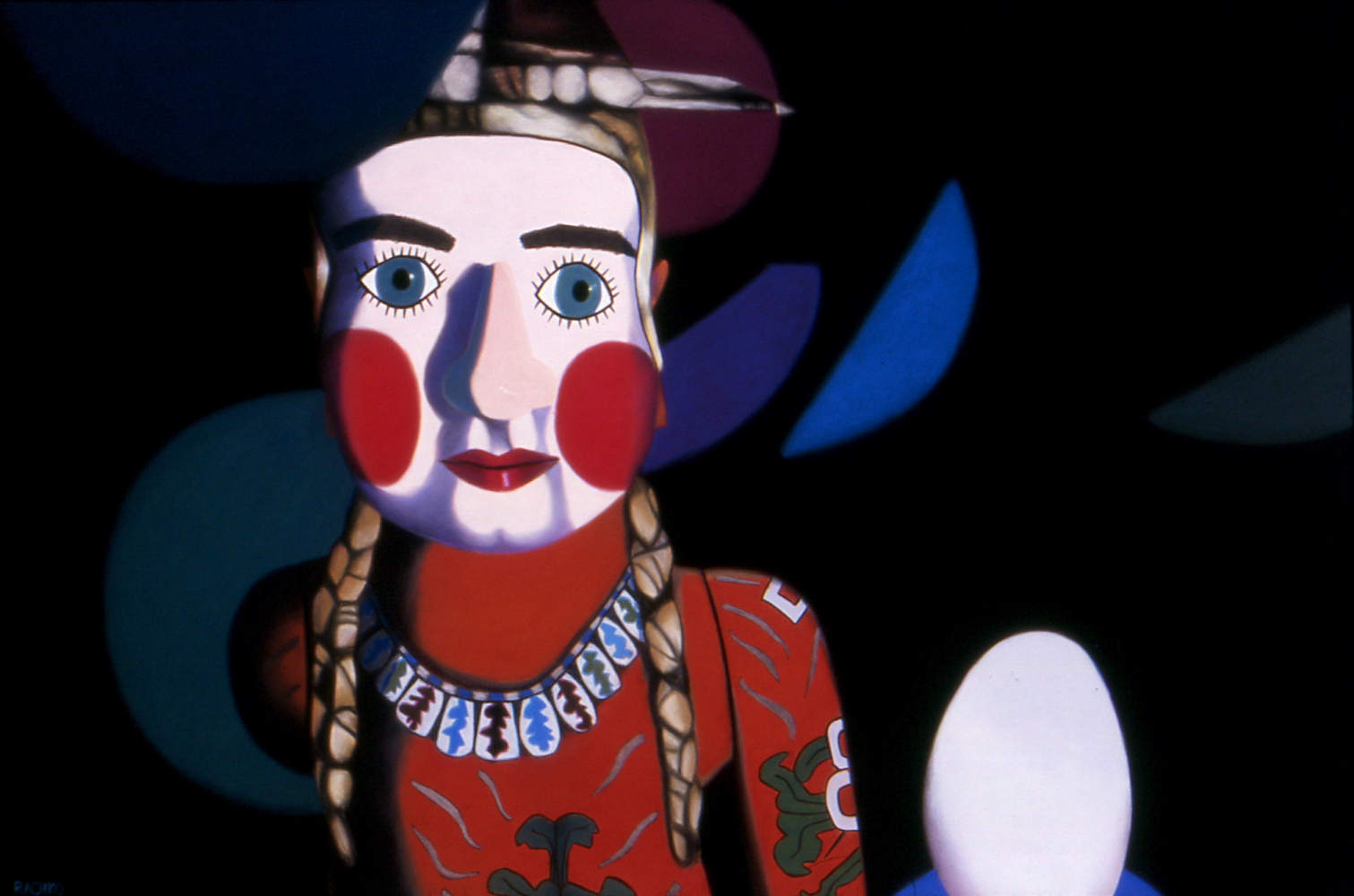
“Epiphany,” 38″ x 58,” soft pastel on sandpaper, 2012

“The Ancestors,” soft pastel on sandpaper, 58″ x 38,” 2013
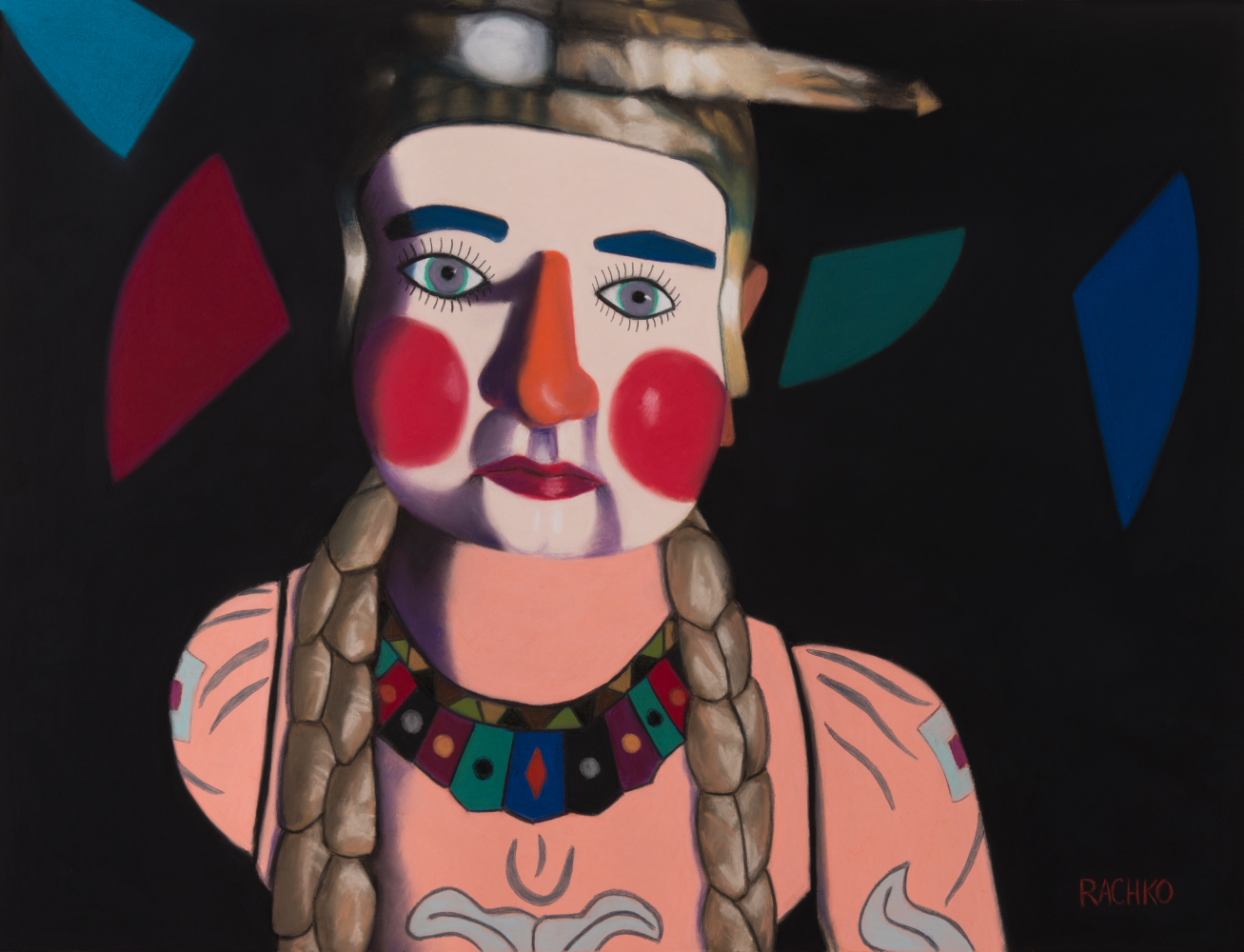
“The Storyteller,” soft pastel on sandpaper, 20″ x 26,” 2014
And she is in the painting that is on my easel now. See my February 14 blog post.
Comments are welcome!
Q: What does your creative process look like when you are ready to begin a new painting?

Preliminary sketch
A: My working methods have changed dramatically over the years with my current process being a much-simplified version of how I used to work. In other words as I pared down my imagery in the “Black Paintings,” my process quite naturally pared down, too.
One constant is that I have always worked in series with each pastel painting leading quite logically to the next. Another is that I always have set up a scene, lit and photographed it, and worked with a 20″ x 24″ photograph as the primary reference material. In the “Domestic Threats” series I shot with a 4″ x 5″ view camera. Nowadays the first step is to decide which photo I want to make into a painting (currently I have a backlog of images to choose from) and to order a 19 1/2″ x 19 1/2″ image (my Mamiya 6 shoots square images and uses film) printed on 20″ x 24″ paper. I get the print made at Manhattan Photo on West 20th Street in New York. Typically I have in mind the next two or three paintings that I want to create.
Once I have the reference photograph in hand, I make a preliminary tonal charcoal sketch on a piece of white drawing paper. The sketch helps me think about how to proceed and points out potential problem areas ahead. For example, in the photograph above I had originally thought about creating a vertical painting, but changed to horizontal format after discovering spatial problems in my sketch.
Also, I decided to make a small painting now because it has been two years since I last worked in a smaller (than my usual 38″ x 58″) size. I am re-using the photograph on which “Epiphany” is based. Using a photograph a second time lets me see how my working methods have evolved over time.
Comments are welcome!
Q: Do you have any advice for a young painter or someone just starting out as an artist?
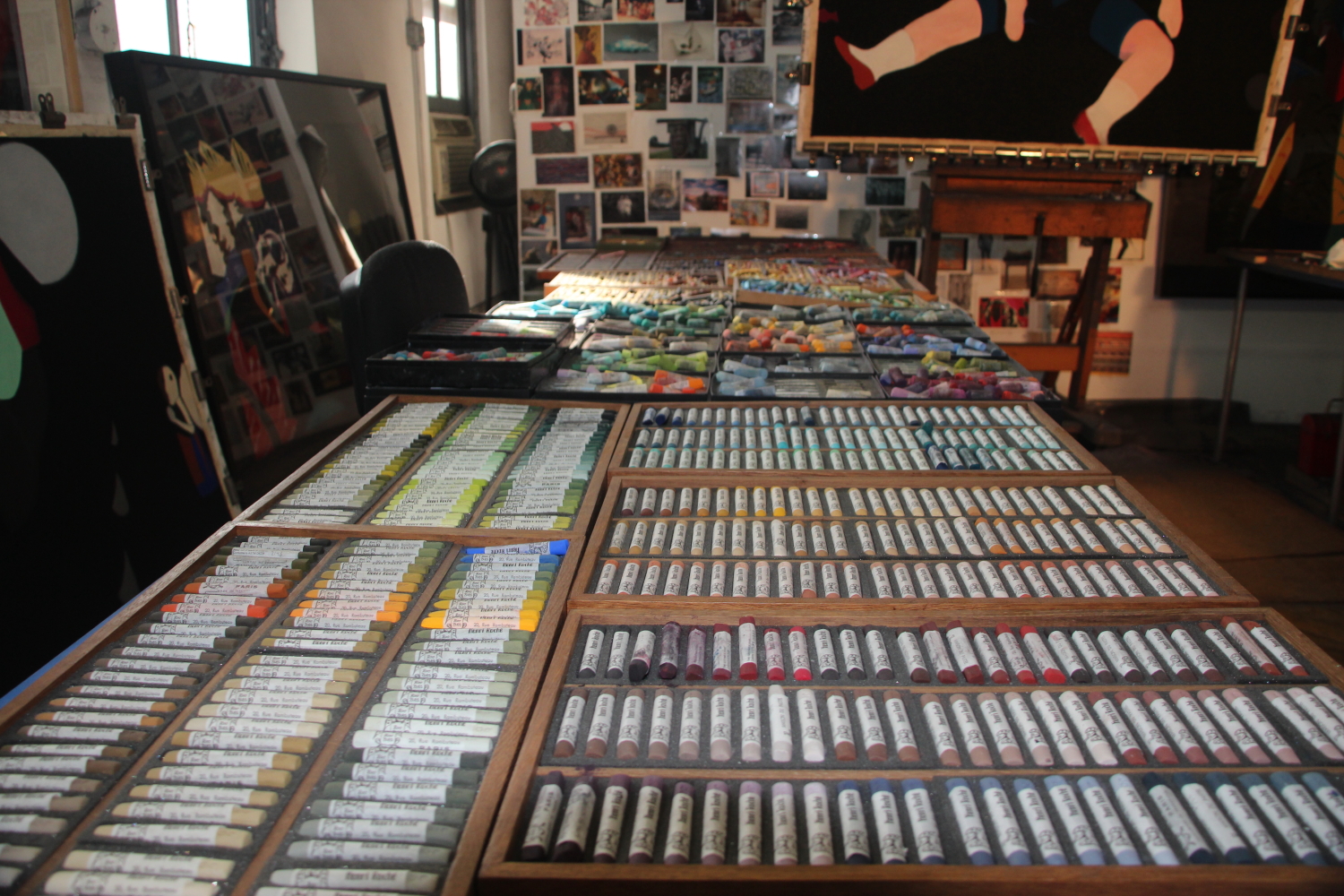
Studio
A: As artists each of us has at least two important responsibilities: to express things we are feeling for which there are no adequate words and to communicate to a select few people, who become our audience. By virtue of his or her own uniqueness, every human being has something to say. But self-expression by itself is not enough. As I often say, at it’s core art is communication. Without this element there is no art. When artists fail to communicate, perhaps they haven’t mastered their medium sufficiently so are unsuccessful in the attempt, or they may be being self-indulgent and not trying. Admittedly there is that rare and most welcome occurrence when an artistic statement – such as a personal epiphany – happens for oneself alone.
Most importantly, always listen to what your heart tells you. It knows and speaks the truth and becomes easier to trust as you mature. If you get caught up in the art world, step back and take some time to regain your bearings, to get reacquainted with the voice within you that knows the truth. Paint from there. Do not ever let a dealer or anyone else dictate what or how you should paint.
With perhaps the singular exception of artist-run cooperative galleries, be very suspicious of anyone who asks for money to put your work in an exhibition. These people are making money from desperate and confused artists, not from appreciative art collectors. With payment already in hand there is no financial incentive whatsoever for these people to sell your paintings and they won’t.
Always work in a beautiful and special place of your own making. It doesn’t need to be very large, unless you require a large space in which to create, but it needs to be yours. I’m thinking of Virginia Woolf’s “a room of one’s own” here. A studio is your haven, a place to experiment, learn, study, and grow. A studio should be a place you can’t wait to enter and once you are there and engaged, are reluctant to leave.
Be prepared to work harder than you ever have, unrelentingly developing your special innate gifts, whether you are in the mood to do so or not. Most of all remember to do it for love, because you love your medium and it’s endless possibilities, because you love working in your studio, and because you feel most joyously alive when you are creating.
Comments are welcome!
Q: Your new work explores relationships to figures through the medium of soft pastel. What prompted this departure from photography?
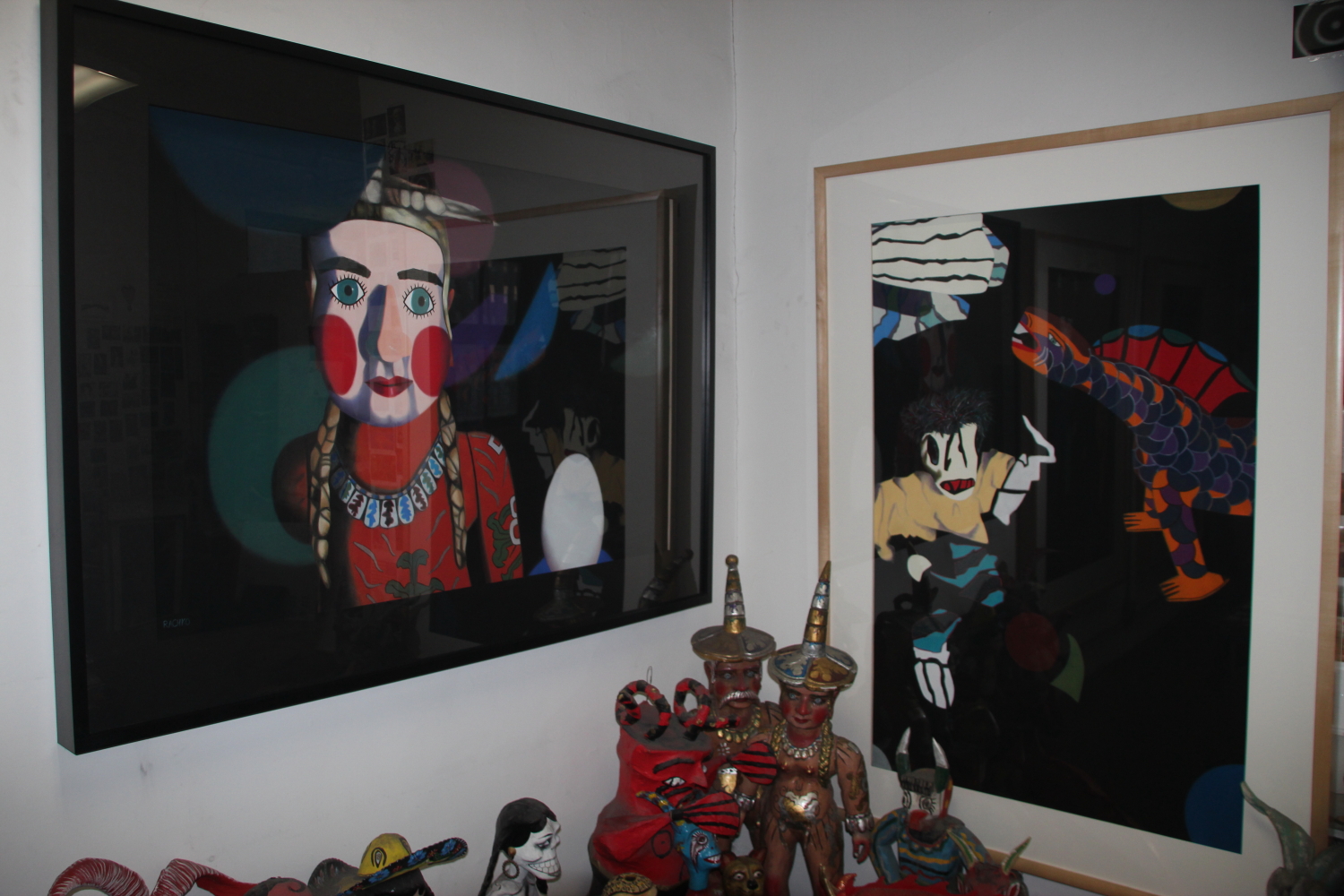
A corner of the studio
A: Actually it was the other way around. As I’ve mentioned, I was a maker of pastel-on-sandpaper paintings long before I became a photographer (1986 vs. 2002). However, the photos in the “Gods and Monsters” series were meant to be photographs in their own right, i.e., they were not made to be reference material for paintings. in an interesting turn of events, in 2007 I started a new series, “Black Paintings,” which uses the “Gods and Monsters” photographs as source material. Collectors who have been following my work for years tell me the new series is the strongest yet. For now I’m enjoying where this work is leading. The last three paintings are the most minimal yet and I’ve begun thinking of them as the “Big Heads.” There is usually a single figure (“Stalemate” has two) that is much larger than life size. “Epiphany” (above, left) is an example. All of them are quite dramatic when seen in person, especially with their black wooden frames and mats.
Comments are welcome!


 barbararachkoscoloreddust.com