Blog Archives
Pearls from artists* # 626

*an ongoing series of quotations – mostly from artists, to artists – that offers wisdom, inspiration, and advice for the sometimes lonely road we are on.
This is why, when writers who are just starting out ask me when it gets easier, my answer is never. It never gets easier. I don’t want to scare them, so I rarely say more than at, but the truth is that, if anything, it gets harder. The writing life is filled with predictable uncertainties, but with the awareness that we are always starting over. That everything we will ever write will be flawed. We may have written one book, or many, but all we know – if we know anything at all – is how to write the book we’re writing. All novels are failures. Perfection itself would be a failure. All we can hope is that we will fail better. That we will not fall prey to the easy enchantments of repeating what may have worked in the past. I try to remember that the job – as well as the plight, and the unexpected joy – of the artist is to embrace uncertainty, to be sharpened and honed by it. Each time we come to the end of a piece of work, we have failed as we have leapt – spectacularly, brazenly – into the unknown.
Dani Shapiro in Still Writing: The Perils and Pleasures of a Creative Life
Comments are welcome!
Pearls from artists* # 628

Beginning
*an ongoing series of quotations – mostly from artists, to artists – that offers wisdom, inspiration, and advice for the sometimes lonely road we are on.
We have nothing to go by, but still, we must begin. It requires chutzpah – the Yiddish word for that ineffable combination of courage and hubris – to put down one word, then another, perhaps even accumulate a couple of flimsy pages, so few that they don’t even firm the smallest of piles, and call it the beginning of a novel. Or memoir. Or story. Or anything, really rather than a couple of flimsy pages.
When I’m between books, I feel as if I will never have another story to tell. The last book has wiped me out, has taken everything from me, everything I understand and feel and know and remember, and … that’s it. There’s nothing left. A low-level depression sets in. The world hides its gifts from me. It has taken me years to realize that this feeling, the one of the well being empty, is as it should be. It means I’ve spent everything. And so I must begin again.
I wait.
I try to be patient. I remember Colette, who wrote that her most essential art was “not that of writing, but the domestic task of knowing how to wait, to conceal, to save up crumbs, to reglue, regild, change the worst into the not-so-bad, how to lose and recover in the same moment that frivolous thing, a taste for life.” Colette’s words, along with those of a few others, have migrated from one of my notebooks to another for over twenty years now. It’s wisdom I need to remember – wisdom that is easy to forget.
Dani Shapiro in Still Writing: The Perils and Pleasures of a Creative Life
Comments are welcome!
Pearls from artists* # 627

In Hanga Roa, Rapa Nui (Easter Island), one of the most remote places on Earth!
*an ongoing series of quotations – mostly from artists, to artists – that offers wisdom, inspiration, and advice for the sometimes lonely road we are on.
We cannot afford to walk sightless among miracles. Nor can we protect ourselves from suffering. We do work that thrusts us into the pulsing heart of this world, whether or not we’re on the mood, whether or not it’s difficult or painful or we’d prefer to divert our eyes. When I think of the wisest people I know, they share one defining trait: curiosity. They turn away from the minutiae of their lives – and focus on the world around them. They are motivated by a desire to explore the unfamiliar. They are drawn toward what they don’t understand. They enjoy surprise. Some of these people are seventy, eighty, close to ninety years old, but they remind me of my son and his friend on the day I sprung them from camp. Courting astonishment. Seeking breathless wonder.
Dani Shapiro in Still Writing: The Perils and Pleasures of a Creative Life
Comments are welcome!
Pearls from artists* # 616
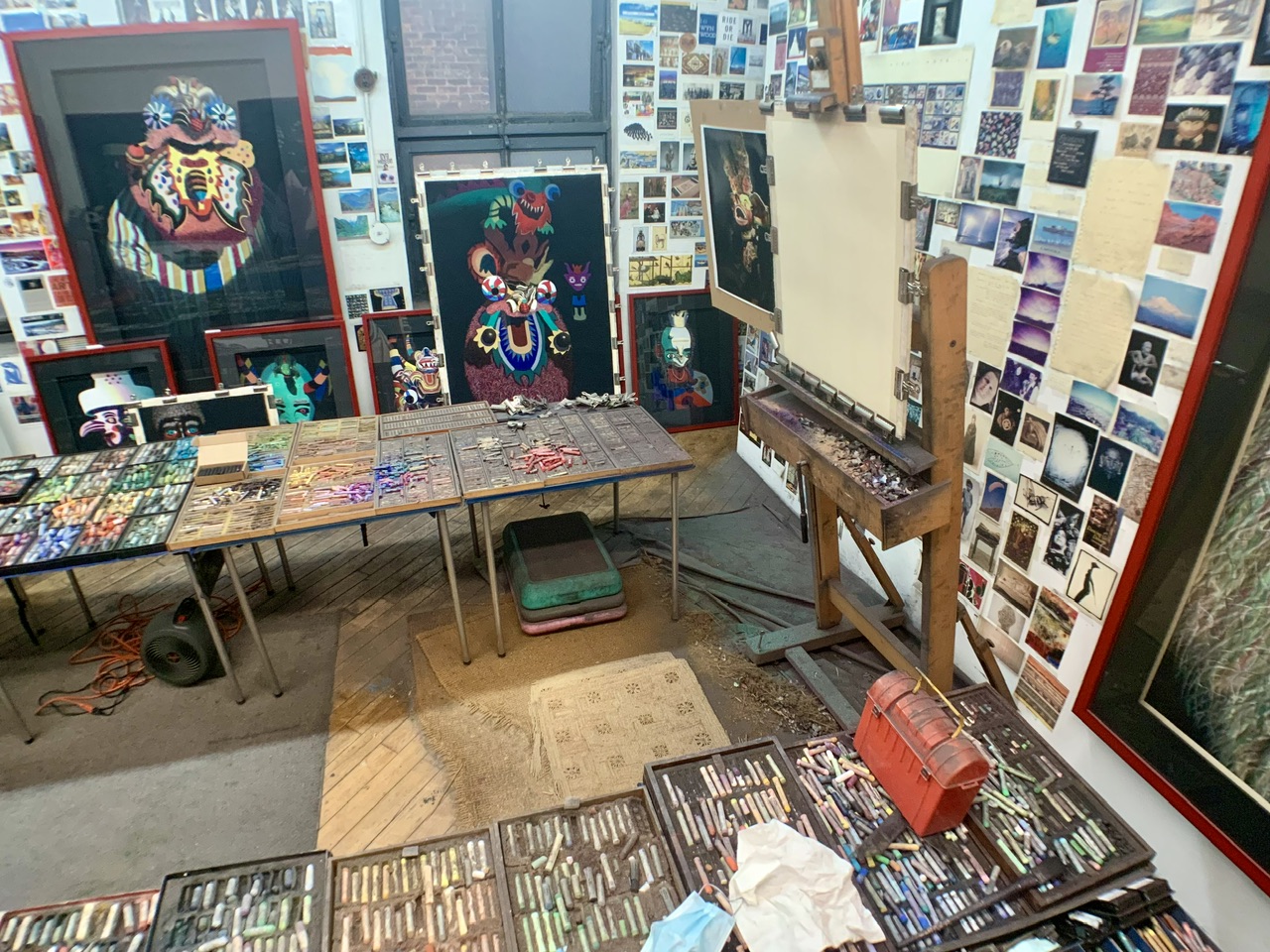
*an ongoing series of quotations – mostly from artists, to artists – that offers wisdom, inspiration, and advice for the sometimes lonely road we are on.
This may be the most important piece of advice I can give you: The Internet is nothing like a cigarette break. If anything, it’s the opposite. One of the most difficult practical challenges facing writers in this age of connectivity is the fact that the very instrument on which most of us write is also a portal to the outside world. I once heard Ron Carlson say that composing on a computer is like writing in an amusement park. Stuck for a nanosecond? Why feel it? With the single click of a key we can remove ourselves and take a ride on a log flume instead.
By the time we return to work – if, indeed, we return to our work at all – we will be further away from our deepest impulses rather than closer to them. Where were we? Oh, yes. We were stuck. We were feeling uncomfortable and lost. We have gained nothing in the way of waking-dream time. Our thoughts have not drifted, but rather, have ricocheted from one bright and shiny thing to another.
Dani Shapiro in Still Writing: The Perils and Pleasures of a Creative Life
Comments are welcome!
Pearls from artists* # 595

Film still from “Barbara Rachko: True Grit,” directed by Jennifer Cox, Moto Films LLC
*an ongoing series of quotations – mostly from artists, to artists – that offers wisdom, inspiration, and advice for the sometimes lonely road we are on.
One of the great paradoxes of the writing life is that our words – chosen carefully, so thoughtfully, with deep focus and concentration – those words once on the page go dead on us. Language is ours only when we are forming sentences, moving elements around, grappling with punctuation, speaking words aloud, feeling them on our lips. While we are shaping a scene into something we can hear and touch and see, that scene lives and breathes. We are inside language like painters, we are working in our medium: the tempera, the thin line, the wet oil on canvas, still in process, still alive.
But once we commit – once those words dry like paint, are affixed to the page – it becomes nearly impossible to see them. This? We think to ourselves. Our most loathsome critic emerges with a swirl of her cape. Really? What the hell is this? The sentences appear to have been written in another language – a dark dream language, tucked into some musty, inaccessible corner of our psyche. Attempting to discern its meaning is a bit like looking at our own face in the mirror. It is at once so familiar as to be invisible, and so intimate that we turn away, baffled, ashamed.
Can we ever see ourselves, really? Can we read ourselves?
It is a powerful conundrum because without the ability to see our writing afresh we cannot do the necessary work. How do we know whether a problem lies with the work, or with our inability to enter it? We need clarity, but not coldness. Openness, but not attachment. We want optimism, but that optimism must not go hand in hand with discernment. We’re not looking for a cheerleader, nor a fault-finding judge. We want to read ourselves with equanimity.
Dani Shapiro in Still Writing: The Pleasures and Perils of a Creative Life
Comments are welcome!
Pearls from artists* # 586

Starting a new one!
*an ongoing series of quotations – mostly from artists, to artists – that offers wisdom, inspiration, and advice for the sometimes lonely road we are on.
The page is your mirror. What happens inside you is reflected back. You come face-to-face with your own resistance, lack of balance, self-loathing, and insatiable ego – and also with your singular vision, guts, and fortitude. No matter what you’ve achieved the day before, you begin each day at the bottom of the mountain. Isn’t this true for most of us? A surgeon about to perform a difficult operation is at the bottom of the mountain. A lawyer delivering a closing argument. An actor waiting in the wings. A teacher on the first day of school. Sometimes we may think that we’re in charge, or that we have things figured out. Life is usually right there, though, ready to knock us over when we get too sure of ourselves. Fortunately, if we have learned the lessons that years of practice have taught us, when this happens, we endure. We fail better. We sit up, dust ourselves off, and begin again.
Dani Shapiro in Still Writing: The Perils and Pleasures of a Creative Life
Comments are welcome!
Pearls from artists* # 234

“The Ancestors,” soft pastel on sandpaper, 58″ x 38″
* an ongoing series of quotations – mostly from artists, to artists – that offers wisdom, inspiration, and advice for the sometimes lonely road we are on.
Be a good steward to your gifts. This is the first sentence on a list I keep tacked to the bulletin board in my study, an impeccable set of instructions left by poet Jane Kenyon.
Protect your time.
Feed your inner life.
Avoid too much noise.
Read good books, have good sentences in your ears.
Be by yourself as often as you can.
Walk.
Take the phone off the hook
Work regular hours.
Dani Shapiro in Still Writing: The Perils and Pleasures of a Creative Life
Comments are welcome!
Pearls from artists* # 233
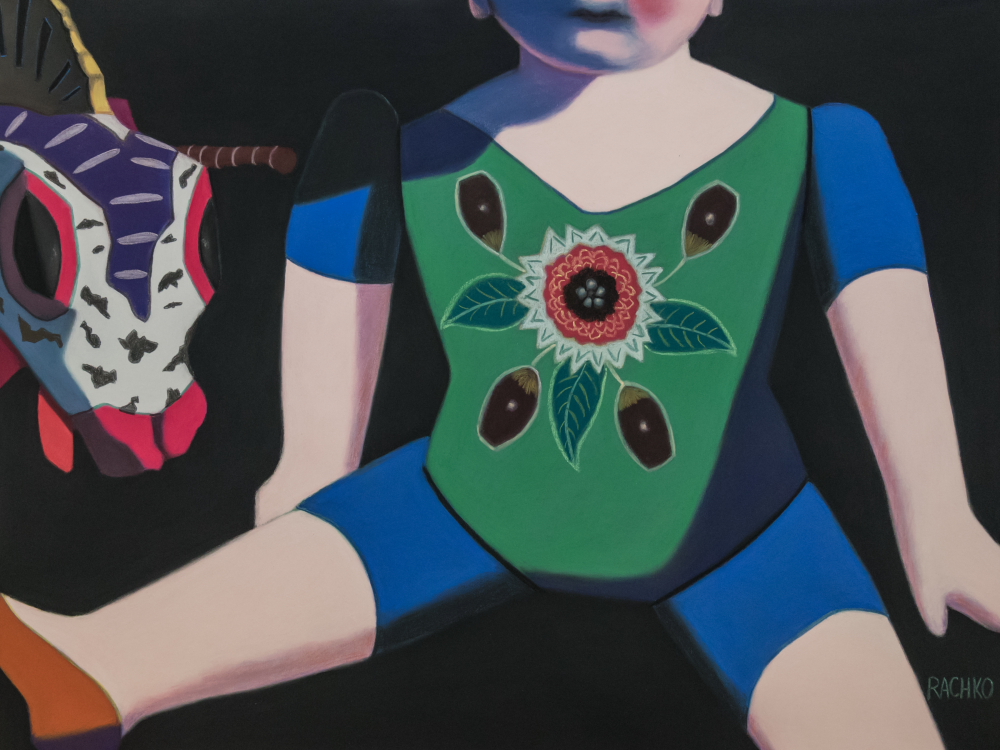
“Alone Together,” soft pastel on sandpaper, 20″ x 26″
* an ongoing series of quotations – mostly from artists, to artists – that offers wisdom, inspiration, and advice for the sometimes lonely road we are on.
These words are true for most artists, not only writers.
There is the gift, of course, which is inseparable from – though not the same as – a need, a hunger for expression. It is possible to have the gift without the need. It is possible to have the need without the gift. The former can lead to a happy and contented life. I have seen promising young writers discard their gift, shrugging it off like a wrap on a warm summer evening. They don’t care. They don’t want or need it. The other, however, is a painful situation: the hunger for self-expression without the gift – that ineffable thing you can’t teach, or buy, or will into being. This story often ends in resentment and unfulfillment. Then there is endurability – Ted Solotaroff’s word – the ability to withstand the years in the cold, the solitary life, the affronts and indignities, the painful rejections that never end. The gift and the hunger are nothing without that endurability. But up there with the gift, the hunger, and endurance is another trait, without which the writer’s life can’t possibly work.
The writing life is full of risk. There is the creative risk – the willingness to fall flat on our face again and again – but there is also practical risk. As in, it may not work out. We don’t get brownie points for trying really hard. When we set our hopes on this life, we are staking our future on the contents of our own minds. On our ability to create and continue to create. We have nothing but this. No 401(k), no pension plan, often no IRA, no plans – God knows – for retirement. We have to accept living with profound uncertainty.
Dani Shapiro in Still Writing: The Perils and Pleasures of a Creative Life
Comments are welcome!
Pearls from artists* # 232

Studio entrance
* an ongoing series of quotations – mostly from artists, to artists – that offers wisdom, inspiration, and advice for the sometimes lonely road we are on.
Think of this distance we travel between home and work, between family and art, between our everyday responsibilities and the life of the imagination as our own version of a rush-hour commute. We’re not standing on a platform, boarding a train, shouldering our way through crowds on our way from home to office – a ritual that creates its own buffer zone between the two traversed worlds – but we are still making a journey. It’s a solitary trek, and to a casual observer it might not seem like we’re going anywhere at all. We might, for instance, be sitting in the same exact spot. We might be wearing the same clothes we slept in, or maybe we’ve actually showered and put on a semblance of normal attire. But no matter. We are commuting inward. And on Monday mornings – or after a long holiday, a summer vacation, any time we have been away from the page – we have to be even more vigilant about that commute. We are traveling to that place inside ourselves – so small as to be invisible – where we are free to roam and play. So let the electric company wait. Let the mail pile up. Turn off the phone’s ringer. The voices around us grow quiet and still. We travel as surely as we’re in our cars, listening to NPR, our mug of coffee in its trusty cup holder. We know that once we enter the place from which we write, it will expand to make room for us. It will be wider than the world.
Dani Shapiro in Still Writing: The Perils and Pleasures of a Creative Life
Comments are welcome!
Pearls from artists* # 230
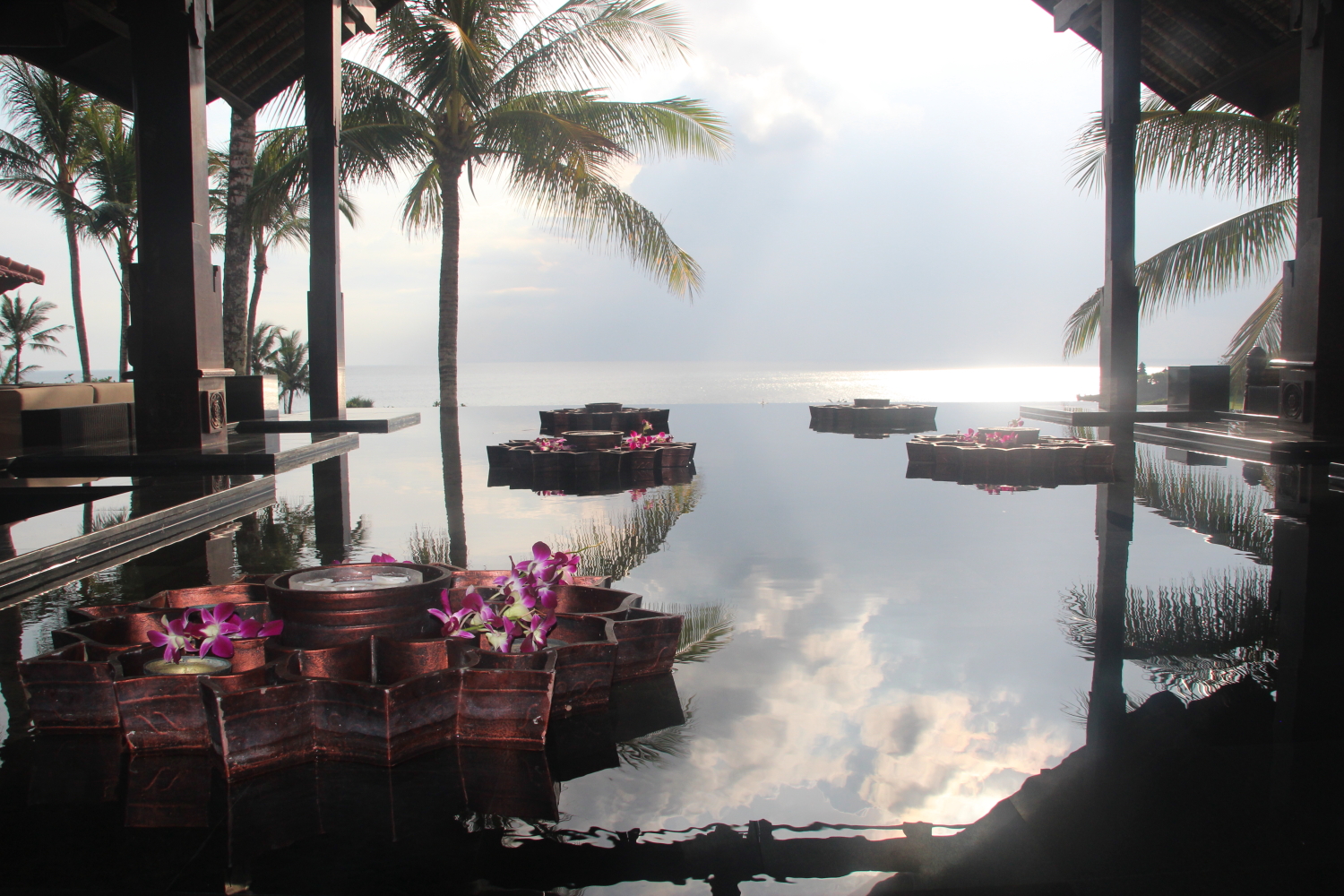
On the Indian Ocean in Tanah Lot, Bali
* an ongoing series of quotations – mostly from artists, to artists – that offers wisdom, inspiration, and advice for the sometimes lonely road we are on.
I like excitement as much as the next person. Perhaps even more than the next person. But I get overstimulated easily, and I can feel my brain shorting out when I have too much going on. And it doesn’t take much: a good piece of news, a nice review, a longed-for assignment, a cool invitation, and suddenly I can’t think straight. The outside world glitters, it gleams like a shiny new toy. Squinting, having lost all sense of myself, I toddle with about as much consciousness as a two-year-old in the direction of that toy. Once I get a little bit of it, I am conditioned to want more, more, more. I lose all sight of whatever I had been doing before.
One of the strangest aspects of a writing life is what I think of as going in and out of the cave. When we are in the middle of a piece of work, the cave is the only place we belong. Yes, there are practical considerations. Eating, for instance. Or helping a child with homework. Or taking out the trash. Whatever. But a writer in the midst of a story needs to find a way to keep her head there. She can’t just pop out of the cave, have some fun, go dancing, and then pop back in. The work demands our full attention, our deepest concentration, our best selves. If we’re in the middle – in the boat we’re building – we cannot let ourselves be distracted by the bright and shiny. The bright and shiny is a mirage, an illusion. It is of no use to us.
If there is a time for that brightness, it is at the end: when the book is finished and the revisions have been turned in, when you’ve given everything inside of you and then some. When the cave is empty. Every rock turned over. The walls covered with hieroglyphics that only you understand – notes you’ve written to yourself in the darkness. But it’s possible that something interesting has happened while you’ve toiled amid the moths and millipedes. Once you’ve acclimated to cave life, stumbling toward the light may have lost some of its appeal. What glitters looks shopworn. The sparkle and hum of life outside the cave feels somehow less real than what has taken place deep within its recesses. Savor it – this hermetic joy, this rich unexpected peace. It’s hard-won, and so easy to lose. It contains within it the greatest contentment I have ever known.
Dani Shapiro in Still Writing: The Perils and Pleasures of a Creative Life
Comments are welcome!


 barbararachkoscoloreddust.com