Blog Archives
Pearls from artists* # 612
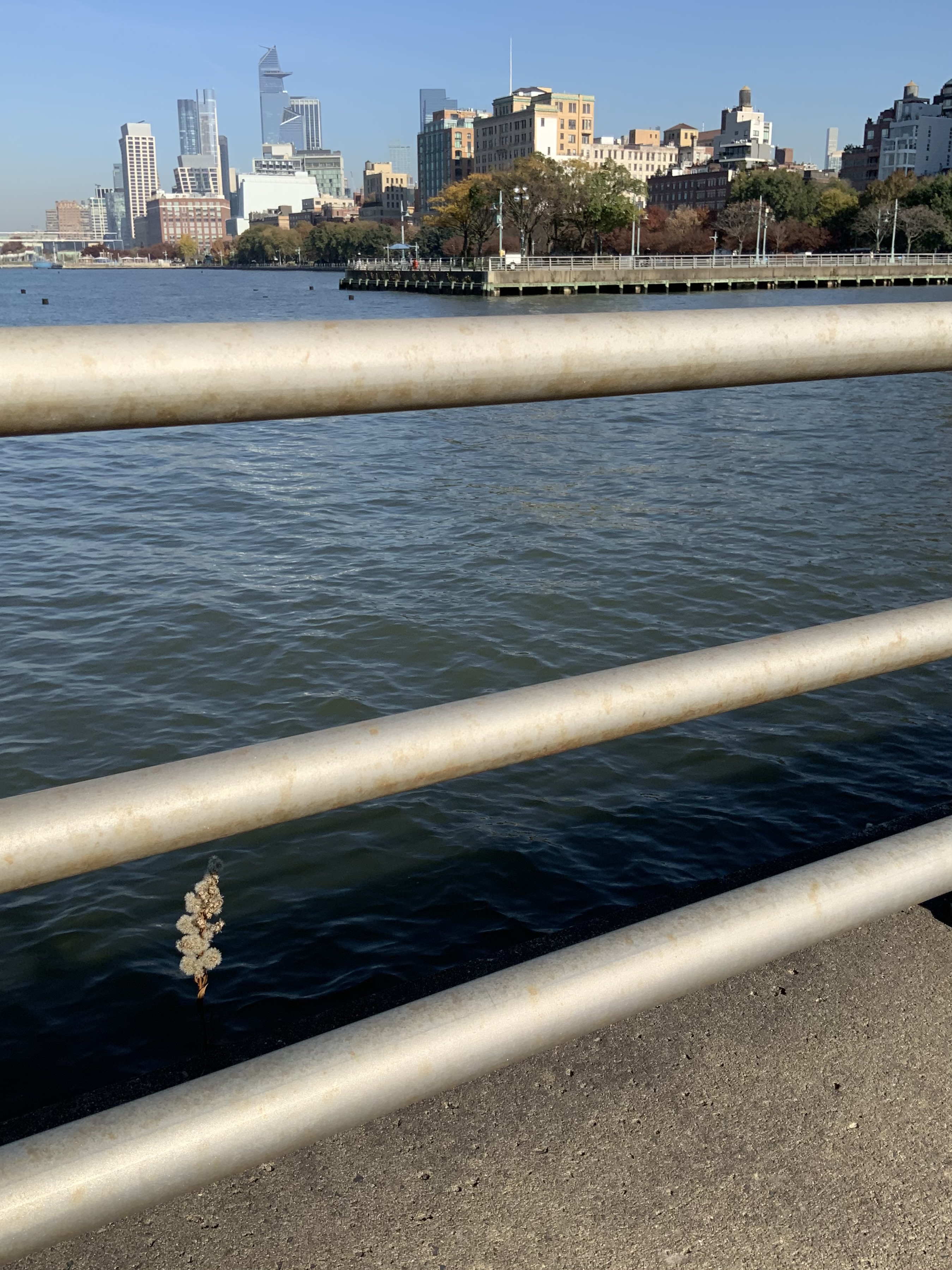
New York, NY
*an ongoing series of quotations – mostly from artists, to artists – that offers wisdom, inspiration, and advice for the sometimes lonely road we are on.
It is the poet and philosopher who provide the community of objectives in which the artist participates. Their chief preoccupation, like the artist, is the expression in concrete form of their notions of reality. Like him, they deal with verities of time and space, life and death, and the heights of exaltation as well as the depths of despair. The preoccupation with these external problems creates a common ground which transcends the disparity of the means used to achieve them. And it is in the language of the philosopher and poet or, for that matter, of other arts which share the same objective that we must speak if we are to establish some verbal equivalent of the significance of art.
Let us not for a moment conceive that the language of one is interchangeable with that of the other: that one can duplicate the sense of a picture by the sense of words or sounds, or that one can translate the truth of words by means of pictorial delineations. Not all odes of Pindar, framed and embroidered, could duplicate the portrayal by Apelles’ brush of the Hero of the Palaestra. The Pandemonium of Milton or Dante’s Inferno can never replace the vision of the Last Judgment by either Michelangelo or Signorelli. No more so than the Pastoral Symphony of Beethoven can be apprehended through the reading of idyllic poems, augmented by descriptions of woodland and fields, of torrents and streams, the study of ornithological sounds, and the laws of harmonics. Neither books on jurisprudence, nor costume plates, can possibly reconstruct Raphael’s School of Athens. And the man who knows a book or a picture through its critics, whatever his experience, has no experience of the art itself. The truth, the reality of each, is confined within its own boundaries and must be perceived in terms of the means generic to itself.
In speaking of art here, there is no thought of recreating the experience of the picture. If we compare one art to another, it is not with the intention of contrasting their actuality, but to speak rather of the motivations and properties such as are admissible to the world of verbal ideas. And if… we are partial to the philosopher – at the expense of those others who share with the artist his common objectives, it is not because we divine in his effort a greater sympathy to the artist, but because philosophy shares with art it’s preoccupation with ideas in the terms of logic.
Mark Rothko in The Artist’s Reality: Philosophies of Art
Comments are welcome!
Pearls from artists* # 516
*an ongoing series of quotations – mostly from artists, to artists – that offers wisdom, inspiration, and advice for the sometimes lonely road we are on
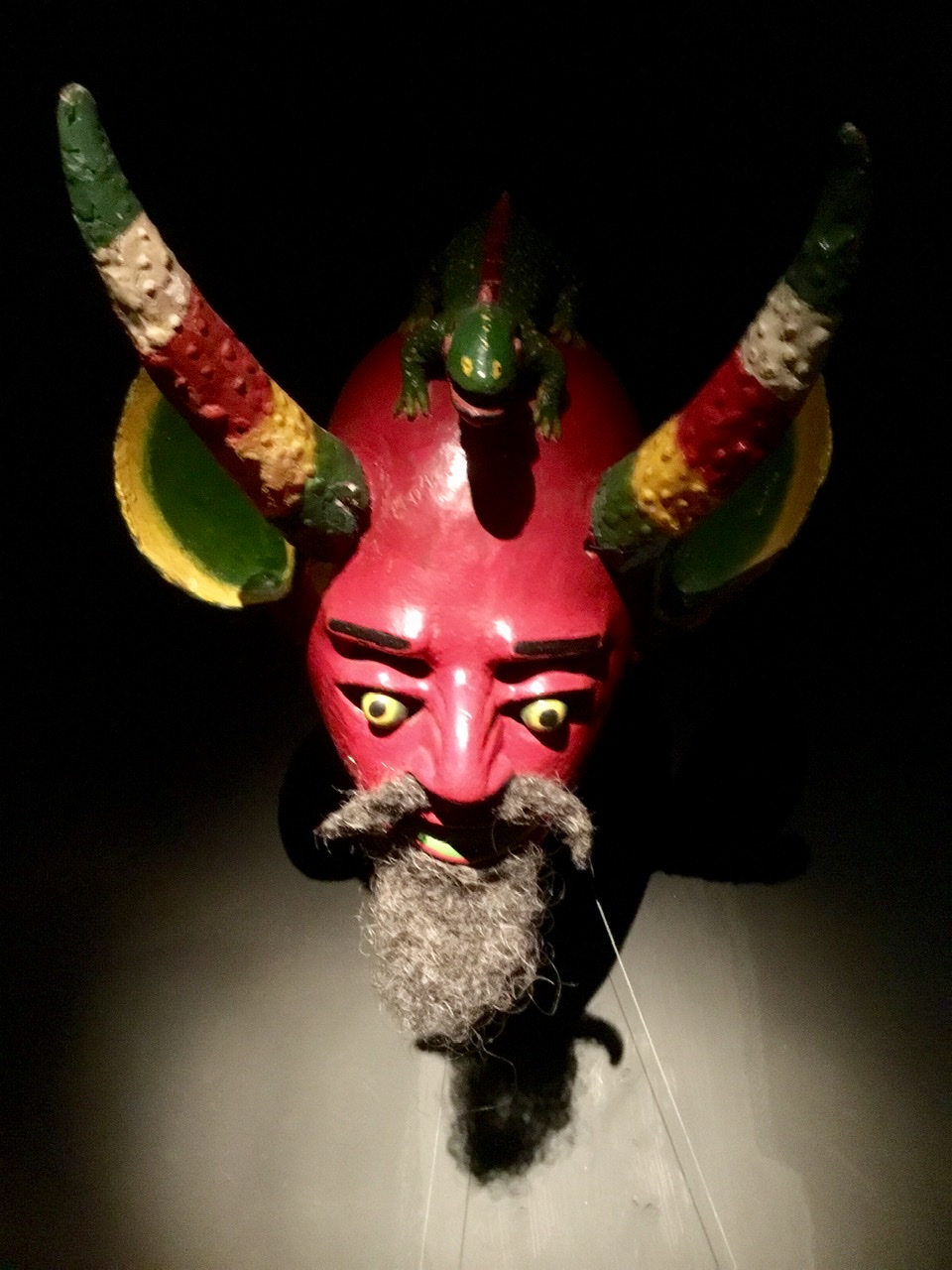
In Oruro, Bolivia, devotion to the Virgin del Socavon (Virgin of the Mineshaft) migrated from the fixed festival of Candlemas (2 February) to the movable feast of Carnival. By delaying their public devotion to the Virgin until the four-day holiday before Ash Wednesday, Oruro’s miners were able to enjoy a longer fiesta than if they had confined it to a single saint’s day. During Oruro’s Carnival, thousands of devils dance through the streets before unmasking in the Sanctuary of the Mineshaft to express devotion to the Virgin.
Evidently, the festive connotation of devils is not always demonic. In Manresa [Spain], the demons and dragons celebrate the restoration of liberty after a brutal civil war and subsequent dictatorship [General Francisco Franco]. In Oruro… the masked devils protest exploitation of indigenous miners by external forces and devote themselves to a Virgin who blesses the poor and marginalized. Festive disorder generally dreams not of anarchy but of a more egalitarian order.
Max Harris in Carnival and other Christian Festivals: Folk Theology and Folk Performance
Comments are welcome!
Pearls from artists* # 445
*an ongoing series of quotations – mostly from artists, to artists – that offers wisdom, inspiration, and advice for the sometimes lonely road we are on.
My good friend the writer Charles L. Mee, Jr helped me to recognize the relationship between art and the way societies are structured. He suggested that, as societies develop, it is the artists who articulate the necessary myths that embody our experience of life and provide parameters for ethics and values. Every so often the inherited myths lose their value because they become too small and confined to contain the complexities of the ever-transforming and expanding societies. In that moment new myths are needed to encompass who we are becoming. These new constructs do not eliminate anything already in the mix; rather, they include fresh influences and engender new formations. The new mythologies always include ideas, cultures and people formerly excluded from the previous mythologies. So, deduces Mee, the history of art is the history of inclusion.
I believe that the new mythologies will be created and articulated in art, in literature, painting and poetry. It is the artists who will create a livable future through their ability to articulate in the face of flux and change.
Anne Bogart in A Director Prepares: Seven Essays on Art and Theater
Comments are welcome!
Pearls from artists* # 71

New York street
* an ongoing series of quotations – mostly from artists, to artists – that offers wisdom, inspiration, and advice for the sometimes lonely road we are on.
Artists are individuals willing to articulate in the face of flux and transformation. And the successful artist finds new shapes for our present ambiguities and uncertainties. The artist becomes the creator of the future through the violent act of articulation. I say violent because articulation is a forceful act. It demands an aggressiveness and an ability to enter into the fray and translate that experience into expression. In the articulation begins a new organization of the inherited landscape.
My good friend the writer Charles L. Mee, Jr. helped me to recognize the relationship between art and the way societies are structured. He suggested that, as societies develop, it is the artists who articulate the necessary myths that embody our experience of life and provide parameters for ethics and values. Every so often the inherited myths lose their value because they become too small and confined to contain the complexities of the ever-transforming and expanding societies. In that moment new myths are needed to encompass who we are becoming. These new constructs do not eliminate anything already in the mix; rather, they include fresh influences and engender new formations. The new mythologies always include ideas, cultures and people formerly excluded from the previous mythologies. So, deduces Mee, the history of art is the history of inclusion.
Ann Bogart in A Director Prepares: Seven Essays on Art and Theater
Comments are welcome!
Pearls from artists* # 29
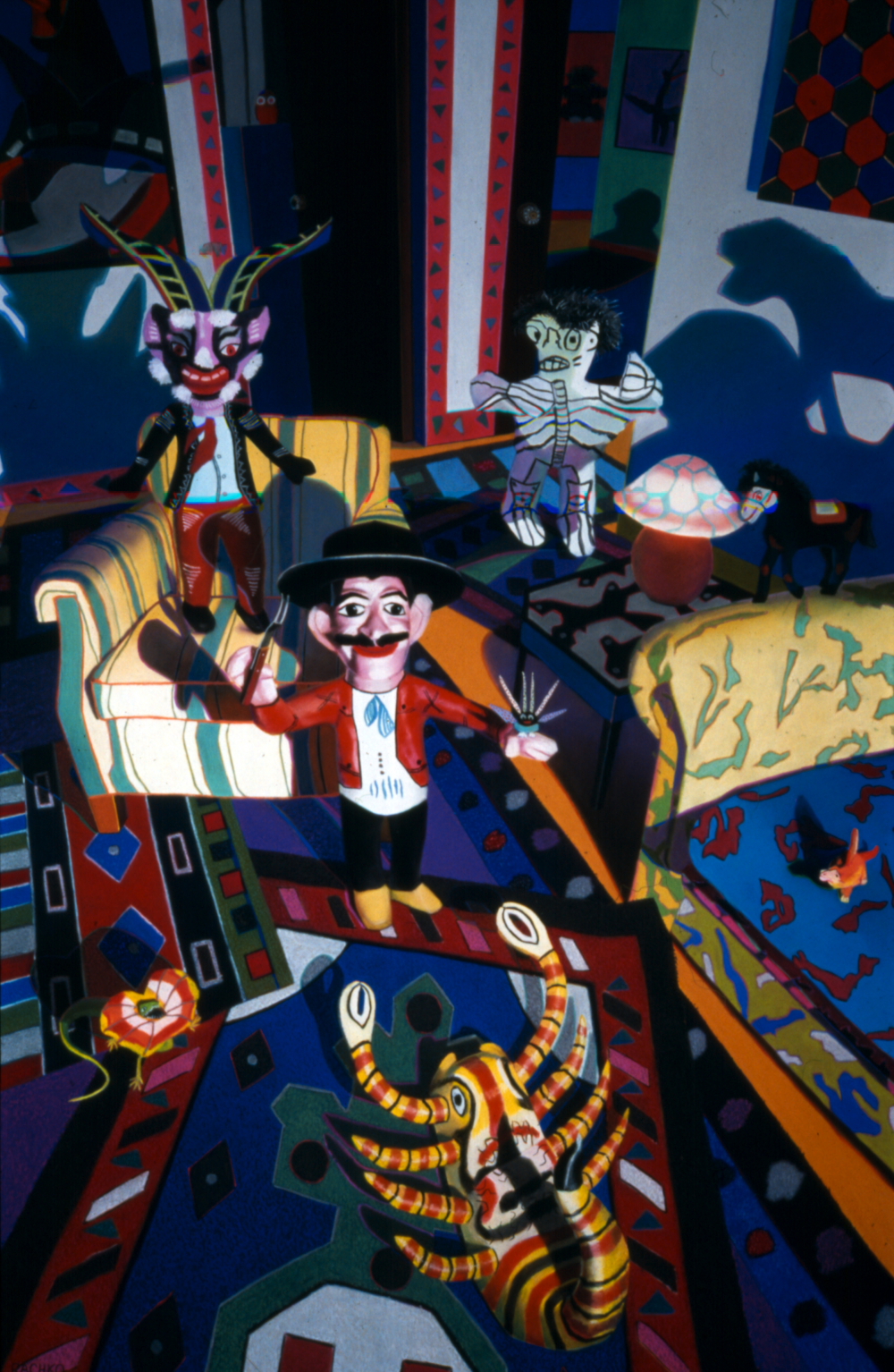
“He Just Stood There Grinning,” soft pastel on sandpaper, 58″ x 38″
* an ongoing series of quotations – mostly from artists, to artists – that offers wisdom, inspiration, and advice for the sometimes lonely road we are on.
And all the spaces of our past moments of solitude, the spaces in which we have suffered from our solitude, enjoyed, desired, and compromised solitude, remain indelible within us, and precisely because the human being wants them to remain so. He knows instinctively that this space identified with his solitude is creative; that even when it is forever expunged with the present, when, henceforth, it is alien to all the promises of the future, even when we no longer have a garret, when the attic is lost and gone, there remains the fact that we once loved a garret, once lived in an attic. We return to them in our night dreams. These retreats have the value of a shell. And when we reach the very end, the labyrinths of sleep, when we attain to the regions of deep slumber, we may perhaps experience a type of repose that is pre-human; pre-human, in this case, approaching the immemorial. But in the daydream itself, the recollection of moments of confined, simple, shut-in space are experiences of heartwarming space, of a space that does not seek to become extended, but would like above all to be possessed. In the past, the attic may have seemed too small, it may have seemed cold in winter and hot in summer. Now, however, in memory recaptured through daydreams, it is hard to say through what syncretism the attic is at once small and large, warm and cool, always comforting.
Gaston Bachelard in The Poetics of Space
Comments are welcome!


 barbararachkoscoloreddust.com