Blog Archives
Q: Can you speak about a book (or books) that deeply influenced you as an artist?

Barbara’s well-worn copy of “Camille Pissarro: Letters to His Son Lucien”
A: One such book that stands out is “Camille Pissaro: Letters to His Son Lucien.” The book is comprised of weekly letters from a father conveying wisdom about his craft, art, and life, over roughly twenty years, to a beloved son, who is just beginning his artistic journey. I discovered this gem about thirty years ago when I was just starting to find my way as an artist, too. Pissarro’s words are beautiful, poignant, and deeply felt. He has much to say to artists because, sadly, we still contend with the same problems, such as how to remain authentic and earn a living, how to deal with galleries and collectors, how to stay focused on the work, etc. I often enjoy rereading favorite passages simply because it makes me feel less alone as an artist.
Comments are welcome!
Pearls from artists* # 200
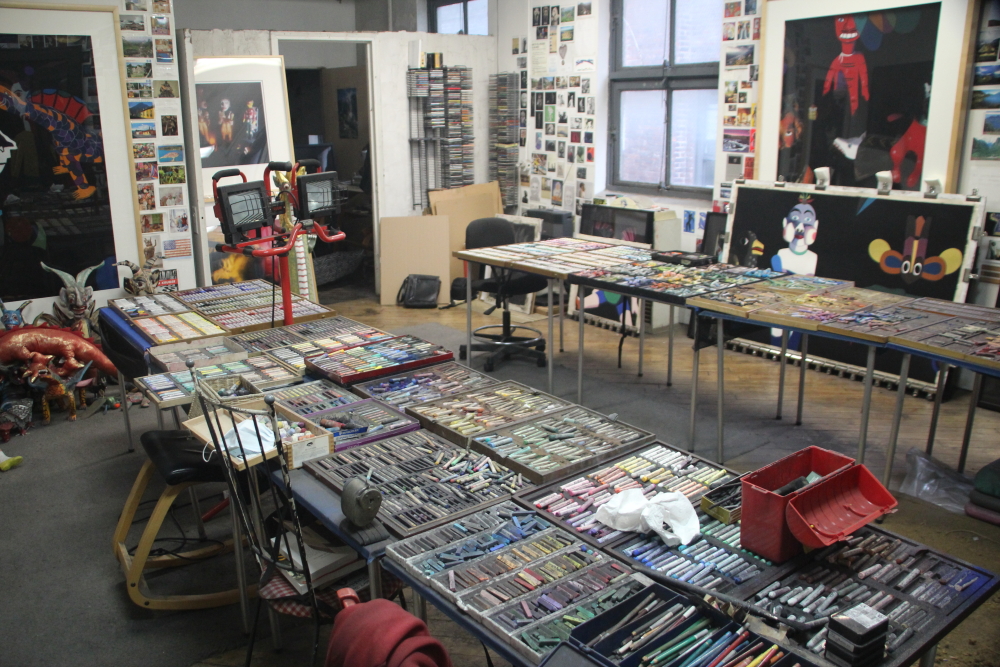
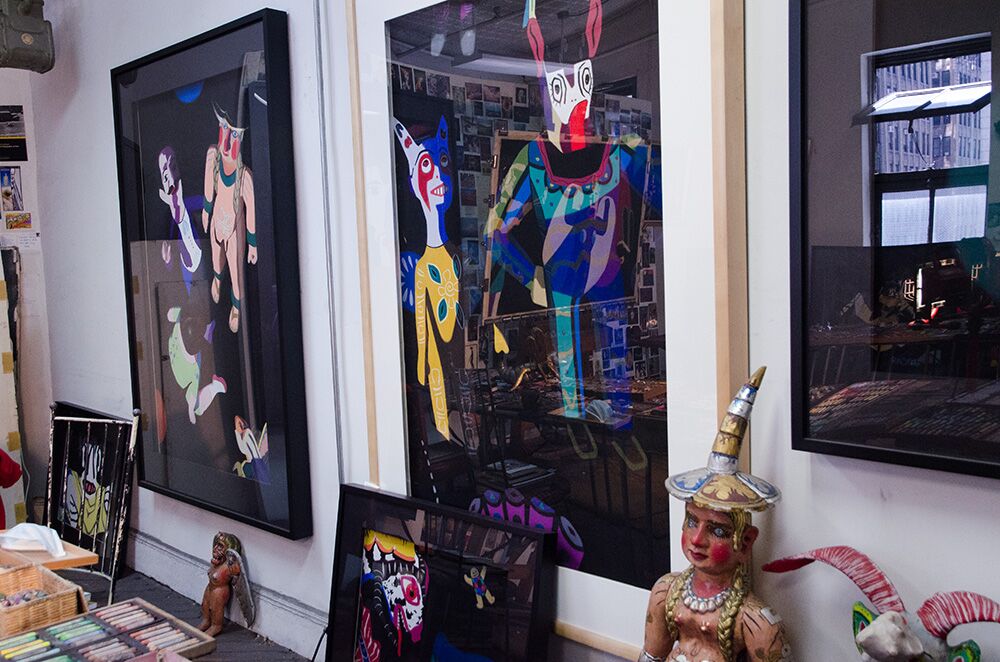
Barbara’s studio
* an ongoing series of quotations – mostly from artists, to artists – that offers wisdom, inspiration, and advice for the sometimes lonely road we are on.
Why Art?
Because you will never have to change batteries or remember passwords or read directions or fear obsolescence.
Questroyal Fine Art, LLC, ad in The New Yorker, issue of April 11, 2016
Comments are welcome!
Pearls from artists* # 198

“Troublemaker,” soft pastel on sandpaper, 20″ x 26″
* an ongoing series of quotations – mostly from artists, to artists – that offers wisdom, inspiration, and advice for the sometimes lonely road we are on.
The writer doesn’t need economic freedom. All he needs is a pencil and some paper. I’ve never known anything good in writing to come from having accepted any free gift of money. The good writer never applies to a foundation. He’s too busy writing something. If he isn’t first rate he fools himself by saying he hasn’t got time or economic freedom. Good art can come out of thieves, bootleggers, or horse swipes. People really are afraid to find out just how much hardship and poverty they can stand. They are afraid to find out how tough they are. Nothing can destroy the good writer. The only thing that can alter the good writer is death. Good ones don’t have time to bother with success or getting rich…
Nothing can injure a man’s writing if he’s a first-rate writer. If a man is not a first-rate writer, there’s not anything that can help it much. The problem does not apply if he is not first-rate, because he has already sold his soul for a swimming pool.
William Faulkner in Writers at Work: The Paris Review Interviews First Series, edited and with an introduction by Malcolm Cowley
Comments are welcome!
Q: Do you remember the first pastel painting that you ever made?
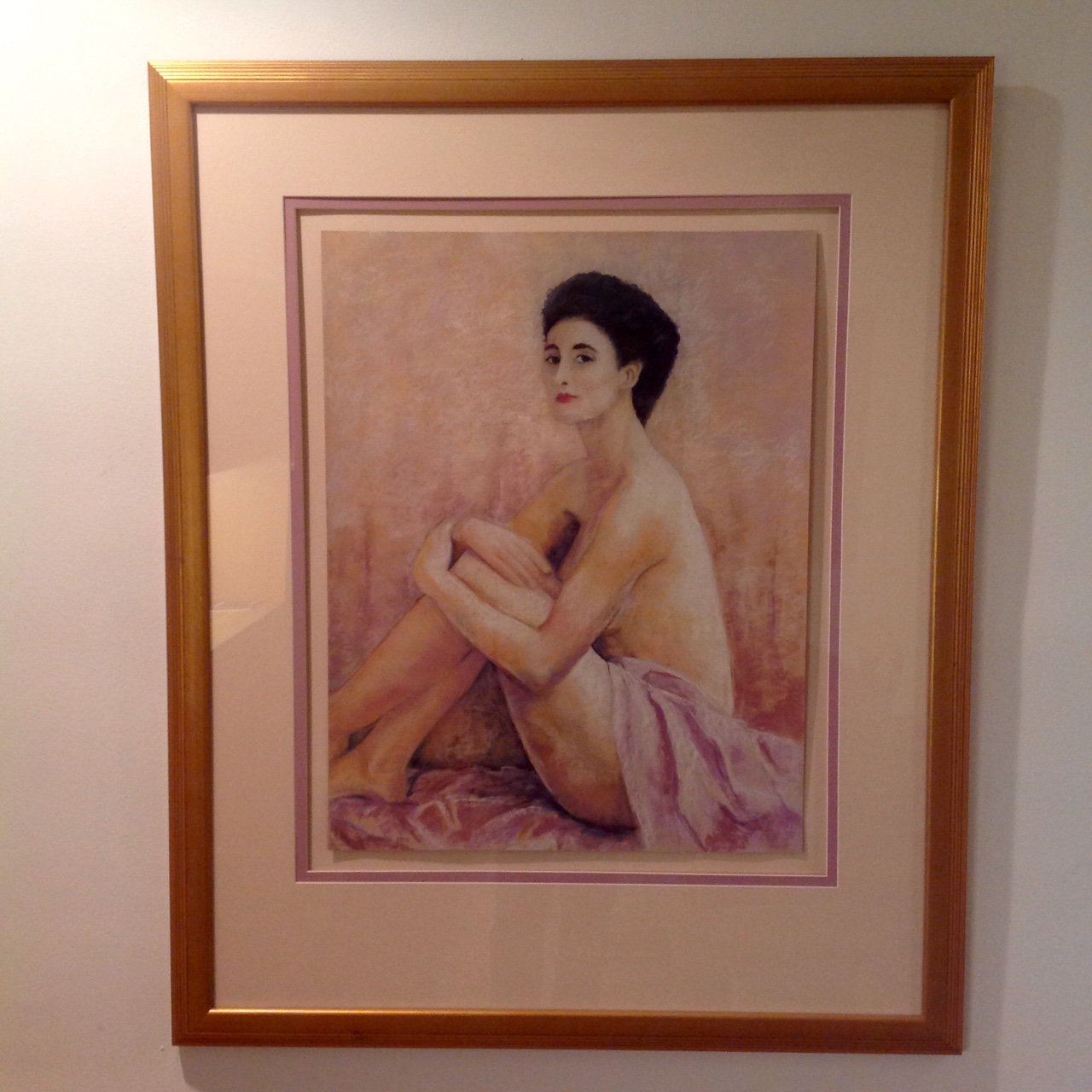
First framed pastel painting, 1988
A: Yes, it was a small head-and-neck portrait of a live model in a figure drawing class at The Art League School in Alexandria, VA. I don’t know what became of it.
I also remember the first pastel painting that I ever framed because it is still hanging in my Alexandria house. It is dated 1988 (see photo) and was made in a one-week workshop with Diane Tesler at The Art League. The workshop was specifically to teach artists how to paint from photographs and it was my first time studying with Diane. I made the mistake of bringing, as reference material, a magazine photograph that was originally a perfume ad in the The Sunday Times Magazine. Diane tactfully explained that it was wrong to use someone else’s photograph instead of my own, but let me do it this one time.
So many years later walking by my painting I still think of Diane. She taught me a valuable lesson: do not use anyone else’s photographs, ever!
Comments are welcome!
Pearls from artists* # 194

“Epiphany,” soft pastel on sandpaper, 38″ x 58″
* an ongoing series of quotations – mostly from artists, to artists – that offers wisdom, inspiration, and advice for the sometimes lonely road we are on.
I did sculpture because what interested me in painting was to bring some order to my brain. It was a change of means. I took to clay as a break from painting; at the time I’d done absolutely everything I could in painting. Which means it was still about organizing. It was to put my sensations in order and look for a method that really suited me. When I’d found it in sculpture, I used it for painting. To come into possession of my own brain: that was always the goal, a sort of hierarchy of all my sensations, so that I could reach a conclusion.
One day, visiting Carriere at his house, I told him that. He replied: “But, my friend, that’s why you work. If you ever managed it, you’d probably stop working. It’s your reason for working.”
In painting – in any oeuvre – the goal is to reconcile the irreconcilable. There are all kinds of qualities in us, contradictory qualities. You have to construct something viable with that, something stable. That’s why you work your whole life long and want to keep on working until the last moment… as long as you haven’t admitted defeat or lost your curiosity, as long as you haven’t settled into a routine.
Chatting with Henri Matisse: The Lost 1941 Interview, Henri Matisse with Pierre Courthion, edited by Serge Guilbaut, translated by Chris Miller
Comments are welcome!
Pearls from artists* # 182

Hudson Yards, NYC
* an ongoing series of quotations – mostly from artists, to artists – that offers wisdom, inspiration, and advice for the sometimes lonely road we are on.
Maybe you know exactly what you dream of being. Or maybe you’re paralyzed because you have no idea what your passion is. The truth is, it doesn’t matter. You don’t have to know. You just have to keep moving forward. You just have to keep doing something, seizing the next opportunity, staying open to trying something new. It doesn’t have to fit your vision of the perfect job or the perfect life. Perfect is boring, and dreams are not real. Just… DO. You think, “I wish I could travel” – you sell your crappy car and buy a ticket and go to Bangkok right now. I’m serious. You say, “I want to be a writer” – guess what? A writer is someone who writes every day. Start writing. Or: You don’t have a job? Get one. ANY JOB. Don’t sit at home waiting for the magical dream opportunity. Who are you? Prince William? No. Get a job. Work. Do until you can do something else.
Commencement address to Dartmouth College, Shonda Rhimes in Year of Yes: How to Dance It Out, Stand in the Sun and Be Your Own Person
Comments are welcome!
Pearls from artists* 178
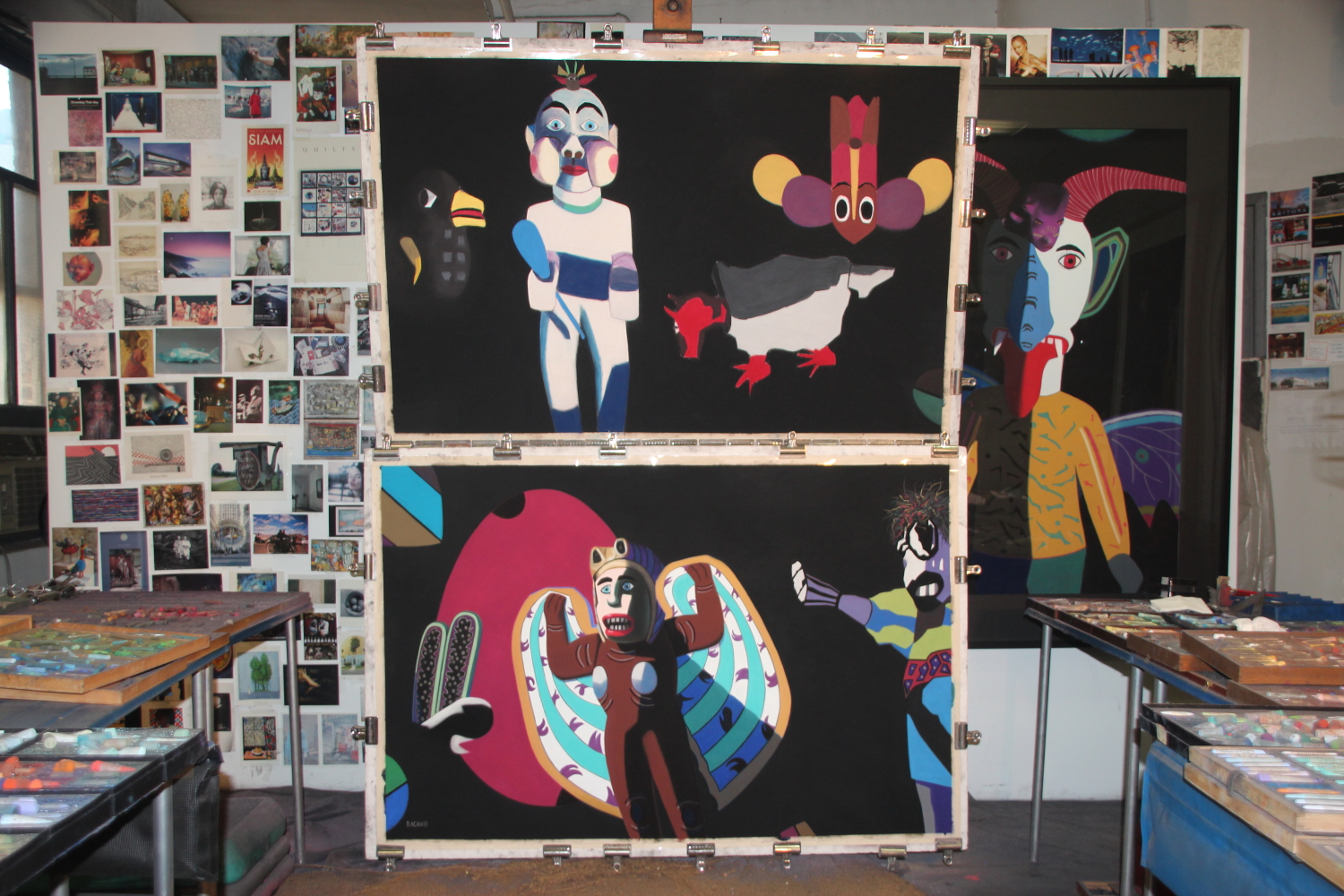
Barbara’s studio with recent works in progress
* an ongoing series of quotations – mostly from artists, to artists – that offers wisdom, inspiration, and advice for the sometimes lonely road we are on.
Most individuals have never had enough time, and they’ve never had enough resources, and they’ve never had enough support or patronage or reward… and yet they still persist in creating. They persist because they care. They persist because they are called to be makers, by any means necessary.
…The essential ingredients for creativity remain exactly the same for everybody: courage, enchantment, permission, persistence, trust – and those elements are universally accessible. Which does not mean that creative living is always easy; it merely means that creative living is always possible.
Elizabeth Gilbert in Big Magic: Creative Living Beyond Fear
Comments are welcome!
Q: What’s on the easel today?
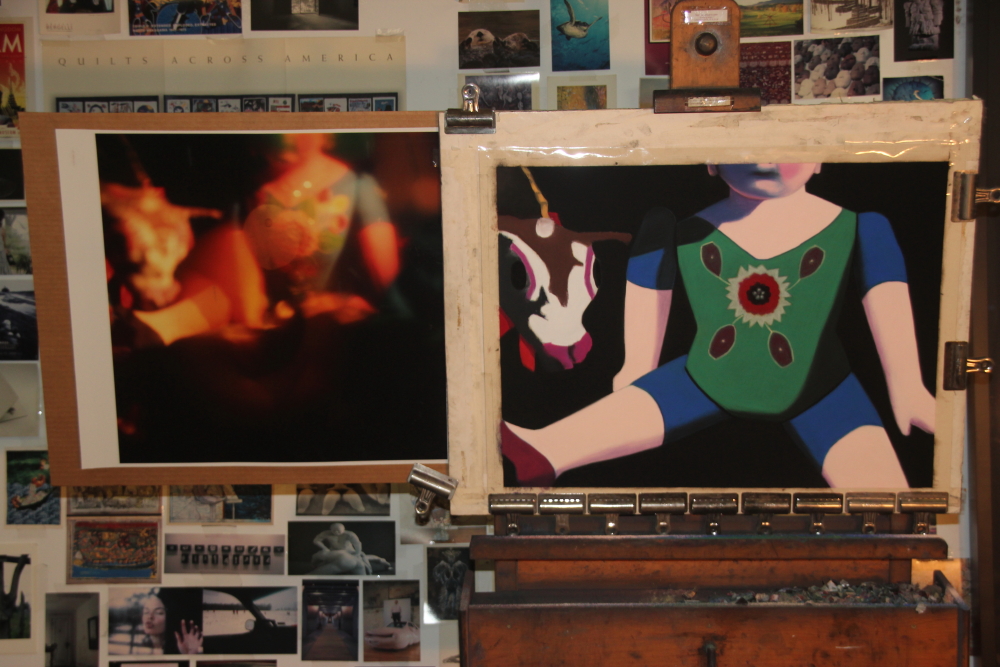
Work in progress
A: I am at work on a small (20″ x 26″) pastel-on-sandpaper painting tentatively called, “Duo.” My previous painting, “Charade,” was a breakthrough of sorts; at least I hope so, because it was such an ordeal to complete!
That’s why I am giving myself a break and making a relatively simple piece now. It’s a way of resting and also of re-filling the well.
Recently something happened that broke my heart: I had to put my beloved cat to sleep. When I look at this image I am reminded of Kit Kat, who was always by my side. He and I were another “Duo” alluded to in the title of this painting.
Comments are welcome!
Pearls from artists* # 174
Barbara’s studio, Photo: Marianne Barcellona
* an ongoing series of quotations – mostly from artists, to artists – that offers wisdom, inspiration, and advice for the sometimes lonely road we are on.
If you are older, trust that the world has been educating you all along. You already know so much more than you think you know. You are not finished; you are merely ready. After a certain age, no matter how you’ve been spending your time, you have very likely earned a doctorate in living. If you’re still here – if you have survived this long – it is because you know things. We need you to reveal to us what you know, what you have learned, what you have seen and felt. If you are older, chances are strong that you may already possess absolutely everything you need to possess in order to live a more creative life – except the confidence to actually do your work. But we need you to do your work.
Whether you are young or old, we need your work in order to enrich and inform our own lives.
Elizabeth Gilbert in Big Magic: Creative Living Beyond Fear
Comments are welcome!
Q: Have any artists influenced you technically?

Barbara at work, Photo: Marianne Barcellona
A: I’d have to say no one, because my technique of using soft pastel on sandpaper is largely self-invented and it continues to slowly evolve. I apply up to thirty layers of pigment, blending it with my fingers, and creating new colors directly on the sandpaper. It is a rather meticulous process that suits my personality.
My unique way of applying and mixing pastel is a richly complex science of color. This intricate technique is one of the reasons that my pastel paintings cannot be forged by anyone.
Every great artist throughout history has invented their own techniques and created a world that is uniquely theirs, with its own iconography, its own laws, and its own specific concerns. Artists who are most worthy of the name create their own tasks and make and break their own rules.
Comments are welcome!


 barbararachkoscoloreddust.com