Blog Archives
Q: Why do you have so many pastels?

Barbara’s Studio
A: Our eyes can see infinitely more colors than the relative few that are made into pastels. When I layer pigments onto the sandpaper substrate, I mix new colors directly on the paper. The short answer is, I need lots of pastels so that I can make new colors.
I have been working exclusively with soft pastel for 40 years. Whenever I feel myself getting into a rut in how I select and use my colors, I look around for new materials to try. Fortunately, new brands of soft pastels are continually coming onto the market. There are pastels that are handmade by artists – I love discovering these – and new colors manufactured by well-known pastel companies. Some sticks of soft pastel are oily, some are buttery, some more powdery, some crumble easily, some are more durable. Each one feels distinct in my hand.
Furthermore, they each have unique mixing properties. It’s an under-appreciated science that I stumbled upon (or maybe I invented it, I’m not sure since I cannot know how other pastel painters work). In this respect soft pastel is very different from other paint media. Oil painters, for example, need only a few tubes of paint to make any color in the world. I don’t go in much for studying color theory as a formal discipline. If you want to really understand and learn how to use color, try soft pastel and spend 10,000+ hours (the amount of time Malcolm Gladwell says, in his book, “Outliers,” that it takes to master a skill) figuring it all out for yourself!
Comments are welcome.
Pearls from artists* # 431

New York Harbor
* an ongoing series of quotations – mostly from artists, to artists – that offers wisdom, inspiration, and advice for the sometimes lonely road we are on.
Writer Stanley Elkin suggested that all books retell the Old Testament story of Job. Similarly one feels that behind most music there is a struggle with pain. By the time we are adults, the songs we know by heart are often those that acknowledge grief or celebrate release, and the performers we respect are the ones who sing from need – people like Etta James, of whom it was said that she “always hit the notes with the right amount of hurt and hope.”
A photographer’s subject is his or her score, the given notes on a page. The way the photographer hits these notes – shows the subject – determines whether we will be newly reconciled with it.
Robert Adams in Art Can Help
Comments are welcome!
Pearls from artists* # 414
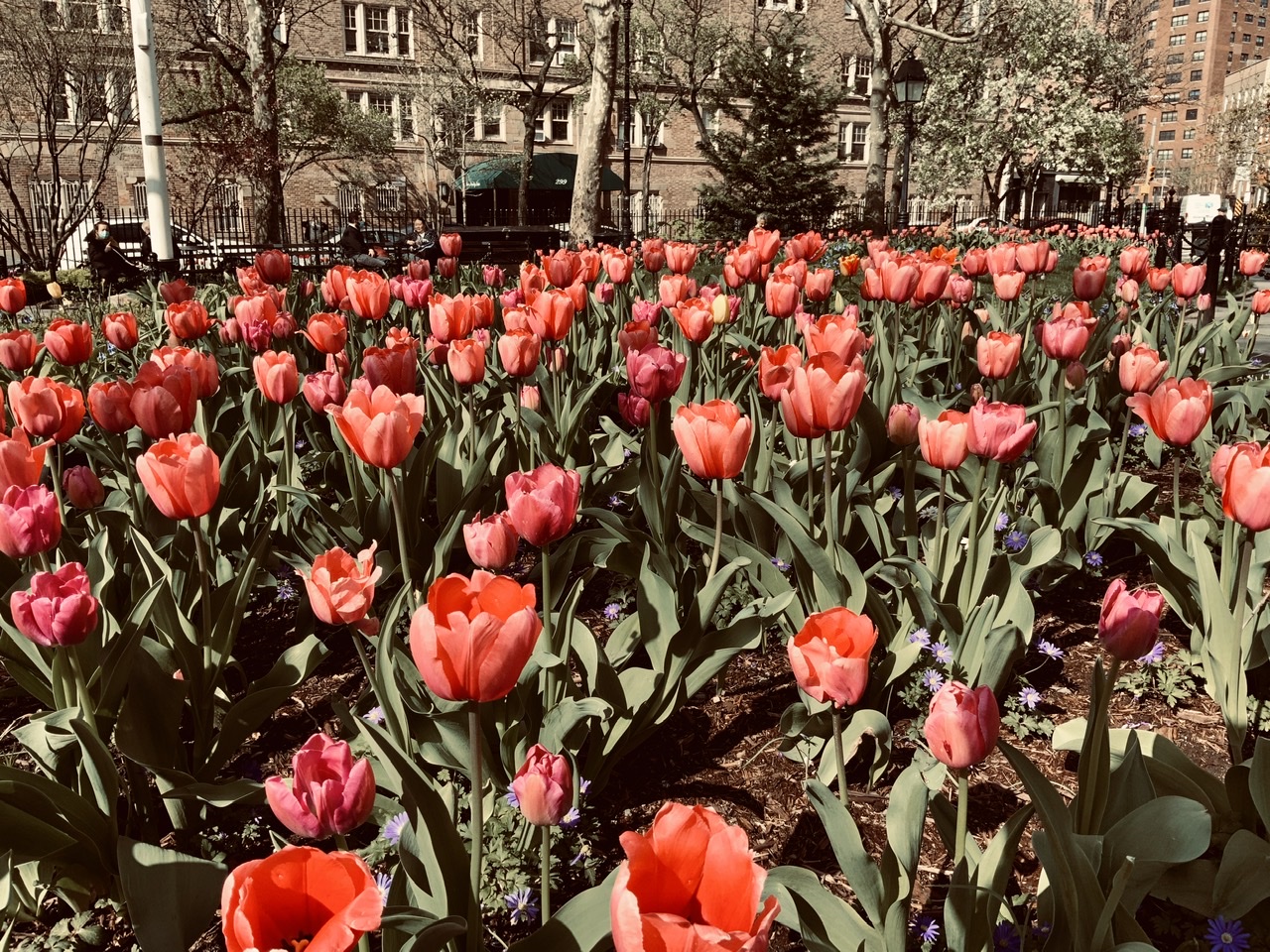
New York, NY
*an ongoing series of quotations – mostly from artists, to artists – that offers wisdom, inspiration, and advice for the sometimes lonely road we are on.
As we grow into our true artistic selves, we start to realize that the tools don’t matter, the story does. Your point of view and the way that you express yourself as a photographer are how you tell the stories that matter to you. And that, my friends, is therapeutic.
There’s a certain amount of Zen in that act. Peace and tranquility are hard to come by in today’s world. But through photography, we all have a chance to find both.
As photographers, we sometimes lose sight of the fact that our ability to use a camera gives us a chance to show everyone else who we are. Young photographers often obsess over doing something new. Older photographers, like Rick and I, realize that the real goal is in being you. So focus on being you not on being new for new’s sake. This is the path to both inner and outer success.
People will ask you what you photograph. I personally am often described as a bird photographer. But we are not what we do. It’s important to note the difference. And that is because people don’t care what you do. They care why you do it. If you are doing what you are meant to do, you will be able to articulate your own why.
Scott Bourne in Photo Therapy Motivation and Wisdom by Rick Sammon
Comments are welcome!
Q: Do you have a mentor?
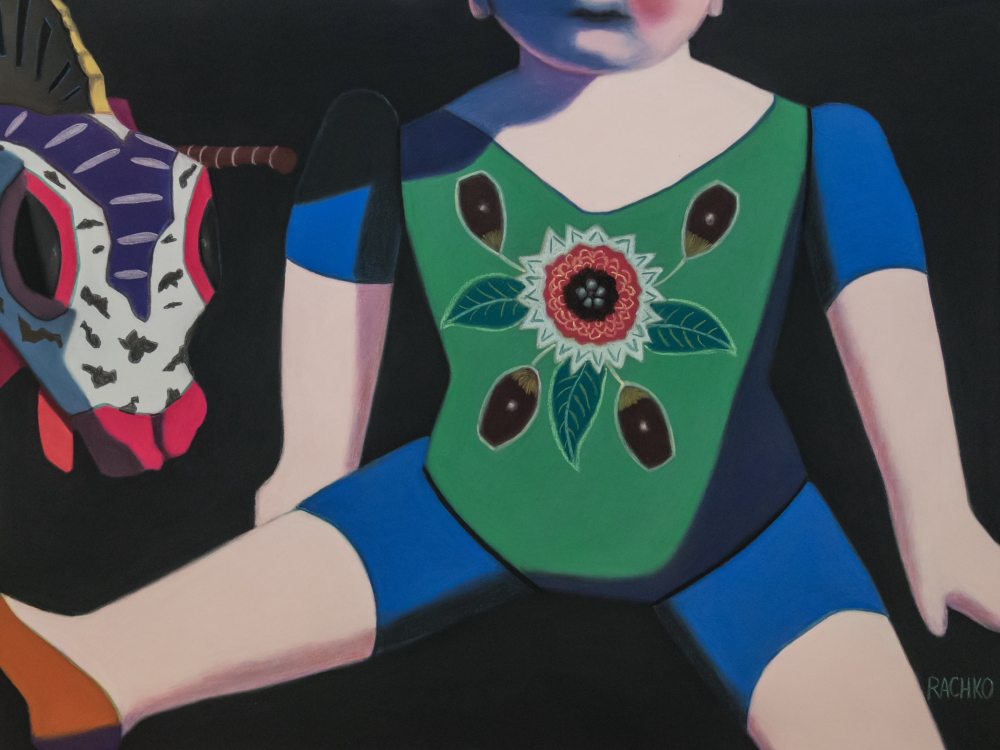
“Alone Together,” soft pastel on sandpaper, 20″ x 26″
A: No, but I often wish I did. How wonderful it would be to consult someone who’s been there, a productive and successful artist who could provide advice on all the concerns, especially the problems and dangers, inherent in a professional artist’s life.
But I have been at this for thirty years and found no such person! I think it’s because each artist’s career is highly unique as we chart are own individual paths. Unlike most professions, there are no firm rules or straight forward career milestones for making your way as an artist.
Besides the countless hours spent in the studio, I have always worked diligently to understand the art business. Certainly getting work seen, exhibited, reviewed, sold, etc. is as important as making it in the first place. It’s all part of being a professional artist.
Early on I developed the habit of relying on my own best judgment, both in creating the work and in getting it seen and collected. Certainly I have made plenty of mistakes. As a result though, I know a tremendous amount about the art business. And I enjoy sharing what I know in the hopes of steering other artists away from making similar missteps.
Comments are welcome!
Pearls from artists* # 187
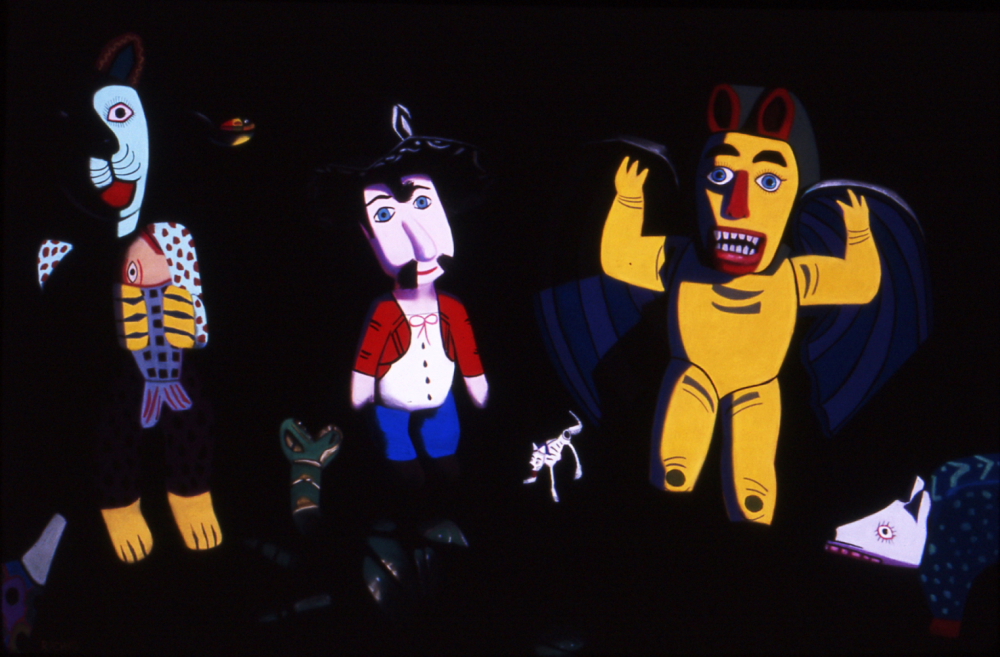
“Big Wow,” soft pastel on sandpaper, 38″ x 58″
* an ongoing series of quotations – mostly from artists, to artists – that offers wisdom, inspiration, and advice for the sometimes lonely road we are on.
As George Grosz said, at that last meeting he attended at the National Institute, “How did I come to be an artist? Endless curiosity, observation, research – and a great amount of joy in the thing.” It was a matter of taking a liking to things. Things that were in accordance with your taste. I think that was it. And we didn’t care how unhomogenous they might seem. Didn’t Aristotle say that it is the mark of a poet to see resemblances between apparently incongruous things? There was any amount of attraction about it.
Marianne Moore in Writers at Work: The Paris Review Interviews Second Series, edited by George Plimpton
Comments are welcome!
Q: What is it about soft pastel that you find so intriguing that you use it as your primary fine art medium?

Some of Barbara’s pastels
A: For starters it’s the medium that I fell in love with many years ago. I recently read this article online, “What is Pastel?” by Mike Mahon, and will quote it because it neatly sums up what I love about working with pastel.
Pastel is the most permanent of all media when applied to conservation ground and properly framed. Pastel has no liquid binder that may cause it to oxidize with the passage of time as oftentimes happens with other media.
In this instance, Pastel does not refer to pale colors, as the word is commonly used in cosmetic and fashion terminology. The pure, powdered pigment is ground into a paste with a minimum amount of gum binder, rolled into sticks and dried. The infinite variety of colors in the Pastel palette range from soft and subtle to hard and brilliant.
An artwork is created by stroking the stick of dry pigment across an abrasive ground, embedding the color in the “tooth” of the ground. If the ground is completely covered with Pastel, the work is considered a Pastel painting; whereas, leaving much of the ground exposed produces a Pastel sketch. Techniques vary with individual artists. The Pastel medium is favored by many artists because it allows a spontaneous approach. There is no drying time, therefore, no change in color occurs after drying as it does in other media.
Did you know that a particle of Pastel pigment seen under a microscope looks like a diamond with many facets? It does! Therefore, Pastel paintings reflect light like a prism. No other medium has the same power of color or stability.
Historically, Pastel can be traced back to the 16th century. Its invention is attributed to the German painter, Johann Thiele. A Venetian woman, Rosalba Camera, was the first to make consistent use of Pastel. Chardin did portraits with an open stroke, while La Tour preferred the blended finish. Thereafter, a galaxy of famous artists—Watteau, Copley, Delacroix, Millet, Manet, Renoir, Toulouse Lautrec, Vuillard, Bonnard, Glackens, Whistler, Hassam, William Merritt Chase—used Pastel for a finished work rather than for preliminary sketches.
Pastels from the 16th century exist today, as fresh as the day they were painted. Edgar Degas was the most prolific user of Pastel and its champion. His protégé, Mary Cassat, introduced Pastel to her friends in Philadelphia and Washington, and thus to the United States. In the Spring of 1983, Sotheby Parke Bernet sold at auction, two Degas Pastels for more than $3,000,000 each! Both Pastels were painted about 1880.
Note: Do not confuse Pastel with “colored chalk.” Chalk is a porous, limestone substance impregnated with dyes, whereas, Pastel is pure pigment—the same as is used in other permanent painting media.
Today, Pastel paintings have the stature of oil and watercolor as a major fine art medium. Many of our most renowned, living artists have distinguished themselves in Pastel and have enriched the art world with this beautiful medium.
So knowing all this, I often wonder, why don’t more artists use pastel? Is it because framing is a big issue? Works on paper need to be framed and pastel paintings have unique problems (see my April 27, 2013 blog post). Second only to the cost of maintaining a studio in New York City, frames are my single largest business expense. Sometimes I am grateful that pastel is a very slow medium. I typically finish 4 or 5 paintings in a year, which means I only have to pay for 4 or 5 frames!
Comments are welcome!


 barbararachkoscoloreddust.com