Blog Archives
Q: You started the Bolivianos series in 2017. It has been 8 years since you created The Champ. This endeavor of focussing on a series for almost a decade’s timeline shows that you embody stability as against many artists who tend to hop on to the next inspiration they find. How has discipline, stability, focus and punctuality defined your works apart from being inspired by Bolivian culture for the series Bolivianos? (Question from Vedica Art Studios and Gallery)
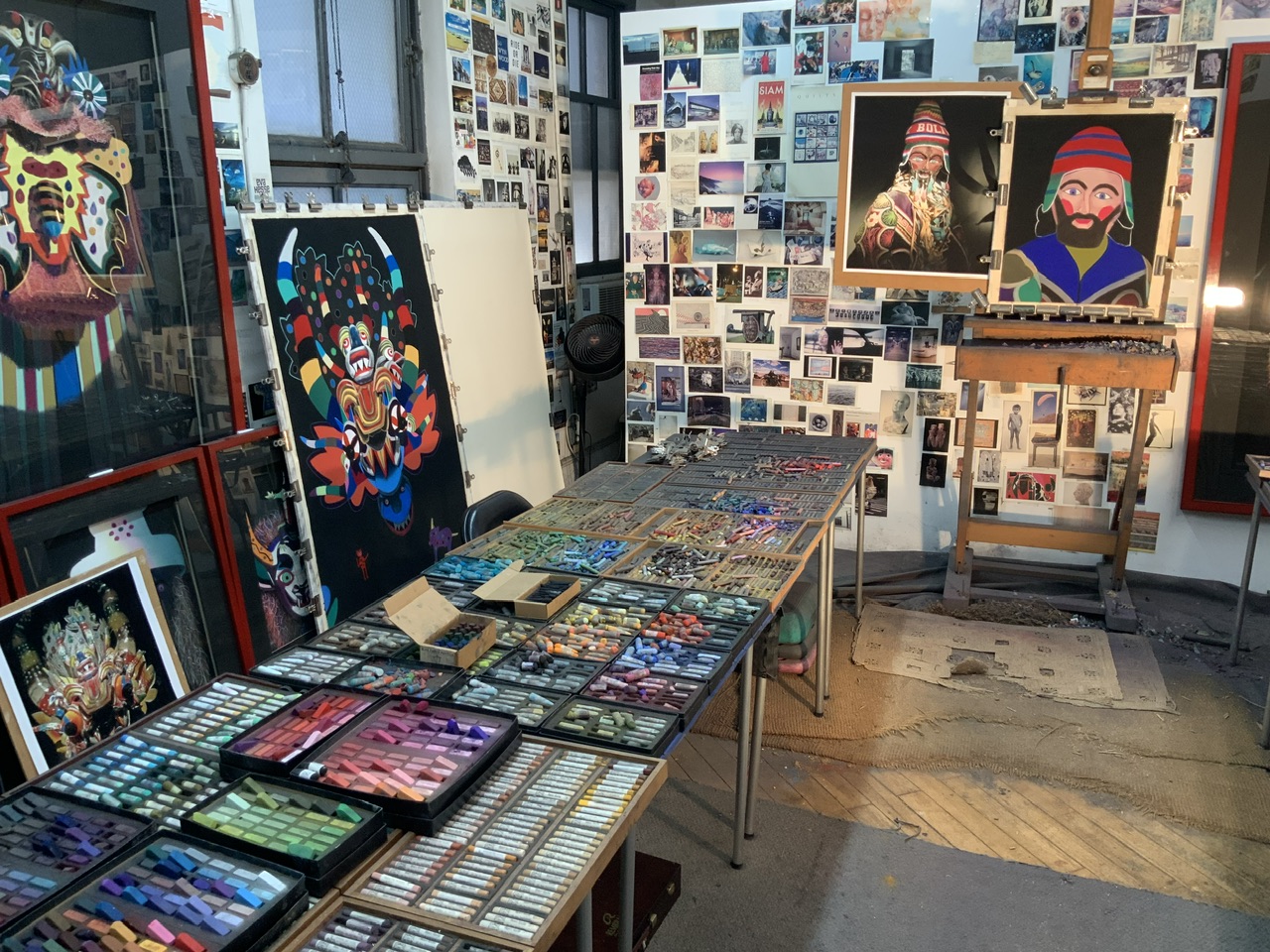
A: My first series, Domestic Threats, lasted fifteen years, and my second, Black Paintings, lasted ten. Stability and related qualities are likely natural parts of my personality, reinforced by my previous professional life. My prior careers as a Navy Commander, commercial pilot, and Boeing-727 Flight Engineer undoubtedly helped develop discipline, stability, focus, and punctuality. Details matter deeply to me; as a Naval Officer for twenty-one years, “attention to detail” was paramount. From my earliest days as an artist, I have been meticulous and dedicated to inventing new techniques and refining the craft of soft pastel.
I dislike wasting precious time. As a goal-oriented person, I continually strive to accomplish as much as possible. These qualities were influenced by my Navy career and further deepened by the tragic loss of my husband onboard the plane that crashed into the Pentagon on 9/11. I understand firsthand that life can change in an instant. Whenever I finish one task, I immediately look around and ask, “OK, what’s next?” I devote my studio time to pushing myself and pastel to new technical heights. There’s always more to accomplish as an artist!
Comments are welcome!
Pearls from artists* # 625

*an ongoing series of quotations – mostly from artists, to artists – that offers wisdom, inspiration, and advice for the sometimes lonely road we are on.
The artist not equipped with the necessary arrogance will be repeatedly sidetracked or subverted by the agendas of others. He will lack a sufficient sense of purpose, will frequently stall and block, and will bring a nagging passivity to his art career. His resolve to do great art may remain a potent idea only, a kind of unexplained force in his body. He is likely to accomplish much less than he otherwise might, support others rather than find support for himself, attempt the small rather than the large, and rebound less well from rejection.
The self-centered artist, on the other hand, is challenged to remember that he is neither god nor Superman, but a human being with human limitations. He hasn’t the time to turn every idea into a book, the ability to top each work with a greater one, the energy to toil ceaselessly at his art, nor the right to trample others as he pursues his goals. If he mistakes or oversteps these limits he will put himself in harm’s way and may find himself struck down by his own obsessional energy, by burnout, by depression, by self-abuse, or by the angry complaints of those whose rights he has cavalierly trampled.
Eric Maisel in A Life in the Arts: Practical Guidance and Inspiration for Creative and Performing Artists
Comments are welcome!
Q: You seem very disciplined. Do you ever have a day when you just can’t get excited about going to the studio to work?

Signing “Narcissist”
A: That happens occasionally, but I usually still go to the studio to work. You know the expression, “99% of life is just showing up”? Well, of course I have to show up at my studio to accomplish anything so I still try to keep fairly regular studio hours – 6 to 7 hours a day, 4 or 5 days a week. And that’s not to mention all the other work – answering email, checking social media, writing blog posts, etc. – which I tend to do at lunchtime, in the evenings, and on my days off from the studio.
When you are an artist there is always work to do and for some of it, no one else can do it because no one else knows the work from the inside the way the maker does. I like what Twyla Tharp says in her book, “The Creative Habit.” In order to progress an artist needs good work habits that become a daily routine. And Chuck Close used to say, “Inspiration is for amateurs,” meaning a professional works whether she’s in the mood or not. I completely agree so I keep working and slowly moving ahead.
As Tchaikovsky wrote in a letter to a friend:
We must always work, and a self-respecting artist must not fold his hands on the pretext that he is not in the mood. If we wait for the mood, without endeavoring to meet it halfway, we easily become indolent and apathetic. We must be patient, and believe that inspiration will come to those who can master their disinclination. A few days ago I told you I was working every day without any real inspiration. Had I given way to my disinclination, undoubtedly I should have drifted into a long period of idleness. But my patience and faith did not fail me, and today I felt that inexplicable glow of inspiration of which I told you; thanks to which I know beforehand that whatever I write today will have power to make an impression, and to touch the hearts of those who hear it.
Quoted in Eric Maisel’s A Life in the Arts: Practical Guidance and Inspiration for Creative and Performing Artists.
Comments are welcome!
Pearls from artists* # 553
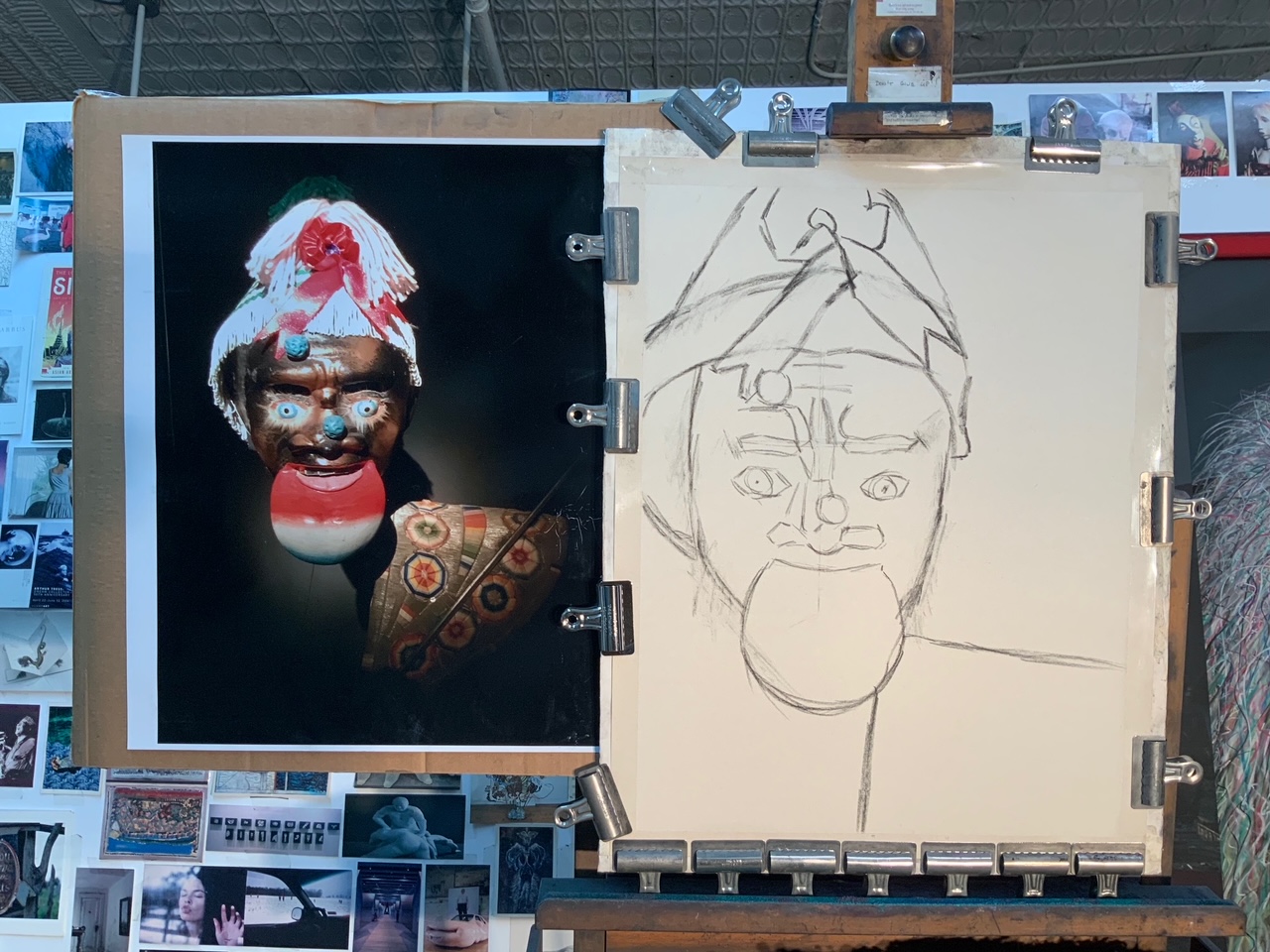
Starting a new pastel painting
*an ongoing series of quotations – mostly from artists, to artists – that offers wisdom, inspiration, and advice for the sometimes lonely road we are on.
We think of the procrastinator as lazy and inactive, but procrastination is active. Not to get all psychological and heavy on you, but procrastination is actually “active avoidance.” I like the word active because it shows just how powerful your avoidance tendencies are.
It takes all kinds of forms – writer’s block and disorganization are two of the most common. I’ve known people who have mild forms of it, and I’ve known people who are absolutely crippled by it, who never accomplish what they set out to do.
… the most heavy-handed thing I can say is: If you procrastinate, you are only robbing yourself.
Anna Deavere Smith in Letters to a Young Artist: Straight-up Advice on Making a Living in the Arts – For Actors, Performers, Writers, and Artists of Every Kind
Comments are welcome!
Pearls from artists* # 451
*an ongoing series of quotations – mostly from artists, to artists – that offers wisdom, inspiration, and advice for the sometimes lonely road we are on.
Your attitude towards resistance determines the success of your work and your future. Resistance should be cultivated. How you meet these obstacles that present themselves in the light of any endeavor determine the direction of your life and career.
Allow me to propose a few suggestions about how to handle the natural resistances that your circumstances might offer. Do not wait for enough time or money to accomplish what you think you have in mind. Work with what you have right now. Work with the architecture you see around you right now. Do not what for what you assume is the appropriate, stress-free environment in which to generate expression. Do not wait for maturity or insight or wisdom. Do not wait till you are sure you know what you are doing. Do not wait until you have enough technique. What you do now, what you make of your present circumstances will determine the quality of your future endeavors.
And, at the same time, be patient.
Anne Bogart in A Director Prepares: Seven Essays on Art and Theatre
Comments are welcome!
Q: What is the most important factor behind your success?

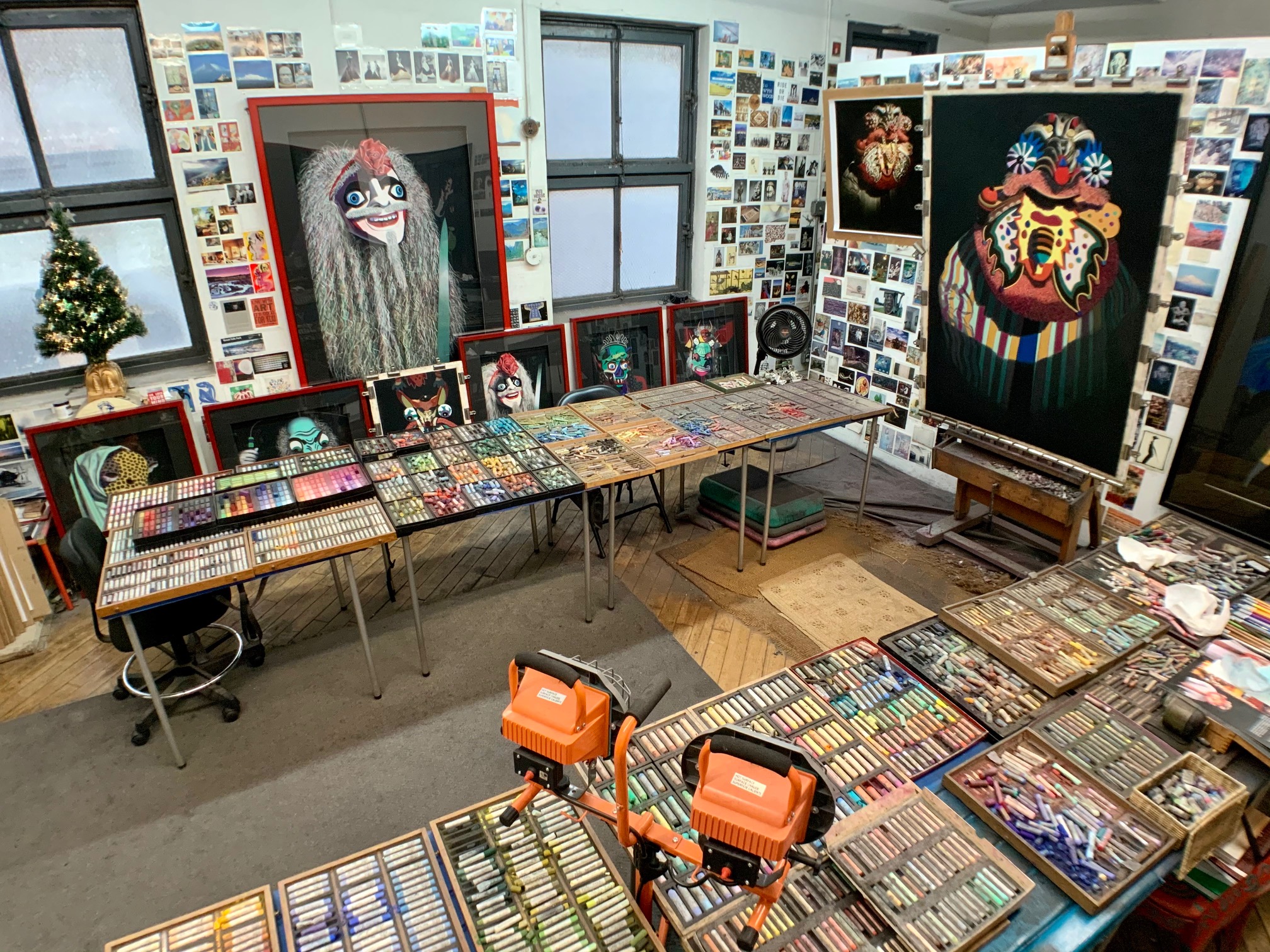
A: In a word, I’d say it’s love. I love soft pastel! I love being an artist! I love looking at the thousands of pastels in my studio while I think about the possibilities for mixing new colors and making exciting new pastel paintings. Soft pastels are rich and intense.
Even after more than thirty years as an artist, I still adore what I am able to accomplish. I continually refine my craft as I push pastel to new heights. My business card says it all: “Revolutionizing Pastel as Fine Art!”
The surfaces of my finished pastel paintings are velvety and demanding of close study and attention. Soft pastel on sandpaper – no other medium is as sensuous or as satisfying. Who could argue with that!
Comments are welcome!
Pearls from artists* 381
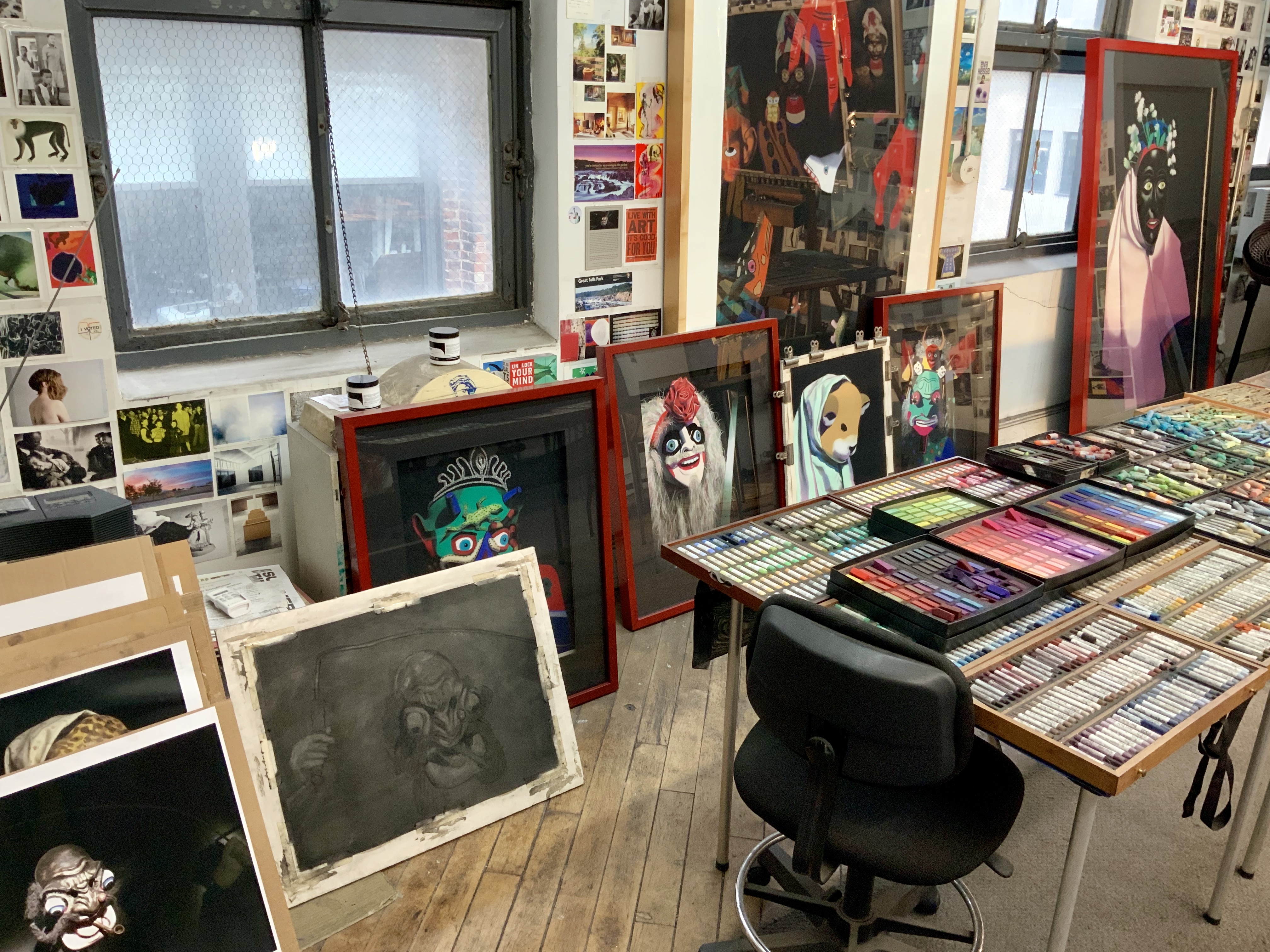
Barbara’s studio with work in progress
* an ongoing series of quotations – mostly from artists, to artists – that offers wisdom, inspiration, and advice for the sometimes lonely road we are on.
A work of art, if it is art, is not an end but a beginning. It is a challenge to the artist who produced it and to the artists around him to take the next step, to answer the questions raised by the work, to achieve what he or she has yet to accomplish. It also represents a challenge to the non-artist, who is offered a fresh vision.
Mary Gabriel in Ninth Street Women
Comments are welcome!
Q: What made you fall in love with soft pastel versus another medium?
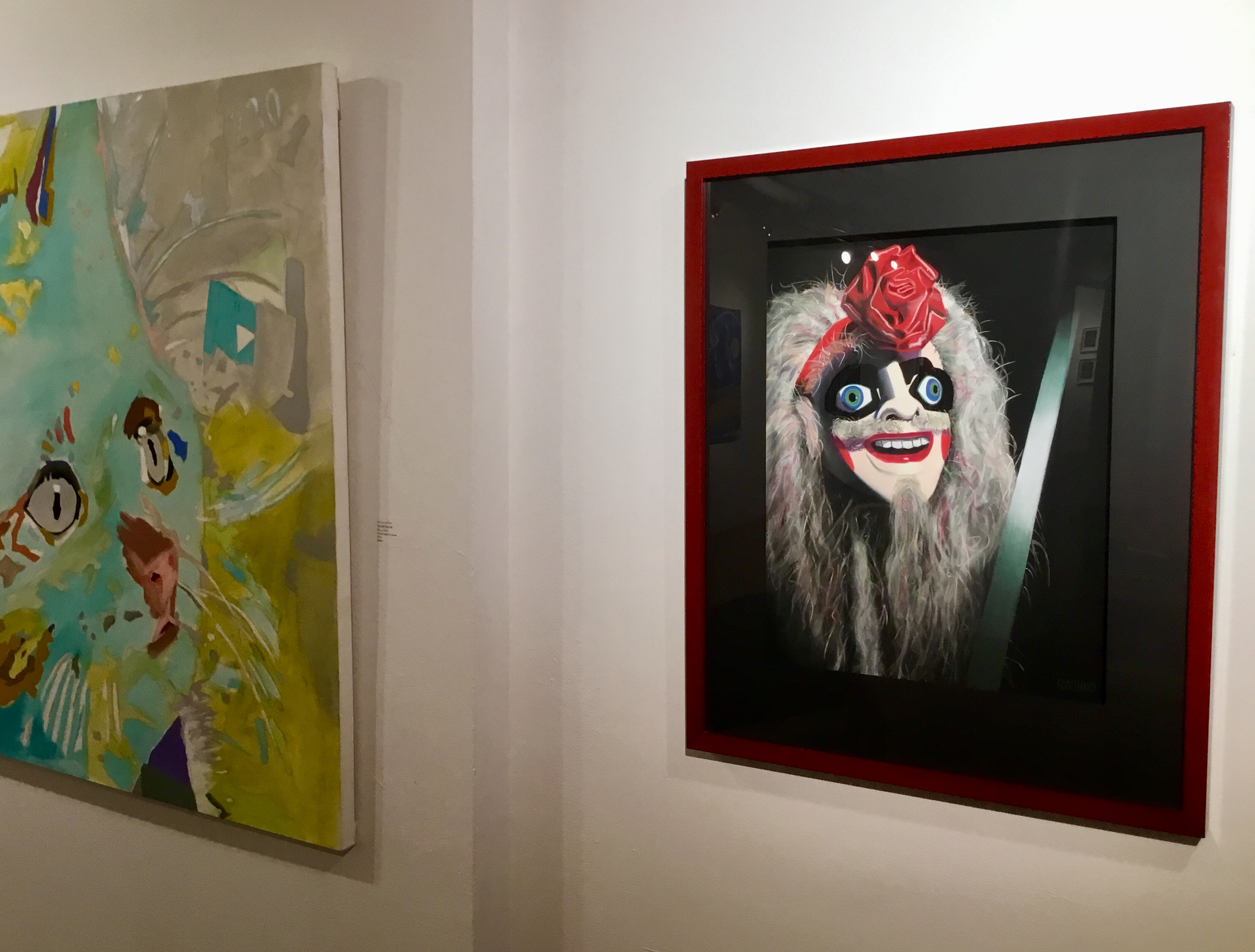
“The Champ” in “Worlds Seen & Unseen” at Westbeth Gallery, NYC
A: I like to get my hands right into my work. In other words, I don’t like brushes or anything else to intervene between my hands and what I’m working on.
I work with 400 or 500 grit Uart sandpaper so the downside is that I rub my fingertips raw from blending layers of soft pastel onto sandpaper. I’ve tried using rubber gloves (they make my fingers sweat and wear out fast), cotton gloves (they leave bits of lint on the paper), using a blending stump (it leaves lint on the paper), etc., but nothing works as well as my own fingers. So sore fingertips are an unavoidable occupational hazard. I sometimes take days off from the studio just so that my hands can heal.
I adore color and love looking at the thousands of pastels in my studio! After working with this medium for more than thirty years, I still love what I am able to accomplish and I am still pushing it to do new things. The colors are rich, intense, velvety. No other medium is as sensuous or as satisfying.
Comments are welcome!
Pearls from artists* # 199
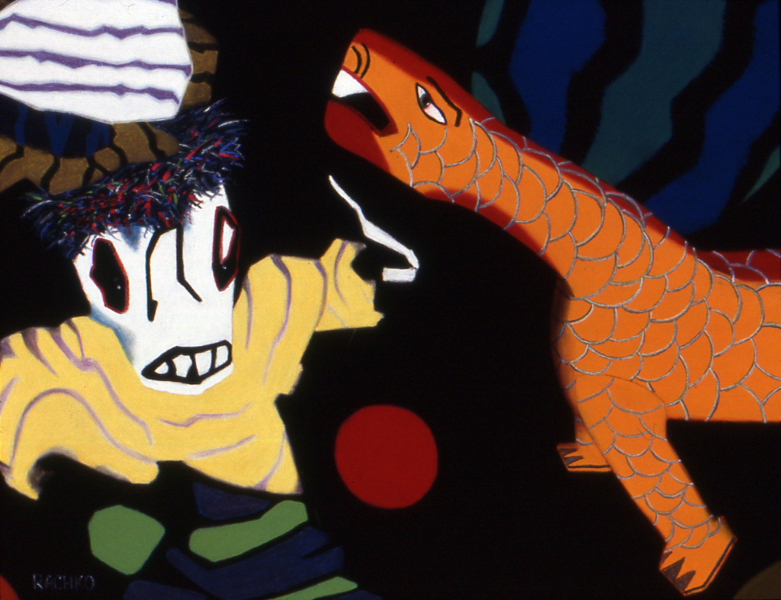
“Trio,” soft pastel on sandpaper, 20″ x 26″
* an ongoing series of quotations – mostly from artists, to artists – that offers wisdom, inspiration, and advice for the sometimes lonely road we are on.
Writers, like all artists, are concerned to represent reality, to create a more absolute and complete reality than reality itself. They must, if they are to accomplish this, assume a moral position, a clearly conceived political, social, and philosophical attitude; in consequence, their beliefs are, of course, going to find their way into their work. What artists believe, however, is of secondary importance, ancillary to the work itself. A writer survives in spite of his beliefs. Lawrence will be read whatever one thinks of his notions on sex. Dante is read in the Soviet Union.
A work of art, on the other hand, has a representative and expressive function. In this representation the author’s ideas, his judgments, the author himself, are engaged with reality.
Alberto Moravia in Writers at Work: The Paris Review Interviews First Series, edited and with an introduction by Malcolm Cowley
Comments are welcome!
Q: What are some of your work habits? Do you sit most of the day?
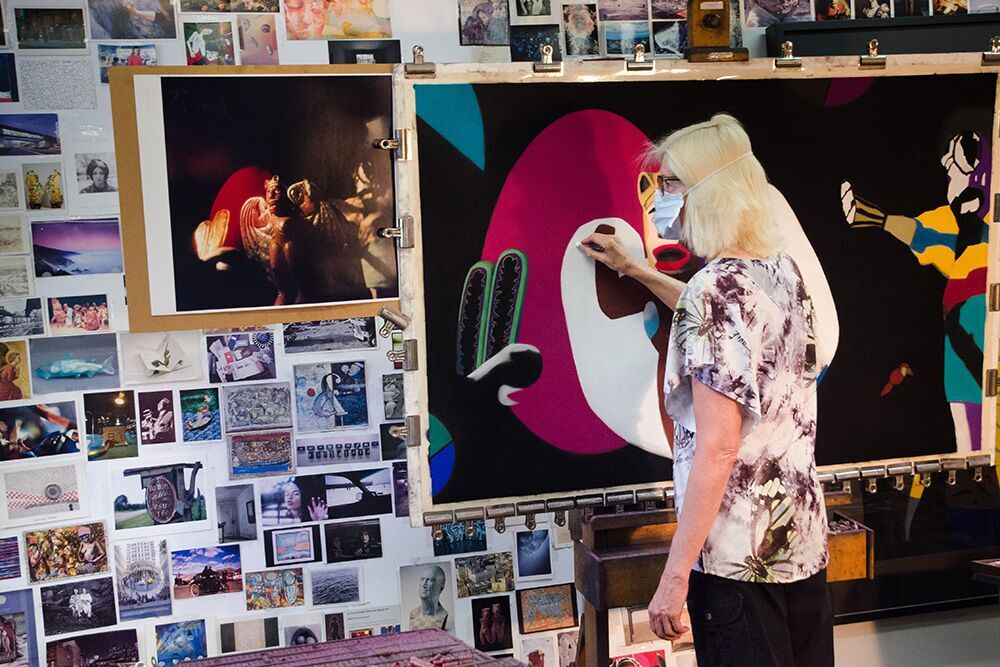
Barbara at work, Photo: Marianne Barcellona
A: No, I never sit while working. I enjoy the physicality of art-making and prefer to stand at my easel so I can back up to see how a painting looks from a distance. I like being on my feet all day and getting some exercise.
In order to accomplish anything, artists need to be disciplined. I work five days a week, taking Wednesdays and Sundays off, and spend seven hours or more in the studio. Daylight is necessary so I work more hours in summer, fewer in winter. I deliberately don’t have a clock on the wall – art-making is independent of timetables – but I tend to work in roughly two-hour blocks before taking a break.
Studio hours are sacrosanct and exclusively for creative work. I keep my computer and mobile devices out of the studio. Art business activities – answering email, keeping up with social media, sending jpegs, writing blog posts, doing interviews, etc. – are mostly accomplished at home in the evenings and on days off.
Comments are welcome!


 barbararachkoscoloreddust.com