Blog Archives
Pearls from artists* # 563

*an ongoing series of quotations – mostly from artists, to artists – that offers wisdom, inspiration, and advice for the sometimes lonely road we are on.
[John] Graham defined art as a “process of abstracting” thought and emotion by the use of paint or metal or stone. Because art was therefore intrinsically abstract, the duty of the artist would be to push abstraction “fearlessly to its logical end instead of evading it under the disguises of charm or being ‘true to nature.’” The artist created for society, he said, but if that society didn’t like what he or she had produced, the artist”does not trade his ideals for success. Martyrs and saints love luxury and success just as much as ordinary people, only they love something else even more.” Graham said, if the artist is a true genius, he can expect to be misunderstood and alone. “The beauty of genius is frightful to behold, few can envisage it. Others find subterfuge in scepticism.” The abstract artist, he said, would be repeatedly challenged by such skeptics asking, “‘What does it mean?’… Is it a sky, a house, a horse?’” To which they should respond with confidence and honesty, “‘No, it is a painting.’”
Mary Gabriel in Ninth Street Women
Comments are welcome!
Pearls from artists* # 554
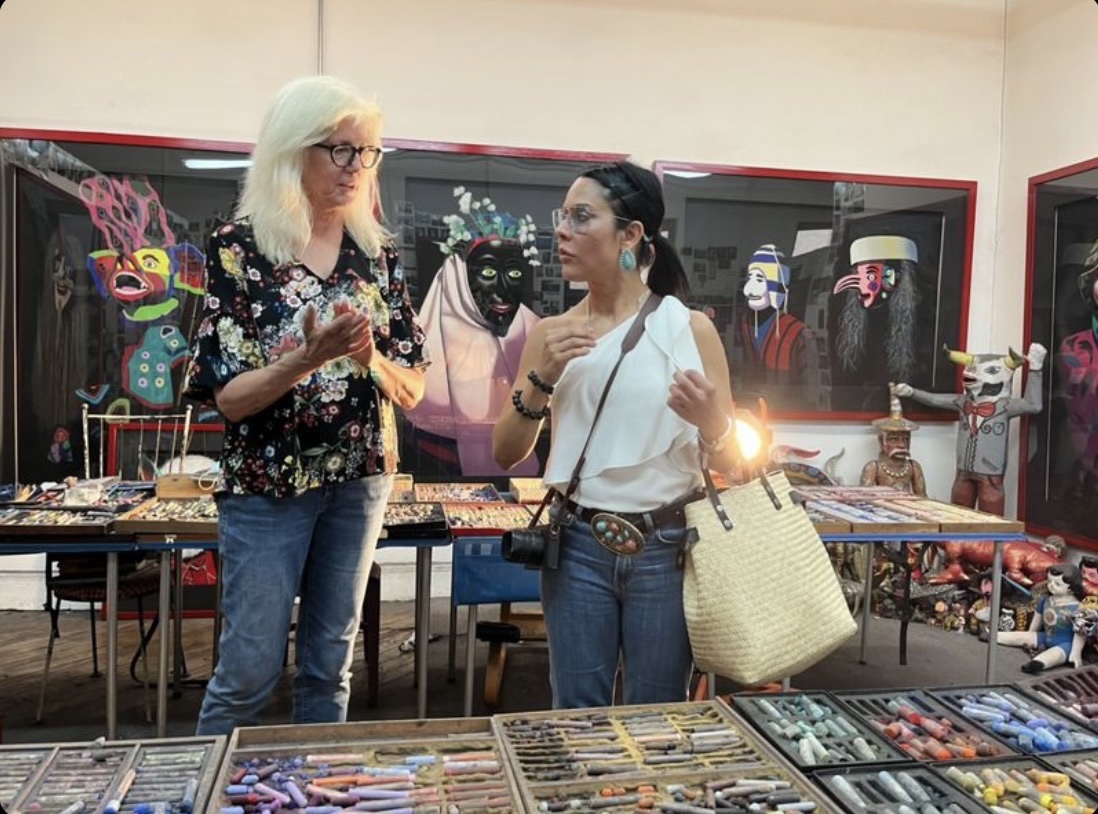
Explaining my work. Photo: David De Hannay
*an ongoing series of quotations – mostly from artists, to artists – that offers wisdom, inspiration, and advice for the sometimes lonely road we are on.
We’ve all taken advantage of the unlimited instant access that the wired world claims to provide. So it’s not surprising that many artists are reluctant to contemplate, much less accept, any self-imposed limitations. Painters and sculptors who remain in their studios grapple with the fundamentals and fine points of representation or abstraction – worrying about Renaissance theories of perspective or Klee’s or Kandinsky’s ideas about plane geometry – can be accused of having their heads in the sand. But there comes a time when certain questions must be asked. What are the artistic traditions that mean the most to you? What is your artistic heritage? Where do you stand?
Between Abstraction and Representation by Jed Perl in The New York Review of Books, November 24, 2022
Comments are welcome!
Pearls from artists* # 421
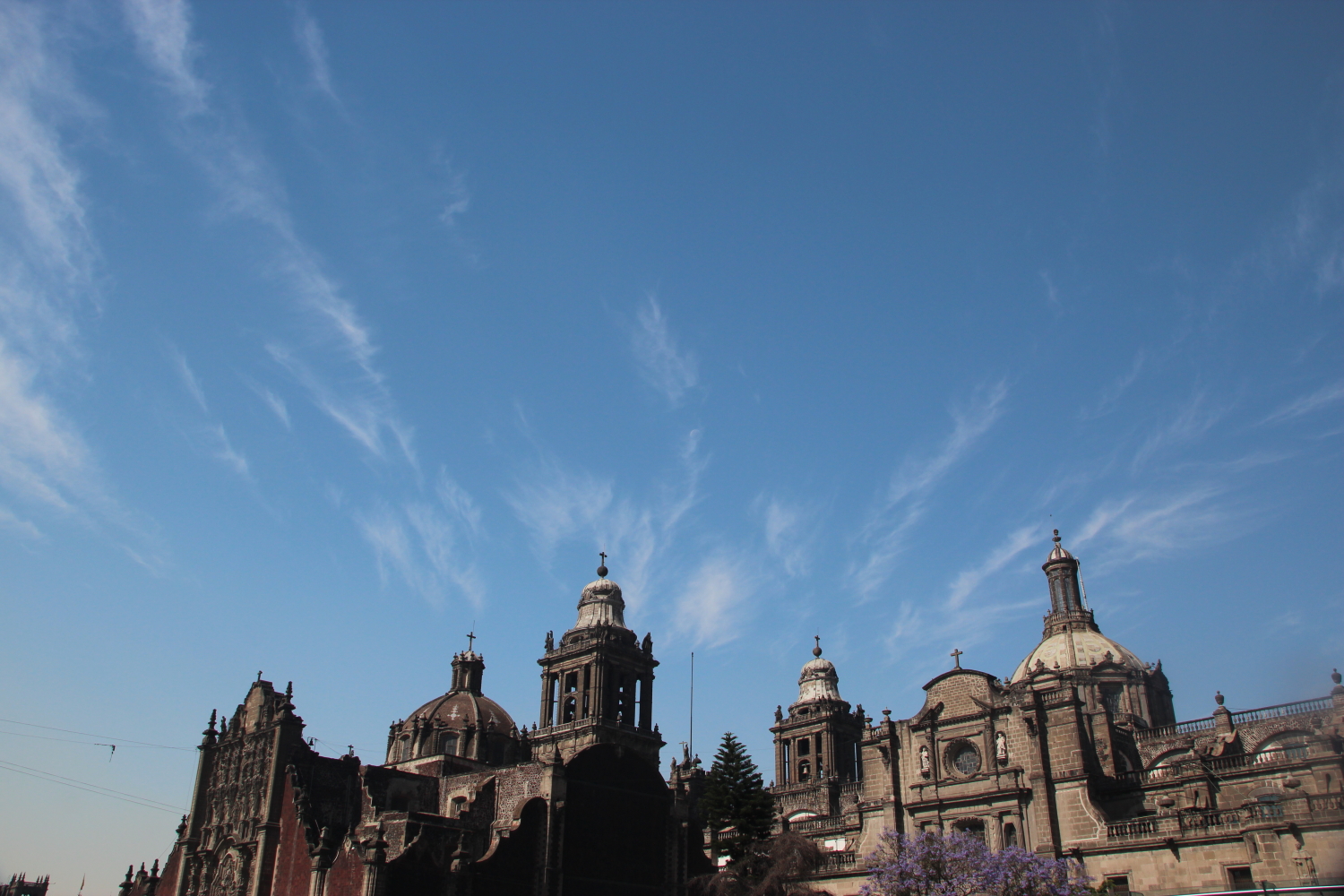
Mexico City
*an ongoing series of quotations – mostly from artists, to artists – that offers wisdom, inspiration, and advice for the sometimes lonely road we are on.
The economic meltdown that followed the crash of the U.S. stock market in 1929 shattered the country’s faith in itself. With one third of the country unemployed and droughts devastating the Midwest, many Americans doubted their ability to endure and triumph. More than ever, as the American novelist John Dos Passos asserted, the country needed to know “what kind of firm ground other men, belonging to generations before us, have found to stand on.” Guided by the Mexican muralists, whose art they had ample opportunities to study in reproduction and exhibition, American artists responded by seeking elements from the country’s past, which they mythologized into epics of strength and endurance in an effort to help the nation revitalize itself.
Thomas Hart Benton led the charge. Long a vociferous critic of European abstraction as elitist and out of touch with ordinary people, Benton hailed the Mexican muralists for the resolute public engagement of their art and for portraying the pageant of Mexican national life, exhorting his fellow American artists to follow their example in forging a similar public art for the U.S., even as he firmly rejected the communist ideology that often inflected the Mexican artists’ work. African American artists were likewise inspired by the Mexican muralists’ celebration of the people’s fight for emancipation. In creating redemptive narratives of social justice and liberation, artists such as Charles White and Jacob Lawrence transformed that struggle for freedom and equality into a new collective identity, one that foregrounded the contribution of African Americans to national life.
Vida Americana: Mexican Muralists Remake American Art, 1925 – 1945, edited by Barbara Haskell
Comments are welcome!
Pearls from artists* # 307
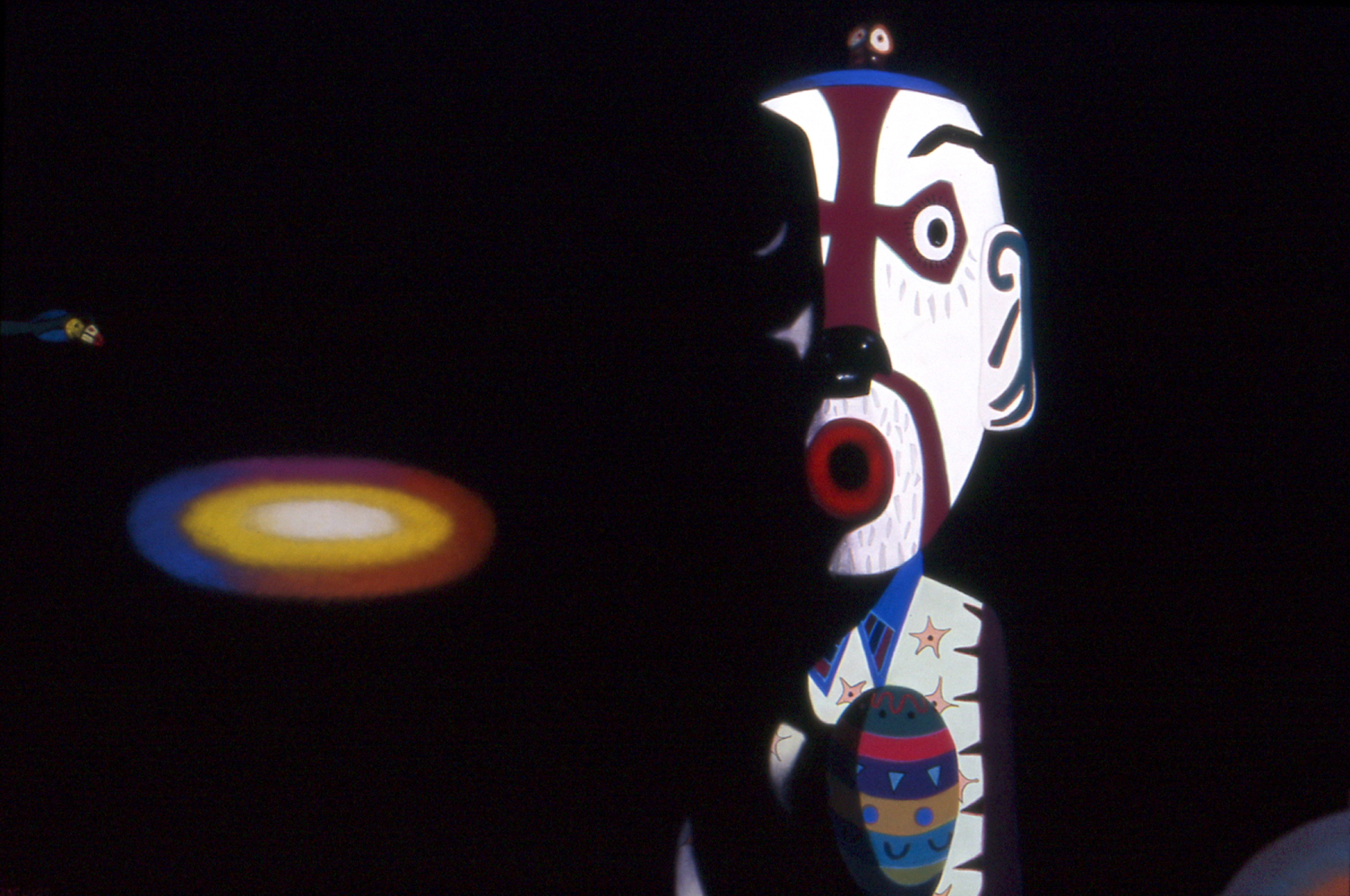
“Poker Face,” soft pastel on sandpaper, 38″ x 58″
* an ongoing series of quotations – mostly from artists, to artists – that offers wisdom, inspiration, and advice for the sometimes lonely road we are on.
Until fairly recently the word art as applied to pictures usually referred not just to representations of the world but to representations that suggested an importance greater than we might otherwise have assumed. Such pictures were said to instruct and delight, which they did by their wholeness and richness. The effect was to reinforce a sense of meaning in life, though not necessarily a belief in a particular ideology or religion, and in this they were a binding cultural achievement.
Unfortunately art of this quality is now little attempted, partly because of disillusionment from a century of war, partly because of sometimes misplaced faith in the communicative and staying powers of total abstraction, and partly because of the ease with which lesser work can be made and sold. This atrophying away of the genuine article is a misfortune because, in an age of nuclear weapons and over-population and global warming, we need more than ever what art used to provide. Somehow we have to recommit to picture making that is serious. It is impermissible any longer to endorse imitations that distract us or, openly or by implication, ridicule hope. The emptiness of material by Jeff Koons and Damien Hirst, for example, is born of cynicism and predictive of nihilism.
Robert Adams in Art Can Help
Comments are welcome!
Q: Your “Gods and Monsters” series consists of tableaux of Mexican and Guatemalan figures that are photographed in a way that blurs certain elements to abstraction while others are in clear focus. Can you please speak more about this work?

Untitled chromogenic print, 24″ x 24″, edition of 5
A: When I depict the Mexican and, more recently, Guatemalan figures in my pastel-on-sandpaper paintings, they are hard-edged, vibrant, and in-your-face. That’s a result of the way I work in pastel. I slowly and meticulously build up layers of pigment, blend them with my fingers, continually refine and try to find the best, most eye-popping colors. It’s a very slow process that takes months of hard work. An aside… One frustration I have as an artist – I am hardly unique in this – is that my audience only sees the finished piece and they look at it for perhaps ten seconds. They rarely think about how their ten-second experience took me months to create!
In 2002 when I began photographing these figures, I wanted to take the same subject matter and give it an entirely different treatment. So these images are deliberately soft focus, dreamy, and mysterious. I use a medium format camera and shoot film. I choose a narrow depth of field. I hold gels in front of the scene to blur it and to provide unexpected areas of color. Even as a photographer I am a colorist.
I want this work to surprise me and it does, since I don’t usually know what images I will get. Often I don’t even look through the viewfinder as I position the camera and the gels and click the shutter. I only know what I’ve shot after I’ve seen a contact sheet, usually the next day.
The “Gods and Monsters” series began entirely as a reaction to my pastel paintings. The latter are extremely meticulous and labor intensive. At a certain point in the process I know more or less what the finished painting will look like, but there are still weeks of slow, laborious detail work ahead. So my photographic work is spontaneous, serendipitous, and provides me with much-needed instant gratification. I find it endlessly intriguing to have two diametrically opposed ways of working with the same subject.
Comments are welcome!


 barbararachkoscoloreddust.com