Category Archives: Studio
Q: How do you persist despite the haters, nay-sayers, etc.? (Question from Bold Journey Publishing)

Barbara’s Studio
A: There are so many obstacles to art-making and countless reasons to just give up. When you really think about it, it’s amazing that great art gets made at all. So why do we do it? For artists I believe it’s all about making our time on earth matter, about devotion to our innate gifts, and a deep love of our hard-fought creative process.
I have been a full-time professional artist for 37 years. How and why do successful artists persist? It helps a lot to be stubborn! We just keep digging in that much deeper. Making art is a most noble and sacred calling – you know this if you are one of the called – and that’s what separates those of us who are in it for the long haul from the wimps, fakers, and hangers-on. I say to my fellow artists who continue to work despite the endless challenges, we artists who continue to struggle every day for recognition of our gifts are true heroes!
These words below by Mary Gabriel in Ninth Street Women, published in 2017, ring true for artists. It’s good, even for me, to occasionally reread them and be reminded.
The obstacles faced by women who hoped to leave a mark on humankind have, through the millennium, varied in height but not in stubborn persistence. And yet, a great many women have stubbornly ignored them. The desire to put words on a page or marks on a canvas was greater than the accrued social forces that told them they had no right to do so, that they were excluded by their gender from that priestly class called artist. The reason, according to Western tradition, was as old as creation itself: For many, God was the original artist and society had assigned its creator a gender – He. The woman who dared to declare herself an artist in defiance of centuries of such unwavering belief required monstrous strength, to fight not for equal recognition and reward but for something at once more basic and vital: her very life. Her art was her life. Without it, she was nothing. Having no faith that society would broaden its views on artists by dethroning men and accommodating women, in 1928 [Virginia] Woolf offered her fellow writers and painters a formula for survival that allowed them to create, if not with acceptance, then at least unimpeded. A woman artist, she said, needed but two possessions: “money and a room of her own.”
Furthermore, I think I persist because I do not believe in “big breaks.” Big breaks may sometimes happen, but in my experience an artist’s life is made up of single-minded dedication, persistence, hard work, and lots of small breaks. I recently finished reading “Failing Up: How to Take Risks, Aim Higher, and Never stop Learning” by Leslie Odom, Jr. I like what he has to say to artists here:
The biggest break is the one you give yourself by choosing to believe in your wisdom, in what you love, and in the gifts you have to offer the waiting world.
Comments are welcome!
Pearls from artists* # 606

Barbara’s Studio
*an ongoing series of quotations – mostly from artists, to artists – that offers wisdom, inspiration, and advice for the sometimes lonely road we are on.
The most ephemeral thoughts and feelings are gradually shaped into hard copy that is worked over, painted over, edited, and refined before the public sees it. This is where the sculptor cuts away and polishes the stone, where the painter covers the beginnings of the image with layer upon layer of enriching re-vision.
The muse presents raw bursts of inspiration, flashes, and improvisatory moments in which the art just flows out. But she also presents the technical, organizational job of taking what we have generated, then filing and fitting and playing with the pieces until they line up. We arrange them, cook them, render them down, digest them. We add, subtract, reframe, shift, break apart, melt together. The play of revision and editing transforms the raw into the cooked. This is a whole art unto itself, of vision and revision, playing with the half-baked products of our prior play.
It is essential to perform that secretarial labor in a way that is not mechanical. Editing must come from the same inspired joy and abandon as free improvisation. Stravinsky tells us, “The idea of work to be done is for me so closely bound up with the idea of the arranging of materials and of the pleasures of the actual doing of the work affords us that, should the impossible happen and my work suddenly be given to me in a perfectly completed form, I should be embarrassed and nonplussed by it, as a hoax.”
Stephen Nachmanovitch in Free Play: Improvisation in Life and Art
Comments are welcome!
Q: What would you say collectors of your work have in common?
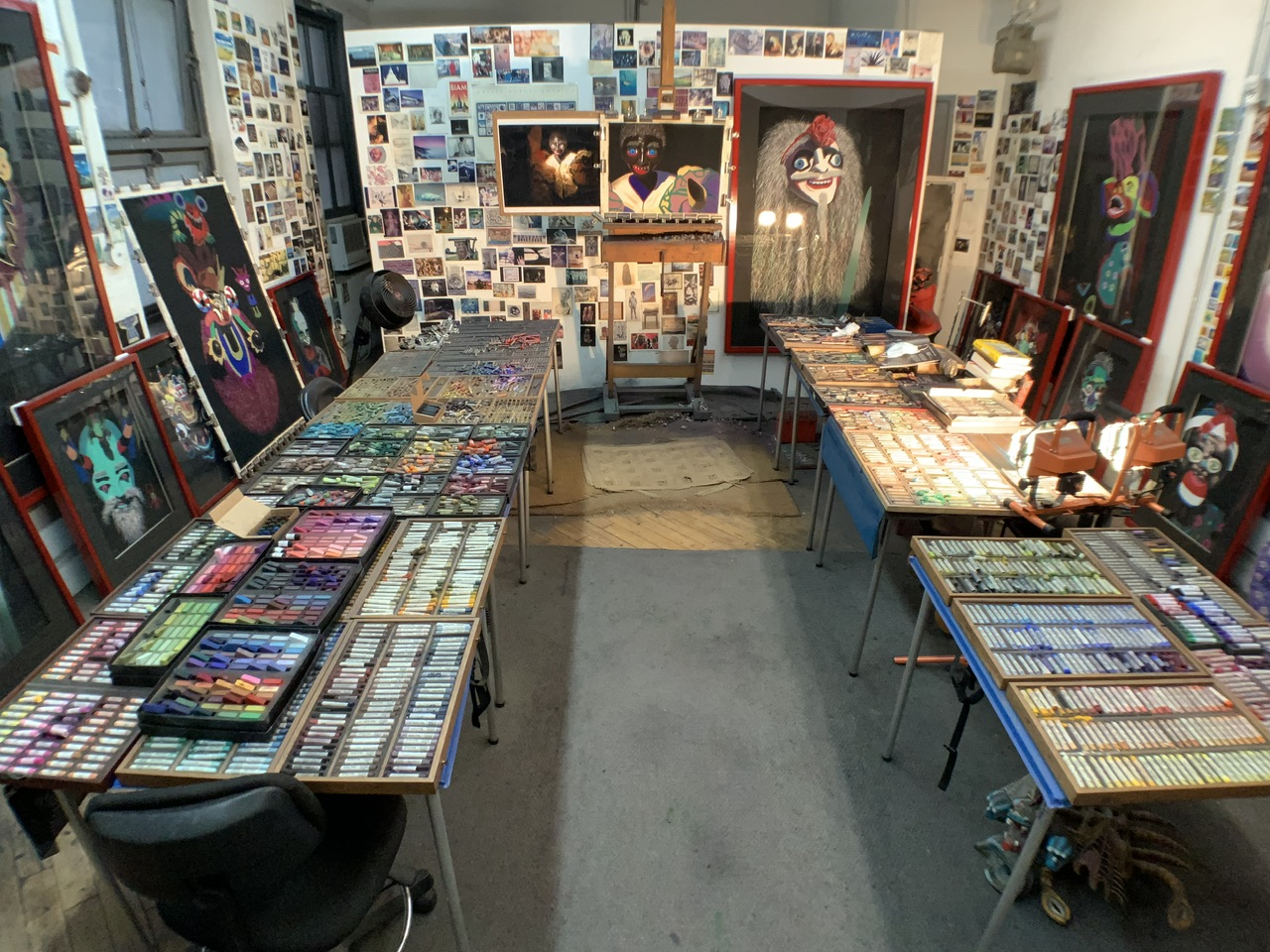
Barbara’s Studio
A: That’s a great question! I’d say that collectors of my work typically range in age from about 40 to their late 70s, they are college graduates with advanced degrees, they often don’t have kids, which is why they have disposable income and time to pursue their interests in art and culture. When I meet them (presuming my work was sold through a gallery or other third party), we usually have much to talk about – art, art history, photography, cinema, film history, dance, drama, music, travel, archaeology, Mexico, Central and South America, India, Asia – the list goes on and on.
Comments are welcome!
Pearls from artists* # 602
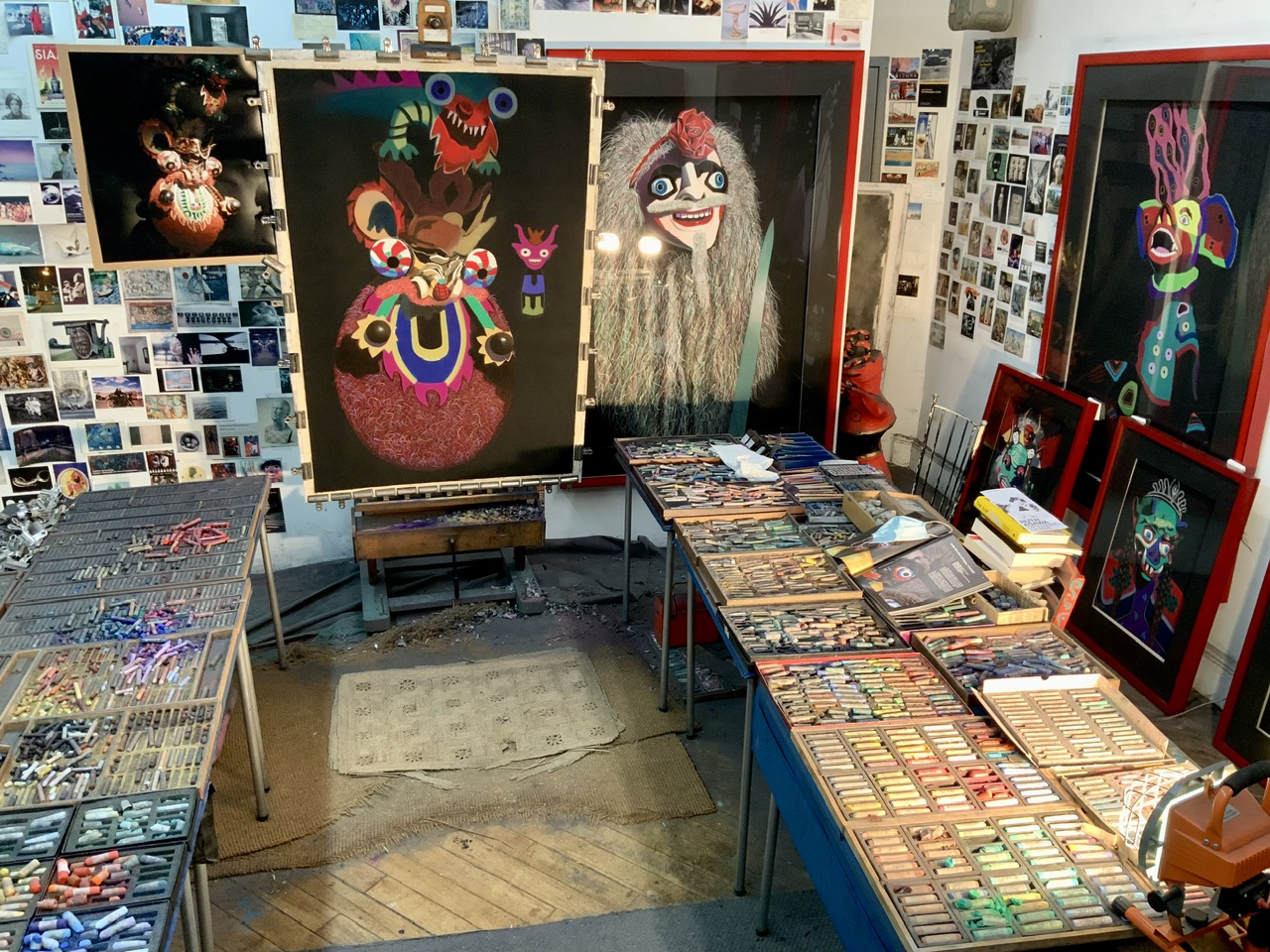
Barbara’s Studio
*an ongoing series of quotations – mostly from artists, to artists – that offers wisdom, inspiration, and advice for the sometimes lonely road we are on.
Anyone who studies an instrument, sport, or other art form must deal with practice, experiment, and training. We learn only by doing. There is a gigantic difference between the projects we imagine doing or plan to do and the ones we actually do. It is like the difference between a fantasied romance and one in which we really encounter another human being with all his or her complexities. Everyone knows this, yet we are inevitably taken aback by the effort and patience needed in the realization. A person may have great creative proclivities, glorious inspirations, and exalted feelings, but there is no creativity unless creations actually come into existence.
Stephen Nachmanovitch in Free Play: Improvisation in Art and Life
Comments are welcome!
Q: What’s on the easel today?
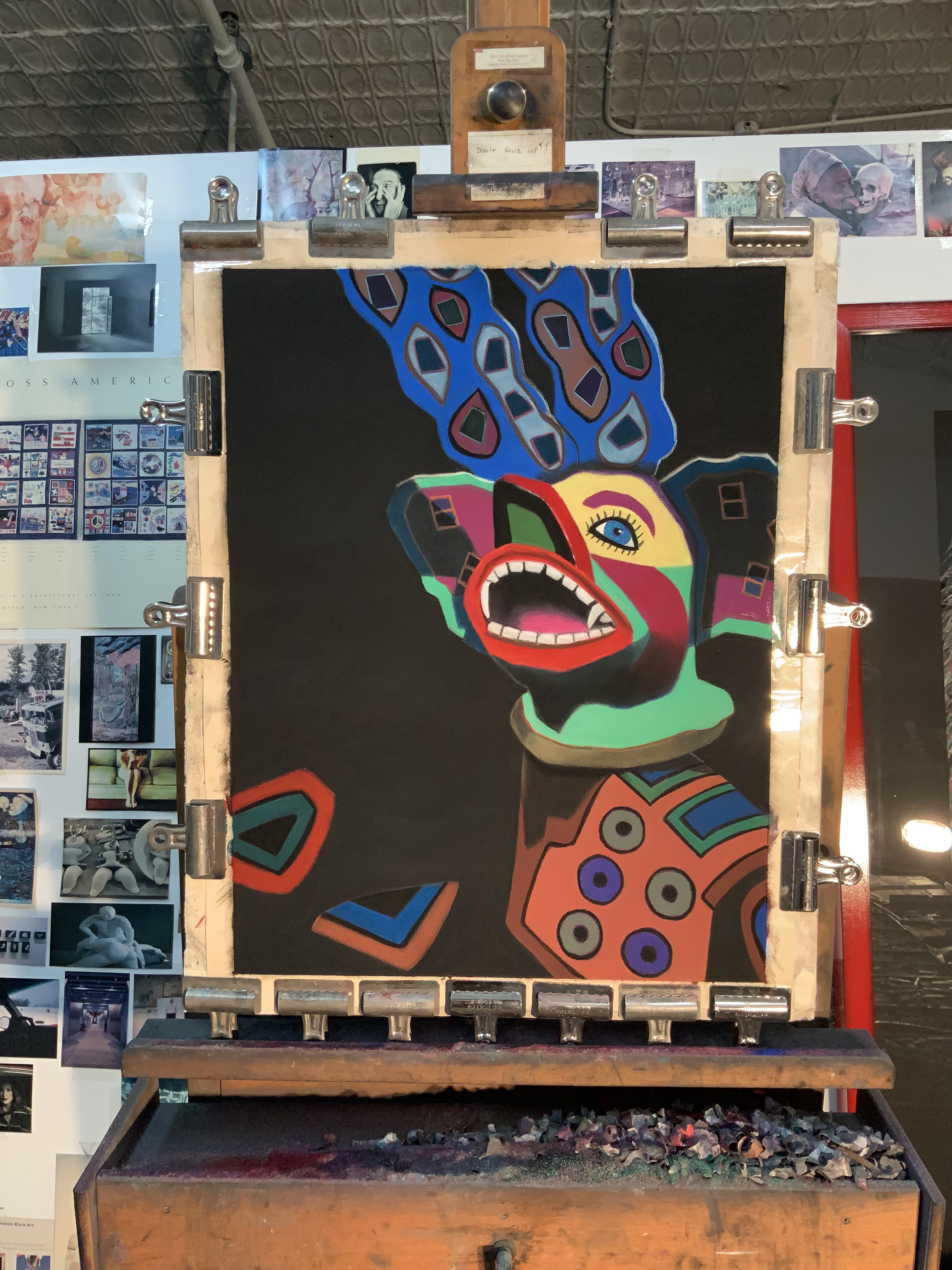
Nearly finished!
A: I’m finishing up “Maestro,” soft pastel on sandpaper, 26” x 20”.
Comments are welcome!
Pearls from artists* # 600
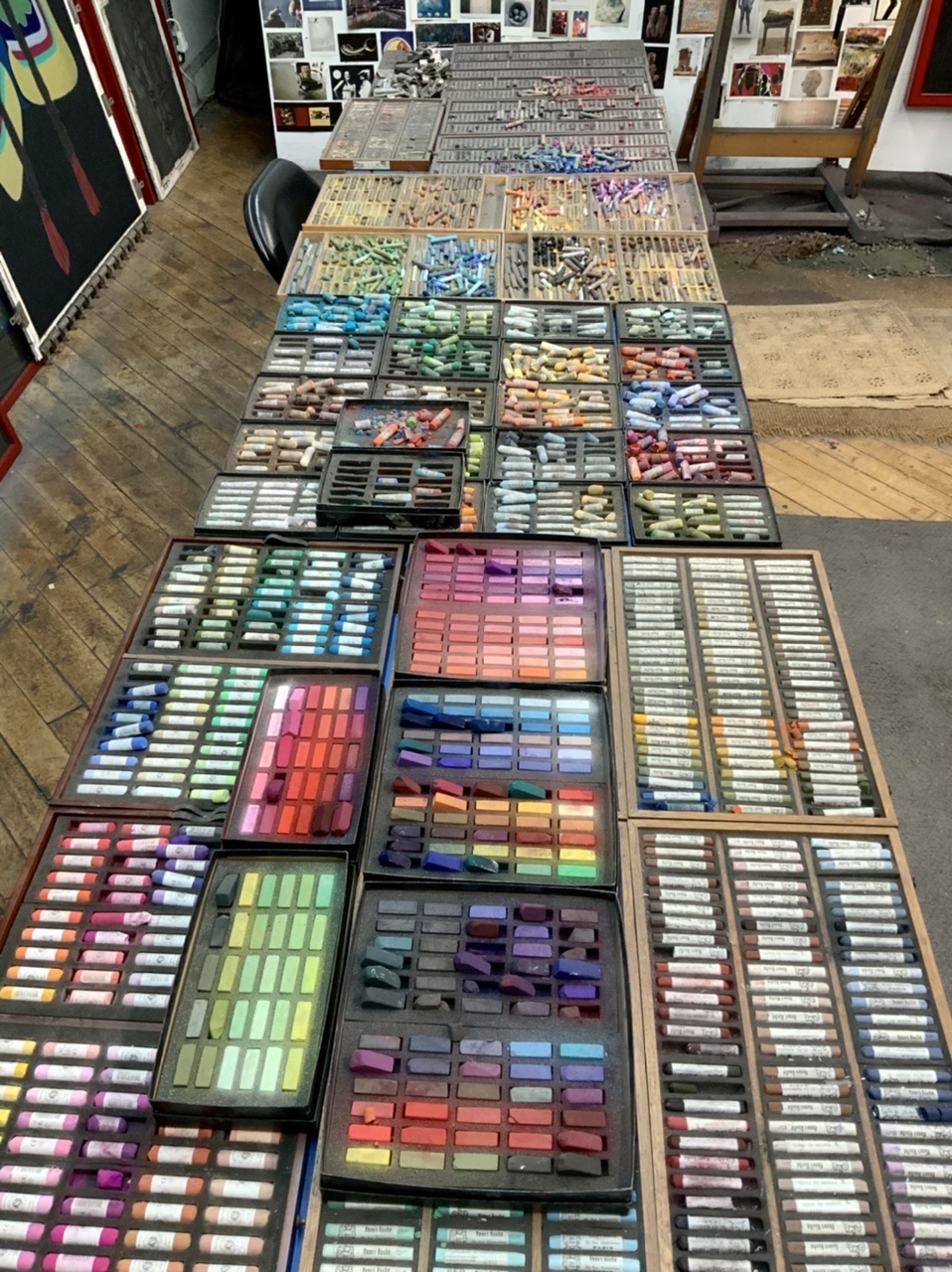
*an ongoing series of quotations – mostly from artists, to artists – that offers wisdom, inspiration, and advice for the sometimes lonely road we are on.
I am always between two currents of thought: first the material difficulties, turning round and round and round to make a living; and second, the study of color. I am always hoping to make a discovery here, to express the feelings of two lovers by a marriage of two complementary colors, their mingling and their opposition, the mysterious vibrations of kindred tones. To express the thought behind a brow by radiance of a bright tone against a somber background. To express hope by some star, the eagerness of a soul by a sunset glow.
Vincent van Gogh quoted by Stephen Nachmanovitch in “Free Play: Improvisation in Life and Art
Comments are welcome!
Pearls from artists* # 597

Barbara’s Studio
*an ongoing series of quotations – mostly from artists, to artists – that offers wisdom, inspiration, and advice for the sometimes lonely road we are on.
From earliest childhood, the boys had been treated differently from their sister. They were allowed more freedom, encouraged to play outdoors and to engage in rough and tumble, and their lives were expanded early on when, at the age of seven, each was sent to St. Mary’s, the prep school of Stonyhurst College. It seemed as if the boys were being readied for adventure and excitement, but while their horizons were opening up, Leonora [Carrington] felt hers were being closed down – or more specifically, never explored. Her role, which was clear even when she was in the nursery, was to keep safe: not to rock any boats, not to take any chances. What they sought to teach her was that she should sit a certain way and behave a certain way: she should be supportive, helpful, polite. She should listen, especially to men, she should have traditional skills, such as playing music and speaking French. Drawing and painting, for which she showed altitude from an early age, were fine within reason. What harm could there be in Prim [Lenora] creating pictures? Especially if those pictures were of flowers and trees, family members and characters from fairy stories.
But art was Leonora’s secret weapon – and she hid it in plain sight, because her parents did not have the faintest idea where her talents might lead. Art, for them, was unthreatening and pretty. They had no idea that this skill their daughter was developing would be one the key to another life entirely; still less that art could never be a validation of the status quo, but meant a radical reappraisal of everything in the artists sight.
So what Leonora practiced in the nursery at Crookhey was the subversive silence of smoldering rebellion. Spared by the inherent unfairness that gave Pat, Gerard, and Arthur so much freedom; stoked by the growing realization that she had a talent that would lead, eventually, to Liberty. “I always painted, and I always knew it was what I would do,” she said many years later. As the Jesuits who educated her brothers at Stonyhurst might have said (but didn’t): show me a girl aged seven, and I will show you the woman.
Joanna Moorhead in Surreal Spaces: The Life and Art of Leonora Carrington
Comments are welcome!
Q: What’s on the easel today?
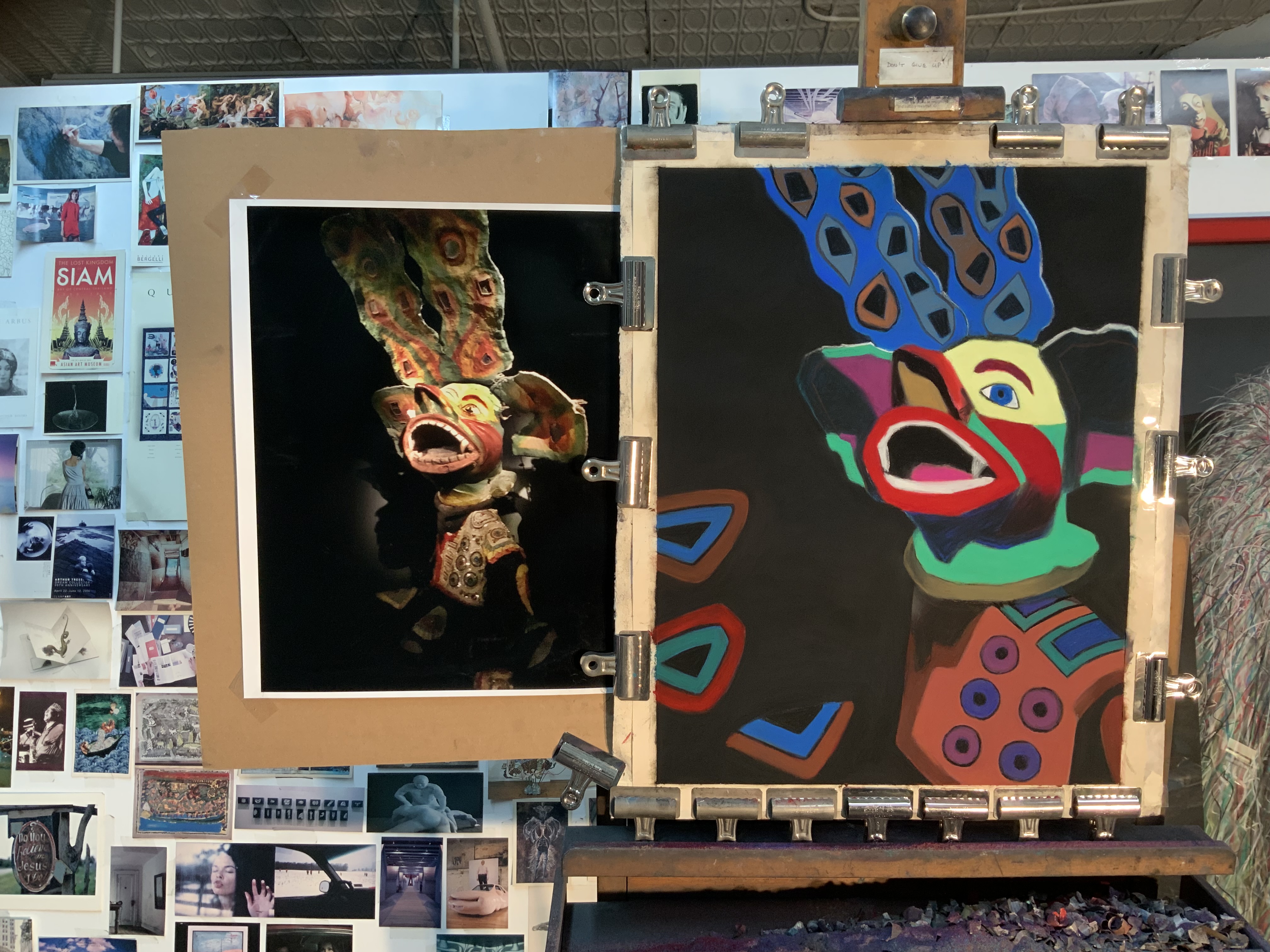
Work in progress
A: I continue working on “Maestro,” soft pastel on sandpaper, 26” x 20.”
Comments are welcome!
Pearls from artists* # 593
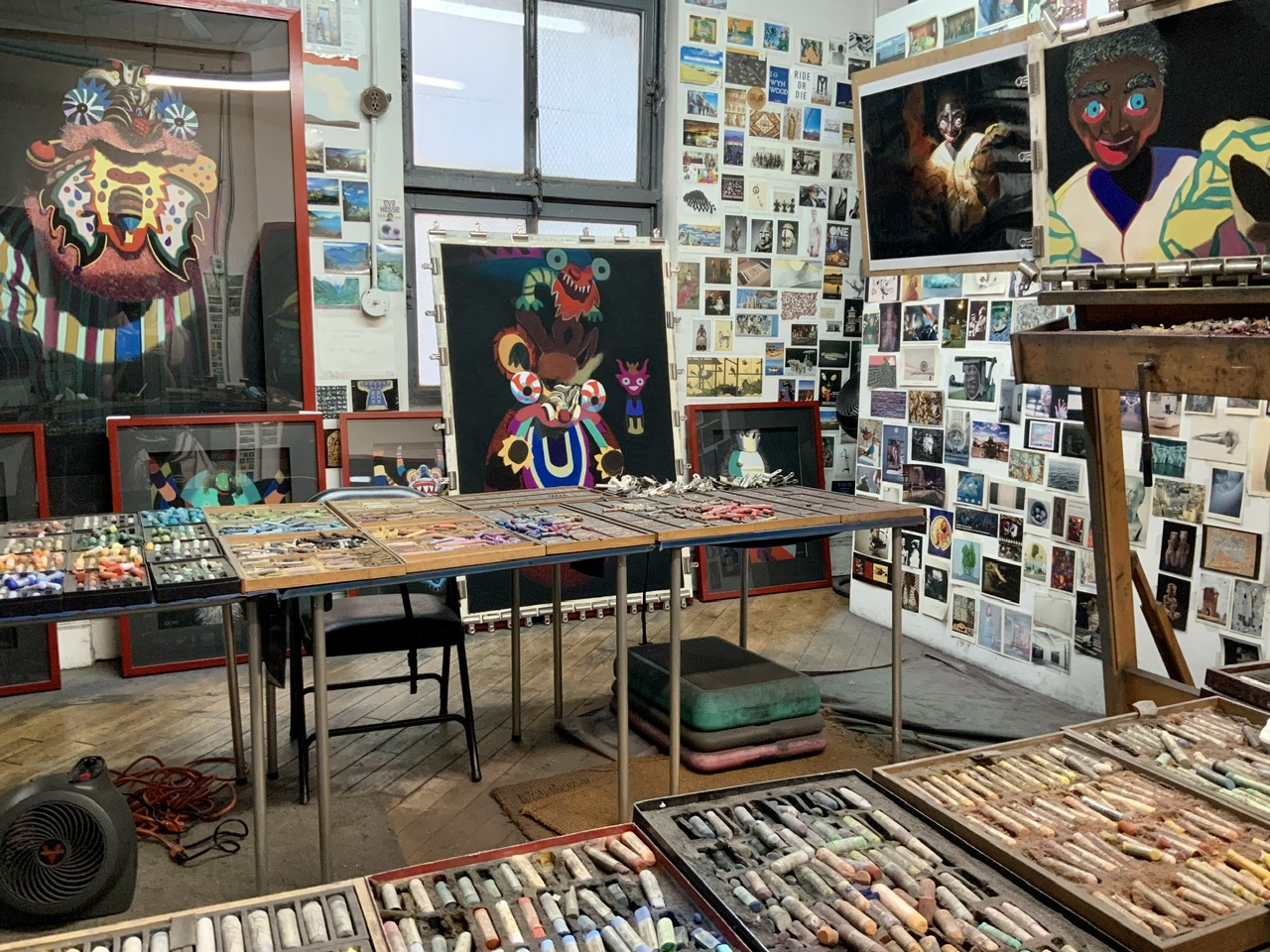
Barbara’s Studio with work in progress
*an ongoing series of quotations – mostly from artists, to artists – that offers wisdom, inspiration, and advice for the sometimes lonely road we are on.
Falling in love with beauty or with someone else’s artwork that touches us is easy. We can experience the rapture of it and go home. But falling in love with our instrument or with our work is more like falling in love with a person, in that we experience the rapture and delight of the discovery, but then we are saddled with the effort of fulfillment, with love’s labors and the hard lessons in which illusions are stripped away, in which we confront difficult pieces of self-knowledge, in which we have to stretch our physical, emotional, intellectual stamina to its limits, in which our patience and our ability to persevere and transcend ourselves are tested.
Stephen Nachmanovitch in Free Play: Improvisation in Life and Art
Comments are welcome!
Q: What’s on the easel today?
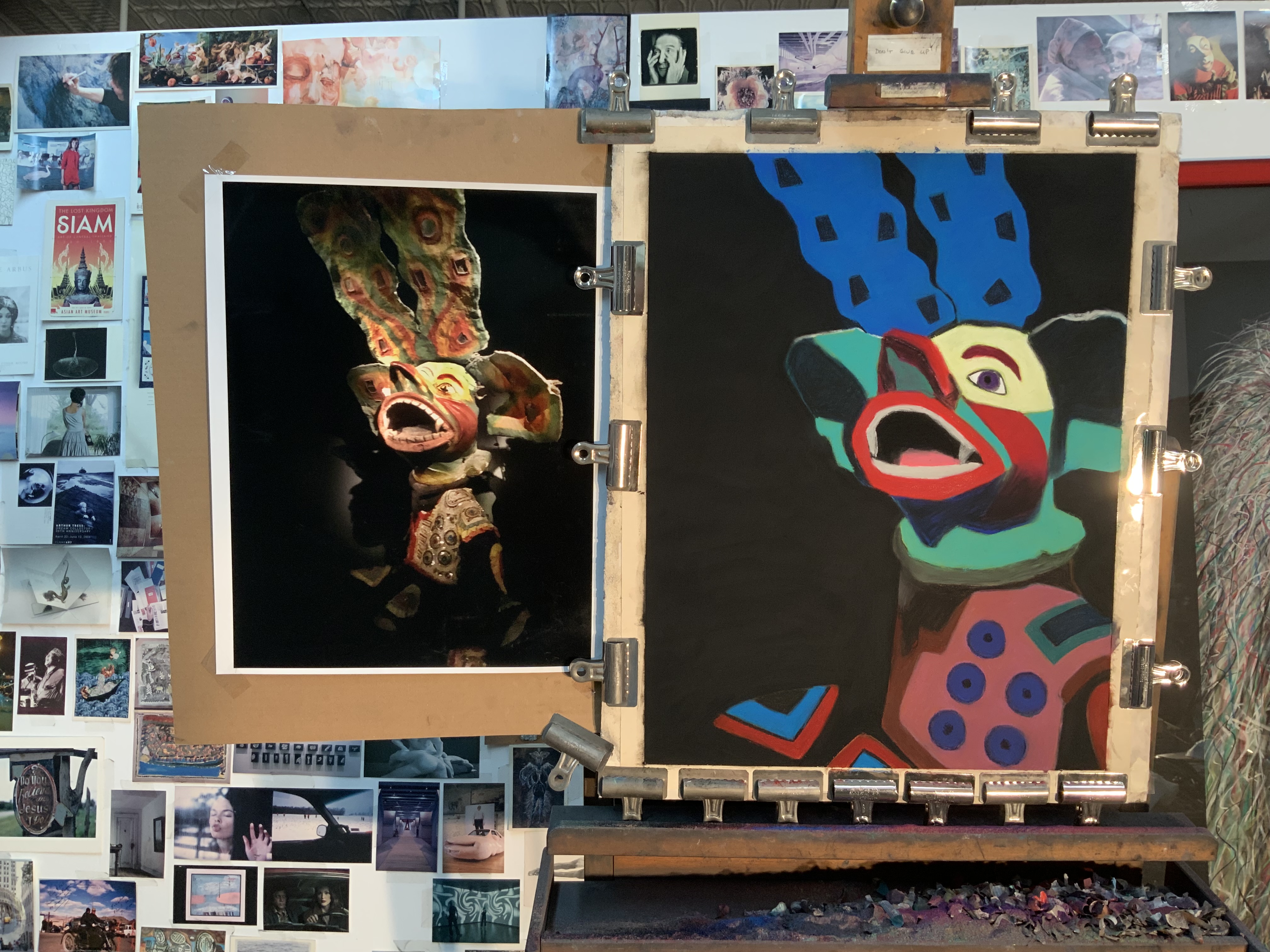
Work in progress
A: I am working on a small, as yet untitled, pastel painting.
Comments are welcome!



