Category Archives: Art in general
Pearls from artists* # 209

“So What?”, soft pastel on sandpaper, 20″ x 26″
* an ongoing series of quotations – mostly from artists, to artists – that offers wisdom, inspiration, and advice for the sometimes lonely road we are on.
For a young painter, life is difficult. If he’s sincere, if he’s entirely taken up with what he’s researching, he can’t do painting that flatters art lovers. If he’s concerned with success, he works with just the one idea: pleasing people and selling. He loses the support of his own conscience and is dependent on how others are feeling. He neglects his gifts and eventually loses them.
For us, the problem was simple: the buyer simply didn’t exist. We were working for ourselves. We were in a trade that offered no hope at all. So we had fun with any little thing. I suppose people shipwrecked on a desert island must find it very jolly – all their problems have ceased to exist. Nothing left to do but have a laugh, tell jokes, and play jokes. Painters? How could they ever expect to sell anything?
Chatting with Henri Matisse: The Lost 1941 Interview, Henri Matisse with Pierre Courthion, edited by Serge Guilbaut, translated by Chris Miller
Comments are welcome!
Pearls from artists* # 208
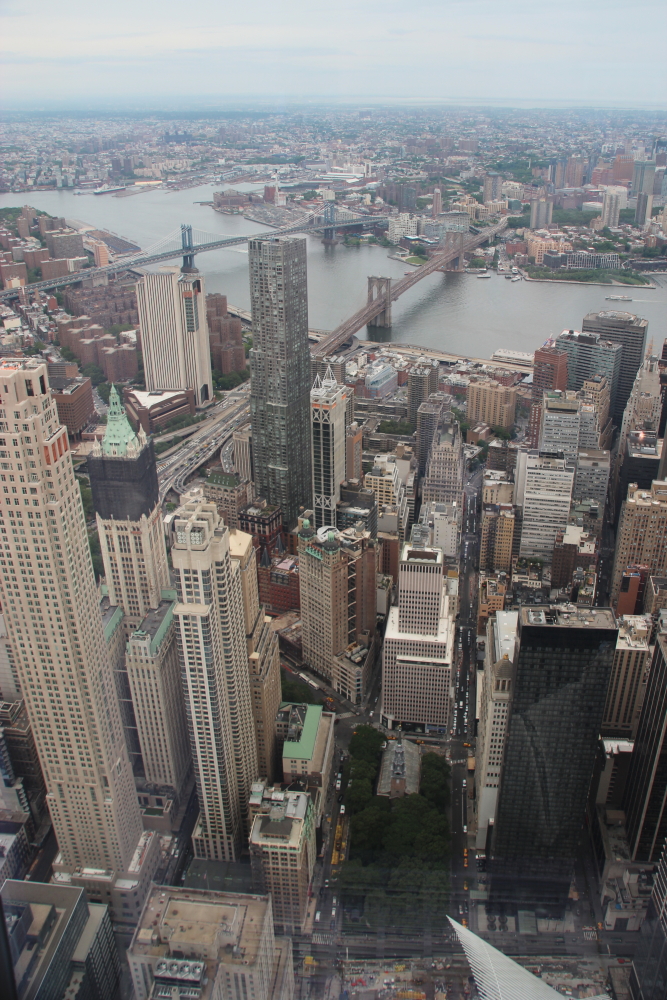
View from One World Trade Center
* an ongoing series of quotations – mostly from artists, to artists – that offers wisdom, inspiration, and advice for the sometimes lonely road we are on.
PC: In your painting, you’ve always kept this speed of movement. One senses that you work something out slowly, deep down, that it’s hard work, but there’s always something fresh about its expression.
HM: That’s because I revise my notion several times over. People often add or superpose – completing things without changing their plan, whereas I rework my plan every time. I never get tired. I always start again, working from the previous state. I try to work in a contemplative state, which is very difficult: contemplation is inaction, and I act in contemplation.
In all the studies I’ve made from my own ideas, there’s never been a faux pas because I’ve always unconsciously had a feeling for the goal; I’ve made my way toward it the way one heads north, following the compass. What I’ve done, I’ve done by instinct, always with my sights on a goal I still hope to reach today. I’ve completed my apprenticeship now. All I ask is four or five years to realize that goal.
PC: Delacroix said that too. Great artists never look back.
HM: Delacroix also said – ten years after he’d left the place – “I’m just beginning to see Morocco.” Rodin said to an artist, “You need to stand back a long way for sculpture.” To which the student replied, “Master, my studio is only ten meters wide.”
Chatting with Henri Matisse: The Lost 1941 Interview, Henri Matisse with Pierre Courthion, edited by Serge Guilbaut, translated by Chris Miller
Comments are welcome!
Q: What significance do the folk art figures that you collect during your travels have for you?

Barbara’s studio
A: I am drawn to each figure because it possesses a powerful presence that resonates with me. I am not sure exactly how or why, but I know each piece I collect has lessons to teach.
Who made this thing? How? Why? Where? When? I feel connected to each object’s creator and curiosity leads me to become a detective and an archaeologist to find out more about them and to figure out how to best use them in my work.
The best way I can describe it: after nearly three decades of seeking out, collecting, and using these folk art figures as symbols in my work, the entire process has become a rich personal journey towards gaining greater knowledge and wisdom.
Comments are welcome!
Pearls from artists* # 207

Barbara’s studio
* an ongoing series of quotations – mostly from artists, to artists – that offers wisdom, inspiration, and advice for the sometimes lonely road we are on.
More than in any other vocation, being an artist means always starting from nothing. Our work as artists is courageous and scary. There is no brief that comes along with it, no problem solving that’s given as a task… An artist’s work is almost entirely inquiry based and self-regulated. It is a fragile process of teaching oneself to work alone, and focusing on how to hone your quirky creative obsessions so that they eventually become so oddly specific that they can only be your own.
“What It Really Takes to Be an Artist: MacArthur Genius Teresita Fernandez’s Magnificent Commencement Address,” by Maria Popova in “brainpickings”
Comments are welcome!
Pearls from artists* # 206
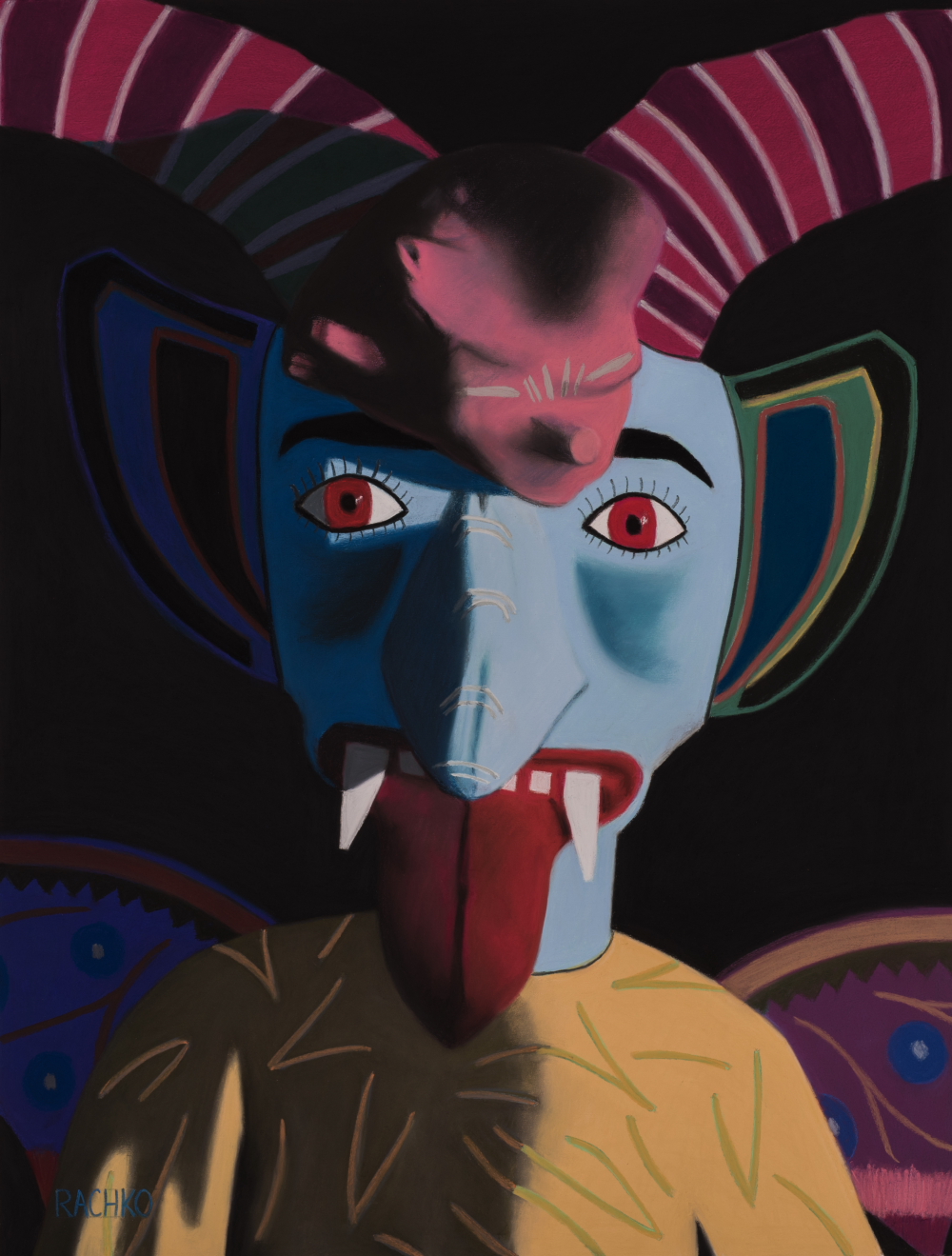
“Provocateur,” soft pastel on sandpaper, 26″ x 20″
* an ongoing series of quotations – mostly from artists, to artists – that offers wisdom, inspiration, and advice for the sometimes lonely road we are on.
And a career in higher education and medicine has taught me that creativity – whether in the sciences, arts or humanities – fosters controversy. We neither seek nor avoid controversy – we anticipate it and welcome the opportunity to explain the creative choices we make. We must take risks. We must be involved in the vital issues facing the world.
David J. Skorton, Director of the Smithsonian Institution in “What Do We Value?” Museum, May/June 2016
Comments are welcome!
Pearls from artists* # 205
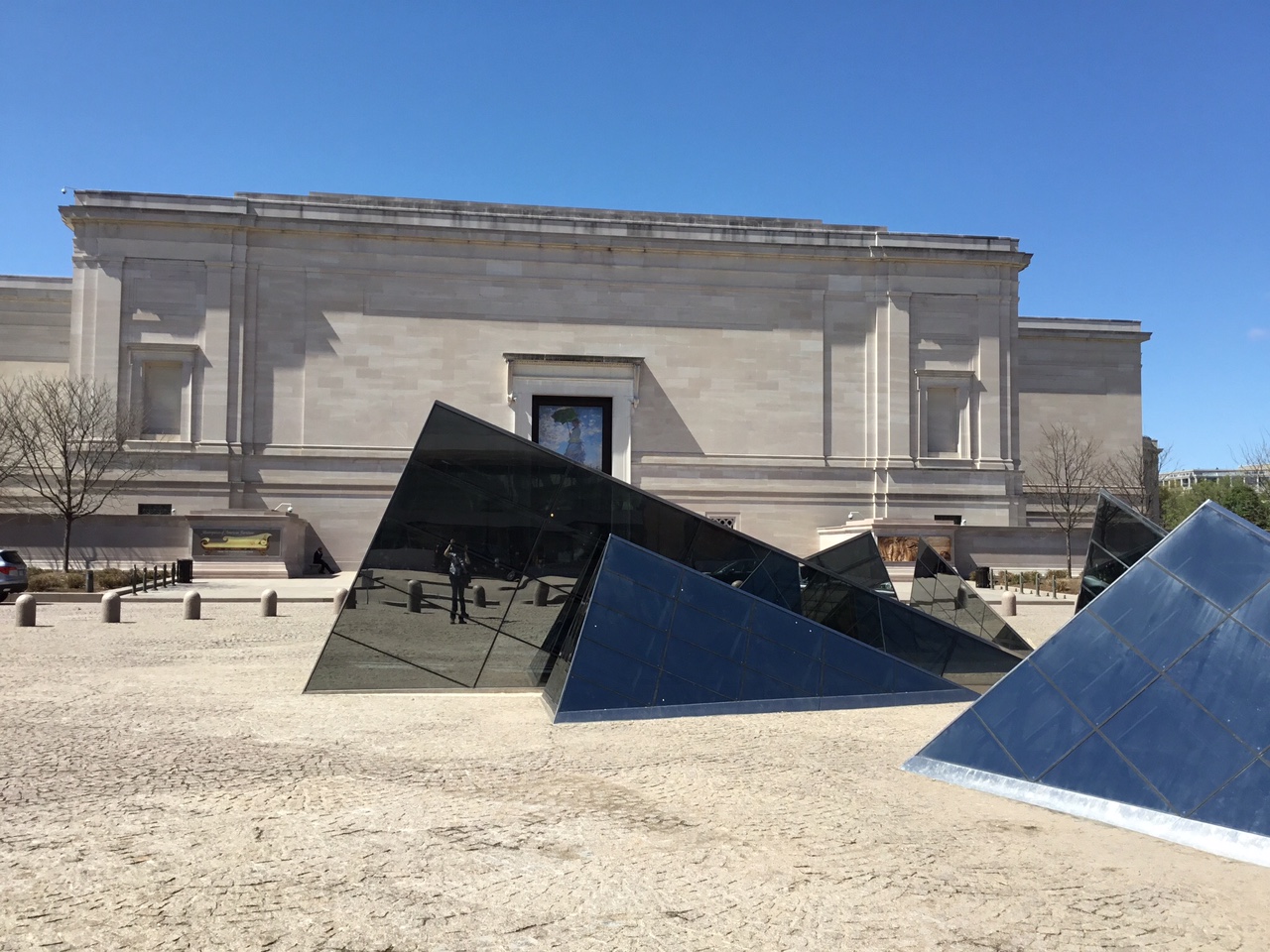
National Gallery of Art with self-portrait
* an ongoing series of quotations – mostly from artists, to artists – that offers wisdom, inspiration, and advice for the sometimes lonely road we are on.
Museums empower people when they are patrons for artists and thinkers; when they amplify civic discourse, accelerate cultural change and contribute to cultural intelligence among the great diversity of city dwellers, visitors, policy makers and leaders… Museums present beautiful, accessible and meaningful spaces in which communities and individuals can meet, exchange ideas and solve problems.
David J. Skorton, Director of the Smithsonian Institution in “What Do We Value?” Museum, May/June 2016
Comments are welcome!
Pearls from artists* # 204
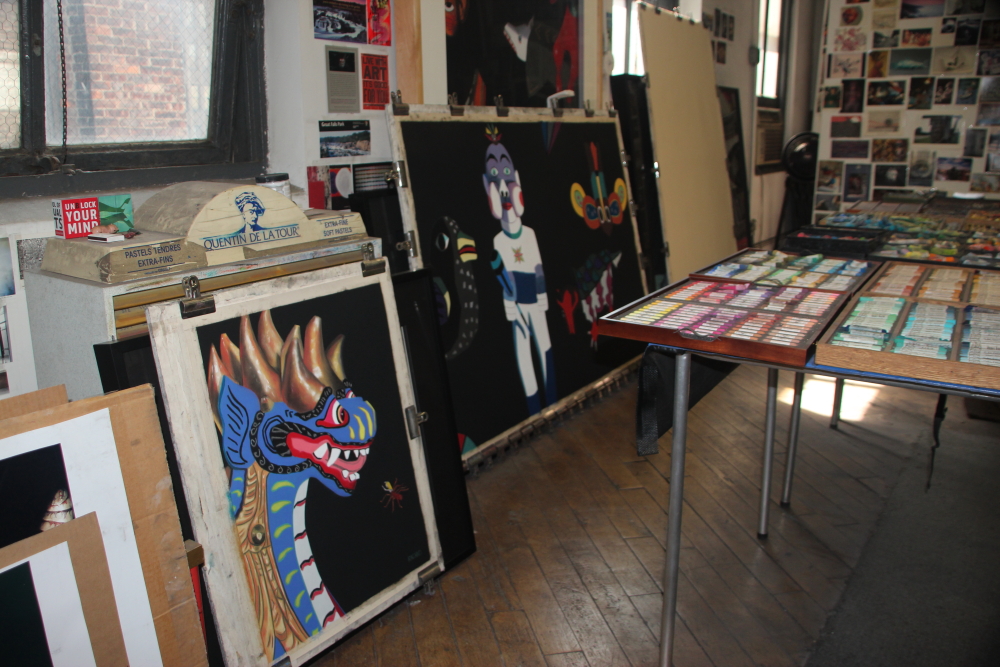
Barbara’s studio with work in progress
* an ongoing series of quotations – mostly from artists, to artists – that offers wisdom, inspiration, and advice for the sometimes lonely road we are on.
It has been said that science helps us understand what we can do; the arts and humanities – our culture and values – help us decide what to do. Studying the arts and humanities develops critical-thinking skills and nimble habits of mind, provides historical and cultural perspective and fosters the ability to analyze, synthesize and communicate.
As author Daniel Pink observed, “The last few decades have belonged to a certain kind of person with a certain kind of mind – computer programmers who could crank code, lawyers who could craft contracts, MBAs who could crunch numbers… The future belongs to a very different kind of mind – creators and empathizers, pattern recognizers and meaning makers. These people – artists, inventors, designers, storytellers, caregivers, consolers, big-picture thinkers – will now reap society’s richest rewards and share its greatest joys.”
David J. Skorton, Director of the Smithsonian Institution in “What Do We Value?” Museum, May/June 2016
Comments are welcome!
Q: Can you speak about a book (or books) that deeply influenced you as an artist?

Barbara’s well-worn copy of “Camille Pissarro: Letters to His Son Lucien”
A: One such book that stands out is “Camille Pissaro: Letters to His Son Lucien.” The book is comprised of weekly letters from a father conveying wisdom about his craft, art, and life, over roughly twenty years, to a beloved son, who is just beginning his artistic journey. I discovered this gem about thirty years ago when I was just starting to find my way as an artist, too. Pissarro’s words are beautiful, poignant, and deeply felt. He has much to say to artists because, sadly, we still contend with the same problems, such as how to remain authentic and earn a living, how to deal with galleries and collectors, how to stay focused on the work, etc. I often enjoy rereading favorite passages simply because it makes me feel less alone as an artist.
Comments are welcome!
Pearls from artists* # 203

“Palaver,” soft pastel on sandpaper, 26″ x 20″
* an ongoing series of quotations – mostly from artists, to artists – that offers wisdom, inspiration, and advice for the sometimes lonely road we are on.
One day, looking for something that might interest those few buyers there were, Marquet and I decided to reconnoiter. So we went to the Pavillon de Rohan, to the Galeries de Rivoli, where there were dealers in engraving and in all kinds of curiosities that might attract foreign customers. We each came back with an idea: mine was to do a park landscape with swans. I went to the Bois de Boulogne to do a study of the lake. Then I went to buy a photo showing swans and tried to combine the two. Only it was very bad; I didn’t like it – in fact nobody liked it; it was impossible; it was stodgy. I couldn’t change; I couldn’t counterfeit the frame of mind of the customers on the rue de Rivoli or anywhere else. So I put my foot through it.
I understood then that I had no business painting to please other people; it wasn’t possible. Either way, when I started a canvas, I painted it the way I wanted with things that interested me. I knew very well that it wouldn’t sell, and I kept putting off the confection of a picture that would sell. And then the same thing would happen the next time.
There are plenty of artists who think it’s smart to make paintings to sell. Then – when they have acquired a certain reputation, a degree of independence – they want to paint things for themselves. But that simply isn’t possible. Painting’s an uphill task and if you want to find out what you’re capable of, you can’t dillydally on the way.
Chatting with Henri Matisse: The Lost 1941 Interview, Henri Matisse with Pierre Courthion, edited by Serge Guilbaut, translated by Chris Miller
Comments are welcome!
Pearls from artists* # 202

Soft pastels
* an ongoing series of quotations – mostly from artists, to artists – that offers wisdom, inspiration, and advice for the sometimes lonely road we are on.
When you’re working on something, you always wonder, “Can I get away with this? Is it working?” It’s the space between that I’ve been interested in for a long time. I think that when I started to make, say, a triptych that came from an observation of a little Picasso drawing, the spaces in between became as important as the three actual pieces. It’s especially true of the Wallpaper piece. But most of the changes in my own work really evolve from one piece to the next: from looking at my own work, the works of others, and things in my studio. It happens when you see something that you didn’t see previously, like those scraps of clay that became the wall pieces. It’s similar to the space that I’ve explored for years and years between artist and craftsperson, which is both interesting and challenging, and I don’t think that one thing is inferior to the other. Each has a different goal, a different function. Its my responsibility how nd where my work is viewed in different contexts.
In Conversation: Betty Woodman with Phong Bui, The Brooklyn Rail, April 2016
Comments are welcome!



