Category Archives: Art in general
Pearls from artists* # 246
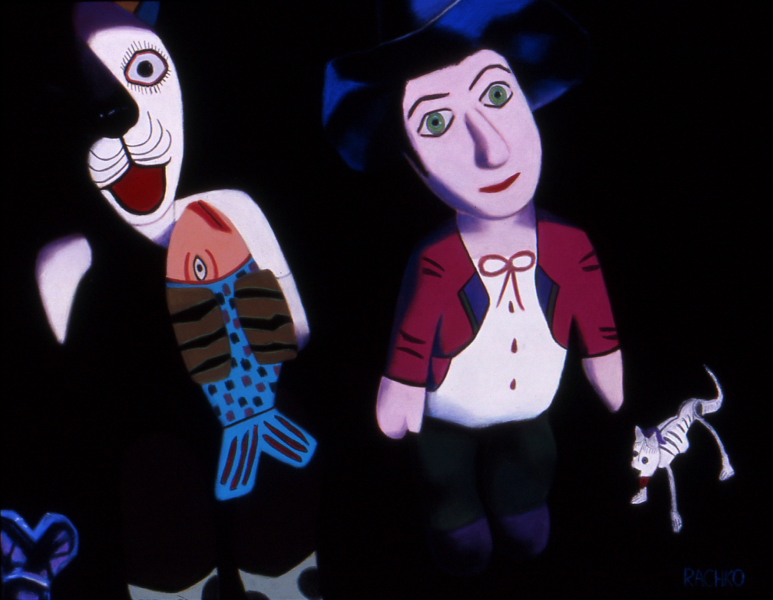
“Offering,” soft pastel on sandpaper, 20″ x 26″
* an ongoing series of quotations – mostly from artists, to artists – that offers wisdom, inspiration, and advice for the sometimes lonely road we are on.
Is love, taken together with art, not the only license to surpass the human conditions and to be greater, more generous, more unhappy, if necessary, than common man? Let us embrace the possibility heroically – let us renounce none of the advantages afforded to us by our animated state.
The Poet’s Guide to Life: The Wisdom of Rilke, edited and translated by Ulrich Baer
Comments are welcome!
Pearls from artists* # 245
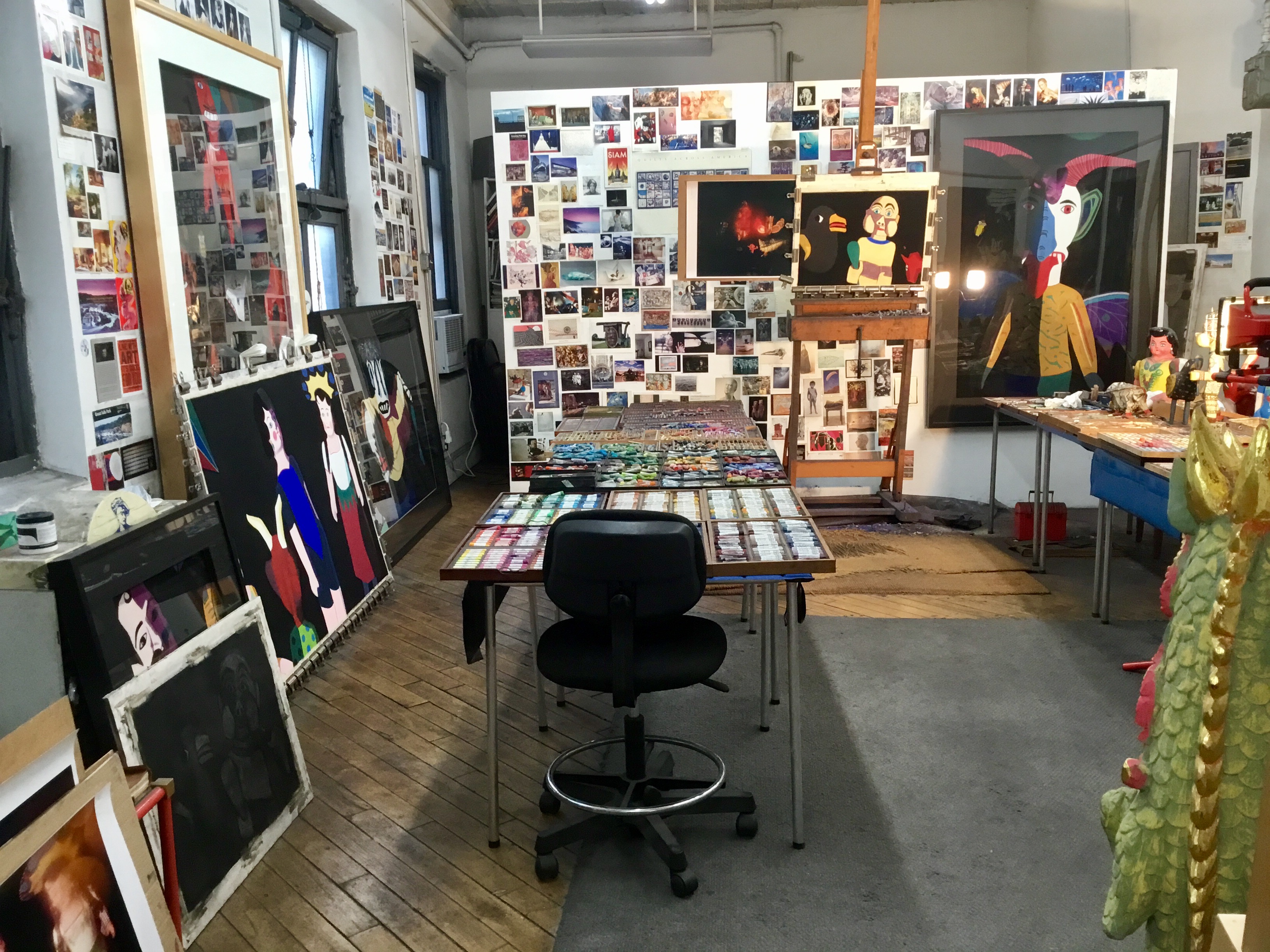
Barbara’s studio with works in progress
* an ongoing series of quotations – mostly from artists, to artists – that offers wisdom, inspiration, and advice for the sometimes lonely road we are on.
Just as a puppy dog strives to become nothing but simply a dog and as thoroughly a dog as possible, one has to grow into art as the mode of existence for which one’s heart and lungs were made, as the only appropriate option. If one chances upon art from the outside, it ends up being nothing but a bad disguise, and life, in its unshakeable honesty, takes it upon itself to tear off this masquerade.
The Poet’s Guide to Life: The Wisdom of Rilke, edited and translated by Ulrich Baer
Comments are welcome!
Pearls from artists* # 244
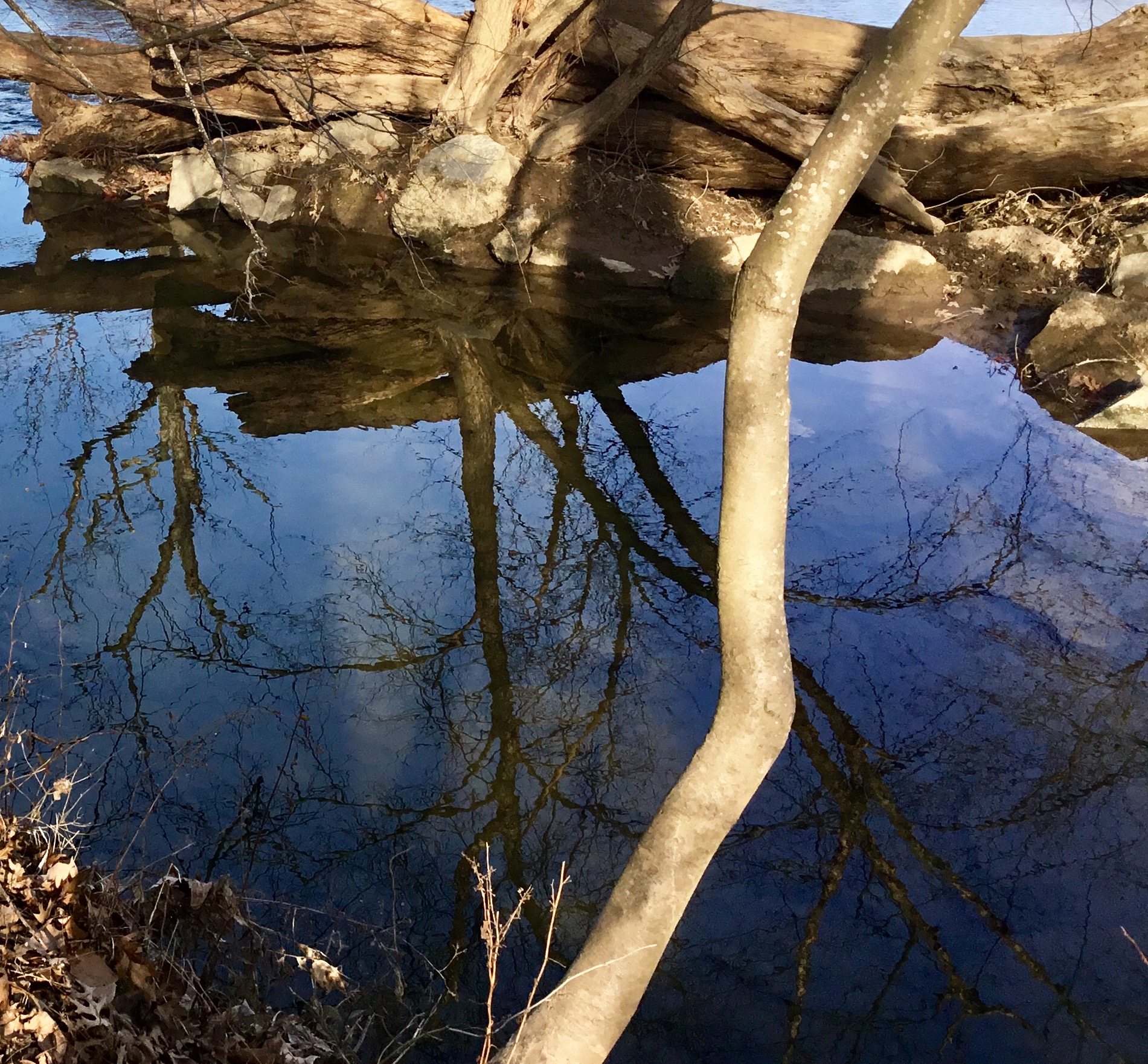
Great Falls, VA
* an ongoing series of quotations – mostly from artists, to artists – that offers wisdom, inspiration, and advice for the sometimes lonely road we are on.
Poet or painter, musician or architect, all solitary individuals at bottom turn to nature because they prefer the eternal to the transient, the profound rhythms of eternal laws to that which finds justification in passing. Since they cannot persuade nature to share in their experience they consider their task to grasp nature in order to place themselves somewhere in its vast contexts. And with these single solitary individuals all of humanity approaches nature. It is not the ultimate and possibly most peculiar value of art that it constitutes the medium in which man and landscape, figure and world encounter and find each other. But in the painting, the building, the symphony – in a word, in art itself, they seem to join together as if in a higher, prophetic truth, to rely on one another, and it is as if they completed each other to become that perfect unity that characterizes the work of art.
The Poet’s Guide to Life: The Wisdom of Rilke, edited and translated by Ulrich Baer
Comments are welcome!
Pearls from artists* # 243
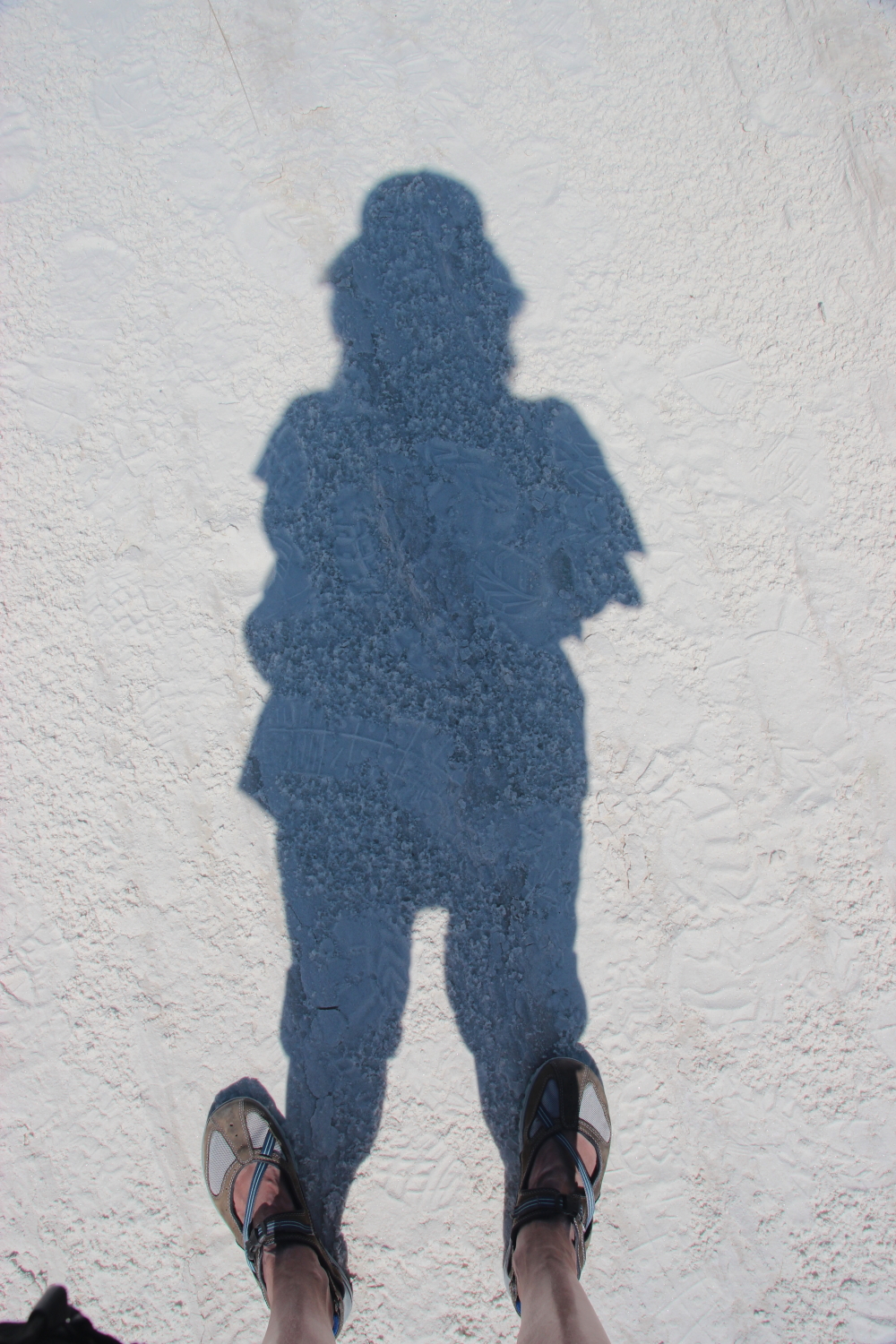
Self portrait, White Sands, NM
* an ongoing series of quotations – mostly from artists, to artists – that offers wisdom, inspiration, and advice for the sometimes lonely road we are on.
Art is not a making-oneself-understood but an urgent understanding-of-oneself. The closer you get in your most intimate and solitary contemplation or imagination (vision), the more has been achieved, even if no one else were to understand it.
The Poet’s Guide to Life: The Wisdom of Rilke, edited and translated by Ulrich Baer
Comments are welcome!
Pearls from artists* # 238

Self-portrait with “Blue Misterioso”
* an ongoing series of quotations – mostly from artists, to artists – that offers wisdom, inspiration, and advice for the sometimes lonely road we are on.
Form is certainty. All nature knows this, and we have no greater advisor. Clouds have forms, porous and shape-shifting, bumptious, fleecy. They are what clouds need to be, to be clouds. See a flock of them come, on the sled of the wind, all kneeling above the blue sea. And in the blue water, see the dolphin built to leap, the sea mouse skittering; see the ropy kelp with its air-filled bladders tugging it upward; see the albatross floating day after day on its three-jointed wings. Each form sets a tone, enables a destiny, strikes a note in the universe unlike any other. How can we ever stop looking? How can we ever turn away?
Mary Oliver in Upstream: Selected Essays
Comments are welcome!
Pearls from artists* # 236
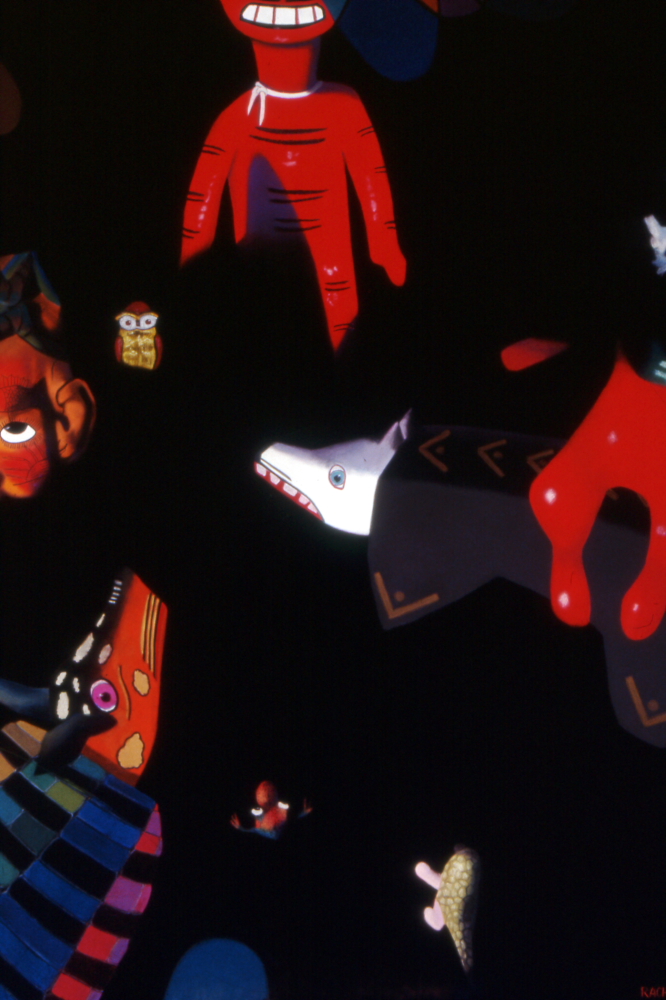
“Some Things We Regret,” soft pastel on sandpaper, 58″ x 38″
* an ongoing series of quotations – mostly from artists, to artists – that offers wisdom, inspiration, and advice for the sometimes lonely road we are on.
There are so many things that art can’t do. It can’t bring the dead back to life, it can’t mend arguments between friends, or cure AIDS, or halt the pace of climate change. All the same, it does have some extraordinary functions, some odd negotiating ability between people, including people who never meet and yet who infiltrate and enrich each other’s lives, it does have a capacity to create intimacy; it does have a way of healing wounds, and better yet of making it apparent that not all wounds need healng and not all scars are ugly.
Olivia Laing in The Lonely City: Adventures in the Art of Being Alone
Comments are welcome!
Pearls from artists* # 226

Barbara at work, Photo: Marianne Barcellona
* an ongoing series of quotations – mostly from artists, to artists – that offers wisdom, inspiration, and advice for the sometimes lonely road we are on.
Technique is the test of sincerity. If a thing isn’t worth getting the technique to say, it is of inferior value. All that must be regarded as exercise. Richter in his Treatise on Harmony, you see, says, “These are the principles of harmony and counterpoint; they have nothing whatever to do with composition, which is quite a separate activity.”
Ezra Pound in Writers at Work: The Paris Review Interviews Second Series, edited by George Plimpton
Comments are welcome!
Pearls from artists* # 213
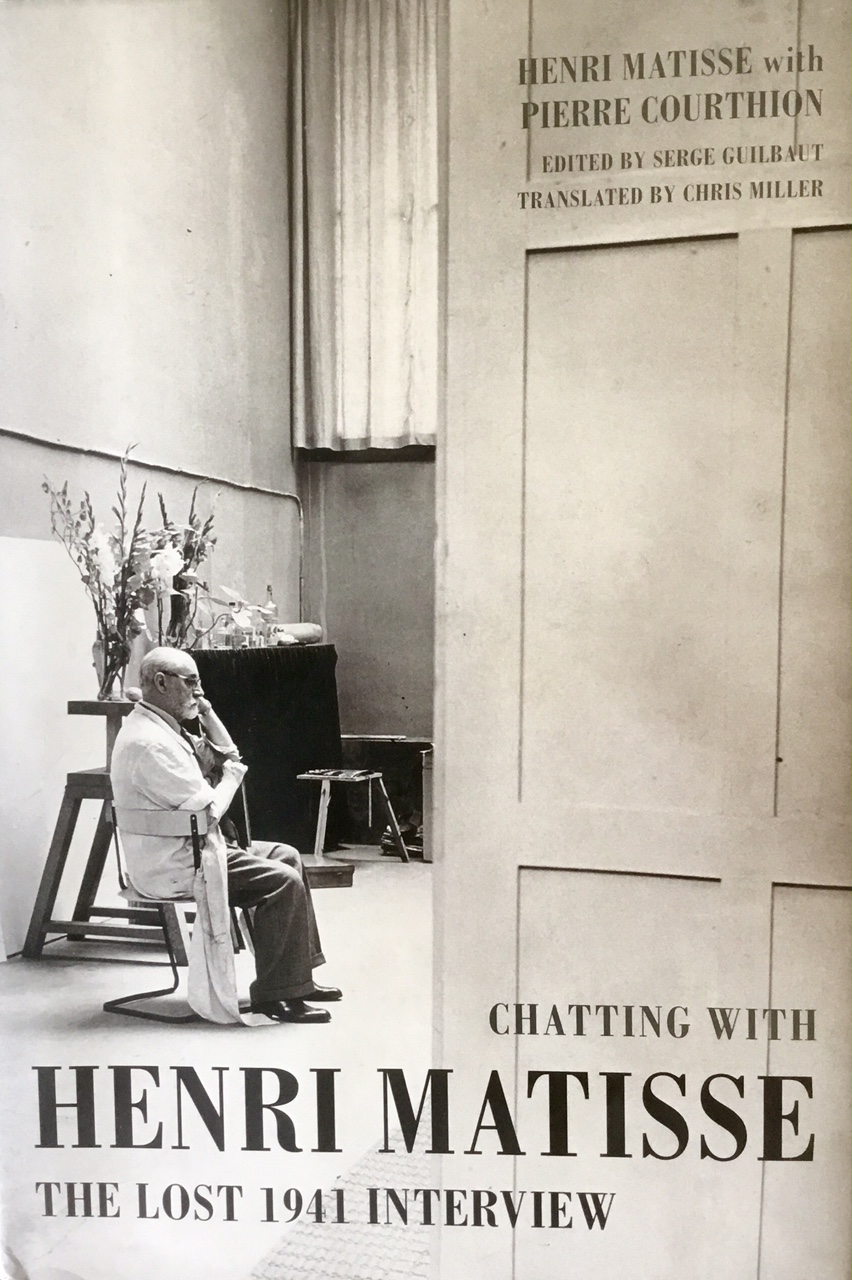
Matisse Book Cover
* an ongoing series of quotations – mostly from artists, to artists – that offers wisdom, inspiration, and advice for the sometimes lonely road we are on.
I am astonished by the accuracy with which Matisse remembers the most trifling facts; he describes a room that he went into forty years ago and gives you the measurements, where every piece of furniture stood, how the light fell. He is a man of astounding precision and has little time for anything that he has not confirmed for himself. In art matters, he is not the sort to go looking for a profile fortuitously created by cracks in the wall. Elie Faure writes that Matisse is perhaps the only one of his contemporaries (in particular Marquet and Bonnard) to know exactly where he comes from and the only one who never allows it to show “because his inveterate, invincible, vigilant willpower is always focused on being himself and nothing but.”
Matisse neglects nothing. He seems to know as much about the art market as about painting.
So many stratagems to sell a painting, from intimidating the purchaser to seeming to avoid him: Vollard used them all and used them successfully. Not least the lies that he told to reassure the client. “It works like this,” says Matisse: “To make a sale, you invent lies that have somehow disappeared into thin air by the time the deal is done.”
We talk of the difficulties faced by dealers hoping to gain access to Renoir in his Cagnes residence. Renoir didn’t like having people talk to him about selling his work,” says Matisse: “It bored him. About the only one who got a foot in the door was Paul Guillaume; he dressed up as a young worker with a floppy necktie: “You see, I’m a local. I’ve always loved your painting. I’ve just inherited a little money; I’d like to buy something.”
Chatting with Henri Matisse: The Lost 1941 Interview, Henri Matisse with Pierre Courthion, edited by Serge Guilbaut, translated by Chris Miller
Comments are welcome!
Pearls from artists* # 212
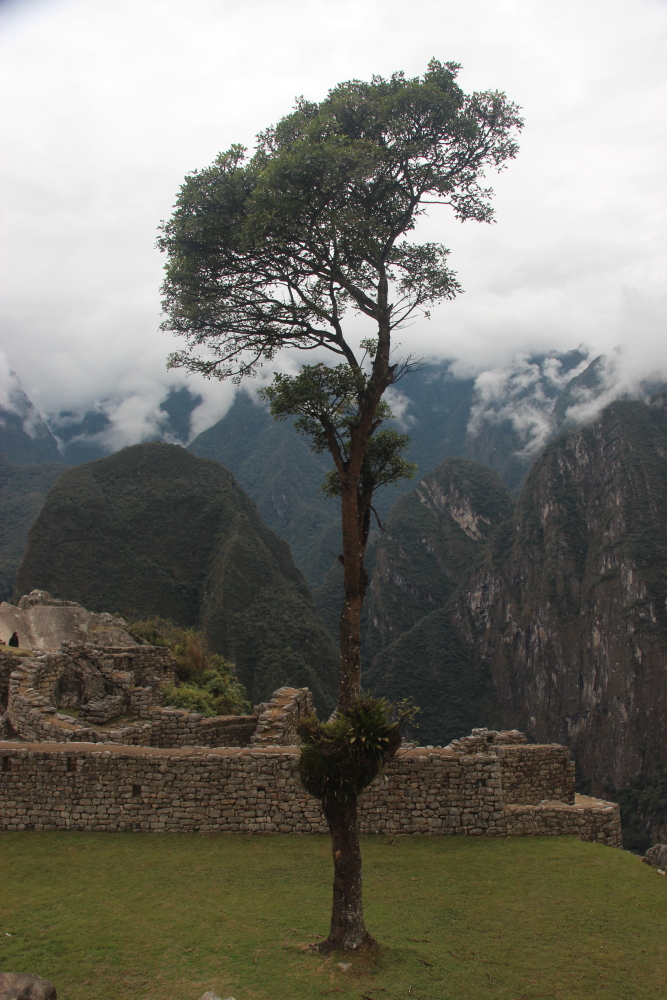
Machu Picchu
* an ongoing series of quotations – mostly from artists, to artists – that offers wisdom, inspiration, and advice for the sometimes lonely road we are on.
… the anthropologist Ellen Disanayake… in Homo Aestheticus, argues that art and aesthetic interest belong with rituals and festivals – offshoots of the human need to ‘make special,’ to extract objects, events, and human relations from everyday uses and to make them a focus of collective attention. This ‘making special’ enhances group cohesion and also leads people to treat those things which really matter for the survival of community – be it marriage or weapons, funerals, or offices – as things of public note, with an aura that protects them from careless disregard and emotional erosion. The deeply engrained need to ‘make special’ is explained by the advantage that it has conferred on human communities, holding them together in times of threat, and furthering their reproductive confidence in times of peaceful flourishing.
Beauty: A Very Short Introduction, by Roger Scruton
Comments are welcome!
Pearls from artists* # 210
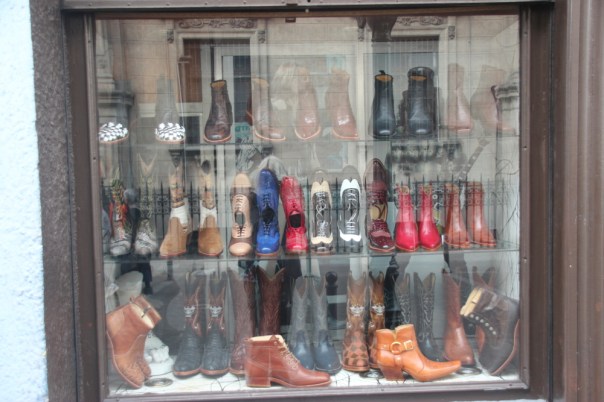
Lima, Peru (with self-portrait)
* an ongoing series of quotations – mostly from artists, to artists – that offers wisdom, inspiration, and advice for the sometimes lonely road we are on.
Much that is said about beauty and its importance in our lives ignores the minimal beauty of an unpretentious street, a nice pair of shoes or a tasteful piece of wrapping paper, as though these things belonged to a different order of value from a church by Bramante or a Shakespeare sonnet. Yet these minimal beauties are far more important to our daily lives, and far more intricately involved in our own rational decisions, than the great works which (if we are lucky) occupy our leisure hours. They are part of the context in which we live our lives, and our desire for harmony, fittingness and civility expressed and confirmed in them. Moreover, the great works of architecture often depend for their beauty on the humble context that these lesser beauties provide. Longhena’s church on the Grand Canal would lose its confident and invocatory presence, were the modest buildings which nestle in its shadow to be replaced with cast-concrete office blocks, of the kind that ruin the aspect of St. Paul’s.
Beauty: A Very Short Introduction, by Roger Scruton
Comments are welcome!



