Category Archives: Art in general
Pearls from artists* # 276
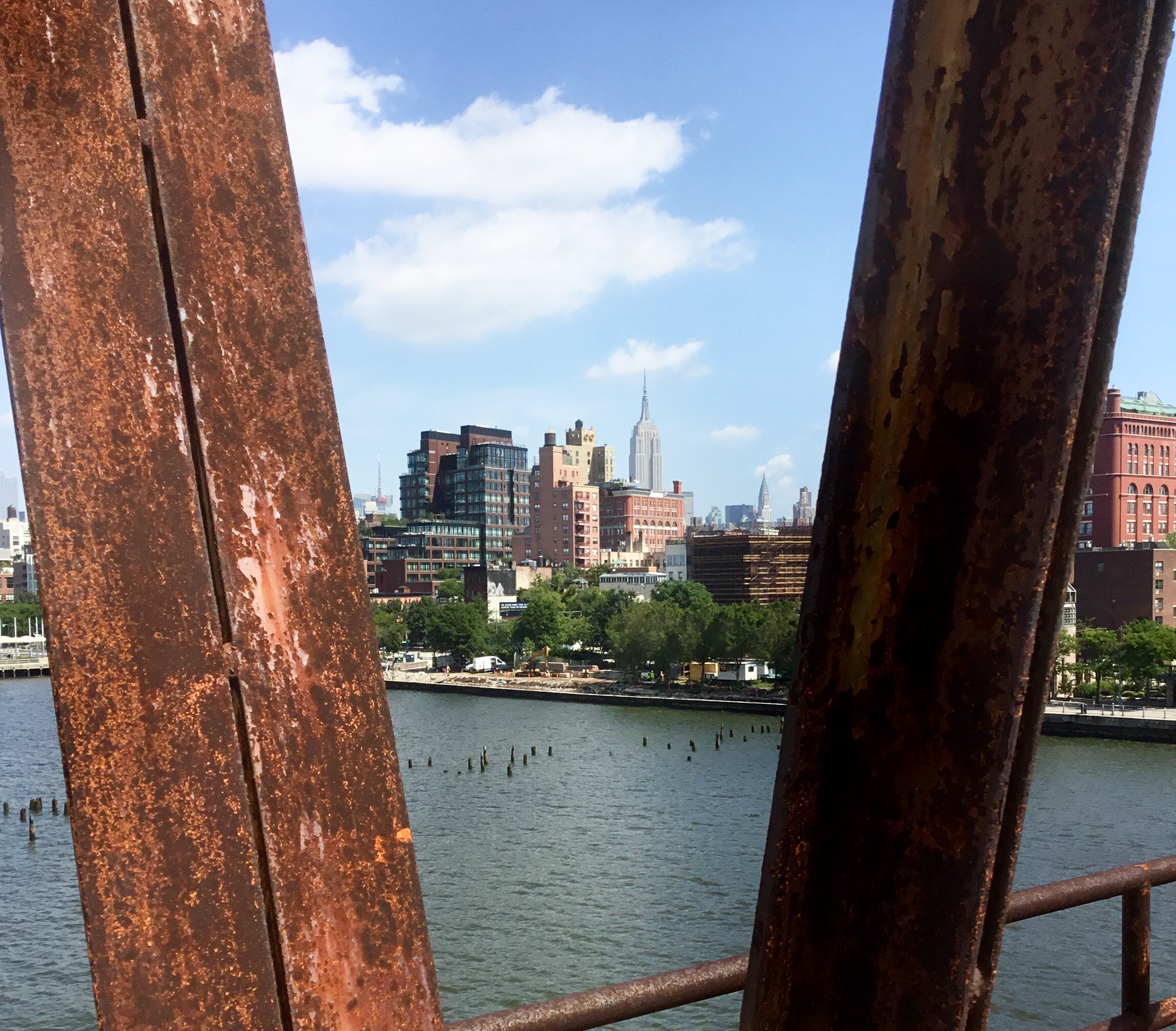
The West Village
* an ongoing series of quotations – mostly from artists, to artists – that offers wisdom, inspiration, and advice for the sometimes lonely road we are on.
A long time later, after I became a novelist, I realized that the ambiguities of the human mind are what give fiction and perhaps all art its power. A good novel gets under our skin, provokes us and haunts us long after the first reading, because we never fully understand the characters. We sweep through the narrative over and over again, searching for meaning. Good characters must retain a certain mystery and unfathomable depth, even for the author. Once we see to the bottom of their hearts, the novel is dead for us.
Eventually, I learned to appreciate both certainty and uncertainty. Both are necessary in the world. Both are part of being human.
Alan Lightman in A Sense of the Mysterious: Science and the Human Spirit
Comments are welcome!
Pearls from artists* # 275

“The Sovereign,” soft pastel on sandpaper, 58″ x 38″ image, 70″ x 50″ framed
* an ongoing series of quotations – mostly from artists, to artists – that offers wisdom, inspiration, and advice for the sometimes lonely road we are on.
Works of art… have a dominant function. They are objects of aesthetic interest. They may fulfill this function in a rewarding way, offering food for thought and spiritual uplift, winning for themselves a loyal public that returns to them to be consoled or inspired. They may fulfill their function in ways that are judged to be offensive or demeaning. Or they may fail altogether to prompt the aesthetic interest that they petition for. The works of art that we remember fall into the first two categories: the uplifting and the demeaning. The total failures disappear from memory. And it really matters which kind of art you adhere to, which you carry around in your heart. Good taste is… important in aesthetics… and indeed taste is what it is all about. If university courses do not start from that premise, students will finish their studies of art and culture just as ignorant as when they began. When it comes to art, aesthetic judgment concerns what you ought and ought not to like…
Roger Scruton in Beauty: A Very Short Introduction
Comments are welcome!
Pearls from artists* # 274

Barbara’s studio
* an ongoing series of quotations – mostly from artists, to artists – that offers wisdom, inspiration, and advice for the sometimes lonely road we are on.
“Beauty is never enough,” he said. “Meaning is more important. If something catches people’s eyes enough to make them move around it, they will build a story around it. And that will not just be about beauty.”
Eric Charles-Donatien in Feathered Glory: In a studio in Paris, an old craft is given new life by Burkhard Bilger in The New Yorker, Sept. 25, 2017
Comments are welcome!
Pearls from artists* # 272
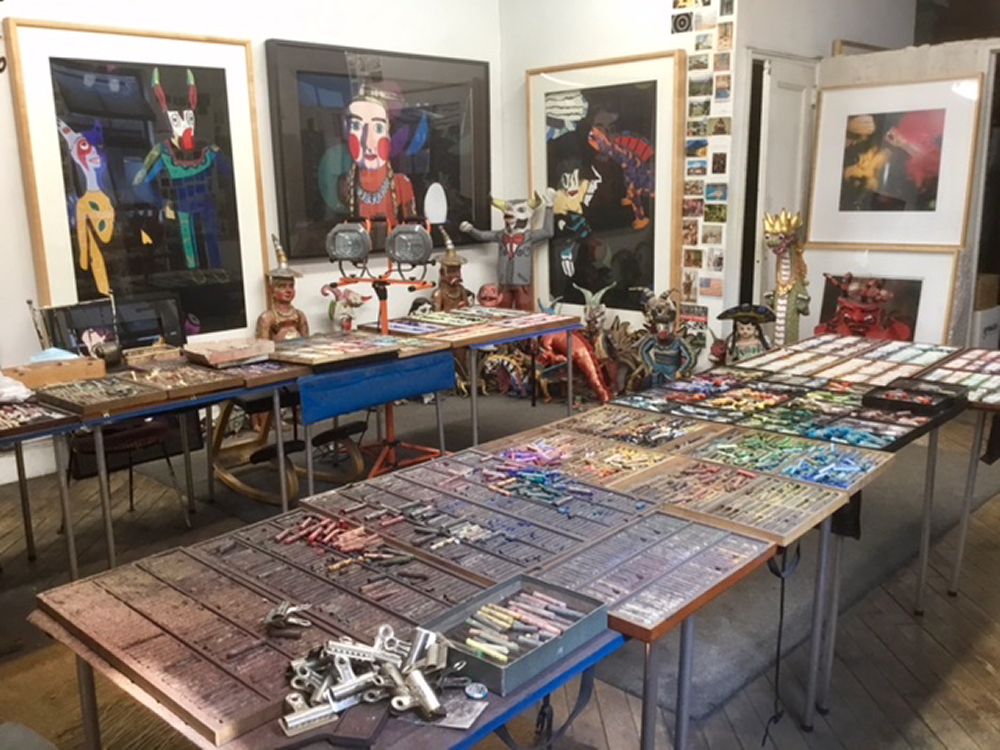
Barbara’s studio
* an ongoing series of quotations – mostly from artists, to artists – that offers wisdom, inspiration, and advice for the sometimes lonely road we are on.
One important distinction that can be made between physicists and novelists, and between the scientific and artistic communities in general, is what I shall call “naming.” Roughly speaking, the scientist tries to name things and the artist tries to avoid naming things.
To name a thing, one needs to have gathered it, distilled and purified it, attempted to identify it with clarity and precision. One puts a box around the thing and says what’s in the box is the thing and what’s not is not…
… The objects and concepts of the novelist cannot be named. The novelist might use the words love and fear, but these names do not summarize or convey much to the reader. For one thing, there are a thousand different kinds of love…
… Every electron is identical, but every love is different.
The novelist doesn’t want to eliminate these differences, doesn’t want to clarify and distill the meaning of love so that there is only a single meaning… because no such distillation exists. And any attempt at such a distillation would undermine the authenticity of readers’ reactions, destroying the delicate, participatory creative experience of a good reader reading a good book. In sense, a novel is not complete until it is read. And each reader completes the novel in a different way.
Alan Lightman in A Sense of the Mysterious: Science and the Human Spirit
Comments are welcome!
Pearls from artists* # 266
Washington, DC
* an ongoing series of quotations – mostly from artists, to artists – that offers wisdom, inspiration, and advice for the sometimes lonely road we are on.
… it is easy to describe the natural objects that we can hold in our hands, or move into view, as we would describe works of art: and this conditions the kind of pleasure we take in them. They are objets trouves, jewels, treasures, whose perfection seems to radiate from themselves, as from an inner light. Landscapes by contrast are very far from works of art – they owe their appeal not to symmetry, unity and form, but to an openness, grandeur and world-like expansiveness, in which it is we and not they that are contained.
Roger Scruton in Beauty: A Very Short Introduction
Comments are welcome!
Pearls from artists* # 264
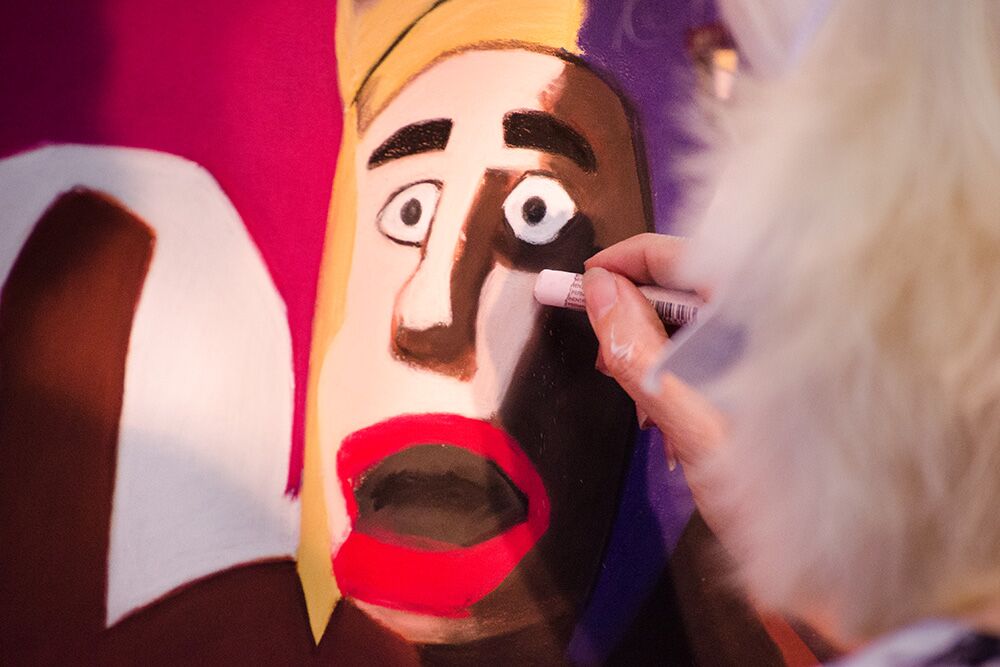
Barbara at work, Photo: Marianne Barcellona
* an ongoing series of quotations – mostly from artists, to artists – that offers wisdom, inspiration, and advice for the sometimes lonely road we are on.
Science brims with colorful personalities, but the most important thing about a scientific result is not the scientist who found it, but the result itself. Because that result is universal. In a sense, that result already exists. It is only found by the scientist. For me, this impersonal, disembodied character of science is both its great strength and its great weakness.
I couldn’t help comparing the situation to my other passion, the arts. In the arts, the individual is the essence. Individual expression is everything. You can separate Einstein from the equations of relativity, but you cannot separate Beethoven from the Moonlight Sonata. No one will ever write The Tempest except Shakespeare or The Trial except Kafka.
Alan Lightman in A Sense of the Mysterious: Science and the Human Spirit
Comments are welcome!
Pearls from artists* # 263
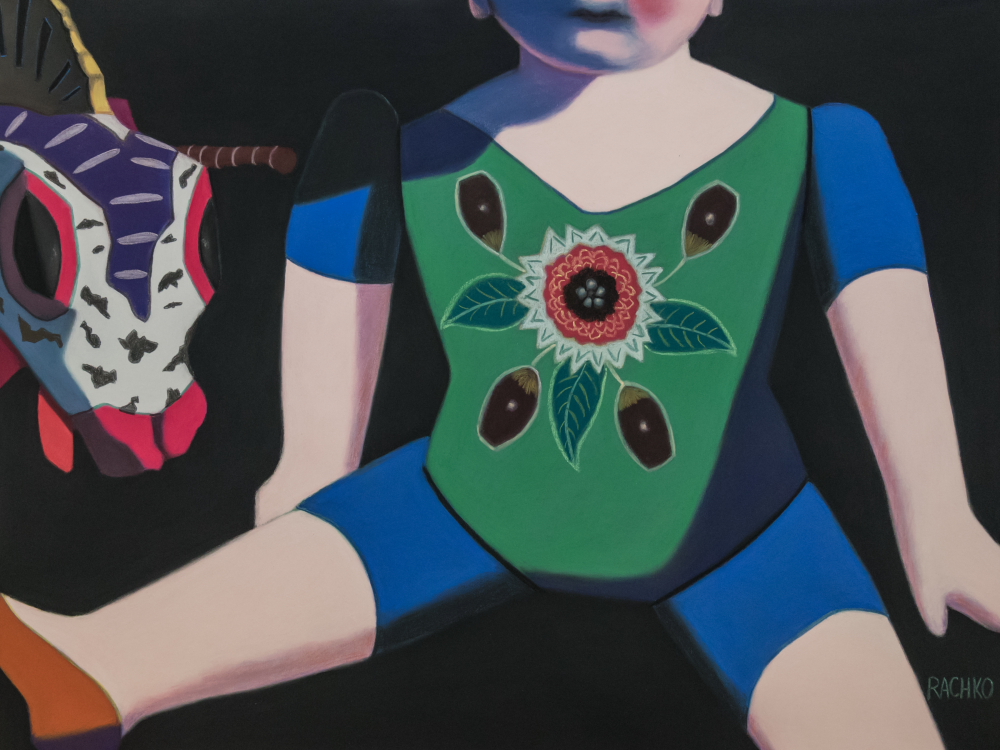
“Alone Together,” soft pastel on sandpaper, 20″ x 26″
* an ongoing series of quotations – mostly from artists, to artists – that offers wisdom, inspiration, and advice for the sometimes lonely road we are on.
Making art and viewing art are different at their core. The sane human being is satisfied that the best he/she can do at any given moment is the best he/she can do at any given moment. That belief, if widely embraced, would make this book unnecessary, false, or both. Such sanity is, unfortunately, rare. Making art provides uncomfortably accurate feedback about the gap that inevitably exists between what you intended to do, and what you did. In fact, if artmaking did not tell you (the maker) so enormously much about yourself, then making art that matters to you would be impossible. To all viewers but yourself, what matters is the product: the finished artwork. The viewers’ concerns are not your concerns (although it’s dangerously easy to adopt their attitudes). Their job is whatever it is: to be moved by art, to be entertained by it, to making a killing off it, whatever. Your job is to learn to work on your work.
David Bayles and Ted Orlando in Art & Fear: Observations On the Perils (and Rewards) of ARTMAKING
Comments are welcome!
Pearls from artists* # 262

“Big Deal,” soft pastel on sandpaper, 58″ x 38″
* an ongoing series of quotations – mostly from artists, to artists – that offers wisdom, inspiration, and advice for the sometimes lonely road we are on.
It may have been easier to paint bison on the cave walls long ago than to write this (or any other) sentence today. Other people, in other times and places, had some robust institutions to shore them up: witness the Church, the clan, ritual, tradition. It’s easy to imagine that artists doubted their calling less when working in the service of God than when working in the service of self.
Not so today. Today almost no one feels shored up. Today artwork does not emerge from secure common ground: the bison on the wall is someone else’s magic. Making art now means working in the face of uncertainty; it means living with doubt and contradiction, doing something no one much cares whether you do, and for which there may be neither audience nor reward. Making the work you want to make means setting aside these doubts so that you may see clearly what you have done, and thereby see where to go next. Making the work you want to make means finding nourishment within the work itself. This is not the Age of Faith, Truth, and Certainty.
David Bayles and Ted Orlando in Art & Fear: Observations On the Perils (and Rewards) of ARTMAKING
Comments are welcome!
Pearls from artists* # 255
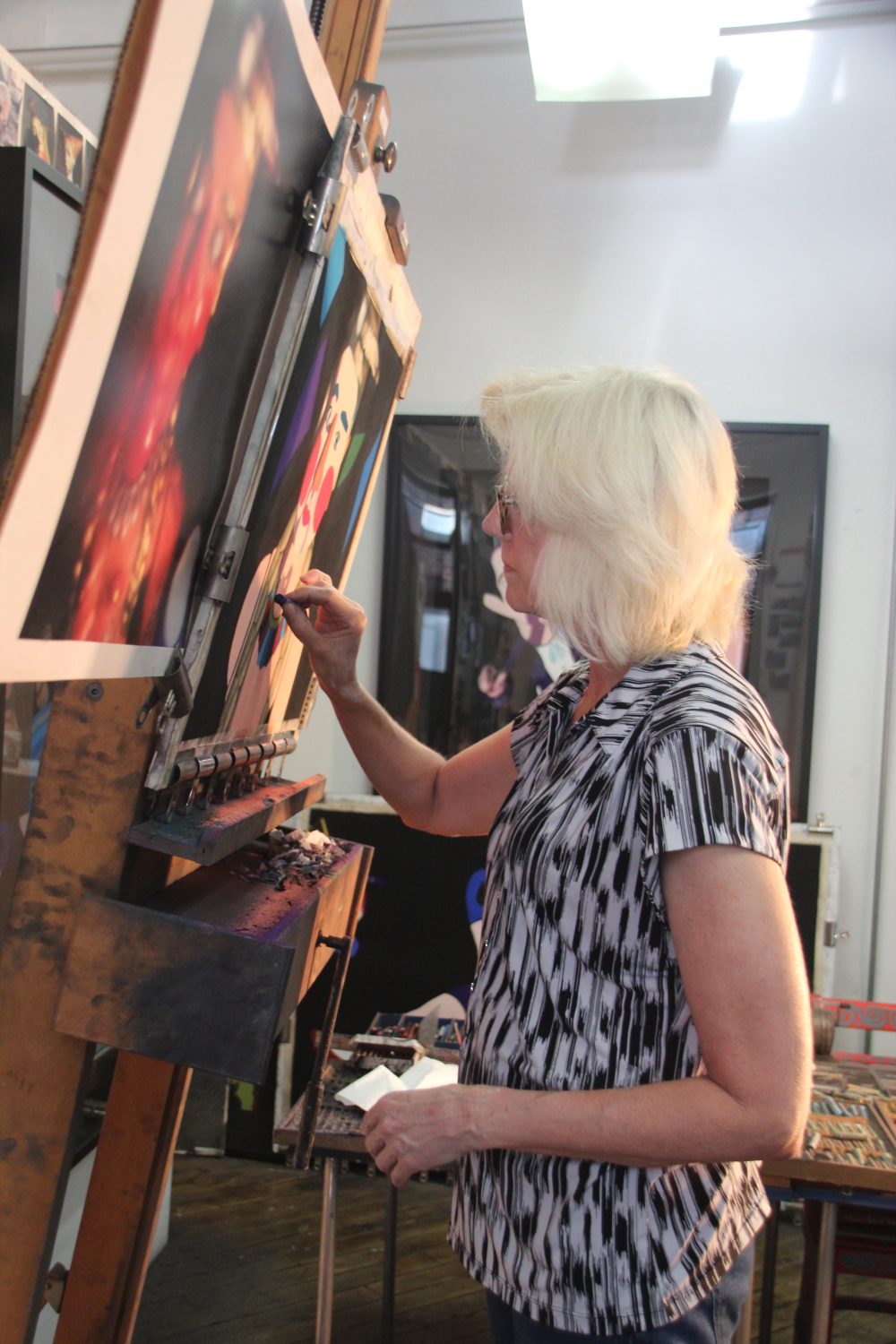
Barbara at work on “The Storyteller”
* an ongoing series of quotations – mostly from artists, to artists – that offers wisdom, inspiration, and advice for the sometimes lonely road we are on.
… several basic assumptions I have about the need for authenticity:
- Because in the end there is no other kind of art.
- I could have used the word ‘originality,” rather than authenticity, if the word’s root in “origin,” as in, “from the depth or source,” is recognized. However, the word implies a certain newness, “never done before,” that authenticity does not, and art in general does not need, in order to be deeply personal.
- Something that is authentic “rings true” for us. It comes from an inner truth. We draw from a source that is inner-directed rather than outer-directed, to use Maslow’s expression about self-actualization.
- Creating work that is authentic has a sacredness about it. It may be a way out – a small way perhaps, but at least a personal way – of a social dynamic that is all economics, consumerism, greed, and disregard for inner life. The word “science” comes from a root meaning “to separate.” Our cultural world view has been deeply influenced by that. Anything that we come to authentically in our artistic expression demands a personal inner synthesis. It is experience and insight won firsthand. The more we assimilate our “experience” from the advertising/media/consumer/government perspective the less authentic it will be.
- Most of what we express creatively is prelinguistic. The deeper insights are obviously coming from somewhere. They are not logically structured in the mind, but it may take logic to get them expressed.
- Ultimately, it doesn’t matter to the world if you paint or dance or write. The world can probably get by without your efforts. But that is not the point. The point is what the inner process of following your creative process will do, to you. It is clearly abut process. Love the work, love the process. Our fascination will pull our attention forward. That, also, will fascinate the viewer.
Ian Roberts in Creative Authenticity: 16 Principles to Clarify and Deepen Your Artistic Vision
Comments are welcome!
Pearls from artists* # 254

“Survivors,” soft pastel on sandpaper, 20″ x 26″ image, 28 1/2″ x 35″ framed
* an ongoing series of quotations – mostly from artists, to artists – that offers wisdom, inspiration, and advice for the sometimes lonely road we are on.
An artist learns by repeated trial and error, by an almost moral instinct, to avoid the merely or the confusingly decorative, to eschew violence where it is a fraudulent substitute for power, to say what he has to say with the most direct and economical means, to be true to his objects, to his materials, to his technique, and hence, by a correlated miracle, to himself.
Ian Roberts in Creative Authenticity: 16 Principles to Clarify and Deepen Your Artistic Vision
Comments are welcome!



