Category Archives: Art in general
Pearls from artists* # 299

“The Storyteller,” soft pastel on sandpaper, 20″ x 26″
*an ongoing series of quotations – mostly from artists, to artists – that offers wisdom, inspiration, and advice for the sometimes lonely road we are on.
The artist is always and for all time a seer, and artistic creation is always and for all time an act of prophecy.
The artist does not choose the prophecy. Rather, the prophetic shines through her work. It comes from elsewhere.
The artist therefore needs enough courage to stay true to the work at hand. Even greater courage is required of those to whom the finshed work is given, for their interests will always recommend dismissing the vision for fear of its implications.
J.F. Martel in Reclaiming Art in the Age of Artifice: A Treatise, Critique, and Call to Action
Comments are welcome!
Pearls from artists* # 297
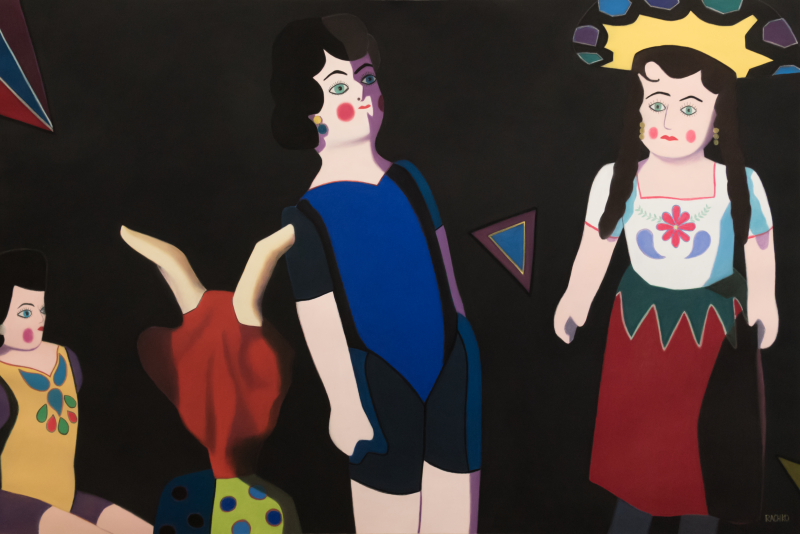
“Conundrum,” soft pastel on sandpaper, 38″ x 58″
*an ongoing series of quotations – mostly from artists, to artists – that offers wisdom, inspiration, and advice for the sometimes lonely road we are on.
The most valuable critic of contemporary work is another artist engaged in the same game. Yet few misunderstandings exceed those between two painters engaged upon different kinds of things. Only long after can an observer resolve the differences between such painters, when their games are all out, and fully available for comparison.
George Kubler in The Shape of Time: Remarks on the History of Things
Comments are welcome!
Q: (Part II) Would you share your story of how creating art enabled you to heal after losing your husband on 9/11?

“The Champ,” soft pastel on sandpaper, 35” x 28.5” framed. The first of my “Bolivianos”.
A: Continued from last Saturday’s post…
Because I use reference photos for my pastel paintings, the first challenge was to learn how to use Bryan’s 4 x 5 view camera. At that time I was not a photographer. Always Bryan had taken reference photos for me.
In July 2002 I enrolled in a view camera workshop at New York’s International Center of Photography. Much to my surprise I had already absorbed quite a lot from watching Bryan. After the initial workshop, I continued more formal studies of photography for a few years. In 2009, I am proud to say, I was invited to present a solo photography exhibition at a New York gallery!
In 2003 I resumed making my “Domestic Threats” series of pastel paintings, something that had seemed impossible after Bryan’s death. The first large pastel painting that I created using a reference photograph taken by me confirmed that my life’s work could continue. The title of that painting, “She Embraced It and Grew Stronger,” was autobiographical. “She” is me, and “it” meant continuing on without Bryan and living life for both of us.
Having had a long successful run, the “Domestic Threats” series finally ended in early 2007. Around that time I was feeling happier and had come to better terms with losing Bryan. While this is a tragedy I will never truly be at peace with, dealing with the loss became easier with time.
Then in 2007 I suddenly became blocked and did not know where to take my work next. I had never experienced creative block and for a full-time professional artist, this was a painful few months. Still, I continued to go to the studio every day and eventually, thanks to a confluence of favorable circumstances, the block ended.
My next pastel painting series was called, “Black Paintings.” I viewed the black background as literally, the very dark place that I was emerging from, exactly like the figures emerging in these paintings. The figures themselves were wildly colorful and full of life, but that black background is always there.
Still the work continues to evolve. Recently I began my third pastel painting series called, “Bolivianos,” based on a mask exhibition encountered in La Paz at the Museum of Ethnography and Folklore. Many people have proclaimed this to be my most bold, daring, and exciting pastel painting series yet. And I think they may be right! Continuing on the journey I began 30+ years ago, I am looking forward to creating many new, striking pastel paintings!
Comments are welcome!
Pearls from artists* # 290

“Dichotomy,” soft pastel on sandpaper, 38″ x 58″
*an ongoing series of quotations – mostly from artists, to artists – that offers wisdom, inspiration, and advice for the sometimes lonely road we are on.
Rational functionalism is technique,
Irrational functionalism is art.
Art is creation
It can be based on but is independent of knowledge.
We can study art through nature,
but art is more than nature.
Art is spirit,
and has a life of its own.
Art in its nature is anti-historical
because creative work is looking forward.
It can be connected with tradition
but grows, consciously or unconsciously, out of an artist’s mentality.
Art is neither imitation nor repetition
but art is revelation.
Joseph Albers in Truthfulness in Art in Joseph Albers in Mexico, edited by Lauren Hinkson
Comments are welcome!
Q: What do you dislike most about being an artist?
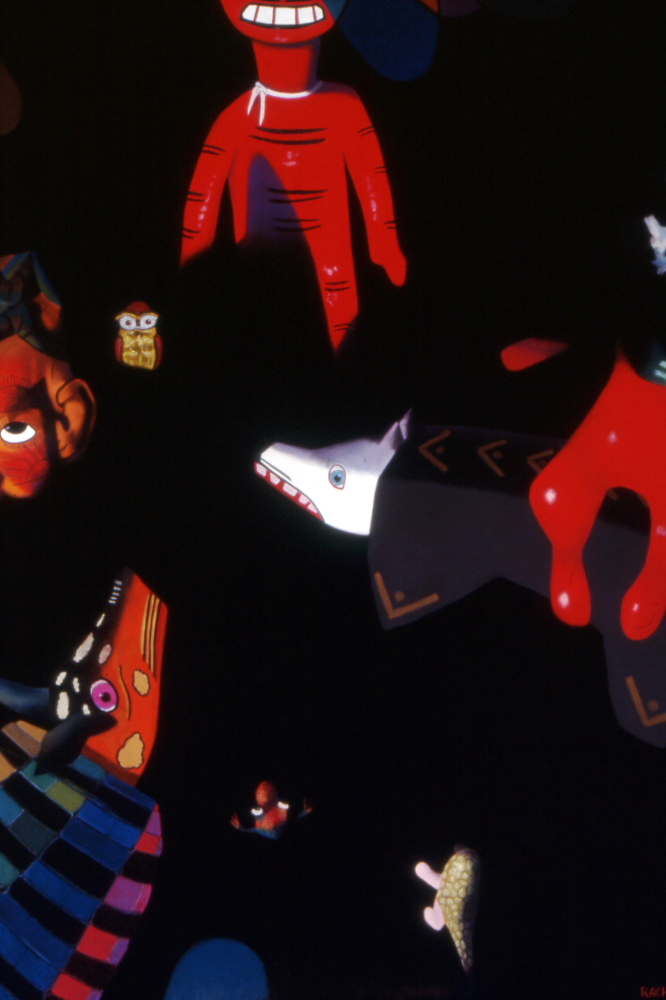
“Some Things We Regret,” soft pastel on sandpaper, 58″ x 38″
A: It’s the fact that too often artists remain unappreciated while they are alive and/or do not share in the rewards after long years of struggle against numbing odds. They/we do whatever is necessary to keep creating new work even as it is ignored and misunderstood.
This unfortunate situation has repeated itself throughout the history of art. As Hilary Spurling stated in the preface to her two-volume biography, Matisse The Master, even Henri Matisse was misunderstood, his work regarded as “merely decorative” during his lifetime and long after.
At this time I have few illusions about the difficulties of being an artist. Somehow I still tell myself, ignore the setbacks and work like there’s no tomorrow.
Comments are welcome!
Pearls from artists* # 287
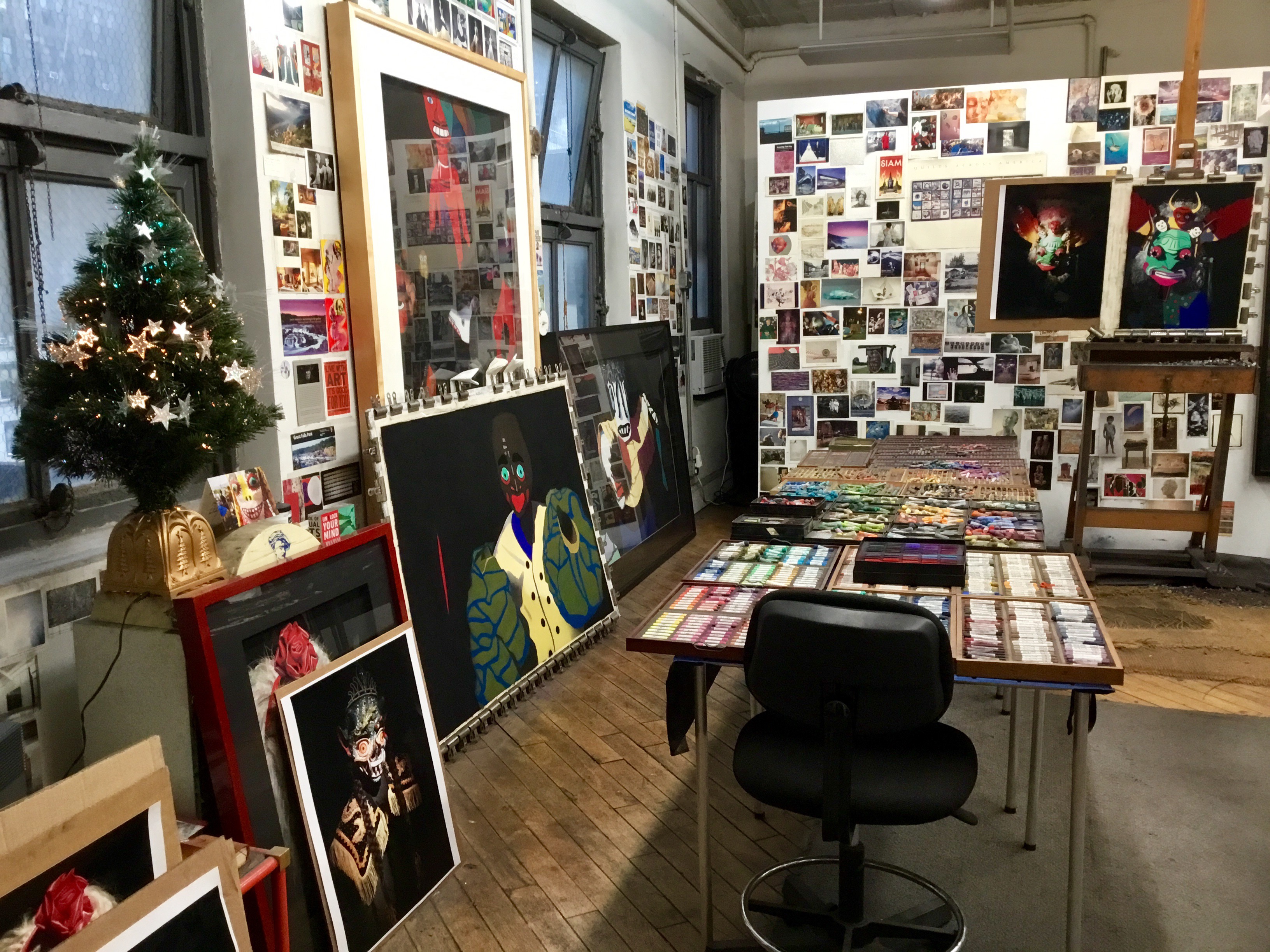
Barbara’s studio
*an ongoing series of quotations – mostly from artists, to artists – that offers wisdom, inspiration, and advice for the sometimes lonely road we are on.
“To go back and introduce into all the schools art, to cut down on sports but bring arts, philosophy back into all educational systems,” he said. “And that’s what’s being cut everywhere. And I think that’s one of the sad and tragic parts of where we are. Education is the resistance to everything that is bad today.”
Jonas Mekas quoted in Want to Be Happy? Think Like an Old Person, by John Leland, The New York Times, Dec. 29, 2017.
Comments are welcome!
Pearls from artists* # 286
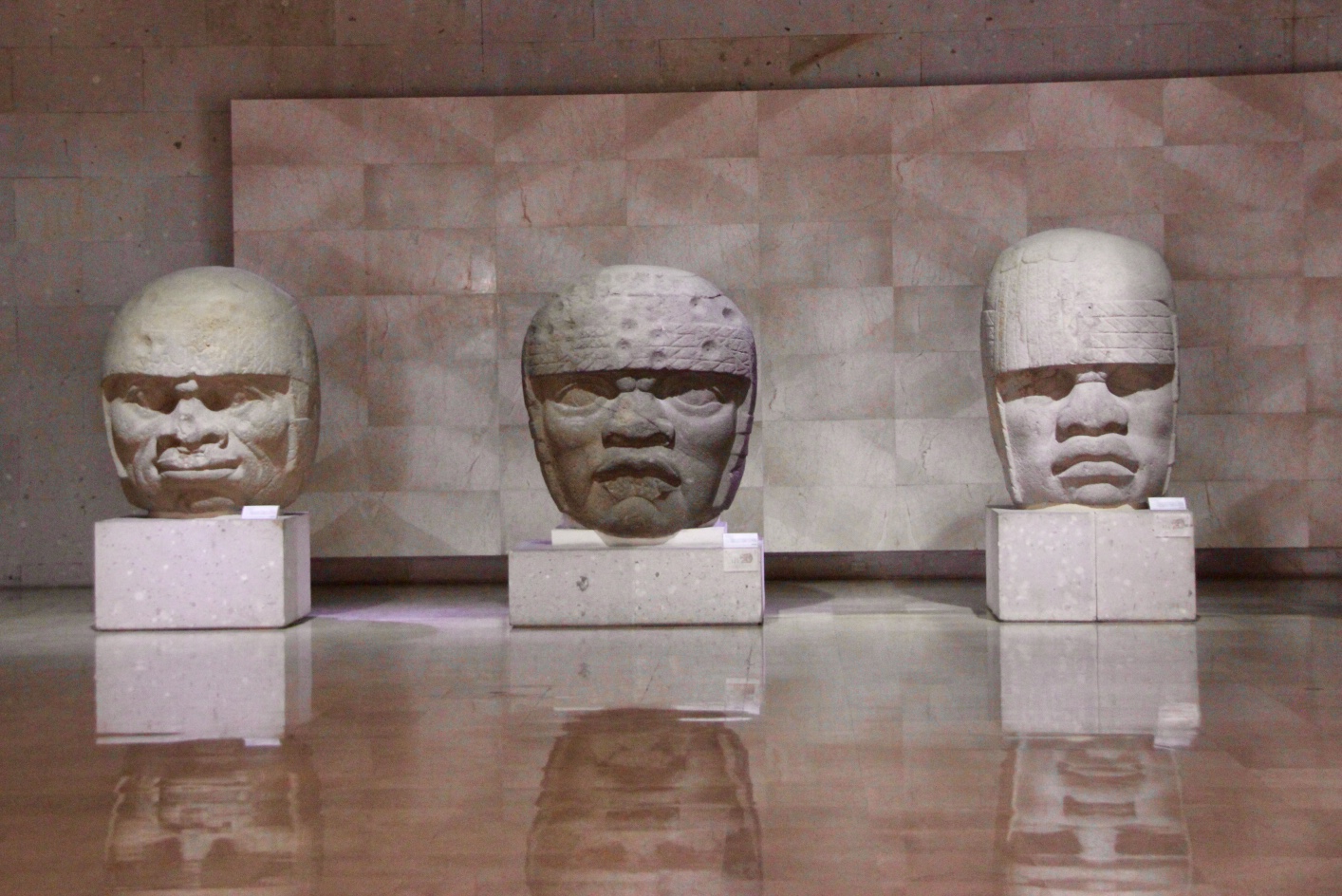
Museo de Antropología de Xalapa
*an ongoing series of quotations – mostly from artists, to artists – that offers wisdom, inspiration, and advice for the sometimes lonely road we are on.
All real art is or was modern in its time,
daring and new,
demonstrating a constant change in seeing and feeling.
If revival had been a perpetual virtue,
we would still live in caves and earth pits.
In art, tradition is to create,
not to revive.
Joseph Albers quoted in Ruins in Reverse by Lauren Hinkson in Joseph Albers in Mexico
Comments are welcome!
Pearls from artists* # 285
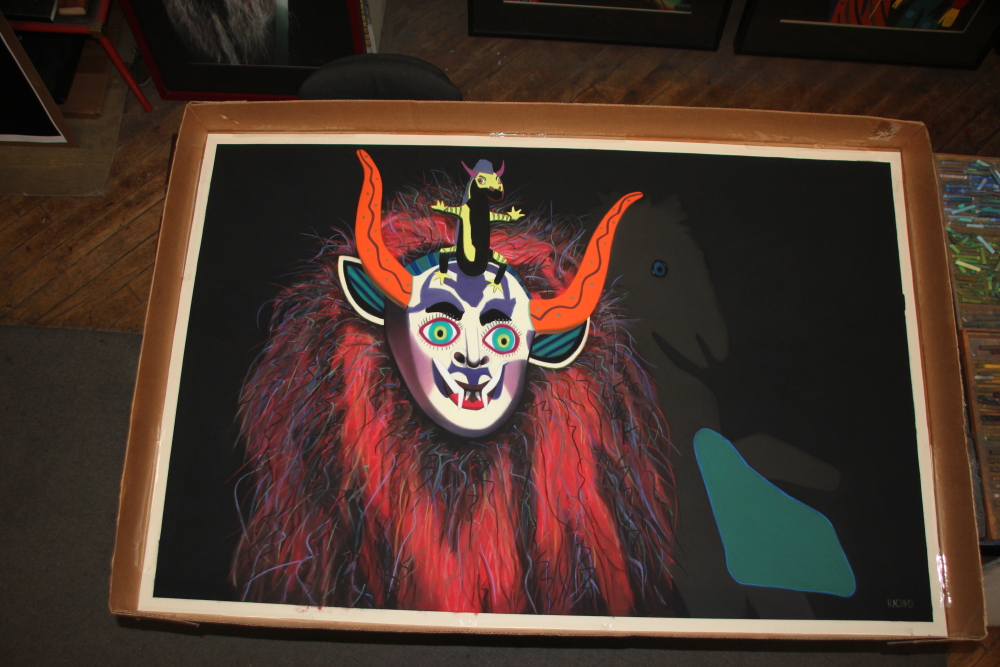
“The Orator,” 38″ x 58,” boxed to go to the framer
*an ongoing series of quotations – mostly from artists, to artists – that offers wisdom, inspiration, and advice for the sometimes lonely road we are on.
So much of the writing life is mundane. Buying printer ink and paper, doing dishes, arranging the pens in the cup, smoke breaks on the phone, taking baths or going for walks or sitting blankly on the couch wondering if the day will end before one makes a discovery or a decision. These habits of day-to-day tedium are what can’t be seen on the surface of a writer’s face when we meet her at a book signing – the time and effort spent living in her own head. Writing is a lonesome art.
Women at Work: Interviews from the Paris Review, preface by Ottessa Moshfegh
Comments are welcome!
Pearls from artists* # 284
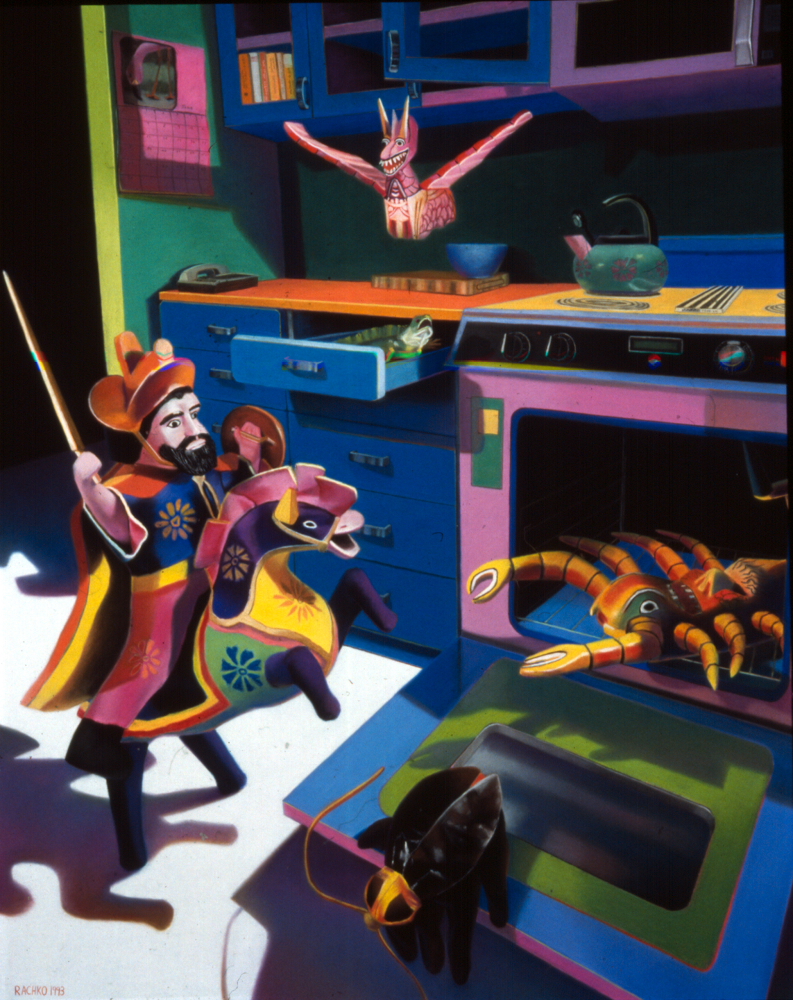
“The Magical Other,” soft pastel on sandpaper, 48″ x 38″
*an ongoing series of quotations – mostly from artists, to artists – that offers wisdom, inspiration, and advice for the sometimes lonely road we are on.
We can do anything, or almost, but how balanced, magnanimous, and modest one has to be to do anything! And also how patient. It is as true in the arts as anywhere else.
So… to work. It is not a non sequitur. I shall never be one of those directly active (except as a teacher, occasionally), but now and then I am made aware that my work, odd though it seems, does help people. But it is only in these last years at Nelson that I have known that for sure.
May Sarton in Journal of a Solitude: The intimate diary of a year in the life of a creative woman
Comments are welcome!
Pearls from artists* # 277

Lake Titicaca above Cocacabana, Bolivia
* an ongoing series of quotations – mostly from artists, to artists – that offers wisdom, inspiration, and advice for the sometimes lonely road we are on.
Einstein wrote, “The most beautiful experience we can have is the mysterious. It is the fundamental emotion which stands at the cradle of true art and true science.” What did Einstein mean by “the mysterious?” I don’t think he meant that science is full of unpredictable or unknowable supernatural forces. I believe that he meant a sense of awe, a sense that there are things larger than us, that we do not have all the answers at this moment. A sense that we can stand right at the edge between known and unknown and gaze into that cavern and be exhilarated rather than frightened. Just as Einstein suggested, I have experienced that beautiful mystery both as a physicist and as a novelist. As a physicist, in the infinite mystery of physical nature. As a novelist, in the infinite mystery of human nature and the power of words to portray some of that mystery.
Alan Lightman in A Sense of the Mysterious: Science and the Human Spirit
Comments are welcome!



