Blog Archives
Q: When did you start using the sandpaper technique and why (Question from “Arte Realizzata”)

A: In the late 1980s when I was studying at the Art League School in Alexandria, VA, I enrolled in a three-day pastel workshop with Albert Handel, an artist known for his southwest landscapes in pastel and oil paint. I had just begun working with soft pastel and was experimenting with paper. Handel suggested I try Ersta fine sandpaper. I did and nearly three decades later, I’ve never used anything else.
This paper is acid-free and accepts dry media, mainly pastel and charcoal. It allows me to build up layer upon layer of pigment and blend, without having to use a fixative. The tooth of the paper almost never gets filled up so it continues to hold pastel. (On the rare occasion when the tooth DOES fill up, which sometimes happens with problem areas that are difficult to resolve, I take a bristle paintbrush, dust off the unwanted pigment, and start again). My entire technique – slowly applying soft pastel, blending and creating new colors directly on the paper, making countless corrections and adjustments, rendering minute details, looking for the best and/or most vivid colors – evolved in conjunction with this paper.
I used to say that if Ersta ever went out of business and stopped making sandpaper, my artist days would be over. Thankfully, when that DID happen, UArt began making a very similar paper. I buy it in two sizes – 22″ x 28″ sheets and 56″ wide by 10-yard-long rolls. The newer version of the rolled paper is actually better than the old, because when I unroll it, it lays flat immediately. With Ersta I would lay the paper out on the floor for weeks before the curl would give way and it was flat enough to work on.
Comments are welcome!
Q: How do you work and approach your subject? (Question from “Arts Illustrated”)
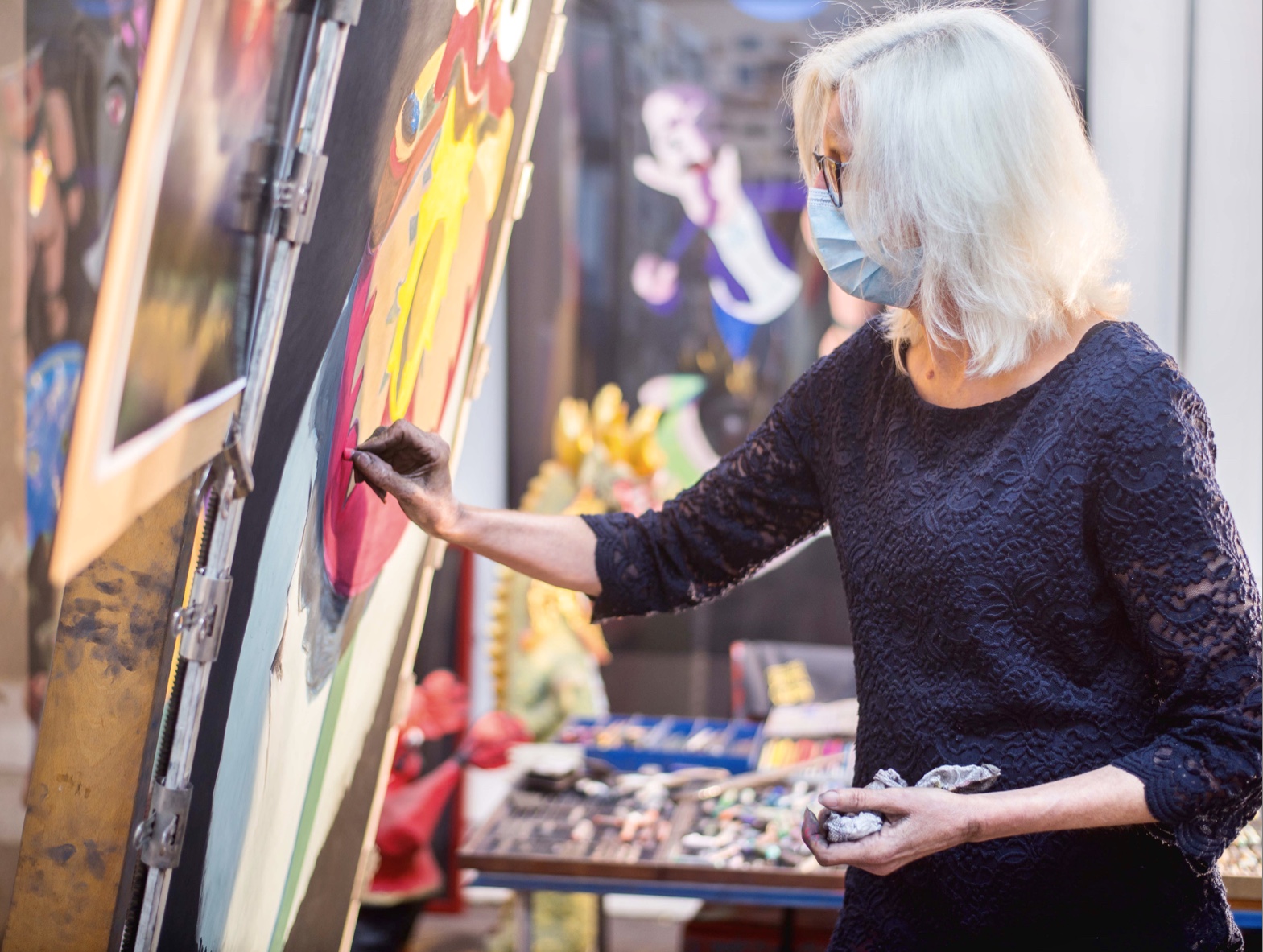
A: Undoubtedly, I could not make my work without UART sandpaper since my entire pastel technique evolved around it. I use 400 0r 500 grit. My favorite thing about it is its ‘tooth’ (i.e. texture or roughness).
Over the many months I spend creating a pastel painting, I build layer upon layer of soft pastel. Because the paper I use is relatively “toothy,” it accepts all of the pastel the painting needs. And as many people know, I own and use thousands of soft pastels!
Many layers of soft pastel and several months of studio time go into creating each painting. My self-invented technique is analogous to the glazing techniques used by the Old Masters, who slowly built up layers of thin oil paint to achieve a high degree of finish. Colors were not only mixed physically, but optically.
Similarly, I gradually build up layers of soft pastel, as many as thirty, to create a pastel painting. After applying a color, I blend it with my fingers and push it into the sandpaper’s tooth. It mixes with the color beneath to create a new color, continually adding richness, saturation, and intensity to the piece. By the time a pastel painting is finished, the colors are bold, vibrant, and exciting.
From the beginning in the 1980s I used photographs as reference material and my late husband, Bryan, would shoot 4” x 5” negatives of my elaborate setups with his Toyo-Omega view camera. In those days I rarely picked up a camera except when we were traveling. After Bryan was killed on 9/11, I inherited his extensive camera collection – old Nikons, Leicas, Graphlex cameras, etc. – and I wanted to learn how to use them. In 2002 I enrolled in a series of photography courses (about 10 over 4 years) at the International Center of Photography in New York. I learned how to use all of Bryan’s cameras and how to make my own big color prints in the darkroom.
Along the way I discovered that the sense of composition, form, and color I developed over many years as a painter translated well into photography. The camera was just another medium with which to express my ideas. Astonishingly, in 2009 I had my first solo photography exhibition in New York.
It’s wonderful to be both a painter and a photographer. Pastel painting will always be my first love, but photography lets me explore ideas much faster than I ever could as a painter. Paintings take months of work. To me, photographs – from the initial impulse to hanging a framed print on the wall – are instant gratification.
For several years I have been using my iPad Pro to capture thousands of travel photographs. Most recently, I visited Gujarat and Rajasthan in India. I have never been inclined to use a sketchbook so composing photos on my iPad keeps my eye sharp while I’m halfway around the world, far from my studio practice.
My blog, “Barbara Rachko’s Colored Dust,” continues to be a crucial part of my overall art practice. Blogging twice a week forces me to think deeply about my work and to explain it clearly to others. The process has helped me develop a better understanding about why I make art and, I like to think, has helped me to become a better writer.
Comments are welcome!
Q: What made you fall in love with soft pastel versus another medium?
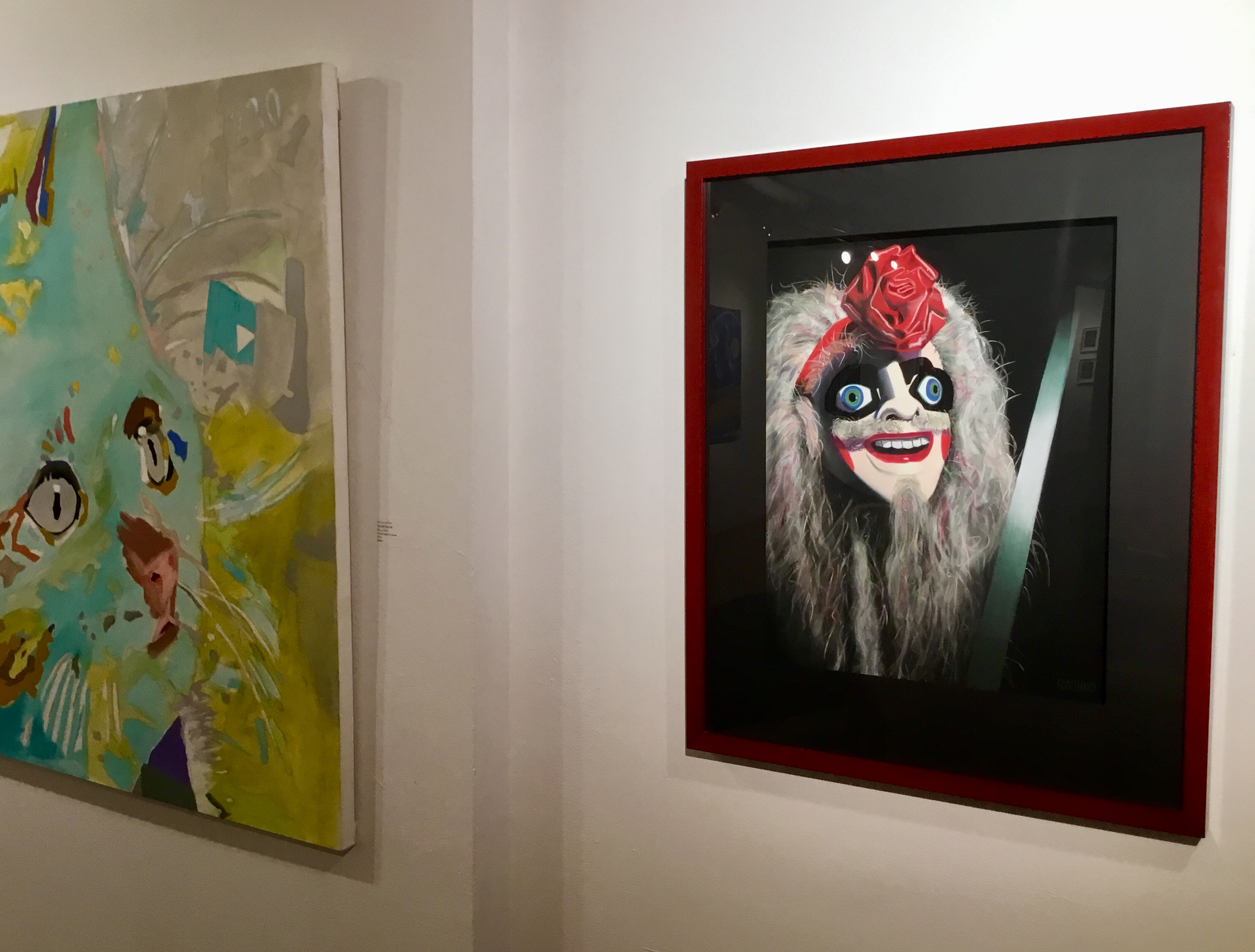
“The Champ” in “Worlds Seen & Unseen” at Westbeth Gallery, NYC
A: I like to get my hands right into my work. In other words, I don’t like brushes or anything else to intervene between my hands and what I’m working on.
I work with 400 or 500 grit Uart sandpaper so the downside is that I rub my fingertips raw from blending layers of soft pastel onto sandpaper. I’ve tried using rubber gloves (they make my fingers sweat and wear out fast), cotton gloves (they leave bits of lint on the paper), using a blending stump (it leaves lint on the paper), etc., but nothing works as well as my own fingers. So sore fingertips are an unavoidable occupational hazard. I sometimes take days off from the studio just so that my hands can heal.
I adore color and love looking at the thousands of pastels in my studio! After working with this medium for more than thirty years, I still love what I am able to accomplish and I am still pushing it to do new things. The colors are rich, intense, velvety. No other medium is as sensuous or as satisfying.
Comments are welcome!
Q: Would you speak about the meaning of your work and the different materials you use?
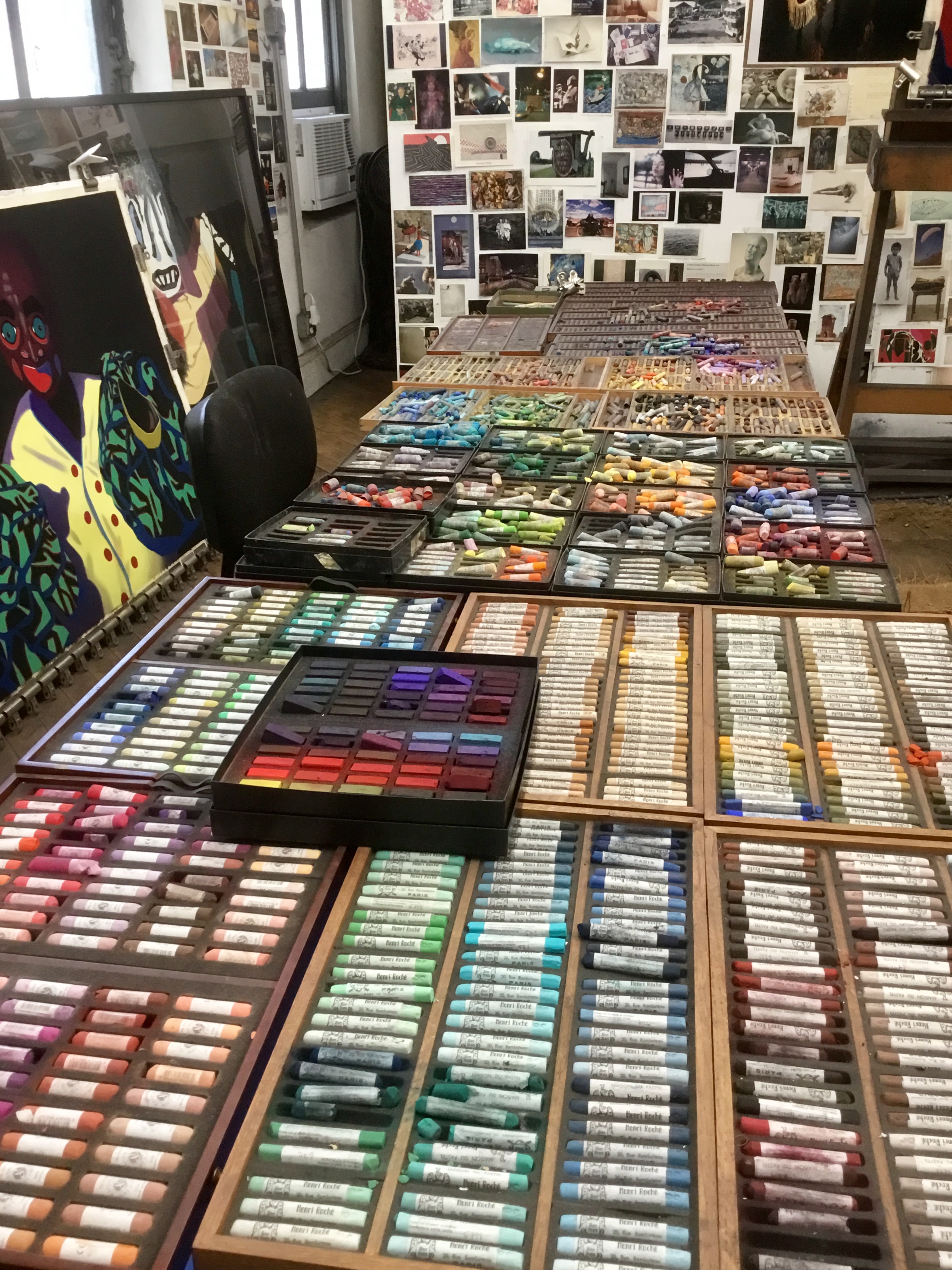
About half of Barbara’s pastels
A: It is as difficult to explain the meaning of my art as it is to interpret the meaning of life! I am invested in and concerned with process: foreign travel, prodigious reading, devotion to craft, months of slow meticulous work in the studio trying to create an exciting work of art that has never been seen before, etc. I love making pastel paintings! Many years ago I challenged myself to push the limits of what soft pastel can achieve. I am still doing so.
I leave it to others – viewers, arts writers, critics, art historians – to study my creative journey and talk about meanings. I believe an artist is inspired to create and viewers ponder the creation. I would not presume to tell anyone how to react to my work.
For many years I have been devoted to promoting soft pastel as a fine art medium. There are excellent reasons it has been around for five hundred years! It is the most permanent of media. There’s no liquid binder to cause oxidizing or cracking over time, as happens with oil paint. Pastel colors are intense because they are close to being pure pigment. Pastel allows direct application (no brushes) with no drying time and no color changes.
I use UArt acid-free sandpaper. This is not sandpaper from a hardware store. It is made for artists who work in pastel and allows me to build up layers of pigment without using a fixative. My process – slowly applying and layering pastels, blending and mixing new colors directly on the paper, making countless adjustments, searching for the best and/or most vivid colors – continually evolves. Each pastel painting takes months to create.
Comments are welcome!
Q: What one piece of artistic “equipment” could you not live without?
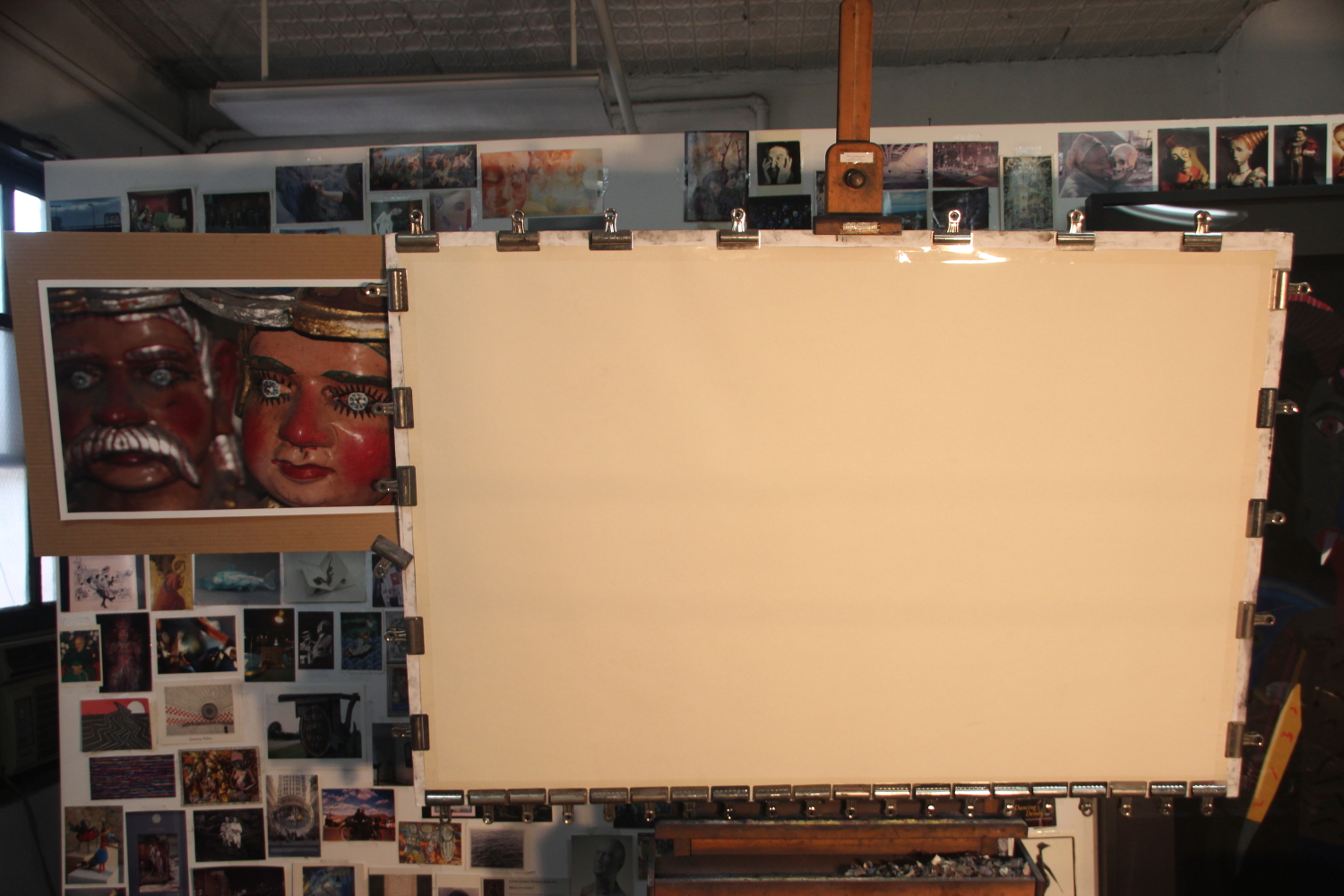
Untouched sandpaper
A: Undoubtedly, I could not make my work without UART sandpaper. Over the many months I spend creating a painting, I build layer upon layer of soft pastel. Because this paper is so “toothy,” it accepts all of the pastel the painting needs.
As many people know, I own and use a lot of soft pastel! My entire technique evolved around this sandpaper, which allows me to add and blend as many as thirty layers.
Comments are welcome!
Q: When and why did you start working on sandpaper?

Raw sandpaper
A: In the late 1980s when I was studying at the Art League in Alexandria, VA, I took a three-day pastel workshop with Albert Handel, an artist known for his southwest landscapes in pastel and oil paint. I had just begun working with soft pastel (I’d completed my first class with Diane Tesler) and was still experimenting with paper. Handel suggested I try Ersta fine sandpaper. I did and nearly three decades later, I’ve never used anything else.
The paper (UArt makes it now) is acid-free and accepts dry media, especially pastel and charcoal. It allows me to build up layer upon layer of pigment, blend, etc. without having to use a fixative. The tooth of the paper almost never gets filled up so it continues to hold pastel. If the tooth does fill up, which sometimes happens with problem areas that are difficult to resolve, I take a bristle paintbrush, dust off the unwanted pigment, and start again. My entire technique – slowly applying soft pastel, blending and creating new colors directly on the paper (occupational hazard: rubbed-raw fingers, especially at the beginning of a painting as I mentioned in last Saturday’s blog post), making countless corrections and adjustments, looking for the best and/or most vivid colors, etc. – evolved in conjunction with this paper.
I used to say that if Ersta ever went out of business and stopped making sandpaper, my artist days would be over. Thankfully, when that DID happen, UArt began making a very similar paper. I buy it from ASW (Art Supply Warehouse) in two sizes – 22″ x 28″ sheets and 56″ wide by 10 yard long rolls. The newer version of the rolled paper is actually better than the old, because when I unroll it it lays flat immediately. With Ersta I laid the paper out on the floor for weeks before the curl would give way and it was flat enough to work on.
Comments are welcome!


 barbararachkoscoloreddust.com