
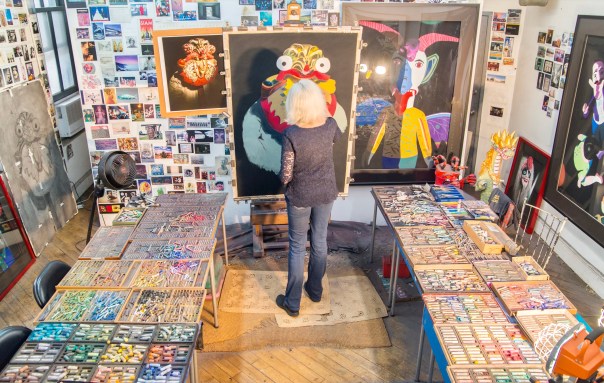
Barbara at work on “Schemer,” Soft Pastel on Sandpaper, 26” x 20”
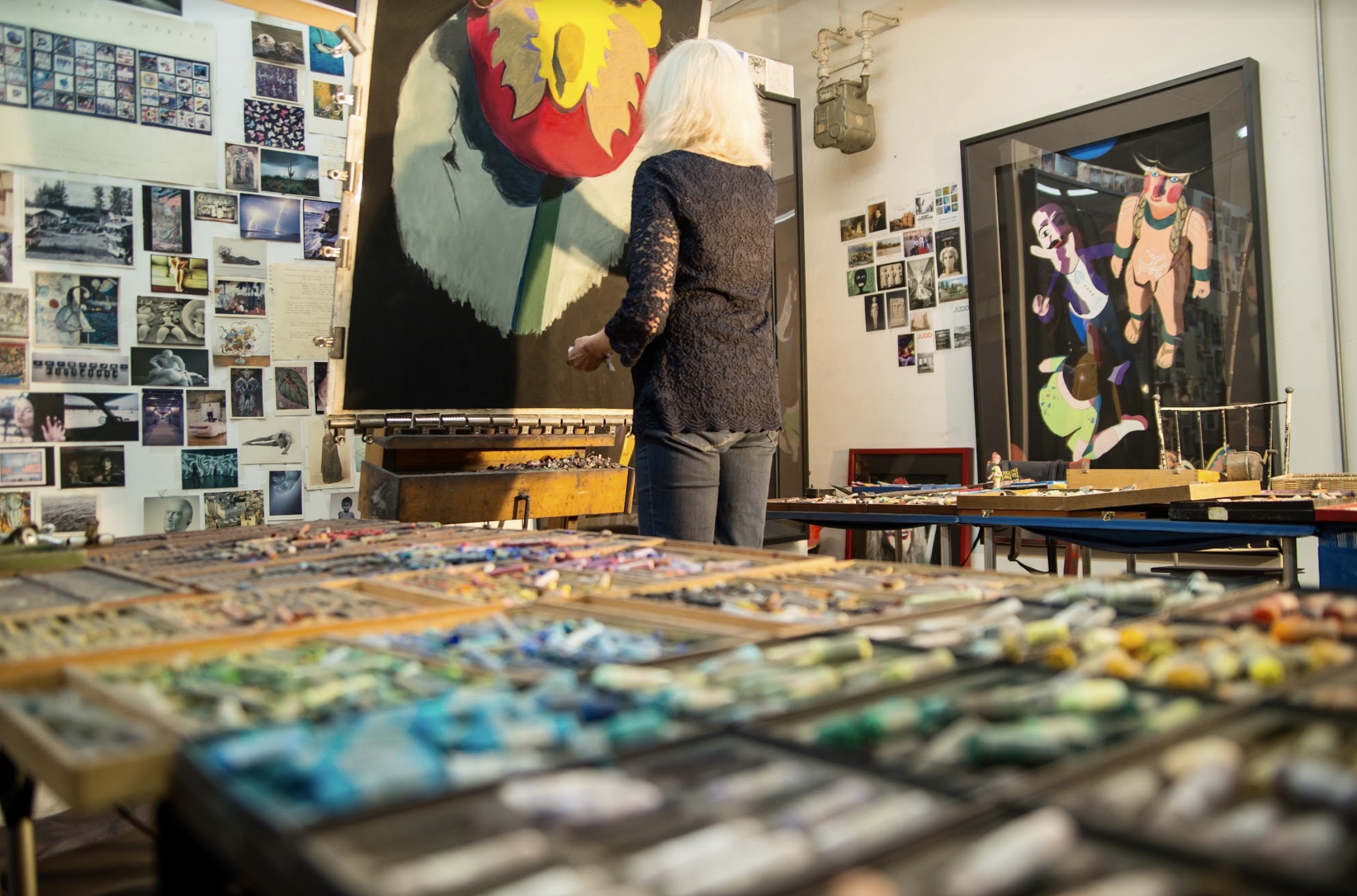
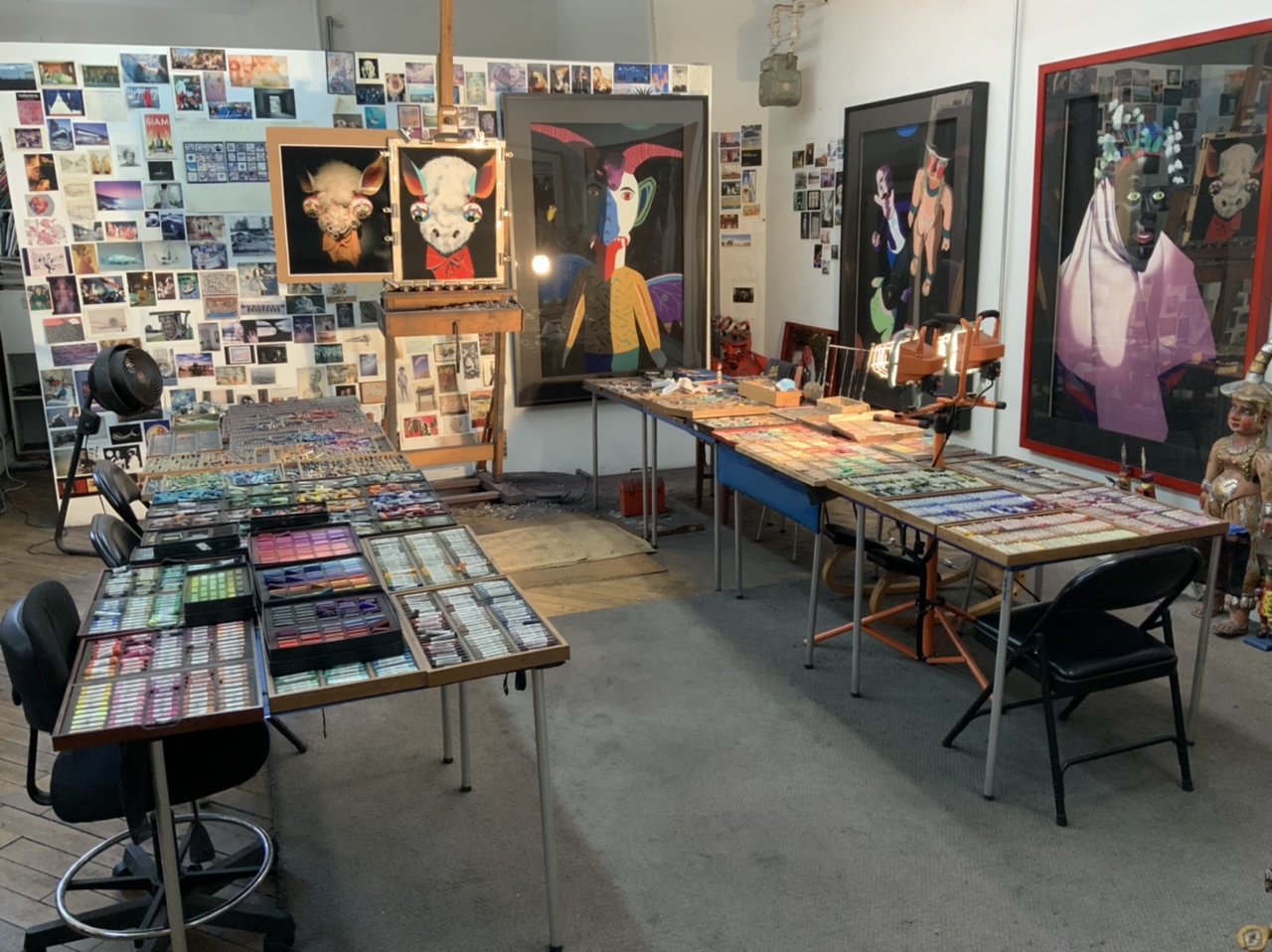
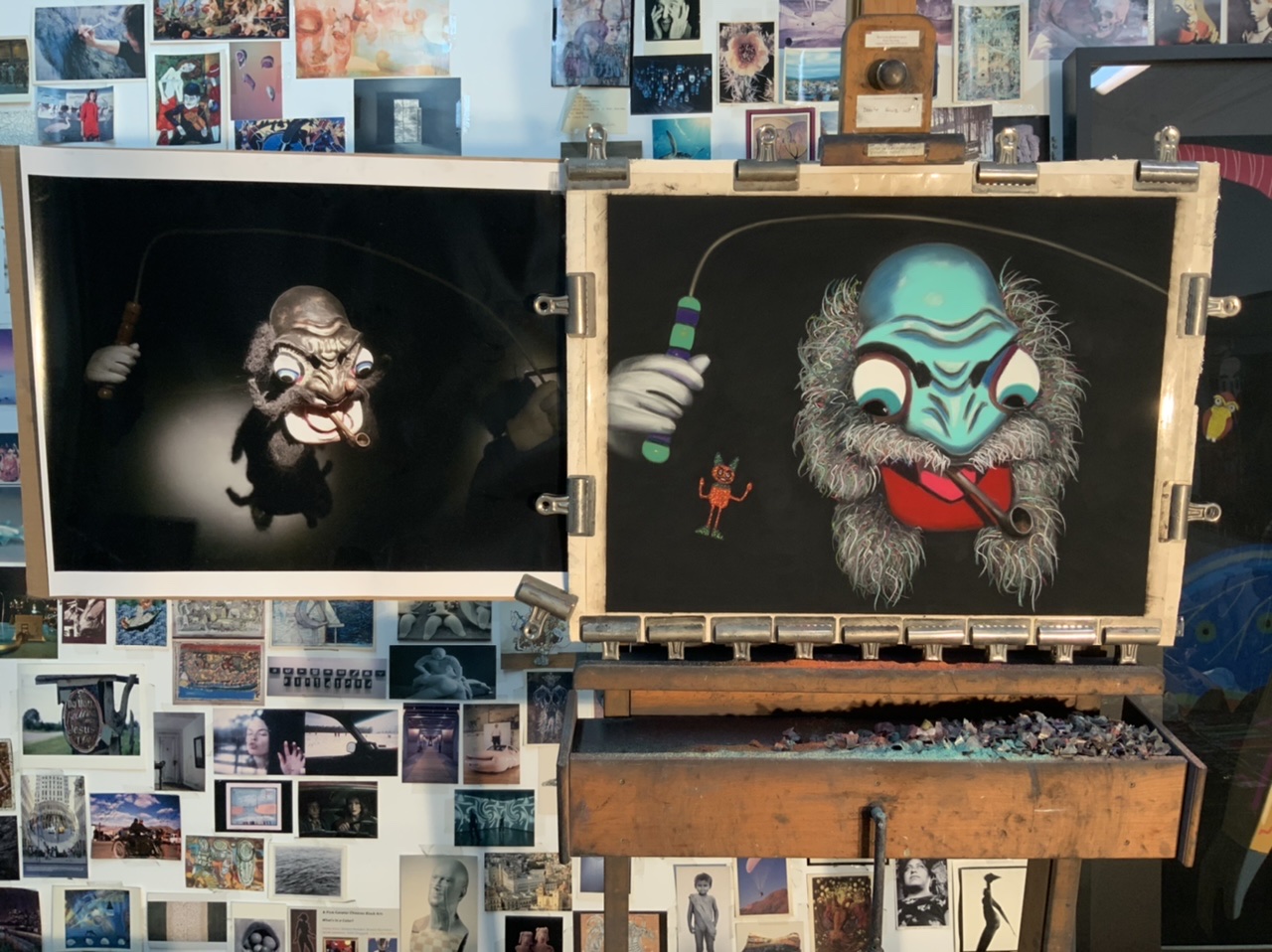
A: I’ll describe a typical day at the studio. When I first arrive in the morning, I read for 30 minutes. Reading focuses and quiets my mind and gets me ready to begin the day’s work. While I read, I look at the pastel painting that’s on my easel to see where to begin. Then I close the book, turn on some music, plug in the Halogen lamps I use while working, apply a barrier cream to my hands, put on a surgical mask (to avoid breathing pastel dust), pick up a pastel, and start.
I never sit while working. I enjoy the physicality of art-making and prefer to stand at my easel so I can back up to see how the pastel painting looks from a distance. I like being on my feet all day and getting some exercise. I work for a couple of hours, break for lunch, and then work the rest of the afternoon.
I believe artists need to be disciplined. I work five days a week, taking Wednesdays and Sundays off, and spend seven hours or more per day in the studio. Daylight is essential so I work more hours in summer, fewer in winter. I like to think of art-making as independent of time tables, but I tend to work in roughly two-hour blocks before taking a break. I typically work until 5:00 or so.
Studio hours are sacrosanct and exclusively for creative work. I do not have WiFi at my studio and prefer to keep my computer and mobile devices elsewhere (they devour time). Art business activities – answering email, keeping up with social media, sending jpegs, writing blog posts, doing interviews, etc. – are accomplished at home in the mornings, in the evenings, and on days off from the studio.
Comments are welcome!





 barbararachkoscoloreddust.com
Q: I understand your comments to mean that being at the studio challenges you to be your best. How (why) do you think that works? (Question from Nancy Nikkal)
Aug 8
Posted by barbararachkoscoloreddust
“Avenger,” soft pastel on sandpaper, 58″ x 38″
A: I am always trying to push my pastel techniques further, seeking to figure out new ways to render my subject matter, expanding my technical vocabulary. It would be monotonous to keep working the same old way. Wasn’t it John Baldessari who said, “No more boring art?” He was talking about art that’s boring to look at. Well, as someone who CREATES art I don’t want to be bored during the making so I keep challenging myself. I love learning, in general, and I especially love learning new things about soft pastel.
Very often I start a project because I have no idea how to depict some particular subject using pastel. For example, one of the reasons I undertook “Avenger” was to challenge myself to render all of that hair! Eventually I managed to figure it out and I learned a few new techniques in the process.
Comments are welcome!
Share this:
Posted in 2020, An Artist's Life, Bolivianos, Creative Process, Pastel Painting, Working methods
2 Comments
Tags: always, “Avenger”, ”No more boring art”, challenge, comments, creates, depict, eventually, expending, figure out, further, John Baldessari, learning, making, managed, matter, monotonous, myself, Nancy Nikkal, particular, pastel, process, project, reasons, render, seeking, soft pastel, soft pastel on sandpaper, Studio, subject, talking, technical, techniques, trying, understand, undertook, vocabulary, working