Blog Archives
Pearls from artists* # 665

*an ongoing series of quotations – mostly from artists, to artists – that offers wisdom, inspiration, and advice for the sometimes lonely road we are on.
We are wordlessly persuaded and taught outright to hide so much of what we have unearthed in our lives. But artists throughout the centuries have described the power of using anguish as a catalyst to fuel their creativity. In Greek epic poetry, ‘Kleos’ refers to immortal renown. Unlike present-day fame, this term referred exclusively to heroes who had surmounted a great obstacle or persevered through tremendous difficulties. There is a certain authority that comes from those who have endured hardship. They have earned the depth of their work.
Darkness contains a great deal of energy. We can use it for destruction or creativity. Only those who tolerate it are able to illuminate the shadowy corners, revealing the nefariousness that hopes to stay hidden. We cannot change our past, or any hell that we have been through. But art provides the means to exorcise the pain that has taken up residence in our body and fashion it into a form outside ourselves, in an infinitely affirmative gesture. The darkness we have passed through was not endured in vain if we mold it into a vision that lights the way out… for us, and for all the other souls who undoubtedly need it.
Kate Kretz in Art From Your Core: A Holistic Guide to Visual Voice
Comments are welcome!
Pearls from artists* # 560
*an ongoing series of quotations – mostly from artists, to artists – that offers wisdom, inspiration, and advice for the sometimes lonely road we are on.
In describing her technique, Joan [Mitchell] once said, “I don’t go off and slop and drip. I ‘stop, look, and listen!’ at railroad tracks. I really want to be accurate.” One can imagine every stroke applied, every drizzle of pigment – both those visible in the finished work and those buried beneath its many layers – being the result of just such consideration. The majesty of Joan’s painting, which she would call City Landscape, was a quality it shared with all great art – the sense that it had always existed, and that during one inspired moment it had been dredged from the subconscious depths by a hand and mind graced with the talent and vision to retrieve it for the rest of us. That revealing work, so exuberant, so deep, so masterful, and so unlike the shards and violent explosions that had been her signature, was the result of Joan’s having survived a personal hell and her own imperfections. It was her prize for having persevered, and all who saw it were the beneficiaries.
Mary Gabriel in Ninth Street Women
Comments are welcome!
Pearls from artists* # 544
*an ongoing series of quotations – mostly from artists, to artists – that offers wisdom, inspiration, and advice for the sometimes lonely road we are on.
Creativity is human potential made manifest. But what is talent? The dictionary (in this case Webster’s New World Dictionary) informs us that talent is any natural ability, power, or endowment, and especially a superior, apparently natural ability in the arts or sciences or in the learning or doing of anything.
This definition is revealing on several counts. First of all, it defines talent in terms of abilities and powers. It suggests that an artist can answer the question “Am I talented?” In the affirmative if he can point to certain endowments that he possesses.
But which ones should be point to? What are the important ones in his art discipline? How many of them does he need to do good work? Do they all matter equally? Which, if any, are absolutely necessary? How much of a desired ability does he need – how great a vocal range, how long a leap, how fine a hand as a draftsman?
Eric Maisel in A Life in the Arts: Practical Guidance and Inspiration for Creative and Performing Artists
Comments are welcome!
Pearls from artists* #498

*an ongoing series of quotations – mostly from artists, to artists – that offers wisdom, inspiration, and advice for the sometimes lonely road we are on.
“The first time I ever went to a meeting where they discussed any of my books academically,” she chuckled, “a Canadian Scholar was going to discuss The Left Hand of Darkness. He didn’t know that I was going to be there. When I walked in, he was appalled. He looked at me with a savage look on his face and said, ‘Just don’t tell me you didn’t know what you were doing.’ That’s a basic thing, actually, between scholars and artists. I think, ‘Oh, is that what I was doing? Or Is that why I did that? and it’s very revealing. But the fact is, you cannot know that while you’re doing it. The dancer can’t think, Now I’m going to take a step to the left. That ain’t the way you dance.”
Ursula K. Le Guin: The Last Interview and other Conversations, edited and with an introduction by David Streitfeld
Comments are welcome!
Q: How does art help you explore and understand other cultures? (Question from Arte Realizzata)
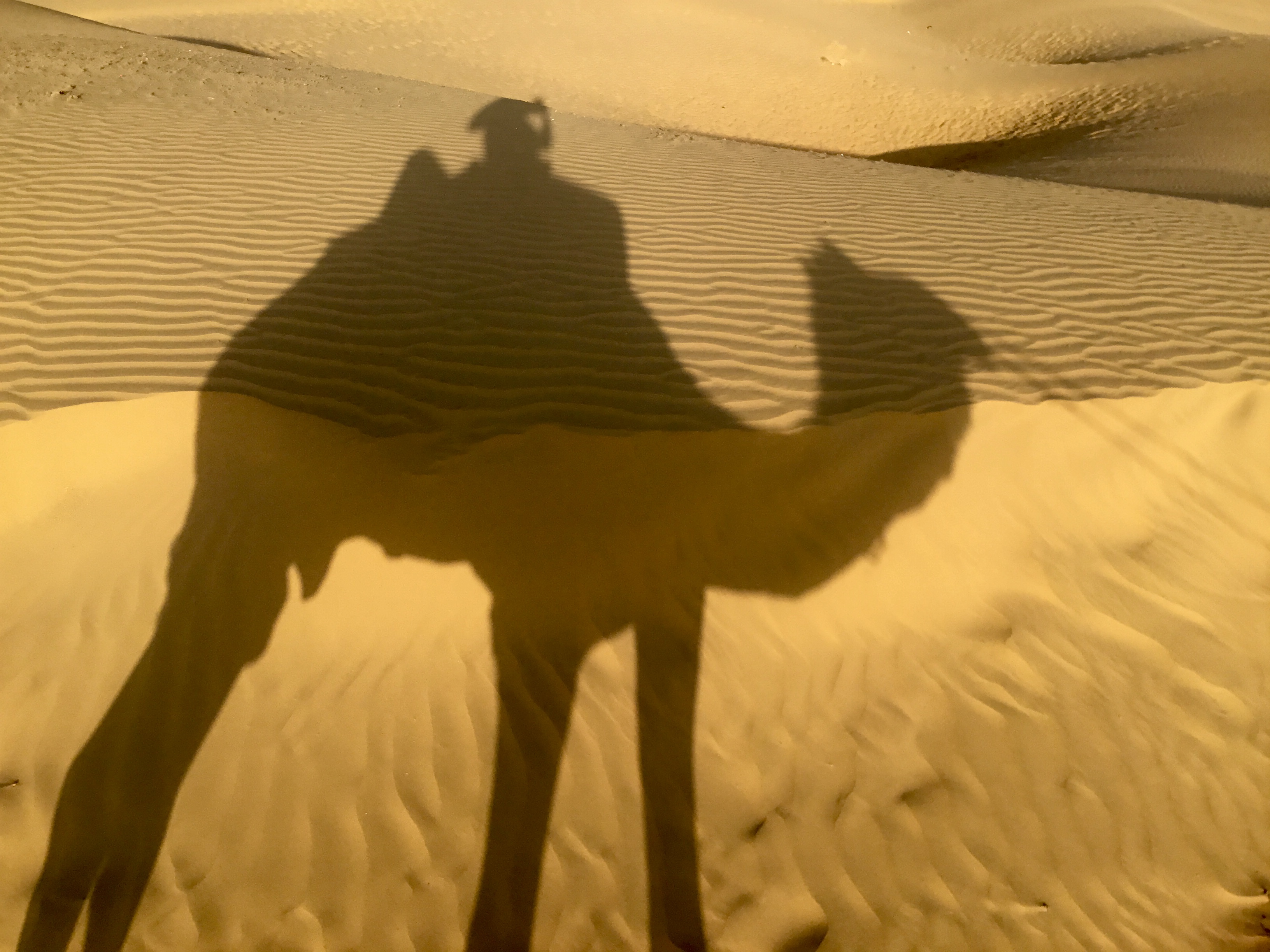
A: Art helps me explore and understand other cultures by revealing our shared humanity across space and time. For me art and travel are intertwined; there is no better education! My art-making has led me to visit fascinating places in search of source material, ideas, and inspiration: to Mexico, Guatemala, Brazil, Argentina, Uruguay, France, England, Italy, Bali, Java, Sri Lanka, and India. I have seen firsthand that people all over the world are the same.
Art has led me to undertake in-depth studies of intriguing subjects: drawing, color, composition, art, art history, the art business, film, film history, photography, mythology, literature, music, jazz, jazz history, and archaeology, particularly that of ancient Mesoamerica (Olmec, Zapotec, Mixtec, Aztec, and Maya), and South America (the Inca and their ancestors).
This rich mixture of creative influences continually grows. For anyone wanting to spend their time on earth studying, learning, and meeting new challenges, there is hardly anything more fascinating than to be a well-travelled, perpetually curious artist!
Comments are welcome!
Pearls from artists* # 48

“Big Deal,” with double portrait of the author
* an ongoing series of quotations – mostly from artists, to artists – that offers wisdom, inspiration, and advice for the sometimes lonely road we are on.
Until the invention of photography, the painted (or sculptural) portrait was the only means of recording and presenting the likeness of a person. Photography took over this role from painting and at the same time raised our standards for judging how much an informative likeness should include.
This is not to say that photographs are in all ways superior to painted portraits. They are more informative, more psychologically revealing, and in general more accurate. But they are less tensely unified. Unity in a work of art is achieved as a result of the limitations of the medium. Every element has to be transformed in order to have its proper place within these limitations. In photography the transformation is to a considerable extent mechanical. In a painting each transformation is largely the result of a conscious decision by the artist. Thus the unity of a painting is permeated by a far higher degree of intention. The total effect of a painting (as distinct from its truthfulness) is less arbitrary than that of a photograph; its construction is more intensely socialized because it is dependent on a greater number of human decisions. A photographic portrait may be more revealing and accurate about the likeness and character of the sitter; but it is likely to be less persuasive, less (in the very strict sense of the word) conclusive. For example, if the portraitist’s intention is to flatter or idealize, he will be able to do so far more convincingly in a painting than with a photograph.
Geoff Dyer, editor, Selected Essays: John Berger
Comments are welcome!


 barbararachkoscoloreddust.com