Blog Archives
Pearls from artists* # 98
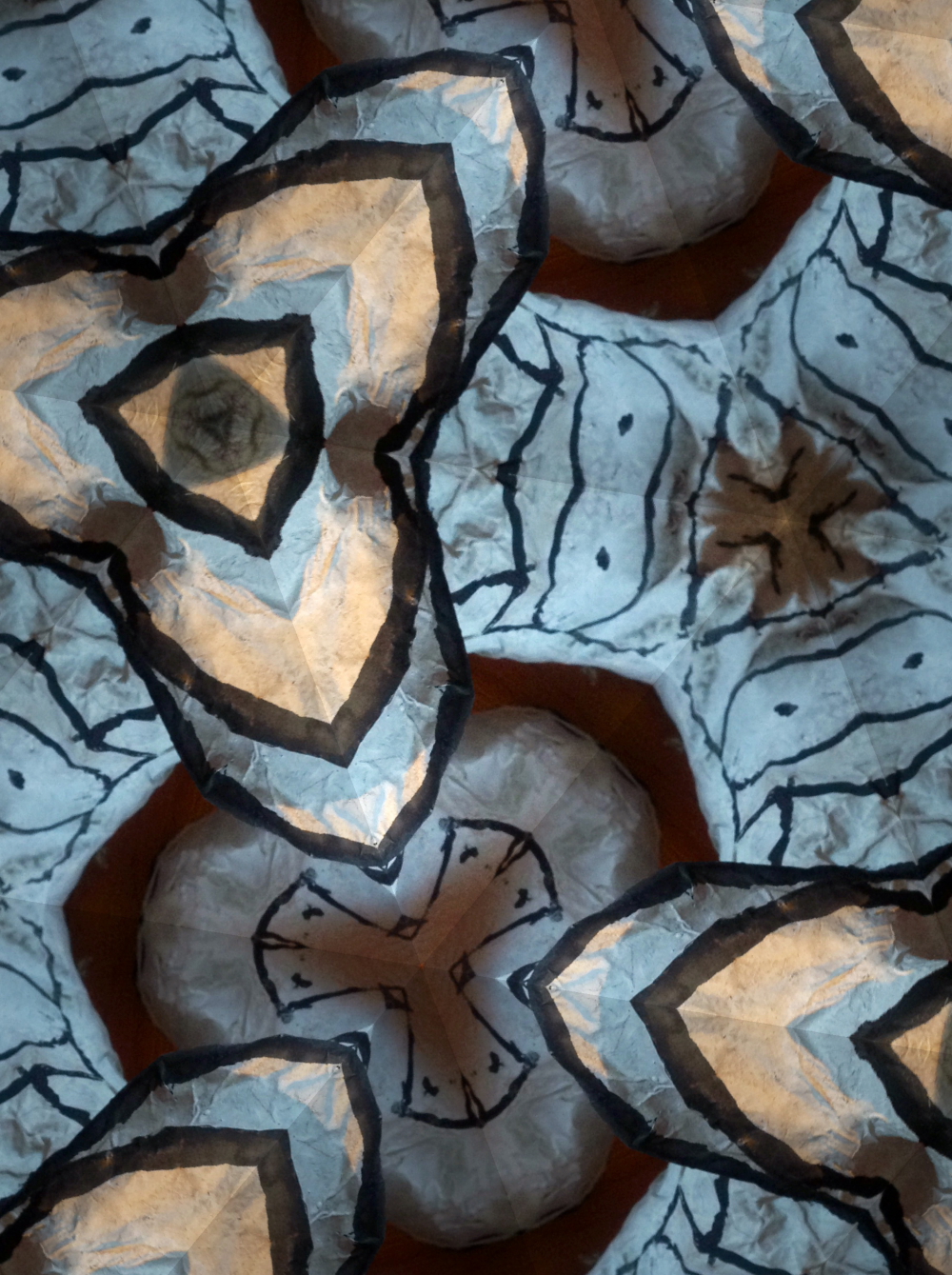
Teleidoscope
* an ongoing series of quotations – mostly from artists, to artists – that offers wisdom, inspiration, and advice for the sometimes lonely road we are on.
A work of art can start you thinking about some aesthetic or philosophical problem; it can suggest some new method, some fresh approach to fiction. But the relationship between reading and writing is rarely so clear-cut…
To be truthful, some writers stop you dead in your tracks by making you see your own work in the most unflattering light. Each of us will meet a different harbinger of personal failure, some innocent genius chosen by us for reasons having to do with what we see as our own inadequacies. The only remedy to this I have found is to read a writer whose work is entirely different from another, though not necessarily more like your own – a difference that will remind you of how many rooms there are in the house of art.
Francine Prose in Reading Like a Writer: A Guide for People Who Love Books and for Those Who Want to Write Them
Comments are welcome!
Q: How do you feel about accepting commissions?

“Reunion,” soft pastel on sandpaper, 38″ x 58″, 1990
A: By the time I left the Navy in 1989 to devote myself to making art, I had begun a career as a portrait painter. I needed to make money, this was the only way I could think of to do so, and I had perfected the craft of creating photo-realistic portraits in pastel. It worked for a little while.
A year later I found myself feeling bored and frustrated for many reasons. I didn’t like having to please a client because their concerns generally had little to do with art. Once I ensured that the portrait was a good (and usually flattering) likeness, there was no more room for experimentation, growth, or creativity. I believed (and still do) that I could never learn all there was to know about soft pastel. I wanted to explore color and composition and take this under-appreciated medium as far as possible. It seemed likely that painting portraits would not allow me to accomplish this. Also, I tended to underestimate the amount of time needed to make a portrait and charged too small a fee.
So I decided commissioned portraits were not for me and made the last one in 1990 (above). I feel fortunate to have the freedom to create work that does not answer to external concerns.
Comments are welcome!
Q: What impact do you hope to have on viewers of your work?
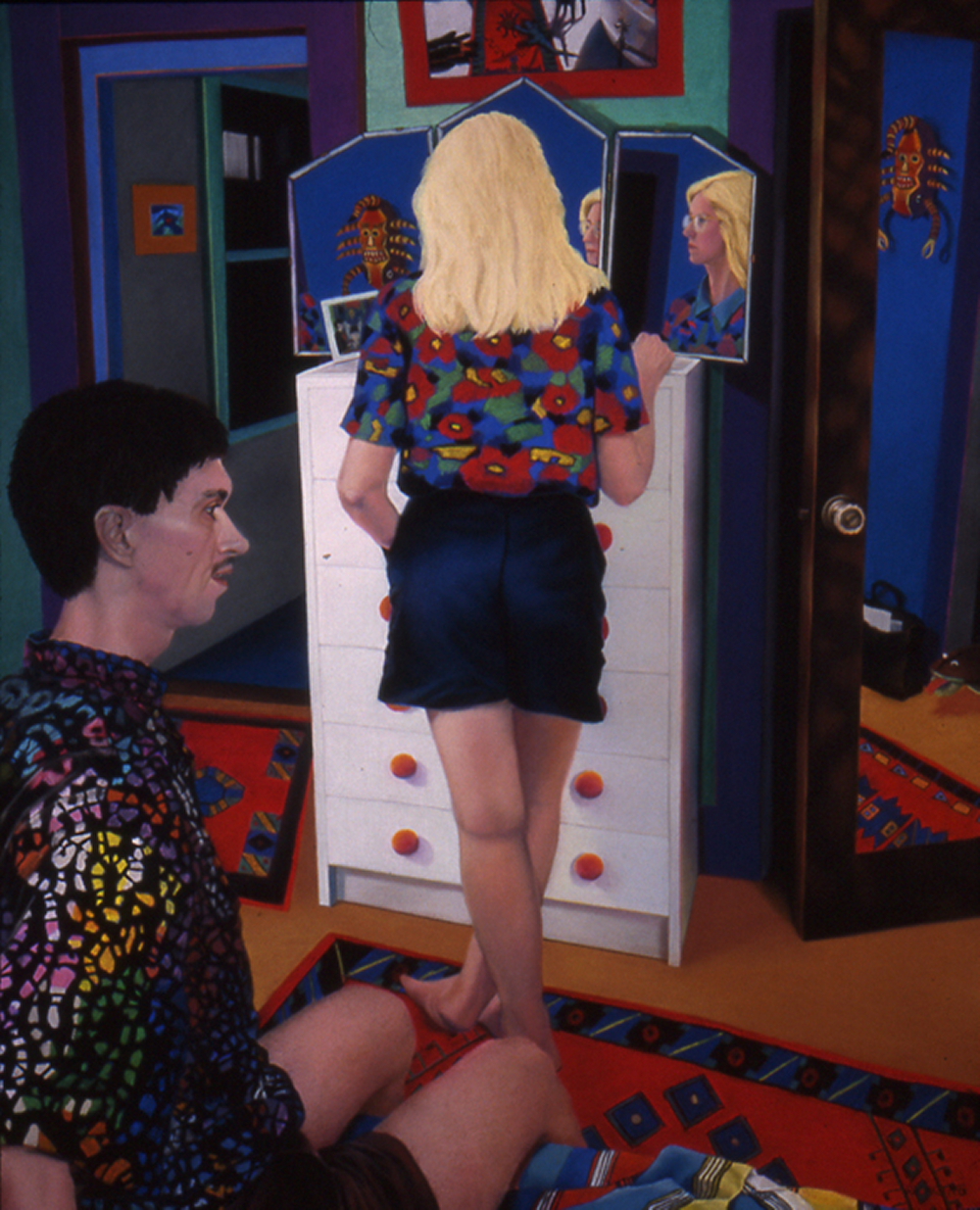
“Us and Them,” soft pastel on sandpaper, 47″ x 38″, 1993
A: I am pushing soft pastel to its limits, using it in ways that no artist has done before. I want people to see what is possible to accomplish with this medium. Because I have experienced unspeakable heartache – the loss of my husband on 9/11, onboard the high-jacked airplane that crashed into the Pentagon – when viewers learn about my life story, I hope to serve as an inspiration to keep forging ahead regardless of what tragedies life may bring. These are the main reasons that I wrote my eBook.
Comments are welcome!
Pearls from artists* # 22

Alexandria living room
* an ongoing series of quotations – mostly from artists, to artists – that offers wisdom, inspiration, and advice for the sometimes lonely road we are on.
So inclination you see is not lacking, and yet in all probability I shall have to try right here to clamber in the dark and all alone over the crest of the year, so to speak, for disciplinary reasons. I shall not deserve it otherwise, that is: I have long wanted to be here all alone, strictly alone, to go into my cocoon, to pull myself together, in short, to live by my heart and nothing else. Now since day before yesterday I have really been here all alone inside the old walls – outside, the sea, outside, the Karst, outside, the rain, perhaps tomorrow the storm – now must appear what is within by way of counterweight to such great and fundamental things. So, if something quite unexpected does not come, it may be the right thing to say, to hold out, to hold still with a kind of curiosity toward oneself, don’t you think? That is how things stand, and if I stir now everything will shift again; and then hearts are labeled, like certain medicines: shake before taking; I have been continually shaken in these last years, but never taken, that is why it is better that I should quietly arrive at clarity and precipitation…
Jane Bannard Greene and M.D. Herter Norton, translators, Letters of Rainer Maria Rilke 1910 – 1926
Comments are welcome!
Pearls from artists* # 18

West Village
* an ongoing series of quotations – mostly from artists, to artists – that offers wisdom, inspiration, and advice for the sometimes lonely road we are on.
Those who would make art might well begin by reflecting on the fate of those who preceded them: most who began, quit. It’s a genuine tragedy. Worse yet, it’s an unnecessary tragedy. After all, artists who continue and artists who quit share an immense field of common emotional ground. (Viewed from the outside, in fact, they’re indistinguishable). We’re all subject to a familiar and universal progression of human troubles – troubles we routinely survive, but which are (oddly enough) routinely fatal to the art-making process. To survive as an artist requires confronting these troubles. Basically, those who continue to make art are those who have learned how to continue – or more precisely, have learned how to not quit.
But curiously, while artists always have a myriad of reasons to quit, they consistently wait for a handful of specific moments to quit. Artists quit when they convince themselves that their next effort is already doomed to fail. And artists quit when they lose the destination for their work – for the place their work belongs.
Virtually all artists encounter such moments. Fear that your next work will fail is a normal, recurring, and generally healthy part of the art-making cycle. It happens all the time: you focus on some new idea in your work, you try it out, run with it for awhile, reach a point of diminishing returns, and eventually decide it’s not worth pursuing further. Writers even have a phrase for it – “the pen has run dry” – but all media have their equivalents. In the normal artistic cycle this just tells you that you’ve come full circle, back to that point where you need to begin cultivating the next new idea. But in artistic death it marks the last thing that happens: you play out an idea, it stops working, you put the brush down… and thirty years later you confide to someone over coffee that, well, yes, you had wanted to paint when you were much younger. Quitting is fundamentally different from stopping. The latter happens all the time. Quitting happens once. Quitting means not starting again – and art is all about starting again.
David Bayles and Ted Orland, Art & Fear
Comments are welcome!



