Blog Archives
Pearls from artists* # 315

“The Champ,” soft pastel on sandpaper, 26″ x 20″
*an ongoing series of quotations – mostly from artists, to artists – that offers wisdom, inspiration, and advice for the sometimes lonely road we are on.
A work of art is good if it has sprung from necessity. In this nature of its origin lies the judgment of it: there is no other. Therefore, my dear sir, I know of no advice for you save this: to go into yourself and test the deeps in which your life takes rise; at its source you will find the answer to the question whether you must create. Accept it, just as it sounds, without inquiring into it. Perhaps it will turn out that you are called to be an artist. Then take that destiny upon yourself and bear it, its burden and its greatness, without ever asking what recompense might come from outside. For the creator must be a world unto himself and find everything in himself and in Nature to whom he has attached himself.
Rainer Maria Rilke, Letters to a Young Poet, Translated by M.D. Herter Norton
Comments are welcome!
Pearls from artists* # 311
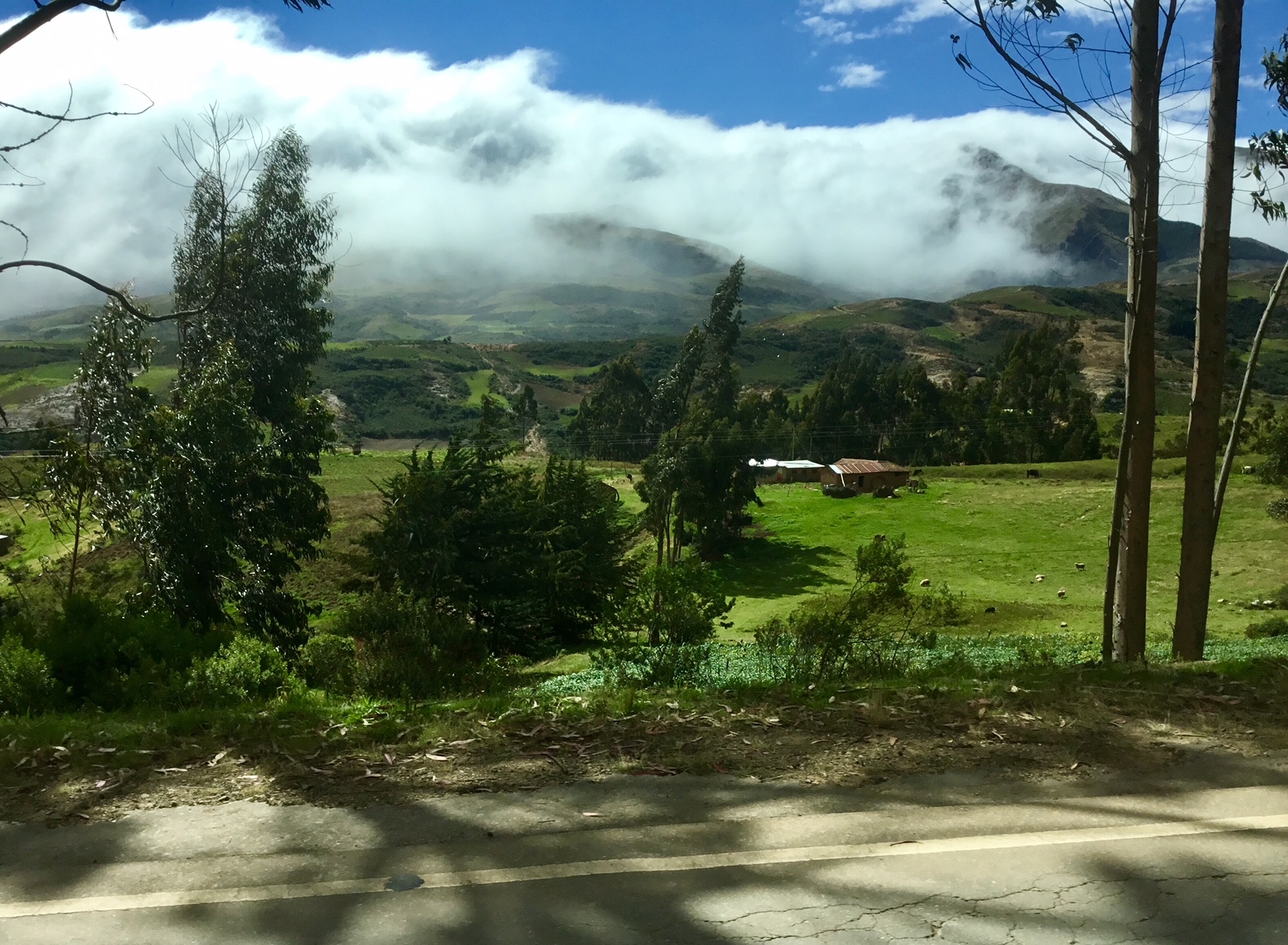
On the road in Bolivia
*an ongoing series of quotations – mostly from artists, to artists – that offers wisdom, inspiration, and advice for the sometimes lonely road we are on.
In nature, light and shadow create ephemeral moments of beauty. To experience the transition from sunset to night we must await and cherish each fleeting moment and not just the finale. We must be attentive to beauty revealing all its moods.
Amy Tan in In Character: Opera Portraiture, John F. Martin, Foreword by Amy Tan, Preface by David Gockley.
Comments are welcome!
Pearls from artists* # 290

“Dichotomy,” soft pastel on sandpaper, 38″ x 58″
*an ongoing series of quotations – mostly from artists, to artists – that offers wisdom, inspiration, and advice for the sometimes lonely road we are on.
Rational functionalism is technique,
Irrational functionalism is art.
Art is creation
It can be based on but is independent of knowledge.
We can study art through nature,
but art is more than nature.
Art is spirit,
and has a life of its own.
Art in its nature is anti-historical
because creative work is looking forward.
It can be connected with tradition
but grows, consciously or unconsciously, out of an artist’s mentality.
Art is neither imitation nor repetition
but art is revelation.
Joseph Albers in Truthfulness in Art in Joseph Albers in Mexico, edited by Lauren Hinkson
Comments are welcome!
Pearls from artists* # 277

Lake Titicaca above Cocacabana, Bolivia
* an ongoing series of quotations – mostly from artists, to artists – that offers wisdom, inspiration, and advice for the sometimes lonely road we are on.
Einstein wrote, “The most beautiful experience we can have is the mysterious. It is the fundamental emotion which stands at the cradle of true art and true science.” What did Einstein mean by “the mysterious?” I don’t think he meant that science is full of unpredictable or unknowable supernatural forces. I believe that he meant a sense of awe, a sense that there are things larger than us, that we do not have all the answers at this moment. A sense that we can stand right at the edge between known and unknown and gaze into that cavern and be exhilarated rather than frightened. Just as Einstein suggested, I have experienced that beautiful mystery both as a physicist and as a novelist. As a physicist, in the infinite mystery of physical nature. As a novelist, in the infinite mystery of human nature and the power of words to portray some of that mystery.
Alan Lightman in A Sense of the Mysterious: Science and the Human Spirit
Comments are welcome!
Pearls from artists* # 273

The Lightning Field
* an ongoing series of quotations – mostly from artists, to artists – that offers wisdom, inspiration, and advice for the sometimes lonely road we are on.
The night sky was clear, too many stars.
Satellites described distinctive arcs, moving too fast for
nature across our broad field of vision.
The desert floor was drenched with rainwater, and our boots
suctioned the mud.
The moon’s shy face revealed only a sliver, but the starlight
was strong enough for the poles to pick up its silver.
We watched time, light, and distance compress over The
Lightning Field.
The dome of the sky was palpable,
papered in stars.
How long ago did the light that reflected in the poles leave
its source?
Laura Raicovich in At The Lightning Field
Comments are welcome!
Pearls from artists* # 258
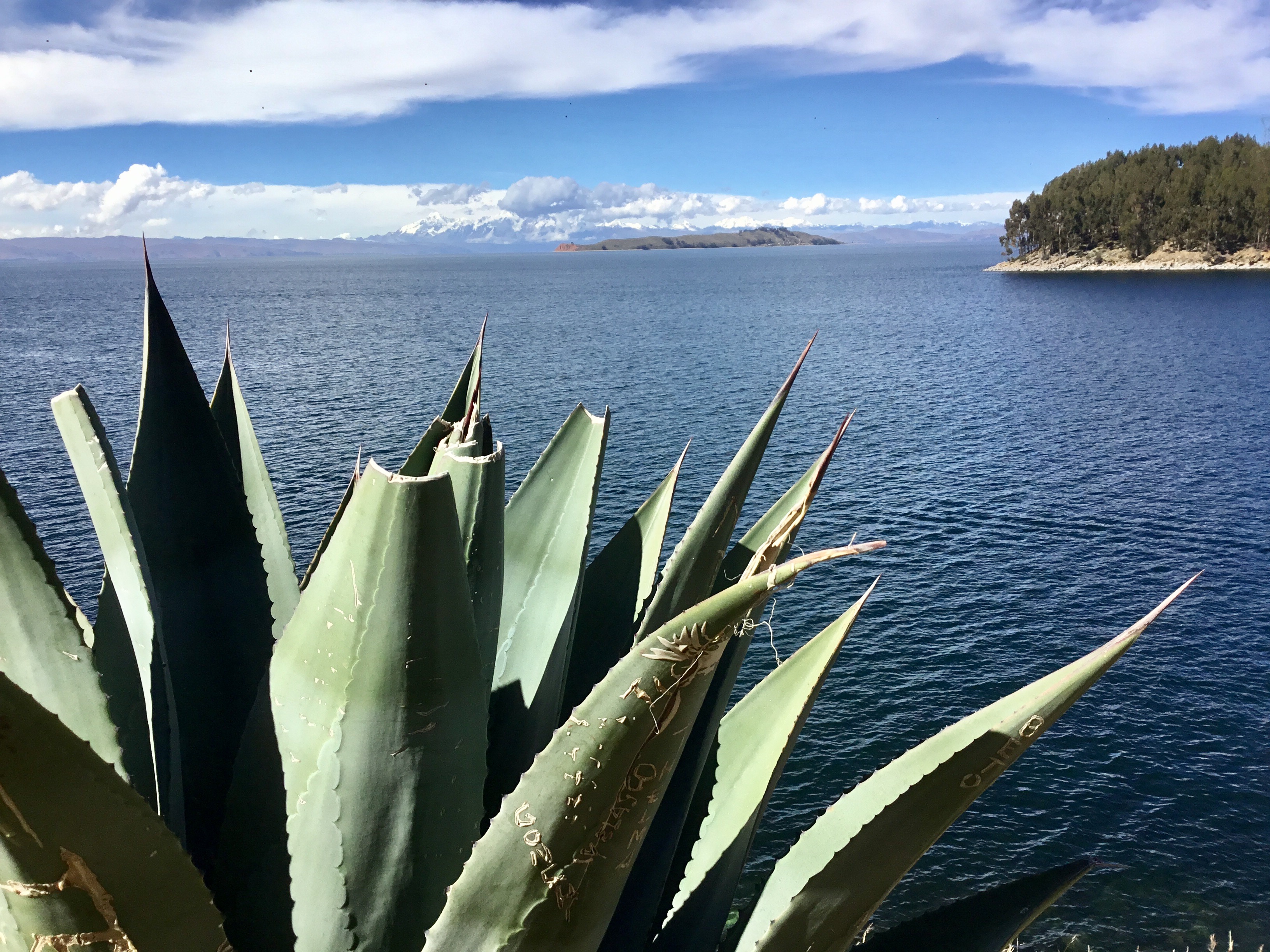
Isla del Sol in Bolivia
* an ongoing series of quotations – mostly from artists, to artists – that offers wisdom, inspiration, and advice for the sometimes lonely road we are on.
Does this imply that ‘beauty is in the eye of the beholder,’ that there is no objective property that we recognize and about whose nature and value we can agree? My answer is simply this: everything I have said about the experience of beauty implies that it is rationally founded. It challenges us to find meaning in its object, to make critical comparisons, and to examine our own lives and emotions in the light of what we find. Art, nature, and the human form all invite us to place this experience in the center of our lives. If we do so, then it offers a place of refreshment of which we will never tire. But to imagine that we can do this, and still be free to see beauty as nothing more than a subjective preference or a source of transient pleasure, is to misunderstand the depth to which reason and value penetrate our lives. It is to fail to see that, for a free being, there is right feeling, right experience and right enjoyment just as much as right action. The judgment of beauty orders the emotions and desires of those who make it. It may express their pleasure and their taste: but it is pleasure in what they value and taste for their true ideals.
Roger Scruton in Beauty: A Very Short Introduction
Comments are welcome!
Pearls from artists* # 244
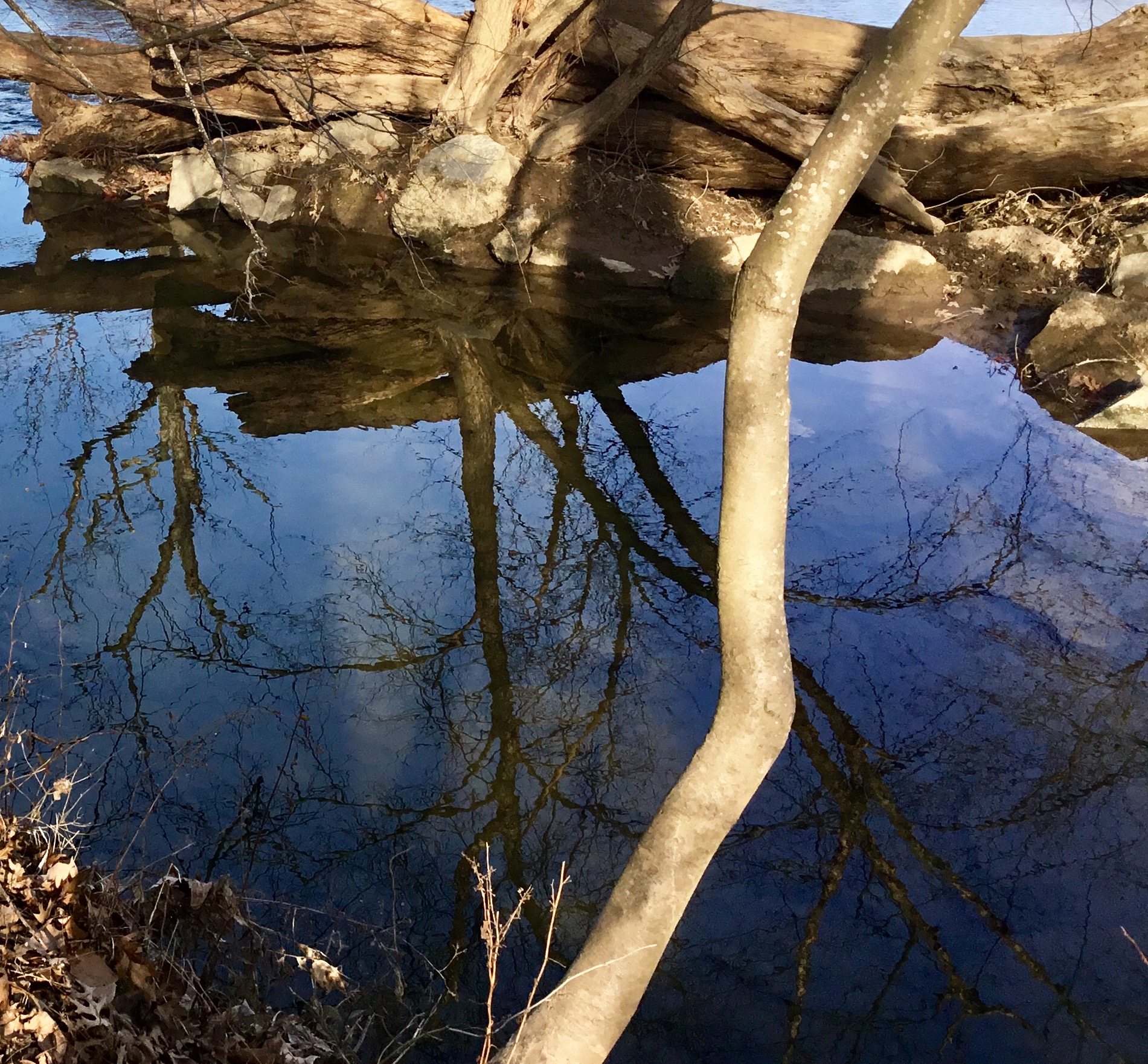
Great Falls, VA
* an ongoing series of quotations – mostly from artists, to artists – that offers wisdom, inspiration, and advice for the sometimes lonely road we are on.
Poet or painter, musician or architect, all solitary individuals at bottom turn to nature because they prefer the eternal to the transient, the profound rhythms of eternal laws to that which finds justification in passing. Since they cannot persuade nature to share in their experience they consider their task to grasp nature in order to place themselves somewhere in its vast contexts. And with these single solitary individuals all of humanity approaches nature. It is not the ultimate and possibly most peculiar value of art that it constitutes the medium in which man and landscape, figure and world encounter and find each other. But in the painting, the building, the symphony – in a word, in art itself, they seem to join together as if in a higher, prophetic truth, to rely on one another, and it is as if they completed each other to become that perfect unity that characterizes the work of art.
The Poet’s Guide to Life: The Wisdom of Rilke, edited and translated by Ulrich Baer
Comments are welcome!
Pearls from artists* # 238

Self-portrait with “Blue Misterioso”
* an ongoing series of quotations – mostly from artists, to artists – that offers wisdom, inspiration, and advice for the sometimes lonely road we are on.
Form is certainty. All nature knows this, and we have no greater advisor. Clouds have forms, porous and shape-shifting, bumptious, fleecy. They are what clouds need to be, to be clouds. See a flock of them come, on the sled of the wind, all kneeling above the blue sea. And in the blue water, see the dolphin built to leap, the sea mouse skittering; see the ropy kelp with its air-filled bladders tugging it upward; see the albatross floating day after day on its three-jointed wings. Each form sets a tone, enables a destiny, strikes a note in the universe unlike any other. How can we ever stop looking? How can we ever turn away?
Mary Oliver in Upstream: Selected Essays
Comments are welcome!
Pearls from artists* # 173
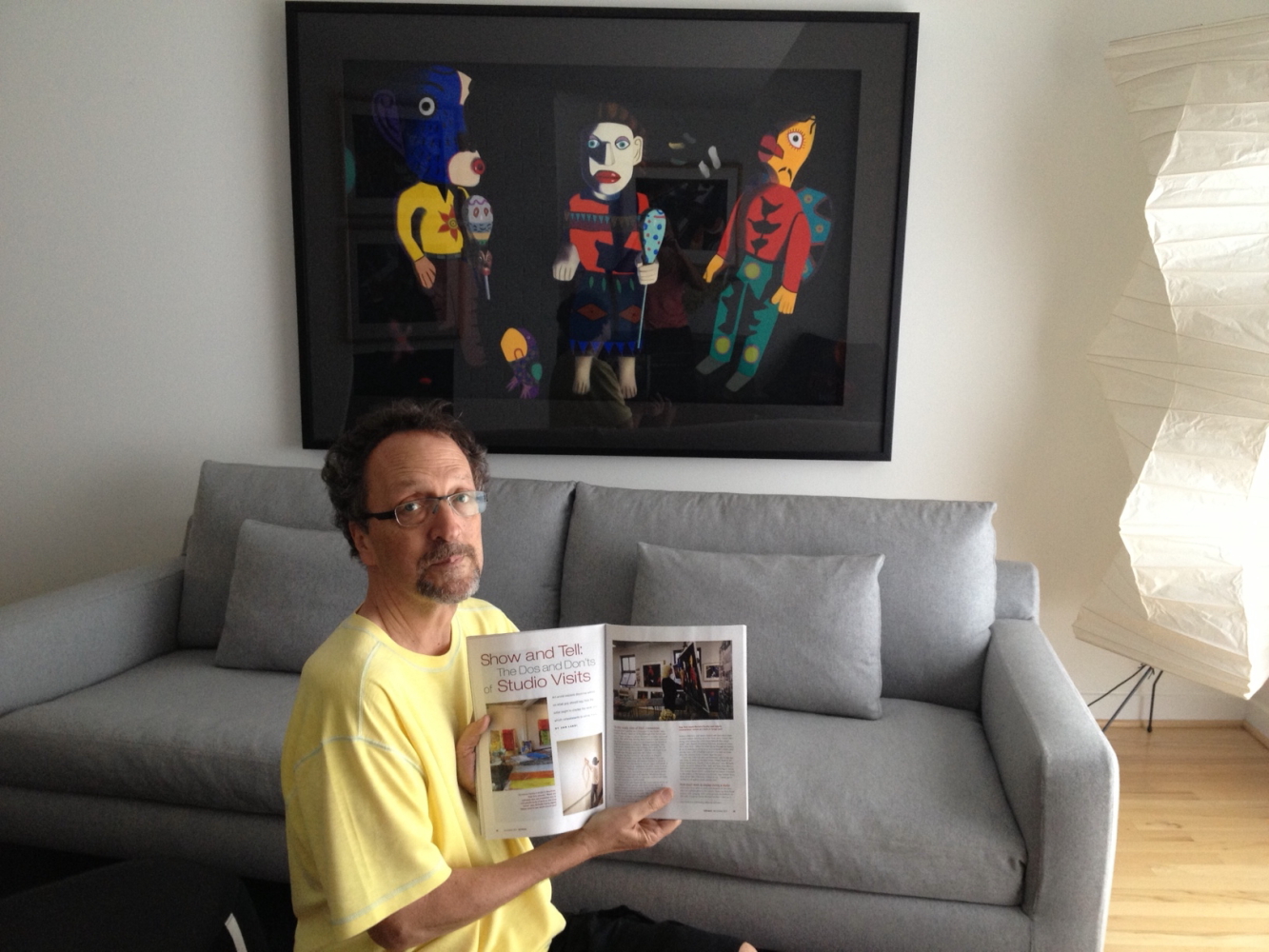
Collector, “False Friends,” and ARTNews article that shows the painting in progress
* an ongoing series of quotations – mostly from artists, to artists – that offers wisdom, inspiration, and advice for the sometimes lonely road we are on.
Artists, by nature, are gamblers. Gambling is a dangerous habit. But whenever you make art, you’re always gambling. You’re rolling the dice on the slim odds that your investment of time, energy, and resources now might pay off later in a big way – that somebody might buy your work, and that you might become successful.
Elizabeth Gilbert in Big Magic: Creative Living Beyond Fear
Comments are welcome!
Pearls from artists* # 165
“The Space Between,” soft pastel on sandpaper, 58″ x 38″
* an ongoing series of quotations – mostly from artists, to artists – that offers wisdom, inspiration, and advice for the sometimes lonely road we are on.
When I have painted a fine picture I have not given expression to a thought! That is what they say. What fools people are! They would strip painting of all its advantages. A writer has to say almost everything in order to make himself understood, but in painting it is as if some mysterious bridge were set up between the spirit of the persons in the picture and the beholder. The beholder sees figures, the external appearance of nature, but inwardly he meditates; the true thinking that is common to all men. Some give substance to it in writing, but in so doing they lose the subtle essence. Hence, grosser minds are more easily moved by writers than by painters or musicians. The art of the painter is all the nearer to man’s heart because it seems to be more material. In painting, as in external nature, proper justice is done to what is finite and to what is infinite, in other words, to what the soul finds inwardly moving in objects that are known through the senses alone.
The Journal of Eugene Delacroix edited by Hubert Wellington
Comments are welcome!


 barbararachkoscoloreddust.com