Blog Archives
Pearls from artists* # 658

Barbara’s Studio
*an ongoing series of quotations – mostly from artists, to artists – that offers wisdom, inspiration, and advice for the sometimes lonely road we are on.
A civilized society needs not only doctors, lawyers, and teachers but also artists, craftspeople, and other creatives to make our earthly existence compelling, thoughtful, and vibrant. Most people work to buy a bigger house, a newer car, or better vacations for themselves and their families. Artists devote their lives to making our world a more beautiful, truthful, and equitable place for everyone. They put their labor in service of those they might never see, for rewards that are never guaranteed. To my mind, this is a magnanimous pursuit… and about as unselfish as you can get.
Kate Kretz in Art From Your Core: A Holistic Guide to Visual Voice
Comments are welcome!
Pearls from artists* # 562

“Shadow,” soft pastel on sandpaper, 26” x 20,” in progress
*an ongoing series of quotations – mostly from artists, to artists – that offers wisdom, inspiration, and advice for the sometimes lonely road we are on.
Jung observed that complexes could affect groups of people en masse. He saw that certain moments seemed to be expressions of a collective shadow, a bursting forth of a mass psychosis; the repressed side of a whole group coming alive; a tribal Mr. Hyde. He saw this madness first-hand in Germany in the 1930s and wrote about it. But every era carries some measure of collective shadow.
One could argue that no moment in time has seen more of the reality of human darkness than ours. Having witnessed the Holocaust and faced the threat of nuclear war in the twentieth century, and now facing the environmental impact of fossil fuels and plastics in the twenty-first century, we are undoubtedly aware of more of humanity’s potential for destruction than any of our ancestors ever were. Such a view does not come from a moralizing stance. Our era has made forced witnesses of us all.
The shadow is about where we put the Devil – where do we allow darkness to be housed? Racism and bigotry offer the relief of foisting our group’s shadow onto another whom we view as lesser. Doing so enables us not to look at or feel our shadow, and not see our own worst selves. But this collective shadow of our modern culture is also bigger and wider than group-to-group projections. There are culture-wide or civilization expressions of the collective shadow.
Jung saw the widespread loss of connection to the inner life and to a lived spirituality as one of the primary illnesses of our time. He observed that people were no longer animated by the traditional religions… For Jung, this meant that we’ve lost the old way but not yet found the new, and are sitting in a spiritual vacuum.
Into that vacuum, without our awareness, has slipped our fascination with human technology. Observe people closely today and you’ll notice that we have an almost magical faith in our devices. People see their computers and phones as all-knowing and expect them to function perfectly all the time, and view pharmaceuticals as magic cure-alls. Where we used to put God, we now have put technology. Where spirit was, we have unconsciously placed human genius.
Gary Bobroff in Carl Jung: Knowledge in a Nutshell
Comments are welcome!
Pearls from artists* # 548
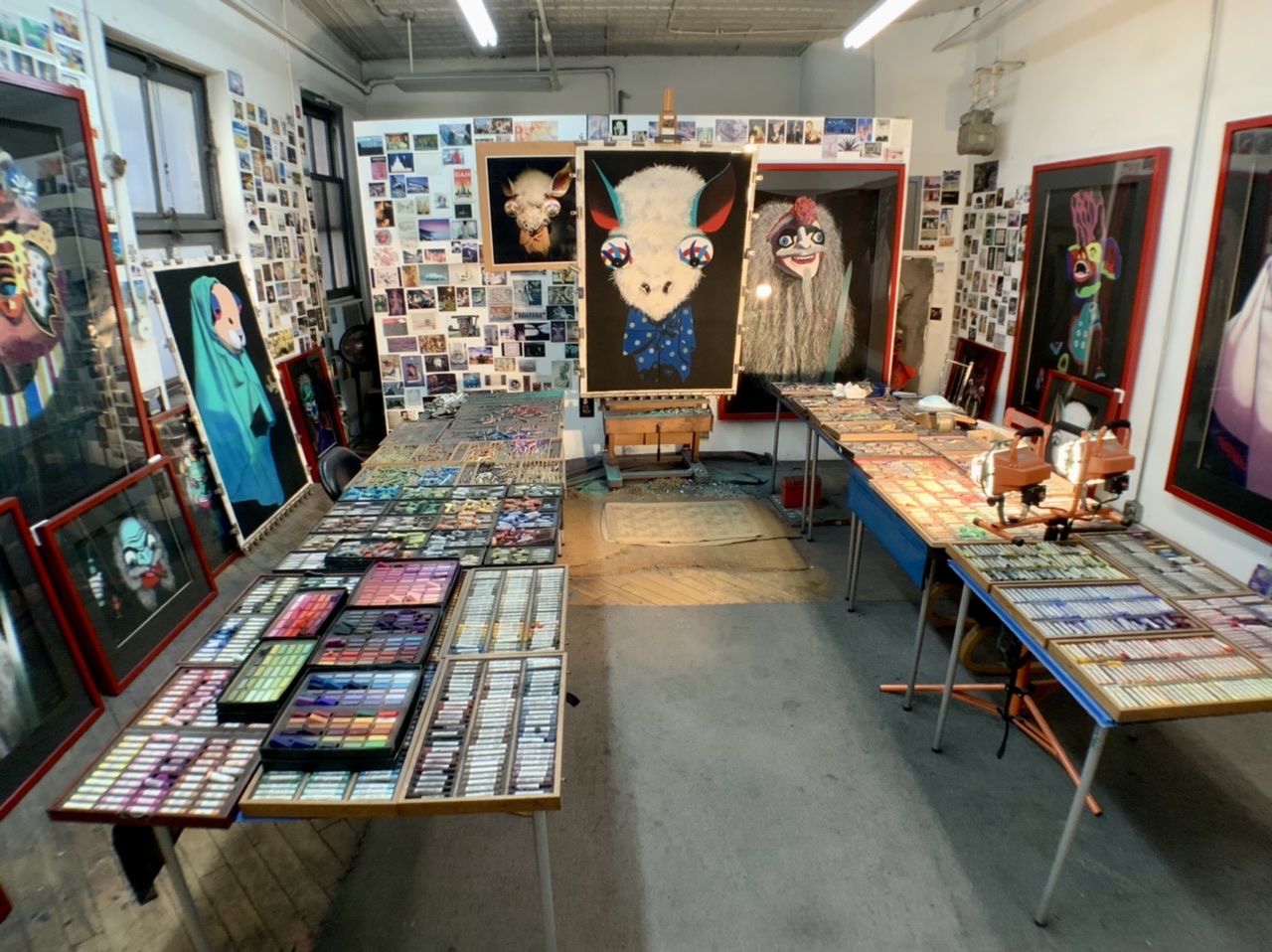
*an ongoing series of quotations – mostly from artists, to artists – that offers wisdom, inspiration, and advice for the sometimes lonely road we are on.
We who work in the arts are at risk of being in a popularity contest rather than a profession. If that fact causes you despair, you should probably pick another profession. Your desire to communicate must be bigger than your relationship to these chaotic and unfair realities. Ideally, we must be even more ‘professional’ than lawyers, doctors, accountants, hairdressers. We have to create our own standards of discipline.
All of the successful artists I know are very disciplined and very organized. Even if they don’t look organized, they have their own order.
Anna Deavere Smith in Letters to a Young Artist: Straight Up Advice on Making a Life in the Arts – for Actors, Performers, Writers, and Artists of Every Kind
Comments are welcome!
Pearls from artists* # 501

* an ongoing series of quotations – mostly from artists, to artists – that offers wisdom, inspiration, and advice for the sometimes lonely road we are on.
When I talk about “creative living” here, please understand that I am not necessarily talking about pursuing a life that is professionally or exclusively devoted to the arts. I’m not saying that you must become a poet who lives on a mountaintop in Greece, or that you must perform at Carnegie Hall, or that you must win the Palme d’Or at the Cannes Film Festival. (Though if you want to attempt any of these feats, have at it. I love to watch people swing for the bleachers.) No, when I refer to “creative living,” I am speaking more broadly. I’m talking about living a life that is driven more strongly by curiosity than by fear.
... A creative life is an amplified life. It’s a bigger life, a happier life, an expanded life, and a hell of a lot more interesting life. Living in this manner – continually and stubbornly bringing forth the jewels that are hidden within you – is a fine art, in and of itself.
Elizabeth Gilbert in Big Magic: Creative Living Beyond Fear
Comments are welcome!
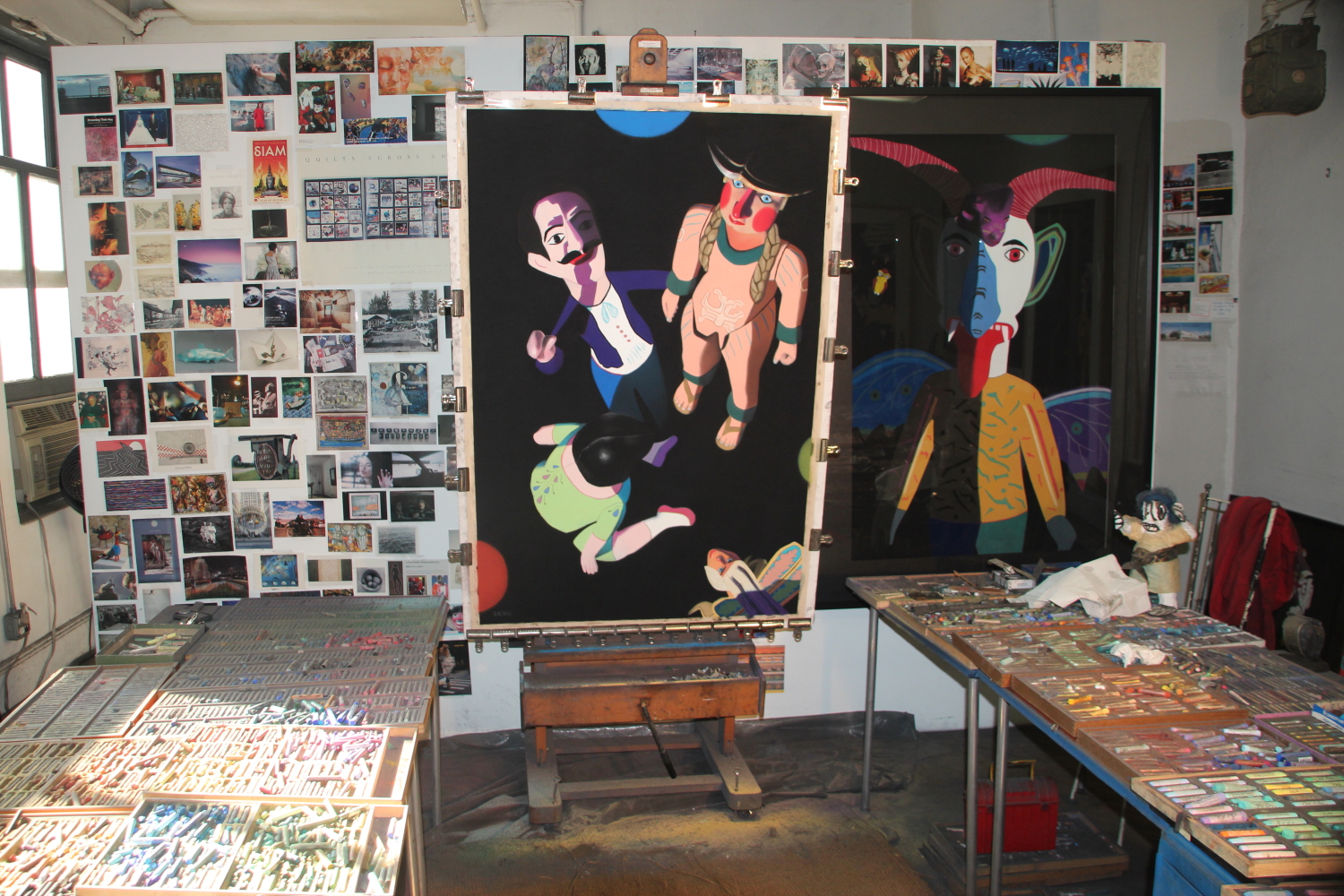
Q: What’s on the easel today?


A: I just started a large 58″ x 38″ pastel painting based on the same reference photograph I used for “Shamanic,” 26″ x 20.” Sometimes ideas for new projects arrive in prosaic ways. I saw a mockup of “Shamanic” on my New Delhi gallery’s Instagram page. The mockup depicted my pastel painting as considerably larger than it actually is. I became intrigued with this unexpected format and decided to create a new one in a larger size.
For now I have turned Shamanic” to the wall so that it does not inadvertently influence my color choices. The two pastel paintings are already looking quite different.
Comments are welcome!
Pearls from artists* # 78
Barbara’s studio
* an ongoing series of quotations – mostly from artists, to artists – that offers wisdom, inspiration, and advice for the sometimes lonely road we are on.
To me, openings are never what you want them to be. The excitement, relief, anxiety, and anticipation are too much to process. There’s no apotheosis, no pinnacle, no turning point. It’s not like theater, where at the end of a performance people get up and applaud.
Nothing gets created at an opening. Nothing of artistic merit takes place. All of that important stuff happens in the studio, long before the exhibition, when you’re alone. For me, anyway, openings are something to get through, an ordeal to be endured. The bigger the event, the less I remember it. I pretty much walk in, and wherever I stop is where I stay. I paint a grin on my face so fixed that by the end of the evening my jaw is sore. I remember none of the conversations. I stand there shaking hands, blindly mouthing, “Thank you. Thank you very much.” Then eventually April [Gornick, Fischl’s wife] collects me and we leave.
If, on the other hand, you were to ask me what I remember about making the paintings in a show, that’s a different story. Imagine touching something, stroking it, jostling it, caressing it, and as you’re doing this, you are creating it. How you touched it is how it came into existence. Unlike other pleasures, where the feelings fade quickly as details become blurred, with paintings you remember everything. Within the details are all the bumps and the friction, the memory of when the creative instinct flowed, when you were distracted or lazy or working too hard. It’s all there on the canvas. When I look at my paintings again, years later, even, I remember it all – the victory laps and the scars.
Eric Fischl and Michael Stone in Bad Boy: My Life On and Off the Canvas
Comments are welcome!


 barbararachkoscoloreddust.com