Category Archives: Travel
Q: How much of your work is autobiographical?

“The Champ,” soft pastel on sandpaper, 26″ x 20″
A: I suppose all of it is, in the sense that often I can look at a particular pastel painting and remember what was happening in my life when I made it. As I get older, however, it’s becoming more difficult to remember the circumstances surrounding my earliest work. Certainly, the cultures of an ever-expanding number of countries – Bolivia last year – are influencing my imagery for the better.
Comments are welcome!
Travel photo of the month*
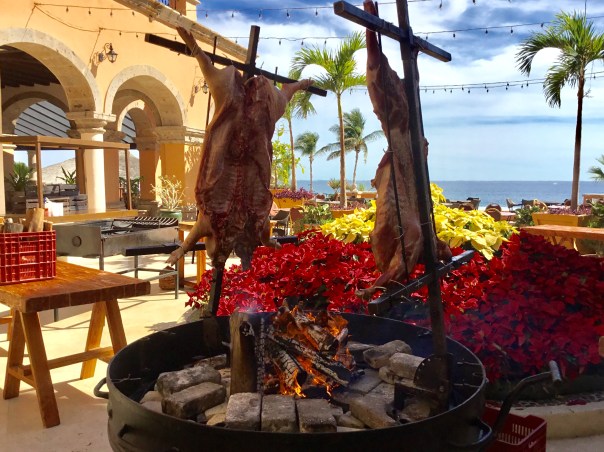
New Year’s Eve in Los Cabos, Mexico
*Favorite travel photographs that have not yet appeared in this blog.
Comments are welcome!
Travel photo of the month*
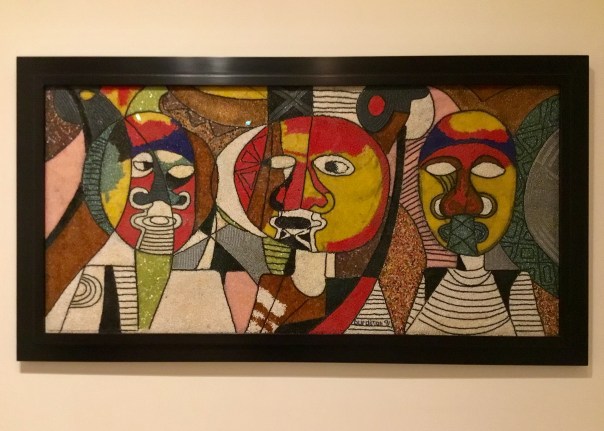
“The Three Wise Men,” Jimoh Buraimoh, Glass beads, plastic cylinders, cotton, epoxy, plywood, 1991
* Favorite travel and other photographs that have not yet appeared in this blog.
A: I saw this painting at the Baltimore Museum of Art and was intrigued by the intracacy and textures of the beads, cylinders, and other items used by Jimoh Buraimoh, a Nigerian modernist. The figures are his portrayal of the three men who traveled to England in 1960 to negotiate Nigeria’s independence. Buraimoh honors the nation’s founders with materials that glorify Yoruba heritage and artistic traditions. His title also associates the men with the three wise men of the Bible. I enjoy this work very much and couldn’t help being reminded of imagery by Picasso.
Comments are welcome!
Travel photo of the month*
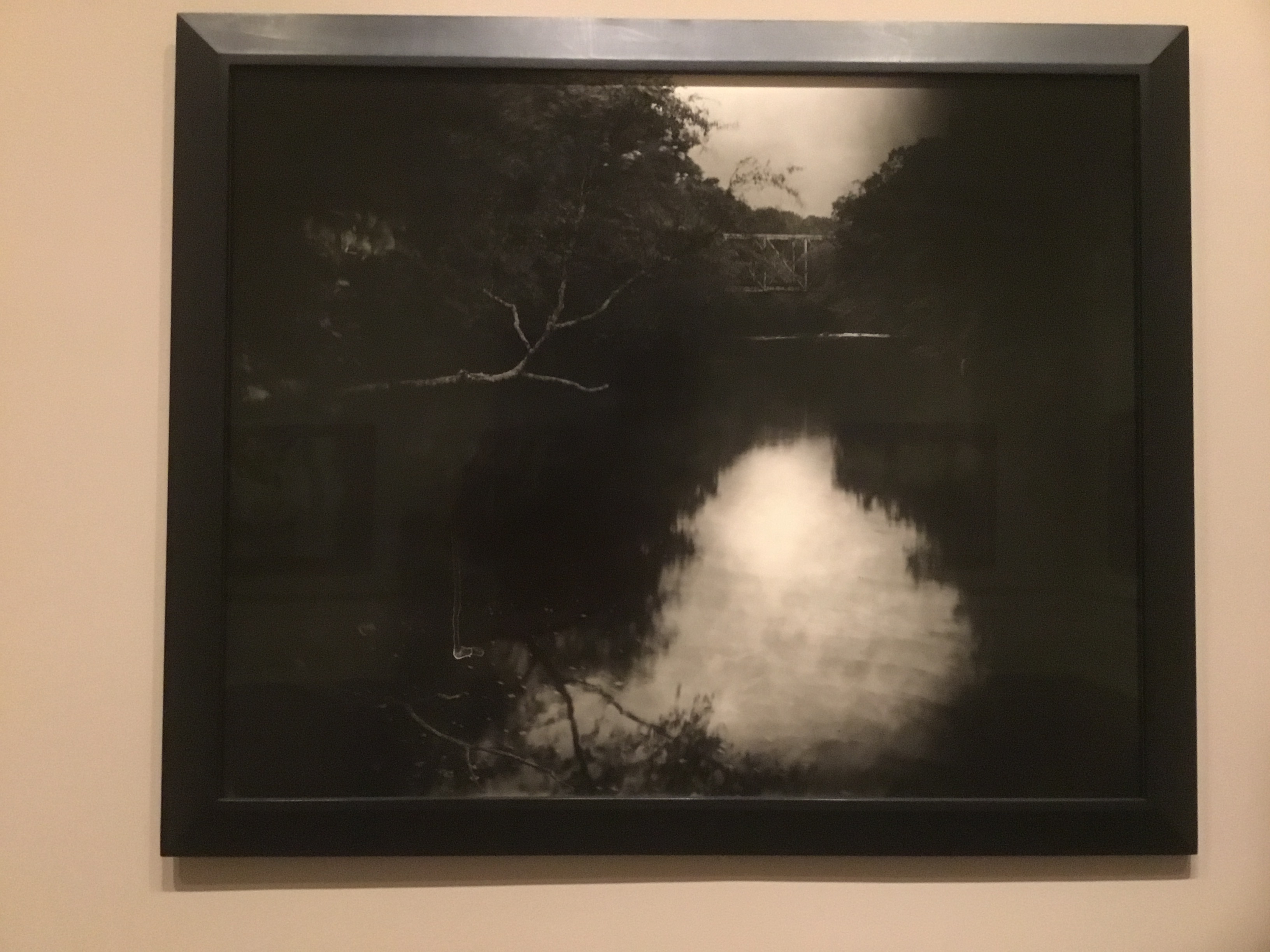
Deep South, Untitled (Bridge on Tallahatchie) by Sally Mann
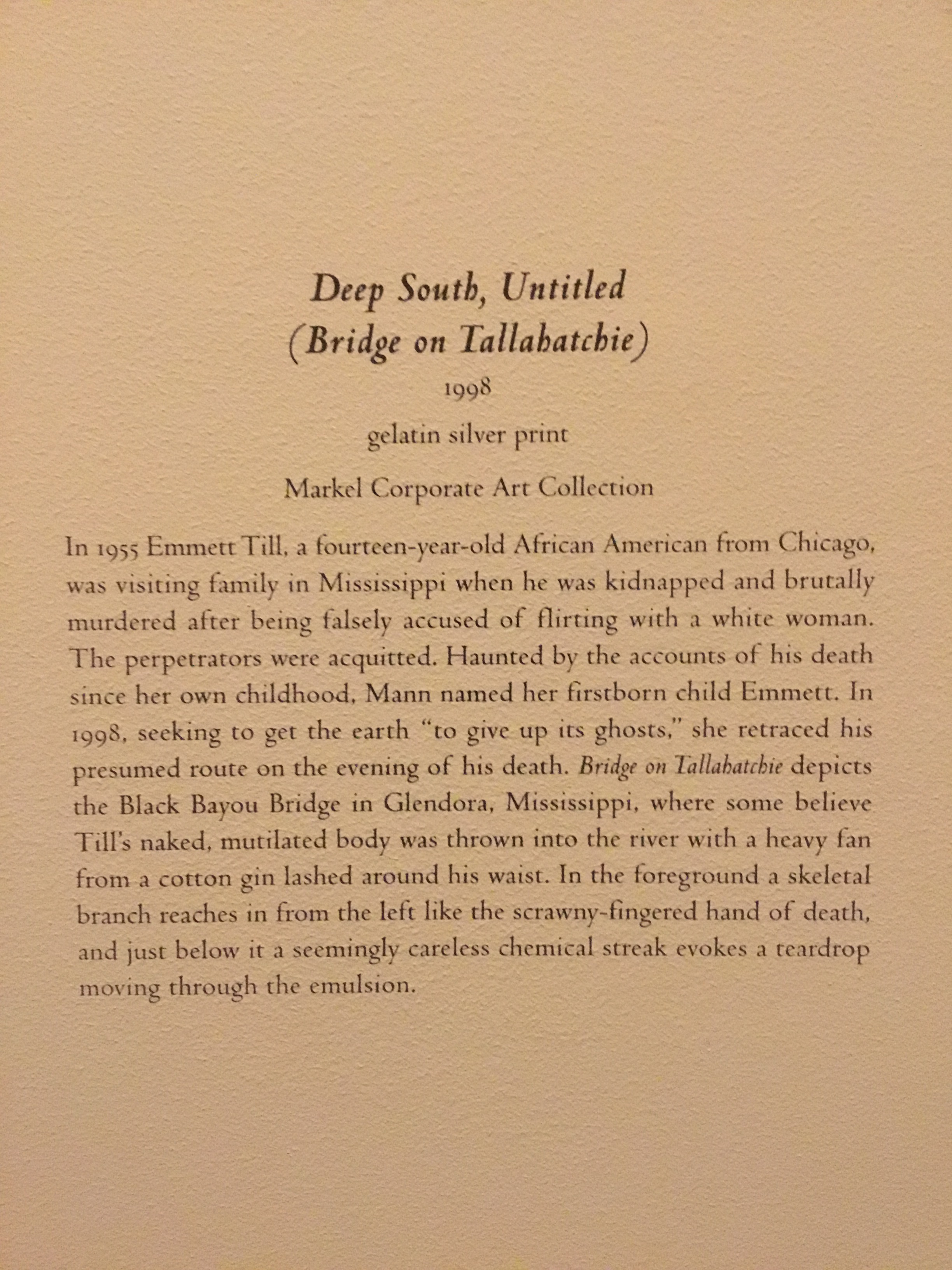
From “Sally Mann: A Thousand Crossings” at the National Gallery of Art
*Favorite travel photographs that have not yet appeared in this blog.
Comments are welcome!
Q: Please speak about how the three pastel paintings series that you have created interrelate.

“The Orator,” soft pastel on sandpaper, 38″ x 58″
A: The Black Paintings series of pastel-on-sandpaper paintings grew directly from an earlier series, Domestic Threats. While both use cultural objects as surrogates for human beings acting in mysterious, highly-charged narratives, in the Black Paintings I replaced all background details of my actual setup (furniture, rugs, etc.) with lush black pastel. In this work the ‘actors’ are front and center.
While traveling in Bolivia last spring, I visited a mask exhibition at the National Museum of Ethnography and Folklore in La Paz. The masks were presented against black walls, were spot-lit, and looked eerily like 3D versions of my Black Paintings. I immediately knew I had stumbled upon a gift. So far I have completed three pastel paintings in the Bolivianos series. Two more are in progress now.
All of my pastel paintings are an example of a style called “contemporary conceptual realism” in which things are not quite as innocent as they seem. Each painting is a Trojan horse. There is plenty of backstory to my images, although I usually prefer not to over-explain them. Much is to be said for mystery in art.
The world I depict is that of the imagination and this realm owes little debt to the natural world. Recently, at an art talk I was reminded how fascinating it is to learn how others respond to my work. As New York art critic Gerrit Henry once remarked, “What we bring to a Rachko… we get back, bountifully.”
Comments are welcome!
Travel photo of the month*
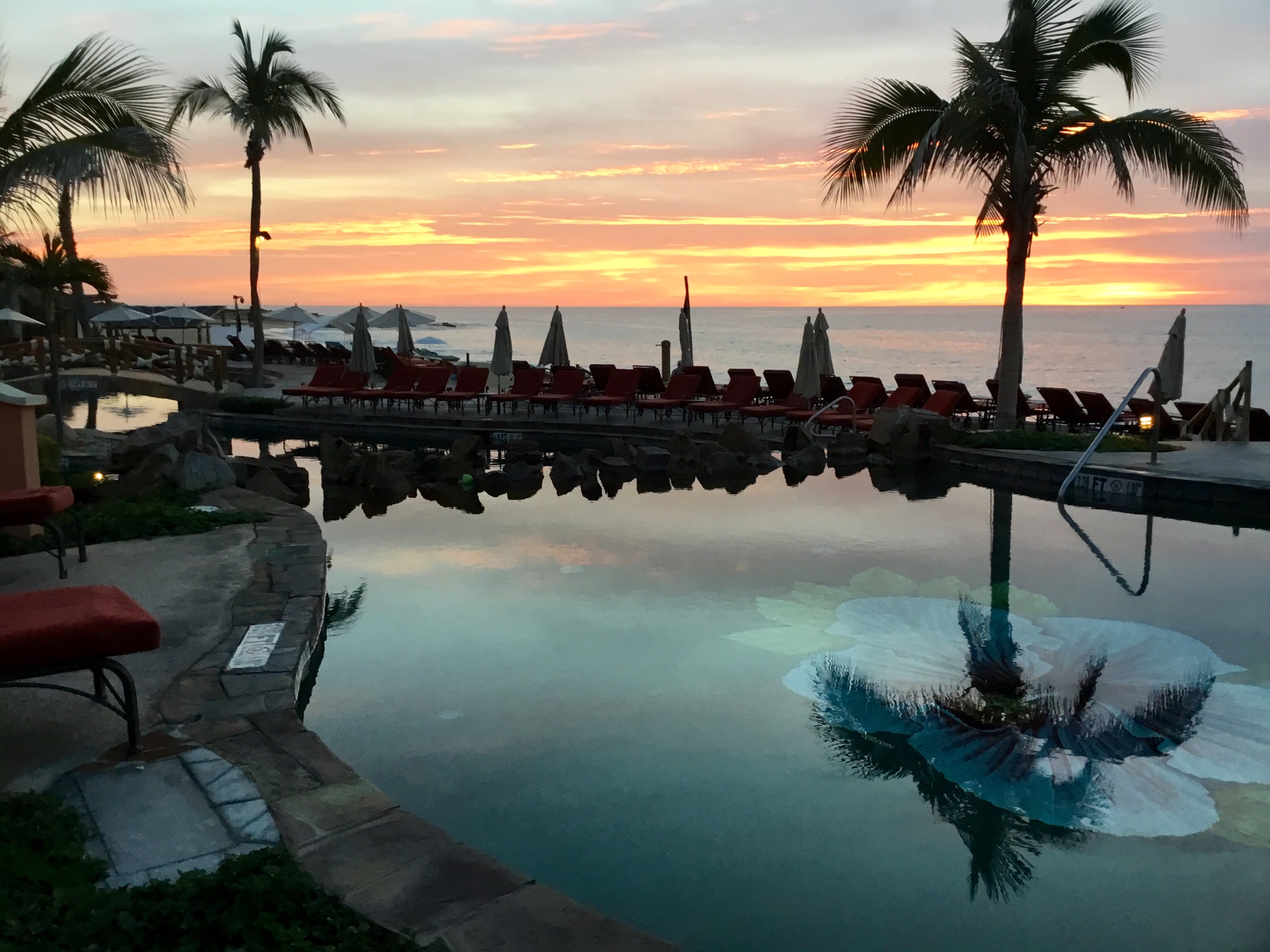
Morning in Los Cabos, Mexico
*Favorite travel photographs that have not yet appeared in this blog.
Comments are welcome!
Travel photo of the month*
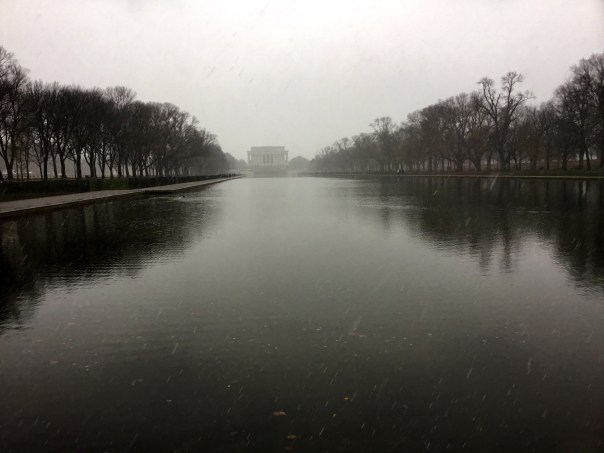
First snow of the season, Washington, DC
*Favorite travel photographs that have not yet appeared in this blog.
Comments are welcome!
Pearls from artists* # 273

The Lightning Field
* an ongoing series of quotations – mostly from artists, to artists – that offers wisdom, inspiration, and advice for the sometimes lonely road we are on.
The night sky was clear, too many stars.
Satellites described distinctive arcs, moving too fast for
nature across our broad field of vision.
The desert floor was drenched with rainwater, and our boots
suctioned the mud.
The moon’s shy face revealed only a sliver, but the starlight
was strong enough for the poles to pick up its silver.
We watched time, light, and distance compress over The
Lightning Field.
The dome of the sky was palpable,
papered in stars.
How long ago did the light that reflected in the poles leave
its source?
Laura Raicovich in At The Lightning Field
Comments are welcome!
Q: Would you elaborate as to how your recent trip to Bolivia is influencing your work just now?
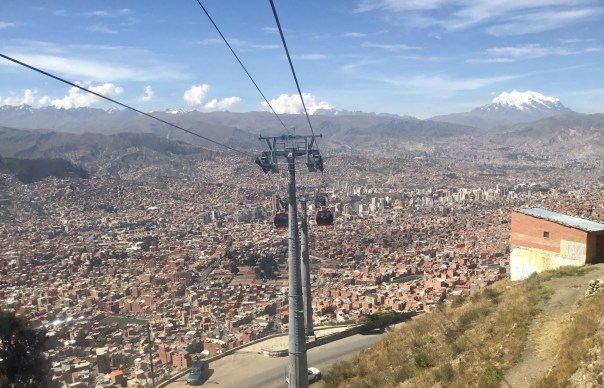
La Paz, Bolivia
A: I consider myself extremely fortunate to have seen a mask exhibition at the National Museum of Ethnography and Folklore when I visited La Paz in May. Presented as they were against black walls with dramatic spot-lighting, the masks looked exactly like 3D versions of my paintings! These old Bolivian masks were stunning.
I spent a long time there composing photographs on my iPad. Immediately I knew this exhibition was a gift because I now had material to keep me busy in the studio for several years.
I have completed the first pastel painting in my new series, “Bolivianos,” and am far along into the second. I’m looking forward to many more to come!
Comments are welcome!
Q: What non-art book are you reading now?
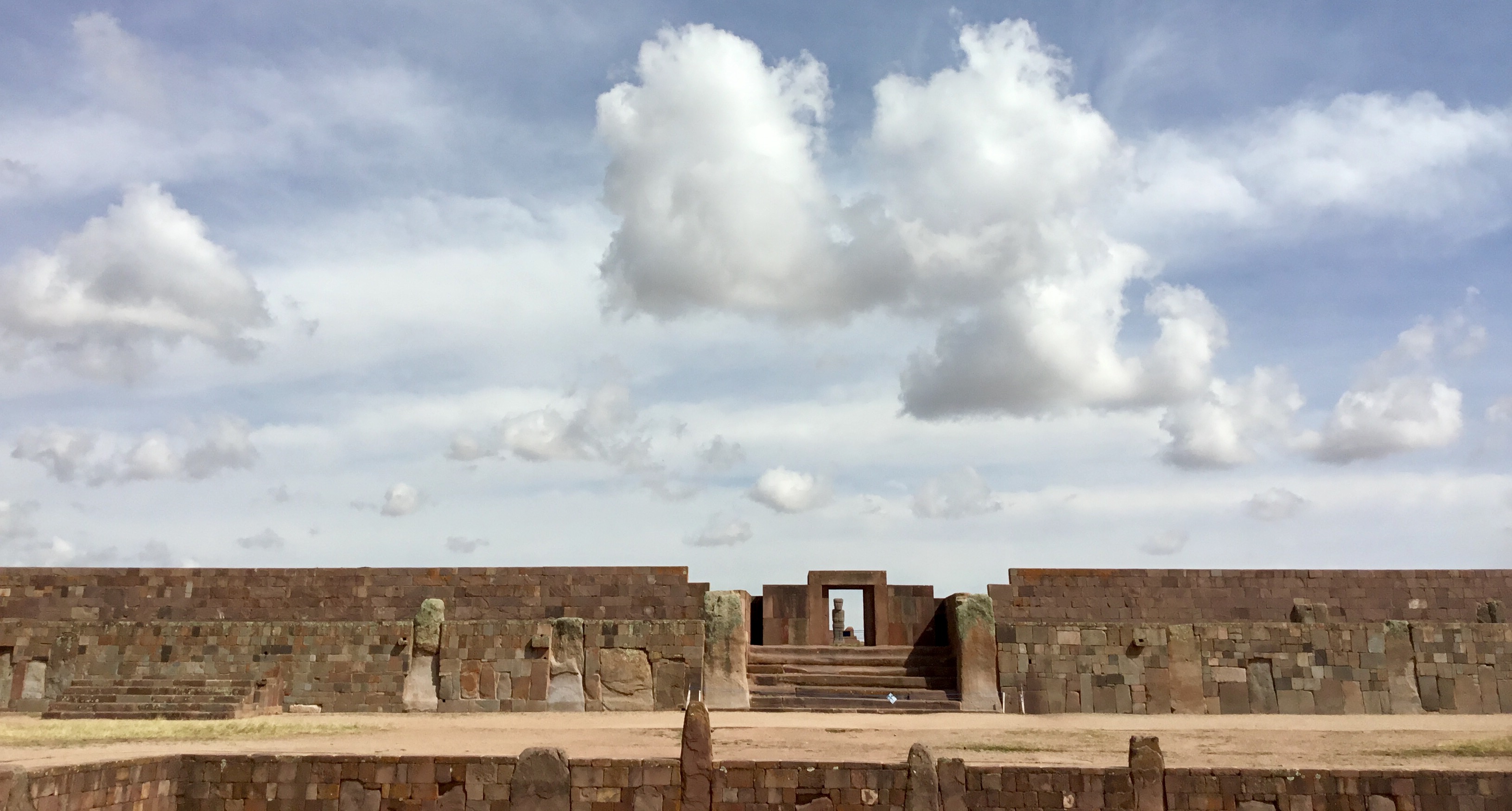
Tiwanaku
A: I am reading Kim Mac Quarrie’s, “The Last Days of the Incas.” It’s fascinating to discover the intricacies of the epic conquest of the short-lived Inca empire. The book is actually thrilling to read. Mac Quarrie makes this story come alive.
Last summer I traveled to Peru to investigate the history of the Incas and the civilizations that preceded them. In May of this year I continued my studies with a trip to Bolivia. Both trips are proving to be highly inspirational for my art practice.
Comments are welcome!



