Category Archives: Studio
Top Facebook posts for 2019
December was a busy month! Here are the most-liked 2019 posts – all dated December – from my Facebook fan page. Please join a worldwide audience of 48,000 people who follow my work at https://facebook.com/BarbaraRachko. Thank you for your support!
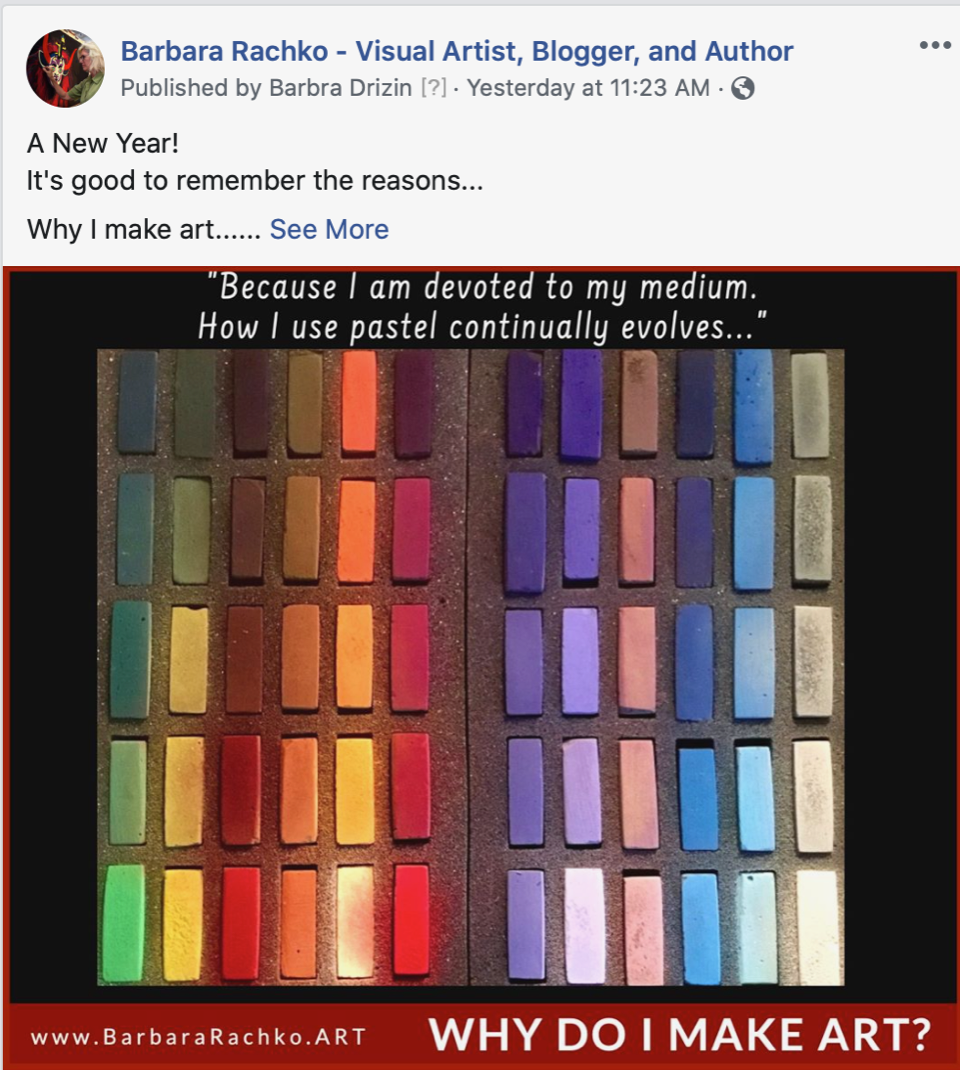
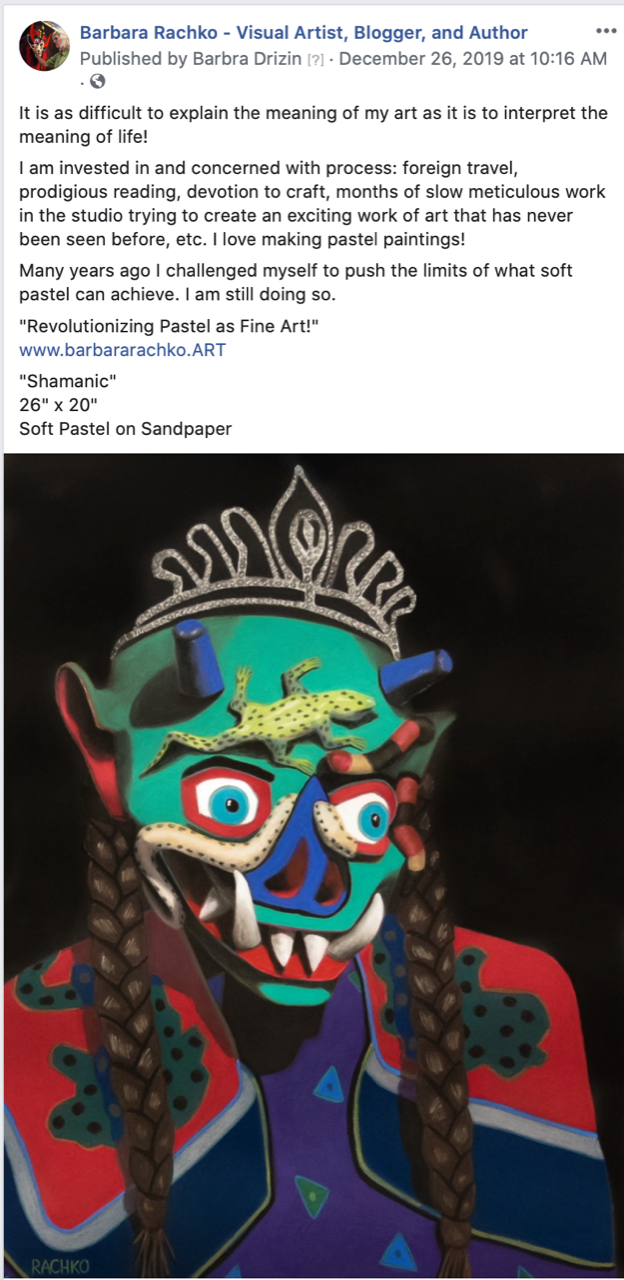
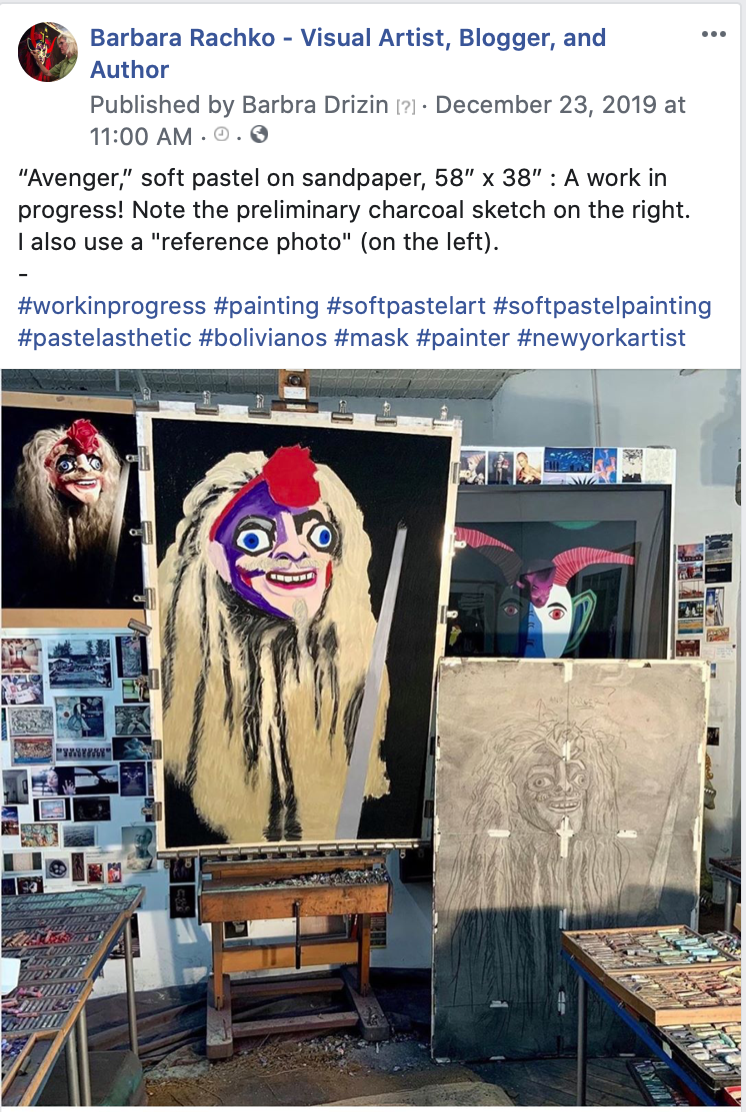
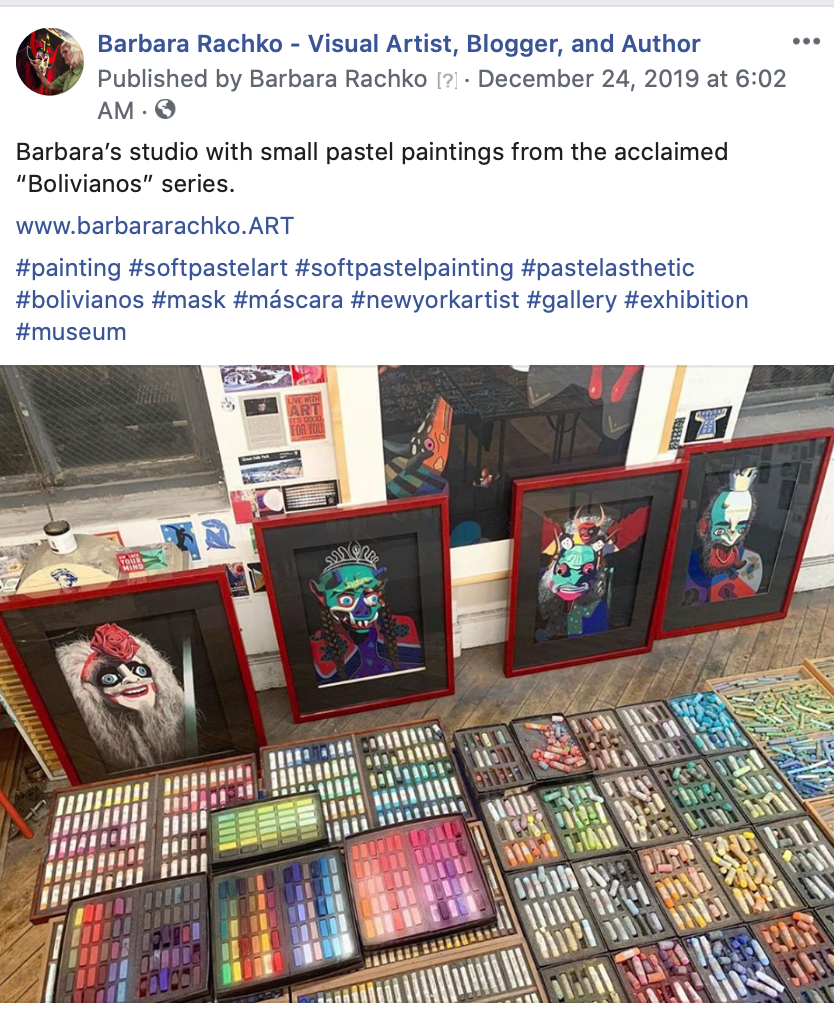
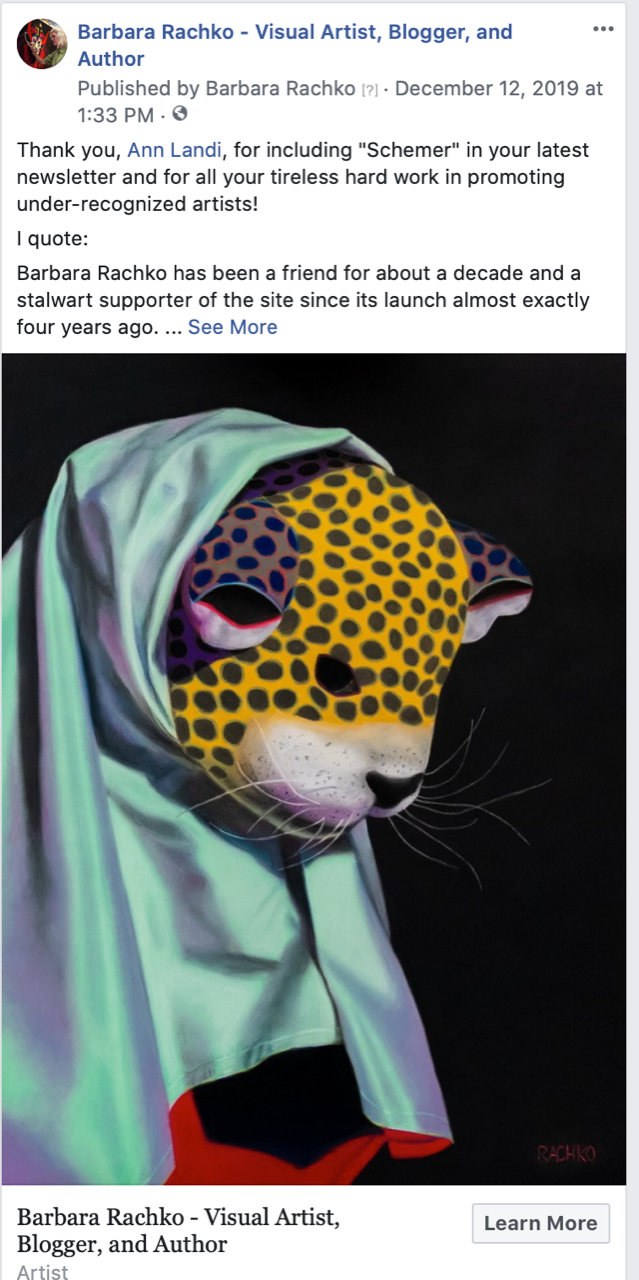
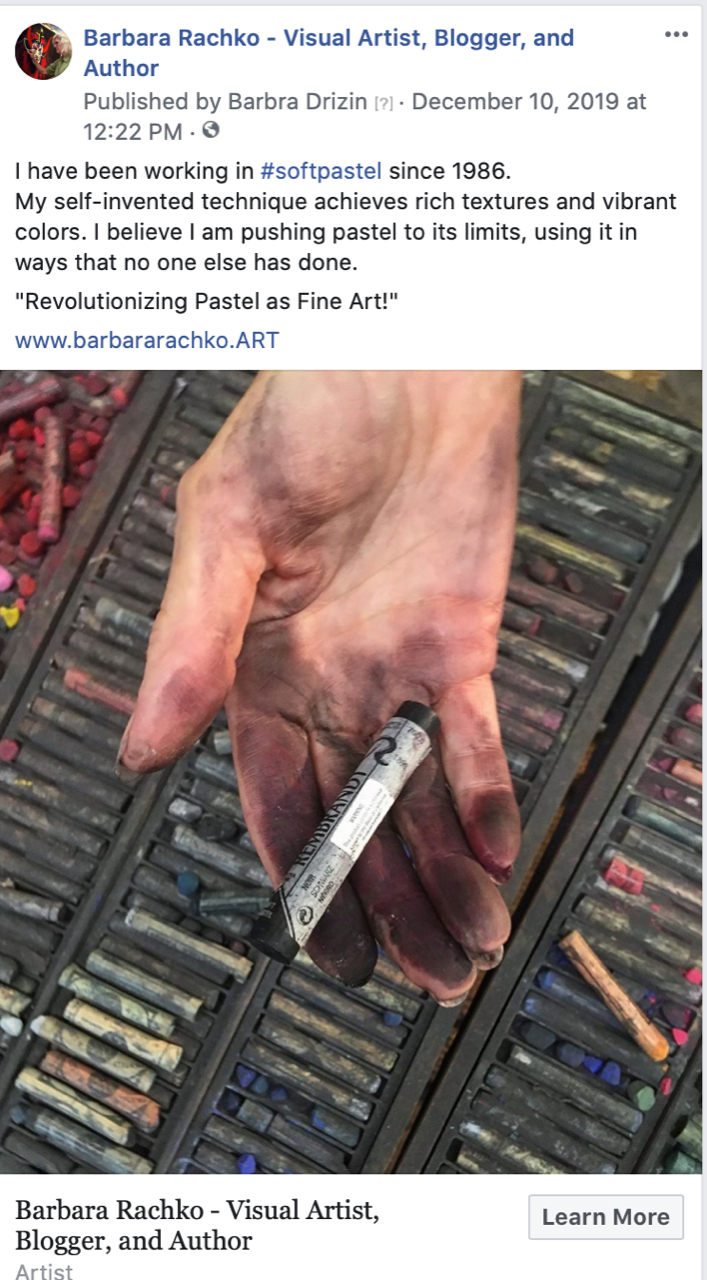
Comments are welcome!
Top Instagram Posts for 2019
New Year’s Day is almost here so I decided to depart from the usual. Here are my most popular images posted on Instagram in 2019.
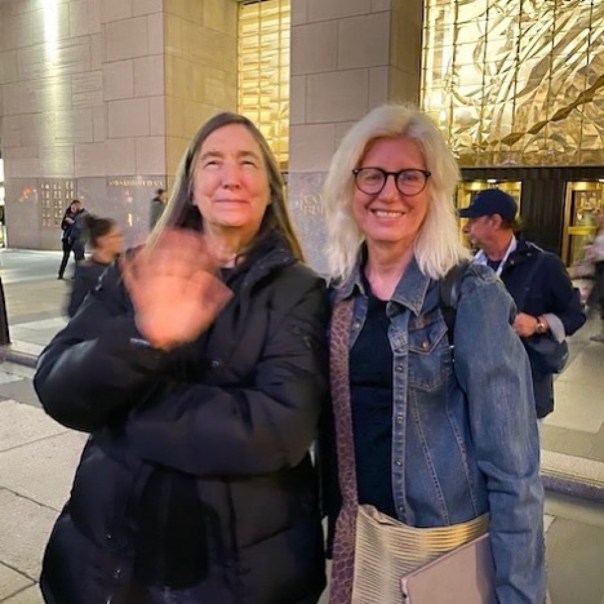
With Jenny Holzer – she’s waiving hello – at Rockefeller Center
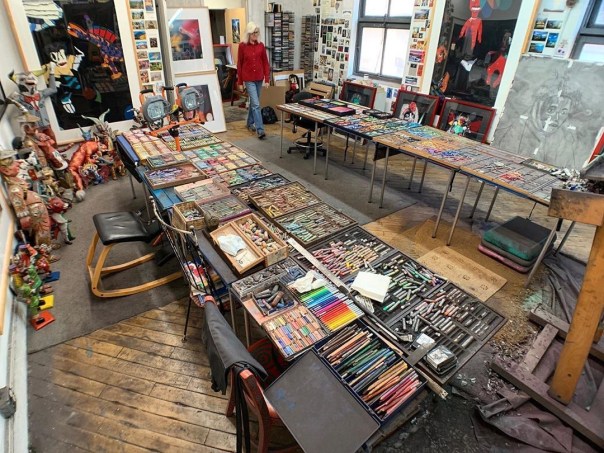
Photo: Izzy Nova
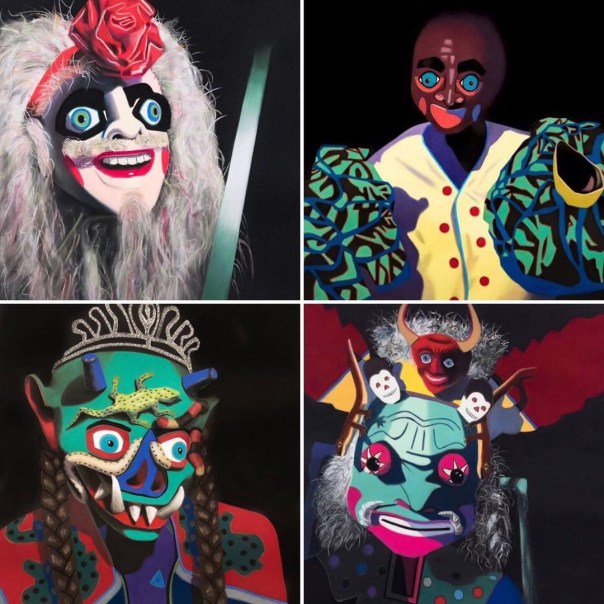
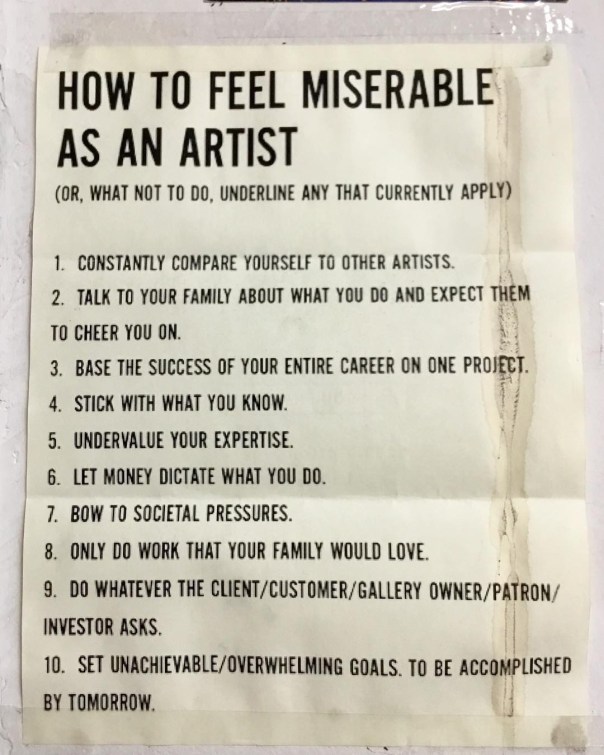
Photo: Izzy Nova
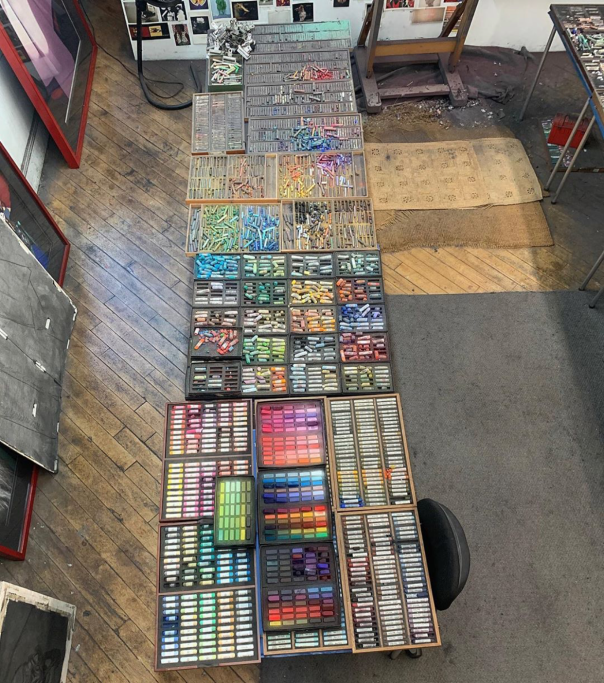
Photo: Izzy Nova
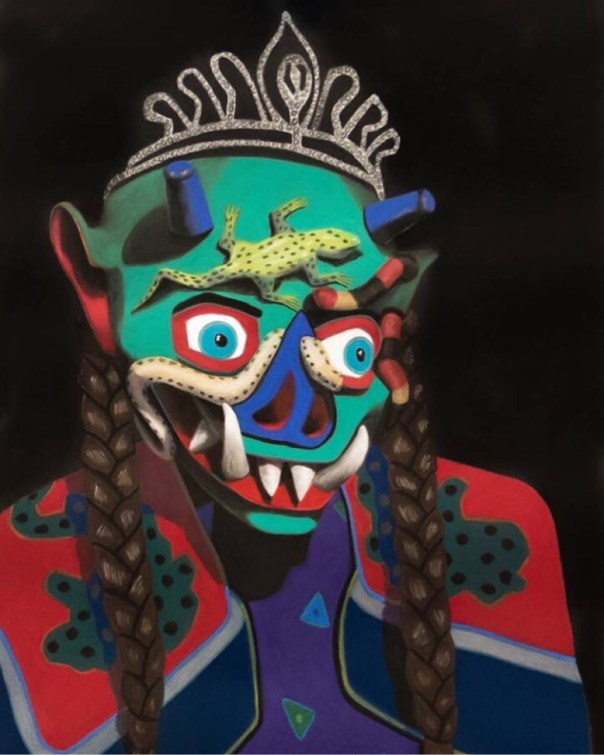
More than 49,000 now!
Please consider following my work at https://Instagram.com/barbararachko_artist.
Comments are welcome!
Pearls from artists* # 382

Barbara’s studio
* an ongoing series of quotations – mostly from artists, to artists – that offers wisdom, inspiration, and advice for the sometimes lonely road we are on.
I think a man [sic] spends his whole lifetime painting one picture or working on one piece of sculpture. The question of stopping is really a decision of moral considerations. To what extent are you intimidated by the actual act, so that you are beguiled by it? To what extent are you charmed by its inner life? And to what extent do you then really approach the intention or desire that is really outside it? The decision is always made when the purée has something in it that you wanted.
Barnett Newman quoted in The Unknown Masterpiece by Honore Balzac
Comments are welcome!
Q: What’s on the easel today?
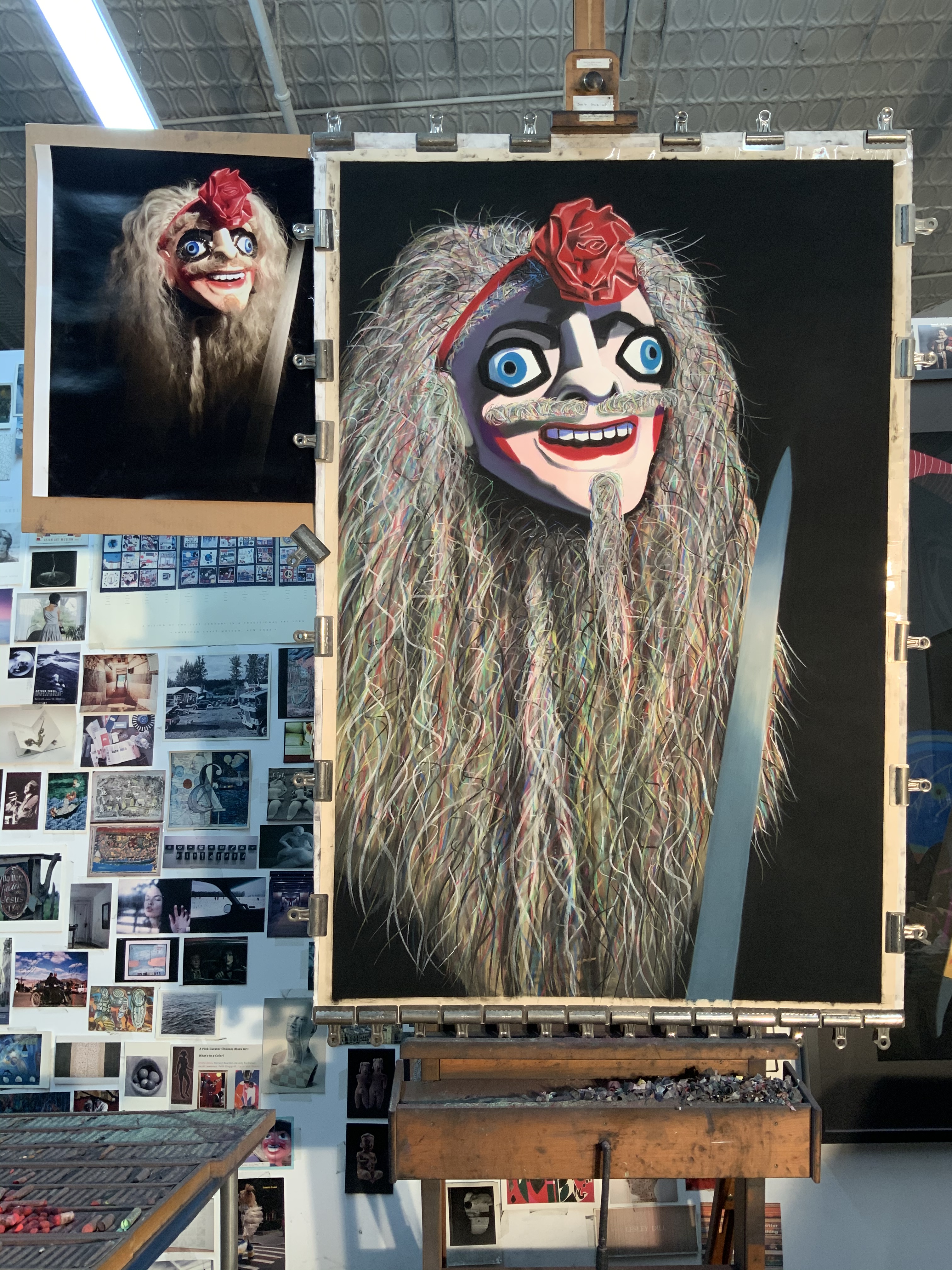
Work in progress
A: “Avenger,” soft pastel on sandpaper, 58” x 38” awaits finishing touches.
Comments are welcome!
Pearls from artists* 381
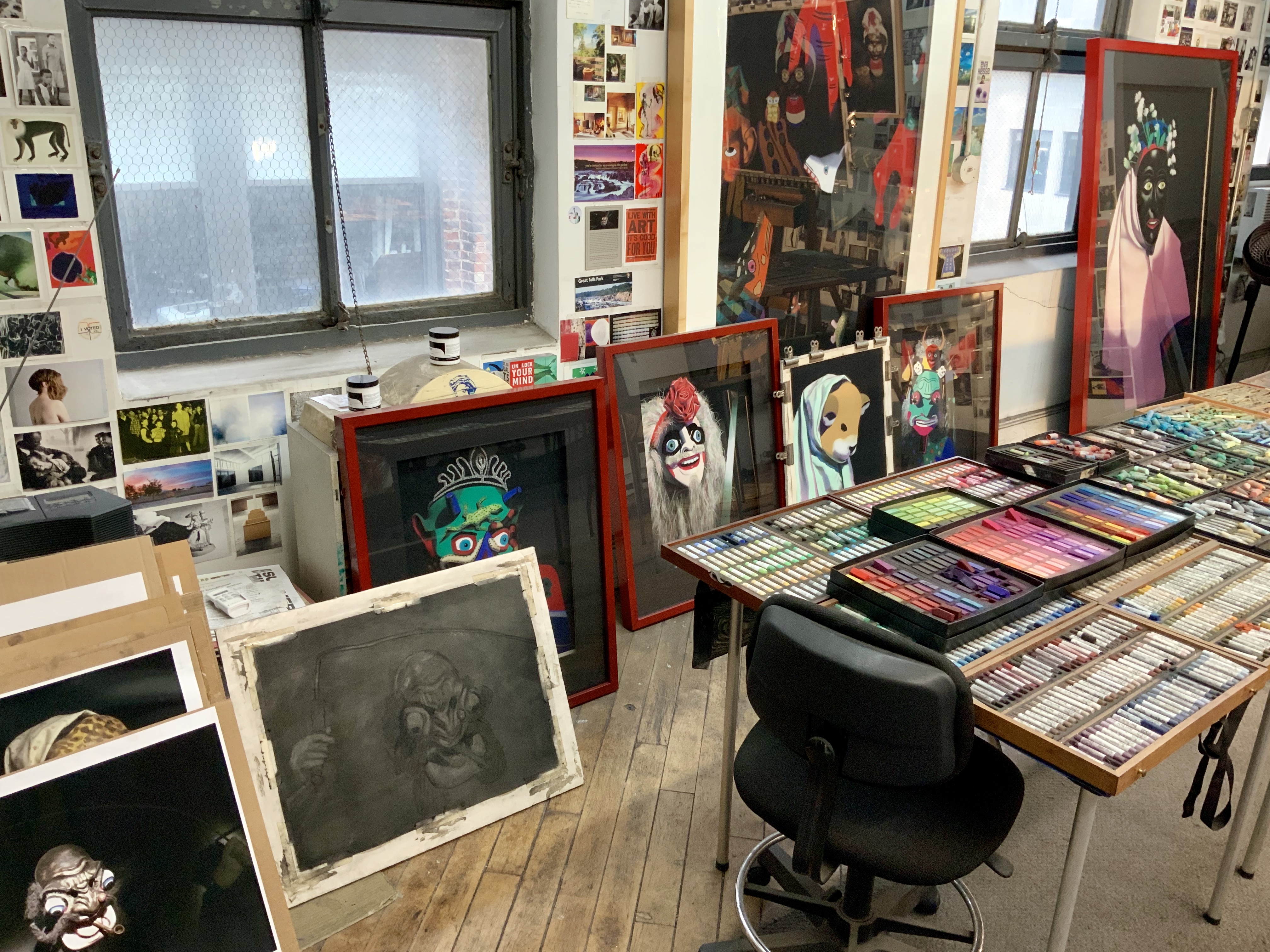
Barbara’s studio with work in progress
* an ongoing series of quotations – mostly from artists, to artists – that offers wisdom, inspiration, and advice for the sometimes lonely road we are on.
A work of art, if it is art, is not an end but a beginning. It is a challenge to the artist who produced it and to the artists around him to take the next step, to answer the questions raised by the work, to achieve what he or she has yet to accomplish. It also represents a challenge to the non-artist, who is offered a fresh vision.
Mary Gabriel in Ninth Street Women
Comments are welcome!
Q: What advice would you give to up and coming artists, as well as experienced artists, who want to reach the level of publicity and notoriety that you have achieved?
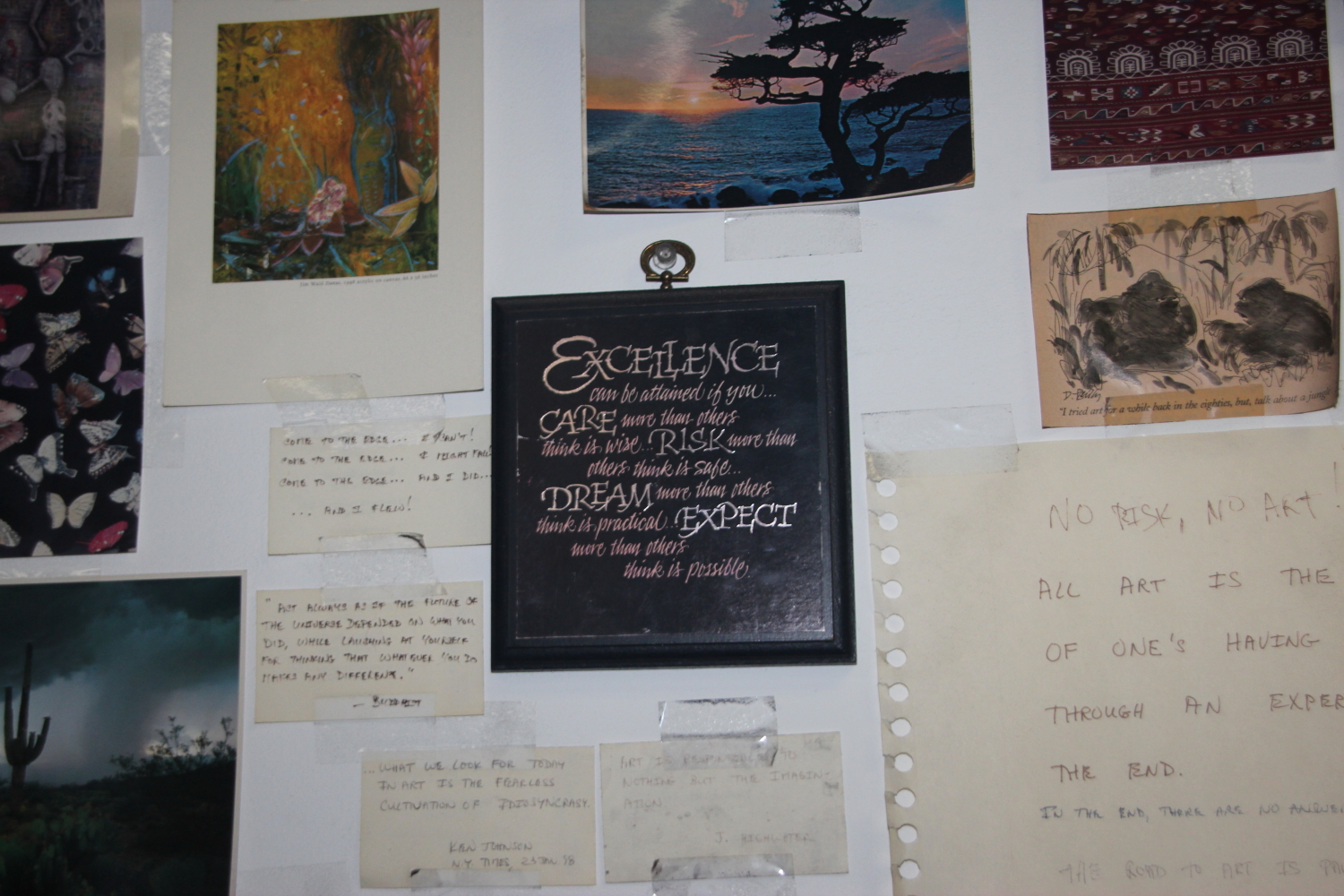
On my studio wall
A: I have several pieces of advice:
Build a support network among your fellow artists, teachers, and friends. It is tough to be an artist, period. Be sure to read plenty of books by and about artists. You will learn that all have experienced similar challenges.
Do whatever you must to keep working – no matter what! Being an artist never gets easier. There are always new obstacles and you will discover solutions over time.
When I left the active duty Navy in 1989, my co-workers threw a farewell party. One of the parting gifts I received was a small plaque from a young enlisted woman whom I had supervised. The words on the plaque deeply resonated with me, since I was about to make a significant and risky career change. It was the perfect gift for someone facing the uncertainty of an art career.
Many years later the plaque is still a proud possession of mine. It hangs on the wall behind my easel, to be read every day as I work. It says:
“Excellence can be attained if you…
Care more than others think is wise…
Risk more than others think is safe…
Dream more than others think is practical…
Expect more than others think is possible.”
I continue to live by these wise words.
Comments are welcome!
Q: What’s on the easel today?
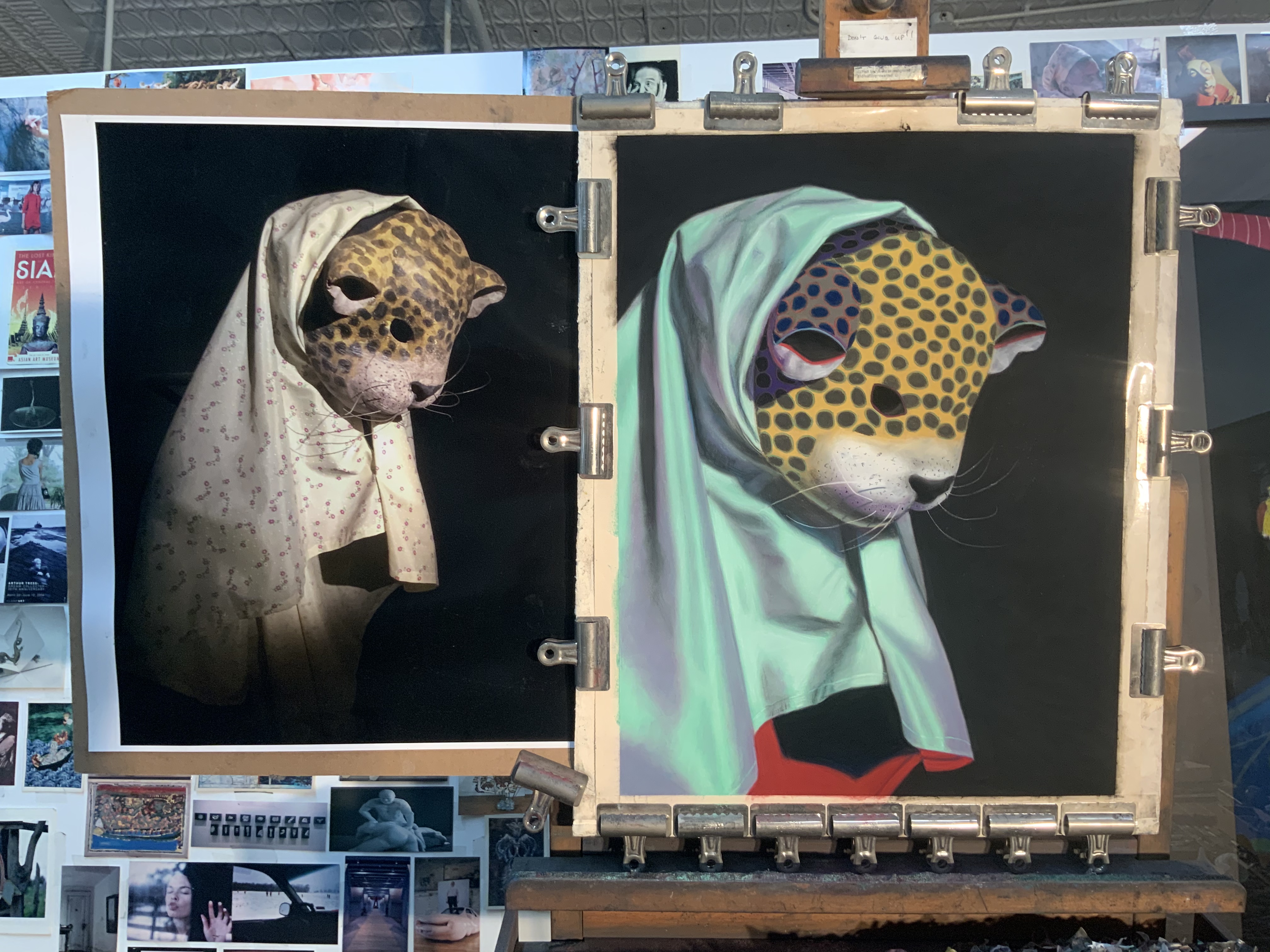
Work in progress
A: “Schemer,” Soft Pastel on Sandpaper, 26” x 20” is nearly finished. Among other things, I will do more blending to soften the transitions from light to dark in the fabric.
Comments are welcome!
Pearls from artists* # 377
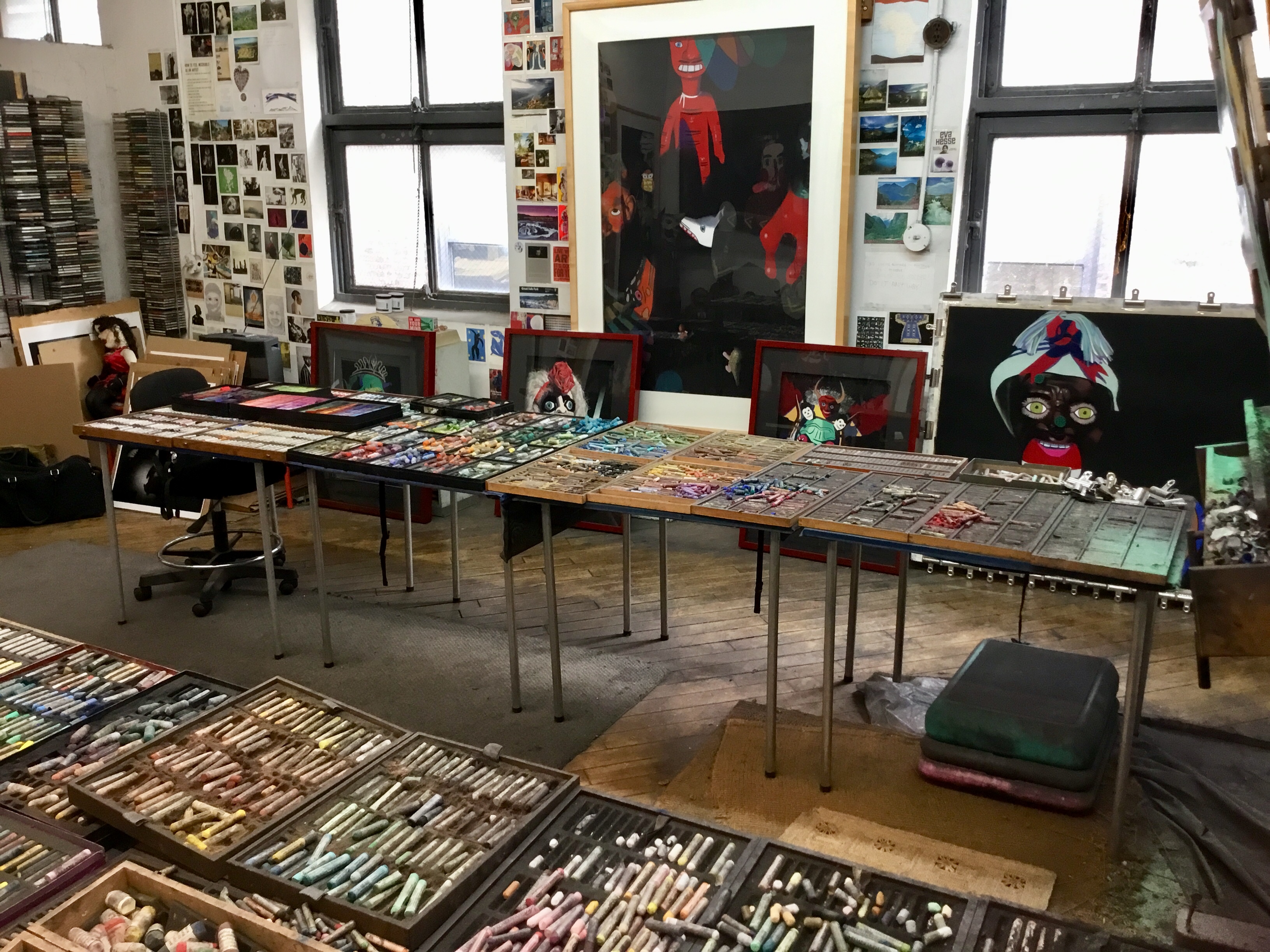
Barbara’s studio
* an ongoing series of quotations – mostly from artists, to artists – that offers wisdom, inspiration, and advice for the sometimes lonely road we are on.
Life for an artist, any artist, was difficult. There were few rewards other than the most important, which was satisfying one’s need to create. But in the art world of galleries, collections, and museums that the avant-garde artists in New York would inherit in the late 1940s, the difficulties experienced by the men who painted and sculpted would be nothing compared to those of the women. Society might mock the men’s work and disparage them for being “bums,” but at least they were awarded the dignity of ridicule. Women had to fight with every fiber of their being not to be completely ignored. In a treatise on men and women in America published at the start of the war, author Pearl S. Buck wrote,
The talented woman… must have, besides their talent, an unusual energy which drives them… to exercise their own powers. Like talented men, they are single-minded creatures, and they can’t sink into idleness nor fritter away life and time, nor endure discontent. They possess that rarest gift, integrity of purpose… Such women sacrifice, without knowing they do, what many other women hold dear – amusement, society, play of one kind or another – to choose solitude and profound thinking and feeling, and at last final expression.
“To what end?” another woman might ask. To the end, perhaps… of art – art which has lifted us out of mental and spiritual savagery.”
Mary Gabriel in Ninth Street Women
Comments are welcome!
Q: Do you enjoy being interviewed?
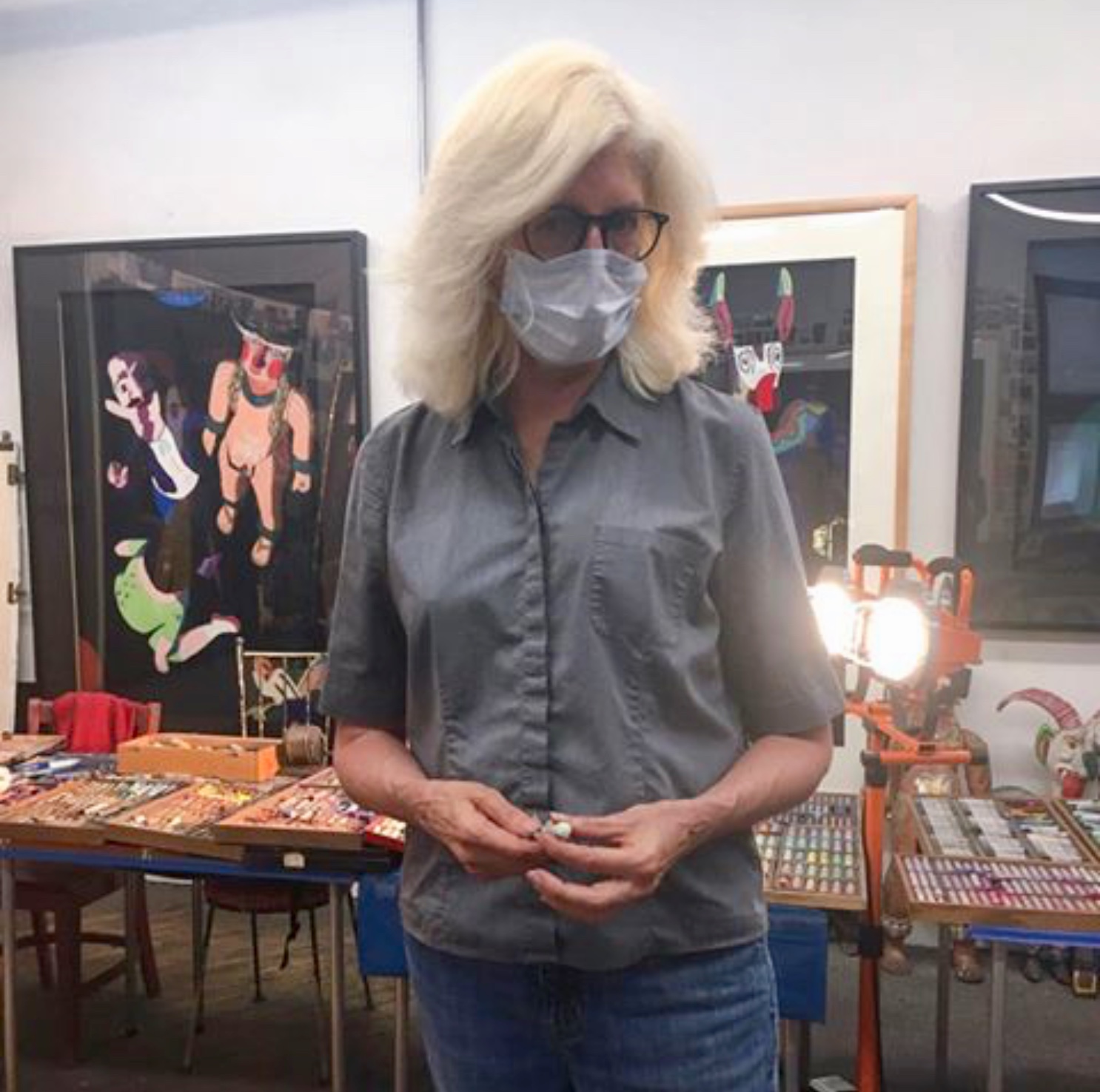
In the studio
A: I do very much. Each new interview is another opportunity to discover what is remembered, what is kept because it still seems important, and how certain details are selected from amongst all the accumulated memories of a lifetime. My own story is continually evolving as some facts are left out or rearranged, and others added. New connections keep being made while some others are discarded. I find it fascinating to read over old interviews and compare them with what I remember in the present.
Comments are welcome!
Start/Finish of “Sentinels,” Soft Pastel on Sandpaper, 38” x 58”
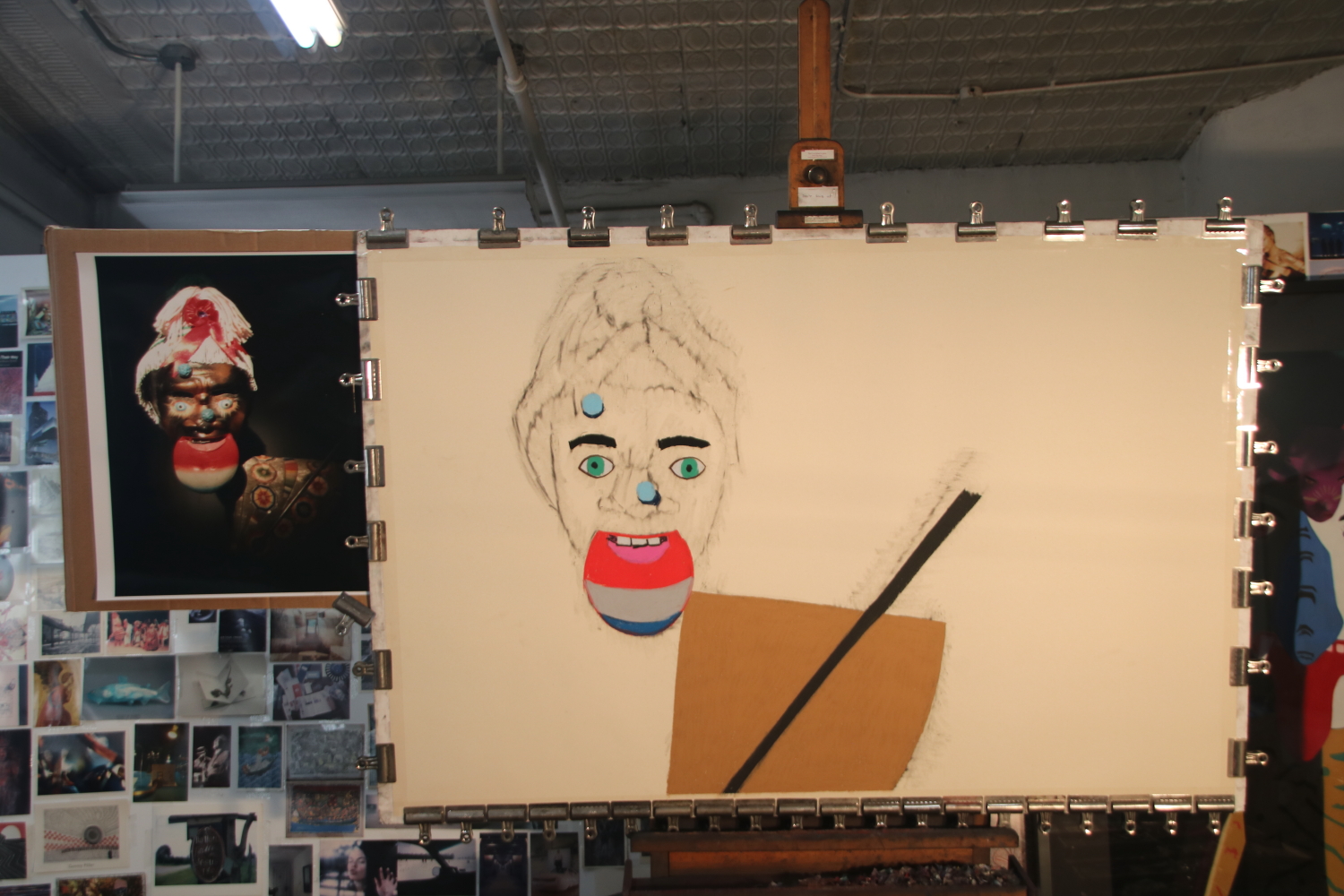
Start
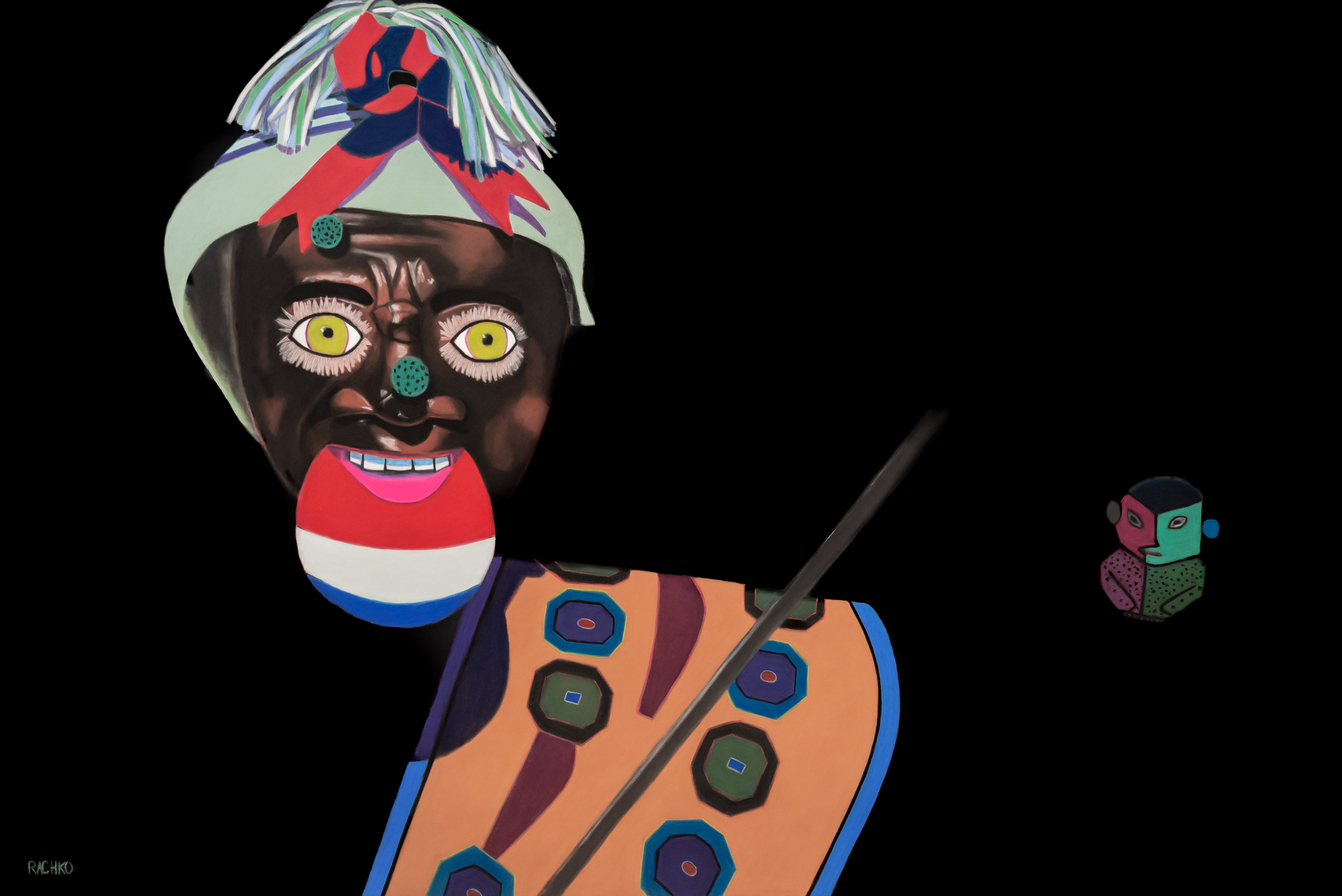
Finished, signed lower left
Comments are welcome!



