Category Archives: Studio
Pearls from artists* # 585
*an ongoing series of quotations – mostly from artists, to artists – that offers wisdom, inspiration, and advice for the sometimes lonely road we are on.
Improvisation, composition, writing, painting, theater, invention, all creative acts are forms of play, the starting place of creativity in the human growth cycle, and one of the great primal life functions. Without play, learning and evolution are impossible. Play is the taproot from which original art springs; it is the raw stuff that the artist channels and organizes with all his learning and technique. Technique itself springs from play, because we can acquire technique only by the practice of practice, by persistently experimenting and playing with our tools and testing their limits and resistances. Creative work is play; it is free speculation using the materials of one’s chosen form. The creative mind plays with the objects it loves. Artists play with color and space. Musicians play with sound and silence. Eros plays with lovers. Gods play with the universe. Children play with everything they can get their hands on.
Stephen Nachmanovitch in Free Play: Improvisation in Life and Art
Comments are welcome!
Q: What’s on the easel today?

Work in progress
A: I continue working on “Narcissist,” soft pastel on sandpaper, 20” x 26”.
Comments are welcome!
Pearls from artists* # 584

Barbara’s Studio
*an ongoing series of quotations – mostly from artists, to artists – that offers wisdom, inspiration, and advice for the sometimes lonely road we are on.
The creation of something new is not accomplished by the intellect but by the play instinct acting from inner necessity. The creative mind plays with the object it loves.
Carl Jung quoted by Stephen Nachmanovitch in Free Play: Improvisation in Life and Art
Comments are welcome!
Pearls from artists* # 583

In the Studio Photo: Susan Erlichman
*an ongoing series of quotations – mostly from artists, to artists – that offers wisdom, inspiration, and advice for the sometimes lonely road we are on.
Let’s return to Michelangelo’s idea of removing apparent surfaces to reveal or liberate the statue that has been buried in the stone since the beginning of time. Michelangelo claimed that he was guided by a faculty he called intelleto. Intelleto is intelligence, not of the merely rational kind, but visionary intelligence, a deep seeing of the underlying pattern beneath appearances. Here the artist is, as it were, an archaeologist, uncovering deeper and deeper strata as he works, recovering not an ancient civilization but something as yet unborn, unseen, unheard except by the inner eye, the inner ear. He is not just removing apparent surfaces from some external object, he is removing apparent surfaces from the Self, revealing his original nature.
Stephen Nachmanovitch in Free Play: Improvisation in Life and Art
Comments are welcome!
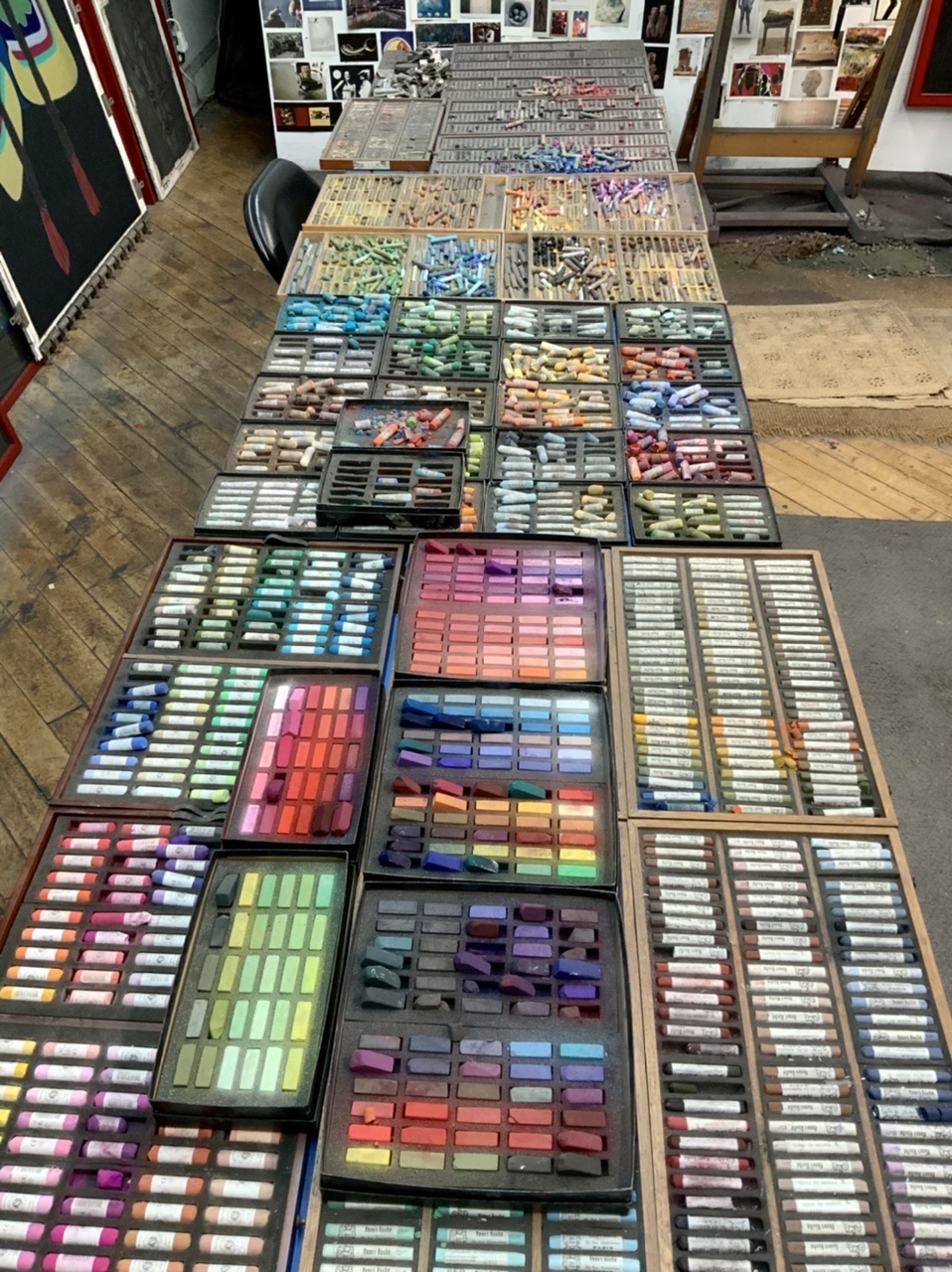
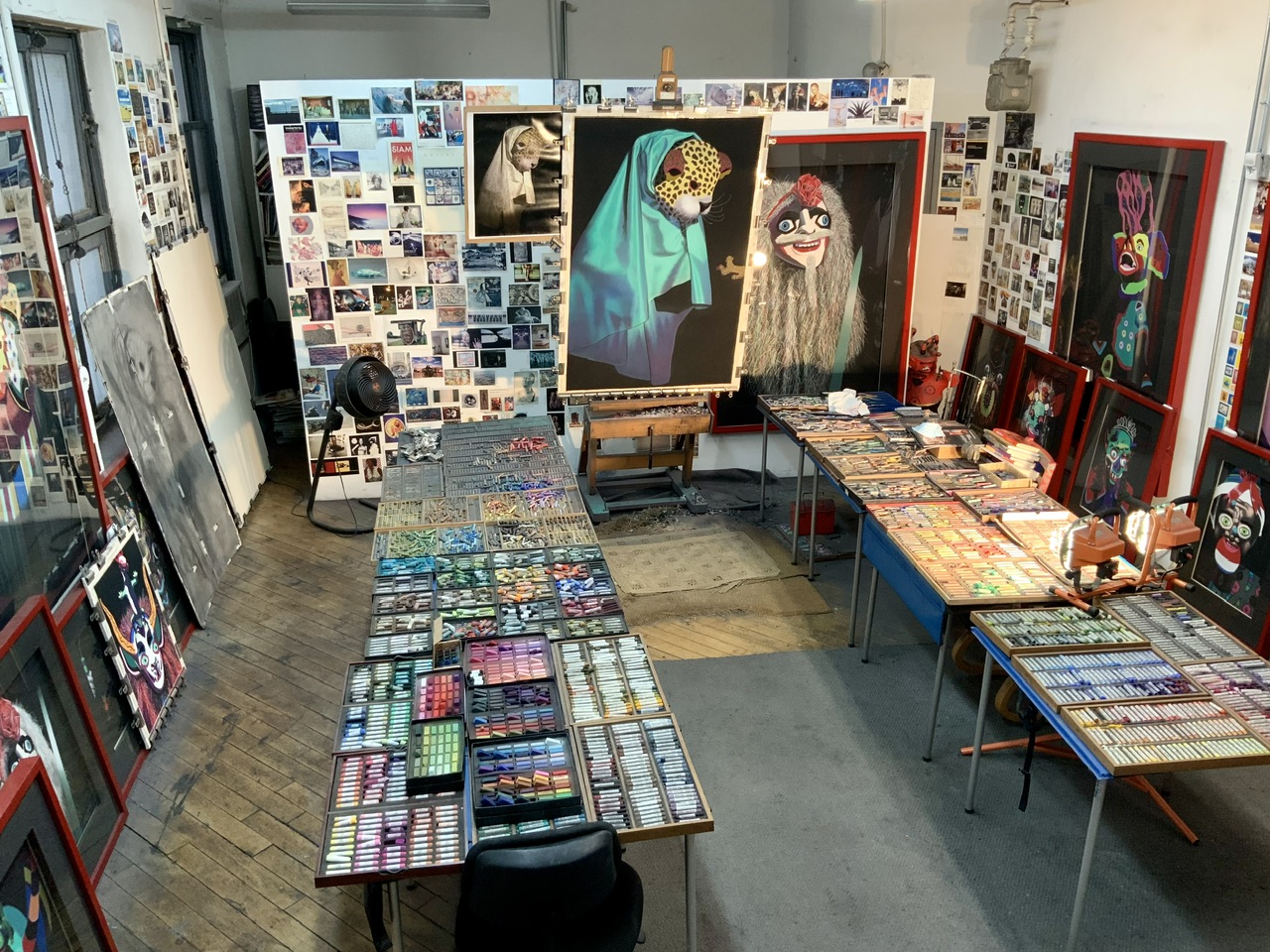
Q: With so many soft pastels to choose from, do you have a way of organizing them so that you can find the color you need?
Barbara’s Studio
A: The arrangement of my pastels evolved organically. I keep them in their original trays. My oldest pastel sets are closer to the easel and the newest ones are the furthest away. After 37 years of experience working in pastel, I am well-acquainted with their individual properties. I know exactly where to find each color based on which manufacturer makes it.
Comments are welcome!
Pearls from artists* # 582

*an ongoing series of quotations – mostly from artists, to artists – that offers wisdom, inspiration, and advice for the sometimes lonely road we are on.
Strange, but the artist has never made a fuss about being denied those estimable virtues other men would not do without: intellectuality, good judgment, a knowledge of the world, and rational conduct. It may be charged, that he has even fostered the myth. In his intimate journals Vollard tells us that Degas feigned deafness to escape disputations and harangues concerning things he considered false and distasteful. If the speaker or subject changed, his hearing immediately improved. We must marvel at his wisdom since he must have only surmised what we know definitely today: tThat the constant repetition of falsehood is more convincing than the demonstration of truth. It is understandable, then, how the artist might actually cultivate this moronic appearance, this deafness, this inarticulateness, in an effort to evade the million irrelevancies which daily accumulate concerning his work. For, while the authority of the doctor or plumber is never questioned, everyone deems himself a good judge and an adequate arbiter of what a work of art should be and how it should be done.
Mark Rothko in The Artist’s Reality: Philosophies of Art, edited by Christopher Rothko
Comments are welcome!
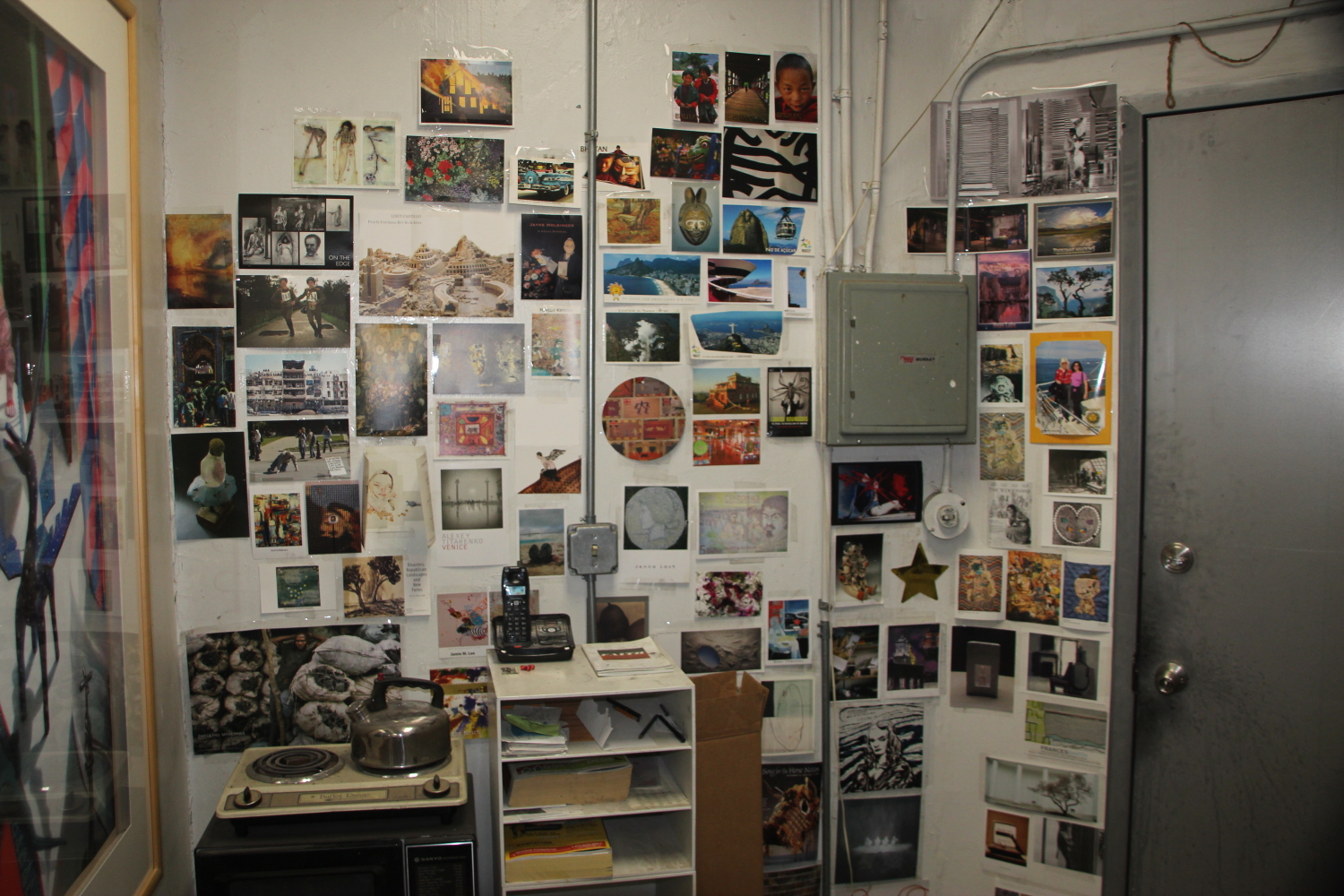
Q: What do you like most about being an artist?
Entrance to Barbara’s studio
A: I love walking into my studio in the morning, knowing that I will spend the day doing what I love, using all my talents, skills, and experience to solve whatever problems lie ahead in the work. As artists we create our own tasks and then go about solving them. Yes, the day to day challenges are significant, but having the freedom to do meaningful work that we love is priceless.
When I was a Lieutenant in the Navy working at the Pentagon, I was very unhappy (and one doesn’t just give two weeks notice and leave the Navy behind)! I still remember what it was like having a soul-crushing job. I am grateful for this turn in my life journey. How much better life is as a professional artist!
Comments are welcome!
Pearls from artists* # 577

In the Studio
*an ongoing series of quotations – mostly from artists, to artists – that offers wisdom, inspiration, and advice for the sometimes lonely road we are on.
What is the popular conception of the artist? Gather a thousand descriptions and the resulting composite is the portrait of a moron: he is held to be childish, irresponsible, and ignorant or stupid in everyday affairs.
The picture does not necessarily involve censure or unkindness. These definitions are attributed to the artist’s preoccupation with his particular kind of fantasy and to the unworldly nature of the fantastic itself. The bantering tolerance granted to the absentminded professor is extended to the artist. Biographers contrast the artless news of his judgments with the high attainment of his art, and while his naïveté or rascality are gossiped about, they are viewed as signs of Simplicity and Inspiration, which are the Handmaidens of Art. And if the artist is inarticulate and lacking in the usual repositories of fact and information, how fortunate, it is said, that nature has contrived to divert him from all worldly distractions so he may be single-minded in regards to his special office.
Mark Rothko in The Artist’s Reality: Philosophies of Art, edited and with an introduction by Christopher Rothko
Comments are welcome!
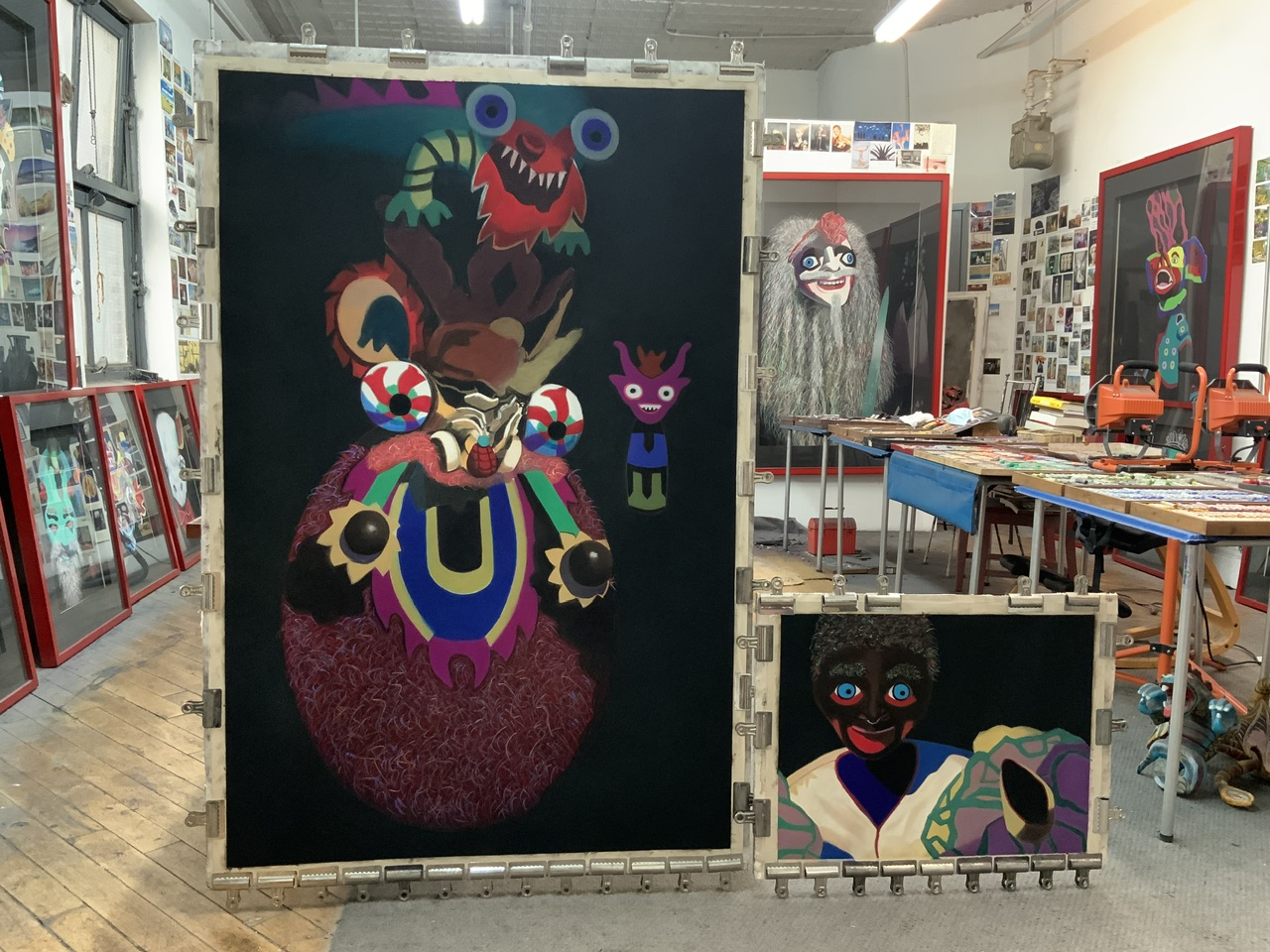
Q: What’s on the easel today?
Work in progress
A: I continue working on “Apparition,” soft pastel on sandpaper, 58” x 38” (left) and “Narcissist,” 20” x 26,” soft pastel on sandpaper (right).
Comments are welcome!
Pearls from artists* # 575

Barbara’s Studio
*an ongoing series of quotations – mostly from artists, to artists – that offers wisdom, inspiration, and advice for the sometimes lonely road we are on.
Creativity is a harmony of opposite tensions… As we ride through the flux of our own creative processes, we hold onto both poles. If we let go of play, our work becomes ponderous and stiff. If we let go of the sacred, our work loses its connection to the ground on which we live.
Knowledge of the creative process cannot substitute for creativity, but it can save us from giving up on creativity when the challenges seem too intimidating and free play seems blocked. If we know that our inevitable setbacks and frustrations are phases of the natural cycle of creative processes, if we know that our obstacles can become our ornaments, we can persevere and bring our desires to fruition. Such perseverance can be a real test, but there are ways through, there are guideposts. And the struggle, which is guaranteed to take a lifetime, is worth it. It is a struggle that generates incredible pleasure and joy. Every attempt we make is imperfect; yet each one of these imperfect attempts is an occasion for a delight unlike anything else on earth.
The creative path is a spiritual path. The adventure is about us, about the deep self, the composer in all of us, about originality, meaning not that which is all new, but that which is fully and originally ourselves.
Stephen Nachmanovitch in Free Play: Improvisation in Life and Art
Comments are welcome!


 barbararachkoscoloreddust.com